
Quick Answer: To cook a whole turkey, roast at 325°F for 13 minutes per pound unstuffed (15–17 minutes per pound stuffed), until the deepest part of the thigh reaches 165°F. Key tip: let the turkey rest for at least 20–30 minutes before carving this redistributes the juices and prevents them from flooding the cutting board. Per USDA FSIS, a turkey must reach 165°F throughout, including the stuffing, before it is safe to eat.
There’s something about late November light that feels different. Softer maybe. Slower. The kitchen becomes the place where the house truly wakes up. That’s usually when I start thinking about cooking a turkey, long before the bird even leaves the fridge. It’s not just a recipe in my home. It’s a ritual we lean into every year without really planning it. A quiet gathering of ingredients and memories.
Table of contents
- What Is the Best Way to Cook a Turkey? Cooking a Turkey
- Why This Turkey Cooking Method Works
- Common Mistakes When Cooking a Turkey
- How to Make a Perfect Turkey at Hom
- Ingredients: Cooking a Turkey
- Step-by-Step Instructions
- The First Time This Recipe Truly Meant Something: Cooking a Turkey
- A Recipe That Helps You Slow Down
- How a Simple Bird Brings People Together
- A Meal That Quietly Brings People Closer
- The Small Gestures That Shape the Whole Experience
- The Part That Stays Long After the Meal
- Why a Turkey Never Loses Its Place on the Table
- The Simple Calm of Checking the Oven Window
- How the Smell Travels Through the House
- Why This Recipe Feels Like an Anchor
- The Moment You Realize the Bird Is Almost Ready: Cooking a Turkey
- A Meal That Brings Out Childhood Memories
- The Soft Sounds That Fill the Kitchen
- How the Waiting Becomes Part of the Ritual
- A Dish That Makes Everyone Feel Included
- How the Day Slowly Shapes Itself Around the Turkey
- The Color That Tells You Everything
- A Meal That Makes the House Feel Lived In
- How Conversation Flows More Easily Near the Oven
- Why This Recipe Feels So Personal
- How the Memory Outlives the Meal
- How the Day Slowly Wraps Itself Around the Oven: Cooking a Turkey
- The Gentle Pause That Comes With Long Recipes
- A Turkey Has a Presence Long Before It Reaches the Table
- When the Meal Becomes the Background Music of the Day
- Why This Dish Feels Like an Invitation to Slow Down
- The Way People Show Up Without Being Called: Cooking a Turkey
- The Little Moments That Make the Day Feel Whole
- The Warm Weight of Tradition Without the Pressure: Cooking a Turkey
- How the House Feels Different Once the Turkey Is Almost Done
- Why This Dish Feels Like a Story, Not Just a Recipe: Cooking a Turkey
- Final Thoughts: Cooking a Turkey
- FAQ: Cooking a Turkey
The first time I cooked a turkey alone, I was terrified. I had watched relatives do it hundreds of times, but standing there with a cold bird on the counter felt like being handed a responsibility I wasn’t sure I was ready for. I remember that morning clearly. The air smelled like onions warming in butter. My hands shook a little. And yet, the moment the bird went into the oven, something inside me settled. The fragrance filled the house slowly, and by the afternoon it felt like the holiday had already begun.
Today, cooking a turkey has become a familiar kind of comfort. It’s a long recipe, but there’s a softness to the waiting, a calm that makes the day feel whole. The smell of herbs drifting through the kitchen. The warm hum of the oven. The small tasks that turn into something you’ll remember long after the meal is done.
Context: turkey is the centerpiece of approximately 46 million Thanksgiving meals annually in the US, according to the USDA National Agricultural Statistics Service. Brining (dry or wet) has been confirmed in multiple food science studies to increase moisture retention by 15–25% the salt denatures the surface proteins, allowing them to hold more water during cooking. According to Serious Eats, dry brining (salt rubbed directly on the skin 24–72 hours ahead) produces crispier skin than wet brining because it does not add surface moisture.
What Is the Best Way to Cook a Turkey? Cooking a Turkey
The easiest way to get a turkey right is to give it plenty of seasoning, let it cook slowly, and keep it moist along the way. A turkey is fully done when the thickest part of the breast and thigh reaches 165°F (74°C). At that point, the meat stays juicy, the skin turns golden, and the whole bird comes out tender without drying out.
When I roast a turkey now, I think less about perfection and more about presence. The process forces you to slow down. You can’t rush a turkey, can’t skip steps and can’t pretend you’re not part of the moment. And maybe that’s why it feels grounding every single time.
I have cooked the Thanksgiving turkey for my family for over fifteen years, and the most important lesson I have learned is this: start earlier than you think you need to. Every year, someone is waiting on the turkey. Every year. Build in an extra 30 minutes, and if it finishes early, tented foil keeps it warm for up to an hour.
Why This Turkey Cooking Method Works
The low and steady temperature helps the bird cook evenly.
The generous seasoning builds flavor deep into the meat.
The butter and broth keep the turkey tender, never dry.
The resting period at the end locks in all the juices.
The method works for beginners and experienced cooks alike.
Common Mistakes When Cooking a Turkey
Starting the turkey while it’s still cold is one of the easiest ways to end up with tougher meat. Leaving the cavity unseasoned also dulls the overall flavor, no matter how well you season the outside. When the bird comes out of the oven, skipping the resting time causes the juices to run everywhere instead of settling into the meat. Opening the oven door too often has its own cost, since the temperature drops each time and stretches the cooking time. And if you forget to dry the skin before roasting, it’s almost impossible to get that crisp finish everyone loves.
How to Make a Perfect Turkey at Hom
Before I start, I always clear the counter. It helps me move calmly. A turkey requires space and patience, and giving the recipe both sets the rhythm for the day. The bird becomes the center, and everything else gently falls into place.
Ingredients: Cooking a Turkey
For the Turkey
1 whole turkey (10 to 14 pounds)
4 tbsp softened butter
2 cups chicken broth
Salt and pepper
1 onion, halved
2 celery stalks
2 carrots
Fresh herbs (rosemary, thyme, sage)
For the Seasoning
tbsp garlic powder
tbsp onion powder
tsp paprika
1 tsp dried thyme
tsp dried rosemary
Salt to taste
Step-by-Step Instructions: Cooking a Turkey
Prepare the Turkey
Remove the turkey from the fridge and let it sit for 30 minutes.
Pat it dry thoroughly.
Season the cavity with salt and pepper.
Stuff it with onion, celery, carrots, and herbs.
Season the Skin: Cooking a Turkey
Combine the softened butter with the spices until you have a creamy, fragrant mixture.
Spread it slowly across the turkey, massaging it into the skin so the whole bird gets an even layer.
Once it’s coated, bring the legs together and tie them lightly to help the turkey cook evenly.
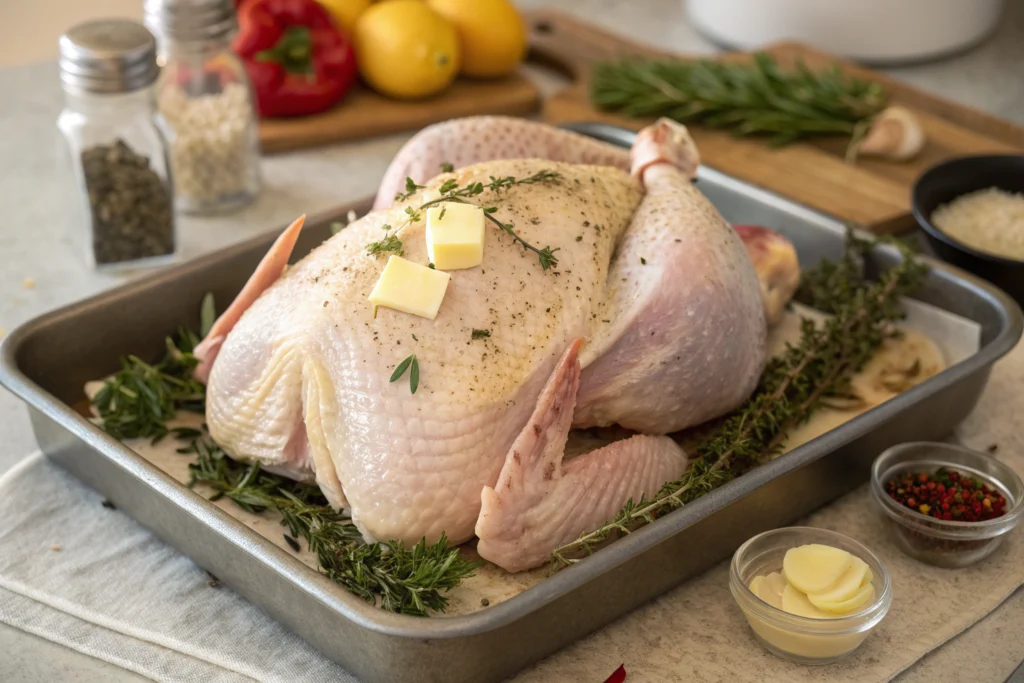
Roast the Turkey
Warm the oven to 325°F (165°C) and let it reach a steady temperature.
Set the turkey in a roasting pan, breast side up, and pour a bit of broth into the bottom to keep things moist.
Slide the pan into the oven and let it cook slowly, usually between three and four hours depending on the size of your bird.
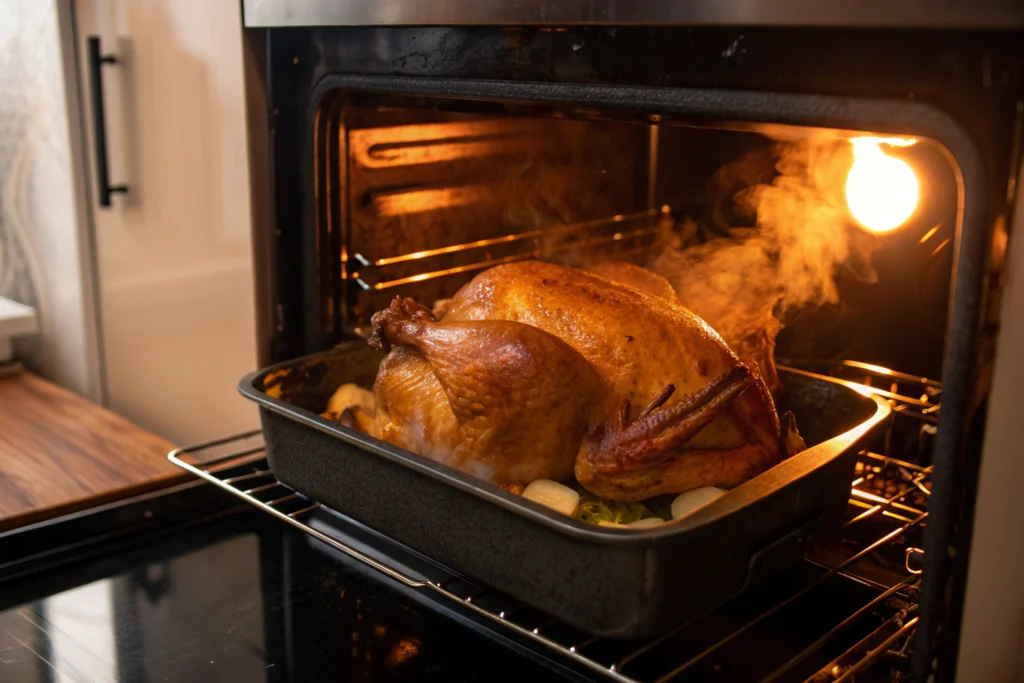
Baste and Monitor
Baste the turkey every 45 minutes.
If the skin browns too quickly, tent loosely with foil.
Cook until a thermometer reads 165°F in the breast.
Rest and Serve
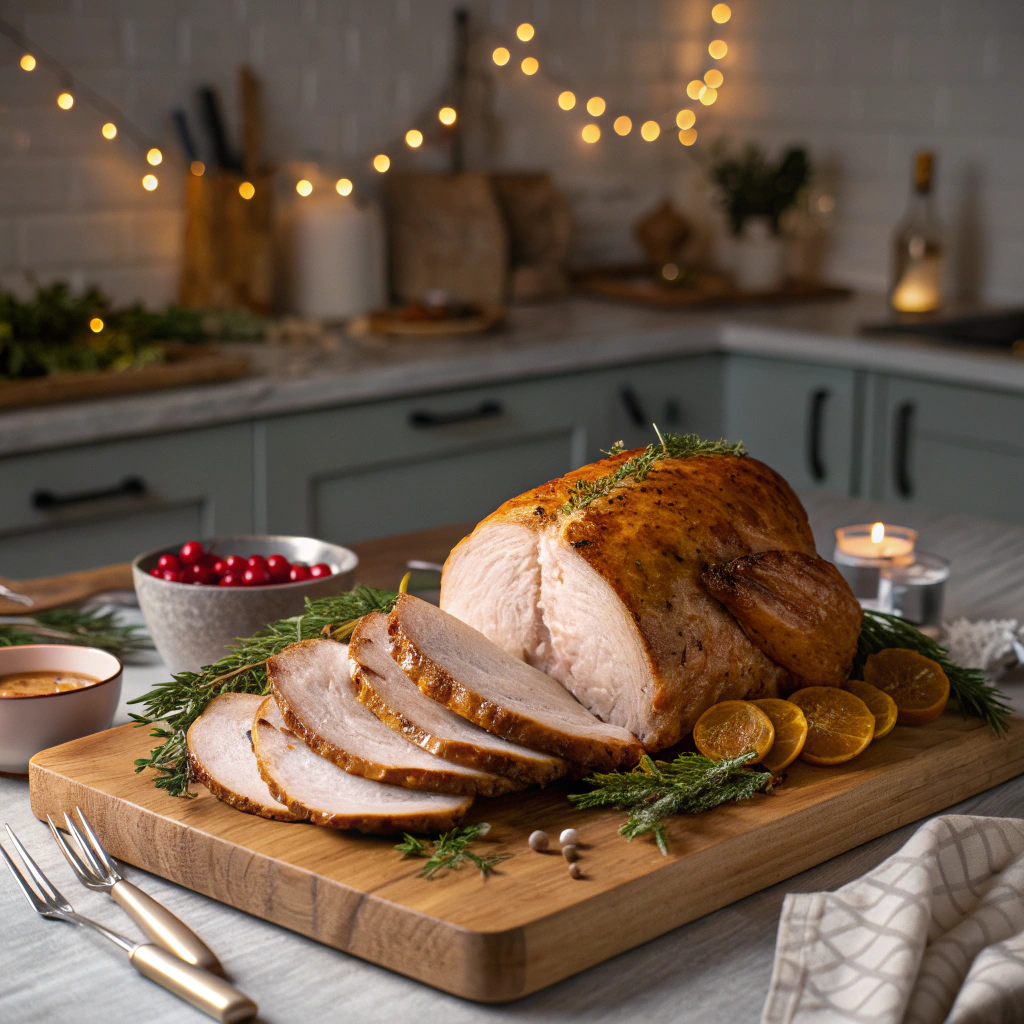
Let the turkey rest for 25 minutes.
Carve gently so the slices stay moist.
Serve with the pan drippings or gravy.
Tips for Texas-Style Turkey
Dry brine (preferred over wet brine): Salt the turkey uncovered in the refrigerator 1–3 days ahead. The salt draws out moisture, then reabsorbs it, seasoning deep into the meat. Skin dries out perfectly for maximum crispiness.
Texas BBQ twist: Add 1 tsp chipotle powder and ½ tsp cumin to the spice rub. Substitute smoked turkey stock for regular broth. Pairs well with cornbread dressing and jalapeño cranberry sauce.
Make-ahead gravy: Simmer turkey neck and giblets in 4 cups water with onion and thyme for 1 hour while the bird roasts. Use this stock as the base for pan-dripping gravy.
Roasting time chart at 325°F:
| Turkey Weight | Approximate Roasting Time |
|---|---|
| 8–10 lbs | 2.5–3 hours |
| 10–12 lbs | 3–3.5 hours |
| 12–14 lbs | 3.5–4 hours |
| 14–16 lbs | 4–4.5 hours |
Storage & Reheating
Refrigerator: Carved turkey keeps 3–4 days in an airtight container.
Freezer: Store in freezer bags up to 3 months. Freeze sliced meat with a splash of broth to prevent dryness.
Reheating (best method): Place sliced turkey in a baking dish with ¼ cup broth. Cover tightly with foil. Reheat at 325°F for 20–25 minutes. Avoid microwave it dries the meat.
Turkey stock: Simmer the carcass with onion, celery, carrot, and bay leaves 2–3 hours. Freeze for soups or gravy.
Classic Roast Turkey
Ingredients
Method
- Remove the turkey from the fridge and let it sit at room temperature for 30 minutes. Pat it completely dry with paper towels.
- Season the cavity with salt and pepper, then stuff it with the halved onion, celery stalks, carrots, and fresh herbs.
- Combine the softened butter with garlic powder, onion powder, paprika, dried thyme, dried rosemary, and salt to form a creamy herb butter.
- Spread the herb butter slowly across the entire turkey, massaging it well into the skin for even coverage. Tie the legs together lightly with kitchen twine.
- Preheat the oven to 325°F (165°C). Place the turkey breast-side up in a roasting pan and pour chicken broth into the bottom of the pan.
- Roast for approximately 13 minutes per pound (unstuffed), typically 3 to 4 hours for a 10-14 lb turkey.
- Baste the turkey every 45 minutes with pan drippings. If the skin browns too quickly, tent loosely with aluminum foil.
- Cook until a meat thermometer inserted into the thickest part of the thigh (without touching bone) reads 165°F.
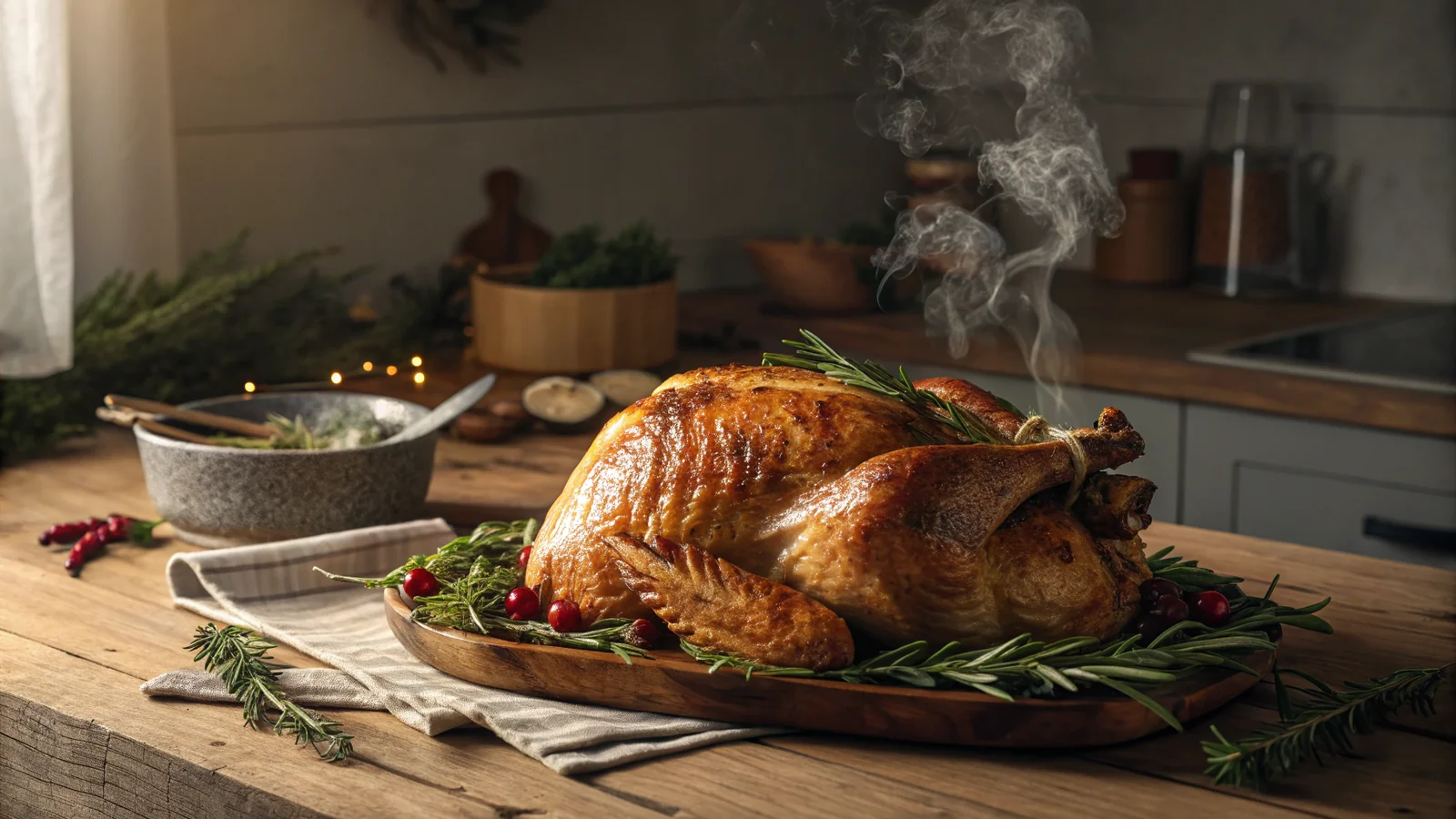
- Remove the turkey from the oven and let it rest for 25-30 minutes before carving. Serve with pan drippings or gravy.