
I still remember the first brisket I ever smoked. A Sunday in late October. I had just gotten a new offset smoker and I was convinced that a few YouTube videos had taught me everything I needed to know. Fourteen hours later, I pulled out what can only be described as a beautiful, perfectly bark-covered piece of leather. My dog walked away from it.
That one disaster kicked off years of obsessing over Texas BBQ brisket. I started taking road trips to central Texas just to eat. Franklin Barbecue in Austin. Snow’s BBQ in Lexington. I took notes at every single stop. I asked questions. I came home and failed again, then failed a little less, until one day I didn’t fail at all.
These days my brisket gets requests months in advance. A neighbor drove forty minutes just for a sandwich last summer. What changed wasn’t fancy equipment. It was understanding seven specific things that most guides gloss over completely.
Why Texas BBQ Brisket Is a Different Animal Entirely
Texas BBQ brisket is built on restraint. Salt, black pepper, maybe a touch of garlic powder. No sauce during the cook, no sugar, nothing sweet. The meat does the work, with smoke and rendered fat doing all the flavoring.
The reason brisket is so hard to cook comes down to biology. According to Texas A&M AgriLife Extension, the pectoral muscles in beef work constantly throughout the animal’s life. All that work means dense connective tissue and collagen. Low, slow heat converts that collagen into gelatin. Rush it and you get leather.
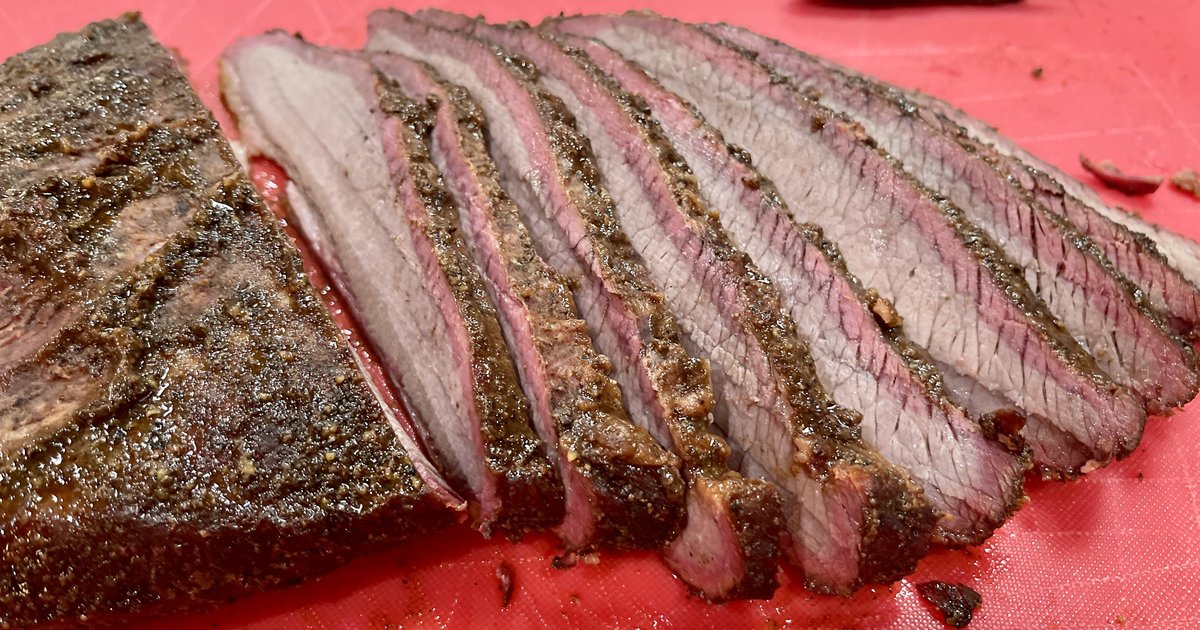
What makes a legendary Texas brisket is hitting three things at once: a thick peppery bark on the outside, a pink smoke ring just under the surface, and a flat that bends without cracking when you pick up a slice. Getting all three right at the same time took me years.
Secret 1: Buy a Whole Packer Brisket, Never a Flat Alone
A whole packer brisket gives you both the flat (the leaner, thinner end) and the point (the fattier, thicker end that sits on top). As the point renders during cooking, it bastes the flat beneath it. You also get dramatically better bark across the whole surface. Aim for 12 to 15 pounds after trimming. When you’re picking your brisket, hold it by one end and let it drape. A brisket that flexes and droops has better marbling and cooks more juicily.
Secret 2: Trim the Fat Cap to Exactly 1/4 Inch
Too much fat and it won’t render. Too little and you lose the moisture protection. Trim cold, right out of the refrigerator. Remove large hard fat pockets from the point-flat seam. Trim the thin tapered edge of the flat so it doesn’t overcook into jerky while the rest finishes.
Secret 3: Keep the Rub Dead Simple
Equal parts coarse kosher salt and coarse black pepper. That’s the Texas pitmaster rub. Some add a small amount of garlic powder. That’s as far as I go. Coarse black pepper creates the iconic bark. Apply generously, press it in, and let it sit uncovered in the refrigerator overnight. The salt pulls moisture out and draws it back in, similar to dry brining.
Secret 4: Temperature and Wood Are Everything
Post oak is the traditional choice. It burns hot and clean, produces mild smoke that complements beef without overpowering it. If you can’t find post oak, white oak is a close second. Avoid mesquite for a long brisket cook. I run my smoker at 250°F. The goal is thin blue smoke, not thick white clouds. AmazingRibs.com has excellent science-based guides on wood selection and smoke management.
Secret 5: Understand the Stall and Embrace It
Between 150°F and 165°F internal temperature, your brisket will stop gaining heat for hours. This is the stall. Evaporative cooling matches the rate of heat entering the meat. Don’t crank the heat. Don’t wrap too early. Let the bark set until it’s firm and dark mahogany. Then wrap in pink butcher paper and return to 250°F until the flat probes tender like warm butter, around 200°F to 205°F.
Secret 6: The Rest Period Is Not Optional
When it hits target temperature, wrap it in butcher paper and a beach towel and put it in a cooler. Minimum two hours, up to six. The muscle fibers that contracted during cooking gradually relax and juices redistribute. Brisket sliced immediately loses an enormous amount of moisture on the cutting board. Rested brisket holds every drop inside.
Secret 7: Slicing Technique Matters More Than You Think
Separate the point from the flat first. Rotate each piece so you’re cutting perpendicular to the muscle fibers. Slices about 1/4 inch thick. Use a sharp slicing knife. A dull knife tears the meat and you lose juice at every tear. The point can be cubed and put back on the smoker for another hour to make burnt ends.
Common Mistakes That Ruin Texas BBQ Brisket
- Too much smoke too early. Hit the brisket with wood at the very start when the surface is cool and sticky. After the bark sets, additional smoke has diminishing returns.
- Opening the smoker too often. Every time you open the lid, you lose heat. No more than once an hour.
- Judging doneness by temperature alone. Use the probe test. A thermometer should slide in like warm butter.
- Slicing too soon. The rest is part of the cook. Account for it in your timeline.
- Buying the brisket the day you want to cook it. Buy two or three days out. Trim it, dry-brine it overnight.
What to Serve With Texas BBQ Brisket
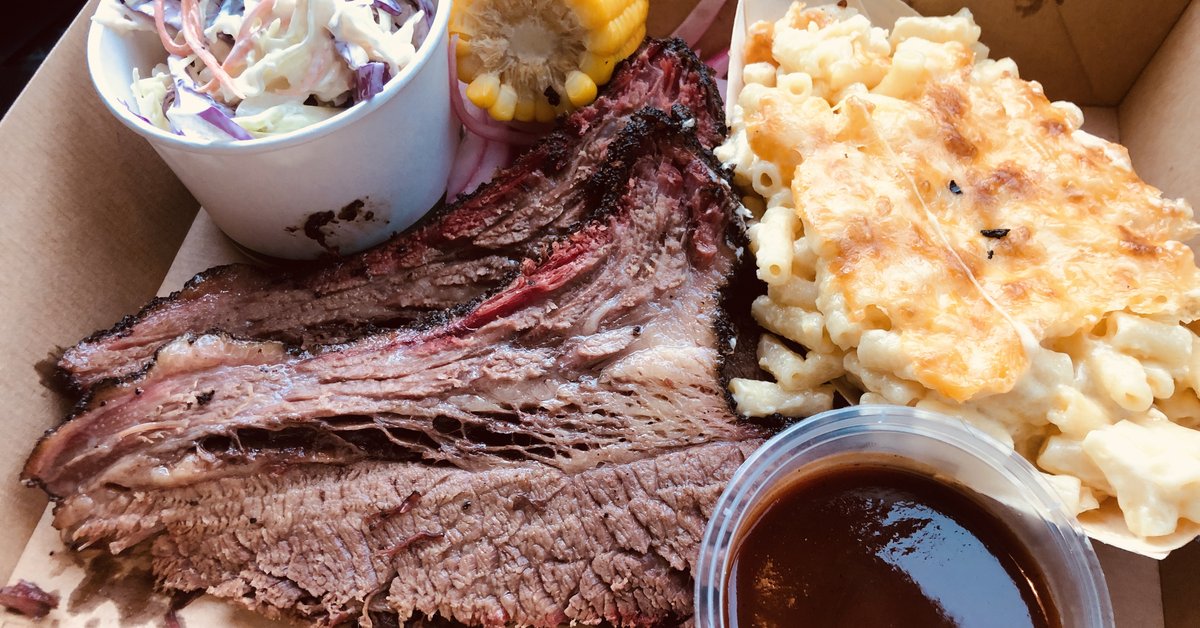
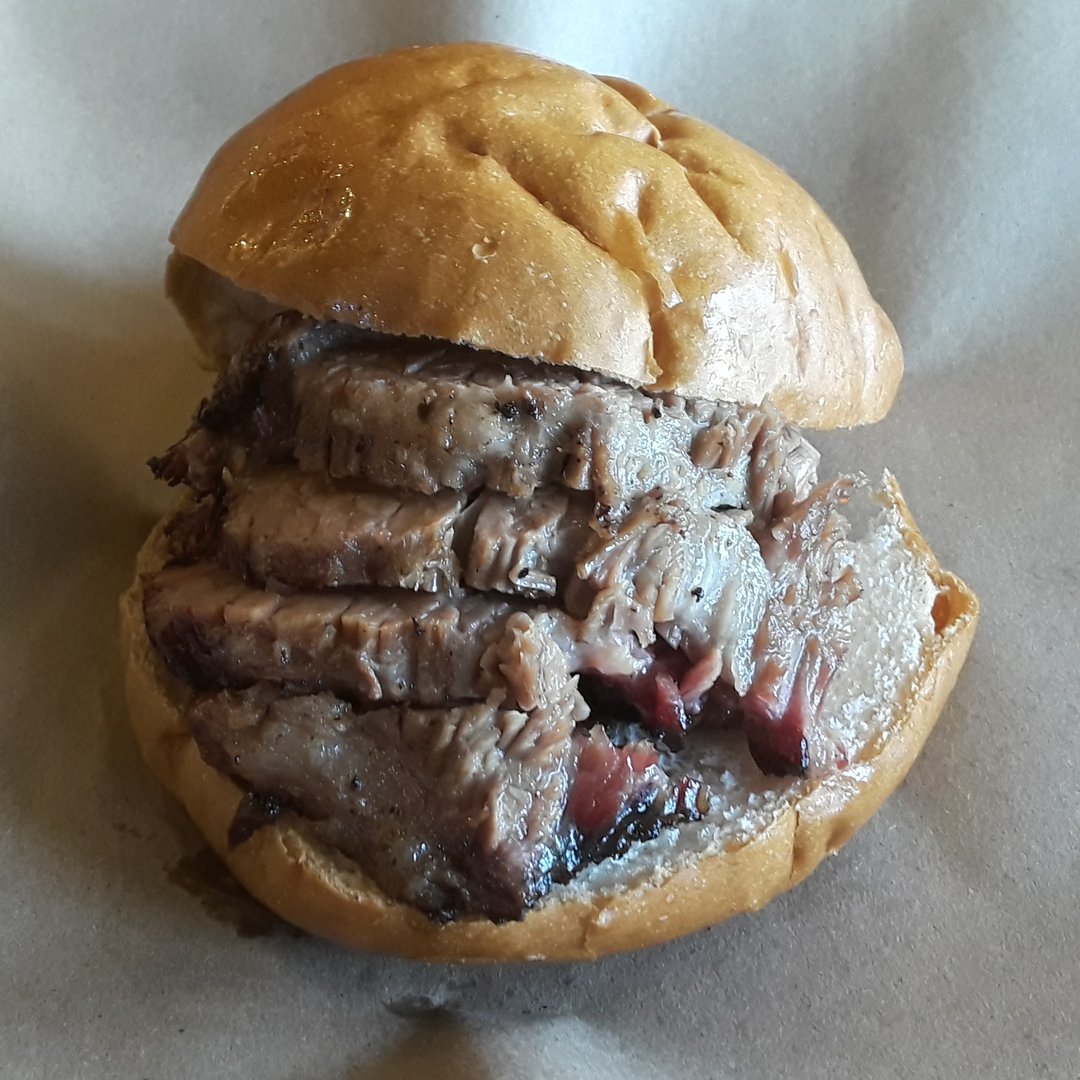
In central Texas: white bread or saltines, raw white onion, pickled jalapenos, dill pickles. Nothing competes with the meat. At home I add creamy coleslaw and slow-cooked pinto beans. For more ideas on what goes alongside smoked meats, check our Texan BBQ side dishes guide. According to the National Barbecue Association, around 75% of American households own some form of outdoor grill or smoker. You’re in good company whatever equipment you’re working with.
Make It At Home: Texas BBQ Brisket
All the technique above in one recipe card below. Follow it step by step and give the brisket the time it needs.
Texas BBQ Brisket
Ingredients
Method
- The day before: Trim the fat cap to 1/4 inch and remove any large hard fat pockets from the point-flat seam. Cut off the thin tapered end of the flat.
- Mix the salt, pepper, and garlic powder together. Apply generously to all surfaces of the brisket, pressing it into the meat. Refrigerate uncovered overnight, 8 to 12 hours.
- Preheat your smoker to 250°F with post oak wood. Place the brisket fat-side up (offset smoker) or fat-side down (pellet grill). Insert a leave-in thermometer in the thickest part of the flat.
- Smoke unwrapped until the bark is dark, firm, and set — typically 6 to 8 hours and around 160°F internal temperature. Maintain thin blue smoke throughout.
- Wrap tightly in two layers of pink butcher paper. Return to the smoker at 250°F. Cook until the flat probes tender like warm butter, around 200°F to 205°F internal temperature.
- Remove from the smoker. Keep wrapped and rest in a cooler (faux Cambro) for a minimum of 2 hours, up to 6.
- Separate the point from the flat. Slice each against the grain to about 1/4-inch thickness. Serve immediately.
Notes
Frequently Asked Questions
How long does it take to smoke a Texas BBQ brisket?
Plan for 1 to 1.25 hours per pound at 250°F, plus a 2 to 4-hour rest. A 14-pound brisket typically takes 14 to 17 hours total.
Fat side up or fat side down for brisket?
On an offset smoker, fat side up. On a pellet grill or kettle where heat comes from below, fat side down. Either works if you’re consistent.
What internal temperature is Texas brisket done?
Target 200°F to 205°F in the thickest part of the flat, but use the probe test as the real indicator. Slides in like warm butter means it’s done.
What wood is best for Texas BBQ brisket?
Post oak is the classic choice. White oak is a close second. Avoid mesquite for long cooks.
Can I smoke a brisket in 8 hours?
Not properly. Brisket needs low-and-slow heat to convert collagen to gelatin. Use a pressure cooker if you need it faster.
How do I store and reheat leftover brisket?
Slice only what you’ll eat immediately. Store the rest whole, wrapped in butcher paper. Reheat slices in a pan with beef tallow at 300°F for 15 minutes. Never microwave brisket.
Every failed brisket teaches you something. Take notes, adjust one variable at a time, embrace the long cook. Happy smoking.