Southern Comfort Food
Texas Roadhouse Green Beans
Chef Mia's copycat Texas Roadhouse green beans: the smoky bacon trick that beats the restaurant. Easy skillet side, tender and savory, ready in 20 minutes.
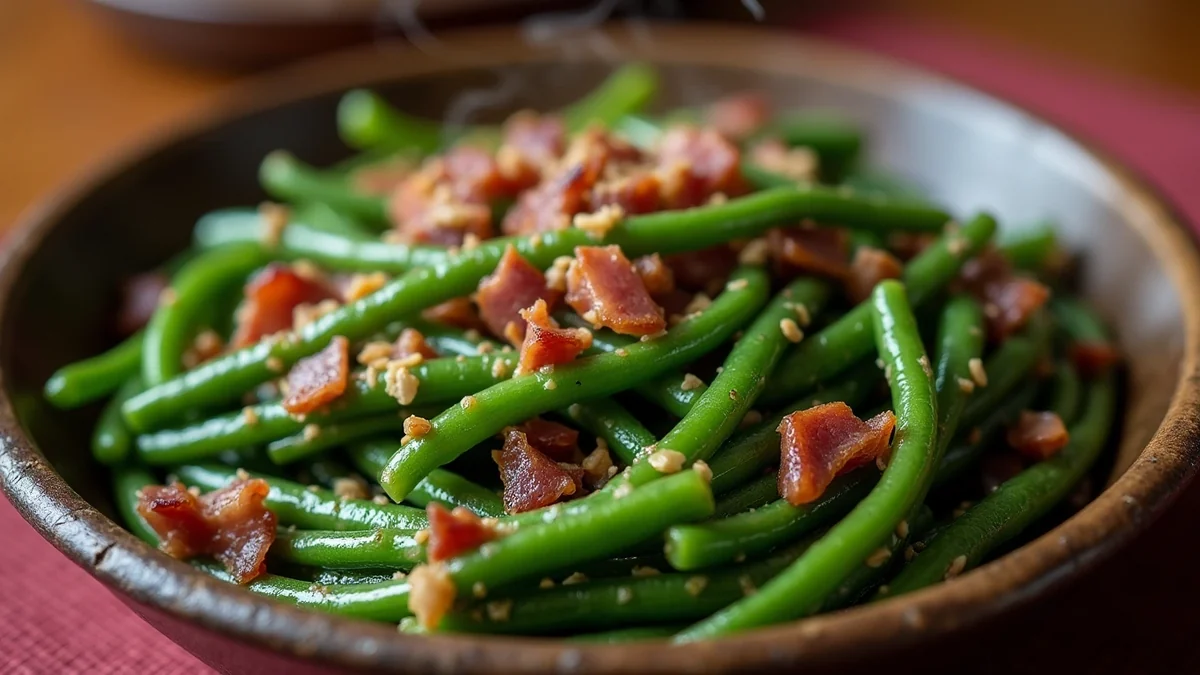
Quick answer: Texas Roadhouse green beans are canned green beans simmered low with crisp bacon, onion, butter, a spoon of sugar, salt, and pepper until they turn silky, smoky, and faintly sweet. The copycat: cook 6 chopped bacon slices in a large skillet until crisp and set them aside, saute 1/2 cup diced onion in the drippings with 2 tablespoons of butter, then add 4 drained 15-ounce cans of green beans, 3/4 cup chicken broth, 1 tablespoon sugar, 1 teaspoon kosher salt, and 1/2 teaspoon black pepper. Simmer 20 minutes, stir the bacon back in, and serve. Canned beans are the point, not a compromise; fresh beans stay squeaky instead of going tender the restaurant way.
The green beans are the side everybody at a Texas Roadhouse table ignores on the menu and then eats to the last bean when they land next to the steak. Soft, smoky, a little sweet, clearly cooked with pork. For years readers asked me for the trick, expecting some restaurant secret, and the honest answer disappoints people for about a minute: canned green beans, bacon, onion, sugar, and a slow, patient simmer. Then they make it, and the disappointment ends.
I will say the quiet part plainly, because it is the whole recipe: this is one of the rare dishes where the canned vegetable beats the fresh one. Fresh green beans hold their squeak no matter how long you simmer them; canned beans have already surrendered, which frees them to soak up bacon drippings and seasoned broth like little sponges. That silky, fully tender texture is exactly what the restaurant serves. Southern cooks have known this for generations, and the Roadhouse kitchen simply runs the same play at scale. Twenty minutes in one skillet, and the steak on your plate finally has its proper wingman.
Why Canned Beans Are the Secret (Yes, Really)
Every failed copycat of this dish fails the same way: somebody upgrades to fresh green beans. It feels like the responsible move and it ruins the dish. Fresh beans are built to stay crisp; you can simmer them half the afternoon and they keep a vegetal squeak that has nothing to do with what the restaurant serves. The Roadhouse bean is soft all the way through, almost silky, and only a canned or very long-stewed bean gets there.
Canning cooks the beans completely under pressure, which collapses the cell structure that keeps a fresh bean springy. That sounds like damage, and for a crisp salad it would be. Here it is the entire point. A collapsed bean stops resisting and starts absorbing, and twenty minutes in bacon drippings and seasoned broth turns it into a different vegetable than the one that went in.
This is old Southern logic, not restaurant innovation. Church-supper green beans, the kind stewed with a ham hock since before anyone wrote the recipes down, chase exactly this texture. The steakhouse version just swaps the hock for bacon and the hours for a can opener. I grew up thinking slow-stewed beans took all day; the can gets you most of the way there before the skillet is even hot.
Buy regular cut green beans, not French-style. The thin frenched strips fall apart into threads during the simmer, and whole beans stay a touch too firm. Standard cut beans, drained well, are the sweet spot. Store brands are fine; the bacon does not care about the label.
The Bacon Trick: Render Cold, Season Everything
The bacon works two jobs here, and most cooks only collect on one of them. The obvious job is the crisp pieces stirred in at the end. The bigger job is the drippings, because the rendered fat is what actually flavors four cans of beans. Six slices give you roughly three tablespoons of smoky fat, and every bit of it stays in the pan.
Start the chopped bacon in a cold skillet and bring the heat up with it. A cold start renders the fat gently and completely, so you get maximum drippings and evenly crisp pieces instead of burnt edges wrapped around chewy centers. It is a small habit that upgrades every bacon job in your kitchen, not just this one.
Pull the bacon when it is crisp and set it aside; it goes back in only at the end. Bacon that simmers with the beans for the full twenty minutes turns soft and hammy. That is not wrong, exactly, and some tables prefer it, but the restaurant serves distinct pieces with a little chew, and the late add-back is how you get there.
Thick-cut bacon is my pick because the pieces survive the stir with some dignity. Smoked bacon of any kind is non-negotiable; the smoke is doing the work a smokehouse ham would do in the older versions of this dish. If your bacon is unsmoked, a drop of liquid smoke in the broth is an honest patch.
The Exact Ratio, Ingredient by Ingredient
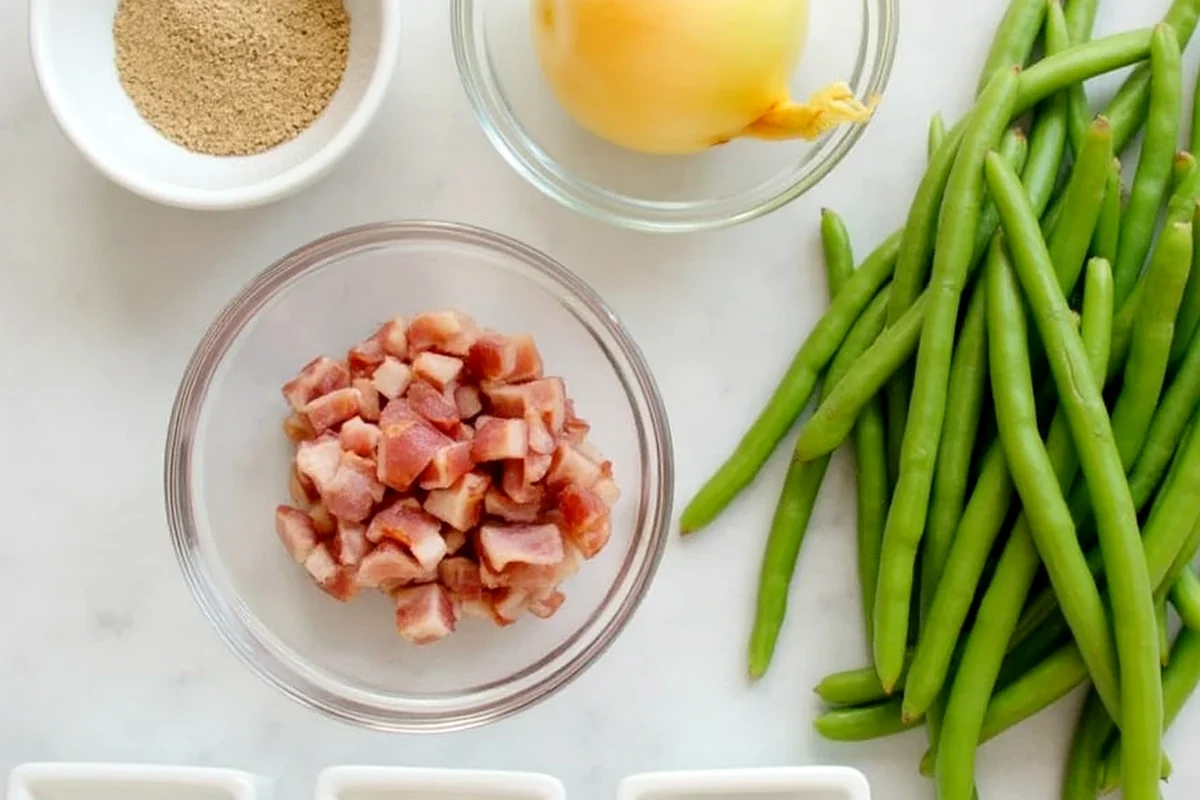
Four 15-ounce cans of green beans, drained. That feeds six as a side and fits a 12-inch skillet. The canning liquid goes down the drain; it tastes of tin and dilutes the bacon. The beans get a far better bath than the one they arrived in.
Six slices of bacon and two tablespoons of butter. The bacon brings smoke and salt, the butter rounds the drippings out and adds the glossy finish the restaurant beans have. Half a cup of diced white onion softens into the background; nobody should find a crunchy piece of onion in the finished dish.
Three quarters of a cup of low-sodium chicken broth is the simmering liquid, and low-sodium is deliberate: the bacon and the added teaspoon of kosher salt handle the seasoning, and full-salt broth plus bacon tips the skillet over the edge. Water works in a pinch with a small flavor tax.
One tablespoon of sugar reads as more than it is across four cans of beans; it lands as a faint sweetness that plays against the smoke, the same balance the restaurant strikes. Half a teaspoon of black pepper finishes the base. The optional garlic powder and crushed red pepper are for cooks who want a rounder or livelier skillet, and both stay in the background at the listed amounts.
The 20-Minute Simmer: Where the Flavor Happens
Once everything is in the skillet, the recipe becomes a waiting game, and the waiting is the recipe. Twenty minutes at a lazy, uncovered simmer does three things at once: the broth reduces into a light glaze, the beans absorb the bacon fat and seasoning, and the onion melts into the liquid until it disappears as a texture and stays as a flavor.
Keep the heat low. A hard boil breaks the beans apart and boils the liquid away before the flavor exchange finishes. You want occasional slow bubbles, the kind you could count. Stir once or twice, gently, with a wooden spoon; aggressive stirring turns soft canned beans into mush.
The 20-minute mark is the restaurant texture. But this dish has a wide runway: 30 or even 40 minutes on the lowest heat, with a splash more broth if the pan runs dry, only deepens it. This is why the beans are the most forgiving thing on a steak-night stove; they cannot really overcook, and they hold happily while you fuss over meat temperatures.
You will know it is done when the liquid has reduced to a few glossy spoonfuls and a bean tastes seasoned through the middle, not just on the surface. If the beans taste right but the pan is still wet, raise the heat for the last two minutes and let it tighten.
Fresh or Frozen Beans, If You Insist
You can build an honest version from fresh beans; it just stops being a 20-minute recipe. Trim a pound and a half of fresh green beans, then simmer them 45 minutes to an hour in the full amount of broth plus an extra half cup, covered for the first half. You are deliberately overcooking them by modern standards to reach the old-fashioned silky texture. Season at the end, since the long reduction concentrates the salt.
Frozen beans sit between the two. They are blanched before freezing, so they are partway surrendered already; 30 to 35 minutes of gentle simmering usually lands them where canned beans start. Thaw them first or the skillet spends ten minutes recovering from the ice.
For a holiday table, the fresh-bean long stew with double the bacon is genuinely worth the hour, and you can hold it on low all afternoon. For a Tuesday steak dinner, open the cans without guilt. The restaurant does the equivalent, and nobody at that table is complaining.
Balancing Sweet, Salty, and Smoky
This dish lives on a three-way balance, and the fix for a flat skillet is almost always one of the three. Too flat and boring: more salt, a quarter teaspoon at a time. Too salty, which usually means aggressive bacon or full-sodium broth: a pinch more sugar and a splash of water pull it back. Too sweet: black pepper and a few drops of cider vinegar sharpen it right up.
Taste at the end of the simmer, not the beginning. The reduction concentrates everything, so a skillet seasoned correctly at minute one is over-seasoned at minute twenty. This is the single most common way home cooks miss on stewed sides.
A quiet upgrade from my kitchen: a half teaspoon of my Texas Roadhouse steak seasoning stirred in with the broth. The garlic, onion, paprika, and brown sugar in the blend echo everything already in the skillet and tie the beans to the steak they are sitting next to. It is not canon, but it tastes like it should be.
Texas Roadhouse vs Cracker Barrel Green Beans
People search for both of these beans in the same breath, so it is worth drawing the line. The two chains cook green beans in the same broad tradition, canned or long-stewed beans simmered soft with pork, but they land in different places, and knowing the difference tells you which one you are actually chasing.
Cracker Barrel leans country and savory. Their beans are stewed low and slow with plenty of pork, usually bacon or ham, and seasoned mostly with salt and pepper, with little to no sugar. The result is a straight-ahead Southern side that tastes of pork fat and time, the kind of bean that belongs next to meatloaf and mashed potatoes. If your memory of the beans is purely smoky and salty, Cracker Barrel is the target, and you leave the sugar out of this recipe.
Texas Roadhouse tips a touch sweeter. That spoon of sugar against the bacon and onion is the small thing that separates the steakhouse bean from the country one; it reads as balance rather than dessert, but it is there, and it is why the Roadhouse version tastes a hair rounder. This recipe is built for that steakhouse profile. Want the Cracker Barrel character instead? Same method, drop the sugar, and lean a little harder on the black pepper.
Both are honestly better than the green bean casserole they usually share a holiday table with, and both come from the same place your grandmother's beans did. The chains simply codified what Southern cooks have done with a can of beans and a hunk of pork for a hundred years. Pick your sweetness level and the rest of the skillet is identical.
If the casserole is what you actually want, the oven dish with mushroom cream and crisp fried onions, that is a different recipe and it has its own page: my green bean casserole is the from-scratch version, and it is the one to make when the oven has a free rack. These skillet beans are for when it does not.
What to Serve Them With
Steak, obviously; these beans exist to sit beside beef. They are the classic plate partner for anything wearing a good crust, and alongside Texas Roadhouse mashed potatoes you have rebuilt the restaurant's most-ordered combination at home for a fraction of the check.
They carry a full copycat spread too: the rolls with cinnamon butter, the seasoned rice, and these beans cover the sides while the grill handles the rest. For barbecue plates, brisket and ribs especially, they fill the same seat; my roundup of Texas BBQ sides has the full supporting cast.
They also hold their own on a holiday table, where the bacon-and-slow-simmer profile out-earns the green bean casserole with less work and no canned soup. Make a double batch; they reheat better than almost anything else on that table.
Make-Ahead, Storage, and Reheating
These beans might be the best make-ahead side in this whole section of the site. Cook them completely, hold back the bacon, and refrigerate both separately up to 4 days. The flavor keeps developing in the fridge, and day-two beans taste noticeably deeper than day-one. Reheat gently in a skillet with a splash of broth or water, then stir in the bacon.
On the stove, they hold on the lowest burner setting for a good half hour before serving, which is why they belong on every hosting menu. Add a spoonful of liquid if the pan tightens up. In a slow cooker on warm, they will hold through an entire party.
Freezing works with an asterisk: the beans go slightly softer again after thawing, which this dish tolerates better than most. Three months in a sealed container, thawed overnight in the fridge, reheated in a skillet. Freeze without the bacon and crisp fresh bacon when you serve; frozen-and-thawed bacon pieces come back sad. Being a stovetop dish is also why these beans earn a place on a Thanksgiving table, where oven space is the real constraint: my Texas Thanksgiving guide works that traffic problem out for the whole menu.
Mistakes to Avoid
Using fresh beans in the 20-minute version. Covered above, but it is the number one miss and worth repeating: fresh beans need triple the time to reach this texture. Match the bean to the clock you actually have.
Simmering in the canning liquid. It saves a step and costs the dish; the packing water tastes flat and metallic and it crowds out the broth and drippings that should be doing the flavoring. Drain properly.
Skipping the sugar because it sounds wrong in a vegetable. That tablespoon is the difference between generic bacon beans and the specific sweet-smoky Roadhouse profile people order. It does not read as dessert; it reads as balance.
Boiling hard to save time. High heat breaks the beans down into a khaki mash and reduces the liquid before the flavor exchange happens. Low and slow is already only twenty minutes; this corner is not worth cutting.
Adding the bacon at the start. It goes soft, sheds its crunch into the broth, and the finished dish loses the textural contrast between silky bean and crisp pork. Bacon out early, bacon back in late.
Texas Roadhouse Green Beans Recipe
Ingredients
- 6 slices bacon, chopped
- 2 tablespoons unsalted butter
- 1/2 cup diced white onion (about half a medium onion)
- 4 cans (15 oz each) green beans, drained
- 3/4 cup (180 ml) low-sodium chicken broth
- 1 tablespoon sugar
- 1 teaspoon kosher salt
- 1/2 teaspoon black pepper
- Optional: 1/4 teaspoon garlic powder, a pinch of crushed red pepper
Instructions
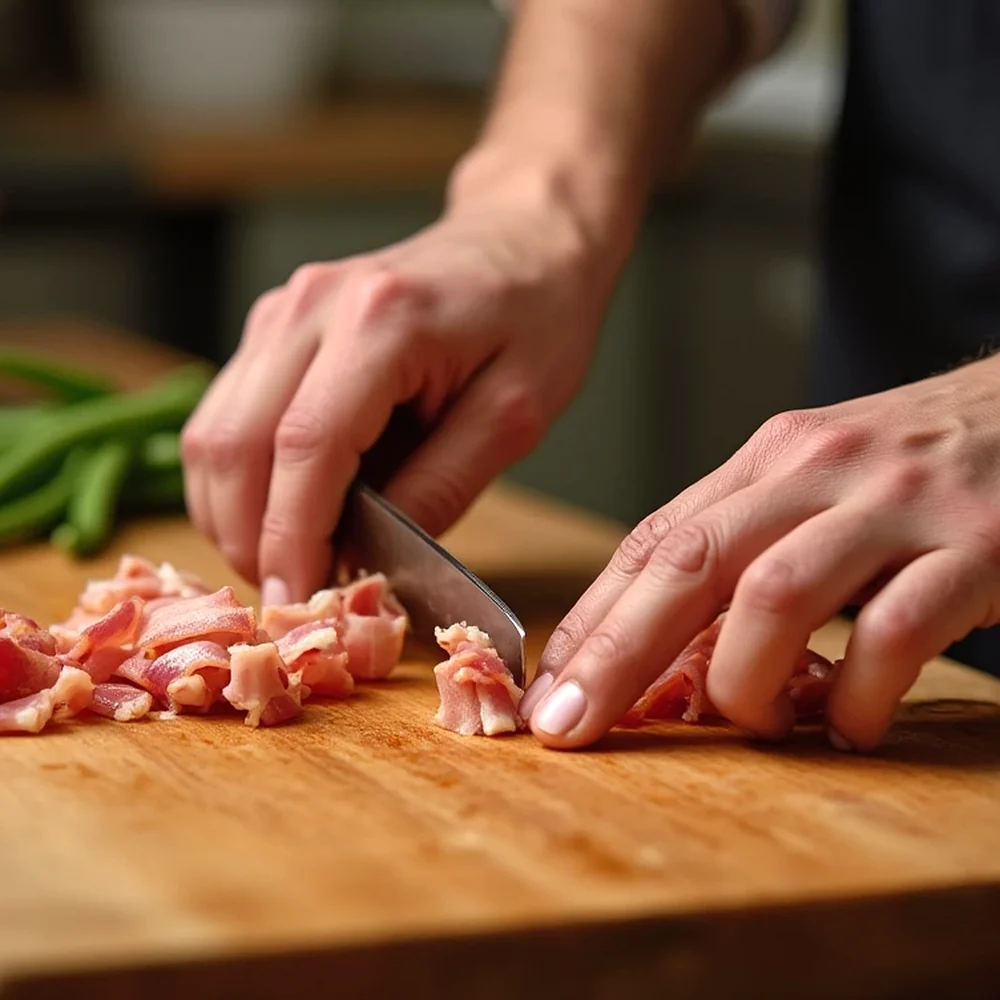
- Crisp the bacon. Put the chopped bacon in a large cold skillet, then set it over medium heat. Starting cold renders the fat slowly and evenly instead of scorching the edges. Cook 6 to 8 minutes, stirring now and then, until the pieces are crisp. Lift the bacon out with a slotted spoon and set it aside, leaving every drop of the drippings in the pan.
- Saute the onion in the drippings. Add the butter to the bacon fat, then the diced onion. Cook over medium heat 4 to 5 minutes until soft, translucent, and just starting to color at the edges. The onion and the drippings together are the flavor base the beans will drink up during the simmer.
- Add the beans and seasonings. Add the drained green beans, the chicken broth, sugar, salt, and pepper, plus the garlic powder and red pepper if you are using them. Stir gently so the beans get coated in the fat without breaking apart. Canned beans are tender already; treat them kindly.
- Simmer low, 20 minutes. Bring the skillet to a gentle simmer, then drop the heat to low and let it go, uncovered, for 20 minutes, stirring once or twice. The broth will reduce to a light glaze and the beans will take on the smoke and sweetness. Another 10 minutes does no harm if the rest of dinner is running behind; this dish only gets better with patience.
- Stir the bacon back in. Return the crisp bacon to the skillet and stir. Adding it at the end keeps some texture; simmered the whole way, it goes soft and reads as ham. Taste a bean and adjust: a pinch more sugar if your bacon ran salty, more black pepper if it needs edge.
- Serve warm. Serve straight from the skillet or in a warmed bowl, with a spoonful of the reduced broth over the top. The beans hold beautifully on low heat for half an hour, which makes them the most forgiving side on a steak-night table.
Frequently Asked Questions
How does Texas Roadhouse make their green beans?
The restaurant style is canned-style green beans simmered with smoky pork, onion, and a touch of sweetness until fully tender. The home copycat: crisp 6 chopped bacon slices, saute 1/2 cup diced onion in the drippings with 2 tablespoons butter, add 4 drained cans of green beans, 3/4 cup low-sodium chicken broth, 1 tablespoon sugar, 1 teaspoon salt, and 1/2 teaspoon pepper, then simmer 20 minutes and stir the bacon back in.
Does Texas Roadhouse use canned green beans?
The texture says yes: the restaurant beans are soft and silky all the way through, which is the signature of canned or long-stewed beans, not fresh ones. For the copycat, canned is the correct choice, not a shortcut. Fresh beans keep a crisp squeak even after a long simmer and never land the same texture unless you stew them 45 minutes or more. Use regular cut canned beans, drained.
Can I make Texas Roadhouse green beans with fresh green beans?
Yes, with more time. Trim 1.5 pounds of fresh beans and simmer them 45 to 60 minutes in the bacon drippings and an extra half cup of broth, covered for the first half, until they are completely tender with no squeak. Season at the end, because the long reduction concentrates salt. Frozen beans need about 30 to 35 minutes. The 20-minute clock only works with canned beans.
Why do my green beans taste bland?
Usually one of three misses. The beans simmered in their canning liquid instead of broth and drippings; drain the cans fully. The simmer was too short for the beans to absorb the seasoning; give them the full 20 minutes on low. Or the balance is off: add salt a quarter teaspoon at a time, and remember the tablespoon of sugar, which sounds optional and is actually what creates the sweet-smoky restaurant profile.
What can I use instead of bacon?
Ham works well: simmer a smoked ham hock or a cup of diced ham with the beans from the start for the older Southern profile. Smoked sausage, sliced thin and browned, is another good route. For a meat-free skillet, saute the onion in butter, use vegetable broth, and add 1/2 teaspoon smoked paprika plus a few drops of liquid smoke; the beans will not be the restaurant version, but they will be a good imitation of it.
Are Texas Roadhouse green beans gluten-free?
The homemade copycat is naturally gluten-free: green beans, bacon, butter, onion, broth, sugar, salt, and pepper contain no wheat. Check your bacon and broth labels, since a few brands add wheat-based flavorings. At the actual restaurant, always confirm with the location, since recipes and cross-contact practices vary; at home you control every label, which is one more argument for making them yourself.
Can I make these in a slow cooker?
Yes, and it is a good holiday move. Crisp the bacon and saute the onion in a skillet first, since neither happens properly in a crock, then combine everything except the bacon in the slow cooker. Low for 2 to 3 hours, then stir in the bacon before serving. The beans hold on warm for hours after that, which frees the stove entirely on a big cooking day.
How long do leftover green beans keep?
Four days in a covered container in the refrigerator, and they genuinely improve overnight as the smoke and seasoning settle in. Store the bacon separately if you can, and reheat the beans gently in a skillet with a splash of broth. They also freeze up to 3 months with a slightly softer thawed texture. For a party, cook them a day ahead on purpose; day-two beans are the best ones.