Tex-Mex Recipes
Original King Ranch Chicken
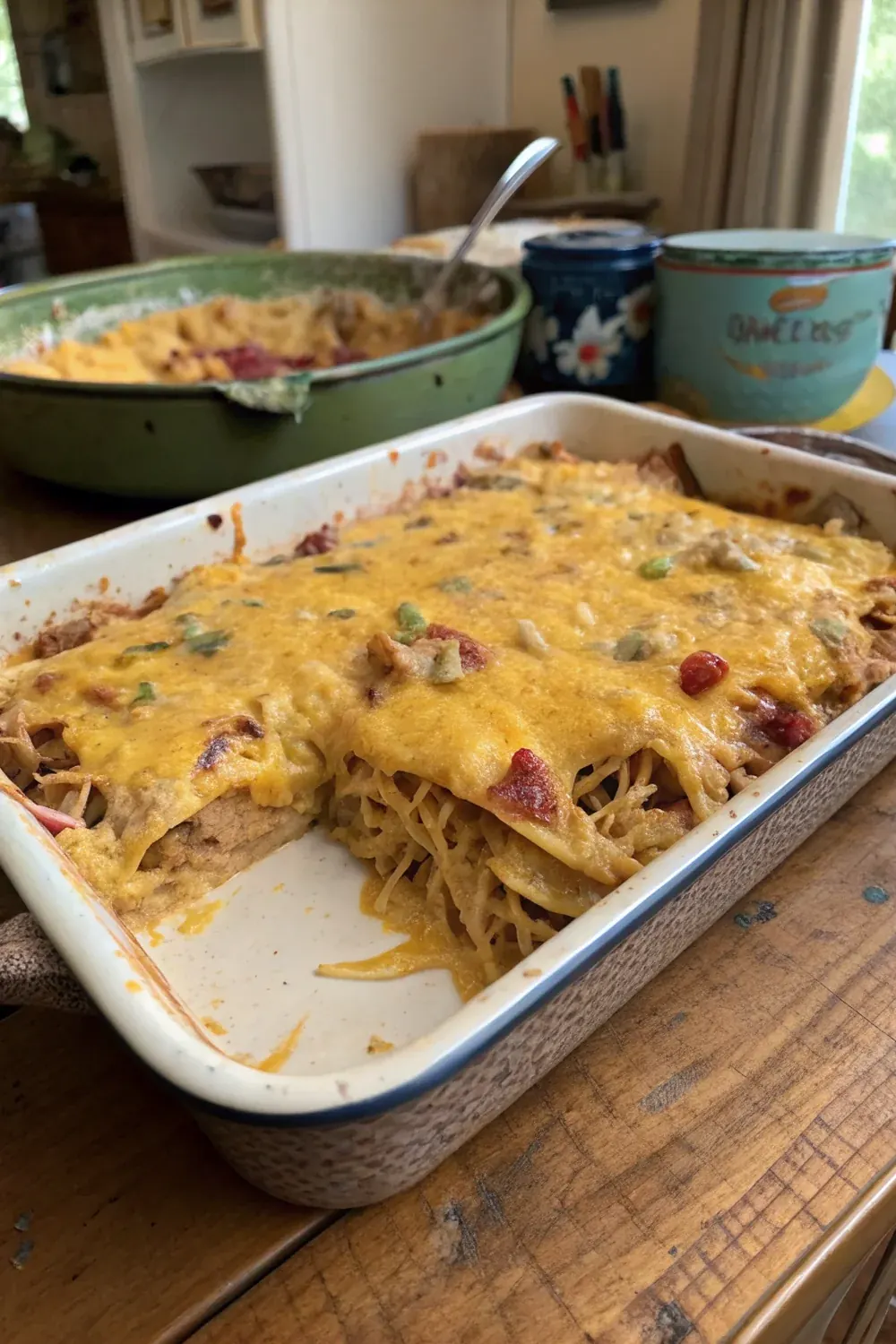
Chef Mia's King Ranch Chicken: corn tortillas, shredded chicken, Rotel, yellow cheddar, cream-soup base or scratch bechamel. The Texas potluck classic.
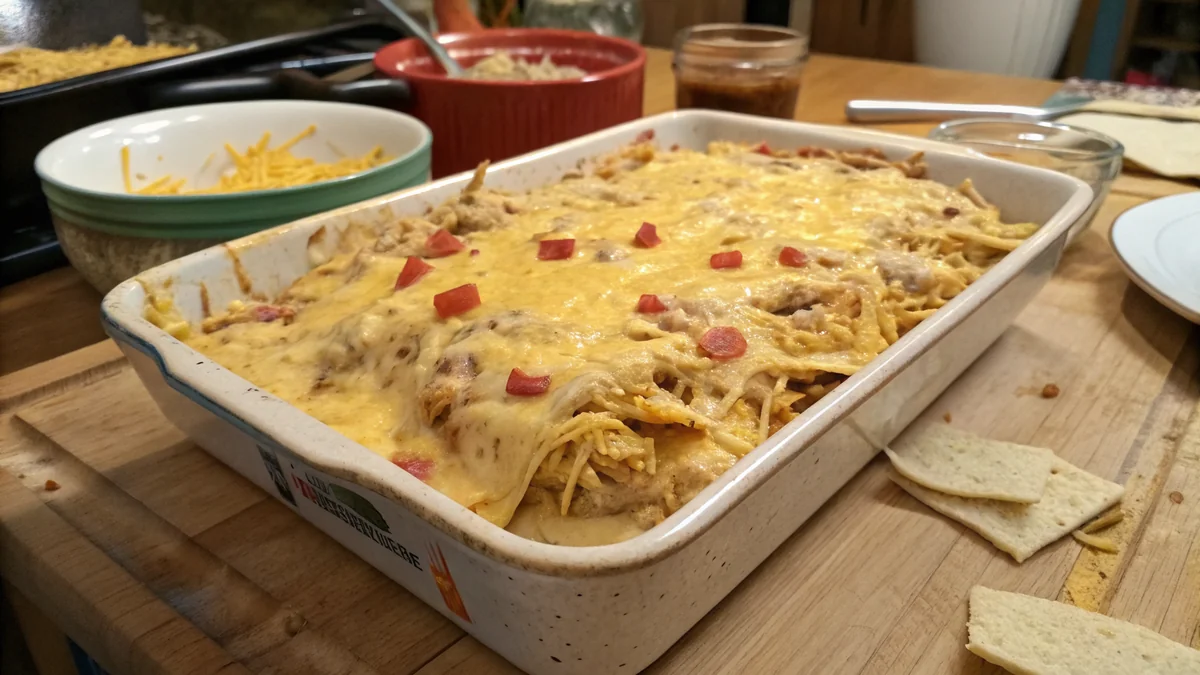
Quick answer: King Ranch Chicken is a Texas casserole layered like a Tex-Mex lasagna: corn tortillas, shredded chicken, sauteed onions and bell peppers, a sauce of cream of mushroom soup with Rotel tomatoes, all blanketed in shredded yellow cheddar. Bake at 350F for 35 minutes covered, then 10 minutes uncovered until bubbling and the cheese is golden in spots. The dish has no actual connection to the King Ranch (one of the largest ranches in the world); it was named in the 1950s or 1960s by a church cookbook contributor and stuck. The cream-soup version is canon; the scratch version is for cooks who want more control over salt and dairy.
King Ranch Chicken is the casserole that built Texas potlucks from 1960 to roughly 1995. Every church cookbook published in Texas during that period - Methodist, Baptist, Catholic, all of them - has a version, and most are within 90 percent of each other. Layered corn tortillas, shredded chicken, a creamy sauce built on cream of mushroom soup and Rotel, peppers and onions, shredded yellow cheese on top. It is what the woman next door brought when somebody had surgery; what showed up at funerals; what fed a Sunday school class for under a dollar a person.
What it is not: connected to the actual King Ranch, the 825,000-acre ranch in South Texas that has been one of the largest ranches in the world since 1853. The recipe just borrowed the name. There is no surviving record of who first wrote it down. Texas Monthly published a definitive version in the late 1990s that helped standardize the recipe across Texas kitchens; the recipe below is closer to that edition than to the original cream-soup-cans version, but I include both because both are honest to the tradition. Pick the one that fits your week.
The History of King Ranch Chicken
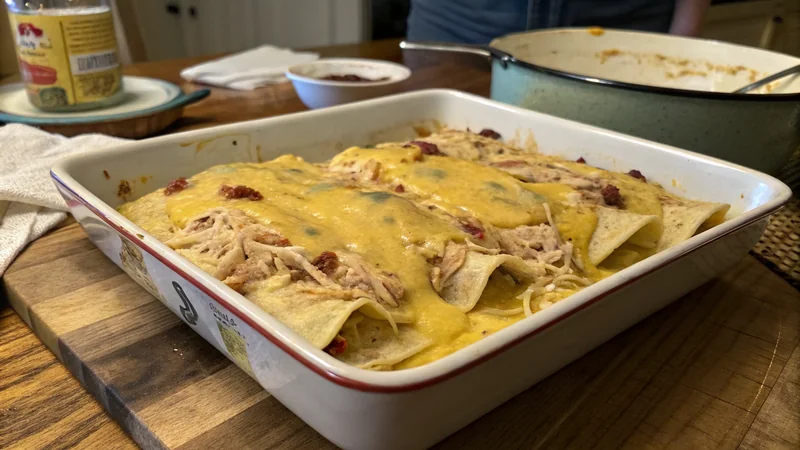
King Ranch Chicken first appeared in print in Texas community cookbooks during the late 1950s and early 1960s. The recipe spread through church bake sales, Junior League cookbooks, and oral handoffs from a neighbor to a neighbor. By 1970 it was on virtually every Texas potluck table. By 1990 it had jumped state lines and showed up in Oklahoma, Louisiana, and Arkansas community cookbooks under the same name.
The name has no factual connection to the actual King Ranch, the 825,000-acre cattle and citrus operation in South Texas (Kleberg County, mostly) that has been one of the largest ranches in the world since 1853. There is no record of the dish being served at the King Ranch headquarters, no historical menu reference, no ranch cookbook citing it. Several theories circulate - that an early home cook tried to fancy up a casserole with a famous name, that it was inspired by ranch hand cooking, that someone actually working at the ranch wrote it down. None has documentary support.
What is true is that the recipe became iconic precisely because it was so adaptable. The cream-soup version uses pantry staples and feeds 8 people for under $10. The scratch version uses bechamel and homemade chicken broth and feeds 8 people for closer to $25 with significantly more flavor control. Both versions are recognizable as the same dish.
Cream Soup vs From Scratch
The cream-soup version is the historical canon. Two cans (cream of mushroom and cream of chicken), a can of Rotel, a half cup of sour cream, the seasoning. It is what every Texas grandmother made and what the dish first looked like in print. The flavor is rich, slightly salty, and mildly seasoned - perfect potluck-portable food. The downside is the high sodium and the dependence on commercial soup.
The from-scratch version replaces the canned soups with a homemade bechamel: 4 tablespoons butter + 4 tablespoons flour + 2 cups whole milk + 1 cup chicken broth, whisked into a thick sauce, with 1 teaspoon mushroom-soy sauce or a tablespoon of soy sauce for umami depth. It takes 15 extra minutes and gives you control over salt, dairy fat, and overall flavor. The result is creamier, less salty, and tastes more homemade.
Both versions work. For a weeknight casserole or a Sunday potluck, the cream-soup version is the right move. For a holiday meal where the dish is the centerpiece, the from-scratch version is worth the time. The recipe below is the canonical cream-soup version; switch to bechamel by substituting the two cans of soup with the bechamel described above.
Choosing the Chicken
Rotisserie chicken is the practical choice. A 3-4 pound rotisserie chicken yields about 4 cups of shredded meat - exactly what the casserole needs. Pull the meat off the bones while the chicken is still warm; it shreds easier and the breast pieces stay moist. Skip the skin or include it depending on family preference.
Poached chicken from scratch is the make-ahead move. Poach 4 boneless skinless chicken breasts (or 6 thighs) in 4 cups of seasoned broth (a halved onion, 2 cloves garlic, 1 bay leaf, 1 teaspoon salt) for 18-20 minutes until the internal temp is 165F. Cool in the broth for 10 minutes, then shred. The leftover broth becomes the chicken broth in the recipe.
Leftover Thanksgiving turkey works beautifully as a substitute. Use 4 cups of shredded turkey - white meat, dark meat, or a mix. The casserole holds turkey better than chicken because turkey takes longer to dry out in the oven. And the other direction has its own page now: my King Ranch beef casserole browns 2 pounds of ground beef hard and runs the same layers with a deeper, enchilada-leaning character.
Avoid pre-shredded chicken from the deli case unless you taste-check it first. Some grocery stores shred old rotisserie meat, and the texture suffers. Fresh rotisserie or homemade poached is the right move.
The Tortillas: Corn, Always
Corn tortillas are the canon and there is a structural reason: corn tortillas hold up to wet sauce without dissolving. Flour tortillas absorb the cream sauce and turn into a gummy paste within an hour. The dish becomes a cream-soaked mush instead of a layered casserole. If a King Ranch recipe calls for flour tortillas, that recipe is wrong.
Use 6-inch yellow or white corn tortillas. The brand matters less than freshness - even cheap corn tortillas work if they are not stale. Mission, La Banderita, and Guerrero are all acceptable supermarket choices. Handmade tortillas from a tortilleria (every Texas city has them) are an upgrade.
Soften the tortillas before layering. Microwave a stack of 12 covered with a damp paper towel for 30-45 seconds, or wrap in foil and warm in the oven for 5 minutes. Cold or stale tortillas tear when you fit them into the dish; warm tortillas slide into place.
Tear tortillas to fit corners. The casserole does not care if a corner has a partial tortilla - the sauce and cheese fill any gaps. Aim for about 80 percent tortilla coverage in each layer.
The Cheese: Yellow Cheddar
Sharp yellow cheddar is the canonical choice. Medium yellow works fine; mild is too understated. The yellow color is part of the casserole's signature visual identity - white cheese makes it look like a different dish (and turns it into something closer to a sour cream chicken enchilada bake).
A 50/50 blend of cheddar and Monterey Jack improves melt quality. Monterey Jack melts smoother and stretchier; cheddar carries more flavor. The blend gives the best of both. Use 2 cups of cheddar plus 1 cup of jack instead of 3 cups of straight cheddar.
Velveeta is non-traditional in King Ranch Chicken (unlike in queso, where it is canon). The casserole is meant to have visible cheese strands and browned spots on top, both of which Velveeta does not produce. Stick with shredded yellow cheddar.
Always shred from a block. Pre-shredded bagged cheese is coated in cellulose to prevent clumping in the bag, and that coating prevents smooth melting in the oven. Shredding from an 8-ounce block takes 30 seconds with a box grater. The improvement in texture and browning is worth the minute.
Step-by-Step Method
King Ranch Chicken assembles like a lasagna: sauce, tortillas, filling, cheese, repeat. The order is sauce on the bottom (so the bottom layer of tortillas does not stick), tortillas, half the chicken-sauce mixture, cheese, tortillas, the rest of the chicken-sauce mixture, cheese on top.
Some recipes use three layers of tortillas instead of two. Three layers is fine but the casserole gets tortilla-heavy and the cream-to-tortilla ratio shifts. Two layers is the classic.
Cover for the first 25-30 minutes of baking, then uncover for the last 10-12 minutes. Covered baking sets the layers without over-browning. Uncovered finish browns the cheese and reduces excess moisture.
Resting after the bake is non-negotiable. Ten minutes of rest lets the sauce reset and the layers stop sliding when sliced. A casserole cut straight from the oven produces messy, oozing portions; ten minutes of rest produces sliceable squares.
Mistakes to Avoid
Using flour tortillas. They dissolve. Use corn for any wet casserole.
Skipping the saute step. Raw onions and peppers in the casserole stay crunchy and sour. The 5-minute saute develops sweetness and gets the vegetables to the right texture.
Using pre-shredded bagged cheese. The cellulose coating prevents proper melting and browning. Shred from a block.
Not draining the Rotel enough. Including all the canning liquid makes the casserole watery. Drain about half - keep 2 tablespoons of the liquid for moisture but pour off the rest.
Skipping the rest after baking. Cutting at minute one gives a sloppy first portion. Wait 10 minutes; the casserole holds its shape.
Overcooking. 35-45 minutes is the right window. Past 50 minutes the casserole starts drying around the edges and the cheese gets greasy.
Troubleshooting
Casserole is watery. Rotel was not drained enough, or the chicken broth was over-poured. Drain Rotel down to 2 tablespoons of liquid next time, and reduce broth to 1/4 cup if your sauce looked loose.
Top is browning too fast, center is cold. Oven runs hot. Lower temp to 325F and bake 5 minutes longer. Or move the rack down a notch.
Tortillas are gummy. Tortillas were not corn, or they sat in the sauce too long before baking. Use corn tortillas; assemble and bake within 30 minutes of mixing the sauce.
Casserole is bland. Almost always a salt issue. Cream soups vary in sodium; some need a 1/4 teaspoon more salt, some are already maxed out. Taste the sauce mixture before assembling and adjust.
Cheese on top is greasy or separated. Pre-shredded cheese, or oven was too hot for too long. Shred from a block and pull the casserole at 35 total minutes if cheese is melted.
Variations
From-scratch (Texas Monthly style). Replace both cans of soup with a homemade bechamel: 4 tablespoons butter + 4 tablespoons flour cooked into a blond roux + 2 cups whole milk + 1 cup chicken broth, whisked smooth, with 1 teaspoon soy sauce for umami. The casserole is creamier, less salty, and more controlled.
Spicier (San Antonio style). Add 1 chopped seeded jalapeno to the sauteed vegetables. Increase chili powder to 1 tablespoon. Use Rotel Hot instead of Original. The casserole keeps the texture but pushes the heat from mild to medium.
Green chile King Ranch. Replace the Rotel with 1 cup of roasted Hatch green chiles (chopped) plus 1 cup of diced fresh tomato. The casserole shifts from a tomato-and-red profile to a green-chile profile and pairs especially well with cilantro garnish.
Dairy-light. Use one can of cream soup instead of two, replace the second with 1 cup of chicken broth + 1 cup of pureed canned white beans. The casserole is lighter, lower in dairy fat, and equally delicious - the white beans approximate the body of cream soup.
Smaller portion (square pan). Halve everything and bake in a 9-inch square pan. Reduces servings to 4-5, perfect for a small family. Reduce covered bake time to 20 minutes, uncovered to 8.
Soup-pot King Ranch. The same flavor collision works loose and creamy on one burner, no layering and no oven. My King Ranch chicken soup rebuilds the casserole as a 45-minute stovetop supper, with crispy corn tortilla strips standing in for the baked layers. It is also the smartest landing spot for a leftover rotisserie chicken.
What to Serve With King Ranch Chicken
Refried beans (frijoles refritos) and Spanish rice are the canonical sides - the same trinity as beef and cheese enchiladas. The casserole is rich; the sides should be lighter or sharper to balance.
A simple green salad (chopped romaine, diced tomato, sliced avocado, lime vinaigrette) cuts through the cream-and-cheese richness. Avoid heavy salad dressings - ranch on a King Ranch is too much dairy in one meal.
Add pico de gallo (diced tomato, white onion, jalapeno, cilantro, lime, salt) on the side. The bright acid wakes up the casserole and gives picky eaters a way to customize their plate.
Drinks: cold Mexican lager (Modelo, Tecate, Pacifico), iced tea with lemon, or a margarita on the rocks for celebrations. Avoid red wine and heavy beer - they compete with the cream sauce.
For a complete Tex-Mex menu, see the Ultimate Tex-Mex Recipes Guide. Pair with smoked chorizo queso as a starter, or finish with buttermilk pie for a Sunday-supper close.
Storage and Reheating
Refrigerator
Refrigerate leftover casserole, covered, for up to 4 days. Like most casseroles, it tastes better on day two - the layers integrate, the spices settle, and the cheese firms into the sauce.
Freezer
Freeze unbaked, fully assembled, for up to 3 months. Cover the dish tightly with foil and plastic wrap. Thaw overnight in the fridge before baking; add 10-15 minutes to the bake time if going from cold. Do not freeze cooked casseroles - the texture suffers more than uncooked ones.
Reheating
Reheat individual portions in a 350F oven, covered with foil, for 20-25 minutes. The covered foil traps steam and keeps the tortillas from drying. Microwaving works in a pinch but the tortillas turn rubbery - 90 seconds covered with a damp paper towel is the technique.
Make-ahead: assemble the casserole through the cheese-on-top step, cover with foil, refrigerate up to 24 hours. Bake straight from the fridge, adding 10 minutes to the covered bake time. This is the right move for hosting - the work happens the day before, and the oven does the rest.
Tips for the Best King Ranch Chicken
These are the field-tested moves that turn a respectable potluck casserole into the version people ask you to bring back. None of them are exotic; they are the small disciplines that separate a Texas grandmother's casserole from a recipe-card facsimile.
- Use day-old tortillas. Slightly stale 6-inch corn tortillas absorb less sauce and hold their layered structure better than fresh-off-the-press tortillas. If yours are fresh, lay them flat on a sheet pan and let them dry uncovered for 30 minutes before assembly.
- Don't skip the Rotel. Rotel is the tomato-and-green-chile shortcut that gives the casserole its signature Tex-Mex flavor. Generic diced tomatoes will leave the dish tasting flat. Original or Mild are canonical; Hot if your table runs spicy.
- Add crushed tortilla chips on top. A handful of crushed plain Tostitos or Juanita's pressed into the cheese layer in the last 5 minutes of baking gives a crunchy contrast that the original 1960s version did not always have but Texas potluck cooks added once they figured it out.
- Let it rest 10 minutes after baking. Non-negotiable. A casserole pulled at minute zero will slide off the spatula in a creamy mess. Ten minutes of rest sets the layers into sliceable squares.
- Double the recipe for a 9x13 dish. The recipe as written fits a 9x13 perfectly for 8 servings. For a large family gathering or a potluck where you need 12-15 portions, scale to 1.5x and use a slightly deeper pan (a roasting pan works) with an extra 10 minutes of covered bake time.
For more Texas casserole and Texas comfort food ideas, see the category page, or pair this with another Tex-Mex casserole favorite for a weeknight rotation.
Original King Ranch Chicken Recipe
Ingredients
- 1 (3-4 lb) rotisserie chicken, meat shredded (about 4 cups), or 4 cups cooked shredded chicken
- 12 corn tortillas, 6-inch (yellow or white)
- 1 medium yellow onion, diced
- 1 green bell pepper, diced
- 1 red bell pepper, diced (or use a second green; the red is for color)
- 2 cloves garlic, minced
- 2 tablespoons unsalted butter
- 1 (10.5 oz) can condensed cream of mushroom soup
- 1 (10.5 oz) can condensed cream of chicken soup
- 1 (10 oz) can Rotel diced tomatoes with green chiles, drained slightly
- 1/2 cup (120 ml) chicken broth, low-sodium
- 1/2 cup (120 ml) sour cream
- 2 teaspoons chili powder (Gebhardt's or Mexene preferred)
- 1 teaspoon ground cumin
- 1/2 teaspoon kosher salt
- 1/4 teaspoon freshly ground black pepper
- 3 cups (340 g) shredded sharp cheddar cheese (yellow), freshly shredded
- 1 cup (115 g) shredded Monterey Jack cheese, optional, for stretch
- Optional garnish: chopped cilantro, sliced green onions, lime wedges
Instructions
- Preheat and prep. Preheat oven to 350F (175C). Lightly grease a 9x13-inch baking dish with butter or cooking spray. Have all ingredients prepped and within reach - this assembly moves fast.
- Saute the vegetables. Melt the butter in a 12-inch skillet over medium heat. Add the diced onion, green pepper, and red pepper. Cook 5-6 minutes, stirring occasionally, until the onions are translucent and the peppers are softened. Add the minced garlic and cook 30 more seconds until fragrant. Pull off heat.
- Make the sauce. In a large bowl, whisk together the cream of mushroom soup, cream of chicken soup, Rotel (with about 2 tablespoons of liquid retained), chicken broth, sour cream, chili powder, cumin, salt, and pepper. Whisk until smooth - no streaks of any single ingredient. The sauce should look creamy with red flecks from the Rotel and chili powder.
- Combine sauce, chicken, and vegetables. Add the shredded chicken and the sauteed pepper-and-onion mixture to the bowl with the sauce. Stir gently to coat everything evenly. The mixture should be loose, not dry - if it looks tight, add another 1/4 cup of chicken broth.
- Soften the tortillas. Place the corn tortillas in a stack on a microwave-safe plate, cover with a damp paper towel, and microwave 30-45 seconds until pliable. Or wrap in foil and warm in the 350F oven for 5 minutes. Soft tortillas tear less when layered.
- Layer the casserole. Spread 1/2 cup of the chicken-sauce mixture in the bottom of the prepared baking dish. Cover with a layer of 6 tortillas, slightly overlapping (it is OK to tear tortillas to fit corners). Spoon half of the remaining chicken-sauce mixture over the tortillas, spreading evenly. Sprinkle 1 cup of cheddar cheese. Layer the remaining 6 tortillas, then the rest of the chicken-sauce mixture. Top with the remaining 2 cups of cheddar (and 1 cup of Monterey Jack if using), spreading edge to edge.
- Bake covered. Cover the dish loosely with aluminum foil (tent slightly so the cheese does not stick). Bake on the center rack for 25-30 minutes, until the casserole is bubbling around the edges. Covered baking sets the layers without over-browning the top.
- Bake uncovered. Remove the foil. Continue baking 10-12 minutes uncovered, until the cheese on top is fully melted, deep golden in spots, and the sauce is bubbling visibly across the surface. If the cheese is melted but you want more browning, broil for 1-2 minutes (watch closely).
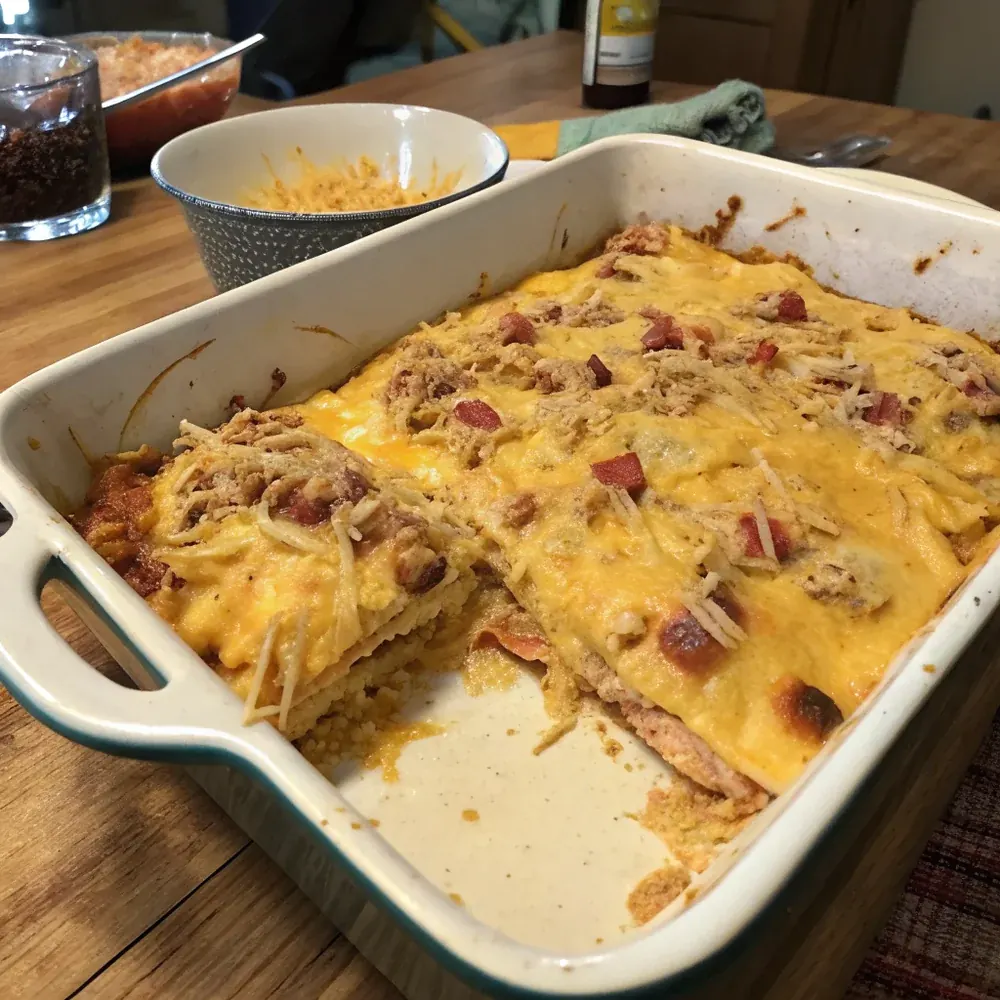
- Rest and serve. Pull the casserole and let it rest for 10 minutes before serving. The rest is non-negotiable - cutting too early means the layers slide apart on the plate. After 10 minutes, the casserole holds its shape on the spatula. Garnish with chopped cilantro, sliced green onions, or lime wedges. Serve hot with refried beans, Spanish rice, and a green salad.
Frequently Asked Questions
Is King Ranch Chicken connected to the actual King Ranch?
No. The recipe has no factual connection to the 825,000-acre King Ranch in South Texas. It first appeared in Texas community cookbooks in the late 1950s and 1960s, named after the famous ranch but without any documented link. The name stuck because it sounded important and Texas; the recipe became canon because it was practical and delicious.
What's the history of King Ranch Chicken?
King Ranch Chicken is a Texas casserole tradition, named after the famous King Ranch in South Texas though with no documented link to the actual ranch. The dish became popular in church cookbooks across Texas in the 1950s-1960s and was definitively codified by Texas Monthly in the late 1990s. It is one of the most-printed casserole recipes in 20th-century Texas community cookbooks.
Can I use flour tortillas instead of corn?
No. Flour tortillas dissolve in the wet cream sauce within an hour and turn the casserole into a gummy paste. Corn tortillas hold their structure under wet baking. This is the same rule as for enchiladas with chili gravy - corn for wet, flour for dry.
Can I use rotisserie chicken?
Absolutely. Rotisserie chicken works perfectly and saves time - a 3-4 lb store-bought rotisserie yields about 4 cups of shredded meat, which is exactly what the casserole needs. Pull the meat while still warm; it shreds easier and the breast pieces stay moister. This is the canonical weeknight shortcut.
Can I make King Ranch Chicken from scratch without cream soup?
Yes. Replace both cans of cream soup with a homemade bechamel: 4 tablespoons butter + 4 tablespoons flour into a blond roux + 2 cups whole milk + 1 cup chicken broth, whisked smooth. Add 1 teaspoon soy sauce or mushroom-soy for umami depth. The result is creamier, less salty, and more refined.
Can I make King Ranch Chicken ahead of time?
Yes. Assemble the casserole through the cheese-on-top step, cover tightly with foil and plastic wrap, and refrigerate up to 24 hours before baking. Bake straight from the fridge, adding 10-15 minutes to the covered bake time if going from cold. This is the ideal hosting strategy - the work happens the day before, and the oven does the finishing on the day.
Why is my King Ranch Chicken watery?
Three common causes: (1) the Rotel was not drained enough - drain to about 2 tablespoons of liquid; (2) the corn tortillas were fresh and absorbed too much sauce - use day-old or briefly toast them; (3) the casserole was cut before resting - wait 10 minutes after pulling from the oven. Fix the next batch by addressing all three.
Why use Rotel?
Rotel is canned diced tomatoes with green chiles - a brand-specific Tex-Mex shortcut since the 1950s. The combination of tomato, chile, and brand-specific seasoning is part of the dish's identity. Drain it lightly (keep 2 tablespoons of liquid). Substitute: 1 cup diced fresh tomato + 2 tablespoons diced jalapeno + 1/4 teaspoon salt.
Can King Ranch Chicken be frozen?
Yes - freeze unbaked. Assemble fully, cover tightly with foil and plastic wrap, freeze for up to 3 months. Thaw overnight in the fridge before baking; add 10-15 minutes to the bake time if going from cold. Do not freeze cooked casseroles - the texture suffers more after thawing.
Can I make a smaller portion?
Yes. Halve all ingredients and bake in a 9-inch square pan. Reduce covered bake time to 20 minutes and uncovered time to 8. Yields 4-5 servings - perfect for a small family or weeknight dinner without 4 days of leftovers.