Tex-Mex Recipes
Texas Roadhouse Steak Seasoning Copycat
Chef Mia's Texas Roadhouse steak seasoning copycat: kosher salt, coarse pepper, brown sugar, garlic, onion, paprika, turmeric. The chain blend at home.
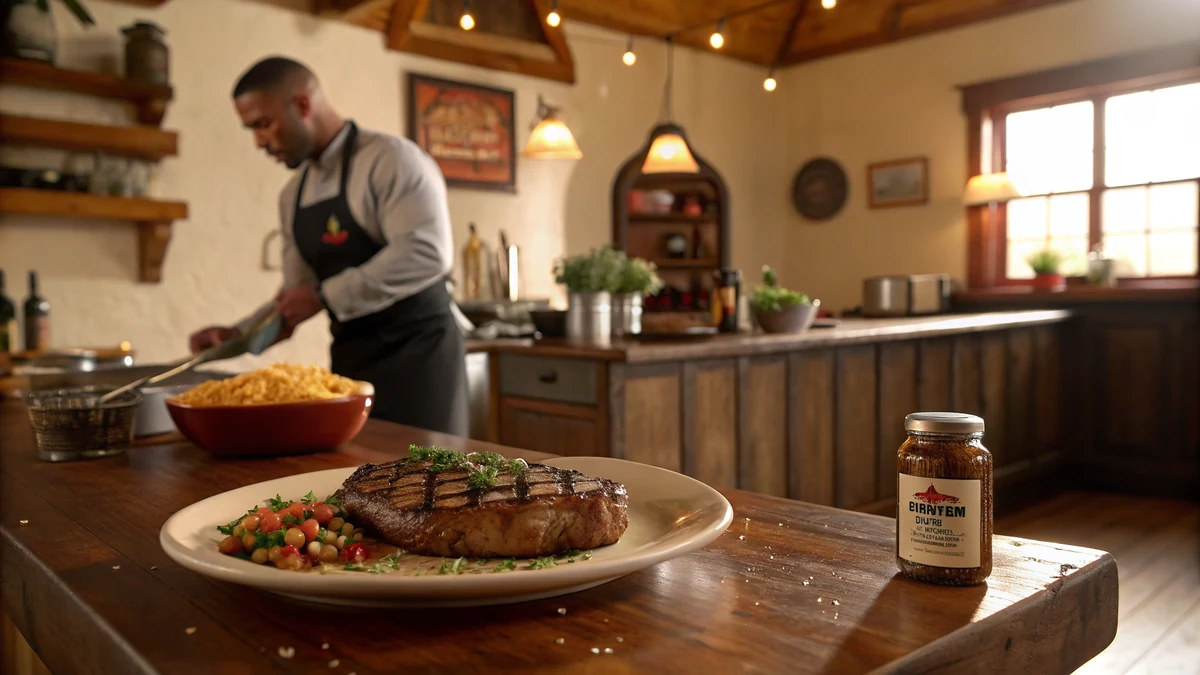
Quick answer: Texas Roadhouse steak seasoning is the chain's signature hand-rubbed blend that the kitchen presses into every steak before it hits the cast iron grill. The home copycat is a 7-ingredient dry rub: 2 tablespoons of kosher salt, 1 tablespoon of coarse-ground black pepper, 2 teaspoons of dark brown sugar, 1 teaspoon of garlic powder, 1 teaspoon of onion powder, 1 teaspoon of sweet paprika, and 1/2 teaspoon of ground turmeric for color. Whisk the spices in a small bowl. Sprinkle generously over a room-temperature steak (about 2 teaspoons per pound of meat), press into the surface with your palms, let rest 10 minutes, and grill or sear as usual. Keeps 6 months in an airtight jar.
Here is the whole blend in one breath: 2 tablespoons kosher salt, 1 tablespoon coarse black pepper, 2 teaspoons dark brown sugar, a teaspoon each of garlic powder, onion powder, and sweet paprika, and a half teaspoon of turmeric for that golden color. That is it. Whisk, jar, done in five minutes. Texas Roadhouse has hand-rubbed essentially this profile into its hand-cut steaks since the first location opened in Clarksville, Indiana in 1993, and the seasoning is one of the few menu items that has not changed in thirty years. Every cook there learns the same routine: generous coverage, a firm press into the meat, a short rest before the grill. The steaks come out meaty, salty, slightly sweet, faintly smoky.
The home copycat below is a seven-spice blend that matches the chain's flavor profile closely. I have been making this seasoning for ten years in my Hill Country kitchen, primarily for cast iron ribeyes on Sunday nights and for the occasional weeknight skillet steak. It is also the rub I press onto Texas Roadhouse steak kabobs before they go over the coals. The recipe scales easily - a quarter-cup batch lasts me about six weeks of casual steak cooking. The blend also works beautifully on chicken thighs, pork chops, a chopped steak like their Roadkill, smoked sausage, baked potatoes, and roasted vegetables. Once it lives in a jar in your spice cabinet, you find yourself reaching for it more than you expected. The 2 tablespoons of kosher salt do the heaviest lifting, but the turmeric and paprika are what give the blend its restaurant-signature golden-orange tint on a finished steak. It is the rub I reach for first on a Texas T-bone.
The Texas Roadhouse Steak Story
Texas Roadhouse built its menu around hand-cut steaks served at family-friendly prices. The chain's calling card is the in-store butcher case at the front of every location, where a cook hand-cuts the day's ribeyes, NY strips, sirloins, and filets to order. Every steak gets the same treatment: hand-seasoned with the house dry rub, pressed into the meat surface, rested briefly, then grilled over a wood-fueled cast iron grill.
The seasoning blend itself is a proprietary recipe that the chain has never officially published. Various ex-employee leaks and reverse-engineering attempts over the years have converged on roughly the same flavor profile: heavy on kosher salt, coarse black pepper, with brown sugar for caramelization, garlic and onion powder for the savory backbone, and a touch of paprika and turmeric for color. The home copycat below is calibrated to match that profile closely.
What makes the chain's seasoning different from generic steakhouse rubs is the salt grain size and the dark brown sugar. Most generic steak seasonings (McCormick, Lawry's) use fine table salt and white sugar, which dissolves immediately on contact with the meat surface and produces a thin layer of seasoning. Coarse kosher salt and brown sugar give a textured, almost gritty coating that bonds to the meat and creates the slight crust Texas Roadhouse steaks are known for.
The chain has been hand-seasoning steaks the same way since the original Clarksville location opened in 1993. Customers who eat at Texas Roadhouse weekly often say they can identify a Texas Roadhouse steak by smell alone - the seasoning is that distinctive.
Homemade vs the Bottled Version (and the 'Original Recipe' Question)
Two questions land in my inbox every time this page gets shared. Can you just buy the seasoning? And is this the original recipe? Short answers: sort of, and nobody outside the company has it. The longer answers are worth a minute.
On buying it: many Texas Roadhouse locations sell a shaker of their steak seasoning at the front counter, next to the peanuts and gift cards, and it shows up on the chain's online merchandise shop from time to time. If you love the flavor and hate measuring, that bottle is a fine souvenir. But a retail spice bottle has sat in a warehouse and on a shelf; the garlic and onion powders in it are already months past their aromatic peak the day you buy it. A quarter-cup batch mixed at home costs pennies, takes five minutes, and is fresher by default.
The homemade batch also gives you the dials. Cooking for a low-sodium household? Pull the salt back. Keto table? Swap the brown sugar for a monkfruit blend, one for one. Want more heat, more smoke, more garlic? The Variations section below covers all three. A sealed retail bottle offers none of that, and the label keeps its cards close, with 'spices' doing a lot of quiet work in the ingredient list.
On the 'original recipe': Texas Roadhouse has never published it, period. Everything online, this page included, is reverse-engineering built from ex-employee accounts and a lot of side-by-side taste tests, and the serious attempts all converge on the same salt-pepper-sugar-garlic-onion-paprika skeleton. So treat any page shouting 'leaked original recipe' with suspicion. What I can promise is that most people who taste this blend next to the restaurant's cannot reliably pick which is which, and that is the test that matters at the dinner table.
The Hand-Seasoning Technique
Hand-seasoning means exactly what it sounds like: the cook scoops a measured amount of seasoning into one hand, sprinkles it evenly across the surface of the steak with the other hand, and then presses it firmly into the meat with both palms. The pressing step is the critical one. Without it, the seasoning sits on top of the meat and falls off during the sear, ending up burnt on the grill grates instead of in the meat.
Sprinkle from height. Sprinkling from 12 inches above the steak gives more even distribution than sprinkling from 2 inches above. The extra height lets gravity spread the spices across the surface rather than concentrating them in one spot. This is the same technique that pit masters use when applying brisket rub.
Press the seasoning in firmly. Use the heels of both palms to press the seasoning into the meat surface, applying about 3-5 pounds of pressure. The pressing forces some of the seasoning into the meat's surface striations and bonds the rest to the moist surface. The seasoning should look slightly compressed and well-distributed after the press.
Season both flat sides. Flip the steak over and repeat the sprinkle-press technique on the other side. Coat the edges with whatever seasoning falls off during the flip. Edge seasoning is less critical than flat-side seasoning because the edges get less direct heat during cooking.
The 7-Spice Profile: Salt-Pepper-Sweet-Aromatic-Color
The blend has seven ingredients and each one does a specific job. Understanding the role of each spice lets you scale, modify, and troubleshoot the blend more effectively than just following a recipe.
Kosher salt (2 tablespoons): the heaviest contributor by weight and by flavor. The salt seasons the meat through dry brining - it draws moisture out of the surface, dissolves into a brine, then re-absorbs back into the meat carrying the dissolved spices with it. Without enough salt, the seasoning tastes thin. Diamond Crystal kosher salt is the canonical choice; Morton kosher salt is 1.7x saltier by volume, so reduce to 1 tablespoon if using Morton.
Coarse-ground black pepper (1 tablespoon): the second-heaviest contributor and the backbone of any steakhouse seasoning. 16-mesh coarse-ground pepper is the canonical Texas BBQ size (used in brisket rubs and steak rubs across the state). Avoid pre-ground fine pepper; the texture and flavor are noticeably weaker.
Dark brown sugar (2 teaspoons): provides caramelization during the sear. The molasses content of dark brown sugar gives a deeper, slightly bitter-sweet note than white sugar, which pairs beautifully with the salt and pepper. The sugar amount is calibrated to provide flavor without scorching during a high-heat sear.
Garlic powder (1 teaspoon) and onion powder (1 teaspoon): the savory backbone. Both are dehydrated and concentrated, which means a small amount delivers a lot of flavor without adding water (water in a rub messes up the searing). Use fresh containers (less than 6 months old) for the strongest flavor.
Sweet paprika (1 teaspoon) and turmeric (1/2 teaspoon): the color components. Both contribute mild flavor (paprika is sweet-fruity, turmeric is earthy-bitter) but their primary job is the orange-golden color of the finished blend. Without them, the seasoning looks gray; with them, it has the restaurant-signature warm tone.
Kosher Salt vs Sea Salt vs Coarse Black Pepper
The salt choice in this blend matters more than most home cooks realize. Three options work; one is strongly preferred.
Diamond Crystal kosher salt is the canonical choice. The crystals are large, hollow, and irregular - they dissolve more slowly than fine salts, which gives the dry-brine effect the time it needs to work. Diamond Crystal is what most professional restaurants use, including Texas Roadhouse. The 3-pound red box is sold at H-E-B, Walmart, and most major grocery stores for about $5.
Morton kosher salt works but is roughly 1.7x saltier by volume than Diamond Crystal because Morton's crystals are denser and more uniform. If using Morton, reduce the salt from 2 tablespoons to 1 tablespoon. Otherwise, the blend will taste over-salted.
Sea salt (Maldon flake, gray Celtic, pink Himalayan) works for finishing a cooked steak but is too expensive for a base seasoning blend. Save the sea salts for sprinkling on the sliced steak just before serving.
Fine table salt (Morton iodized) is the wrong choice. The fine grain dissolves immediately and gives a 'salty-but-not-distributed' result; the steak tastes uniformly salty rather than having the textured seasoned crust that defines a proper steakhouse steak.
Coarse-ground black pepper: 16-mesh is the canonical Texas BBQ grind. McCormick sells 16-mesh in the standard spice aisle. Penzeys, Pendery's, and Texas BBQ supply stores all carry it. Avoid fine ground pepper for this blend; the textural difference is what gives the seasoning its restaurant-quality crust.
The Sugar Question (Brown vs White)
Sugar in a steak seasoning is controversial among home cooks. Some argue that sugar burns at the high temperatures needed for a proper sear and should be omitted entirely. Others insist that sugar is necessary for caramelization and the slight crust character of a steakhouse-style steak. Both camps have a point; the truth is in the amount.
Two teaspoons of brown sugar in a quarter-cup batch is the right amount. That comes out to about 1/4 teaspoon of sugar per steak (the amount used per pound). At that ratio, the sugar caramelizes during the sear but does not burn before the meat surface is properly browned. More sugar (a tablespoon or more) burns reliably and gives a bitter, slightly acrid taste.
Dark brown sugar is the preferred sugar variant. The molasses content gives a deeper, more complex sweetness than white sugar. Light brown sugar works as a substitute. Avoid raw sugar (turbinado) for this blend; the larger crystals do not distribute evenly and clump during whisking. Avoid honey or maple syrup; these are wet and ruin the dry-rub texture.
Sugar-free adaptation: replace the brown sugar with monkfruit-erythritol blend (Lakanto Golden or Swerve Brown), 1:1 substitution. The flavor profile is nearly identical. Keto and diabetic guests can use the blend without modification beyond the sugar swap.
Paprika, Turmeric, and the Color Factor
The paprika and turmeric in this blend do most of the visual work. A blend without them is gray and unappetizing - just salt and pepper crystals on the steak. With them, the blend has the warm golden-orange tone that signals 'restaurant quality' to anyone who has eaten at a Texas Roadhouse.
Sweet paprika is the canonical choice. Spanish sweet paprika (pimenton dulce) is the gold standard - made from sun-dried sweet red peppers ground in central Spain. La Chinata and La Dalia are excellent brands in the small red tin. Hungarian sweet paprika (Szeged brand) is another excellent option with a slightly different flavor profile (more grassy, less smoky).
Smoked paprika (pimenton de la vera) is the Texas-friendly upgrade. Made from peppers smoked over oak before grinding, smoked paprika gives the blend a slight campfire note that pairs naturally with steak. I sometimes use half sweet and half smoked for a deeper character. La Chinata smoked paprika is widely available.
Turmeric does not contribute much flavor at this small amount (1/2 teaspoon in a quarter cup), but it dramatically intensifies the orange color. Without turmeric, the blend reads pale and washed-out. With it, the seasoning catches light beautifully when sprinkled on the steak. McCormick ground turmeric is fine.
Avoid: hot paprika (overwhelming heat for this blend), Hungarian rose paprika (decorative only, no flavor), or pre-blended 'steak seasoning' from a commercial brand to replace these components.
How Much to Apply (and Why Generosity Matters)
Two teaspoons of seasoning per pound of steak is the canonical Texas Roadhouse ratio. For a 1-pound ribeye, that means 2 teaspoons total, split roughly evenly between the two flat sides. The 2-teaspoons-per-pound ratio scales linearly: 2-pound steak gets 4 teaspoons (about 1 1/3 tablespoons total), and so on.
Generosity matters. The blend is heavier on salt and pepper than many home steak seasonings, which means a generous application is the canonical move. Restaurant-style steak seasoning is one of the few cases where 'too much' is essentially impossible until you exceed about 4 teaspoons per pound, at which point the steak tastes uniformly salty rather than complex.
Edge coverage: after seasoning both flat sides, rotate the steak on its edge and sprinkle a small amount of seasoning around the perimeter. This ensures every bite has seasoned crust. Skip if you are short on seasoning; flat-side coverage is the priority.
For thin steaks (under 3/4 inch thick): reduce the seasoning to 1 1/2 teaspoons per pound. The thinner profile means less surface area per unit of mass, and the standard ratio over-seasons thin steaks.
For thick steaks (over 1.75 inches thick, like cowboy-cut ribeyes): increase to 2 1/2 teaspoons per pound. The thicker profile means more interior to season through the dry-brine, and the standard ratio leaves the center under-seasoned.
Let the Steak Rest with Seasoning (The Dry-Brine Effect)
Once the seasoning is applied and pressed in, let the steak rest at room temperature for 10 to 20 minutes before cooking. This is the dry-brine step and it is what makes seasoned steak taste seasoned-through rather than just surface-seasoned.
The science: salt draws moisture out of the meat's surface through osmosis. The drawn-out moisture mixes with the dissolved spices to form a salty, flavored brine that sits on the surface. As the brine rests, it slowly reabsorbs back into the meat (the rate is about 1/16 inch per 10 minutes). The reabsorbed brine carries the dissolved spices deeper into the meat than surface-only seasoning ever could.
Twenty minutes is the optimum window for a 1-inch thick steak. Longer (30-60 minutes) gives slightly deeper seasoning penetration but starts to dry out the surface, which is bad for searing. Shorter (under 5 minutes) skips the dry-brine entirely and gives essentially surface-only seasoning.
If you have the time to plan ahead, season the steak in the morning and refrigerate it loosely covered until 1 hour before cooking. The overnight dry-brine gives the deepest possible seasoning. This is the technique used at the best steakhouses and at restaurants like Peter Luger and Keens in NYC.
Cooking Method: Cast Iron Beats Everything
Texas Roadhouse cooks their steaks on wood-fueled cast iron grills. The home equivalent that gets closest is a 12-inch cast iron skillet on a high-output gas burner. Cast iron retains heat better than thinner pans and produces the deep mahogany crust that defines a steakhouse-quality steak.
Cast iron sear technique: heat the dry cast iron skillet over medium-high heat for 5 to 7 minutes until smoking. Add 1 tablespoon of high-smoke-point oil (avocado, refined sunflower, or canola - NOT olive oil, which smokes too low). When the oil shimmers and starts to release wisps of smoke, lay the seasoned steak in the pan and DO NOT MOVE IT for 3-4 minutes. Flip once. Cook the second side for another 3-4 minutes. Pull at 130F internal for medium-rare.
Grill technique: build a high-heat fire (450-475F at the grates) on a gas or charcoal grill. Lay the seasoned steak on the grates perpendicular to the bars. Cook 3-4 minutes per side, flipping once. The grill gives slightly different flavor than cast iron (more smoke, less crust) but the seasoning shines through both. See my cowboy cut ribeye for a complete cast iron steak technique.
Oven reverse-sear: bake the seasoned steak at 225F until the internal temperature reaches 115F (45-60 minutes). Pull out and let rest 5 minutes while you heat a cast iron skillet to smoking-hot. Sear the steak in the hot pan for 60-90 seconds per side. The reverse-sear gives the most even doneness across the steak with a hard crust on the outside.
Beyond Steak: Other Uses for the Blend
This seasoning blend is too good to keep just for steaks. It works beautifully on a range of proteins and vegetables.
Chicken thighs: season generously, let rest 30 minutes, sear in cast iron or grill. The blend matches Texas Roadhouse's grilled chicken flavor profile almost exactly. Excellent for the BBQ chicken on a Texas Roadhouse-style plate.
Pork chops: season thick-cut bone-in pork chops, let rest 20 minutes, sear in cast iron or grill 4-5 minutes per side until 145F internal. The brown sugar in the blend caramelizes beautifully on pork.
Smoked sausage: sprinkle on cooked sausage links before grilling. The seasoning adds depth to commercial sausages that often taste flat. Works on hot dogs too, surprisingly.
Baked potatoes: rub a baked Idaho russet with the seasoning before baking. The skin develops a savory crust and the seasoning permeates the flesh slightly. Texas Roadhouse-style loaded baked potato.
Roasted vegetables: toss sliced sweet potatoes, carrots, broccoli florets, or Brussels sprouts with olive oil and 1-2 teaspoons of the blend, roast at 425F for 25 minutes. Excellent autumn side dish.
Burgers: mix 1 teaspoon of the blend into 1 pound of ground beef before forming patties. Texas-Roadhouse-flavored burgers; pair with my honey BBQ sauce for a Texan barbecue burger.
One boundary worth knowing: a dry rub is the right tool for tender cuts and whole steaks, but cubed kabob meat and working cuts like flank want a soak instead. For those, use my Texas Roadhouse kabob marinade, the wet counterpart to this jar - same steakhouse profile, delivered as a soy, Worcestershire, and lemon bath that tenderizes while it seasons.
Storage of the Blend
Dry spice blends keep beautifully if stored correctly. A well-sealed glass jar in a cool dark spice cabinet gives this blend a 6-month useful life with minimal flavor loss. Properly stored, the blend can last up to a year, though the volatile aromatics in the garlic powder and onion powder start to fade noticeably after 8-10 months.
Use glass not plastic. Plastic containers absorb spice oils over time, which both flavors the plastic and reduces the spice intensity. A 4-oz Ball quilted jelly jar with a two-piece lid is canonical for this purpose; sold at any hardware store for under $2.
Store away from the stove. Heat shortens spice shelf life dramatically. The cabinet above the stove (a common spot) is actually one of the worst spice storage locations. A cool dry cabinet on the other side of the kitchen is ideal.
Label the jar with the date you made the blend and the ingredients. Six-month-old spices are still good; a year-old blend with mystery contents in a coffee jar from your last move is harder to evaluate.
Refresh the blend every 6 months. Even with good storage, the volatile compounds fade. A fresh batch every six months keeps the blend at peak flavor. The fast prep (5 minutes total) makes refreshing easy.
Variations Worth Trying
Texas BBQ steak seasoning. Increase the paprika to 2 teaspoons and add 1 teaspoon smoked paprika and 1/2 teaspoon ground cumin. The blend tilts toward Central Texas BBQ rub territory. Pairs beautifully with brisket-grilled steaks.
Cajun steak seasoning. Add 1 teaspoon cayenne pepper, 1 teaspoon dried oregano, and 1 teaspoon dried thyme. The blend leans Louisiana with deeper heat and more herb complexity. Pairs beautifully with blackened technique - cook in a smoking-hot cast iron skillet for 90 seconds per side.
Coffee-rubbed steak seasoning. Add 2 teaspoons finely ground coffee (any medium-dark roast) to the standard blend. The coffee adds a bitter-roast complexity that pairs naturally with beef. A Texas cowboy-camp move.
Salt-free version. Eliminate the salt entirely and double the pepper to 2 tablespoons. For low-sodium diners. Apply twice as generously to compensate for the missing salt; otherwise the seasoning tastes thin. Pair with a sprinkle of finishing salt at the table for diners who prefer salt.
Garlic-forward variation. Double the garlic powder to 2 teaspoons and add 1 teaspoon dried garlic flakes for textural variety. Excellent on steaks for garlic lovers. Pairs beautifully with cowboy butter as the finishing sauce.
Mistakes to Avoid
Using fine table salt instead of kosher salt. Fine salt dissolves immediately and gives a uniform-salty result rather than the textured crust that defines a steakhouse steak. Diamond Crystal kosher salt is the canonical choice.
Skipping the press. Without pressing the seasoning into the meat, it falls off during the sear and ends up burnt on the pan or grill grates. The press bonds the seasoning to the moist surface and prevents loss.
Skipping the 10-20 minute rest. The dry-brine step is what makes seasoned steak taste seasoned-through. Without the rest, you get surface-only seasoning.
Using too much sugar. A tablespoon of sugar (rather than 2 teaspoons) burns reliably at the high temperatures needed for a proper sear. Stick with 2 teaspoons in the canonical blend.
Pre-ground fine black pepper. The textural and flavor difference between fine pepper and coarse 16-mesh pepper is significant. Coarse is canonical.
Storing in the spice rack above the stove. Heat shortens spice shelf life. A cool dry cabinet on the other side of the kitchen is the right storage location.
Tips for the Best Steak Seasoning
Five batches in, you start noticing the small dials. These are the moves I keep returning to in my Hill Country kitchen, the ones that lift this seasoning from competent to memorable.
- Use Diamond Crystal kosher salt specifically. Morton works but is 1.7x saltier; reduce to 1 tablespoon if using Morton. Diamond Crystal is the canonical professional kitchen choice.
- Buy 16-mesh coarse-ground black pepper. McCormick sells it in the standard spice aisle. The textural difference from fine pepper is the difference between steakhouse-quality and home-quality.
- Mix in dark brown sugar, not white sugar. The molasses content adds depth that white sugar cannot. Break up clumps before whisking.
- Use turmeric for color even if you doubt it. The 1/2 teaspoon adds barely any flavor but transforms the visual presentation. Restaurant-quality color matters.
- Make a quarter-cup batch every 6 months. The blend keeps for a year but volatile aromatics fade after 6 months. Fresh batches keep the flavor sharp.
For the other Texas Roadhouse copycats to round out a chain-restaurant-at-home meal, see grilled shrimp, rolls, ranch dip, rice pilaf, and green beans. For a properly cooked steak to apply this seasoning to, head to my cowboy cut ribeye.
Texas Roadhouse Steak Seasoning Copycat Recipe
Ingredients
- For the blend:
- 2 tablespoons Diamond Crystal kosher salt (or 1 tablespoon Morton kosher salt)
- 1 tablespoon 16-mesh coarse-ground black pepper
- 2 teaspoons dark brown sugar, packed and broken up to remove clumps
- 1 teaspoon garlic powder
- 1 teaspoon onion powder
- 1 teaspoon sweet paprika (Spanish or Hungarian)
- 1/2 teaspoon ground turmeric (for color, not flavor)
- Optional pantry additions:
- 1/4 teaspoon ground cayenne pepper (for gentle heat)
- 1/4 teaspoon ground cumin (for Texan warmth)
- 1/4 teaspoon dried oregano or Italian seasoning (for herbal depth)
- Equipment:
- Small mixing bowl, whisk or fork, 4 oz glass jar with tight lid (Ball quilted jelly jar is canonical)
- Label and marker for the jar
Instructions
- Measure the spices into a small bowl. Combine the kosher salt, coarse-ground black pepper, dark brown sugar, garlic powder, onion powder, sweet paprika, and ground turmeric in a small mixing bowl. Break up any brown sugar clumps with your fingers before adding. The dry sugar should be evenly distributed; clumps will not dissolve into the spice blend and will dump uneven sweetness onto the steak.
- Whisk to fully combine. Whisk vigorously for 30 to 45 seconds until the blend is uniform in color (golden-orange-brown) with no visible streaks of pure salt, pure brown sugar, or pure paprika. A fork works in place of a whisk; either way, the goal is a uniformly distributed dry mix. Taste a tiny pinch on a clean fingertip; the order on your tongue should be salty first, slightly sweet second, peppery third, with a faint paprika-and-turmeric warmth at the back.
- Transfer to an airtight glass jar. Pour the seasoning into a clean dry 4-oz glass jar with a tight-fitting lid. Ball quilted jelly jars are perfect at $1 each from any hardware store. Label the jar with the date and contents. Store in a cool dark spice cabinet away from the stove (heat shortens spice shelf life).
- Use 2 teaspoons per pound of meat. For ribeyes, NY strips, sirloins, filets, and other steaks: sprinkle about 2 teaspoons of seasoning per pound of meat. For a 1-pound 1.5-inch ribeye, use 2 teaspoons total, split between the two flat sides. Coat the edges with whatever falls off the flat sides. Press the seasoning firmly into the surface of the meat with your palms; the pressing binds the seasoning to the meat and prevents it from sliding off during the sear.
- Let the steak rest 10 to 20 minutes. After applying the seasoning, let the steak rest at room temperature for 10 to 20 minutes. The salt draws out moisture from the surface, then re-absorbs back into the meat along with the dissolved spices, which seasons the meat more deeply than surface-only seasoning. This is the same dry-brine technique used for any quality steak. Do not skip the rest; it is the difference between surface-flavored and deep-flavored seasoning.
- Cook your preferred method. Once the steak has rested, cook by your preferred method: cast iron sear (450F skillet, 3 to 4 minutes per side for medium-rare), grill over high heat (450-475F, 3-4 minutes per side), or oven reverse-sear (225F oven until internal temp is 115F, then 60-second hard sear in a hot pan). The seasoning works for all three methods. Finish with a tablespoon of butter melted into the pan and basted over the steak in the last 30 seconds of cooking.
- Rest the cooked steak before slicing. Pull the steak off the heat at 5 degrees below your target internal temperature (130F for medium-rare). Let it rest on a cutting board, tented loosely with foil, for 5 to 8 minutes. The internal temperature continues climbing during the rest as the juices redistribute through the meat. Slice against the grain at 1/4-inch thickness. Serve immediately with the pan juices and butter from the cook spooned over the slices.
Frequently Asked Questions
Is this exactly the Texas Roadhouse steak seasoning?
It is a close home copycat, not the official chain recipe. Texas Roadhouse has never officially published their seasoning blend, but multiple ex-employee leaks and reverse-engineering attempts converge on this approximate profile. Most blind tasters comparing this blend to the chain's seasoning cannot reliably tell the difference. The chain may use slightly different sugar (white vs brown) or salt grain size, but the overall flavor profile matches closely.
How long does the spice blend keep?
About 6 months at peak flavor in an airtight glass jar in a cool dark spice cabinet. Up to 1 year before the volatile aromatics in the garlic and onion powders start fading noticeably. Refresh the batch every 6 months for the best flavor. The 5-minute prep makes refreshing easy.
Can I use this blend on chicken or pork?
Yes. The blend works beautifully on chicken thighs, pork chops, smoked sausage, baked potatoes, and roasted vegetables. For chicken: season generously, let rest 30 minutes, sear in cast iron or grill. For pork: season thick-cut bone-in pork chops, let rest 20 minutes, sear or grill 4-5 minutes per side until 145F internal. The brown sugar caramelizes beautifully on both.
How do I adjust the salt for different brands?
Diamond Crystal kosher salt is the canonical choice (the recipe is calibrated for it). Morton kosher salt is 1.7x saltier by volume; reduce to 1 tablespoon if using Morton. Avoid fine table salt; the texture and dissolution rate are wrong for this blend. For low-sodium diners, see the salt-free variation in the Variations section.
Is this seasoning gluten-free?
Yes. Kosher salt, black pepper, brown sugar, garlic powder, onion powder, paprika, and turmeric are all naturally gluten-free. The blend is also vegan, vegetarian, dairy-free, and contains no major allergens. It is suitable for celiac and gluten-sensitive diners. Confirm by reading the label of any specific paprika or onion powder brand you use; some store-brand spices use wheat-based anti-caking agents.
Can I make a salt-free version?
Yes. Eliminate the kosher salt and double the black pepper to 2 tablespoons. For depth, you can also add 1 teaspoon dried mushroom powder (savory umami without salt). The seasoning will taste thinner without salt and you may need to apply twice as generously to compensate. Pair with a sprinkle of finishing salt at the table for diners who prefer salt - this keeps the blend usable for both low-sodium and standard diners in the same household.
Can I use this blend on a hamburger?
Yes. Mix 1 teaspoon of the blend into 1 pound of ground beef before forming patties. The seasoning distributes through the meat (rather than just on the surface) which is the right approach for ground beef. The brown sugar in the blend caramelizes during the sear and gives a slight crust on the patty surface. Pair with honey BBQ sauce for a Texan barbecue burger.
Why brown sugar instead of white sugar?
Brown sugar has molasses content that gives depth and a slight bitter-sweet complexity that white sugar lacks. The molasses also caramelizes more readily than white sugar at high heat, which contributes to the slight crust on a finished steak. Light brown sugar works as a substitute. White sugar would give a less complex flavor but is acceptable in a pinch. Avoid raw sugar (turbinado) - the larger crystals do not distribute evenly through the blend.