
Quick Answer: Ballard cheese ball is a crowd-pleasing appetizer made with cream cheese, sharp cheddar, pecans, and green onions, rolled into a ball and chilled. Total time: 15 minutes + 2 hours chilling. Key tip: use room-temperature cream cheese for easier mixing and a smoother texture. According to USDA FoodData Central, one ounce of cream cheese provides approximately 100 calories and 10g of fat.
Some recipes are complicated, and some are just quietly brilliant. Ballard cheese recipe belongs to the second group. It is nothing more than a mixture of soft cheese, sharper cheese and a few seasonings, yet somehow it becomes the first thing to disappear from the table. You put it down beside crackers, vegetables or breadsticks and suddenly conversations happen near it. The pleasure comes from contrast. Soft interior, crunchy exterior, salty notes and a little tang all at once. It feels familiar even when you taste it for the first time.
Table of Contents
Historically, the cheese ball became a fixture of American entertaining in the 1950s and 1960s, during the rise of cream cheese as a home cooking staple. Kraft’s Philadelphia Brand cream cheese had been available since 1872, but its widespread adoption in home recipes accelerated dramatically with post-war suburban culture. Today, according to retail data tracked by Statista, cream cheese sales in the US exceed $2 billion annually.
What people mean when they say ballard cheese recipe
Ballard cheese does not refer to a specific cheese you buy. It refers to a way of preparing a cheese ball that became associated with the Ballard area and then traveled far beyond it. Cream cheese usually forms the base, combined with cheddar or another stronger cheese. Seasonings, herbs or sauces are mixed in and the entire ball is rolled in nuts or another coating. It is less about geography now and more about a method. A bowl, a spoon, a bit of patience in the refrigerator and something festive appears almost without effort.
My grandmother made a version of this cheese ball every Thanksgiving in her East Texas kitchen. She never measured anything she went by feel. After years of reverse-engineering her recipe, I found that the secret is a full 8 hours of chilling, not just 2. It lets the flavors meld and the ball hold its shape when cut.
Why this cheese ball feels so satisfying
Texture that invites another bite
What makes ballard cheese recipe memorable is texture. The outside crunch meets a very smooth inside. Each small swipe with a cracker brings both at once. You do not have to think about it, yet your mouth notices the difference immediately.

Flavor that feels balanced
There is richness from cream cheese, sharper notes from aged cheese and subtle background flavor from onion, garlic or Worcestershire sauce. It is savory without being harsh, rich without being overwhelming. You taste it once and your hand usually goes back without discussion.
The ingredients that build the flavor
Most versions share a common base. They tend to include softened cream cheese, grated cheddar or another firm cheese, a small amount of Worcestershire sauce, onion powder or finely minced shallot, garlic powder or small amounts of fresh garlic, with salt and pepper adjusted to taste. For the coating, common choices include chopped pecans, walnuts, almonds, herbs or bacon pieces. Nothing rare or complicated is required, only things many kitchens already have.
How to prepare ballard cheese recipe at home
Mixing the base gently
The first step is very simple. Softened cream cheese is mixed with grated cheese and seasonings. The key is softness. When the cheese is not at least a little warm from room temperature, lumps stay inside. When it is softened, everything blends into a smooth mixture.
Forming the shape
The mixture is gathered with clean hands or wrapped in plastic wrap and shaped into a round ball or sometimes a log. It then rests in the refrigerator. The cold helps it hold structure later when you roll it in coating or slice into it with a knife.
Adding the finishing layer
Once firm, the cheese is rolled in whatever texture you prefer. Nuts press in gently. Herbs cling to the surface. Crushed crackers or pretzels add crunch. This exterior is not decoration only. It gives each bite a final sound and texture.
Small problems people face and how they resolve them
When the cheese ball feels too soft
That usually means it needs more time to chill or the ratio leaned too much toward cream cheese. A little more grated hard cheese or extra time in the fridge usually solves it.
When it crumbles instead of holding shape
That often comes from too much dry ingredient or too little moisture. Softening the mixture briefly and mixing a bit longer usually brings it together.
When flavor feels too shy
A tiny pinch more salt, sharper cheddar instead of mild cheese, or a drop more Worcestershire sauce can change the entire personality of the ball. Resting overnight also deepens flavor.
Variations that change mood without changing method
Ballard cheese recipe adapts easily. You can create spicy versions with jalapeño or chili flakes, herb versions with parsley, dill or chives, sweet-salty versions with dried cranberries and nuts, Mediterranean-inspired versions with feta and olives or smoky versions with smoked cheddar or bacon pieces. The base stays the same. Only the mood shifts.
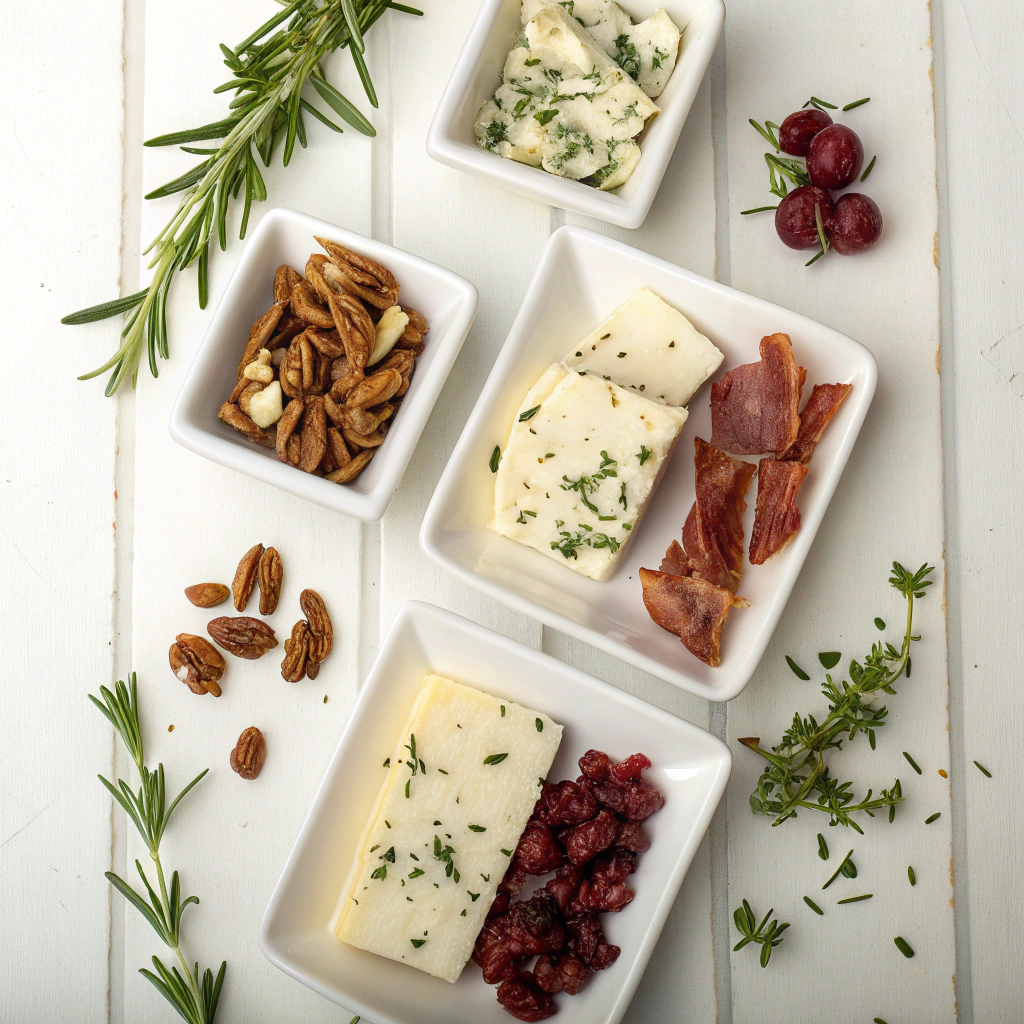
How people like to serve ballard cheese recipe
Cheese balls invite sharing. They appear on boards beside crackers, toasted baguette slices, pretzels, celery sticks, carrot sticks or apple wedges. They work at quiet evenings as easily as larger gatherings. Someone slices, someone spreads, someone laughs nearby. The food becomes part of the atmosphere instead of the centerpiece.
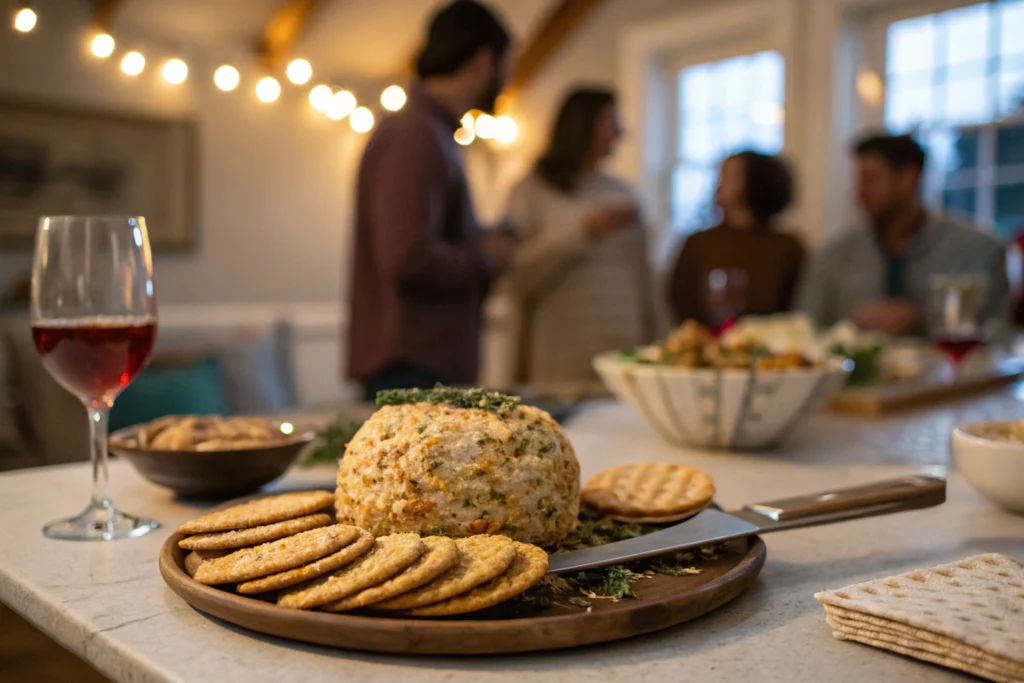
Making it ahead without stress
This is the kind of ballard cheese recipe that actually benefits from waiting. Prepared a day earlier, flavors settle and blend. Stored in the refrigerator wrapped well, it keeps its shape easily. Right before the moment you want to serve it, you coat it so the outside stays crisp. That is why it appears so often at holidays, picnics and casual nights with friends. Most of the work is already done.
When a simple recipe becomes part of memory
Ballard cheese recipe tends to return again and again. Someone remembers it from a previous dinner and asks for it quietly. A child grows up thinking this cheese ball always existed in their home. A guest asks for the recipe and brings it to another table later. It travels not through restaurants but through people.
When sharing food feels effortless
Some dishes require explanation, instructions or formal serving. This one does not. You place the cheese ball on a plate, add something to spread it with and people simply gather. No ceremony, no rules, just small bites and casual conversation. It becomes part of the background of the evening, not the focus, yet somehow everyone remembers it afterward.
The moment the knife goes in
There is always a small satisfying moment when someone finally cuts into the cheese ball. The coating cracks slightly, the soft center appears and people lean in a little closer. From that point on, it stops being decoration and becomes food. That tiny sound of the first cut often starts the flow of the evening.
How aroma creates anticipation
Even before tasting, you smell the cheese, garlic, herbs or smoked notes depending on how you made it. That aroma tells people what is coming long before their first bite. Plates slowly move nearer. Someone makes room on the table. The food has already started working before it is even touched.
When a ballard cheese recipe adapts to seasons
In cooler months, versions with nuts, bacon and stronger cheese feel right. In warmer weather, herbs, citrus zest and lighter cheese take the lead. The same basic idea shifts naturally with the season. Ballard cheese recipe does not belong to one time of year. It simply changes clothes.
Teaching someone the recipe without writing it down
This is the kind of ballard cheese recipe you can show rather than read. Someone watches you soften cheese, stir gently, taste, adjust, chill and coat. They learn with their hands instead of from measurements on paper. Years later, they will repeat the same gestures almost without thinking, and the recipe will have moved quietly into another kitchen.
When food brings confidence to new cooks
Many people fear complicated cooking. Ballard cheese recipe gently removes that fear. It works even if your shaping is imperfect, even if your coating is uneven. When people enjoy it, you realize that home cooking does not need to be complex to be meaningful. That confidence often opens the door to many more recipes afterward.
A small comfort on busy days
There are evenings when time feels thin and energy even thinner. Having a ballard cheese recipe ready in the fridge turns those nights into something softer. You take it out, add crackers, maybe cut some vegetables and suddenly there is a small, unplanned gathering at the table. Effort is low, comfort is high.
The quiet pleasure of making things by hand
Rolling cheese between your palms, pressing nuts or herbs around it, smoothing the surface into a round shape feels strangely calming. It connects your hands directly to what you will later eat. That physical contact changes the way you experience the food. It is no longer just something bought, it is something made.
How simple ingredients become something memorable
Individually, the ingredients are ordinary. Cream cheese. Cheddar. A few spices. Some nuts or herbs. Nothing rare or expensive. Yet together they create something people talk about after the evening ends. That transformation from simple to special is part of what makes cooking quietly magical.
When a simple appetizer starts conversations
Sometimes it is not the main course that people remember, but the small appetizer that traveled from person to person at the table. The cheese ball does exactly that. Someone asks what you put inside, another suggests a variation, and suddenly the recipe itself becomes part of the conversation.
The comforting weight of familiar flavors
There is something reassuring about flavors you recognize instantly. Creamy cheese, a hint of garlic, a little salt, maybe some herbs or nuts. They do not shock or overwhelm. They simply settle in comfortably, like a familiar song you have heard many times and still enjoy.
When preparation becomes a small ritual
Softening the cheese, grating, mixing, tasting, shaping, chilling, each step follows the other naturally. After a while the order becomes automatic, almost ritual-like. You do not rush. You let the cheese firm in the fridge, and you trust the waiting as much as the mixing.
A recipe that follows you through life stages
It may start as something you bring to student parties. Later it appears at family dinners, birthdays, and holiday tables. The recipe stays the same while life around you changes. Food anchored in memory often works like this, linking different moments together quietly.
Making something that invites people in
When guests ask, “Did you make this?” there is always a brief moment of pride in answering yes. Not because it was difficult, but because you took the time. Food made by hand sends a simple message without words: you cared enough to prepare something for others.
How one recipe adapts to every table
Formal dinner, casual picnic, office gathering, quiet night at home, it fits each place without effort. It can look elegant on a serving platter or just as comfortable on a small kitchen plate. Few recipes travel so easily between occasions.
When a recipe travels from one home to another
Some recipes are not written in cookbooks first. They move from kitchen to kitchen through friends, neighbors, family visits and shared tables. The Ballard cheese recipe spreads exactly like that. Someone tastes it once, asks for it, then prepares it somewhere else, and the circle continues.
The quiet joy of watching it disappear
There is a special, simple satisfaction in seeing something you made slowly vanish from the plate. No one announces it. People just keep returning to it, one more bite at a time, until suddenly the platter is almost empty. That silent approval feels warmer than any compliment.
When food becomes part of the atmosphere
You may not remember every conversation from a gathering, but you remember how it felt. The cheese ball is one of those foods that blends into that feeling. It does not dominate. It contributes. It becomes part of the atmosphere of laughter, noise, and relaxed moments.
A recipe that forgives timing
Some recipes demand exact minutes and strict attention. This one waits for you. If it chills a little longer, it only becomes firmer. If guests are late, it stays ready. It adapts to life instead of forcing life to adapt to it. That makes it especially practical and comforting.
A simple answer to the question “What should I bring?”
When invitations say “just bring something,” this ballard cheese recipe is often the solution. It travels well, requires no reheating and suits almost everyone. Instead of stress, you feel calm. You already know it will be appreciated wherever it goes.
How texture plays its quiet role
The contrast between creamy cheese and crunchy coating is part of why people return to it again. Soft inside, crisp outside, that combination is deeply satisfying even before you think about it. Texture works silently, yet it defines the entire experience.
When hospitality lives in small gestures
You do not need a complicated menu to show care. Sometimes hospitality is as simple as placing a cheese ball on the table with crackers and saying “serve yourself.” That permission, that openness, makes people feel at ease much faster than formal dishes ever could.
A small comfort on busy days
Sometimes you are tired before the guests even arrive. Knowing that one part of the table is already fully prepared, reliable and well-liked brings relief. The Ballard cheese recipe quietly supports you in the background, taking one worry away from your mind.
The charm of a ballard cheese recipe that fits every season
It does not belong only to winter or summer. It works on holiday tables, picnics, birthdays, casual evenings, office gatherings or family visits. It travels through seasons unchanged, always finding a place where it feels natural.
FAQ about ballard cheese recipe
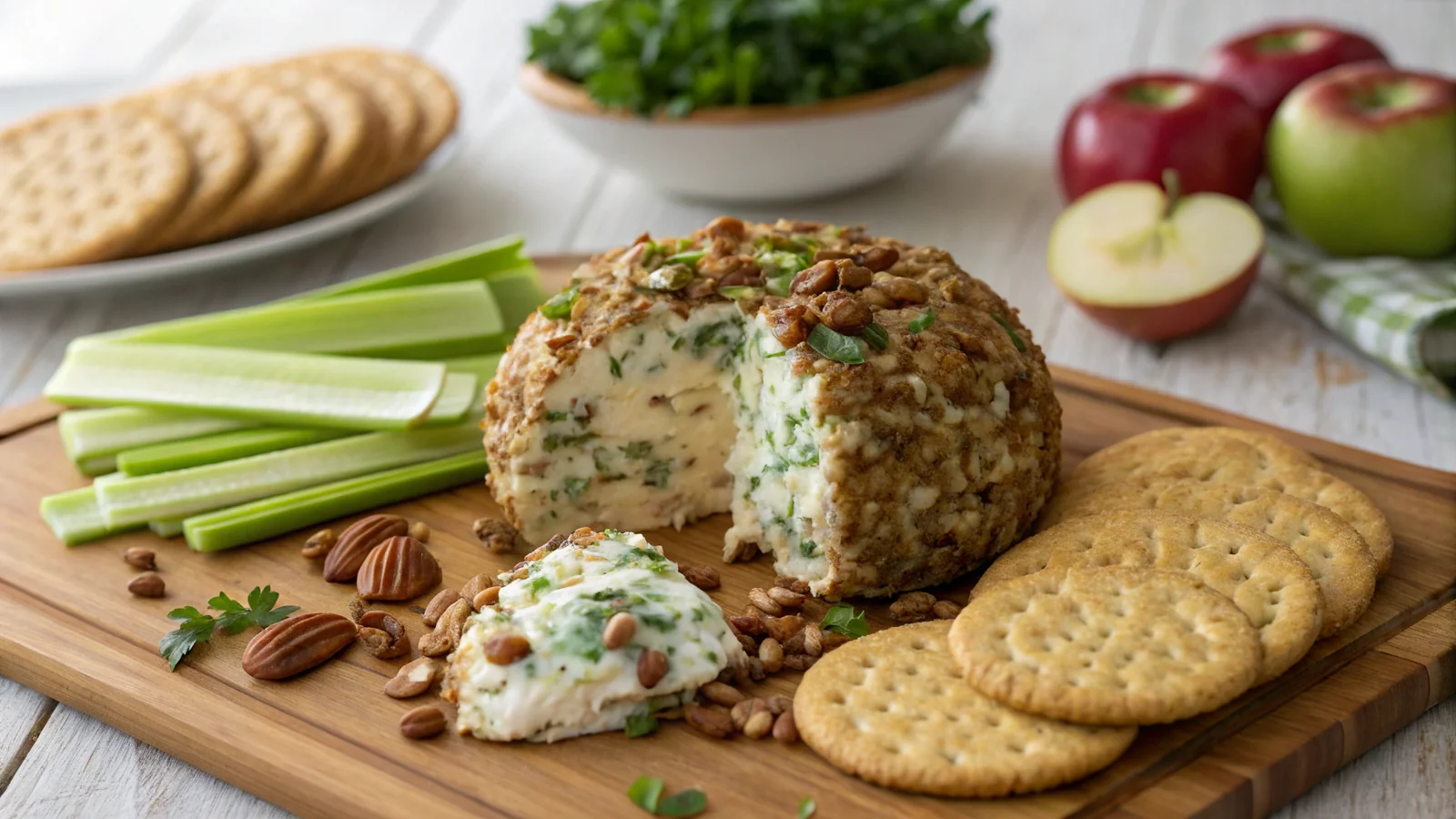
Ballard Cheese Ball
Ingredients
Method
- Beat the softened cream cheese in a bowl until smooth. Mix in the grated cheddar, Worcestershire sauce, garlic powder, onion powder, and green onions.
- Season with salt and black pepper to taste and mix until fully combined.
- Gather the mixture and shape it into a ball using your hands or by wrapping it tightly in plastic wrap.
- Refrigerate for at least 2 hours (or overnight) until firm.
- Roll the chilled cheese ball in the chopped pecans, pressing gently so they adhere to the surface.
- Serve with crackers, sliced vegetables, or breadsticks.