Texas Desserts
Buttermilk Pie
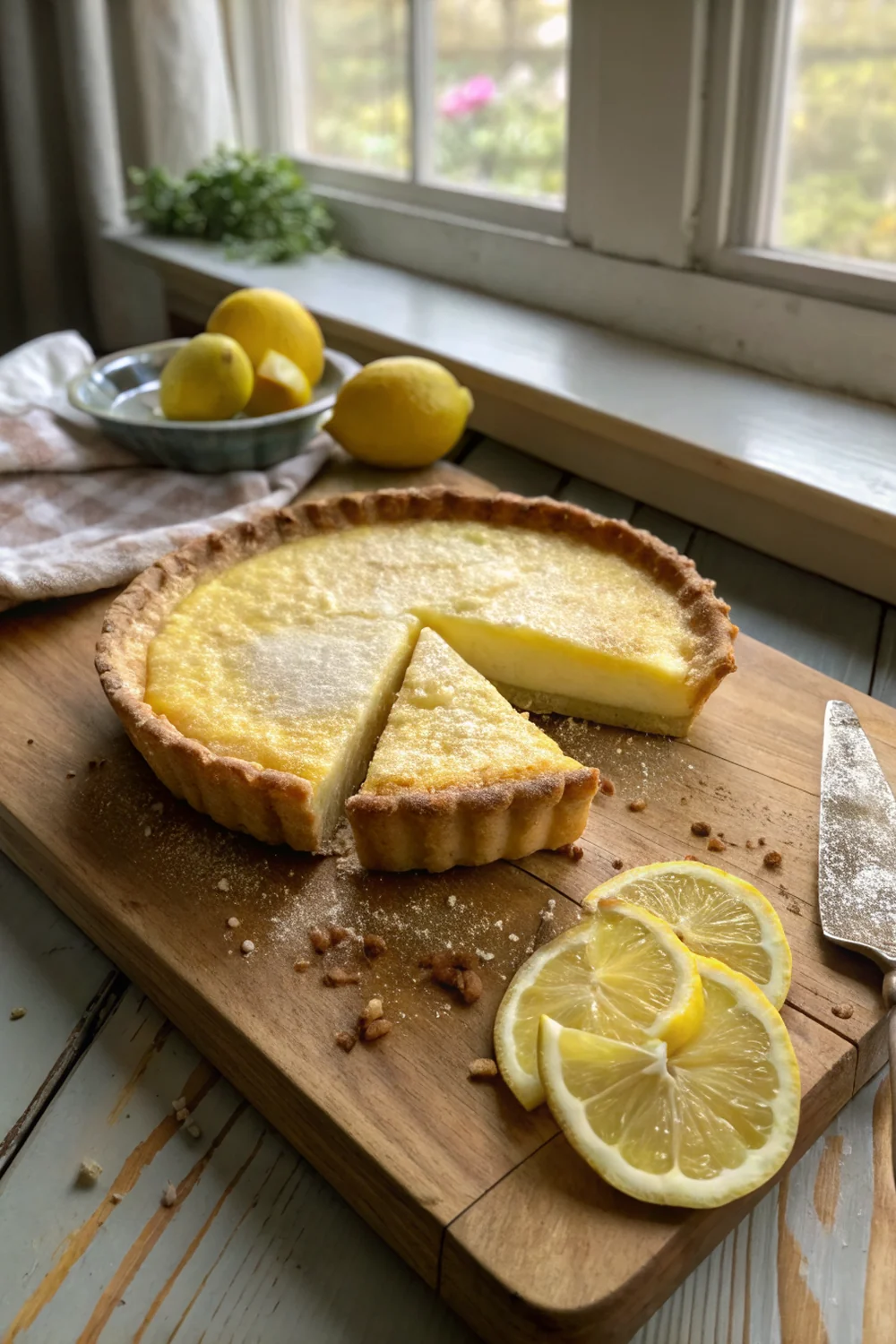
Chef Mia's Texas buttermilk pie: full-fat buttermilk custard, all-butter crust, jiggle-set, lemon zest and nutmeg. Hill Country tradition.
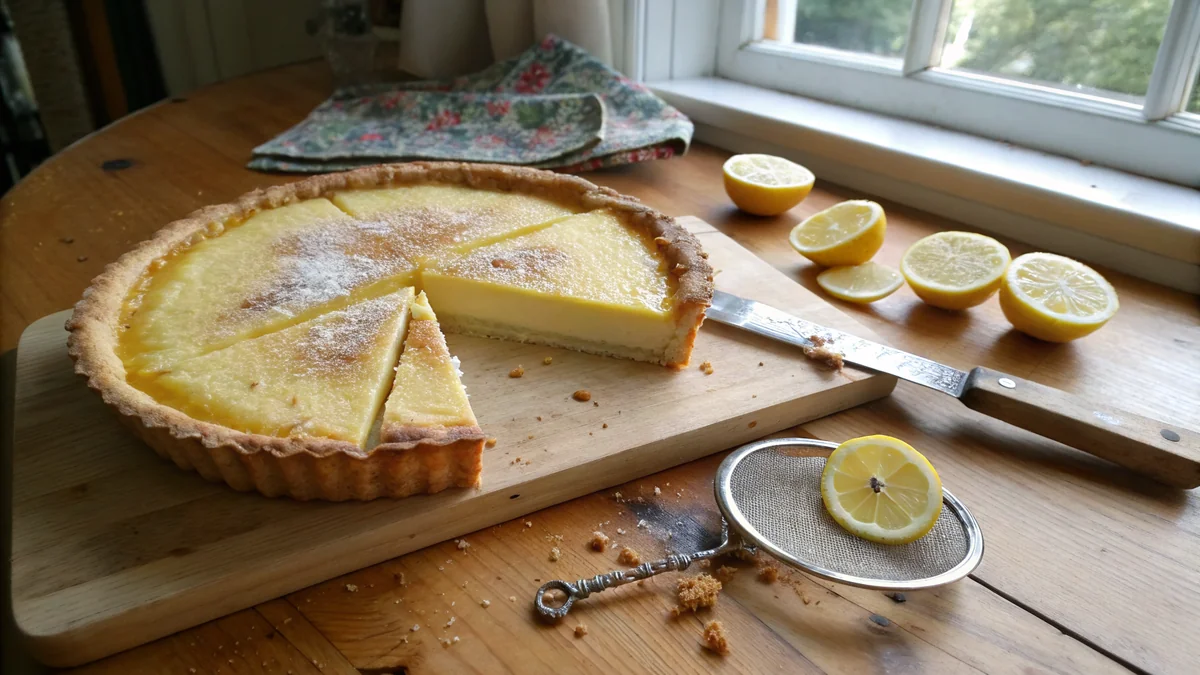
Quick answer: Buttermilk pie is the Texas Hill Country custard pie: full-fat buttermilk whisked with melted butter, sugar, eggs, flour, vanilla, lemon zest, and nutmeg, poured into a lightly blind-baked all-butter crust, baked at 350F for 45-50 minutes until the center jiggles softly without rippling. The top forms a thin golden skin; the inside stays creamy and tangy. Cool four hours before slicing, ideally chill overnight, and serve at room temperature with a thin lemon slice.
Buttermilk pie is what Texas Hill Country families made when the cows were giving more milk than the household could drink. Czech and German immigrants who settled around Fredericksburg, New Braunfels, and Schulenburg in the 1840s-1880s adapted European custard tarts to American buttermilk, and what came out is the silky, tangy, slightly lemony pie that still appears at every church potluck and bridal shower in central Texas.
It is the cousin of chess pie (a Southern custard equivalent that uses cornmeal instead of flour) and the country cousin of crème brûlée. It is not flashy. The first bite tastes like dessert and the second bite tastes like memory. I make this when I want a pie that feels old-fashioned without being precious - the kind of pie a grandmother would actually serve, on a Sunday afternoon, with coffee. On a holiday dessert table I set it beside my pumpkin pie so guests can take a sliver of each.
What Buttermilk Pie Tastes Like
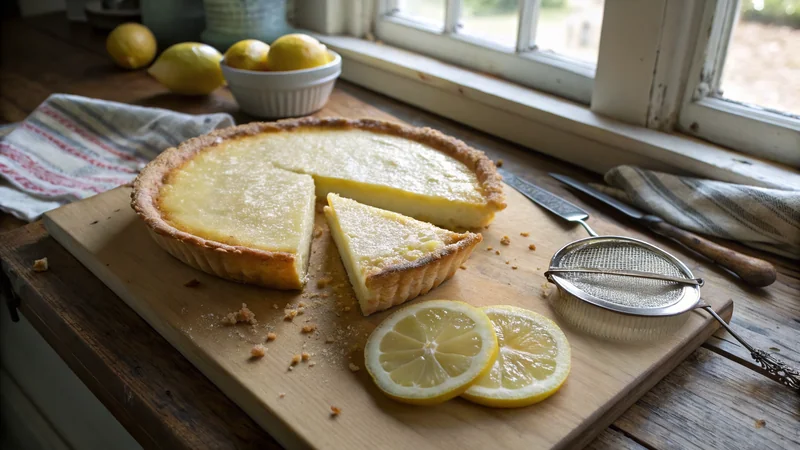
Buttermilk pie sits between three more famous desserts. It is creamier than chess pie (which uses cornmeal as a thickener and tastes more rustic). It is more rustic than crème brûlée (which uses pure cream and gets a torched sugar crust). It is tangier than custard pie (which uses regular milk and tastes flatter). The defining note is the buttermilk acidity, which keeps the pie from feeling heavy despite the butter and sugar.
The texture is silky-soft but firm enough to slice. A good buttermilk pie holds its shape on the fork, with a slight wobble. The top forms a thin golden skin during baking, like crème brûlée's pre-torch surface. The interior is the color of pale ivory, smooth, with a slight grain from the buttermilk solids.
The flavor profile is sweet, tangy, slightly lemony from the zest, with a faint warm note from the nutmeg. Vanilla is the backbone. Almost everyone who tries it for the first time says "this tastes like something my grandmother would make," even when their grandmother never made it. That is the pie's emotional signature.
Texas Hill Country Heritage
The Hill Country (Fredericksburg, New Braunfels, Boerne, Comfort, Schulenburg, Walburg) was settled primarily by German and Czech immigrants between 1830 and 1890. They brought European pastry traditions - delicate custard tarts, kolaches, strudel - and adapted them to what was available locally: buttermilk from family cows, Texas-grown wheat, eggs from backyard chickens, sugar from East Texas refineries.
Buttermilk pie was the result. It is essentially a custard tart with American buttermilk substituted for European cream. The substitution made the pie cheaper, more shelf-stable in the era before refrigeration, and gave it the tangy note that became its signature.
By 1920, buttermilk pie had spread across Texas via church cookbooks, Junior League collections, and Methodist supper menus. By 1950, it was as iconic as pecan pie at any Texan family gathering. By 2000, it had quietly fallen out of fashion in restaurants but remained a fixture at home bakers' tables. The dish is still better made at home than in any restaurant - it does not scale up well, and freshly made buttermilk pie is a different dessert from one that sat in a display case.
The Buttermilk Question
Use full-fat cultured buttermilk. The kind sold in the refrigerated dairy section as "old-fashioned" or "churned" buttermilk. Low-fat or fat-free buttermilk works but produces a slightly less rich pie - acceptable but not ideal.
Powdered buttermilk substitutes (Saco brand) work in baked goods but should not be used here. The pie depends on the texture and flavor of fresh fluid buttermilk; powdered substitutes give a flatter, more chemical-tasting result.
If you cannot find buttermilk, the substitute is 1 cup of whole milk + 1 tablespoon white vinegar or lemon juice, stirred and rested for 5 minutes until curdled. The acid mimics the buttermilk acidity. The result is acceptable but not identical - real buttermilk has lactic-acid culture flavors that the vinegar substitute cannot replicate.
Yogurt substitution: 1/2 cup plain whole-milk yogurt + 1/2 cup whole milk, whisked smooth. Better than the vinegar version. Greek yogurt is too thick - thin it with extra milk to fluid consistency.
The Crust: Light Blind-Bake
All-butter crust gives the right flavor for buttermilk pie. Shortening crusts taste flat and undercut the delicacy of the custard. Cold butter, ice water, chilled dough, chilled crust before baking - all the basic principles of pie crust apply here.
The blind-bake is light, not full. 12 minutes covered with weights at 375F, then 4-5 minutes uncovered. The bottom should look dry and pale, not browned. Unlike pecan pie (which needs a fully blind-baked crust because the filling is wet and slow), buttermilk pie's filling sets faster and the crust continues baking with the filling. Over-blind-baking gives a too-dark crust by the time the pie is done.
Crimp decoratively because the edges are visible. Buttermilk pie has no decorative top topping (no streusel, no pecans, no meringue) - the crust edge is the visual signature. Take 30 extra seconds to make a clean crimp.
Filling Chemistry
Five ingredients do the structural work in buttermilk pie filling: butter, sugar, eggs, flour, and buttermilk. Butter provides richness and helps the filling set into a tender custard. Sugar sweetens and helps the filling hold structure when cooled. Eggs are the primary thickener and gel the filling on cooling. Flour stabilizes and prevents weeping (eggs alone can leak liquid; flour absorbs and holds it).
The egg ratio matters. Three large eggs is the right amount for one pie. Two eggs gives a pie that does not set properly - runny center, loose texture. Four eggs gives a denser, more custardy pie that some people prefer but moves away from the classic profile.
Three tablespoons of flour is the canonical amount. Less and the pie weeps; more and the texture goes from custard toward bread pudding. Some old recipes use 2 tablespoons of cornmeal instead of flour - that produces chess pie, not buttermilk pie. The two are cousins, not the same.
Melted butter, not softened. Melted butter incorporates smoothly into the sugar; softened butter creams with the sugar like cake batter, which gives the wrong texture. Melt in the microwave 45 seconds, let cool 5 minutes before using.
Lemon Zest and Nutmeg
The lemon zest is what brightens buttermilk pie. Without it, the pie tastes one-dimensional - sweet, fatty, slightly tangy. With it, the pie has a high citrus top note that lifts the whole experience. One whole lemon's worth of zest, finely grated with a microplane.
Lemon juice is optional and not classic. Some recipes call for 1 tablespoon of lemon juice in the filling. The juice intensifies the tang but can curdle the buttermilk slightly. Stick with zest only for the cleanest flavor.
Nutmeg is the warm spice canon. 1/4 teaspoon freshly grated. Pre-ground nutmeg from a jar tastes flat after 6 months; freshly grated from a whole nutmeg (use a microplane or a dedicated nutmeg grater) is dramatically more aromatic.
Optional additions: 1/4 teaspoon ground cinnamon (warmer, more cake-like), 1 tablespoon of bourbon (very Texan, very good), or a pinch of cardamom (Scandinavian-leaning twist). Stick with vanilla + lemon zest + nutmeg for the canonical version.
The Bake: 350F, Jiggle Test
350F (175C) for 45-50 minutes is the right window. The pie is done when the edges are puffed and set, the center jiggles slightly when tapped but does not ripple like liquid, and the top is light golden. An instant-read thermometer in the center should read 175-180F.
The jiggle test: tap the side of the pie pan. The center 2-3 inches should move as one unit, like firm jello. If it ripples like liquid, give it 5-10 more minutes. If the whole pie shakes uniformly without distinction between center and edges, it is over-baked.
Most home cooks under-bake buttermilk pie because the appearance does not change much from minute 40 to minute 50. Trust the temperature and the jiggle test rather than the color. The top stays pale gold; it does not deeply brown.
If the crust edges are browning faster than the filling is setting, tent the edges loosely with foil after 25 minutes. A pie shield works even better. Tenting is a frequent need for pies baked at 350F for over 40 minutes.
Cooling and Slicing
Cool at room temperature for at least 4 hours, ideally 6-8. The custard continues to set as it cools. Slicing at 2 hours gives a runny center even when the bake was perfect.
Refrigerate after the room-temperature cool if you prefer a firmer cold slice. Cold buttermilk pie is delicious and how some Texans prefer it. Other purists insist on room temperature only.
Slice with a thin sharp knife, wiping between cuts. The first slice is always the hardest - press straight down, pull straight up, do not saw. A serrated knife is too aggressive and tears the custard.
The pie keeps at room temperature for 24 hours, refrigerated for 5 days, frozen for 2 months. Bring to room temperature for 30-60 minutes before serving for the best texture if it has been refrigerated.
Mistakes to Avoid
Skipping the rest. The custard sets during cooling. A pie sliced at 2 hours runs onto the plate. Wait 4 hours minimum.
Over-baking. The pie continues setting after the bake. Pull when the center jiggles like firm jello. Past that point, the custard goes from creamy to dry and cracked.
Using low-fat buttermilk. Acceptable but not ideal. Full-fat cultured buttermilk gives the right richness and flavor.
Cold eggs added straight from the fridge. Cold eggs incorporate poorly with melted butter and can curdle the filling. Bring eggs to room temperature for 30 minutes before using.
Skipping the lemon zest. The pie tastes flat and one-dimensional. Zest is non-negotiable for the classic Texas profile.
Using a glass pie dish without rack adjustment. Glass conducts heat differently than metal. Position the rack one notch lower if using a glass plate.
Variations
Lemon buttermilk pie. Double the lemon zest to 2 lemons, add 1 tablespoon lemon juice, reduce vanilla to 1 teaspoon. The pie tilts citrus-forward and pairs beautifully with fresh berries.
Coconut buttermilk pie. Add 1/2 cup of toasted shredded sweetened coconut to the filling before pouring. The pie keeps the buttermilk tang but gains a tropical chewy texture.
Chocolate buttermilk pie. Add 1/4 cup unsweetened cocoa powder to the dry ingredients (whisk with the flour). Reduce sugar to 1 1/4 cups. The pie tilts toward chocolate-custard, similar to French silk pie but tangier.
Bourbon buttermilk pie. Add 1 tablespoon of bourbon to the filling. The bourbon notes complement the buttermilk and lemon. Maker's Mark or Buffalo Trace are good choices; avoid flavored bourbons.
Mini buttermilk hand pies. Use a 12-cup muffin tin lined with crust circles. Fill each with 2-3 tablespoons of filling. Bake at 350F for 25-30 minutes. Yields 12 individual pies, perfect for parties or potlucks.
Buttermilk Pie Recipe
Ingredients
- For the crust:
- 1 1/4 cups (160 g) all-purpose flour
- 1 tablespoon granulated sugar
- 1/2 teaspoon kosher salt
- 1/2 cup (113 g) unsalted butter, very cold, cut into 1/2-inch cubes
- 3-4 tablespoons ice water
- For the filling:
- 1/2 cup (113 g) unsalted butter, melted and slightly cooled
- 1 1/2 cups (300 g) granulated sugar
- 3 large eggs, room temperature
- 3 tablespoons all-purpose flour
- 1 cup (240 ml) full-fat buttermilk, well shaken
- 2 teaspoons pure vanilla extract
- Zest of 1 lemon (about 1 tablespoon)
- 1/4 teaspoon freshly grated nutmeg
- 1/4 teaspoon kosher salt
Instructions
- Make the dough. In a large bowl, whisk the flour, sugar, and salt. Add the cold cubed butter and use a pastry cutter (or two forks, or your fingertips) to cut the butter into pea-sized pieces with some larger flat flakes. Drizzle in 3 tablespoons of ice water and toss with a fork. The dough should just hold together when you squeeze it; if it crumbles, add the fourth tablespoon. Visible butter chunks make a flaky crust. Form into a flat disc, wrap in plastic, chill at least 1 hour.
- Roll and shape the crust. On a lightly floured surface, roll the chilled dough into a 12-inch circle, about 1/8-inch thick. Transfer to a 9-inch pie plate by rolling around the rolling pin and unrolling over the plate. Press gently into the corners without stretching. Trim the overhang to 1 inch, fold under itself, crimp decoratively. Prick the bottom 8-10 times with a fork. Chill 30 minutes.
- Light blind bake. Preheat oven to 375F (190C). Line the chilled crust with parchment paper and fill with pie weights or dried beans. Bake 12 minutes. Remove parchment and weights, return to oven, bake another 4-5 minutes until the bottom looks dry and pale. The crust should be barely set - not browned - because it will continue baking with the filling. Reduce oven to 350F (175C).
- Whisk the filling. In a large bowl, whisk the melted butter and sugar until uniform. Whisk in the eggs one at a time, then the flour, until smooth. Add the buttermilk, vanilla, lemon zest, nutmeg, and salt. Whisk until completely smooth, no streaks. The filling should be glossy and pale yellow. Avoid over-whisking; excess foam gives a cloudy baked pie.
- Pour into the warm crust. Position the lightly-baked crust on a rimmed baking sheet (in case of overflow). Slowly pour the filling into the warm crust. The filling fills nearly to the rim - leave 1/4 inch of space. Sprinkle the top with a tiny extra grating of nutmeg if desired.
- Bake at 350F. Bake on the center rack for 45-50 minutes. The pie is done when the edges are puffed and set, the center jiggles slightly when you tap the pan but does not ripple, and the top is light golden. If the crust edges brown too fast, tent loosely with foil after 25 minutes. An instant-read thermometer in the center should read 175-180F when done.
- Cool 4 hours minimum. Cool the pie on a wire rack at room temperature for at least 4 hours, ideally 6-8. The custard continues to set as it cools. Slicing earlier gives a runny center. Once fully cooled, the pie can be served at room temperature, or refrigerated overnight for a firmer cold slice. Top with a thin slice of lemon or a dollop of softly whipped cream.
Frequently Asked Questions
What is buttermilk pie?
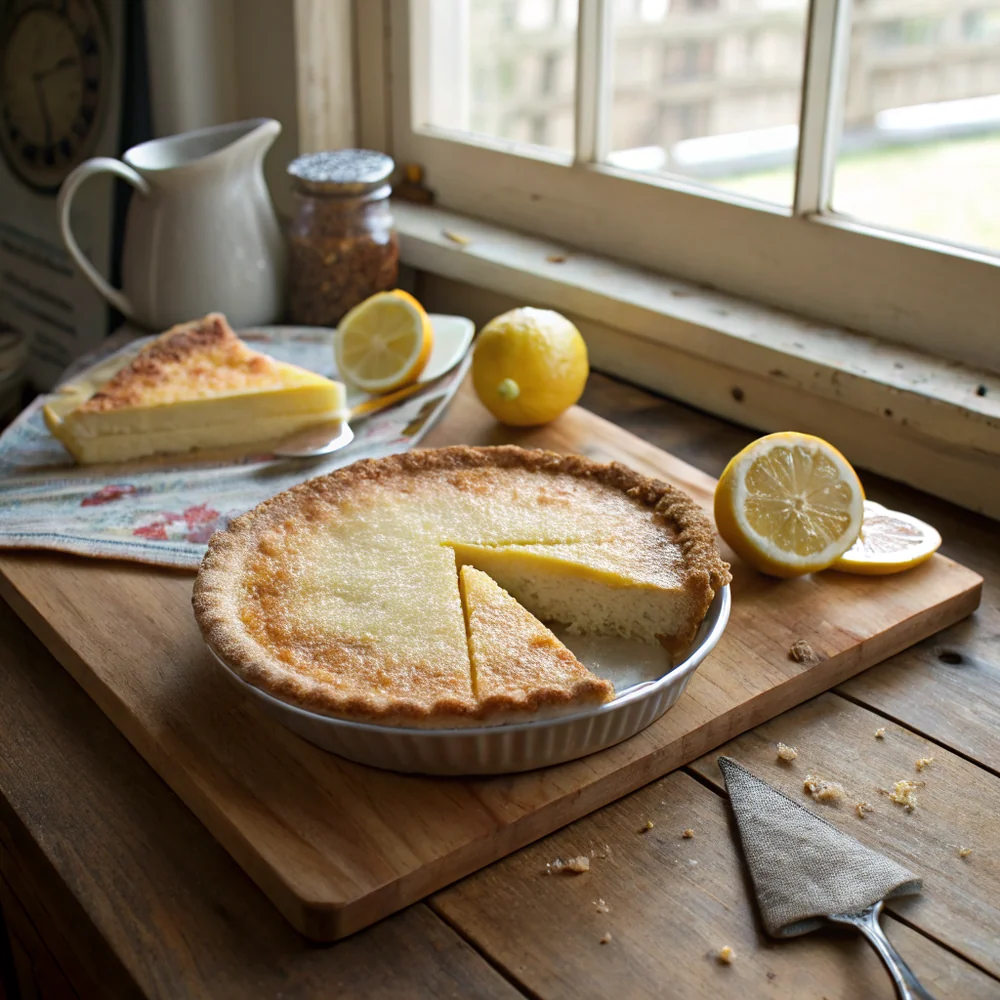
A Texas Hill Country custard pie with German and Czech immigrant roots. Full-fat buttermilk whisked with melted butter, sugar, eggs, flour, vanilla, lemon zest, and nutmeg, baked in an all-butter crust at 350F until just set. Tangy, silky, slightly lemony - the country cousin of crème brûlée.
Can I use low-fat buttermilk?
Yes, but full-fat cultured buttermilk gives the best flavor and texture. Low-fat works in a pinch and produces an acceptable pie that is slightly less rich. Skim or fat-free buttermilk produces a watery, less satisfying result; avoid.
What's the difference between buttermilk pie and chess pie?
Both are Southern custard pies. Buttermilk pie uses buttermilk and flour as thickeners; chess pie uses cornmeal and sometimes vinegar. Buttermilk pie tastes tangier and creamier; chess pie tastes more rustic and slightly grainy. Both are descended from European custard tarts adapted to Southern ingredients.
Should buttermilk pie be served cold or at room temperature?
Both work; preferences vary by family. Room temperature gives the silkiest texture and most pronounced lemon-vanilla notes. Refrigerated gives a firmer cold slice that some prefer. The pie should rest at least 4 hours after baking before any slicing - that step is non-negotiable regardless of serving temperature.
Why does my buttermilk pie come out runny?
Either under-baked or sliced too early. The center should jiggle like firm jello when tapped (not ripple like liquid) and an instant-read thermometer should show 175-180F. Always rest at least 4 hours before slicing - the custard continues setting as it cools.
Can I make it without lemon zest?
Yes, but the pie loses its bright top note and tastes flatter. Substitutes: 1 teaspoon orange zest (warmer, less sharp), or skip entirely and accept the tradeoff. Lemon zest is the canonical move for Texas-style buttermilk pie.
How long does buttermilk pie keep?
Room temperature 24 hours loosely covered. Refrigerated 5 days in an airtight container. Frozen 2 months wrapped tightly in plastic and foil. Thaw overnight in the fridge before serving. The pie holds well because the custard is stable; it does not weep significantly even after refrigeration.