Texas BBQ
Cowboy Butter for Steak
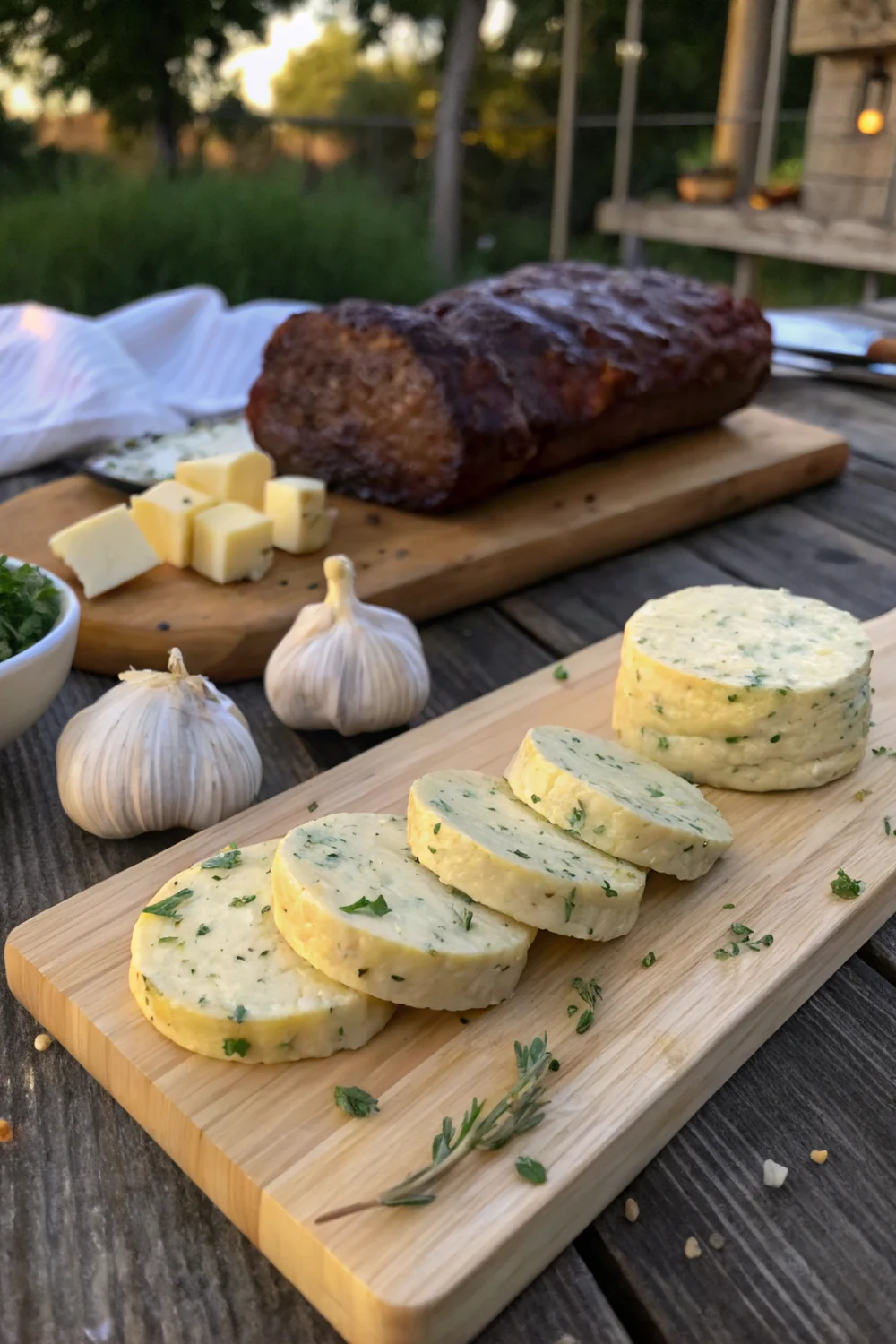
Chef Mia's cowboy butter: softened butter, fresh herbs, garlic, lemon zest, smoked paprika, Dijon. Melts on a hot ribeye and changes everything. 10 minutes prep.
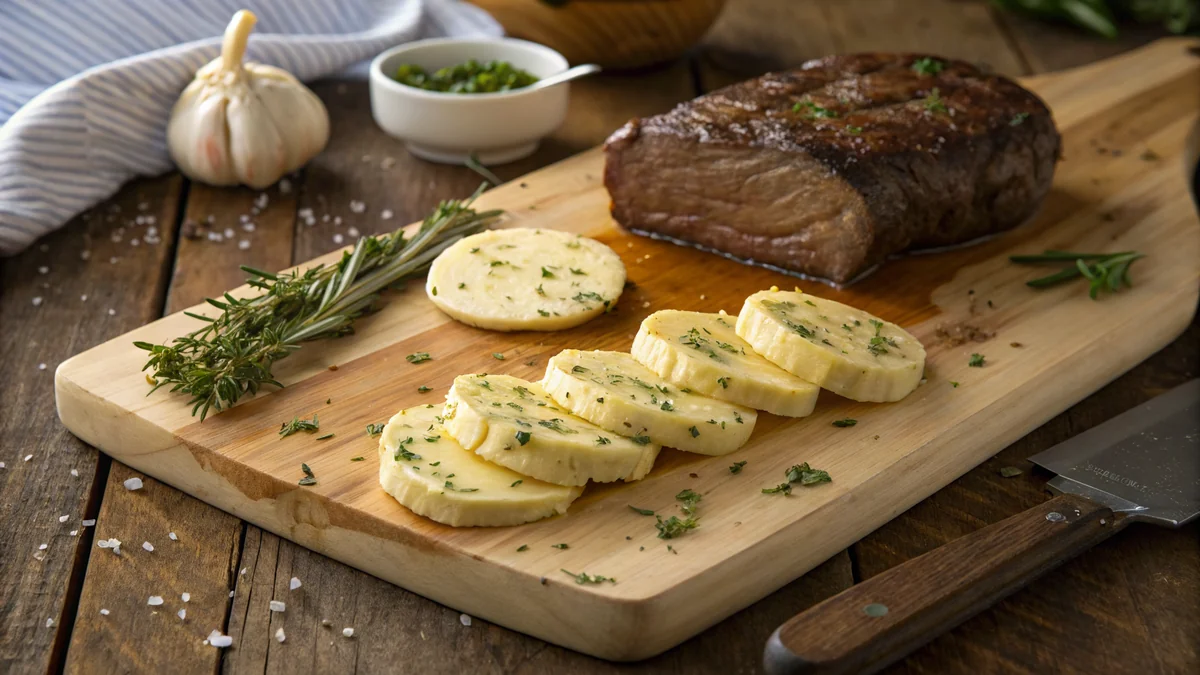
Quick answer: Cowboy butter is a Texas compound butter built on softened unsalted butter folded with minced garlic, fresh thyme + chives + parsley, smoked paprika, Dijon mustard, lemon zest, kosher salt, and a pinch of red pepper flakes. Roll into a log in plastic wrap, chill 1 hour to firm, slice into coins. Place a coin on a hot grilled ribeye right off the grill - the butter melts into the meat juices and creates an instant pan sauce. Holds 1 week refrigerated, 3 months frozen.
Cowboy butter is one of those Texan kitchen tricks that is so simple it feels like a cheat. You take softened butter, fold in minced garlic, fresh herbs, smoked paprika, Dijon mustard, lemon zest, and a tiny pinch of red pepper flakes, roll it into a log, chill it. When a hot ribeye comes off the grill, you put a coin of the butter on top. The butter melts, the garlic releases, the herbs warm, and within thirty seconds you have a pan sauce sitting on your steak that tastes like you spent an hour reducing.
The technique came out of ranch cooking - cowboys with limited equipment but access to good butter, fresh herbs from the kitchen garden, and freshly slaughtered beef. The compound butter approach was practical: make once, slice as needed, every steak gets a sauce without any extra cooking. The technique stuck. Today every Hill Country steakhouse has a version, and home cooks across Texas keep a log of cowboy butter in the fridge year-round.
What Compound Butter Does
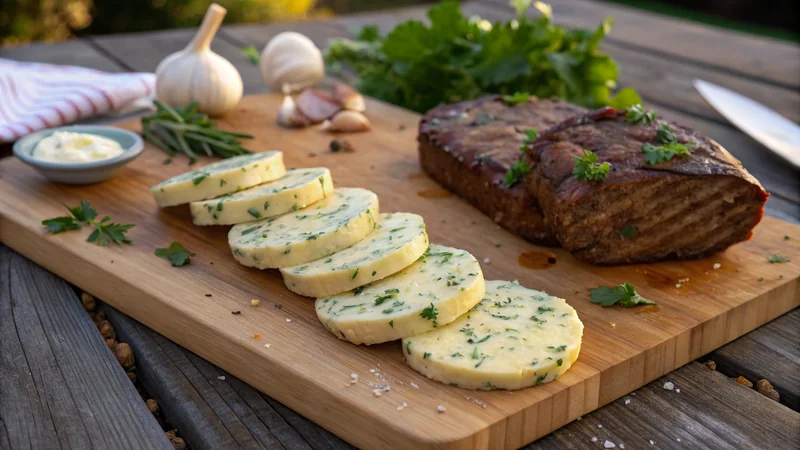
A compound butter is softened butter mixed with savory or sweet additions, then chilled into a firm log. The butter is the carrier; the additions are the flavor. When the butter melts on hot food, it releases all those flavors at once, transforming a simple seared steak into a steak with a sauce.
The technique came from French classical cuisine - beurre composé - where it was used to finish sauces and dress meats. Texas ranch cooking adopted it for practical reasons: cowboys cooking at distant camps needed flavor in their food without complicated sauce work. A log of compound butter in the cooler, sliced as needed, gave every meal a finishing touch.
Cowboy butter is the Texas-flavored version: smoked paprika instead of regular, more garlic than French versions, Worcestershire and Dijon for umami depth, lemon zest for brightness. The result tastes assertively Texan without straying into kitsch.
Three Fresh Herbs Are Required
Thyme, chives, and parsley are the three-herb canon for cowboy butter. Each does specific work. Thyme provides woody savory depth; chives add mild onion notes; parsley brings green grassiness and visual color. Substituting any one of them throws the balance off.
Thyme: use fresh leaves stripped from the stems, not dried. Dried thyme tastes flat in a butter where it does not get cooked. Fresh thyme leaves are tiny and need finely chopping or they pop in your teeth.
Chives: chop very fine. Long chive pieces become tough strings in chilled butter. Use scissors to cut chives into 1/8-inch pieces - faster and cleaner than a knife.
Parsley: use flat-leaf (Italian), not curly. Flat-leaf has stronger flavor; curly is decorative-only. Strip leaves from stems before chopping. The parsley brightens the dark color of the butter and pairs perfectly with steak.
Optional fourth herb: tarragon (1 teaspoon, finely chopped). It adds a subtle anise note that some Texans love and others find too French. Try with and without to see which you prefer.
Smoked Paprika: Spanish Pimenton
Smoked paprika is what distinguishes cowboy butter from a standard French herb butter. It adds smoky depth that amplifies the steak's grilled char and provides the warm orange color that makes the butter visually distinctive.
Buy Spanish pimenton, not Hungarian paprika. Hungarian paprika is sweet and bright; Spanish pimenton is smoke-aged. Within Spanish pimenton, dulce (sweet/mild) is the right choice for cowboy butter - it gives the smoke without harsh heat. Pimenton ahumado picante (hot smoked) works for those who want a kick.
Sub in unsmoked sweet paprika if you cannot find smoked - the butter will lose its signature smoky note but still taste good. Add 1/4 teaspoon liquid smoke as a workaround if you have it, but go light - liquid smoke is potent.
Quality matters. Buy paprika in small jars and replace every 6 months. Old paprika tastes flat and dusty; fresh paprika has a vibrant aroma when you open the jar.
Why Dijon and Worcestershire
Dijon mustard provides acid and sharpness that cuts through butter's richness. Without it the butter feels heavy and one-dimensional. With it, the butter has structure - your palate notices the lemon, then the herbs, then the smoke, then a finishing tang from the mustard. 1 1/2 teaspoons is the right amount; more and the butter tastes mustardy.
Use proper Dijon (Maille, Grey Poupon, Edmond Fallot), not yellow ballpark mustard or honey mustard. The flavor profile is different - Dijon's wine and vinegar base is what works.
Worcestershire sauce is optional but recommended. 1 teaspoon adds umami depth - the anchovy, tamarind, molasses, and vinegar all contribute background notes that enhance the steak. The sauce disappears into the butter; you taste the result, not the sauce itself.
Skip Worcestershire only if you avoid anchovies for dietary reasons. Vegetarian Worcestershire (Lea & Perrins makes one) substitutes mushroom for anchovy and works equally well.
Texture and Storage
Refrigerated, the butter log keeps 7-10 days in plastic wrap. The fresh herbs slowly oxidize and lose their bright color past day 5; the flavor remains good for the full 10 days. Wrap tightly to prevent the butter from absorbing other refrigerator odors.
Frozen, the butter log keeps 3 months in plastic wrap then a freezer bag. Thaw in the refrigerator overnight before slicing, or slice while frozen with a sharp knife. Frozen butter coins drop directly onto hot steak without pre-thawing.
Make a triple batch and slice into individual coins, freeze on a sheet pan, then bag in zip-tops. Pull one coin per steak, drop on, no thawing required. This is the home cook's professional move.
Avoid leaving the butter at room temperature for more than 2 hours - the dairy fats can spoil and the herbs go soggy. Always refrigerate after use.
Where to Use It
Beyond steak, cowboy butter excels on: grilled chicken (place a coin on a hot breast right off the grill, melts into a sauce), seared salmon (the lemon zest and smoke pair beautifully with fish), roasted potatoes (toss roasted halves with a coin while hot), grilled corn on the cob (rub a coin onto hot corn), sauteed mushrooms (toss in a coin at the end), baked sweet potatoes (split open hot potato, drop a coin inside).
On bread: spread softened cowboy butter on warm sourdough, French bread, or biscuits for an instant savory garlic bread. Heat under the broiler 90 seconds for a crispy version. Texas barbecue restaurants often serve compound butter alongside bread baskets for this purpose.
On vegetables: green beans, asparagus, carrots, broccoli all benefit from a finishing coin. Place butter on hot vegetables right out of the steamer or skillet, toss to melt and coat.
Less obvious but excellent: scrambled eggs (fold in 1 tablespoon at the end of cooking), grilled cheese sandwiches (use as the sandwich-side butter), popcorn (drizzle melted cowboy butter over fresh popcorn for an unexpectedly elegant snack).
The Steak: Pairing Notes
Cowboy butter is best on grilled steaks where the high heat creates the temperature contrast that melts the butter dramatically. Ribeye is the canonical match - the fat marbling and the butter complement each other. New York strip works equally well; the butter adds richness that the leaner strip needs.
Tenderloin (filet mignon) benefits from cowboy butter because the cut is mild and the butter adds the flavor that the meat itself lacks. Bone-in cuts (cowboy ribeye, tomahawk, T-bone) are spectacular with cowboy butter - the bone keeps the meat warm longer and the butter melts gradually over 2-3 minutes.
Skip cowboy butter on dry-aged steaks 60+ days. The aged-meat flavors are subtle and the butter overpowers them. Save cowboy butter for younger steaks (USDA Choice, Prime, supermarket-grade dry-aged 14-21 days) where the butter elevates rather than masks.
Method: take the steak off the grill, let rest 1 minute, place a butter coin centered on the hottest spot of the meat. Wait 30 seconds for the butter to melt halfway. Slice the steak through the partially-melted butter, distributing the sauce as you cut. Serve immediately while the butter is still pooled.
Cowboy Butter for Steak Recipe
Ingredients
- 1 cup (227 g) unsalted butter, softened to room temperature (not melted)
- 4 garlic cloves, finely minced (or 2 teaspoons garlic paste)
- 1 tablespoon fresh thyme leaves, finely chopped
- 1 tablespoon fresh chives, finely chopped
- 1 tablespoon fresh flat-leaf parsley, finely chopped
- 1 1/2 teaspoons Dijon mustard
- 1 teaspoon smoked paprika (Spanish pimenton dulce)
- Zest of 1 lemon (about 1 teaspoon)
- 3/4 teaspoon kosher salt
- 1/2 teaspoon coarse ground black pepper
- 1/4 teaspoon red pepper flakes (or 1/8 tsp cayenne for more heat)
- 1 teaspoon Worcestershire sauce (optional, deepens umami)
Instructions
- Soften the butter. Pull the butter out of the fridge 1-2 hours before mixing. Softened means pliable when pressed but not melted - the butter holds its shape but yields easily to a spoon. Microwaving for softening is risky; even a few seconds too long melts pockets which break the texture. Room temperature is the right call.
- Prep aromatics. Mince the garlic finely - paste-fine, not chopped. Finely chop fresh thyme, chives, and parsley. Zest the lemon with a microplane (avoid the bitter white pith). The herbs should be uniform fine; large herb pieces give an inconsistent butter where some bites taste flat and others overwhelm with parsley.
- Combine in a bowl. Place softened butter in a medium bowl. Add minced garlic, all three herbs, Dijon, smoked paprika, lemon zest, salt, black pepper, red pepper flakes, and Worcestershire if using. Use a sturdy fork or wooden spoon to fold everything together. Aim for even color distribution - the butter should turn pale tan-orange from the smoked paprika with visible green herb flecks.
- Taste and adjust. Pinch off a small amount and taste at room temperature. The butter should taste assertive - it will mellow slightly on the steak as the heat softens flavors. Adjust salt if flat, more lemon zest for brightness, more red pepper for heat, more Dijon for tang. Make notes for next time.
- Roll into a log. Lay a 12-inch sheet of plastic wrap on the counter. Spoon the butter onto the wrap in a rough 8-inch line along one edge. Lift the near edge of the wrap over the butter and roll into a tight log, about 1 1/2 inches in diameter. Twist the ends like a candy wrapper to close. Chill in the refrigerator at least 1 hour to firm up.
- Slice into coins. Once chilled, the butter is firm enough to slice into 1/4-inch coins. Use a sharp knife with a clean cut motion - sawing pulls herbs out unevenly. Wipe the knife between cuts. Each coin is about 1 tablespoon and serves one steak, lobster tail, or chicken breast. Re-wrap unused log and refrigerate or freeze.
- Use on hot food. The butter is meant for hot proteins. Place a coin on a freshly grilled ribeye, T-bone, or strip steak right after taking it off the heat - the residual heat melts the butter into the meat juices within 30 seconds, creating an instant pan sauce. Also excellent on grilled corn, baked potatoes, sauteed vegetables, hot bread, or seared salmon.
Frequently Asked Questions
How long does cowboy butter keep?
Refrigerated 7-10 days, frozen 3 months. The fresh herbs lose their bright color past day 5 in the fridge but the flavor stays good for the full 10 days. Wrap tightly in plastic wrap to prevent it from absorbing refrigerator odors. Frozen, slice straight from the freezer onto hot steaks - no need to thaw first.
Can I use salted butter instead of unsalted?
Yes but reduce the added salt from 3/4 teaspoon to 1/4 teaspoon to compensate. Salted butter varies from brand to brand (some have 1.5 percent salt, others 2 percent), making seasoning unpredictable. Unsalted butter gives you control over the salt level. Both work; unsalted is preferred.
Can I make cowboy butter with dried herbs?
Possible but not recommended. Dried thyme, chives, and parsley taste flat and dusty in a non-cooked application like compound butter. Fresh herbs are the difference between a memorable cowboy butter and a forgettable one. If you must use dried, use 1/3 the amount and rehydrate first in 1 teaspoon of warm water.
Why is my cowboy butter grainy?
The butter was probably under-softened (still cold in spots) when mixed, or it was melted too aggressively in the microwave and then re-firmed. Fix: bring to softened room temperature again, re-whip with a fork until smooth, re-roll into a log. Soft butter at proper room temp incorporates herbs evenly without graininess.
Can I make this dairy-free?
Yes. Substitute high-fat vegan butter (Miyoko's, Earth Balance European-style, Califia) 1:1 for the dairy butter. Texture is slightly softer than dairy butter at refrigerator temperature; freezer storage helps firm it. Flavor is good but distinguishable from real butter; the herbs and seasonings carry the dish either way.
Is this the same as Garlic Butter from Texas Roadhouse?
No. Texas Roadhouse's signature butter (cinnamon honey butter) is sweet, served with their bread, and based on butter + cinnamon + honey + powdered sugar. Cowboy butter is savory, served with steak, and built on butter + herbs + garlic + smoked paprika. They are different products for different purposes.
How big should the coins be per steak?
1 tablespoon per 8-12 oz steak is the standard. A 1/4-inch slice from a 1 1/2-inch diameter log gives roughly 1 tablespoon. For a thick bone-in cowboy ribeye (16-20 oz), use 2 tablespoons. The butter should fully melt within 30-60 seconds of placement; if there is excess pooling on the plate, cut back.
Can I serve cowboy butter cold as a dipping sauce?
It is firm at refrigerator temperature, so no. Soften 30-60 minutes at room temperature for a spreadable consistency, or melt fully for a dipping sauce (heat 60-90 seconds in a small saucepan over low heat, whisking until smooth). Melted cowboy butter is excellent for dipping shrimp, lobster, or sourdough bread crusts.