Tex-Mex Recipes
Migas
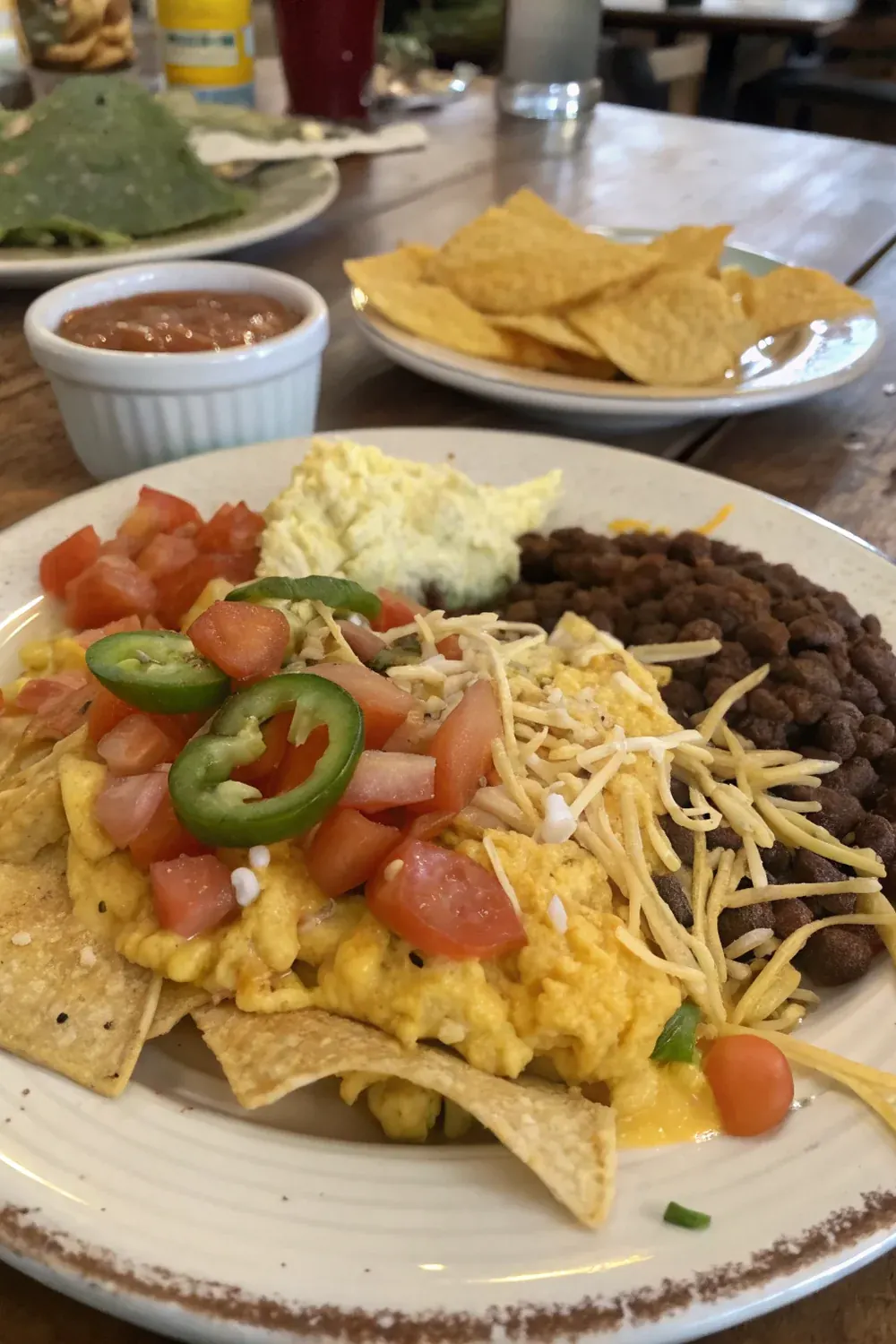
Chef Mia's Austin migas: scrambled eggs with crispy fried corn tortilla strips, jalapeno, tomato, onion, Monterey Jack. The classic Austin Tex-Mex breakfast.
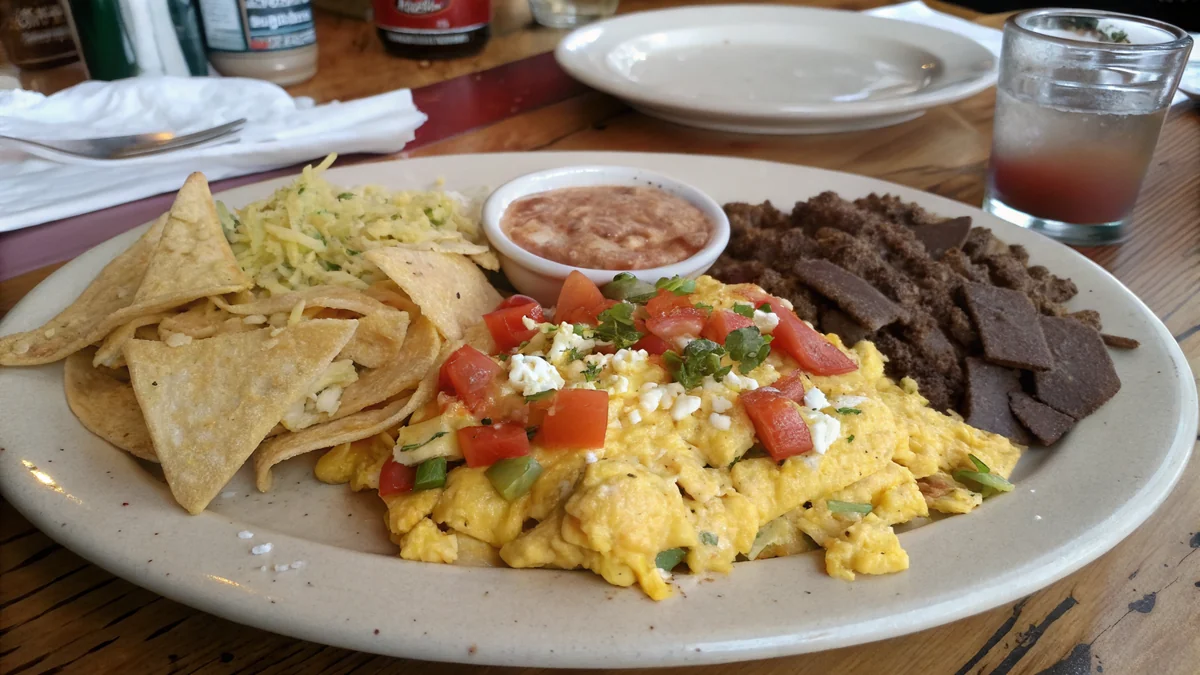
Quick answer: Tex-Mex migas are scrambled eggs cooked with crispy fried corn tortilla strips, sauteed jalapeno, diced tomato, white onion, and a generous handful of shredded Monterey Jack cheese. The tortilla strips fry crisp first in a separate pan, then the eggs and aromatics scramble around them in butter or bacon fat - the strips stay crispy in spots, soften in others, and the scrambled eggs hold everything together. Serve immediately with refried beans, warm flour tortillas, and fresh salsa or pico de gallo. The 25-minute Austin Tex-Mex breakfast classic.
If you've eaten breakfast in Austin, you've probably eaten migas. The dish is on every Tex-Mex breakfast menu in town - Cisco's, Magnolia Cafe, Maria's Taco Xpress, Curra's, Polvo's, Joe's Bakery, El Naranjo. It's the breakfast Austin musicians eat after late shows, the breakfast software engineers eat before standup meetings, the breakfast UT students eat with hangovers on Saturday mornings. Eggs, crispy tortilla strips, jalapeno, tomato, onion, melted Jack cheese - simple in concept, deeply satisfying in practice.
It's not the Spanish migas (a peasant dish of stale bread fried with garlic and chorizo) and it's not chilaquiles (which uses tortilla chips submerged in salsa). The Tex-Mex Austin migas is a scrambled-egg breakfast where the tortilla strips give the textural contrast between soft eggs and crispy carb. This recipe is the canonical Austin version. Twenty-five minutes from start to finish. Serve with refried beans, fresh salsa, and warm flour tortillas - the Austin Tex-Mex breakfast trifecta.
Austin Migas vs Spanish Migas vs Chilaquiles
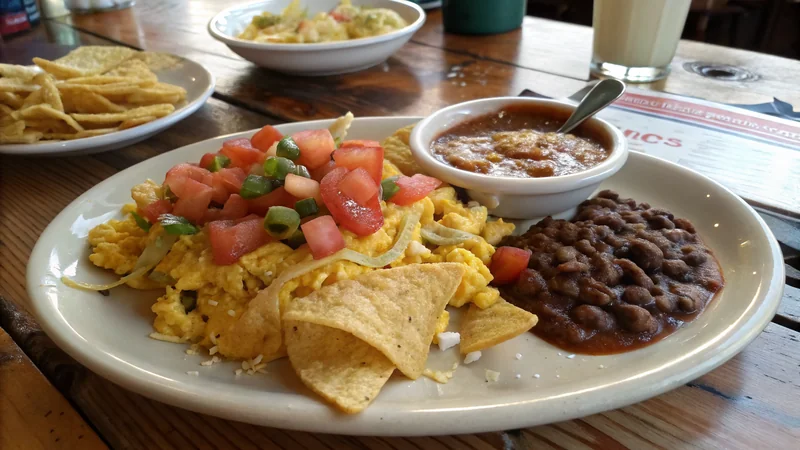
Three different dishes share the migas family connection but cook differently. Austin Tex-Mex migas (this recipe) are scrambled eggs with crispy fried corn tortilla strips, sauteed peppers, and cheese - a quick breakfast finished in 25 minutes. Spanish migas are a peasant dish of stale bread torn into small pieces, fried with garlic and chorizo or pancetta, often served at lunch or dinner. Different texture, different cooking technique, different cuisine.
Chilaquiles are the closest Mexican cousin: crispy tortilla chips (or strips) simmered in salsa verde or roja until they soften and absorb the sauce. Topped with eggs, crema, queso fresco, onion, cilantro. Chilaquiles are saucy and absorbent; migas are scrambled and tortilla-chunky. They cohabit on Tex-Mex breakfast menus but they're different dishes.
The Austin version is specifically Tex-Mex - influenced by Mexican cooking but not identical. The cheese melted into the eggs (Monterey Jack or Jack-Cheddar) is American/Tex-Mex. Mexican Mexico-style migas use queso fresco crumbled on top instead. Both work; this recipe is the Austin Tex-Mex tradition.
Austin diners' menus often differentiate: 'Migas' for the Tex-Mex version, 'Mexican-style migas' for the queso-fresco-Mexican version, and 'Chilaquiles' for the salsa-soaked version.
The Austin Migas Trail
Cisco's Restaurant on East 6th Street has served migas since 1948. It's the unofficial heart of Austin Mexican breakfast - the diner where local politicians and music industry figures eat early morning meetings, where road musicians stop after late shows on the way to bed.
Magnolia Cafe (originally one location near the lake, now several around Austin) is the 24-hour migas hangout. Their migas plate is the recovery breakfast for everyone in Austin's nightlife industry - bartenders, DJs, club promoters - who finish work at 4 AM and want hot food.
Maria's Taco Xpress on South Lamar is the South Austin alternative. Migas tacos (the eggs in a flour tortilla, like a breakfast burrito) is their signature variation. The Sunday morning gospel brunch at Maria's is an Austin institution.
Other Austin migas destinations: Curra's Grill (East Austin classic, founded 1992), Joe's Bakery (the Mexican panaderia and breakfast spot on East 7th), El Naranjo (more refined Oaxacan-Mexican but with excellent migas), Polvo's (East Austin, the cheapest excellent migas), Veracruz All Natural (the food trucks turned brick-and-mortar). Each has a slight regional variation; all serve the canonical Tex-Mex Austin migas.
Crispy Tortilla Strips Are the Soul
The tortilla strips are what define migas. Without them, the dish is just scrambled eggs with vegetables - acceptable but not migas. The strips bring textural contrast: crispy when first added, gradually softening from the egg moisture, never fully soggy.
Use yellow corn tortillas, not flour tortillas or white corn. Yellow corn has stronger corn flavor and crisps better. White corn tortillas work in a pinch but the flavor is milder.
Cut into 1/2-inch wide strips, 3 inches long. Smaller strips lose their crunch too fast in the eggs; larger pieces feel awkward to eat. Some Austin cooks use tortilla chips (crushed slightly) as a shortcut - acceptable but the strip-cut from fresh tortillas tastes fresher.
Day-old slightly stale tortillas crisp better than fresh ones. The slight drying makes the strips hold their crunch longer in the eggs. If using fresh tortillas, no problem - they crisp slightly more slowly but work fine.
Fry at medium-high heat (350F oil temperature) for 60-90 seconds. Higher temperatures burn the strips before crisping; lower temperatures give greasy under-crisped strips. Watch the color: golden brown on both sides is the signal to pull.
Jalapeno, Tomato, Onion: The Trinity
The three vegetable additions - jalapeno, tomato, onion - are non-negotiable in Austin migas. Each does specific work. Jalapeno provides heat and a fresh-pepper note. Tomato provides acid and moisture that balances the eggs and cheese. Onion provides sweet aromatic depth.
Jalapeno: use fresh, not jarred. Seed and dice 1 jalapeno for traditional heat; use 2 for spicier; substitute serrano for more aggressive heat. Avoid jarred pickled jalapenos - the vinegar overpowers the eggs.
Tomato: Roma tomatoes (also called plum tomatoes) are the right choice - meaty, low-water, slightly sweet. Seed and dice to remove excess moisture. Avoid over-ripe tomatoes that release too much juice. Out of season, drained canned diced tomatoes (1/2 cup) substitute acceptably.
Onion: yellow onion is canonical. White onion gives slightly sharper flavor; some Mexico City variations use red onion for color. Yellow is the Austin Tex-Mex standard. Dice fine - 1/4-inch pieces - so they soften completely during the saute.
Optional addition: 1/2 cup of red bell pepper (this recipe includes it). Adds color and slight sweetness. Some Austin diner variations skip the bell pepper for a more authentic-Mexican feel; this version includes it for a brighter plate appearance.
Monterey Jack Is the Cheese
Monterey Jack is the canonical Austin migas cheese. It melts cleanly into the eggs (more melty than cheddar), has mild buttery flavor that pairs with the corn tortillas, and gives the dish its visual yellow-white melted-cheese strand appearance.
Pre-shredded Monterey Jack from the supermarket works fine. Some brands add anti-caking agents that affect melting slightly; for the best melt, buy a block and shred yourself just before cooking.
Jack-Cheddar blend (Pepper Jack, Colby Jack, or 50/50 Jack and sharp Cheddar) is an acceptable variation. Pepper Jack adds extra heat, Colby Jack stays mild, sharp Cheddar adds tang. Avoid pre-shredded Mexican blend - it's often heavy on cheap shred ingredients (queso quesadilla, asadero) that don't melt as cleanly.
Mexican-style migas (versus Austin Tex-Mex) use crumbled queso fresco instead of shredded melting cheese. Sprinkled on top after cooking, not melted in. Different texture, different flavor profile. Both versions appear on Austin Tex-Mex menus.
Quantity: 1 1/2 cups for 4 servings (about 1/3 cup per plate). More cheese is acceptable; less than 1 cup makes the migas feel under-cheesed. Add the cheese off the heat so the eggs don't overcook from the residual heat.
Cooking the Eggs Right
Soft-scrambled eggs are the goal - just-set, still glistening, not yet dry. The Austin diner standard is eggs cooked to about 80 percent done and finished by carryover heat. Overcooked eggs (rubbery, dry, weepy) are the most common migas mistake.
Medium-low heat. The eggs should set gently, not blast-cook. Lower temperatures give more time to push and fold without overcooking; higher temperatures rush the texture into rubbery before you can stop them.
Use a rubber spatula, not a fork or a wooden spoon. The spatula's flat edge folds eggs gently and scrapes the skillet bottom cleanly. Fork-stirred eggs end up with hard cooked egg fragments mixed with raw bits.
The technique: pour eggs in, wait 30 seconds, push toward center as they set, continue gentle pushing every 30 seconds. As the eggs start to look 75% set, stop stirring and start folding the tortilla strips and cheese. The residual heat finishes the eggs to perfect texture.
Total egg cooking time: 3-4 minutes from pour to plate. Faster than that means heat too high; slower than that means heat too low. The window is the soft-set sweet spot.
Serve with the Austin Trifecta
Migas alone is a complete meal but the Austin Tex-Mex breakfast trifecta is migas + refried beans + warm flour tortillas. The three together make the proper Austin breakfast experience.
Refried beans: homemade is excellent, and my refried beans walk through the bacon-fat-and-bean-broth method (pinto beans, lard, garlic, salt - the canonical Tex-Mex preparation) but canned refried beans (Old El Paso, Rosarita, La Costena) are perfectly acceptable. Heat in a saucepan with a splash of broth and a pat of butter to loosen the texture. Top with a small handful of shredded cheese.
Flour tortillas: warm 6-inch flour tortillas (Mission, Tortilla Land, or homemade) on a dry skillet for 10-15 seconds per side until pliable. Wrap in a clean kitchen towel to keep warm. The Austin diner method is to pile 4-6 tortillas on a small plate at the center of the table; everyone takes from the stack.
Pico de gallo: fresh chopped tomato, onion, jalapeno, cilantro, lime juice, salt - the canonical Tex-Mex salsa. Make ahead (it improves with 30 minutes of rest). Excellent on top of the migas or for filling tortillas with extra eggs.
Optional additions: sliced avocado or fresh guacamole, hot sauce (Cholula, Tapatio, Valentina), Mexican crema or sour cream, a wedge of lime, a side of bacon or chorizo. The plate gets more elaborate as you go, but the basic migas + beans + tortillas is the soul of Austin Tex-Mex breakfast. If you add just one thing, make it a spoonful of restaurant-style salsa or a pour of salsa verde; the acid is what the richness of the plate is quietly asking for.
Migas Recipe
Ingredients
- For the tortilla strips:
- 6 corn tortillas (yellow, 6-inch), cut into 1/2-inch wide strips
- 1/4 cup vegetable oil, for frying
- Pinch of kosher salt
- For the migas:
- 8 large eggs
- 2 tablespoons whole milk or half-and-half
- 1/2 teaspoon kosher salt, plus more to taste
- 1/4 teaspoon freshly ground black pepper
- 2 tablespoons unsalted butter (or rendered bacon fat for more flavor)
- 1/2 medium yellow onion, finely diced (about 1/2 cup)
- 1/2 medium red bell pepper, finely diced (about 1/2 cup)
- 1 medium fresh jalapeno, seeded and finely diced (or 2 jalapenos for more heat)
- 1 medium Roma tomato, seeded and diced (about 1/2 cup)
- 1 1/2 cups (170 g) shredded Monterey Jack cheese (or a Monterey Jack-Cheddar blend)
- 2 tablespoons chopped fresh cilantro, plus more for garnish
- For serving:
- Refried beans (homemade or canned, warmed)
- Warm flour tortillas (6-inch, 8 total)
- Fresh pico de gallo or salsa roja
- Sliced avocado or guacamole (optional)
- Hot sauce (Cholula, Tapatio, Valentina)
- Hot coffee or iced coffee
Instructions
- Cut the tortilla strips. Stack 6 corn tortillas on a cutting board. Use a sharp knife to cut the stack in half, then cut each half into 1/2-inch wide strips. The strips should be about 3 inches long. Some Austin diners use day-old slightly stale tortillas for better crisp; fresh works fine.
- Fry the strips crispy. Heat 1/4 cup vegetable oil in a 12-inch skillet over medium-high heat. The oil should shimmer but not smoke. Add the tortilla strips in a single layer (work in 2 batches if needed). Fry 60-90 seconds, stirring once, until the strips are golden brown and crispy - they should hold their shape and crunch when bitten. Remove with a slotted spoon to a paper-towel-lined plate. Sprinkle with a pinch of salt.
- Drain the oil. Pour out all but 1 tablespoon of the frying oil. Wipe the skillet with a paper towel if there are dark bits. Return to medium heat and add the butter (or bacon fat). The remaining oil mixed with butter creates the cooking fat for the eggs - flavor depth without greasiness.
- Saute the aromatics. Add diced onion, red bell pepper, and jalapeno to the skillet. Cook 3-4 minutes, stirring occasionally, until the onion is translucent and the peppers are softened. Add diced tomato; cook 1 more minute until the tomato releases some juice but still holds shape. The aromatics should look softened but not browned.
- Whisk the eggs. While the aromatics cook, whisk together the eggs, milk, salt, and black pepper in a medium bowl until uniformly yellow with no streaks. The milk loosens the eggs and gives the scrambled-eggs a slightly creamier texture. Some Austin cooks skip the milk; both versions work.
- Add eggs to the skillet. Reduce heat to medium-low. Pour the egg mixture into the skillet over the cooked aromatics. Let the eggs sit undisturbed for 30 seconds, then begin gently stirring with a rubber spatula, pushing the eggs toward the center as they set. Continue gentle stirring for 2-3 minutes until the eggs are about 75 percent cooked - still glistening, not yet dry.
- Fold in tortilla strips. Add the crispy tortilla strips and chopped cilantro. Fold gently into the eggs - the goal is to distribute the strips throughout without breaking them. Some strips will absorb egg moisture and soften slightly; others will stay fully crispy. The contrast is the migas signature.
- Add cheese, finish off heat. Sprinkle the shredded cheese over the eggs. Pull the skillet off the heat - the residual heat melts the cheese without overcooking the eggs. Let stand 30-45 seconds for the cheese to fully melt and the eggs to finish setting in the carryover heat.
- Serve immediately. Divide migas among 4 plates. Garnish each with a small sprinkle of additional cilantro. Serve with a side of refried beans, 2 warm flour tortillas, and a small bowl of pico de gallo or salsa. Hot sauce on the table. The migas are best within 5 minutes of plating - the tortilla strips lose their snap as the eggs cool.
Frequently Asked Questions
What is the difference between migas and chilaquiles?
Migas are scrambled eggs with crispy tortilla strips folded in - Tex-Mex breakfast. Chilaquiles are crispy tortilla chips simmered in salsa (verde or roja) until they soften and absorb the sauce - then topped with eggs, crema, queso fresco. Migas are scrambled and crunchy; chilaquiles are saucy and tender. Both are excellent; they're different dishes.
Are migas Mexican or Tex-Mex?
The Austin version is specifically Tex-Mex - the Mexican-American adaptation that became standard at Austin diners in the 20th century. There's also a different Spanish migas (peasant dish of stale bread fried with chorizo) and Mexican-style migas (with queso fresco instead of melted Jack). Tex-Mex Austin migas use Monterey Jack cheese, scrambled eggs technique, and Tex-Mex flavors - it's its own thing.
Can I make migas with flour tortillas instead of corn?
Possible but not authentic. The corn tortilla flavor is essential to migas character - the toasted corn note pairs perfectly with the eggs and cheese. Flour tortillas don't crisp the same way and give a different texture. If you must, use thin flour tortillas cut into strips and fry slightly longer; the result is acceptable but flatter.
How do I keep the tortilla strips crispy?
Two tricks: fry until deeply golden brown (not just pale) for maximum crisp, and add the strips at the very end of cooking the eggs (last 30 seconds before plating). Some strips will soften from the egg moisture; that's normal and good. The contrast between crispy and softened is part of the migas signature.
Can I make migas vegetarian?
Naturally vegetarian - no meat in the recipe. The richness comes from butter (or bacon fat for non-vegetarian flavor depth), eggs, and cheese. To make vegan: substitute the eggs with a vegan scramble (silken tofu + nutritional yeast + turmeric for color), use vegan cheese (Violife or Daiya melt-style), and use butter substitute. Texture differs but flavor profile holds.
Can I make migas ahead of time?
Not recommended for the eggs and tortilla strips - both lose texture quickly. Prep the aromatics (diced onion, pepper, jalapeno, tomato) up to 24 hours ahead. Cut and fry the tortilla strips up to 4 hours ahead and store at room temperature. Cook the eggs and assemble just before serving. Total cook time once everything is prepped: 8 minutes.
What goes well with migas?
The Austin Tex-Mex breakfast trifecta: migas + refried beans + warm flour tortillas. Add fresh pico de gallo or salsa, sliced avocado, hot sauce. Bacon or breakfast chorizo as a protein side. Hot coffee or horchata to drink. For a more elaborate brunch: add huevos rancheros sauce on the side, breakfast tacos as additional carriers.
Why are my migas eggs rubbery?
Heat too high or cooked too long. Eggs should be cooked over medium-low to medium heat, removed from heat at 75-80% set, and finished by carryover heat. Overcooked eggs are dry and weep moisture. Fix: lower the heat next time, pull from heat earlier, fold cheese in off the heat for the residual-heat finish.