Southern Comfort Food
Chicken and Dumplings
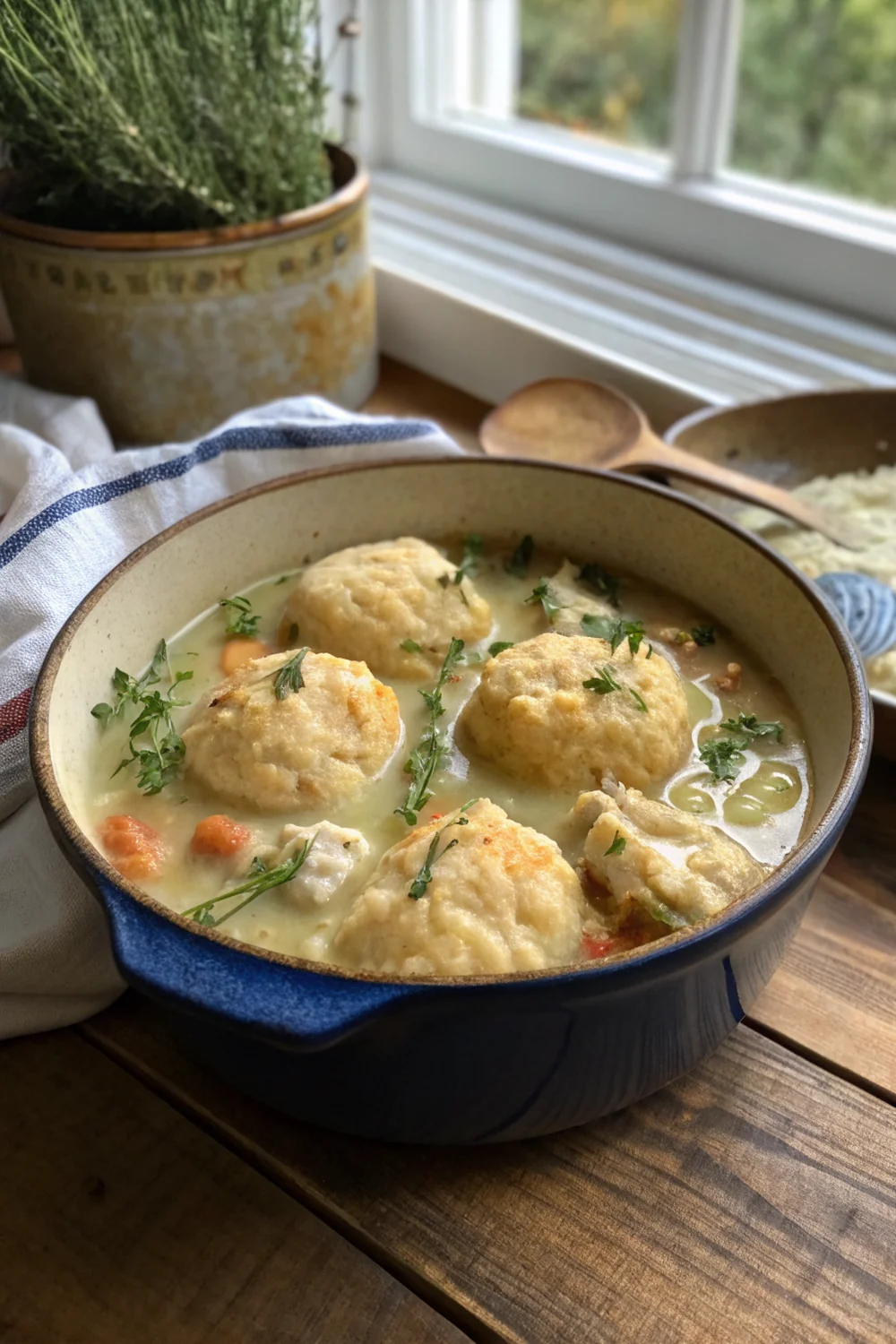
Chef Mia's Texas chicken and dumplings: rotisserie chicken in seasoned broth with buttermilk drop biscuits. The Hill Country cousin to Pillsbury Grands.
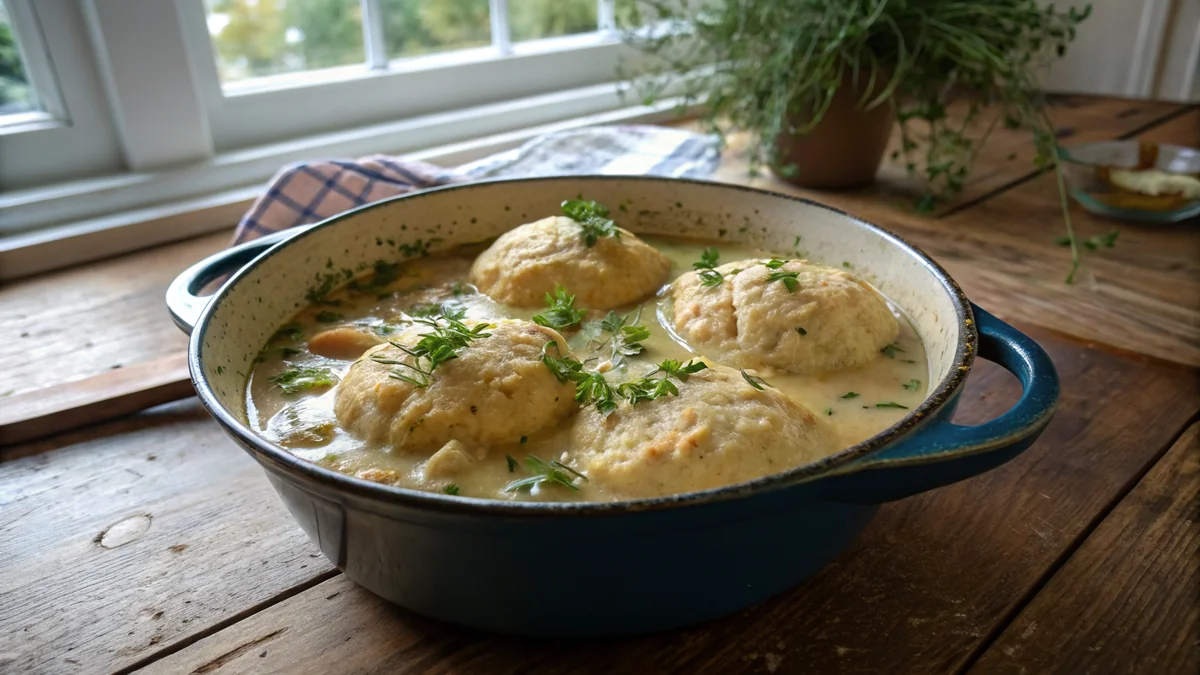
Quick answer: Texas chicken and dumplings starts with shredded chicken simmered in seasoned chicken broth with onion, celery, carrot, garlic, thyme, bay leaf, and a touch of cream for richness. Drop spoonfuls of buttermilk biscuit dough (flour, baking powder, cold butter, buttermilk) directly onto the simmering broth, cover tightly, steam 15 minutes without lifting the lid. The same dish works in a slow cooker (cook the broth on low 5-6 hours, then drop the dumplings on top for 1-1.5 hours) or an Instant Pot (pressure cook the chicken 10 minutes, then steam the dumplings on Saute, never under pressure). The dumplings finish puffy, tender, and saturated with the broth. Serve in deep bowls with cracked black pepper.
The Pillsbury Grands biscuit version of chicken and dumplings is the canon for millions of Americans who grew up with the orange tube cracking open on a Sunday afternoon. It is fast, it is reliable, and it is genuinely good. This recipe is its from-scratch Texas cousin - the Hill Country version a grandmother in Schulenburg or Boerne would make when company comes over and the canned biscuit is not formal enough.
The technique is the same: chicken in seasoned broth, biscuit dough dropped on top, steamed in a covered pot. The difference is everything from-scratch: buttermilk drop biscuits with cold butter and a hint of fresh thyme; broth built with rotisserie chicken bones and aromatic vegetables for depth; a finishing splash of cream that smooths the whole bowl. Same comfort, more soul. Sunday lunch in 60 minutes.
Why Pillsbury Grands Became the Default
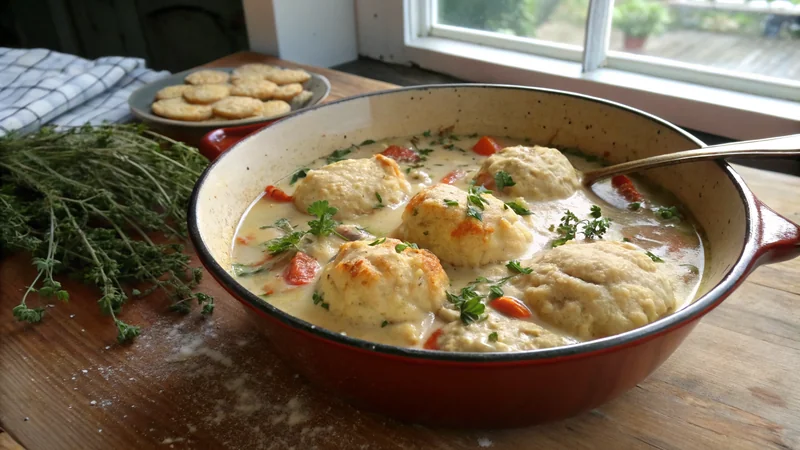
The orange Pillsbury Grands tube launched in 1972 and quickly became the default biscuit in American kitchens. Convenient, consistent, fast - just pop the cardboard tube and bake. By 1985, the chicken-and-dumplings recipe on the back of the tube had been screen-printed into millions of family memories. For an entire generation of Texas mothers and grandmothers, the tube was just kitchen reality.
There is nothing wrong with that. The recipe genuinely works, and there is no shame in canned biscuits when feeding three kids on a Tuesday night. But there is a different version that takes 20 extra minutes and tastes substantially better - the from-scratch buttermilk drop biscuit version. This recipe is that one. Same comfort, more flavor, no tube.
If you want the speed of the original Pillsbury method, you can absolutely use Grands. Cut each biscuit into quarters before dropping onto the broth, simmer covered 12-15 minutes. The from-scratch dough below takes about 8 minutes longer total but produces a noticeably better dumpling - flakier, more tender, with the buttermilk and thyme that the canned version cannot match.
Drop Biscuits vs Rolled Biscuits vs Slick Dumplings
Three styles of dumpling exist in Southern cooking. Drop biscuits (this recipe) are scooped wet onto the simmering broth - puffy, tender, biscuit-like. Rolled biscuits are formed from the same dough, rolled out, cut, and dropped - slightly more uniform shape, slightly less tender. Slick dumplings are flat noodle-like strips made of flour-and-water dough, dropped onto broth - chewy, dense, common in Southern Appalachia.
Texas Hill Country defaults to drop biscuits. They are the easiest to make and they pair best with the rich aromatic broth. Slick dumplings are more common in Tennessee and Kentucky; rolled biscuits are popular in the Carolinas. There is no wrong answer; this is a Hill Country recipe written for the Hill Country style.
Drop biscuit success depends on three things: cold butter (visible chunks in the dough), buttermilk (the acid activates baking soda for lift), and minimal mixing (overmixing develops gluten and toughens the dumpling). All three are equally important.
Rotisserie Chicken Is the Texan Move
A 3-4 lb rotisserie chicken from H-E-B yields about 4 cups of shredded meat - exactly the amount this recipe needs. The chicken is already cooked, seasoned, and tender. Pulling the meat off takes 8 minutes. Total time saved versus poaching from raw: 45 minutes.
If you have time and want maximum flavor, poach 4 boneless skinless thighs in seasoned broth (1 quart broth + halved onion + 2 cloves garlic + bay leaf + 1 tsp salt) for 18-20 minutes until 165F internal. Cool in the broth 10 minutes, then shred. Use the poaching liquid as the broth base. The flavor difference vs rotisserie is meaningful but the time investment doubles.
Leftover roasted chicken from a Sunday dinner is also excellent. Use 4 cups of pulled meat. Keep the carcass to make stock for next week's batch. The rotisserie route is the sensible weeknight choice; the homemade stock route is the special-occasion upgrade.
Avoid using deli sliced chicken or canned chicken - the texture is wrong and the flavor is flat. The recipe needs pulled chicken with visible texture for the broth to feel like a stew rather than a soup.
The Buttermilk Drop Biscuit
The biscuit is half the dish. Cold full-fat buttermilk plus baking powder plus cold butter is the formula for tender flaky drop biscuits. Each ingredient does specific work: buttermilk acidity activates the baking soda for lift; baking powder provides additional rise; cold butter melts during cooking and creates pockets that puff with steam.
Cut butter into 1/4-inch cubes; smaller cubes melt too fast during mixing and the biscuits taste leaner. Larger cubes give very flaky but uneven biscuits. The 1/4-inch cube is the standard.
Mix until just combined. The dough should look shaggy with visible flour pockets - not smooth and uniform like cake batter. Overmixing develops gluten and makes the biscuits tough.
Drop the biscuits in 1/4-cup mounds. Smaller mounds (2 tablespoons each) cook faster but feel skimpy. Larger mounds (1/3 cup) need more time and risk gummy interiors. The 1/4-cup measure is reliable.
Tight Lid, No Peeking, 15 Minutes
The dumplings cook by steam, not direct heat. The biscuit dough sits on top of the simmering broth; the broth's steam rises into the dough and cooks it through from the bottom up. A tight-fitting lid is essential - it traps the steam.
Do not lift the lid. The temptation to check is strong but every peek loses 30-40F of steam temperature, which slows cooking and gives dense gummy biscuit interiors. Set a 15-minute timer, walk away, return only when it goes off.
If your Dutch oven lid does not seal tight, place a piece of foil over the pot before placing the lid, then crimp the edges. The foil seals any gaps. This is the trick from old-school Texan cooks who used cheap pots and got perfect biscuits anyway.
After 15 minutes, lift the lid carefully (steam burns are no joke) and test one biscuit with a toothpick. Clean = done. Wet dough = 3-5 more minutes covered. Most often it is done at 15.
Slow Cooker Chicken and Dumplings (Crock Pot Method)
The crock pot version is the one I make on busy weeks, and it is the method most people mean when they search for Pillsbury chicken and dumplings in a slow cooker. Add 4 cups shredded rotisserie chicken, 6 cups chicken broth, a diced onion, two diced carrots, two diced celery ribs, two minced garlic cloves, 1 teaspoon thyme, a bay leaf, and a teaspoon of salt to a 6-quart slow cooker. Cook on low for 5 to 6 hours or on high for about 3 hours, then stir in 1/2 cup cream right at the end.
For the dumplings you have two routes. The from-scratch buttermilk drop dough below works beautifully: drop heaping spoonfuls across the surface of the hot broth, cover, and cook on high for 1 to 1.5 hours until a toothpick comes out clean. The quicker Pillsbury route is to quarter one can of Grands biscuits and drop the pieces on top, lid on, high for about 1 hour. Do not stir once the dumplings go on - they need to steam undisturbed on the surface or they sink and turn dense.
Two things make or break the slow cooker version. Keep the lid sealed once the dumplings are on, because a crock pot recovers heat slowly and every peek adds 15 minutes to the cook. And add the cream at the very end, never at the start, since dairy held on low for hours can break and turn grainy. If the broth looks thin for your taste, whisk a tablespoon of flour into a little cool broth and stir it in about 20 minutes before serving.
Instant Pot Chicken and Dumplings
The Instant Pot is the fastest route to this dish, start to finish in about 35 minutes. Use the Saute setting to soften the onion, carrot, celery, and garlic in butter for 5 minutes, then add 5 cups broth, the thyme and bay leaf, and 1.5 pounds of raw boneless chicken thighs. Set the lid to sealing, pressure cook on high for 10 minutes, then quick-release the steam. Pull the thighs out, shred them, and stir them back in with 1/2 cup cream.
Dumplings cannot pressure cook - they turn to paste - so they go in last on the Saute setting. Bring the broth back to a gentle bubble, drop the buttermilk biscuit dough (or quartered Grands) across the top, rest the lid on loosely without sealing the valve, and let them steam 12 to 15 minutes until a toothpick comes out clean. Resist the urge to pressure cook the dumplings; the open Saute simmer is what keeps them light instead of gummy.
A couple of Instant Pot notes. If you already have a rotisserie chicken, skip the pressure-cook step for the meat entirely: saute the vegetables, add the broth and shredded chicken, bring to a simmer, and go straight to dumplings, which puts the whole dish under 25 minutes. And watch for the burn warning - scrape any stuck onion off the bottom of the pot before you seal it, since browned bits on the base are the usual cause.
Optional Thickener: Flour Slurry
The traditional Pillsbury recipe gives a thin chicken broth, almost soup-like. Some Texan cooks prefer a thicker stew-like consistency that coats the back of a spoon and clings to the dumplings.
To thicken: whisk 1 tablespoon flour with 2 tablespoons of cool broth in a small bowl until smooth (no lumps). Stir into the simmering broth before adding the dumplings. Cook 2-3 minutes; the broth thickens slightly.
Cornstarch is also possible (1 tablespoon mixed with 2 tablespoons cool broth) but it gives a slightly more glossy finish that some cooks find too commercial-looking. Flour gives a more rustic matte finish.
Skip the thickener entirely if you want a brothier consistency - it is equally traditional. Texas Hill Country families serve both versions; thinner is more soup, thicker is more stew. Match it to your mood and the side dishes (thinner pairs with cornbread well; thicker pairs with biscuits well).
Storage and Reheating
Refrigerated, the chicken and dumplings keep 3-4 days in a covered container. The biscuits absorb broth as they sit, so day-2 biscuits are softer and more saturated - some people prefer this; others prefer the puffier day-1 texture. Both are valid.
Reheat gently on the stovetop over medium-low heat with a splash of broth or water to thin. Stir carefully to avoid breaking up the biscuits. Microwaving works but can give unevenly hot broth and rubber-textured biscuits.
Freezing: not recommended. The biscuits get gummy and dense on thawing; the cream sauce can break. If you must freeze, freeze just the chicken-broth-vegetable base (no biscuits, no cream) for up to 2 months. Make fresh biscuits at serving time.
Make-ahead strategy: prepare the chicken broth base in the morning, reheat at dinner time, mix and drop the biscuit dough fresh just before serving. The biscuits take 20 minutes from mix to plate.
Chicken and Dumplings Recipe
Ingredients
- For the chicken broth base:
- 1 (3-4 lb) rotisserie chicken, meat shredded (about 4 cups), bones reserved
- 2 tablespoons unsalted butter
- 1 medium yellow onion, diced
- 2 celery stalks, sliced
- 2 medium carrots, peeled and sliced
- 3 garlic cloves, minced
- 6 cups (1.4 L) low-sodium chicken broth
- 1 bay leaf
- 2 sprigs fresh thyme (or 1/2 teaspoon dried)
- 1/2 cup (120 ml) heavy cream
- 1 1/2 teaspoons kosher salt
- 1/2 teaspoon freshly ground black pepper
- 1 tablespoon all-purpose flour (for thickening, optional)
- For the buttermilk drop biscuits:
- 2 cups (250 g) all-purpose flour
- 1 tablespoon baking powder
- 1 teaspoon kosher salt
- 1/2 teaspoon baking soda
- 1/2 teaspoon fresh thyme leaves (or 1/4 teaspoon dried)
- 6 tablespoons (85 g) cold unsalted butter, cut into 1/4-inch cubes
- 1 cup (240 ml) cold full-fat buttermilk
- Optional: chopped fresh parsley, for garnish
Instructions
- Build the aromatic base. Melt 2 tablespoons butter in a 5-quart Dutch oven over medium heat. Add diced onion, celery, and carrot. Cook 6-7 minutes, stirring occasionally, until the vegetables soften and the onion turns translucent. Add minced garlic; cook 30 more seconds until fragrant. Do not let the garlic brown - it turns bitter.
- Simmer the broth. Pour in 6 cups chicken broth. Add bay leaf, thyme sprigs, salt, and pepper. Bring to a simmer over medium-high heat, then reduce to medium-low. Simmer 10 minutes uncovered to concentrate the flavor. Taste; the broth should taste rich and aromatic. Adjust salt now - the broth provides 80 percent of the seasoning.
- Add the chicken. Add the shredded rotisserie chicken to the simmering broth. Stir gently, return to a low simmer. Pour in 1/2 cup heavy cream. Stir to combine - the broth lightens to a pale ivory color. If you want a slightly thicker broth, whisk 1 tablespoon flour with 2 tablespoons of broth in a small bowl, stir into the pot.
- Mix the dry biscuit ingredients. In a large bowl, whisk together flour, baking powder, salt, baking soda, and thyme leaves. Whisking distributes the leavening evenly - clumps of baking soda give a soapy taste in finished biscuits. The thyme leaves should look like little green flecks scattered through the flour.
- Cut in the cold butter. Add the cold butter cubes. Use a pastry cutter, two forks, or your fingertips to cut the butter into the flour until the mixture looks like coarse meal with pea-sized butter chunks. Visible butter chunks are essential - they steam-puff during cooking and create the tender flaky layers. Work fast so the butter stays cold.
- Add buttermilk. Pour in the cold buttermilk. Stir with a wooden spoon or rubber spatula until just combined - the dough should look shaggy and slightly wet, with no dry flour pockets. Do not over-mix. Over-mixing develops gluten and gives tough dumplings. The dough is ready when it holds together loosely.
- Drop the biscuits onto the broth. Increase heat under the broth to medium so it simmers gently. Using a 1/4-cup measure or large spoon, drop 8-10 mounds of biscuit dough directly onto the simmering broth. Space them with at least 1/2 inch between each - they expand during cooking. Do not stir or push them down; they should sit on the surface.
- Cover tight, steam 15 minutes. Cover the Dutch oven with a tight-fitting lid. Reduce heat to medium-low. Set a timer for 15 minutes. Do not lift the lid - the steam is what cooks the biscuits through. Lifting the lid before 15 minutes drops the temperature and gives gummy biscuit interiors.
- Check doneness. After 15 minutes, lift the lid. The biscuits should be puffy, dry-looking on top, and a toothpick inserted in the center of one should come out clean (no wet dough). If still raw, cover and cook 3-5 more minutes. Total time including the dough drop is 18-20 minutes.
- Garnish and serve. Pull the bay leaf and thyme stems with tongs. Sprinkle with chopped fresh parsley if using. Ladle into deep bowls, taking 1-2 biscuits per bowl. Crack fresh black pepper over the top. Serve hot with a side of warm cornbread, pickles, or a green salad. Cracker barrel-style if you like - in the South a side of pickled okra is traditional.
Frequently Asked Questions
Can I use Pillsbury Grands biscuits instead of from-scratch dough?
Yes - this recipe was originally inspired by the canned-biscuit method. Use one 16.3 oz can of Pillsbury Grands, separate into 8 biscuits, cut each into quarters, drop onto the simmering broth, cover and cook 12-15 minutes. Faster but less tender; the from-scratch dough is the upgrade.
Why are my dumplings gummy in the middle?
Three usual causes: lid lifted during cooking (steam loss), too thick a biscuit (over 1/4-cup scoop), or broth not at simmer (too cold). Fix: keep lid sealed for full 15 minutes, use a level 1/4-cup measure for the drops, ensure the broth is gently bubbling before adding biscuits.
Can I make this with chicken thighs instead of rotisserie?
Yes. Use 1.5 lb boneless skinless chicken thighs. Sear in butter 3 minutes per side, remove, dice into 1-inch pieces. Add to the broth at the same time as the cream. Thighs give richer flavor than breast meat. Total cook time stays the same since the diced thighs cook through quickly.
Can I make Pillsbury chicken and dumplings in a crock pot?
Yes, and it is one of the easiest ways to do it. Cook the chicken, broth, vegetables, and herbs on low for 5-6 hours (or high for 3), stir in the cream, then drop the buttermilk dumpling dough or quartered Pillsbury Grands across the top and cook on high for 1-1.5 hours with the lid sealed. Do not lift the lid or stir once the dumplings are on - they steam on the surface and a slow cooker is slow to recover lost heat.
Can I make chicken and dumplings in an Instant Pot?
Yes. Saute the vegetables, add broth, herbs, and raw chicken thighs, then pressure cook on high for 10 minutes and quick-release. Shred the chicken, stir it back with the cream, and bring the broth to a simmer on Saute. Add the dumplings last and steam them 12-15 minutes with the lid resting on loosely - never seal the valve for the dumplings, since pressure turns them to paste. With rotisserie chicken you can skip the pressure step entirely and finish in under 25 minutes.
Do I need buttermilk or can I use regular milk?
Buttermilk is strongly preferred. The acid in buttermilk activates the baking soda for proper lift. If you only have whole milk, make a substitute: 1 cup milk + 1 tablespoon white vinegar or lemon juice, stir, let sit 5 minutes until curdled. The result is acceptable but not as tender.
How thick should the broth be?
Personal preference. Thin and brothy (no thickener) is the canonical Pillsbury style - more soup-like. Thicker (add 1 tablespoon flour slurry) is the stew-like style some Texan grandmothers prefer. Both are traditional. Try both versions and pick yours.
Can I make this gluten-free?
Yes. Use Bob's Red Mill 1-to-1 GF flour for both the broth thickener and the biscuit dough. Use a GF baking powder. Texture is slightly denser than wheat-flour biscuits but the flavor holds. The chicken and broth carry the dish; the wheat gluten was never the star.
What sides go with chicken and dumplings?
Cornbread is the canonical Texan match - the texture contrast and the way the cornbread sops up extra broth. Pickled green beans, dill pickles, or a simple cucumber salad balance the richness. For dessert: peach crumble in summer, pecan pie in winter.
Can I freeze chicken and dumplings?
Freeze the chicken-broth-vegetable base only (no biscuits, no cream) for up to 2 months in a freezer container. Thaw overnight, reheat to a simmer, add cream and fresh biscuits at serving time. The biscuits do not freeze well; they get gummy and dense after thawing.