Texas BBQ
Texas Pulled Pork
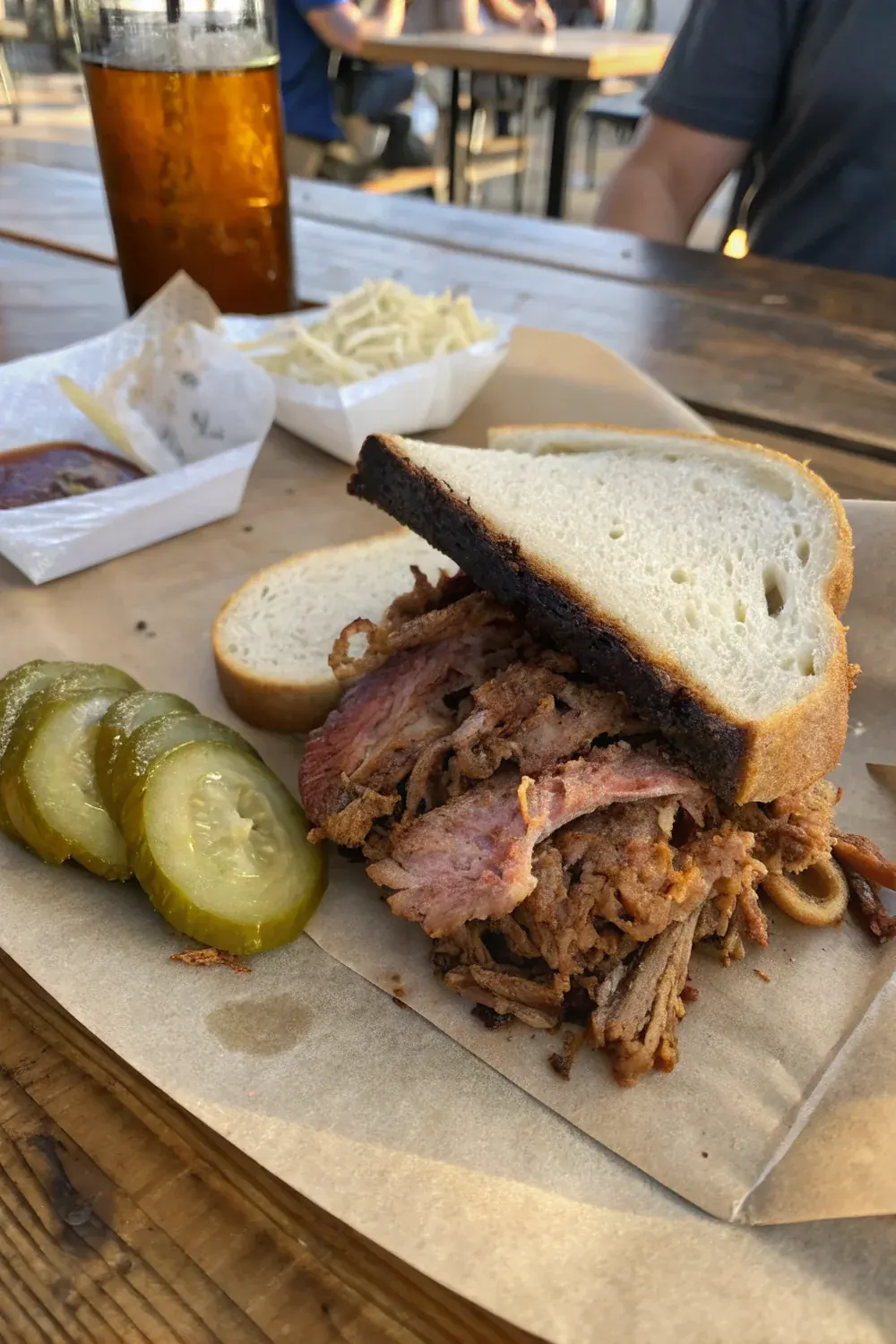
Chef Mia's Texas pulled pork: 8 lb pork shoulder, salt-pepper-paprika rub, post oak smoke, butcher paper wrap. Texas style, not Carolina.
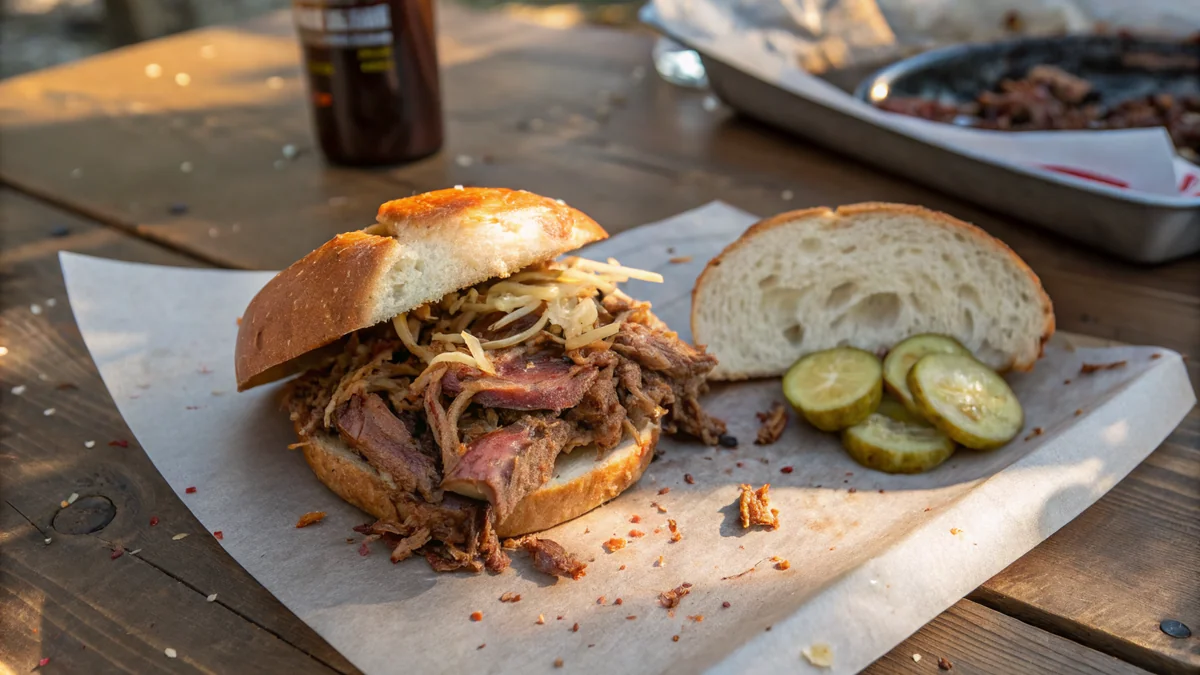
Quick answer: Texas pulled pork is a 7-9 lb bone-in pork shoulder seasoned with a Texas dry rub of kosher salt, 16-mesh black pepper, smoked paprika, garlic powder, and a touch of brown sugar, smoked low-and-slow at 225F over post oak for 12-14 hours until probe-tender at 203F internal. Wrap in pink butcher paper at the bark stage (around 165F internal). Rest in a faux Cambro for 1-2 hours, then pull apart with two forks or claws and toss with a splash of Texas BBQ sauce. Serve on white bread or potato buns with pickles and onion.
Texas pulled pork is its own thing, distinct from Carolina pulled pork or Memphis pulled pork. The differences are real: Texas pulls the pork after a salt-pepper-paprika dry rub (no vinegar mop, no mustard sauce), smokes it over post oak at 225F (not over hickory or fruitwood), wraps in butcher paper at the stall (the same Aaron Franklin technique used on brisket), and finishes with just a light toss of Texas BBQ sauce that's more savory than sweet. The result is a pulled pork that tastes like beef-country adapted to pork - serious, smoky, beefy, no apologies.
If you've already done a Texas brisket, the technique transfers directly. Same wood, same temperature, same wrap timing, same probe-test for doneness. The only differences are the cut (pork shoulder instead of beef brisket) and the time (12-14 hours instead of 12 hours). The shoulder has more fat and connective tissue than brisket; it's actually easier to get right because the wider doneness window forgives small mistakes. This is the pulled pork to make when you have a Saturday and want to feed twelve people.
Texas vs Carolina vs Memphis
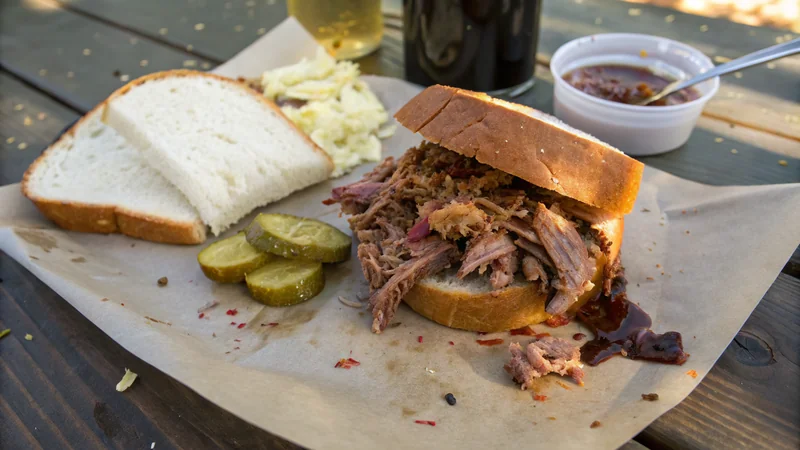
Three regional pulled pork traditions exist in American BBQ. Texas pulled pork uses a salt-pepper-paprika dry rub, smokes over post oak at 225F, wraps in butcher paper at the stall, finishes with a light toss of savory Texas BBQ sauce. Carolina pulled pork (East and West differ slightly) uses minimal seasoning, smokes over hickory and oak at 225-250F, has no wrap, and is finished with a vinegar mop sauce - sharp, thin, no sweetness.
Memphis pulled pork uses a sweeter dry rub (more brown sugar), smokes over hickory at 250F, wraps in foil with a splash of apple juice, and is finished with a tomato-based sauce. The result is sweeter, stickier, more candy-bar-pork than the savory Texas version.
Each tradition is correct for its region. None is better; they're different. This recipe is the Texas version - serious, beefy-pork, post-oak smoke, paper wrap, savory sauce. If you grew up on Carolina pulled pork, this will taste different but unmistakably good. If you grew up on Memphis pulled pork, this will feel less sweet but more nuanced.
The Texas pulled pork tradition is younger than Texas brisket. It got established in the 1980s-1990s when Texas pit masters began applying brisket techniques to pork shoulder, recognizing the wider doneness window made it a forgiving teaching cut for new pit masters.
Boston Butt Is Pork Shoulder
The cut goes by several names. Pork shoulder, pork butt, Boston butt - all the same cut: the upper portion of the front shoulder, cut from the area near the neck. The name 'butt' comes from the wooden barrels (butts) that 19th-century New England butchers shipped this cut in.
Bone-in is preferred. The bone conducts heat into the center, transmits flavor, and gives a visual signal when the meat is done (the bone wiggles cleanly when shaken). Boneless shoulders work but cook 1-2 hours faster and don't have the same indicator.
Look for a 7-9 lb shoulder. Smaller shoulders (under 6 lb) cook through too fast and don't develop full bark. Larger shoulders (over 10 lb) take 16+ hours and require more wood and patience.
Visible fat marbling is essential. The shoulder should have white fat ribbons throughout the meat - this fat renders during the long cook and bastes the meat from inside. Lean pork shoulders make dry pulled pork.
Buy from a butcher when possible (Texas favorites: H-E-B's full-service meat counter, Slovacek's Sausage in Snook, Burns Original BBQ in Houston). Supermarket pre-packaged Boston butts work but vary in quality. Costco wholesale 2-pack shoulders are excellent value for someone making bulk pulled pork for parties.
Post Oak Smoke
Post oak (Quercus stellata) is the canonical Texas BBQ wood. It is what Aaron Franklin uses, what every Lockhart pit uses, what every Texas Monthly top-50 BBQ joint uses. The smoke is clean, mild, slightly sweet, with no bitter aftertaste even on long cooks.
Post oak grows wild across Central Texas. Buy it as cordwood from a Texas BBQ supply (Texas Iron Smokehouse Supply, Smokin' Texas BBQ Supply, or local Hill Country wood lots). Splits are 4-6 inches in diameter, seasoned 6-12 months. Green wood produces creosote and acrid smoke; properly seasoned wood produces thin blue smoke.
Pecan is an excellent substitute. Slightly sweeter than post oak, very Texan. Hickory works but is more pronounced and can overpower long cooks. Mesquite is acceptable for short hot cooks but turns acrid past 4 hours - avoid for pulled pork.
Quantity: a 13-14 hour cook needs about 12-15 lb of seasoned wood. Add 2-3 chunks every 90 minutes for the first 6 hours; stop adding wood after that. The meat has absorbed all the smoke it will by hour 6.
The Stall and the Wrap
The stall is the most-feared phase of long-smoke cooks. Around hour 5-6, the internal temperature stops climbing and plateaus at 160-170F. New pit masters panic, raise the heat, or pull the meat early. Don't.
The stall is evaporative cooling: surface moisture evaporating from the meat faster than smoke heat penetrates. The meat is making important transformations during the stall - fat rendering, collagen melting, bark forming. The stall typically lasts 1-3 hours.
The wrap pushes through the stall. At 165F internal, pull the shoulder, wrap tightly in pink butcher paper (peach paper), return to smoker. The paper traps moisture and reduces evaporation - the temperature climbs through the stall in 30-45 minutes instead of 2-3 hours. The bark stays intact (paper doesn't soften it like foil does).
Use pink butcher paper (sometimes called peach paper) - FDA-approved, untreated, oxygen-permeable. Available from Texas BBQ supply or Amazon. A 24-inch wide roll handles a single shoulder cleanly. Foil works as alternative but softens the bark.
Probe-Tender, Not Just Temperature
Pulled pork is done when it's probe-tender. Internal temperature alone (200F or 203F) is not enough - it's the texture that signals doneness. Insert a probe thermometer into the thickest part of the shoulder; if it slides in like sliding into warm peanut butter (no resistance, smooth glide), the collagen has fully melted and the meat is done.
If the temperature reads 203F but the probe still meets resistance, give it another 30 minutes and re-test. Some shoulders pull tender at 198F; others need 207F. The temperature is a guide; the probe-feel is the truth.
The bone-wiggle test confirms doneness. Grab the bone with tongs and try to wiggle it. A done pulled pork has a bone that wiggles loosely or pulls cleanly out of the meat. A done pork still has tight bone-meat connection.
Don't pull early. An under-done shoulder is the most common pulled pork mistake. The collagen needs the full breakdown to give the silky pull-apart texture; under-done shoulder pulls into chunks rather than strands and tastes drier than it should.
The Faux Cambro Rest
After pulling from the smoker, the rest is non-negotiable. Place the wrapped shoulder in an empty cooler (the faux Cambro), close the lid, and rest 1-2 hours minimum. Up to 4 hours is acceptable.
Why rest matters: the meat continues cooking from carryover heat. The collagen continues breaking down. The juices redistribute. Skip the rest and the meat is too hot to handle, the juices run out when you cut, the texture is dry.
The cooler stays at 145-160F for 4+ hours - food-safe and ideal for finishing a long-cook brisket or pork shoulder. Wrap towels around the meat inside the cooler to insulate further if you need a longer rest.
Save the paper juices. When you unwrap, the butcher paper holds 1-2 cups of accumulated juice. Pour into a bowl. Pour about half back over the pulled pork after pulling - it's pure flavor concentrate. Refrigerate the rest; it's the best base for chili or beans you've ever had.
Serve Texas Style
The Lockhart-Texas service is butcher paper, no plate. Pile pulled pork onto a sheet of butcher paper alongside white bread, dill pickles, sliced raw white onion. Eat with hands. Drink iced tea or Lone Star.
For sandwiches, the Texas way is soft white bread (the cheap fluffy kind, not artisan sourdough) or split potato buns. Pile pulled pork high. Top with pickle slices and raw onion. Skip the coleslaw - that's Carolina. Add a thin drizzle of extra BBQ sauce if desired.
Sides: pinto beans (with bacon), potato salad (mustard-based, mayo-light), pickles. Cornbread is optional but pairs perfectly. Mac and cheese is acceptable but more Memphis than Texas. Skip the green vegetables; pulled pork is not a balanced meal.
Drinks: iced tea (sweet or unsweet) is the canonical Texan match. Mexican lager (Modelo Especial, Tecate) for adults. Sweet tea is sometimes too sweet against the pork; an unsweetened black tea balances better.
Leftovers: refrigerate pulled pork in zip-top bags or covered containers up to 4 days. The best way to reheat pulled pork is gently in a covered skillet with a splash of broth or BBQ sauce. Pulled pork tacos, pulled pork sandwiches, and pulled pork chili are excellent uses for leftovers.
Texas Pulled Pork Recipe
Ingredients
- For the pork:
- 1 (7-9 lb / 3-4 kg) bone-in pork shoulder (Boston butt, sometimes labeled pork butt)
- For the Texas dry rub:
- 1/4 cup (50 g) kosher salt
- 1/4 cup (28 g) coarse 16-mesh ground black pepper
- 2 tablespoons smoked paprika (Spanish pimenton)
- 1 tablespoon garlic powder
- 1 tablespoon onion powder
- 1 1/2 tablespoons light brown sugar (optional, but traditional in Texas)
- 1 teaspoon ground cumin
- 1 teaspoon mustard powder
- 1/2 teaspoon cayenne pepper
- For wrapping and serving:
- 1 large sheet pink butcher paper (FDA-approved peach paper, about 4 ft long)
- 1/3 cup (80 ml) Texas BBQ sauce, plus more for serving
- Soft white sandwich bread or potato buns, dill pickle slices, sliced raw white onion
- Equipment:
- Smoker (offset stick burner, kamado, or pellet grill) capable of 225F
- Post oak (or pecan) chunks/splits, well seasoned
- Instant-read thermometer
- Cooler (faux Cambro) for resting
Instructions
- Trim the pork shoulder. Pull the pork shoulder from the fridge 1 hour before trimming so it's slightly less cold and easier to work. Trim the fat cap to about 1/4 inch thick - thicker fat doesn't render properly during the smoke; thinner exposes too much meat. Score the fat in a 1-inch crosshatch pattern, cutting into the fat but not into the meat. Pat the entire shoulder dry with paper towels.
- Mix and apply the rub. In a small bowl, whisk together kosher salt, black pepper, smoked paprika, garlic powder, onion powder, brown sugar, cumin, mustard powder, and cayenne. The rub should look uniformly orange-red. Coat the entire pork shoulder generously with the rub, pressing it into the fat scores and into the meat. Use about 1 cup total; don't be shy. Let the rubbed shoulder rest at room temperature 30 minutes while you prepare the smoker.
- Set up the smoker. Preheat the smoker to 225F (107C). Use post oak as the primary wood; pecan is an acceptable substitute. Add 2-3 chunks at the start; add a chunk every 90 minutes for the first 6 hours, then stop adding wood (the meat has absorbed all the smoke it will). The fire should produce thin blue smoke - white billowing smoke means your fire is too cold or the wood is wet.
- Smoke fat-side up. Place the pork shoulder on the smoker grate, fat-side up. Insert a probe thermometer into the thickest part of the meat, avoiding the bone. Close the lid and smoke at a steady 225F for the first 6-7 hours. Resist the urge to open the lid - every peek loses 30 minutes of cook time.
- Watch the stall. Around hour 5-6, the internal temperature will hit 165F and stop climbing. This is the stall - evaporative cooling from the meat surface plateauing the temperature. The stall lasts 1-3 hours. The meat is making important changes: fat rendering, collagen melting, bark forming. Do not panic; do not raise the temperature.
- Wrap in butcher paper at 165F. When the internal temperature hits 165F (typically hour 6-7), check the bark - it should be dark mahogany and feel firm to the touch. Pull the shoulder, place on a large sheet of pink butcher paper, fold the paper around the meat tightly like a present (no foil, no liquid added). Return to the smoker fat-side up. The paper traps moisture without steaming the bark.
- Cook through the stall. With the wrap, the temperature climbs faster - typically 165F to 200F in 2-3 hours. Continue smoking at 225F. The bark continues developing through the paper but doesn't soften or wash off. Check internal temperature every 30 minutes after wrap.
- Test for probe-tender. Pull when the internal temperature hits 200-203F AND a probe thermometer slides into the thickest part of the shoulder with no resistance, like sliding into warm peanut butter. The temperature alone isn't enough - it's the probe-feel that signals collagen breakdown is complete. If still resistant at 203F, give it another 30 minutes and re-test.
- Rest in a faux Cambro. Pull the wrapped shoulder from the smoker. Place in an empty cooler with the lid closed - the cooler acts as a faux Cambro, retaining heat for 1-2 hours. The rest is essential: it lets the juices redistribute and the connective tissue continue softening. Skipping the rest gives a tougher, drier pulled pork.
- Pull and toss. Unwrap the rested shoulder. Reserve the accumulated paper juices in a small bowl - they're liquid gold. Use two forks or insulated meat claws to pull the meat apart along the grain. Discard any large fat chunks or gristle. Pour about half the reserved juices back over the pulled pork, then drizzle with 1/3 cup Texas BBQ sauce. Toss gently. Don't over-sauce - the meat should taste like smoke and pork first, sauce second.
- Serve Texas style. Pile pulled pork onto soft white sandwich bread or split potato buns. Top with dill pickle slices and sliced raw white onion. Skip the coleslaw - that's the Carolina move, not Texas. Serve with extra BBQ sauce on the side, white bread for sopping, and a side of pinto beans or potato salad. Pickled jalapenos and sliced raw onion are non-negotiable accompaniments.
Frequently Asked Questions
How long does Texas pulled pork take?
12-14 hours of smoking time for a 7-9 lb shoulder, plus 1-2 hours of resting in a faux Cambro. Plan for a 16-hour total day. Start at 5 AM for a 9 PM dinner. Most Texan home cooks start the smoke the night before for a Sunday afternoon meal - smoke overnight, rest in the morning, serve at lunch.
Can I make Texas pulled pork in a slow cooker?
It will be pulled pork, but it won't taste Texan. Slow cookers can't deliver post-oak smoke, butcher paper bark, or the texture that 14 hours over real fire produces. The result is acceptable everyday pulled pork but missing the smoky depth. If you must use a slow cooker, add 1 tablespoon liquid smoke to the rub and finish under the broiler 2-3 minutes for some bark.
Why does Texas pulled pork take so long?
Two reasons: low temperature (225F) versus higher BBQ temps (250-275F), and the wider connective tissue in pork shoulder needing time to break down. The 225F temperature gives the smoke time to penetrate (hours of exposure to thin blue smoke = deeper smoke ring) while the collagen slowly melts. Faster cooks at higher temps work but produce less complex flavor.
Can I use a pellet grill or kamado?
Yes. Both work for Texas pulled pork. Pellet grills (Traeger, Yoder, Pit Boss) deliver consistent 225F automatically - the easiest method for new pit masters. Kamados (Big Green Egg, Kamado Joe) are excellent fuel-efficient smokers that hold temperature well overnight. Offset stick-burners are the canonical traditional choice but require fire management every 30-45 minutes.
What is the difference between pulled pork and pork shoulder?
Pulled pork is the finished dish made from cooked pork shoulder. Pork shoulder is the cut of meat (also called Boston butt or pork butt) - the upper portion of the front shoulder. You cook a pork shoulder, then pull (shred) the meat - the result is pulled pork. The cut becomes the dish.
How much pulled pork per person?
Plan 1/3 lb of cooked pulled pork per person for sandwiches, 1/2 lb per person for plated meals. A 9 lb raw shoulder yields about 5 lb of pulled pork after trimming, fat rendering, and discarding gristle - feeds 12-15 sandwich portions or 8-10 plate portions. Smoke a second shoulder if feeding 20+ people. For a full breakdown by crowd size, see my guide on how much pulled pork per person.
Do I need to use butcher paper for the wrap?
Pink butcher paper (peach paper) is preferred because it traps moisture without softening the bark. Aluminum foil works but creates the Texas crutch effect - faster cook but softer bark, more steamed than smoked. If you don't have butcher paper, use foil but unwrap for the last 30 minutes to re-crisp the bark.
Can I freeze pulled pork?
Yes. Cool fully, divide into 1 lb portions in zip-top freezer bags with juice, freeze flat. Holds 3 months. Thaw overnight in the fridge, reheat in a covered skillet with a splash of broth. Pulled pork is one of the few BBQ meats that freezes excellently - the flavor and texture hold up beautifully.