Texas BBQ
BBQ Meatloaf
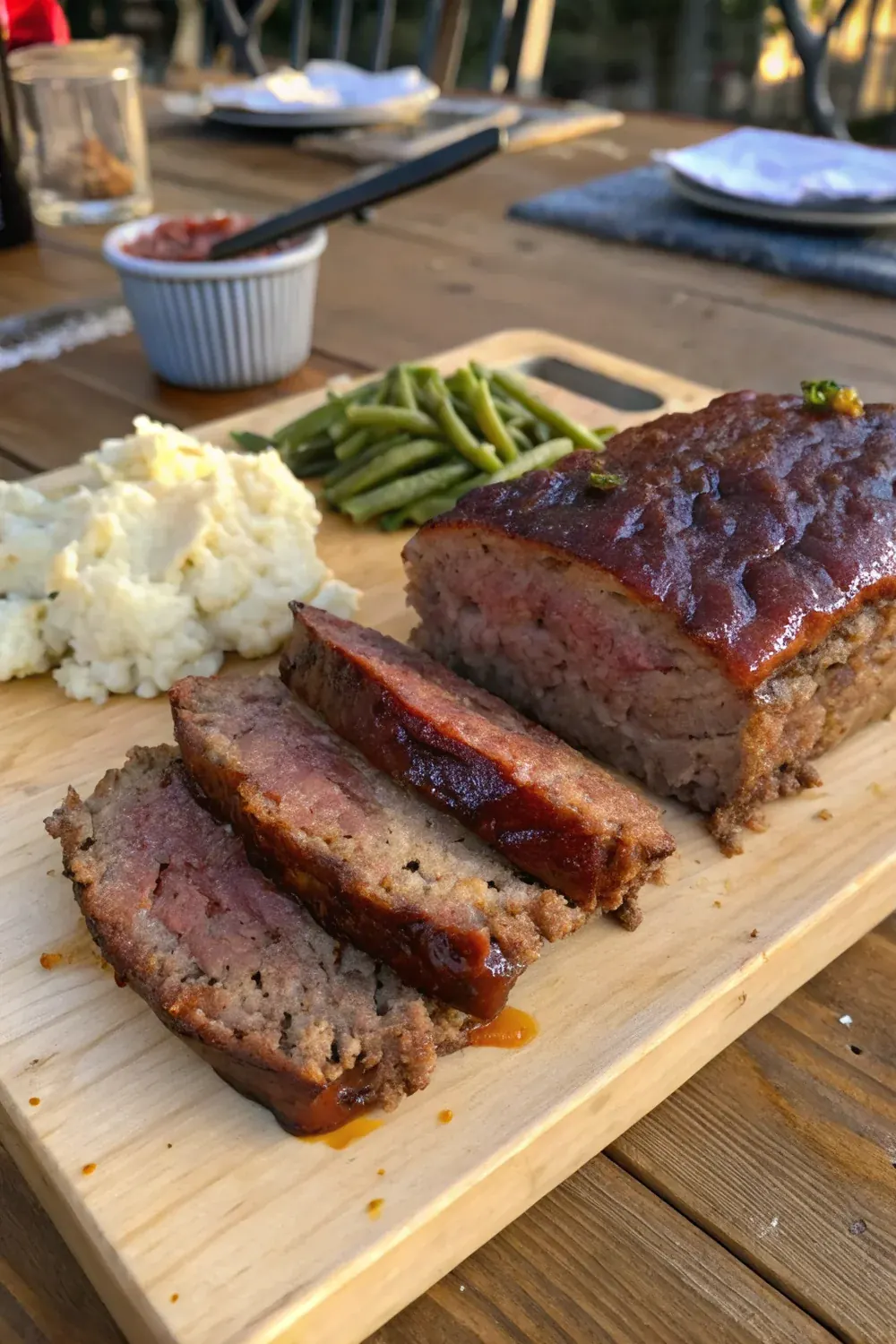
Chef Mia's BBQ meatloaf: 80/20 beef-pork blend, smoked paprika rub, Texas BBQ sauce glaze, optional leftover brisket twist. Crisp edges, juicy center.
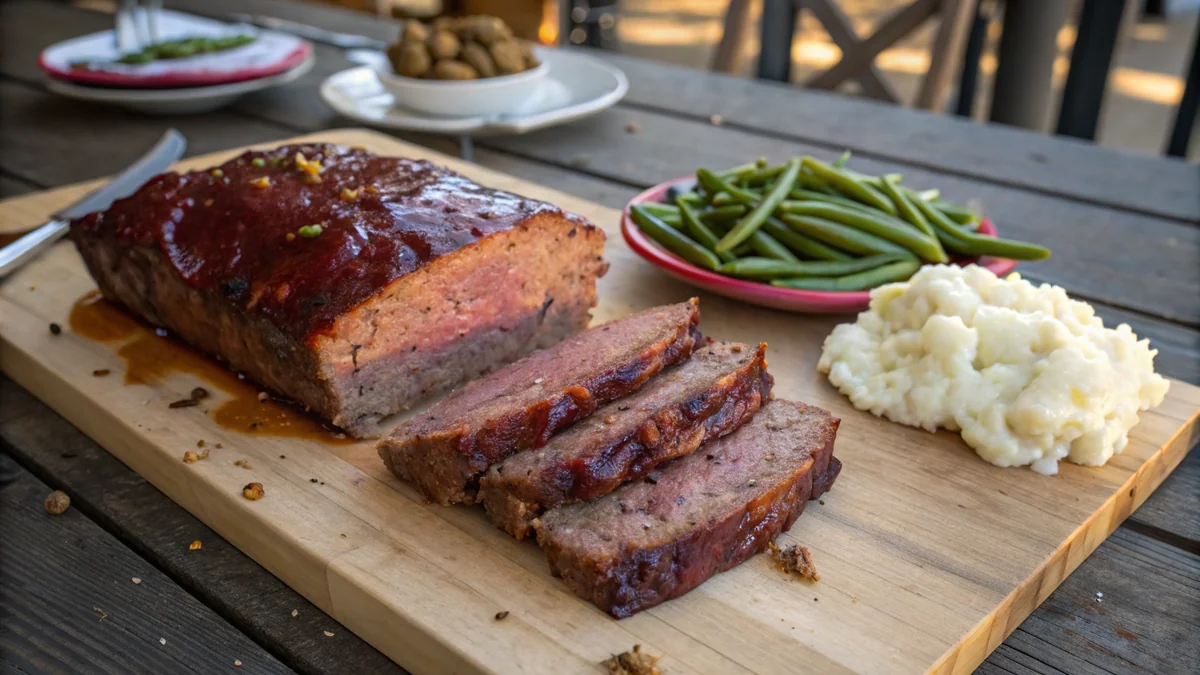
Quick answer: Texas-style BBQ meatloaf is the smokehouse version of the 1950s American classic: a 80/20 beef-pork blend bound with eggs and milk-soaked breadcrumbs, seasoned with chili powder, smoked paprika, garlic, and brown sugar, formed free-form on a sheet pan, and baked at 350F for about an hour with a thick brush of Texas BBQ sauce glazed on the last 15 minutes. The glaze caramelizes under a final 90-second broil to set a real Texas bark on top.
Most American meatloaf recipes go back to mid-century home economics handbooks and lean ketchup-sweet, white-bread heavy, and weeknight bland. The Texas version takes the same basic technique and pushes it toward the smokehouse: pork is added to the beef for fat and flavor, the seasoning shifts from generic Italian herbs to chili powder and smoked paprika, and the topping is BBQ sauce glaze rather than ketchup straight from the bottle. The result tastes like a brisket sandwich shaped into a loaf - which is honestly what it is.
If you have leftover smoked brisket from a weekend cook, this is the recipe that makes the leftovers worth saving. Chop a cup of cold brisket fine and fold it into the raw mix as one-third of the meat. The smoke flavor carries through the loaf, the brisket fat adds richness, and the texture stays meatloaf-tender rather than going stringy. It is the most-requested meatloaf at my family table, and it only happens because I cooked too much brisket the previous Saturday.
Why Texas BBQ Meatloaf Is Different
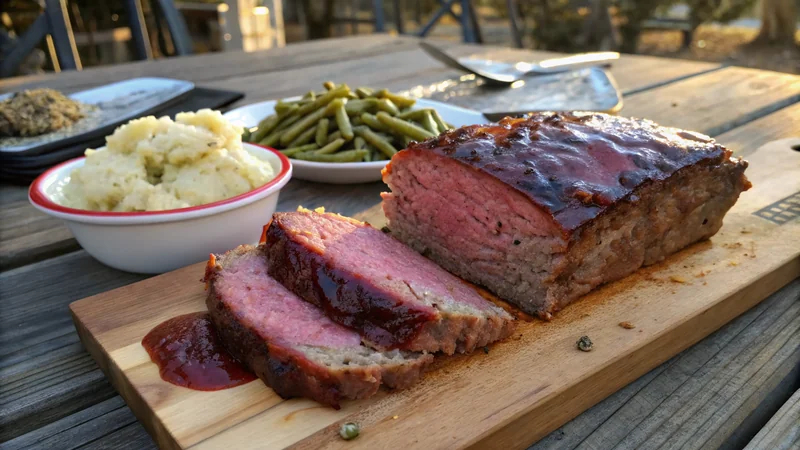
American meatloaf goes back to depression-era home economics: stretch a pound of ground meat with cheap binders (oats, bread, cracker crumbs), bake in a loaf pan, top with ketchup, feed a family. The Texas version comes out of the same lineage but pulls the recipe toward the smokehouse: pork is added for fat and flavor, the seasoning shifts to chili powder and smoked paprika, the loaf is formed free-form on a sheet pan instead of in a pan, and the topping is real Texas BBQ sauce with a broiler finish, not ketchup from a squeeze bottle.
The result is a meatloaf that tastes like a smokehouse plate. The smoked paprika does the heavy lifting on flavor when you do not have a real smoker - it adds a campfire note that pairs naturally with the BBQ sauce glaze. Brown sugar in the rub gives the bark its caramelized edge. The pork addition is the difference between a juicy slice and a dry one; straight ground beef tends to dry out at meatloaf cook times.
What is NOT different: this is still meatloaf. It is not brisket, it is not smoked, it is not slow-cooked. The technique is straightforward home oven baking. The Texas adjustments are seasoning and finish, not method. That makes this a weeknight or Sunday-supper recipe, not a weekend project.
Choosing the Meat: Beef + Pork Blend
80/20 ground beef (80 percent lean, 20 percent fat) is the right base. Leaner ground beef (90/10 or 93/7) gives a dry meatloaf that no amount of glaze can rescue; fattier blends (70/30) leave a slick of grease on the sheet pan and around the slices. 80/20 hits the sweet spot for moisture and binding.
Adding 1/2 lb of ground pork to the 1 1/2 lb of beef is the move that takes meatloaf from good to memorable. Pork has more fat and a slightly sweeter flavor that complements the smoked paprika and brown sugar. The blend tastes like Texas sausage made into a loaf, which is the right reference point for this dish. If pork is unavailable or off the table for your kitchen, replace it with another 1/2 lb of 80/20 beef.
If you have leftover smoked brisket from a weekend cook, chop 1 cup of cold brisket fine (about 1/4-inch dice or smaller) and fold it into the meat mix as one-third of the total. The smoke carries through every slice, the brisket fat adds richness, and the texture stays meatloaf-tender. This is the upgrade that makes meatloaf the second-best reason to cook a brisket on Saturday.
The Texas BBQ Rub
The seasoning is the same Texas trinity used on brisket and ribs: chili powder, smoked paprika, salt, pepper, brown sugar, garlic powder, onion powder. Half goes into the meat mixture itself, half goes on top of the formed loaf as a crust before baking. The crust contribution matters - it gives the bark its base structure.
Use Gebhardt's chili powder if you can find it. The blend is balanced (ancho, cumin, garlic, oregano) and its 130-year history is a Texas pantry staple. Mexene is the second choice. Avoid 'hot' or 'spicy' branded chili powders because they throw off the salt and sugar balance.
Smoked paprika (Spanish pimenton) does the smoke flavor work since you are not using a real smoker. A tablespoon is enough; more turns the loaf medicinal. Sweet pimenton is the default; bittersweet (agridulce) adds depth.
Brown sugar in the rub is non-negotiable for the bark - it caramelizes on the surface and gives the BBQ glaze something to adhere to. Skipping it gives a flatter, softer surface.
Building the Loaf: Binders and Dairy
Three things hold a meatloaf together: eggs (protein), breadcrumbs (starch), and dairy (fat + emulsion). The classic ratio for a 2 lb meat blend is 2 large eggs, 3/4 cup breadcrumbs, and 1/2 cup whole milk. This recipe uses panko (Japanese-style coarse breadcrumbs) instead of fine crumbs because panko gives a lighter texture; the loaf tastes meatloaf-tender rather than dense.
The panade move: soak the breadcrumbs in the milk for 5 minutes BEFORE adding to the meat. This is a trick borrowed from European boulettes and Italian polpette. Dry breadcrumbs added directly to raw meat soak up juice during baking and give a dry, dense loaf. Pre-soaked breadcrumbs release moisture into the meat during cooking.
Substitutions for the breadcrumbs: 3/4 cup quick oats works well and gives a slightly heartier crumb (popular in Southern recipes). 3/4 cup crushed saltines is the depression-era classic and still works. Avoid using flour as a binder - it gives a pasty texture.
Eggs: room temperature beaten lightly. Cold eggs from the fridge can shock the meat mixture; let them sit out 20 minutes before mixing. Two large eggs is right for 2 lb of meat; one egg gives a loose loaf that crumbles when sliced; three eggs make it dense and rubbery.
Free-Form on a Sheet Pan
Loaf pans give a smaller meatloaf with deeper sides and pooled grease at the bottom. Free-form on a sheet pan gives more surface area for the glaze and lets the rendered fat drain away from the loaf. Texas barbecue uses the same logic: meat exposed to air develops bark; meat sitting in liquid steams.
Form the loaf into a rectangle about 9 inches long, 5 inches wide, and 2 inches tall. The dimensions matter for cook time - taller loaves take longer and risk overcooking the outside before the center reaches temperature. A flatter loaf cooks faster and develops more bark per pound.
Line the sheet pan with foil before forming the loaf. Cleanup is significantly easier (the BBQ sauce glaze gets sticky and burnt-on if it hits bare metal) and the foil can be discarded straight after.
If you do not have a rimmed sheet pan, use a 9x13 baking dish - just leave 2-3 inches of empty space around the loaf so air circulates. A loaf pan is the last resort; expect a softer crust and pooled fat at the bottom.
The Glaze: BBQ Sauce + Broiler
The glaze is what makes this meatloaf Texas. Use my Texas BBQ sauce (thinner, vinegar-forward, beef-broth-based) for the most authentic flavor. If your table likes the glaze a touch sweeter, my honey BBQ sauce caramelizes beautifully under the broiler. Sweet Baby Ray's or Stubb's work as store-bought substitutes if you do not have homemade on hand. Avoid thick KC-style sauces - they get gummy and overly sweet on the loaf.
Apply the glaze in two stages. First coat goes on at the 35-40 minute mark when the loaf has been baking unglazed (so the rub crust sets first). Second coat goes on at the 55-minute mark for the final 5 minutes. Two thinner coats give better adhesion than one thick coat.
The broiler finish is the move. Switch to broil HIGH in the last 60-90 seconds of cooking. Watch through the oven window - the sugars in the BBQ sauce caramelize visibly. Pull the moment you see dark mahogany edges and the glaze looks lacquered. Going past that point burns sugar and the entire loaf tastes scorched.
Mistakes to Avoid
Over-mixing the meat. Once eggs and breadcrumbs are added, mix only until evenly combined. Over-mixing develops the muscle proteins and gives a rubbery, dense loaf. The texture should look like ground meat with visible bits of onion and rub, not like a paste.
Skipping the panade. Dry breadcrumbs in raw meat soak up the juices during baking. The loaf comes out dry. Soaking the breadcrumbs in milk for 5 minutes before adding is a 5-minute step that meaningfully changes the result.
Loaf pan vs sheet pan. Loaf pans steam the bottom of the meatloaf in its own grease. Sheet pans let the fat drain. Use a sheet pan unless you specifically want the softer pan-cooked texture.
Glazing too early. Sauce applied to a raw or partially cooked surface burns and turns bitter. Wait until the rub crust has set (35-40 minutes in) before the first glaze coat.
Skipping the broiler step. Without broiler caramelization, the glaze is just sticky sauce on top of meat. With it, the glaze becomes Texas-style bark.
Slicing immediately. A 10-minute rest is non-negotiable. Slicing hot meatloaf gives crumbling slices and juices running onto the board. Resting holds the loaf together.
Variations
All-beef Texan. Skip the pork. Use 2 lb of 80/20 ground beef. The loaf will be slightly less rich but still excellent. The Lockhart purist version.
Brisket-stuffed. Use 1 lb ground beef + 1 lb chopped leftover brisket. The brisket dominates and gives the loaf a smoke-forward flavor. This is the full leftover-recovery move after a Saturday cook.
Spicier (Pecos River style). Add 1 finely diced jalapeno (seeded) + 1 chipotle in adobo (chopped) + 1/2 teaspoon cayenne to the meat mix. Increases heat from mild to medium-hot.
Cheese-stuffed. Form half the meat into a base on the sheet pan, lay 4 oz of cubed sharp cheddar or pepper jack down the center, top with the remaining meat and seal the edges. Cheese melts into pockets during baking.
Meatloaf muffins. Press meat into a greased muffin tin (12 cups, fill each about 3/4 full). Bake 25-30 minutes at 350F, glaze the last 8 minutes. Yields individual portions, perfect for kids' lunches or freezer meals.
Troubleshooting
Loaf cracks down the middle. Either too dry (over-mixed or too much breadcrumb) or oven runs hot. Next time soak breadcrumbs longer, mix less aggressively, or lower the oven 25F.
Glaze runs off the loaf. Sauce was too thin or applied too early. Use a thicker BBQ sauce for the glaze step (the Texas-style sauce reduces enough during baking), and apply at the 35-minute mark when the rub crust is set.
Bottom is mushy. Used a loaf pan or skipped the foil-lined sheet pan. Switch to free-form on a sheet pan next time. For the current loaf, transfer to a clean rack to drain.
Loaf tastes bland. Almost always a salt issue. The 1.5 teaspoon is for 2 lb of meat; if you scaled down without adjusting salt, the loaf reads as flat. Taste the raw mixture (cook a small patty in a skillet 1 minute per side) and adjust before forming the full loaf.
Internal temp not reaching 160F after 60 minutes. Loaf was too tall (over 2.5 inches), or oven runs cool. Lower a flatter loaf next time, or extend bake time in 5-minute increments.
What to Serve With BBQ Meatloaf
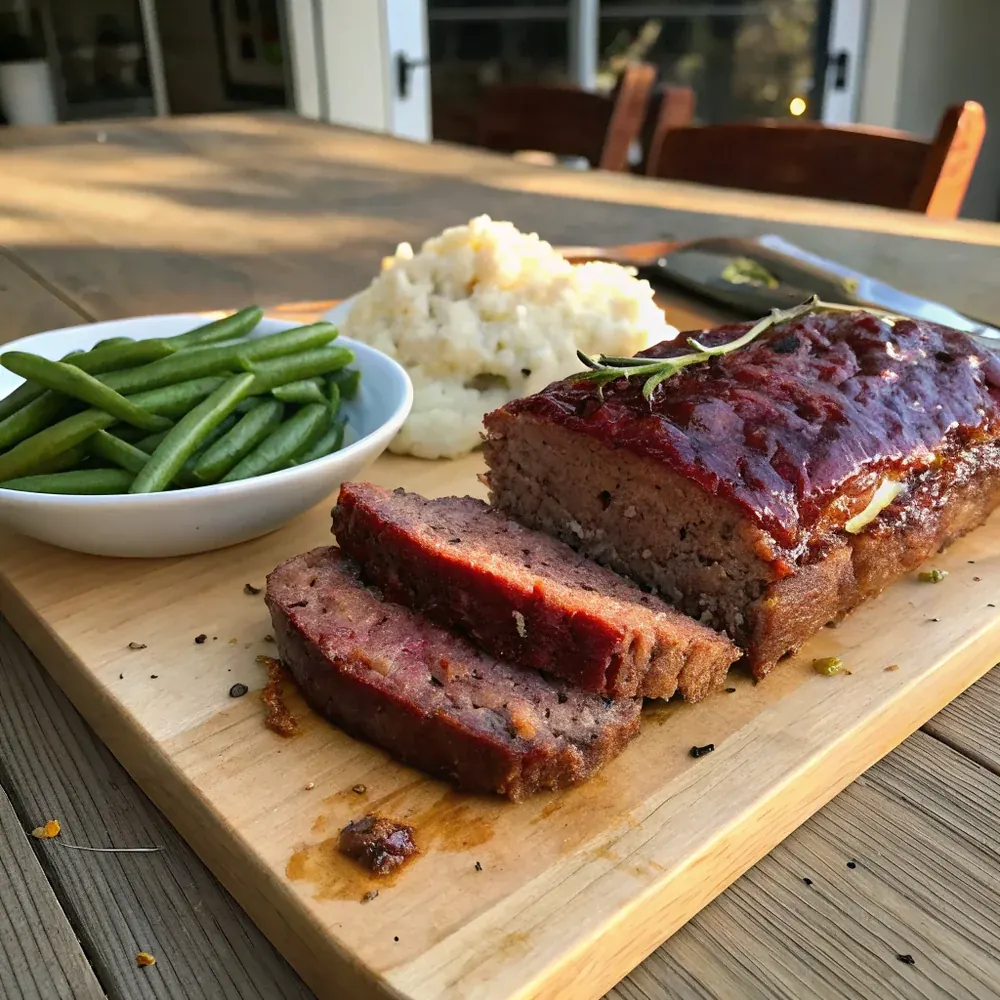
The Sunday supper canon: mashed potatoes (with butter and milk, no fancy stuff), green beans (sauteed with bacon if you want), and Texas cornbread on the side. Three textures, one richness curve, no surprises.
Lighter alternative: a simple green salad with vinaigrette and roasted vegetables (Brussels sprouts, carrots, sweet potatoes) instead of mashed potatoes. The salad cuts the meatloaf richness; the roasted veg adds caramelization that pairs with the glaze.
BBQ-themed alternative: Texas BBQ potato salad, ranch-style pinto beans, and pickles. This treats the meatloaf as a smokehouse main rather than a Sunday-supper main, leaning into the Texas BBQ identity. For the full menu math, my Texas BBQ sides roundup covers all fifteen classics.
Drinks: cold beer (a brown ale or amber pairs well with the smoke notes), iced tea, or a glass of red wine (Zinfandel, Syrah). For the full BBQ table context see the Ultimate Texas BBQ Guide.
Storage and Reheating
Refrigerate sliced or whole leftovers in an airtight container for up to 4 days. Leftover meatloaf is famously good - the flavors integrate overnight and the second-day slice often tastes better than the first.
Reheat gently. Wrap individual slices in foil with a tablespoon of beef broth or BBQ sauce, set in a 325F oven for 12-15 minutes until heated through. Microwaving works in a pinch (60 seconds at 50 percent power, covered with a damp paper towel) but the texture suffers.
Freeze whole baked loaf or individual slices for up to 3 months. Wrap in plastic wrap then foil. Thaw overnight in the fridge before reheating. Texture holds up well after thawing because the meatloaf is bound with eggs and breadcrumbs - no fragile dairy or sauce to break.
Leftover meatloaf sandwich is the underrated payoff. Sliced cold on a buttered toasted bun with extra BBQ sauce, dill pickles, raw onion, and yellow mustard. Better than the original meal, arguably the entire reason to cook the meatloaf. If that sandwich becomes a habit, the same flavor logic built fresh is my easy BBQ burger.
BBQ Meatloaf Recipe
Ingredients
- 1 1/2 lb (680 g) ground beef, 80/20 blend
- 1/2 lb (225 g) ground pork (or replace with extra ground beef)
- 1 cup chopped leftover smoked brisket, optional but recommended
- 1 medium yellow onion, finely diced
- 3 cloves garlic, minced
- 2 large eggs, lightly beaten
- 3/4 cup (45 g) panko breadcrumbs (or 3/4 cup quick oats)
- 1/2 cup (120 ml) whole milk
- 2 tablespoons Worcestershire sauce
- 1 tablespoon chili powder, Gebhardt's preferred
- 1 tablespoon smoked paprika (Spanish pimenton)
- 1 tablespoon dark brown sugar
- 1 1/2 teaspoons kosher salt
- 1 teaspoon freshly ground black pepper
- 1 teaspoon garlic powder
- 1 teaspoon onion powder
- 1/4 cup chopped fresh parsley, optional
- 1 cup (240 ml) Texas BBQ sauce, for the glaze
Instructions
- Soak the breadcrumbs. In a large bowl, combine the panko breadcrumbs and whole milk. Stir and let sit 5 minutes until the breadcrumbs absorb the milk and look like wet sand. This panade is the move that keeps the meatloaf juicy - dry breadcrumbs added directly to the meat soak up juices during baking and give a dense, dry loaf. Soaked breadcrumbs release their moisture into the meat during cooking instead.
- Saute the onion and garlic. Heat 1 tablespoon of vegetable oil in a small skillet over medium heat. Add the diced onion and cook 4-5 minutes until translucent. Add the minced garlic and cook 30 more seconds until fragrant. Pull off heat and let cool 5 minutes - hot aromatics added directly to raw meat start cooking the surface and give a tough texture.
- Mix the rub. In a small bowl, whisk the chili powder, smoked paprika, brown sugar, salt, pepper, garlic powder, and onion powder. Set aside half (about 2 tablespoons) for the glaze step. The other half goes into the meat mixture.
- Combine the meat mixture. Add the ground beef, ground pork, optional chopped brisket, sauteed onion-garlic, beaten eggs, Worcestershire sauce, half the rub, and the parsley to the bowl with the soaked breadcrumbs. Mix gently with your hands or a wooden spoon until just combined - over-mixing develops gluten and gives a rubbery texture. Stop the moment everything looks evenly distributed.
- Form the loaf free-form. Preheat oven to 350F (175C). Line a rimmed baking sheet with foil and spray lightly with cooking oil. Tip the meat mixture out onto the sheet and shape into a loaf about 9 inches long, 5 inches wide, and 2 inches tall. Free-form on a sheet pan beats a loaf pan for two reasons: more surface area for glaze and bark, and the rendered fat drains away instead of pooling around the loaf and steaming the bottom.
- First bake without glaze. Sprinkle the reserved rub evenly over the top of the formed loaf and pat gently to adhere. Place the sheet pan on the center oven rack and bake for 35-40 minutes uncovered. The surface will dry slightly and the rub will form a crust - this is the base of the bark. The internal temperature at this point should be around 130-140F.
- Glaze and continue baking. Pull the sheet pan out and brush the loaf generously with about half of the BBQ sauce, covering the top and sides. Return to the oven and bake another 15-20 minutes, until the internal temperature in the thickest part hits 160F (71C). The glaze will set into a sticky, mahogany layer. Brush on the remaining sauce in the last 5 minutes of bake time.
- Broiler finish. Switch the oven to broil HIGH for 60-90 seconds. Watch closely - the BBQ sauce sugars caramelize fast and can scorch in 15 seconds. Pull when you see dark mahogany edges and the glaze looks shiny and slightly bubbly. This is the move that takes the meatloaf from generic to Texas: real bark on top, not just baked sauce.
- Rest 10 minutes and slice. Pull the sheet pan and let the meatloaf rest 10 minutes on the pan. Resting redistributes juices and lets the slices hold their shape - cutting too early means juicy meat sliding apart on the cutting board. After 10 minutes, slice into 1-inch slabs against the long axis. Serve with extra Texas BBQ sauce on the side, mashed potatoes, and a green vegetable.
Frequently Asked Questions
Can I use just ground beef?
Yes. Use 2 lb of 80/20 ground beef instead of the beef-pork blend. The loaf will be slightly less rich and slightly drier, but still excellent. This is the all-beef Texan version.
What's the difference between Texas-style and traditional meatloaf?
Three differences: the meat blend (Texas adds pork; traditional is beef only), the seasoning (Texas uses chili powder and smoked paprika; traditional uses Italian herbs and garlic), and the topping (Texas uses BBQ sauce glaze with broiler finish; traditional uses ketchup). The technique (mix, shape, bake) is otherwise identical.
Can I make BBQ meatloaf ahead?
Yes. Mix and form the loaf, cover tightly, refrigerate up to 24 hours. Bake from cold, adding 5-10 minutes to the cook time. The flavors integrate overnight and arguably improve. Do not freeze raw - the texture suffers more than freezing baked leftovers.
What pan should I use?
A rimmed sheet pan lined with foil. Free-form the loaf on top - this gives more surface area for the glaze and bark, and lets rendered fat drain away from the loaf. Loaf pans steam the bottom in its own grease, giving a softer crust. Use only as a last resort.
Can I freeze BBQ meatloaf?
Yes. Freeze fully baked, sliced or whole, wrapped in plastic then foil, for up to 3 months. Thaw overnight in the fridge, reheat in a 325F oven wrapped in foil with a splash of broth or BBQ sauce. Texture holds up well because eggs and breadcrumbs bind the loaf - no fragile dairy to break.
How do I know it's done?
Internal temperature 160F (71C) at the thickest part, measured with an instant-read thermometer. Visual signs: glaze is dark mahogany and slightly bubbly, edges have pulled back from the foil slightly, and pressing the top with a finger gives a firm bounce-back. Resting 10 minutes is non-negotiable - the carryover brings the center to ~165F and lets juices redistribute.
Can I add leftover brisket?
Yes - and it is the upgrade that makes this recipe memorable. Chop 1 cup of cold leftover smoked brisket fine (1/4-inch dice or smaller) and fold into the meat mix as one-third of the total. Use 1 lb ground beef + 1/2 lb ground pork + 1 cup chopped brisket. Smoke flavor carries through every slice.