Tex-Mex Recipes
Austin Breakfast Tacos
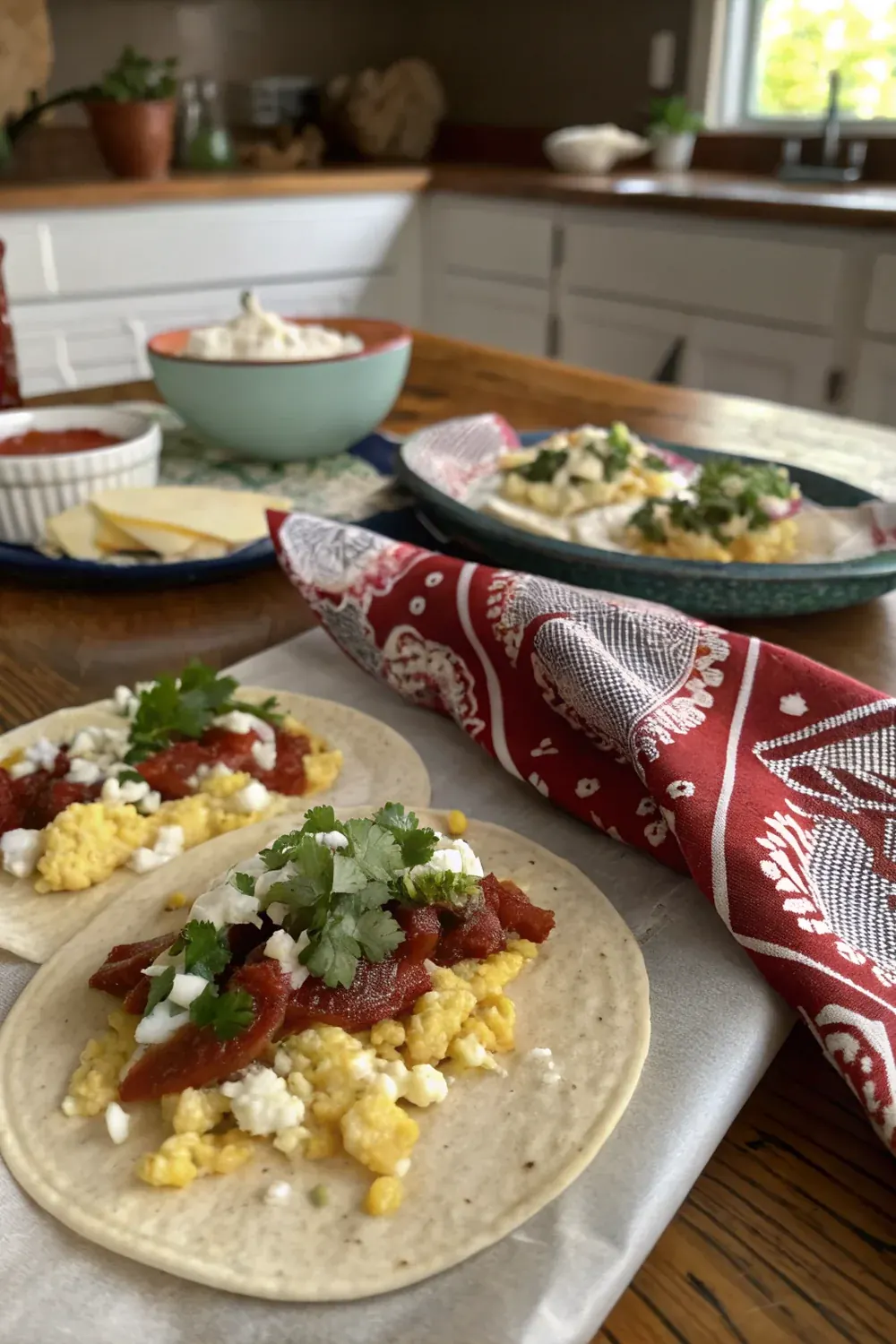
Austin-style breakfast tacos with low-and-slow scrambled eggs, queso fresco, salsa roja, fresh flour tortillas. The Texas capital's signature breakfast.
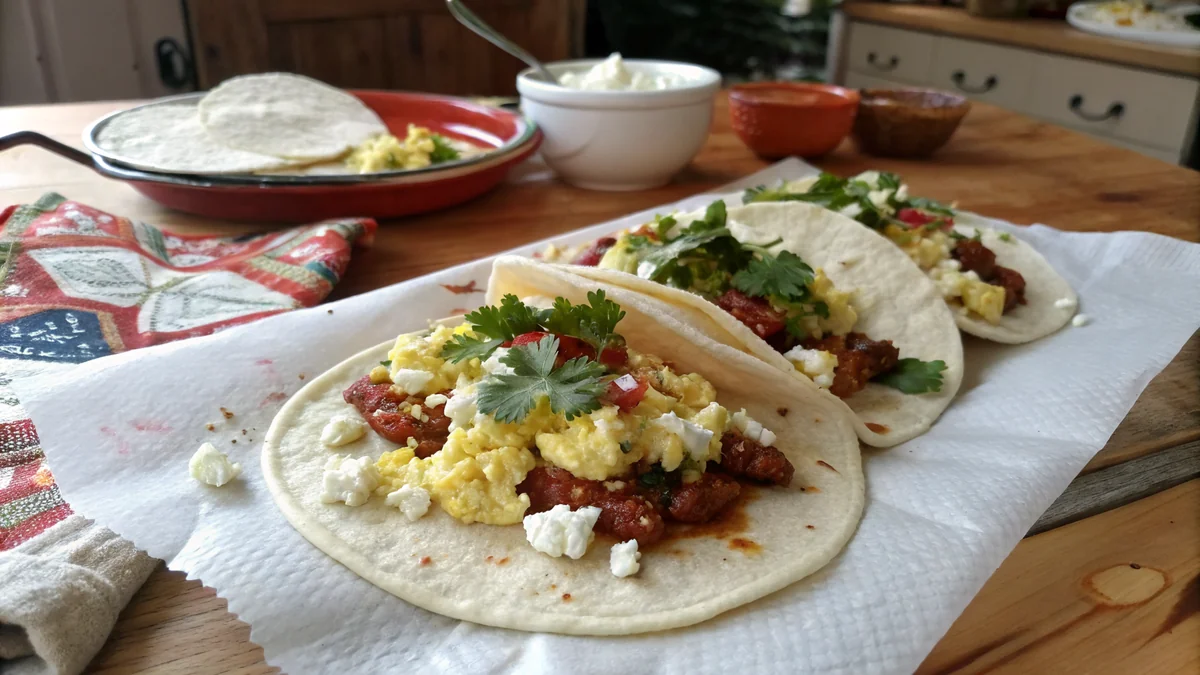
Quick answer: Austin breakfast tacos are warm flour tortillas filled with low-and-slow scrambled eggs, crumbled queso fresco, a quick salsa roja, and the classic trinity of cilantro, white onion, and lime. Add chorizo, bacon, or potato for the full Austin morning. They are wrapped in foil at the great breakfast taco joints (Tacodeli, Veracruz All Natural, Joe's Bakery), eaten in the car, and represent a different Texas taco tradition than the puffy tacos of San Antonio. Total cook time: 20 minutes.
Austin is, by friendly disagreement with San Antonio, the Breakfast Taco Capital of America. The two cities share a state and a love of corn and flour, but their taco traditions diverge sharply in the morning. San Antonio is the home of the puffy taco - a deep-fried fresh masa shell that puffs into a pillowy boat for picadillo and shredded chicken at lunch and dinner. Austin is the home of the breakfast taco, a soft warm flour tortilla folded around scrambled eggs, queso, and salsa, eaten before 11am, often in the front seat of a Subaru on the way to a job in tech or in a band or both.
I lived in Austin for six years and ate at every breakfast taco joint that mattered: Tacodeli for the doña sauce and the precise egg-to-cheese ratio, Veracruz All Natural for the migas taco and the fresh tortillas, Torchy's for the queso-and-egg "Trailer Park" with the trashy fried name, Joe's Bakery on East 7th for the East Austin Mexican-American breakfast tradition that predates the new wave, and Tyson's Tacos on Airport for the late-night-into-morning bridge. The recipe below is the Austin breakfast taco I make at home when I cannot get to any of them: a 20-minute cook, eight tacos for two to four people, the trinity toppings non-negotiable. And when the taco crawl turns into a brisket crawl, my guide to the best BBQ in San Antonio maps the smokehouses worth the drive down I-35.
Austin vs San Antonio: Two Texas Taco Capitals
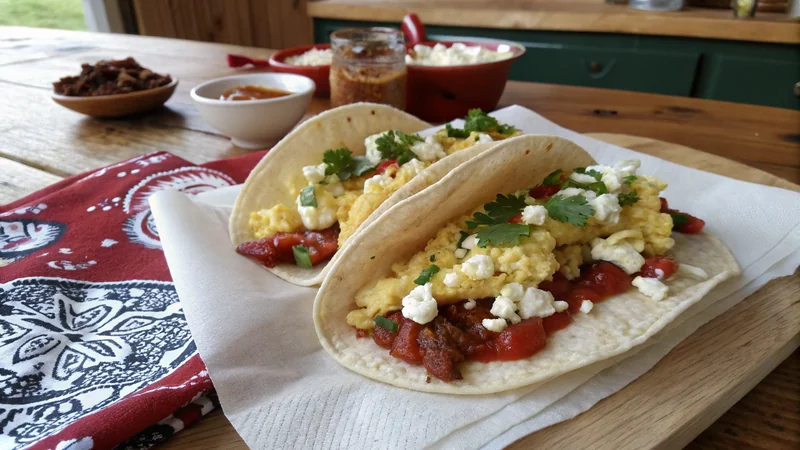
Texas has two taco capitals and they fight a friendly fight every few years. San Antonio claims the puffy taco, a deep-fried fresh masa shell that puffs as it hits the oil and creates a pillowy corn boat for shredded chicken or seasoned ground beef. Austin claims the breakfast taco, a soft warm flour tortilla folded around scrambled eggs and toppings before noon. Both styles are deeply Texan, both have multiple legendary spots, and the cities have written newspaper editorials defending their respective claims.
Austin's case for breakfast taco supremacy rests on three things: volume (Austin alone produces somewhere north of a million breakfast tacos per week), the breakfast taco's role as Austin's universal morning food (every demographic eats them), and the legendary spots that cemented the format - Tacodeli, Veracruz All Natural, Torchy's, Joe's Bakery, Juan in a Million. San Antonio's case rests on the puffy taco's Mexican-American heritage and its unbroken family-restaurant tradition.
The real answer is that both cities are right and the breakfast taco and the puffy taco are different dishes serving different meals. San Antonio breakfast tacos exist (and they are good). Austin puffy tacos exist (and they are rarer). But the morning belongs to Austin and the deep-fried lunch belongs to San Antonio, and that is the working settlement most Texans accept.
The Tortilla Choice: Flour Beats Corn for Breakfast
Austin breakfast tacos are made with flour tortillas, almost always. The reason is texture, not preference: a soft, warm flour tortilla holds soft scrambled eggs without falling apart, and the slight chewiness of flour pairs with the silky eggs in a way corn cannot match. Corn tortillas tend to crack when folded around eggs, and the corn flavor competes with the eggs rather than complementing them.
Use 6-inch flour tortillas, not the 10-inch burrito size. Breakfast tacos are a two-tortilla meal, eaten one-handed. The 6-inch size is what you get at Tacodeli, Veracruz, and every other Austin spot. Flour tortillas larger than 6 inches turn the dish into a wrap, which is structurally a different food.
Fresh handmade flour tortillas are non-negotiable if you want the canonical Austin experience. Homemade buttery tortillas are 30 minutes of work and they elevate the dish more than any other ingredient. If you must buy, look for tortillas in the refrigerated section labeled "handmade" or "taqueria style" - the shelf-stable flour tortillas have stabilizers that affect the texture and the warm-pliability.
The Egg Method: Low-and-Slow
Austin breakfast taco eggs are not diner scrambled eggs. The signature texture is small, soft, glistening curds with no browning - eggs that look just-barely-set. The technique is low-and-slow: medium-low heat, butter (not oil), gentle figure-eights with a silicone spatula, and pulling from heat 30 seconds before they look fully cooked.
The milk addition is non-negotiable for the Austin style. A tablespoon of whole milk or half-and-half per two eggs loosens the curd and adds a slight creaminess. Some recipes use water for fluffier curds, but the Austin spots all use milk. Avoid heavy cream - it makes the eggs taste richer than they should and shifts the dish toward brunch.
Use a nonstick skillet, not stainless steel or cast iron. Stainless can grip the eggs and produce stuck spots that come out as brown flecks; cast iron works but is harder to control at low temperature. Nonstick gives you the gentlest possible cook surface and the easiest cleanup.
Queso Fresco vs Cheddar
The Austin breakfast taco cheese is queso fresco, not yellow cheddar. Queso fresco is a fresh white Mexican cheese, lightly salty, slightly crumbly, with a clean dairy flavor that does not compete with the eggs or the salsa. It does not melt the way cheddar does - it stays in soft crumbles that hold their texture inside the warm taco. The non-melting quality is intentional and what gives the Austin breakfast taco its visual identity.
Cotija is a workable substitute. Cotija is saltier and drier than queso fresco, more like a Mexican parmesan, but the texture role is similar. If you cannot find queso fresco, use cotija and reduce the salt in the eggs by half.
Avoid yellow cheddar. Cheddar in a breakfast taco is a Tex-Mex chain restaurant move (Torchy's uses it in some tacos, but the Austin purists do not), not an Austin signature. Cheddar's strong flavor dominates the eggs, and its melt creates a gluey texture that competes with the soft scramble. Save cheddar for queso dip; queso fresco for breakfast tacos.
The Salsa Roja
Every Austin breakfast taco joint has its house salsa, and most are versions of the same template: charred tomato, charred jalapeno, raw white onion, garlic, salt, lime, cilantro stems. The char on the tomato and jalapeno is what separates Austin salsa roja from a fresh pico de gallo - the char adds smoky depth and makes the salsa taste cooked, not raw.
Char on a dry comal or cast iron skillet over medium-high heat. The tomato skins should blister and slip; the jalapeno should be blackened in spots; the garlic should soften in its skin. This takes 5-6 minutes and transforms the flavor profile. Skipping the char gives you a fresh salsa that tastes too bright for breakfast tacos.
Make the salsa first, before the eggs. Salsa improves with 15 minutes of resting time as the lime and salt bring out the tomato. If you are very organized, make it the night before. Refrigerate up to 4 days; the char-roasted salsa is at peak flavor on day 2.
The Trinity Toppings
Cilantro, white onion, and lime are the trinity. They are not optional. Together they brighten the rich eggs and queso, cut the richness of the salsa, and provide the fresh-herb-and-acid finish that defines an Austin breakfast taco. Skipping any of the three reduces the dish to scrambled eggs in a tortilla, which is fine but not Austin.
Use fresh cilantro, leaves only, chopped roughly. Curly parsley does not substitute. Cilantro haters: skip the cilantro and double the chopped white onion - the onion compensates with its own herbal sharpness. About 8% of people have a genetic aversion to cilantro and there is no point fighting the soap-perception.
White onion, not red. Red onion is sweeter and milder; white onion has the sharp, clean bite that the breakfast taco demands. Dice it small (1/4-inch pieces) and use about a heaping tablespoon per taco. Soaking the diced onion in cold water for 5 minutes before serving softens the bite if you find raw onion too sharp.
Lime - not lemon, not bottled juice. A fresh lime wedge squeezed over the assembled taco brightens everything. Use a key lime if you can find one (more aromatic) or a regular Persian lime otherwise.
Chorizo, Bacon, or Both?
The full Austin breakfast taco menu runs to about a dozen variants, but the three core add-ins are chorizo (Mexican fresh sausage), bacon, and breakfast potato. Each one shifts the taco's identity. Chorizo-egg is the most Tex-Mex - the orange-red oil from the chorizo bleeds into the eggs and gives the whole taco a slightly spiced, slightly oily character. Bacon-egg is the most American breakfast - smoky, salty, a familiar brunch flavor profile in a different vehicle. Potato-egg is the budget choice and arguably the most Austin - the original local-construction-worker breakfast taco built around cheap filling ingredients.
Use Mexican fresh chorizo, not Spanish dry-cured chorizo. Mexican chorizo is uncooked, soft, and seasoned with chile, vinegar, and oregano. Spanish chorizo is cured and sliced like salami, which is wrong for this application. Brown Mexican chorizo in a dry skillet for 6-8 minutes, breaking it up - the rendered oil is part of the flavor.
If you cannot decide, do half the batch with chorizo and half with bacon, label each tortilla as you build, and let the table choose. The two-flavor option is what Tacodeli effectively offers with the dozen taco choices on their menu.
Where to Get the Real Austin Breakfast Tacos
Tacodeli (multiple locations). The most precise breakfast tacos in Austin. The Otto (refried black beans, scrambled eggs, bacon, avocado, with their famous doña sauce) is the best-known. Salsa doña is a creamy roasted jalapeno-tomatillo sauce that should be on every breakfast taco that arrives at your table.
Veracruz All Natural (East Austin and South). The migas taco is the canonical order - scrambled eggs with crispy fried tortilla strips, queso, and pico. The flour tortillas are made fresh on site every morning.
Joe's Bakery and Coffee Shop (East 7th). The old-guard Mexican-American breakfast spot, family-run since 1962, the East Austin tradition that predates the new wave. Order the chorizo and egg taco and a cafe con leche.
Torchy's Tacos (everywhere, originally Austin). The most-scaled but still legitimately Austin. The Trailer Park (fried chicken, lettuce, pico, cheese) is the move; the breakfast tacos are decent but not the standout.
Tyson's Tacos (Airport Blvd). Open late, open early, the bridge between bar nights and work mornings. The Skinny Sanchez and the Pikachu are local cult orders.
Chef Mia's Kitchen Notes
When I lived in East Austin, my Saturday morning ritual was a 10-minute walk to Joe's Bakery, two chorizo and egg tacos, a cafe con leche, and a side of refried black beans. The eggs at Joe's are the model my home version is built around - small soft curds, generous queso fresco, salsa on the side so each taco can be tuned at the table.
The mistake every transplant makes is over-stuffing. Austin breakfast tacos are restrained: 1/4 cup of egg, a heaping tablespoon of cheese, a teaspoon of salsa, a sprinkle of cilantro and onion, a squeeze of lime. The taco closes loosely, eaten in two or three bites. Stuffing more in transforms it into a burrito and breaks the format.
If you have leftovers (rare), the egg-and-queso filling reheats well in a covered skillet over low heat. The tortillas do not - re-warm fresh tortillas. Stale reheated tortillas are the saddest part of any breakfast taco morning.
Mistakes to Avoid
Cold tortillas. Cold flour tortillas crack when folded. Always warm them first - foil-wrapped in a 250F oven, on a comal, or in a damp towel in the microwave for 20 seconds.
Over-cooked eggs. Diner-style brown-edged scrambled eggs are not Austin style. Pull from heat at 90% done. Small soft curds that look just-set, never browned, never dry.
Cheddar instead of queso fresco. Yellow cheddar is a Tex-Mex chain move, not Austin. Use queso fresco or cotija.
Skipping the trinity. Cilantro, white onion, lime - all three. Without them, the taco is missing its brightness and identity.
Spanish chorizo. The cured Spanish chorizo from the deli counter is the wrong product for Austin breakfast tacos. Use fresh Mexican chorizo, browned in a skillet.
Over-stuffing. Austin breakfast tacos are restrained. Two tacos per person, lightly filled, eaten one-handed.
Variations
Migas taco. Replace the plain scramble with a migas-style scramble: fold crispy fried corn tortilla strips, sauteed onion, and tomato into the eggs as they cook. Top normally. This is the Veracruz All Natural canonical breakfast taco.
Bean-and-cheese. Skip the eggs entirely. Spread refried black or pinto beans on the tortilla, top with queso fresco, salsa, cilantro, onion. The vegetarian-and-budget Austin classic.
Avocado-egg. Add 2-3 thin slices of avocado per taco. The avocado adds richness and is a popular Tacodeli order on the Otto template.
Doña sauce. Replace the salsa roja with a roasted-jalapeno-and-tomatillo creamy sauce. Tacodeli's doña is the famous version; copy at home with charred tomatillos, jalapeno, garlic, oil, salt, pulsed in a blender until creamy.
Picadillo breakfast taco. Replace the eggs with seasoned ground beef. This is the Mexican-American tradition that pre-dates the new-wave Austin scene; you will find it at Joe's Bakery and Juan in a Million.
What to Serve With Austin Breakfast Tacos
Hot coffee is the canonical pairing - dark roast, drip or French press, no flavored syrups. Cafe con leche (espresso with steamed milk) is the East Austin Mexican-American move. Iced coffee in summer.
On the side: a small bowl of refried black beans (or pinto), extra salsa, hot sauce (Cholula or Yellowbird), and lime wedges. Some Austin spots add a small fruit cup, but the canonical breakfast taco plate is taco-and-coffee.
For a brunch spread, pair the tacos with smoked chorizo queso as a dippable starter, migas as a second egg dish, and pitchers of agua fresca or micheladas. For more Tex-Mex breakfast and brunch ideas, see the Tex-Mex Recipes category.
Austin Breakfast Tacos Recipe
Ingredients
- 8 flour tortillas, 6-inch (15 cm) size, fresh or warmed
- 8 large eggs
- 1/4 cup (60 ml) whole milk or half-and-half
- 1/2 teaspoon kosher salt
- 1/4 teaspoon freshly ground black pepper
- 2 tablespoons unsalted butter
- 3/4 cup (90 g) crumbled queso fresco (or mild cotija)
- 1/2 cup salsa roja (recipe below or your favorite)
- 1/2 cup fresh cilantro, leaves only, chopped
- 1/2 cup white onion, finely diced
- 2 limes, cut into wedges
- Optional fillings: 1/2 lb cooked Mexican chorizo, 6 slices crumbled bacon, or 1.5 cups crispy diced breakfast potatoes
- For a quick salsa roja:
- 3 Roma tomatoes, halved
- 1 jalapeno, stem removed
- 2 garlic cloves, peeled
- 1/4 white onion
- 1 teaspoon kosher salt
- 1 tablespoon fresh lime juice
- 1/4 cup chopped cilantro stems
Instructions
- Make the salsa roja first. Char the tomato halves, jalapeno, and unpeeled garlic on a dry comal or cast iron skillet over medium-high heat for 5-6 minutes, turning, until blackened spots appear and the tomato skins start to slip. Peel the garlic. Transfer everything to a blender with the white onion, salt, lime juice, and cilantro stems. Pulse 3-4 times for a chunky salsa, or blend longer for a smooth one. Taste and adjust salt. Set aside in a small bowl.
- Warm the tortillas. Stack the tortillas in foil and place in a 250F (120C) oven while you cook the eggs. Or warm directly on a dry comal over medium heat for 20-30 seconds per side, then stack in a tortilla warmer or wrapped in a clean kitchen towel. Cold tortillas crack when folded - warming them is the most overlooked step.
- Whisk the eggs. In a medium bowl, whisk the eggs with the milk, salt, and pepper for 30 seconds, until fully blended with no streaks of white. The milk loosens the curd and lightens the texture - this is the Austin breakfast taco style, not the dense diner-style scramble.
- Cook eggs low-and-slow. In a 10-inch nonstick skillet over medium-low heat, melt the butter until just bubbling but not browning. Pour in the egg mixture. Wait 30 seconds without stirring, then drag a silicone spatula across the bottom in slow figure-eights, pulling the cooked egg toward the center while the uncooked liquid runs to the edges. Cook 4-5 minutes total, until eggs are just set with small soft curds and still glistening. Pull from heat the moment they look 90% set - they finish cooking from residual heat.
- Cook the optional fillings. If using chorizo, brown 1/2 lb of fresh Mexican chorizo (casing removed) in a separate skillet for 6-8 minutes, breaking it up. If using bacon, cook 6 slices to crispy and crumble. If using potatoes, dice 1.5 cups of leftover or fresh potatoes and pan-fry in 1 tablespoon oil for 8-10 minutes until crispy. Set whichever you are using aside warm.
- Build the tacos. Lay a warm tortilla flat. Spoon about 1/4 cup of scrambled egg into the center. Add a heaping tablespoon of crumbled queso fresco. Drizzle with 1-2 teaspoons of salsa roja. Top with chopped cilantro, diced raw white onion, and a squeeze of lime. If adding chorizo, bacon, or potato, scatter a tablespoon over the eggs before the toppings.
- Fold and serve immediately. Fold the tortilla in half loosely. Do not over-stuff - Austin breakfast tacos are meant to be eaten one-handed, and a stuffed taco falls apart. Serve immediately with extra salsa, lime wedges, and hot coffee. The right number per person is two; the wrong number is one.
Frequently Asked Questions
What makes a breakfast taco Austin-style?
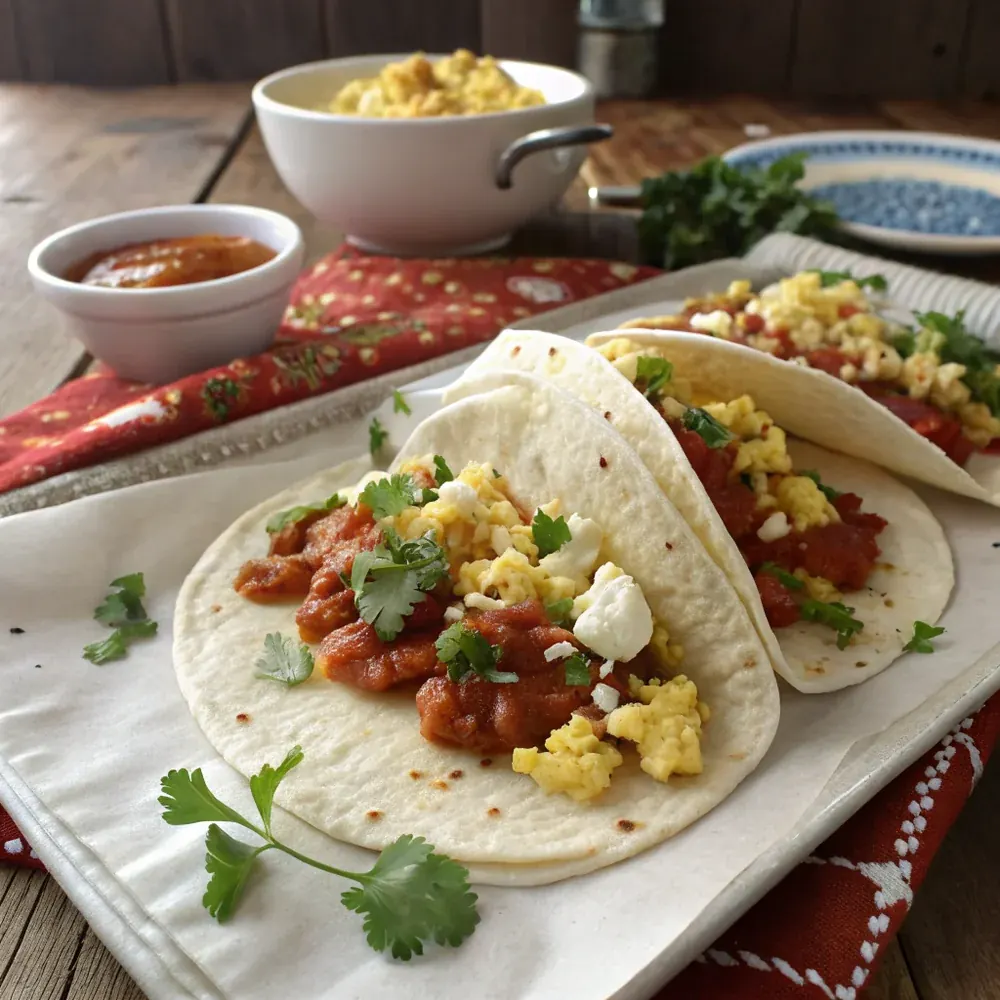
Three things: flour tortillas (not corn), low-and-slow scrambled eggs (small soft curds, never browned), and the trinity of toppings (cilantro, white onion, lime). The signature finish is queso fresco crumble, not melted cheddar, and the salsa is a charred-tomato salsa roja served on the side or drizzled lightly. Add chorizo, bacon, or potato to make it the full Austin morning.
Is Austin or San Antonio the breakfast taco capital?
Austin claims the breakfast taco; San Antonio claims the puffy taco. Both are right. Austin produces more breakfast tacos by sheer volume and has the most-cited spots (Tacodeli, Veracruz All Natural, Joe's Bakery, Torchy's). San Antonio's puffy taco is a different format - deep-fried fresh masa - and lives at lunch and dinner, not breakfast. The two cities split the day.
Can I make breakfast tacos with corn tortillas?
You can, but it stops being the canonical Austin style. Corn tortillas tend to crack when folded around soft scrambled eggs, and the corn flavor competes with the eggs in a way flour does not. If you must use corn (gluten-free or preference), warm them on a comal until very pliable, and accept that the format is closer to a Mexican-tradition breakfast than an Austin one.
Why do my eggs come out tough?
Tough eggs come from too much heat. Austin-style eggs are cooked low-and-slow over medium-low heat with butter, with gentle figure-eights stirring, and pulled from heat 30 seconds before they look fully done. They finish from residual heat. If your eggs are browning or going dry, drop the heat by one level on your stove and pull them sooner.
Can I make breakfast tacos ahead?
Partially. The salsa roja keeps 4 days in the fridge. The chopped cilantro, onion, and lime can be prepped the night before. The eggs must be cooked fresh - reheated scrambled eggs always taste like reheated scrambled eggs. The whole taco assembled and refrigerated overnight produces soggy tortillas. Cook eggs fresh; everything else can be ready to go.
What is queso fresco and where do I find it?
Queso fresco is a fresh white Mexican cheese, lightly salty and slightly crumbly, that does not melt the way cheddar does. It stays in soft crumbles inside a warm taco. Find it in the refrigerated dairy section of any HEB, Whole Foods, Kroger, or Mexican grocery. Brands include Cacique, La Vaquita, Tropical, and Ole Mexican. Cotija is the closest substitute (saltier and drier).
Are breakfast tacos the same as breakfast burritos?
No. A breakfast taco is a 6-inch flour tortilla folded around 1/4 cup of filling, eaten in two or three bites, eaten one-handed. A breakfast burrito is a 10-inch flour tortilla wrapped fully around 1.5+ cups of filling, eaten with two hands, often a meal in itself. Austin canonical is the small two-taco serving, not the burrito format. The two formats serve different appetites.
Can I freeze breakfast tacos?
Not really. The eggs do not freeze well (texture turns rubbery on reheat) and the tortillas can dry out or develop ice crystals. If you must, freeze the cooked filling without eggs (chorizo, bacon, beans, potato), thaw overnight in the fridge, then cook fresh eggs and assemble. Or freeze fully assembled tacos individually for emergency-breakfast use, accepting that the texture will be a step down from fresh.