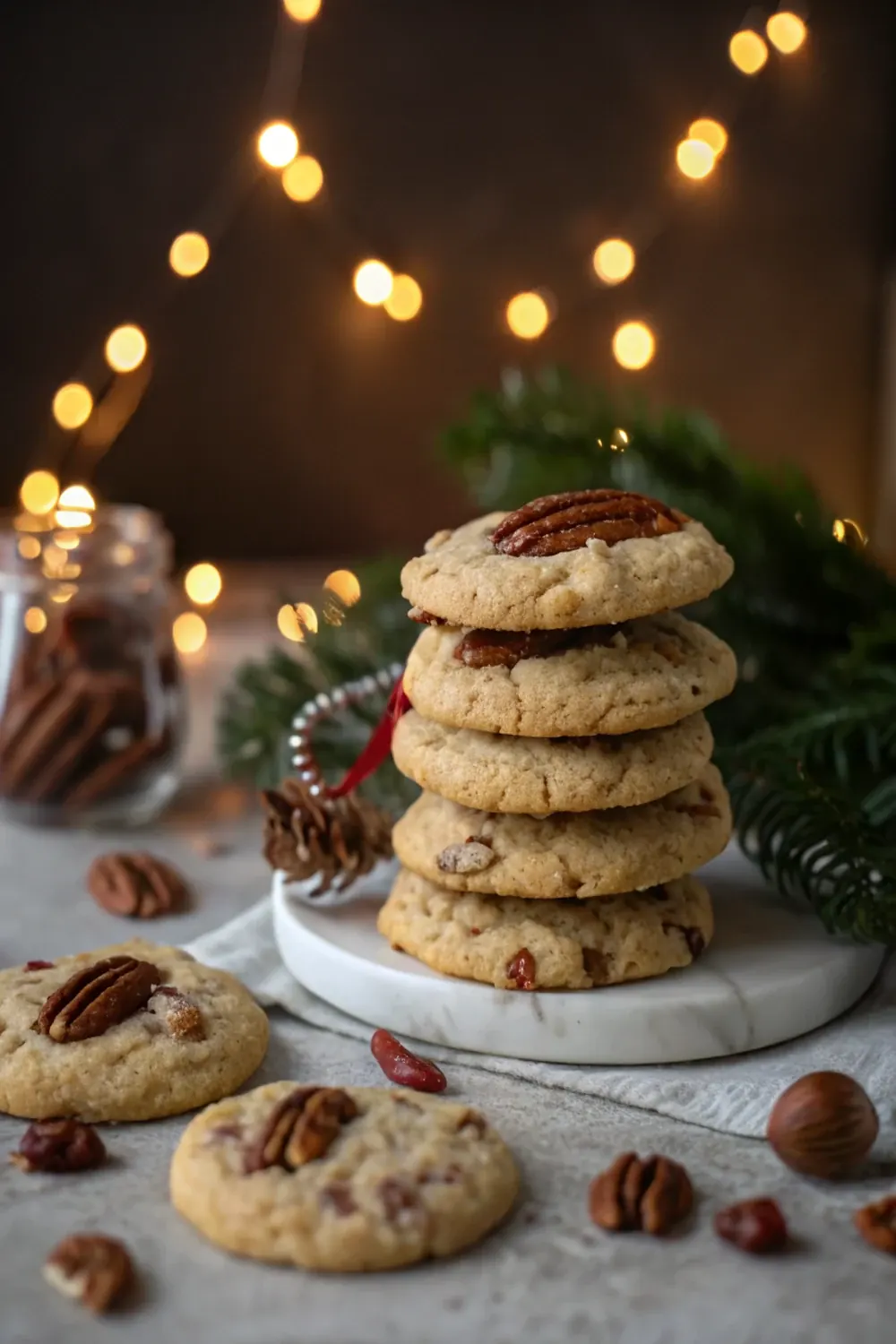
Texas Desserts
Texas Pecan Praline Cookies
Texas pecan praline cookies by Chef Mia: brown butter base with San Saba pecans, caramelized praline flavor, holiday tradition. Make-ahead friendly.
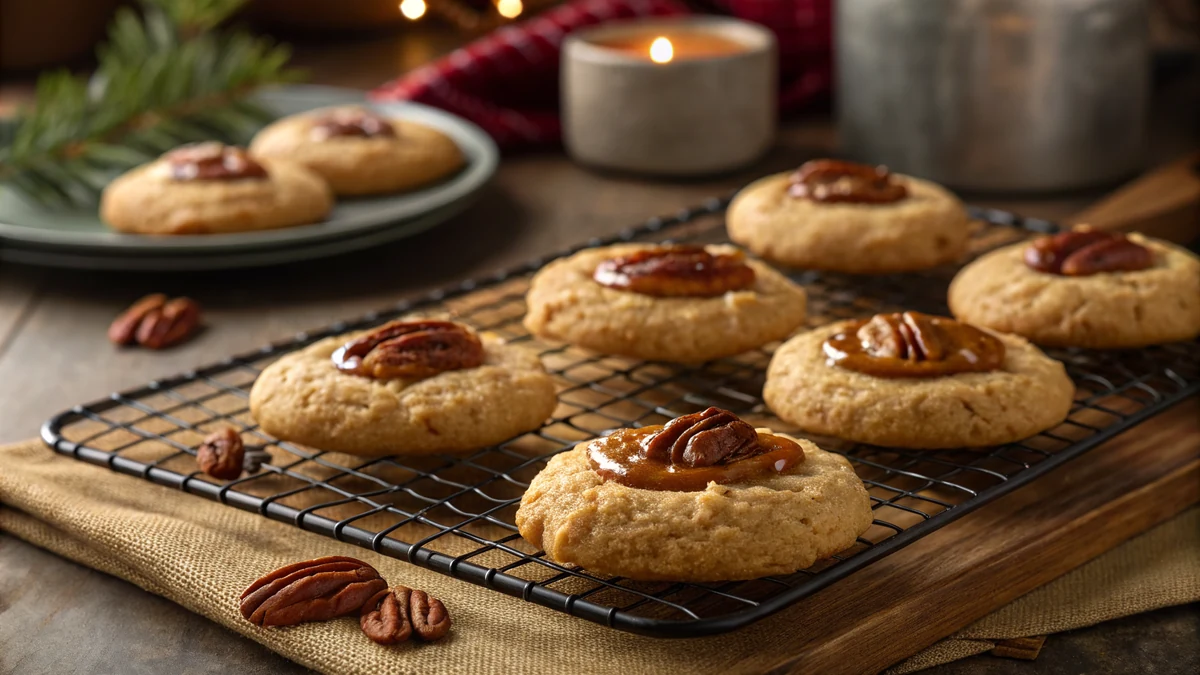
Quick answer: Texas pecan praline cookies start with browned butter for nutty caramel depth, then add brown sugar, an egg, vanilla, flour, and chopped toasted Texas pecans. Drop dough by tablespoons onto a baking sheet and bake at 350°F for 11 to 13 minutes until edges are golden and centers are still slightly soft. Cool 5 minutes on the pan, transfer to a wire rack. Makes about 24 cookies. Make-ahead friendly: dough freezes 3 months, baked cookies freeze 2 months.
Pecan praline cookies are the Texas holiday cookie. They are what my grandmother baked every Christmas Eve while I was a kid in Lockhart. The kitchen smelled like browned butter and toasted pecans for a week leading up to Christmas, and she would make batch after batch, packaging them into tins to mail to family in Houston, Dallas, and across the gulf coast.
The cookies are a tribute to Texas pralines, the regional candy made from sugar, butter, and pecans. The cookie version is more forgiving than the candy (no thermometer required) but captures the same caramel-pecan-butter flavor profile. A good batch tastes like Christmas in the Hill Country.
Pair these with strong coffee, a glass of cold milk, or include them on a holiday cookie platter alongside Czech-Texan kolaches and Texas cowboy cookies. They keep well, freeze well, and travel well, which is why they were my grandmother's go-to gift cookie.
Three Things to Know About Pecan Praline Cookies
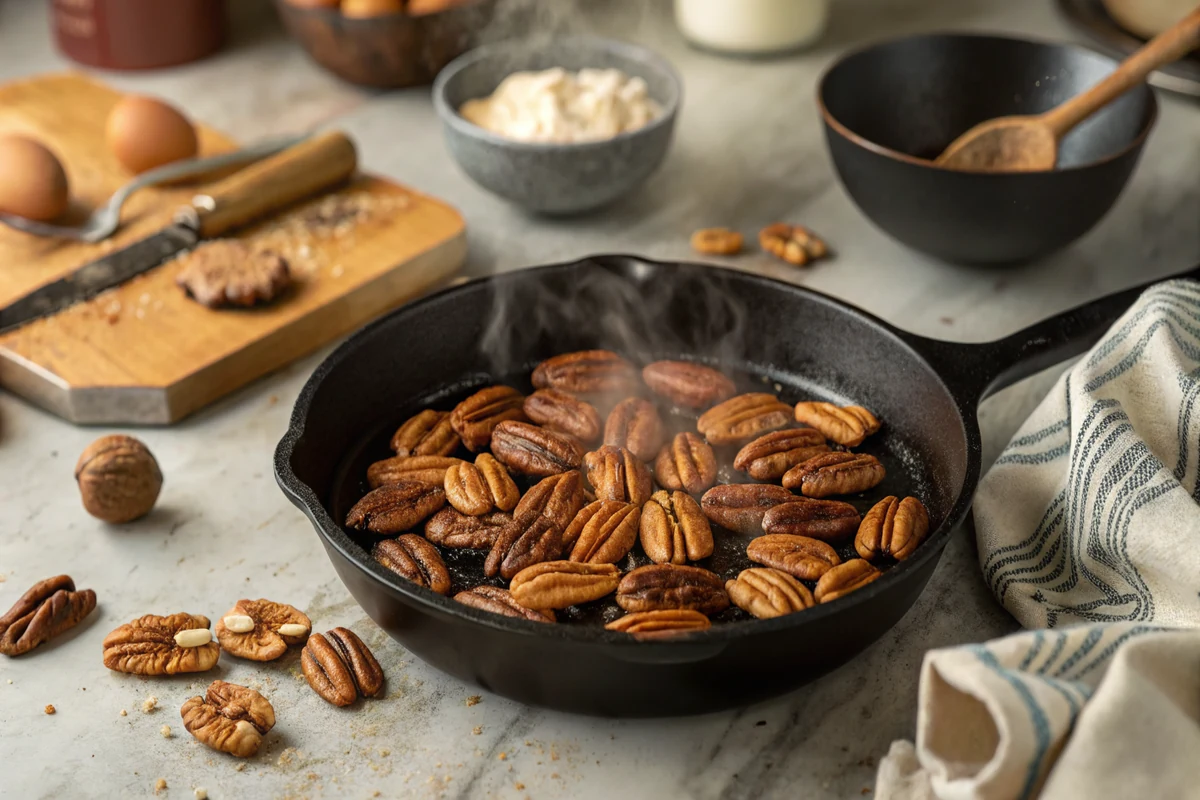
Brown the butter; don't skip this step. The brown butter (beurre noisette) is what gives these cookies their praline-caramel flavor. The milk solids in the butter caramelize, producing nutty compounds that taste like toffee. Skipping the brown butter step gives you a regular pecan cookie, not a praline cookie. The 6 to 8 minutes of browning is the most important time investment in the recipe.
Texas pecans matter. San Saba, Texas is the pecan capital of the world. The Texas-grown pecan has a slightly different flavor profile than Georgia or Louisiana pecans: more buttery, less tannic. If you can buy San Saba pecans (sansabapecans.com, H-E-B stocks them in Texas), do it. Outside of Texas, any fresh pecan halves work; just make sure they're not rancid (smell them; they should smell sweet and nutty, never bitter or off).
The cookies set up as they cool. Pull them from the oven when the edges are golden and the centers still look slightly soft. They will continue cooking from residual heat for another 3 to 4 minutes after coming out. Overbaked cookies are crisp and dry; properly baked cookies have a slight chew at the center.
Choosing the Right Pecans
Texas pecans from San Saba are the ideal. The San Saba River bottomland in Central Texas grows pecan trees that produce particularly buttery, sweet-flavored nuts. The 'San Saba paper-shell pecan' is a regional specialty. Available at H-E-B in Texas, at San Saba Pecan Company directly, or at farmer's markets around Hill Country.
Georgia pecans (Stuart variety) are the second choice. Slightly more tannic and assertive than Texas pecans but excellent. Available everywhere in the US. Look for fresh-shelled pecans in vacuum-sealed bags; avoid pre-chopped pecans in cardboard containers (they're often rancid).
Avoid pecan chips or pecan dust. Pre-chopped pecans go rancid faster than whole or halved pecans because the cut surfaces expose more area to oxygen. Always chop your own from whole or half pecans. Cut on a cutting board with a chef's knife, rocking the blade until pieces are roughly 1/4-inch.
The Brown Butter Method
Use a light-colored saucepan if you have one. The brown butter color changes are easier to see against a light pan (stainless steel, enameled cast iron). Dark cast iron makes it harder to gauge when the butter is properly browned.
Watch the foam. The butter goes through stages: melt, foam (rapid bubbling), foam subsides, then browning begins. The browning happens fast (30 to 60 seconds) once the foam subsides. Watch closely.
Smell for nuts and toffee. The aroma is the most reliable indicator. When the butter smells like roasted nuts and slight toffee, it's ready. If you smell burnt or acrid, you've gone too far.
Pour the entire pan into your mixing bowl, including the brown solids. The brown bits at the bottom of the pan are the most flavorful part. Scrape them all out with a silicone spatula. They become the flavor backbone of the cookies.
Mistakes to Avoid
Skipping the brown butter step. The cookies will taste like a regular pecan cookie, not a praline cookie.
Burning the butter. Brown butter is golden-amber with browned (not blackened) milk solids. Black solids taste bitter. If you go too far, start over.
Adding the sugars to hot butter. Hot butter melts the sugar too fast and creates a grainy texture. Let the brown butter cool 15 minutes (to about 110°F) before adding the sugars.
Overmixing the dough after adding flour. Mix only until the flour is just barely incorporated. Overmixing develops gluten and produces tough cookies.
Skipping the dough rest. 30 minutes of resting hydrates the flour and firms up the dough so the cookies don't spread too thin. The rest is non-negotiable for proper texture.
Overbaking. 11 to 13 minutes is the window. Past 14 minutes, the cookies are crisp and dry. Pull at the first sign of golden edges with still-soft centers.
Crowding the baking sheet. Space cookies 2 inches apart to allow for spreading. Crowded cookies bake into one cookie sheet.
Using cold eggs. Cold eggs can shock the still-warm brown butter mixture and cause it to seize. Use room-temperature eggs (set out 30 minutes before, or warm briefly in hot water in their shells).
Variations Worth Trying
Bourbon-pecan praline. Add 2 tablespoons of bourbon (Garrison Brothers, the Texas bourbon, is ideal) to the dough along with the vanilla. The bourbon adds a slight warmth that pairs beautifully with pecans.
Chocolate chunk praline cookies. Add 1 cup of dark chocolate chunks (Ghirardelli 60% or higher) to the dough along with the pecans. The chocolate and praline flavors are a classic Texas combination.
Maple-pecan version. Replace 1/4 cup of the brown sugar with 1/4 cup of pure maple syrup. The cookies will be slightly softer and have a maple-pecan flavor profile.
Spiced version. Add 1 teaspoon ground cinnamon (in addition to the existing 1/4 teaspoon), 1/4 teaspoon ground cardamom, and 1/4 teaspoon ground nutmeg to the dry ingredients. This is a Christmas-spiced variation that pairs with hot cider.
Stuffed praline cookies. Place 1 teaspoon of dulce de leche in the center of each cookie before baking. The dulce melts into a praline-like center. Indulgent and worth the effort for special occasions.
Storage and Reheating
Refrigerator
The dough keeps 3 days in the fridge, well-wrapped. The longer rest deepens the flavor (the 12-hour rest is preferred by professional bakers). Baked cookies do not need refrigeration; store at room temperature.Freezer
Dough freezes for 3 months. Portion the dough into balls, freeze on a sheet pan for 1 hour, then transfer to a freezer bag. Bake from frozen, adding 2 to 3 minutes to the bake time. Baked cookies freeze for 2 months in a tightly sealed freezer bag or container.Reheating
Cookies do not need reheating. If you want a warm cookie experience, microwave at 50% power for 12 seconds. The cookie will go slightly softer and warm; the brown butter aroma re-emerges. Pairs beautifully with vanilla ice cream.Tips for the Best Pecan Praline Cookies
Use a high-quality butter. The browned butter is the flavor backbone, so use a butter you'd want to taste on its own. Land O Lakes is reliable; Kerrygold gives a slightly more intense brown butter; Plugra is the premium choice. Avoid generic store-brand butter, which often has a high water content that affects browning.
Toast the pecans on a small baking sheet, not in a skillet. Skillet toasting requires constant attention; oven toasting at 350°F for 6 to 8 minutes is more reliable.
Rest the dough for 12 hours if you have the time. Professional bakery cookies (Levain Bakery, Tate's, etc.) almost always rest the dough overnight in the fridge. The flour hydrates more fully and the flavors deepen.
Top each cookie with a pecan half for presentation. The whole pecan half on top signals 'this is a praline cookie' visually. A small detail that elevates the cookie's appearance.
Sprinkle flaky sea salt on top before baking. Maldon sea salt on top of the cookies after they come out of the oven (while still warm) is the modern bakery move. The salt contrasts beautifully with the brown butter sweetness.
What to Serve With Pecan Praline Cookies
Coffee. Strong black coffee, a French press of Texas-roasted beans (Cuvée Coffee or White Rock are good Austin roasters), or a latte. The bitter coffee balances the sweet cookies.
Cold milk. The classic American pairing. Whole milk is best.
Vanilla ice cream. A scoop on a warm cookie with crumbled cookie on top is a Texas restaurant dessert called the 'praline cookie sundae.'
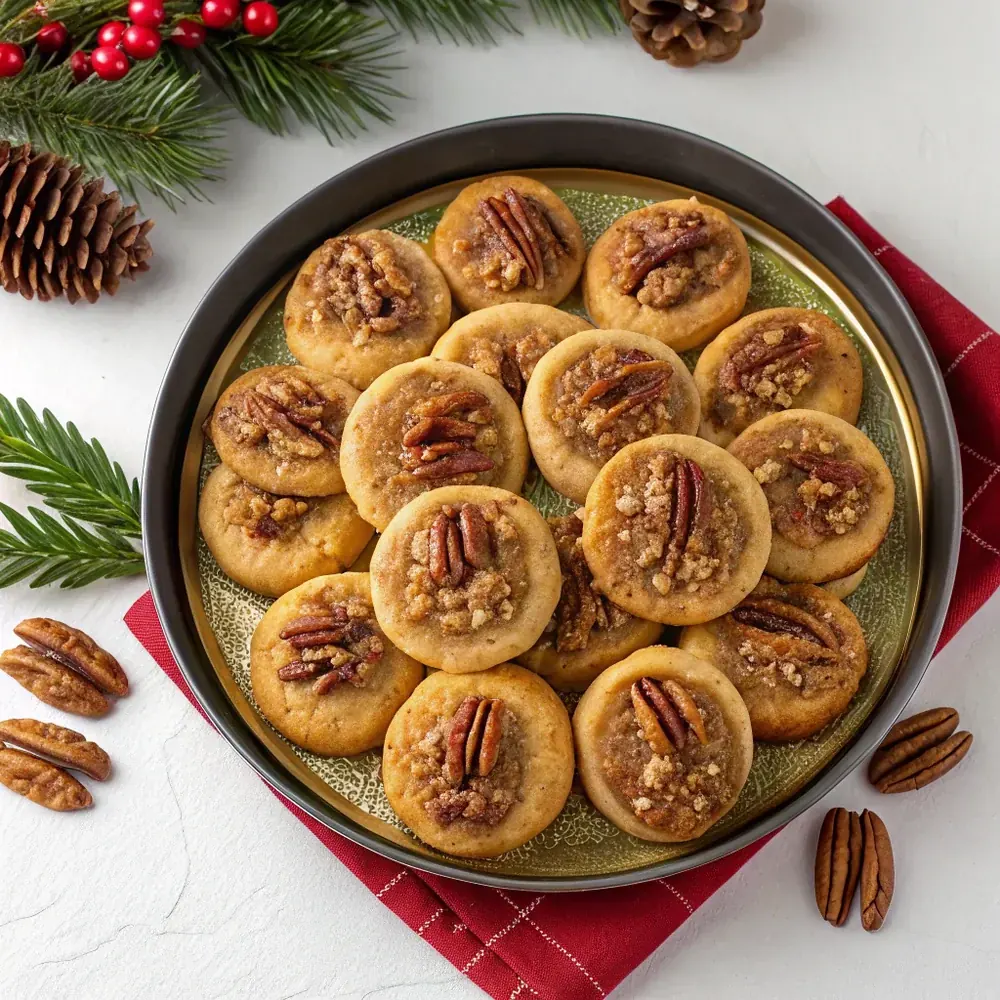
On a holiday cookie platter: Mix these with Texas cowboy cookies, Czech-Texan kolaches, and butter pecan ice cream sandwiches for a complete Texas holiday cookie spread.
For gifting: Wrap 6 to 8 cookies in cellophane bags tied with twine, or stack in a glass jar with a ribbon. The cookies travel well and last a week at room temperature.
Texas Pecan Praline Cookies Recipe
Ingredients
- 1 cup (2 sticks) unsalted butter (Land O Lakes or Kerrygold)
- 1 cup packed light brown sugar
- 1/2 cup granulated sugar
- 1 large egg, room temperature
- 1 large egg yolk, room temperature
- 2 teaspoons pure vanilla extract
- 2 1/4 cups all-purpose flour
- 1 teaspoon baking soda
- 1 teaspoon coarse kosher salt
- 1/4 teaspoon ground cinnamon
- 1 1/2 cups chopped Texas pecans (ideally San Saba), toasted and divided
- 24 pecan halves, for topping (about 1/4 cup)
- Flaky sea salt (Maldon), for finishing (optional)
Instructions
- Brown the butter. Place the 1 cup of butter in a medium-sized heavy-bottomed saucepan (or a 10-inch skillet) over medium heat. Let the butter melt completely, then continue cooking, swirling the pan occasionally, until the butter foams, then subsides, and the milk solids at the bottom turn deep golden brown. The butter will smell nutty and slightly caramelized. This takes 6 to 8 minutes. Pour the browned butter (including the brown solids at the bottom) into a large heat-safe mixing bowl. Let cool 15 minutes.
- Toast the pecans. While the butter cools, spread the 1 1/2 cups chopped pecans on a small baking sheet and toast in a 350°F oven for 6 to 8 minutes, until fragrant and slightly darker. Watch closely; pecans go from toasted to burnt in 30 seconds. Set aside to cool. Reserve 1/4 cup of toasted pecans for topping (in addition to the 24 pecan halves).
- Mix dry ingredients. In a separate bowl, whisk together the flour, baking soda, salt, and cinnamon until evenly distributed.
- Add sugars to brown butter. Once the brown butter has cooled to slightly warm (not hot), add the 1 cup brown sugar and 1/2 cup granulated sugar. Whisk vigorously for 1 minute until smooth and emulsified. The mixture will look glossy and slightly thickened.
- Add eggs and vanilla. Whisk in the whole egg first, then the egg yolk, then the vanilla extract. Mix until smooth and uniform. The wet base should be glossy and pourable.
- Add dry ingredients and pecans. Pour the dry ingredients over the wet base. Stir with a wooden spoon or silicone spatula until just barely combined (a few flour streaks remaining is fine). Fold in the 1 1/4 cups of toasted chopped pecans (reserving 1/4 cup for tops).
- Rest the dough 30 minutes. Cover the bowl with plastic wrap and refrigerate for 30 minutes. The rest hydrates the flour and firms up the dough so the cookies don't spread too thin. (If you want fudgier cookies, rest for 12 hours instead; this is the technique professional bakers use.)
- Preheat and prep. Preheat the oven to 350°F. Line two baking sheets with parchment paper. The parchment helps the cookies release cleanly and prevents over-browning on the bottom.
- Portion the dough. Using a medium cookie scoop (about 2 tablespoons), portion the dough onto the prepared baking sheets, spacing 2 inches apart. Top each cookie with 1 pecan half and a few pieces of the reserved chopped pecans. Sprinkle a small pinch of flaky sea salt on each if using.
- Bake 11 to 13 minutes. Bake one sheet at a time on the middle rack at 350°F for 11 to 13 minutes. The cookies are done when the edges are golden brown and the centers are still slightly soft (they will firm up as they cool). Do not overbake; soft centers are the goal.
- Cool and store. Let cookies cool on the baking sheet for 5 minutes (this is crucial; they're too soft to lift immediately). Transfer to a wire rack to cool completely. Once fully cool, store in an airtight container at room temperature for up to 5 days, or freeze for up to 2 months.
Frequently Asked Questions
Why brown the butter?
Browning the butter caramelizes the milk solids, producing nutty, toffee-like compounds (called melanoidins) that give the cookies their praline-caramel flavor. Without the brown butter step, the cookies taste like a regular pecan cookie. The 6 to 8 minutes of browning is what defines these as 'praline' cookies.
Can I use a different nut?
Yes, but the cookies won't be 'pecan praline' anymore. Walnuts give a more bitter, tannic flavor (closer to a brown sugar walnut cookie). Hazelnuts give a Nutella-like flavor. Almonds give a more delicate, less complex flavor. Pecans are the right choice for the praline tradition.
Why do I need both an egg and an egg yolk?
The whole egg provides structure (the egg white sets the dough during baking). The extra yolk provides richness, color, and a slight chewiness. Skipping the extra yolk gives you slightly less rich cookies. The combination is the recipe's signature texture.
Can I make these without flour (gluten-free)?
Yes. Substitute the all-purpose flour with King Arthur Measure for Measure gluten-free flour. The cookies will be slightly different in texture (less chew) but still excellent. All other ingredients are naturally gluten-free.
How do I prevent the cookies from spreading too thin?
Three steps. First, rest the dough for 30 minutes (or 12 hours for maximum effect). Second, use cold dough; if you're baking in batches, return the second batch's dough to the fridge while the first bakes. Third, don't overbake; remove cookies when edges are golden but centers still look soft.
Can I make the dough ahead?
Yes. The dough keeps 3 days in the fridge (well-wrapped) and 3 months in the freezer (portioned into balls, frozen on a sheet pan, then bagged). Frozen dough bakes from frozen with 2 to 3 minutes added to the bake time.
Why is my cookie tough?
Two possible causes. First, you overmixed the dough after adding flour; mix only until just barely combined. Second, you overbaked; pull at the first sign of golden edges. Tough cookies are usually overcooked or overmixed.
What's the difference between these and chocolate chip pecan cookies?
Pecan praline cookies have a brown butter base (the praline flavor) and feature pecans as the headline ingredient. Chocolate chip pecan cookies have regular butter, chocolate chips, and pecans as a secondary ingredient. The two are different flavor profiles entirely. Praline cookies are the more Texas-specific version.