Texas Desserts
Texas Cowboy Cookies
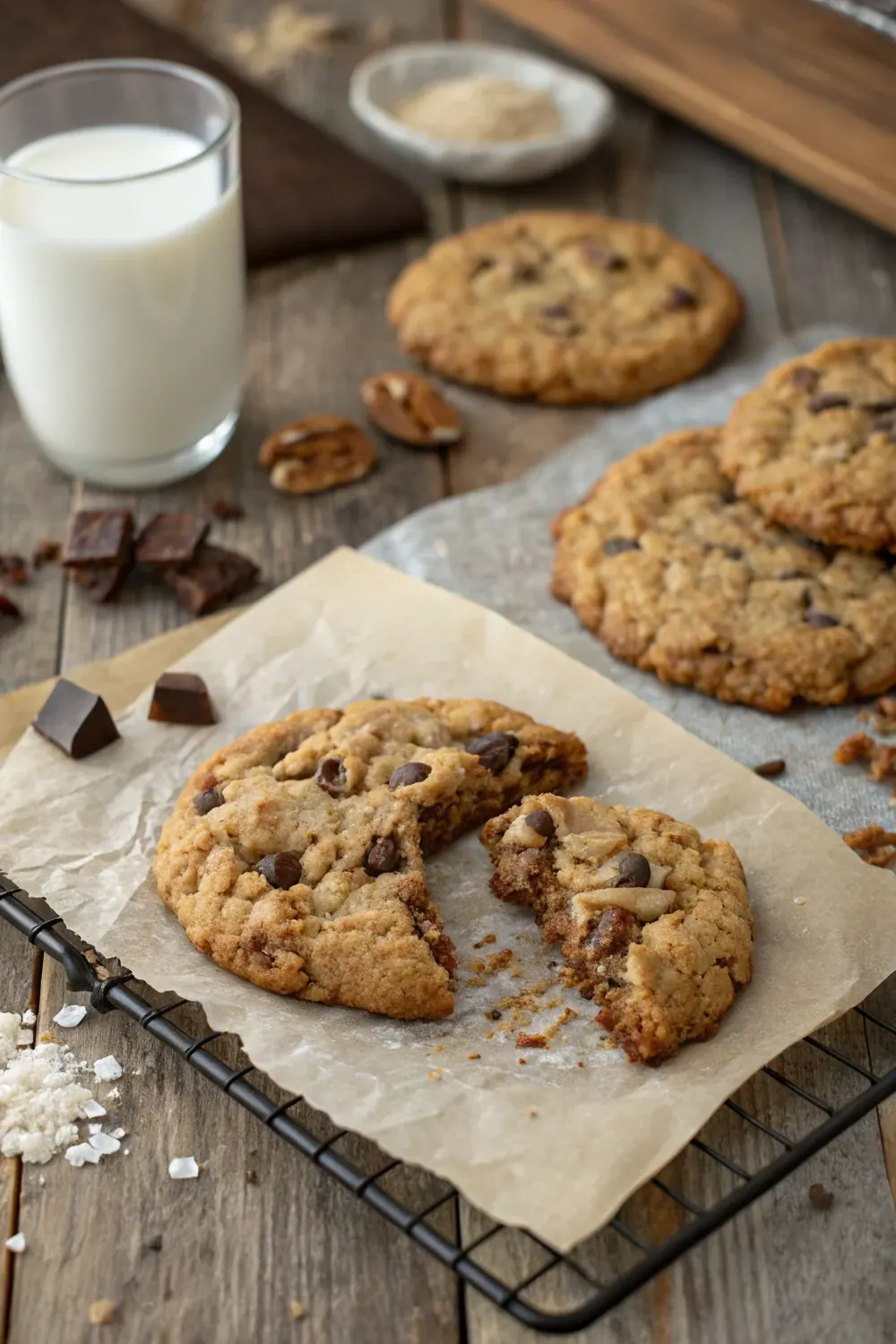
Laura Bush's Texas cowboy cookies, the giant oat-pecan-coconut-chocolate cookie that beat Tipper Gore in the 2000 First Lady bake-off.
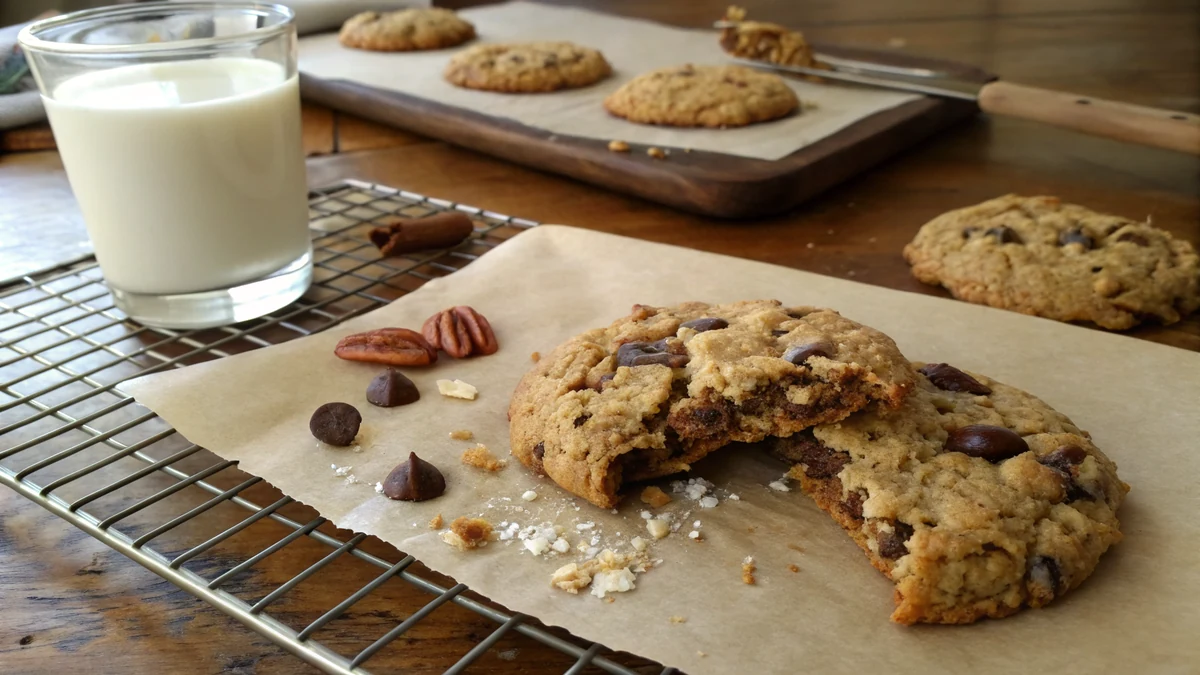
Quick answer: Texas cowboy cookies are giant oat-and-chocolate-chip cookies with pecans, sweetened shredded coconut, and cinnamon, scooped at a quarter cup each and baked into crispy-edged chewy-centered rounds about 4 inches across. The recipe is famously associated with Laura Bush of Midland, Texas, whose version won the Family Circle magazine First Lady bake-off in 2000 against Tipper Gore's ginger snaps. The Bush family cookie has been printed on White House recipe cards and Crawford ranch tea-time menus ever since.
I make these cookies the way Laura Bush taught a generation of Texans to make them, which is to say generous in every direction. Generous with the oats, generous with the pecans, generous with the coconut, generous with the chocolate, and most of all generous with the scoop size. A proper Texas cowboy cookie is not a polite little teatime round; it is a quarter-cup mound of dough that bakes out to a four-inch cookie with crackled edges and a soft yielding middle. You eat it with both hands and you do not apologize for the shower of pecans and oats on your shirt.
Laura Bush published this recipe in the year 2000, when Family Circle magazine ran its quadrennial First Lady cookie bake-off, the magazine contest that pitted the would-be First Lady from each major presidential ticket against the other. Laura Bush of Midland, Texas, submitted her cowboy cookies; Tipper Gore submitted ginger snaps. The cowboy cookies won by a clear margin, and the recipe was printed in newspapers across the country. It became the Bush family cookie, the Crawford ranch tea-time cookie, and over the next two decades a Texas dessert institution that has outlived the contest, the presidency, and the magazine itself.
The 2000 First Lady Bake-Off
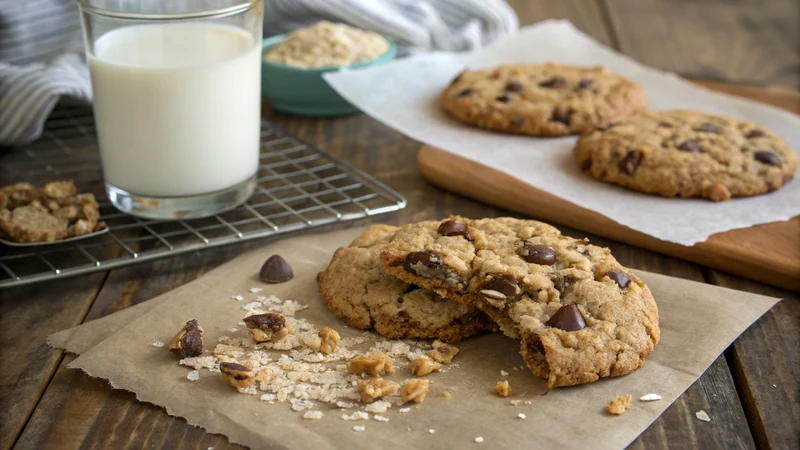
The Family Circle First Lady cookie bake-off was a quadrennial American tradition that ran from 1992 through 2016, in which the would-be First Lady from each major presidential ticket submitted a cookie recipe and the magazine's readers voted for their favorite. The contest started as a response to Hillary Clinton's 1992 'I suppose I could have stayed home and baked cookies' remark, and it grew into a friendly four-year culinary face-off that put recipes from Hillary Clinton, Barbara Bush, Tipper Gore, Laura Bush, Cindy McCain, Michelle Obama, Ann Romney, and Melania Trump on supermarket checkout magazine racks.
In the year 2000, Laura Bush of Midland, Texas, submitted Texas cowboy cookies. Tipper Gore submitted ginger snaps. The reader vote went decisively to the cowboy cookies, and the recipe was reprinted in newspapers across the country and eventually on White House recipe cards. The cookie became Laura Bush's signature dessert during the eight years of her husband's presidency, served at Crawford ranch barbecues, state visits, and reporters' tea-time receptions in Washington.
What made the cowboy cookies win, in the magazine's editorial reading and in most home cooks' opinions, was their generosity. Tipper Gore's ginger snaps were a refined small spice cookie of the kind you might serve at a Washington tea. Laura Bush's cowboy cookies were quarter-cup giants loaded with oats, chocolate, pecans, and coconut, the kind of cookie you eat at a ranch kitchen table with both hands. The contrast read as Texan generosity versus Washington restraint, and the readers voted Texan. The recipe has appeared in every major American food publication since, including Serious Eats, Bon Appetit, and Southern Living, and the Bush family kitchen still bakes them on holiday weekends.
Why They Are Called Cowboy Cookies
The name cowboy cookie predates Laura Bush by several decades. The general term refers to any oversized chunky cookie loaded with multiple mix-ins, typically including oats and chocolate, and the name appears in American cookbooks as early as the 1950s and 1960s. The reading of the name is straightforward: these are cookies a cowboy would eat. Hearty, portable, filling, calorie-dense, made to sustain a man working long hours on a ranch and not made to be polite.
When Laura Bush adopted the cookie as her signature recipe during the 2000 campaign, she gave it a specifically Texan identity by including pecans (the Texas state nut, with the San Saba pecan groves producing some of the finest), by using brown-sugar-heavy proportions that read as ranch-kitchen rather than tea-room, and by scooping the dough into giant quarter-cup mounds rather than standard teaspoon-size cookies. The Bush version is sometimes called Laura Bush cowboy cookies or Texas cowboy cookies to distinguish it from the older generic versions, and the recipe distinguishes itself by the inclusion of sweetened shredded coconut, which is not in every cowboy cookie recipe but is canonical in Laura Bush's.
The campaign branding worked. Cowboy cookies tied perfectly to the George W. Bush Crawford ranch image, to the Midland oil-and-cattle Texas origins of the Bush family, and to the broader 2000 campaign emphasis on Texan plain-spokenness against Washington insider-ism. The cookie was a small piece of edible branding, and it endured because the cookie is genuinely good.
The Five Mix-Ins Philosophy
The signature of a Laura Bush cowboy cookie is the five-component mix-in stack: rolled oats, chocolate chips, pecans, sweetened shredded coconut, and ground cinnamon. None of these is optional; remove any one and you have a different cookie. The proportions on the canonical recipe are equally specific: 3 cups oats, 3 cups chocolate chips, 3 cups chopped pecans, 2 cups sweetened coconut, and 1 tablespoon cinnamon in the dry mix.
The oats provide the chew and the structural body; they absorb butter and egg during the bake and give the cookie its signature pull. The chocolate chips provide the sweet bursts of melt; the pecans provide buttery crunch and the Texan identity; the sweetened coconut adds a chewy floral sweetness and a slight tropical edge that is sometimes overlooked but is essential. The cinnamon does not announce itself but it ties everything together, giving the dough a warm baseline note that makes the cookie taste finished rather than just sweet.
Some modern cooks try to swap in dried fruit or seeds or different nuts, and while those variations are tasty cookies, they are not cowboy cookies in the Laura Bush sense. The five-component canonical stack is the recipe, and the recipe is what won the bake-off in 2000.
Oat Choice, Rolled vs Quick vs Steel-Cut
Use old-fashioned rolled oats, not quick oats and not steel-cut. Rolled oats (Quaker old-fashioned, Bob's Red Mill rolled, or any large-flake rolled oat) are oats that have been steamed and flattened between rollers, producing flat oval flakes about the size of a dime. They absorb moisture during the bake but retain their structure, which is exactly what you want in a cowboy cookie.
Quick oats are rolled oats that have been cut smaller and pre-cooked partially, so they absorb moisture much faster and break down during baking. A cookie made with quick oats will be softer overall, with less of the chewy-oat texture that defines the cowboy cookie. The cookie will taste fine but it will be a different cookie, more like a soft oatmeal cookie than a cowboy cookie.
Steel-cut oats are the whole oat groat chopped into small pieces, and they are absolutely wrong for this cookie. They do not soften enough during a 15-minute bake; you will end up with a cookie full of crunchy raw-tasting oat bits. Save the steel-cut oats for breakfast porridge. Old-fashioned rolled oats are the canonical and correct choice.
Coconut Decision, Sweetened vs Unsweetened
Use sweetened shredded coconut, ideally Baker's Angel Flake or any sweetened shredded coconut from the baking aisle. The sweetened version has a slightly higher moisture content, a sticky-chewy texture that integrates beautifully into the cookie dough, and a sweetness that complements the brown sugar in the base. This is what Laura Bush's recipe specifies and this is what produces the canonical cowboy cookie texture.
Unsweetened coconut, the kind sold in natural food stores or as 'desiccated coconut' in the dry-goods aisle, has a much drier texture and a slightly fibrous chew that does not integrate as well. The cookie will be drier overall and the coconut will read more aggressively as a separate ingredient rather than as a background note. If you only have unsweetened coconut, soak it in 2 tablespoons of warm water for 10 minutes before folding it into the dough to approximate the sweetened texture.
Large-flake versus medium-shred is a matter of preference. The canonical Baker's Angel Flake is medium-shred, and that is what most Texas cooks use. Large-flake coconut (the kind that looks like coconut chips) reads more strongly as a coconut presence and gives a slightly more rustic cookie; medium-shred melts into the background and is the more polished choice. Both work.
Pecans, the Texan Detail
Pecans are the Texas state nut and the canonical cowboy cookie nut. The best Texas pecans come from the San Saba region of the Hill Country, where Risien's Pecan Orchard (founded in 1888 in San Saba, often called the Pecan Capital of the World) and a constellation of family orchards grow some of the finest pecans in North America. The San Saba pecan has a thinner shell, a sweeter and more buttery kernel, and a creamier texture than commodity pecans from larger groves.
If you can find San Saba pecans (HEB carries them in season, October through January, and the Pecan Shed in San Saba ships year-round), use them. They will give you a noticeably more buttery cookie. If you cannot, any fresh pecan halves from a reputable source will work; Diamond, Sun Harvest, or store-brand pecans from a grocery with high turnover are all fine. Avoid stale pecans (rancid pecans taste sharp and acrid, and one rancid pecan will ruin the cookie); buy fresh and store in the freezer until you use them.
Toast the pecans before chopping. Spread them on a dry baking sheet at 350F for 7-9 minutes until they smell fragrant and look one shade darker. This is the single biggest flavor upgrade you can make. Chop the toasted pecans roughly, leaving a mix of half-pieces and quarter-pieces; large pieces give crunch, smaller pieces distribute throughout the dough. Skip the toasting and the cookie still works; do it and you get the cookie that won the bake-off.
Brown Sugar Ratio, the Chew vs Crisp Lever
The cowboy cookie uses equal parts brown sugar and granulated sugar in Laura Bush's canonical version, 1.5 cups each. This 50-50 split is the key textural lever for the cookie, and adjusting it shifts the cookie significantly toward chew or toward crisp.
Brown sugar contains molasses, which adds moisture, acidity, and a darker caramelized note to the cookie. More brown sugar gives a chewier, denser, more caramelized cookie. Granulated sugar is anhydrous and gives a crisper, lighter cookie that spreads more. The 50-50 split balances both qualities, producing a cookie with crackled crisp edges and a chewy soft center, which is the signature cowboy cookie texture.
If you want a noticeably chewier cookie, shift to 2 cups brown sugar and 1 cup granulated. If you want a crisper cookie that spreads thinner, shift to 1 cup brown and 2 cups granulated. The canonical Laura Bush ratio of 1.5 cups each is the textbook balance, and it is the proportion the bake-off voters voted for. Light brown sugar is correct; dark brown sugar gives a heavier molasses note that pushes the cookie toward gingerbread territory.
Chilling the Dough, Does It Matter
Chilling cookie dough before baking is a hotly debated subject among home bakers, and the answer for cowboy cookies is: it matters somewhat, but less than for some other cookies. The canonical Laura Bush recipe does not call for an extended chill; she scoops and bakes immediately. The cookies still work this way, and many White House batches were made without chilling.
That said, a brief 20-30 minute chill of the scooped dough balls before baking does give you a slightly better cookie. The cold dough spreads less, holds its quarter-cup mound shape better, and produces a cookie with more crackled crisp edges and a thicker chewier center. If you have the time and the refrigerator space for two sheet pans of dough balls, do the chill.
A longer overnight chill (12-24 hours) is the technique that Chris Kimball at Cook's Illustrated has popularized for chocolate chip cookies, and it works for cowboy cookies too. The flour hydrates fully, the flavors deepen, and the cookie tastes more complex. The trade-off is that giant rounds of cookie dough in your fridge for 24 hours is a serious refrigerator commitment. I usually do the 20-minute quick chill and call it done.
Scoop Size, the Giant Cowboy Portion
The defining characteristic of a Laura Bush cowboy cookie is the quarter-cup scoop. This is not a standard cookie size; a standard cookie is a tablespoon (about 15-20 g) or two tablespoons (about 30-40 g), and a single quarter-cup cowboy cookie portion is roughly 100 g, two to three times the size of a normal cookie.
Use a 1/4 cup measuring scoop or a #10 disher (the standard restaurant-supply giant cookie scoop). Scoop generously; if you press the dough into the scoop and level it off, you should get a dome about the size of a golf ball plus a bit more. Place 6 dough balls per half-sheet pan, evenly spaced; the cookies spread to about 4 inches across each and you need the space.
If you scoop smaller, the cookie will still work but you will lose the signature cowboy quality. The whole point of these cookies is generosity. If you want a small cookie, make a different recipe. If you are making cowboy cookies, scoop them giant, eat them with both hands, and accept the mess. That is the Bush family kitchen attitude and that is the recipe's identity.
Baking Strategy, One Tray at a Time
Bake one tray at a time, on the center rack of a fully preheated 350F oven. This is non-negotiable for the best cookies. Two trays simultaneously, one on the upper rack and one on the lower, will produce uneven bakes; the top tray browns on top and stays pale on the bottom, the bottom tray browns on the bottom and stays pale on top. Rotating between racks halfway helps but does not fully solve the problem.
Center rack, one sheet at a time, full preheat. While the first sheet is baking, keep the second sheet in the refrigerator so the dough stays cold. As soon as the first sheet comes out, transfer the cookies to a wire rack after 5 minutes of resting on the pan, then wipe the pan with a paper towel if needed, line with fresh parchment, and load the second batch. The total bake time for both sheets at one tray at a time is about 35-40 minutes; not bad for the result.
Line the pans with parchment paper, not silicone mats. Parchment gives a slightly crisper bottom and better spread; silicone mats insulate the dough and the cookies bake up slightly thicker and softer. Both work but parchment is the classic and the better choice for these cookies. Reuse the parchment between batches if it is not too greasy.
The Underbaked-Center Sweet Spot
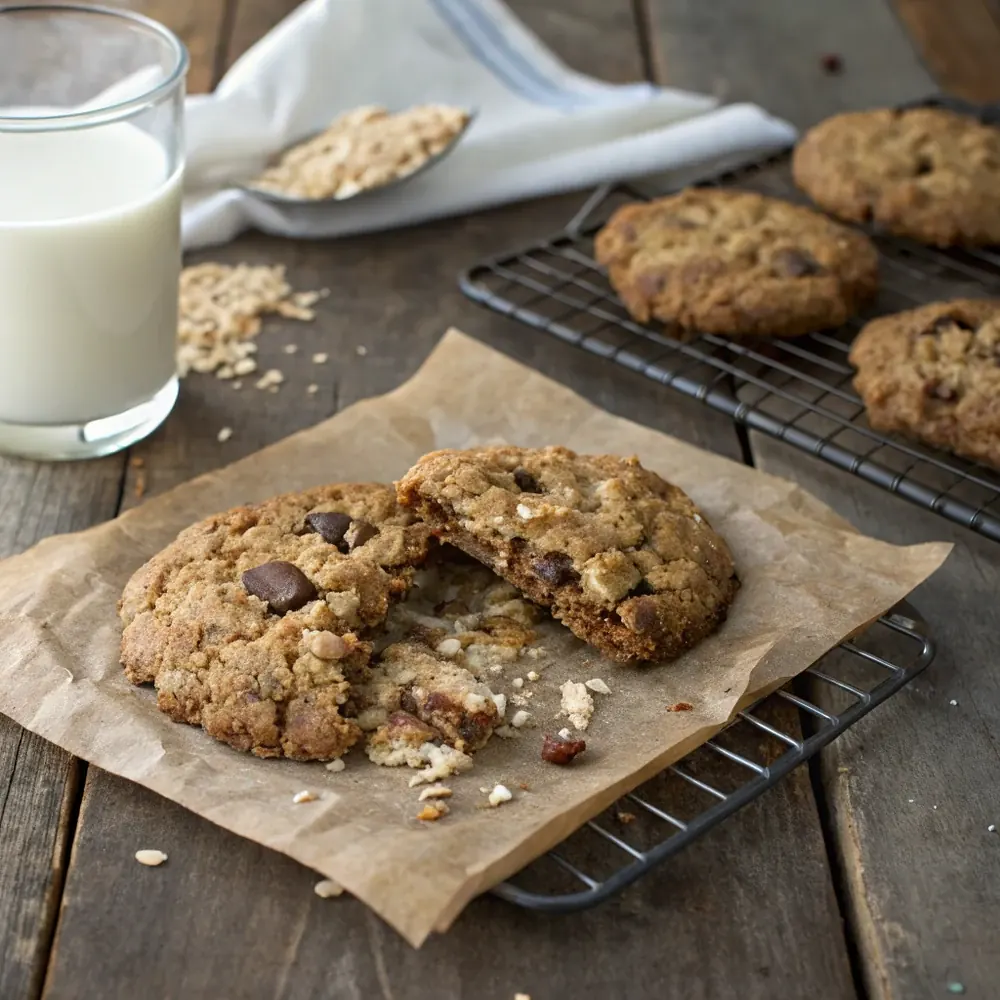
The single most important visual cue for a perfectly baked cowboy cookie is the underbaked-looking center. When you pull the sheet from the oven, the edges should be deep golden brown and the tops should look crackled, but the very middle should still look slightly soft, slightly raw, and slightly underdone. This is exactly right. The cookies will continue baking on the hot pan for 5 minutes after they come out of the oven, and that residual bake is what produces the chewy-center texture.
If you bake until the centers look fully set, you have overbaked. The cookies will be uniformly crisp, dry, and lose the signature chewy-soft middle. They will still be tasty cookies, but they will not be the cowboy cookie that wins the bake-off. Trust the underbaked-looking middle and the 5-minute rest on the hot pan.
The 5-minute rest is also when the cookies firm up enough to be transferred. A cookie pulled off the pan immediately after the oven will tear; a cookie that has rested for 5 minutes lifts cleanly with a spatula. Patience for those 5 minutes is essential. After the rest, transfer to a wire rack and cool fully before stacking or storing.
Storage and Freezing Dough Balls
Baked cowboy cookies keep beautifully at room temperature in an airtight container for up to 5 days. They are best on day one, when the crackled edges still have a slight crisp and the centers are perfectly chewy. By day three they have softened into a more uniform chewy texture, which is also wonderful but a different experience. After day five they start to dry out; freeze any extras at that point.
The better storage strategy, in my Hill Country kitchen, is to freeze the scooped raw dough balls. Scoop the entire batch onto a parchment-lined sheet, freeze for 2 hours until solid, then transfer the frozen dough balls to a zip-top freezer bag. They keep for up to 3 months. When you want fresh-baked cookies, place the frozen balls directly on a parchment-lined sheet, add 2-3 minutes to the bake time, and you have cookies in 20 minutes start to finish.
This frozen-dough strategy is the secret to having warm cookies on demand without committing to a 3-dozen batch at once. The Bush family kitchen at Crawford reportedly kept frozen cowboy cookie dough on hand at all times, ready for unexpected guests or a late-afternoon ranch tea. It is a wonderful habit to adopt.
Variations and Modern Twists
White chocolate macadamia cowboy cookie. Swap the semisweet chocolate chips for white chocolate chips and the pecans for macadamia nuts. Keep the oats, coconut, and cinnamon. The result is a tropical Hawaiian-leaning variation that pairs beautifully with coffee.
Butterscotch cowboy cookie. Swap half the chocolate chips for butterscotch chips. The butterscotch and brown sugar pair into a deeply caramelized cookie that tastes more old-fashioned and less chocolate-forward.
Dark chocolate sea salt cowboy cookie. Use dark chocolate chips (Ghirardelli 60 percent) instead of semisweet, and finish with a generous pinch of Maldon flaky sea salt on each cookie immediately after baking. The salt-and-dark-chocolate combination is a modern Texas variation that has earned its place.
Pecan-only cowboy cookie. Skip the chocolate chips entirely and double the pecans to 6 cups. A very Texan minimal version that lets the toasted pecans speak. Pairs perfectly with my Texas pecan pie for a pecan-forward dessert spread.
Cinnamon-roll cowboy cookie. Double the cinnamon to 2 tablespoons and add 1/2 teaspoon ground cardamom. A holiday variation that reads like a spiced cinnamon roll in cookie form.
Dessert pairing plates. Cowboy cookies sit beautifully on a Texas dessert spread alongside buttermilk pie, peach cobbler, and coconut tres leches cake for a full ranch-table holiday dessert.
Pairing with Sweet Tea, Coffee, and Milk
Cowboy cookies are big bold cookies and they need bold drinks to stand up to them. The canonical Texas pairing is cold milk, the way every American child has eaten cookies since the invention of milk delivery. A tall glass of cold whole milk against a still-slightly-warm cowboy cookie is the Bush family kitchen pairing and the after-school pairing in every Texas home.
For adults, strong black coffee is the better pairing. A medium-dark roast (Texas Coffee Traders, Cuvee Coffee in Austin, or any strong drip from a French press) cuts through the sweetness and balances the brown-sugar density of the cookie. Crawford ranch tea-time used a strong drip coffee from Cuvee or local Crawford roasters; the cookie holds up against any coffee strength.
Sweet tea, the Texas summer pairing, is also wonderful. The high sugar content of sweet tea complements the cookie rather than cutting it, which makes for a more dessert-on-dessert experience but a deeply Texan one. For a more sophisticated pairing, try the cookie alongside a small scoop of butter pecan ice cream; the cookie's pecans and the ice cream's pecans echo each other beautifully.
The Bush Family Legacy and Crawford Texas Culture
Crawford, Texas, population around 700, sits in McLennan County about 25 miles west of Waco in the broader Brazos River valley. It is a small ranching town that became internationally famous as the location of George W. Bush's Prairie Chapel Ranch, the 1,600-acre property the Bush family bought in 1999 and used as the unofficial Western White House throughout the 2001 to 2009 presidency. Foreign heads of state, journalists, and political delegations all made the Crawford pilgrimage during those years, and Laura Bush's cowboy cookies were the unofficial welcome cookie.
Local Crawford bakeries, including the Coffee Station and the now-closed Yellow Rose Cafe, baked variations of cowboy cookies during the Bush years and capitalized on the tourist trade. The recipe became part of Crawford culture even after the Bush presidency ended in 2009, and you can still find cowboy cookies on the menus of Crawford coffee shops today. The Bush Library at SMU in Dallas has the original handwritten recipe card on display in the cooking-and-entertaining exhibit.
The legacy is broader than Crawford, though. Cowboy cookies became, by the late 2000s, a generic Texan dessert tied to ranching culture, family kitchens, and a particular generous-Texan aesthetic. Texas Monthly has covered them. Southern Living has reprinted the recipe at least four times. The cookie has outgrown its bake-off origin and become a Texas dessert institution in its own right, which is exactly what good campaign branding aspires to.
Chef Mia's Notes from the Hill Country Kitchen
I have made cowboy cookies in my Hill Country kitchen at least once a quarter for the past decade. They are my go-to bake-sale cookie, my go-to ranch-guest cookie, and my go-to standby for the moments when somebody calls and says they are dropping by in 90 minutes and I have nothing in the cookie jar. The 90-minute window is exactly right for a batch from start to finish if you have a stand mixer and a hot oven.
The biggest mistake I see in home versions of this cookie is underscaling the mix-ins. The recipe calls for what sounds like an absurd amount of oats, chocolate, pecans, and coconut, and many cooks reflexively cut it down because they think 'surely that cannot be right.' It is right. The cowboy cookie identity is more mix-ins than dough, and the canonical proportions are what produce the canonical cookie. Trust Laura Bush; she submitted this recipe to a national magazine and beat Tipper Gore. The proportions are correct.
My second biggest tip: toast the pecans. Every time. It is 7 minutes of oven time that transforms a good cookie into a remarkable one. San Saba pecans if you can find them, but any fresh pecan toasted will outperform an untoasted high-end pecan. The buttery aromatic oils that come out during toasting are the secret behind the bake-off-winning flavor.
Make a double batch. Freeze half the dough balls. You will be grateful next month when somebody calls and says they are dropping by in 90 minutes. Welcome to the Bush family kitchen habit; it is a good one to inherit. For more on the recipe's history and variations, see Food Network's First Lady recipe coverage and the Family Circle 2000 archives.
Texas Cowboy Cookies Recipe
Ingredients
- For the dry base:
- 3 cups (375 g) all-purpose flour, spooned and leveled
- 1 tablespoon baking powder
- 1 tablespoon baking soda
- 1 tablespoon ground cinnamon
- 1 teaspoon kosher salt
- For the creamed butter base:
- 1 cup (227 g) unsalted butter, softened to room temperature
- 1 1/2 cups (300 g) light brown sugar, packed
- 1 1/2 cups (300 g) granulated sugar
- 3 large eggs, room temperature
- 1 tablespoon pure vanilla extract
- For the Mix-ins:
- 3 cups (270 g) old-fashioned rolled oats (Quaker or Bob's Red Mill, not quick oats and not steel-cut)
- 3 cups (510 g) semisweet chocolate chips (Ghirardelli, Guittard, or Hershey's)
- 3 cups (340 g) pecan halves, toasted and roughly chopped (San Saba Texas pecans if you can find them)
- 2 cups (170 g) sweetened shredded coconut (Baker's Angel Flake is the canonical choice)
- Optional finishing:
- Flaky sea salt for sprinkling after baking (Maldon)
- Equipment:
- Stand mixer with paddle attachment, or hand mixer and a sturdy bowl
- Two half-sheet baking pans lined with parchment paper
- 1/4 cup measuring scoop or large cookie scoop (a #10 disher works perfectly)
- Wire cooling rack
Instructions
- Toast the pecans. Spread the pecan halves on a dry baking sheet and toast at 350F for 7-9 minutes until they smell fragrant and look one shade darker. Watch closely; pecans go from toasted to burnt in about 60 seconds. Let them cool completely, then roughly chop them into a mix of half-pieces and quarter-pieces. Toasting brings out the buttery oil in San Saba pecans and is the single biggest flavor upgrade you can make to this cookie. Skip it and the cookie still works; do it and the cookie tastes the way Laura Bush's actually tasted.
- Whisk the dry ingredients. In a medium bowl, whisk together the flour, baking powder, baking soda, cinnamon, and salt until fully blended and lump-free. The full tablespoon of baking soda plus tablespoon of baking powder is correct; this is a big-batch cookie that needs serious lift, and the cinnamon belongs in the dry mix so it disperses evenly. Set the dry mixture aside.
- Cream the butter and sugars. In the bowl of a stand mixer fitted with the paddle, beat the softened butter, light brown sugar, and granulated sugar on medium-high speed for 3-4 minutes until the mixture is pale, fluffy, and noticeably lighter in color. This is the most important step for texture; under-creamed butter gives flat dense cookies, properly creamed butter gives the crackled lifted top. Scrape down the sides of the bowl once during creaming.
- Add eggs and vanilla. Add the eggs one at a time, beating well after each addition and scraping the bowl between eggs. Add the vanilla and beat to combine. The mixture should look smooth, glossy, and slightly silky, almost like a thick buttercream. If it looks curdled or broken, your eggs were too cold; let it warm up for a few minutes and beat again. Room-temperature eggs are essential.
- Add the dry ingredients. With the mixer on low, gradually add the dry mixture in three additions, mixing just until the flour disappears after each addition. Do not overmix; the dough should still look slightly streaky when you stop the mixer. Overmixing develops gluten and gives tough chewy-in-the-wrong-way cookies.
- Fold in the mix-ins. Remove the bowl from the mixer. With a sturdy wooden spoon or silicone spatula, fold in the oats, chocolate chips, chopped toasted pecans, and shredded coconut by hand. The dough will look impossibly full of mix-ins at first; keep folding patiently and the dough will eventually bind everything together. This is the cowboy cookie identity: more mix-ins than dough. Do not skimp.
- Scoop into giant balls. Using a 1/4 cup measuring scoop or a #10 disher, scoop the dough into generous balls about the size of a golf ball plus a little more, roughly 100 g each. Place 6 dough balls per half-sheet pan, evenly spaced and well apart; these spread to about 4 inches across. Do not flatten the balls; they will spread on their own. If the dough is sticky, refrigerate the scooped balls for 15 minutes before baking.
- Chill briefly (optional but recommended). Refrigerate the scooped dough balls on the parchment-lined sheets for 20-30 minutes while the oven preheats. Chilling firms up the butter and gives a thicker cookie with more crackled edges and a chewier center. If you skip the chill, the cookies will spread thinner and bake crispier overall; both are fine. The chilled version is what Laura Bush's recipe card calls for.
- Preheat the oven. Preheat the oven to 350F with the rack in the center position. A properly preheated oven is essential for the crackled-top texture; an oven that has not fully reached 350F gives flat dull cookies. Give the oven a full 20 minutes to come to temperature, and if your oven runs cool, use an oven thermometer to verify. Bake only one tray at a time on the center rack.
- Bake at 350F. Bake one sheet at a time on the center rack at 350F for 14-17 minutes, until the edges are deep golden brown, the tops are crackled, and the centers still look slightly soft and underdone in the middle. Rotate the pan once halfway through. The cookies will look underbaked when you pull them; this is correct. They finish cooking on the hot pan for 5 minutes after they come out of the oven, and that residual bake is what gives the chewy-center texture.
- Sprinkle salt and rest on the pan. If using, sprinkle a tiny pinch of flaky Maldon sea salt over each cookie immediately as they come out of the oven. Let the cookies rest on the hot pan for 5 minutes; this is the residual-bake stage and it sets the structure. Do not skip the rest. After 5 minutes, transfer the cookies to a wire rack and cool completely. They firm up significantly as they cool.
- Store and serve. Once fully cooled, store the cookies in an airtight container at room temperature for up to 5 days, or freeze for up to 3 months. They are best on day one with the crackled edges still slightly crisp, and they soften over the next 2-3 days into a chewier overall texture. Serve with strong coffee, cold milk, or sweet tea. Both versions are excellent.
Frequently Asked Questions
Did Laura Bush really win the 2000 Family Circle bake-off with this cookie?
Yes. Laura Bush of Midland, Texas, submitted Texas cowboy cookies to the Family Circle First Lady cookie bake-off in 2000, and Tipper Gore submitted ginger snaps. The reader vote went decisively to Laura Bush's cowboy cookies, and the recipe was reprinted in newspapers across the country. The contest was a quadrennial Family Circle tradition that ran from 1992 through 2016 and pitted the would-be First Lady from each major presidential ticket against the other. The cowboy cookies became Laura Bush's signature dessert during the eight years of the Bush presidency.
Why are these cookies so big?
The quarter-cup scoop is the defining characteristic of Laura Bush's cowboy cookies, and it ties directly to the cowboy cookie identity. A cowboy cookie is meant to be hearty, portable, and filling, the kind of cookie a ranch worker would eat for a calorie-dense afternoon snack. Standard cookies are a tablespoon or two of dough; a cowboy cookie is roughly 100 g per cookie, two to three times the size, which bakes out to about 4 inches across. If you scoop them smaller you can still call them cookies, but they will not be cowboy cookies in the Laura Bush sense.
Can I use quick oats or steel-cut oats instead of rolled?
Use old-fashioned rolled oats only. Quick oats are too small and pre-cooked, and they break down during baking into a softer mushier texture that loses the signature chew of a cowboy cookie. Steel-cut oats are the whole oat groat chopped into pieces, and they will not soften enough during a 15-minute bake; you will end up with crunchy raw-tasting oat bits in your cookie. Old-fashioned rolled oats (Quaker, Bob's Red Mill, or any large-flake rolled oat from the baking aisle) are the canonical and correct choice.
Do I have to use sweetened coconut, or can I use unsweetened?
Sweetened shredded coconut (Baker's Angel Flake is the canonical brand) is what Laura Bush's recipe specifies and what produces the right cookie texture. The sweetened version has higher moisture, a sticky-chewy quality that integrates into the dough, and a sweetness that complements the brown sugar base. Unsweetened coconut is drier and more fibrous, and the cookie will read more aggressively coconut-flavored with less integration. If you only have unsweetened, soak it in 2 tablespoons warm water for 10 minutes before folding it in to approximate the sweetened texture.
Why are my cookies coming out flat instead of crackled and lifted?
The most likely cause is under-creamed butter. Cream the softened butter with the brown sugar and granulated sugar on medium-high speed for a full 3-4 minutes until pale, fluffy, and noticeably lighter in color. Under-creamed butter does not incorporate enough air, and the cookies will spread flat without the signature lifted crackled top. Other causes: butter too warm (melted butter spreads more), oven not fully preheated (preheat for 20 minutes), or skipping the brief chill of the scooped dough balls before baking. The chill helps.
Can I freeze the cookies or the dough?
Both. Baked cookies keep in an airtight container at room temperature for 5 days or freeze for 3 months. The better strategy is to freeze raw scooped dough balls; scoop the entire batch onto a parchment-lined sheet, freeze for 2 hours until solid, transfer to a zip-top bag, and they keep for 3 months. Bake frozen dough balls directly from the freezer with 2-3 extra minutes of bake time. This way you have fresh-baked cookies in 20 minutes whenever guests drop by, which is reportedly how the Bush family kitchen at Crawford operated.
Can I make these cookies smaller for a party tray?
Yes, with some adjustments. Scoop the dough into 2-tablespoon balls (about 35 g each, half-golf-ball size) and bake at 350F for 10-12 minutes instead of 14-17. You will get about 72 smaller cookies from a single batch. The texture and flavor are the same, but you lose the iconic giant cowboy quality. For party trays where you want a polite-size cookie, this scaled-down version works perfectly; for the canonical Laura Bush First Lady bake-off cookie, scoop them giant at a full quarter cup each.