Tex-Mex Recipes
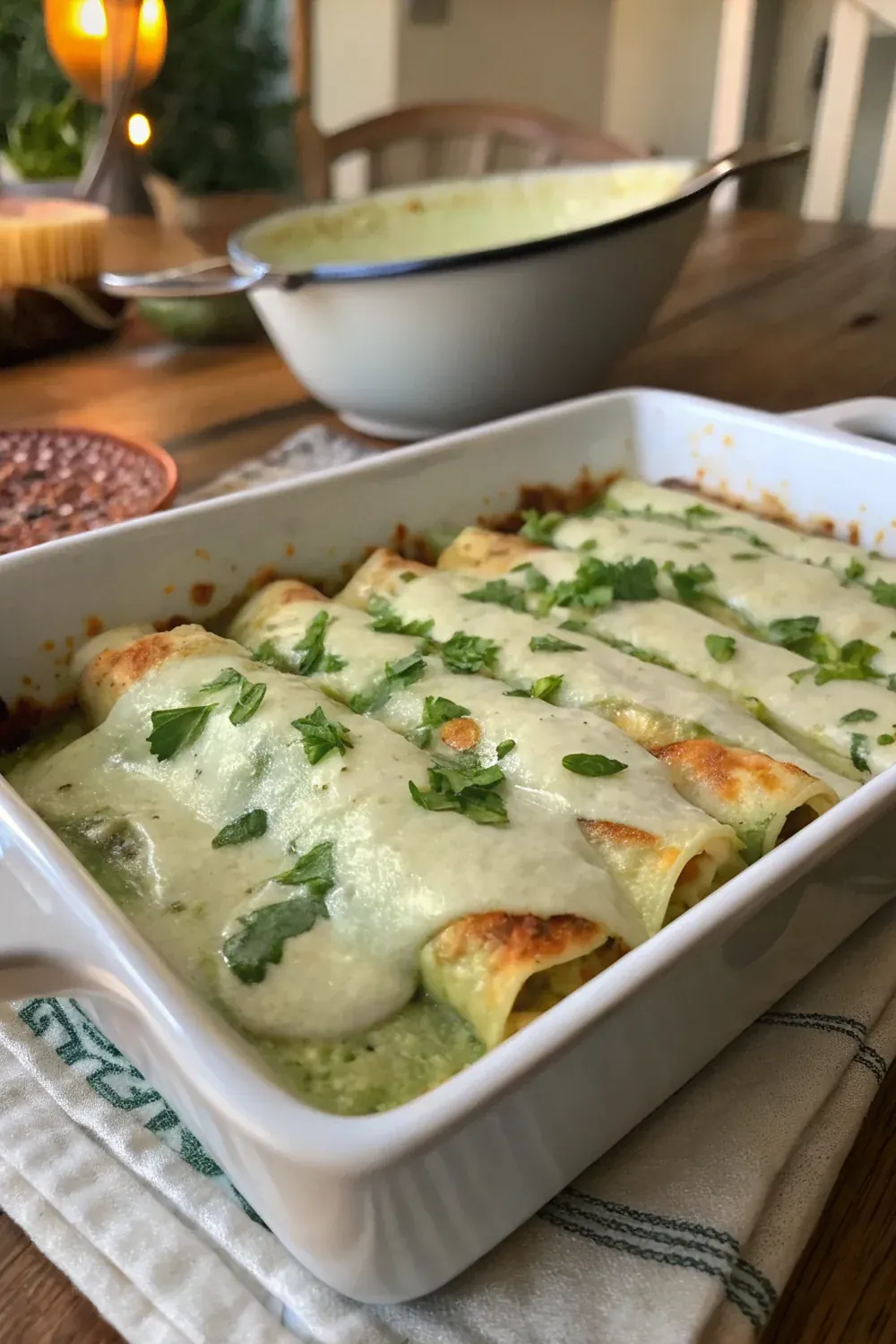
Poblano Chicken Enchiladas
Chef Mia's poblano chicken enchiladas: roasted poblano cream sauce, shredded chicken, Monterey Jack, corn tortillas. Tex-Mex green-chile cousin to beef.
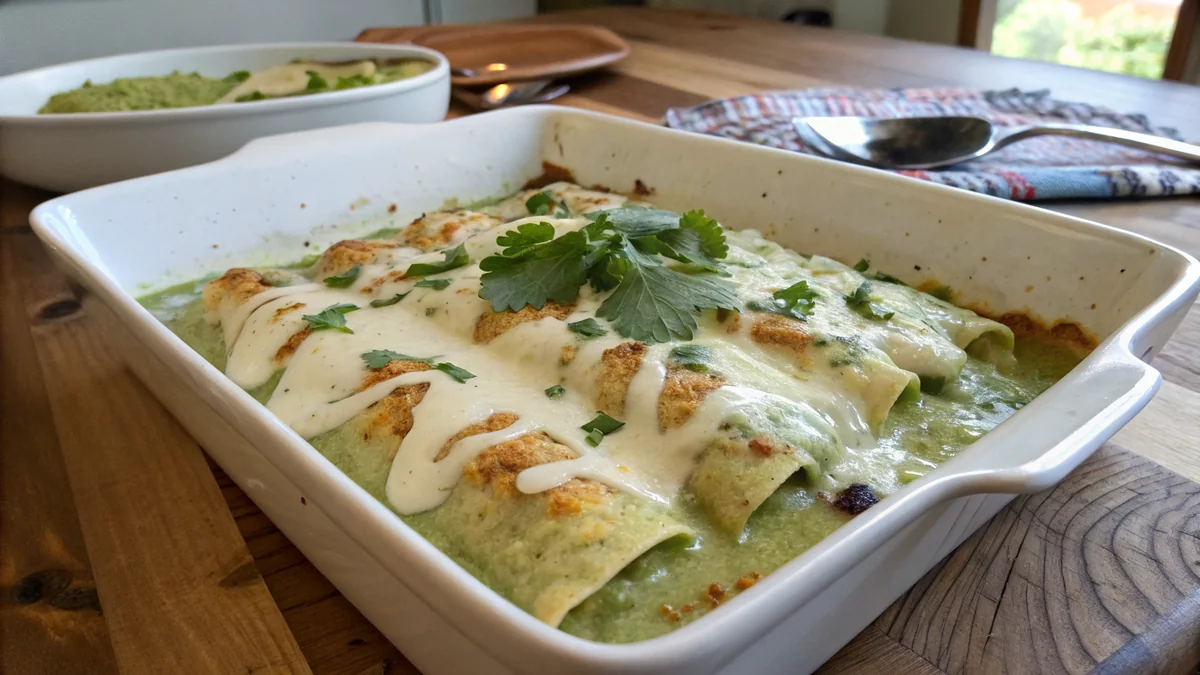
Quick answer: Poblano chicken enchiladas are the green, creamy, Monterey-Jack-topped cousin to the beef-and-cheese chili-gravy version. Roast 4-6 poblanos until the skin blisters, peel and seed them, then blend with heavy cream, chicken broth, garlic, and cilantro into a smooth pale-green sauce. Fill softened corn tortillas with shredded chicken and Monterey Jack, roll seam-side down, ladle the poblano sauce over, top with more cheese, and bake at 350F for 22 minutes until bubbly. Top with crema and cilantro.
The beef-and-cheese enchiladas with chili gravy from Wave 1 are the loud, savory, brown-sauce Tex-Mex plate. Poblano chicken enchiladas are the quieter, paler, creamier alternative - a Tex-Mex evolution that leans more toward Mexican technique while staying on the Tex-Mex side of the line. The signature is the roasted poblano cream sauce: mild (poblanos average 1,000-1,500 Scoville, lower than jalapenos), velvety, and bright green.
I make these for company more often than the beef version because they are harder to mess up at the table. The cream sauce stays glossy under foil, the white cheese photographs better at golden hour on a Texas patio than yellow cheddar, and the heat is gentle enough for kids and in-laws who panic at chile. The ingredient list is longer than chili-gravy enchiladas because you make the sauce from scratch, but the method is forgiving once the poblanos are roasted. For a restaurant-style green-chile take, my Boulders enchilada recipe is the next one to try.
How These Differ from Beef-and-Cheese Enchiladas
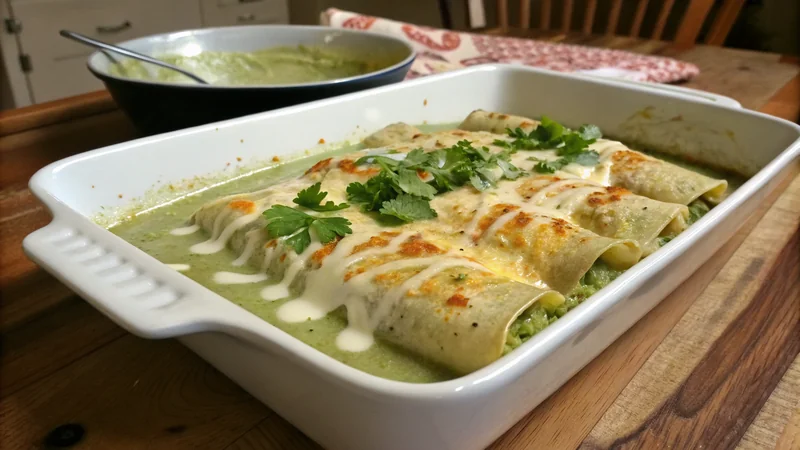
The two recipes share a name and a structure (rolled corn tortillas, baked under sauce, blanketed with cheese), but they are different dishes meant for different occasions. Beef-and-cheese enchiladas use chili gravy - a brown roux-based sauce with chili powder, cumin, and beef broth (no tomato). Poblano chicken enchiladas use a roasted poblano cream sauce - blended chiles, dairy, no roux. The cheese is yellow cheddar in one, white Monterey Jack in the other.
The flavor profiles diverge accordingly. Chili-gravy enchiladas are savory, salty, mineral, slightly bitter from the chili powder. Poblano cream enchiladas are mild, sweet, vegetal, slightly tangy from the cream. Both are Tex-Mex; they sit on different points of the Tex-Mex spectrum.
When to make which: chili-gravy for casual family dinners and Sunday spreads, poblano cream for company and Pinterest-perfect dinner parties. Both reheat well; the poblano version holds slightly better the next day because the cream sauce protects the tortillas from drying.
Choosing Poblanos: Heat and Selection
Poblano peppers are mild Mexican chiles - 1,000-1,500 on the Scoville scale, compared to jalapenos at 2,500-8,000 and serranos at 10,000-25,000. They taste vegetal and sweet with a faint smoky note when raw, deeper and richer when roasted.
Look for poblanos that are firm, deep dark green, and 4-6 inches long. Wrinkled or soft poblanos are old. Avoid pasilla peppers (sometimes mislabeled poblanos in California stores) - they are dried and not the right product. Fresh poblano is what you want.
Six medium poblanos yields about 1 1/4 cups of peeled, seeded, chopped flesh, which is what this recipe needs. If your poblanos are small (3-4 inches), use 8. If large (7-8 inches), use 4. The weight is what matters, not the count.
Heat varies by pepper. Some poblano lots are mild and sweet; others surprise you with mid-jalapeno heat. Taste a small piece raw before adding all of them to the sauce - if one is unusually hot, blend gradually and stop when the sauce reaches your tolerance.
Roasting and Peeling Method
Roasting blackens the skin, sweetens the flesh, and adds a smoky note. Three methods work: oven broiler (most consistent for batches), gas stovetop flame (fastest and most flavorful), or a screaming-hot cast iron skillet (works for one or two peppers).
Oven broiler: 4-6 inches under HIGH for 12-14 minutes total, turning every 3-4 minutes until all sides are blackened. Gas flame: hold with tongs over the burner, rotate until each side is charred (about 3-4 minutes per pepper). Cast iron: dry skillet over high heat, press peppers with tongs until charred, flip and repeat.
Steam after charring. Transfer hot peppers to a bowl, cover with plastic wrap or a plate, wait 10 minutes. The trapped steam loosens the skin. Without this step, the skin clings stubbornly to the flesh and you waste 15 minutes pulling it off in pieces.
Do not rinse the peeled peppers. Rinsing washes away the smoky flavor that the char created. Pull the skin off over a bowl, scoop seeds and stem, transfer flesh to the saucepan. A few black flecks of skin in the final sauce are fine and even welcome - they add visible smoke evidence.
The same roast, steam, and peel sequence works on Hatch chiles, and during the August season I swap them in here without changing a single quantity. If you have never bought a full sack because you were not sure what to do with it, my Hatch chile recipes guide covers the freezing method and the other eleven dishes that stash feeds.
The Cream Sauce: Tex-Mex Hybrid
The poblano sauce sits between Mexican (which would use chicken broth and no cream, more chile-forward) and Tex-Mex (which uses dairy, milder, creamier). This recipe leans Tex-Mex with heavy cream and Monterey Jack. The hybrid is what most American audiences expect when they order "chicken poblano enchiladas" off a menu.
Heavy cream is the right choice. Half-and-half makes the sauce too thin and the bake watery. Whole milk produces a sauce that can break under the oven heat. Crema mexicana (Mexican sour cream) is an excellent half-substitute for half the cream - 1/2 cup crema + 1/2 cup heavy cream gives a slightly tangier sauce.
Cilantro is non-negotiable in the sauce. The fresh herb cuts through the cream and ties the sauce visually to the green poblano color. If you have a cilantro-averse guest (about 4-14% of people taste cilantro as soapy due to OR6A2 receptor genetics), substitute flat-leaf parsley + 1 teaspoon lime juice. The result is similar but not identical.
Cumin in small amounts. Half a teaspoon adds Tex-Mex backbone without making the sauce taste curry-like. More than a teaspoon overpowers the poblano.
Choosing the Chicken
Rotisserie chicken is the practical choice. A 3-4 pound rotisserie chicken yields about 4 cups of shredded meat - this recipe uses 3 cups, leaving 1 cup for tomorrow's salad or tacos. Pull the meat off the bones while still warm; it shreds easier and the breast pieces stay moister.
Poached chicken from scratch is the make-ahead move. Poach 4 boneless skinless chicken breasts in 4 cups of seasoned broth (a halved onion, 2 cloves garlic, bay leaf, 1 teaspoon salt) for 18-20 minutes until 165F internal. Cool in the broth for 10 minutes, then shred. The leftover broth becomes the chicken broth in the sauce - free upgrade.
Avoid pre-shredded chicken from deli cases unless you taste-check first. Some grocery stores shred old rotisserie meat. Fresh rotisserie or homemade poached is the standard.
Leftover Thanksgiving turkey works as a substitute. Use 3 cups shredded turkey, white or dark or mixed. The casserole holds turkey well because turkey takes longer to dry out.
The Cheese: Monterey Jack Over Cheddar
Monterey Jack is the right choice for this dish. It melts smoother than cheddar, has a mild flavor that does not compete with the poblano, and it photographs as a clean white blanket on top instead of the bright yellow that cheddar gives. White cheddar is a reasonable substitute but slightly sharper.
A 50/50 blend of Monterey Jack and Pepper Jack works for a moderately spicier version. The Pepper Jack adds visible flecks of jalapeno and a small heat lift. Avoid blending with Oaxaca cheese in this recipe - Oaxaca pulls in long stringy strands that look strange under cream sauce.
Always shred from a block. Pre-shredded bagged cheese is coated in cellulose to prevent clumping in the bag, and that coating prevents smooth melting in the oven. Shredding 12 ounces from a block takes 45 seconds with a box grater. The improvement is visible.
Queso fresco crumbled on top after baking is the Mexican upgrade. Adds a salty, fresh contrast to the melted Jack. Optional but elegant.
Mistakes to Avoid
Skipping the steam-after-char step. Without 10 minutes of trapped steam, peeling poblano skin takes 15 minutes per batch and you lose half the flesh. Steam, then peel.
Rinsing roasted poblanos. Washes away the smoky flavor. Peel over a bowl, no water.
Using flour tortillas. Same rule as for any wet enchilada: corn for sauce, flour for dry. Flour dissolves in cream sauce and gives you a gummy mess.
Pre-shredded bagged cheese. Cellulose coating prevents proper melting and gives the bake a powdery appearance instead of the glossy melted cheese pull.
Half-and-half instead of heavy cream. The sauce comes out thin and watery. Heavy cream is required for the right consistency and richness.
Over-baking. 22-25 minutes is the right window. Past 30 minutes the cream sauce starts to break and the cheese turns oily.
Troubleshooting
Sauce is too thin. Heavy cream got substituted with milk or half-and-half, or the sauce was not reduced enough before blending. Simmer the blended sauce for 5 more minutes uncovered before pouring over the enchiladas.
Sauce is too thick. Whisk in 1/4 cup warm chicken broth at a time until pourable. Always warm liquid; cold liquid in hot cream sauce can break the emulsion.
Tortillas crack when rolling. Either undersoftened, or stale. Soften 8-10 seconds per side in oil instead of 5-6. If stale, buy fresher tortillas.
Top is browned but center is cold. Oven runs hot, or enchiladas were assembled cold from the fridge. Lower oven to 325F next time, or assemble fresh and bake immediately.
Bland sauce. Either underseasoned, or the poblanos were a mild lot. Add 1/4 teaspoon salt, 1/2 teaspoon cumin, taste. A small squeeze of lime juice can also brighten the whole pan.
Variations
Enchiladas suizas. Replace half the poblano sauce with crema mexicana or Mexican sour cream, and top with a slice of melted Swiss or Manchego cheese. The Mexican-Swiss hybrid that gave "suizas" its name. Slightly richer.
Verde enchiladas. Replace the cream-based poblano sauce with a salsa verde (tomatillo + serrano + onion + cilantro + lime, blended). Skip the heavy cream entirely. Brighter, sharper, more Mexican-leaning. Hatch chiles can substitute for poblanos in late August.
Vegetarian poblano enchiladas. Replace chicken with sauteed mushrooms (cremini and portobello) and corn kernels. The vegetable filling holds the poblano cream sauce beautifully and feels like a complete meal.
Smoked chicken poblano. Use leftover smoked or grilled chicken instead of rotisserie. The smoke layer plays beautifully against the cream sauce. A natural pairing the day after a brisket cook.
Make-ahead. Assemble through the cheese-on-top step, cover with foil, refrigerate up to 24 hours. Bake from cold, adding 8-10 minutes to the bake time. For another Tex-Mex chicken bake the whole table fights over, try the Texas Monthly King Ranch chicken.
Poblano Chicken Enchiladas Recipe
Ingredients
- For the poblano cream sauce:
- 6 medium poblano peppers
- 2 tablespoons unsalted butter
- 1 small yellow onion, finely diced
- 3 cloves garlic, minced
- 1 cup (240 ml) low-sodium chicken broth
- 1 cup (240 ml) heavy cream
- 1/4 cup chopped fresh cilantro
- 1 teaspoon kosher salt
- 1/2 teaspoon ground cumin
- For the filling and assembly:
- 3 cups (about 1 lb) cooked shredded chicken (rotisserie works)
- 12 corn tortillas, 6-inch
- 1/4 cup vegetable oil for softening
- 3 cups (340 g) shredded Monterey Jack cheese, freshly shredded
- 1/4 teaspoon kosher salt for the filling
- For garnish: Mexican crema (or sour cream thinned with milk), chopped cilantro, lime wedges
Instructions
- Roast the poblanos. Set the oven to BROIL on HIGH. Place poblanos directly on a foil-lined baking sheet and broil 4-6 inches under the element, turning every 3-4 minutes with tongs, until the skin is blackened and blistered on all sides (about 12-14 minutes total). Alternatively, char over a gas flame on the stovetop, holding each pepper with tongs, rotating until blackened.
- Steam and peel. Transfer the charred poblanos to a bowl and cover with plastic wrap or a plate. Steam 10 minutes - the trapped heat loosens the skin. Working over the bowl, peel off the blackened skin (do not rinse under water; that washes away the smoky flavor). Stem, seed, and roughly chop. You should have about 1 1/4 cups of roasted poblano flesh.
- Saute the aromatics. Melt butter in a 3-quart saucepan over medium heat. Add the diced onion and cook 3-4 minutes until translucent. Add the minced garlic and cook 30 more seconds until fragrant. Do not let the garlic brown - it goes bitter.
- Build the sauce. Add the chopped roasted poblanos to the saucepan with the onion-garlic. Pour in the chicken broth and bring to a gentle simmer for 2-3 minutes. Transfer the mixture to a blender (or use an immersion blender in the pot). Add the heavy cream, cilantro, salt, and cumin. Blend until smooth and uniformly pale green. Return to the pan and warm through over low heat.
- Soften tortillas. Heat 1/4 cup vegetable oil in a small skillet over medium heat until shimmering. Dip each corn tortilla 5-8 seconds per side in the warm oil until pliable. Drain on paper towels. Cold or stale tortillas crack when rolled - this step is non-negotiable.
- Make the filling. In a large bowl, combine the shredded chicken with 1 cup of the poblano sauce and 1/4 teaspoon of salt. Stir to coat. The sauce-mixed chicken makes the filling tender and ensures every bite has poblano flavor. Hold warm.
- Assemble and roll. Preheat oven to 350F (175C). Spread 1/2 cup of poblano sauce in the bottom of a 9x13-inch baking dish. Working one at a time, place a softened tortilla on a plate, spoon 1/4 cup of the chicken mixture and a heaping tablespoon of Monterey Jack down the center, and roll tightly. Place seam-side down in the baking dish. Repeat with all 12 tortillas, fitting them snugly.
- Sauce, top, and bake. Pour the remaining poblano sauce evenly over the rolled enchiladas, making sure every inch of every tortilla is covered. Top with the remaining shredded Monterey Jack, edge to edge. Bake uncovered for 22-25 minutes, until the cheese is fully melted with golden-brown spots and the sauce is bubbling along the edges.
- Garnish and serve. Pull from the oven, let rest 5 minutes. Drizzle with Mexican crema (thin sour cream with milk if you don't have crema), sprinkle with chopped cilantro, and serve with lime wedges. The Tex-Mex finishing move is generous on the lime - it cuts the cream and brightens the poblano.
Frequently Asked Questions
How spicy are poblano peppers?
Poblanos average 1,000-1,500 Scoville - mild. Compare to jalapenos at 2,500-8,000 or serranos at 10,000-25,000. The flavor is vegetal and sweet, with a smoky note when roasted. Heat varies by lot - taste a small piece raw before adding all of them if you are sensitive.
Can I use canned poblanos or green chiles?
Canned roasted Hatch green chiles (4 oz can) work as a half-substitute - use 2 cans plus 2 fresh roasted poblanos for body. Pure canned green chiles alone make a thinner, less complex sauce. Fresh roasted poblanos are the right product if you can get them.
Why white cheese instead of yellow cheddar?
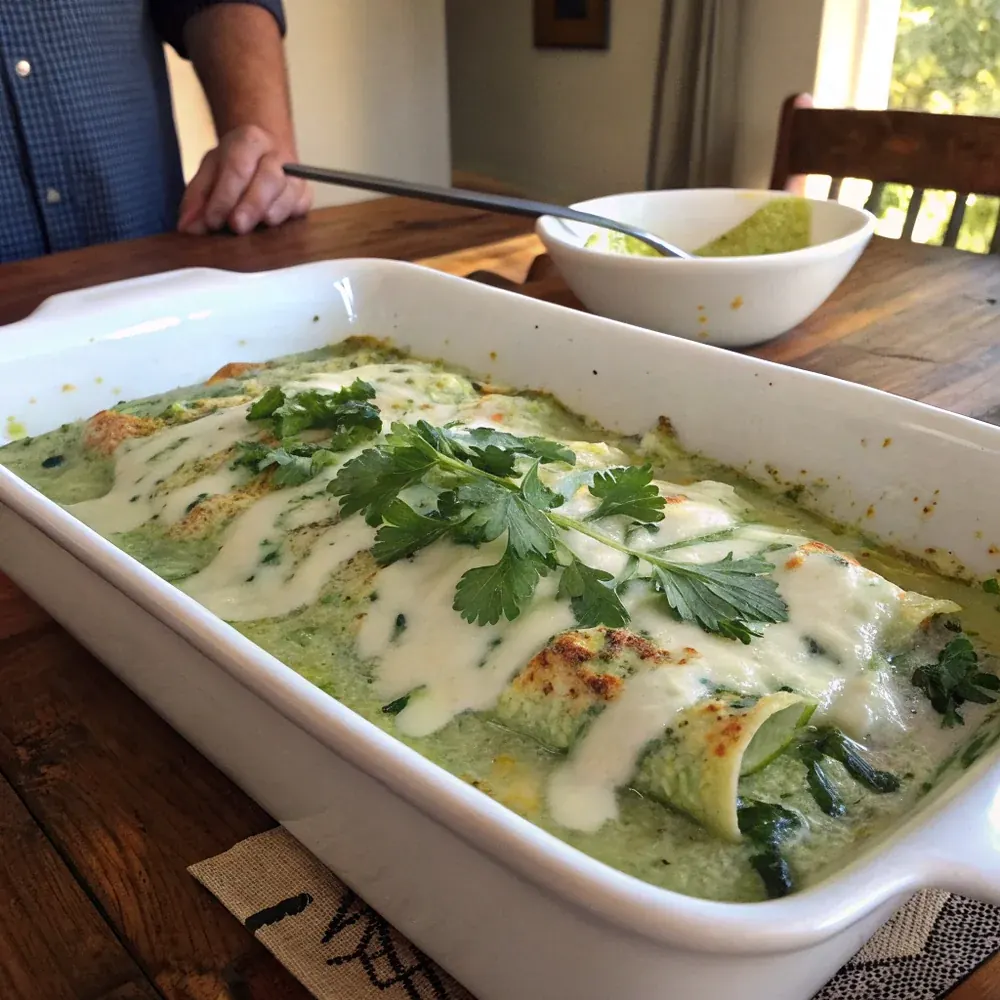
Monterey Jack melts smoother, has a mild flavor that does not compete with the poblano, and photographs cleaner against the green sauce. Yellow cheddar makes the dish look like beef-and-cheese enchiladas with a green sauce - visually confusing. White cheese is the canonical move for poblano enchiladas in both Mexican and Tex-Mex traditions.
Can I make these ahead?
Yes. Assemble through the cheese-on-top step, cover with foil, refrigerate up to 24 hours. Bake from cold, adding 8-10 minutes to the bake time. The cream sauce holds well overnight. The poblano sauce alone keeps in the fridge 3 days, frozen 2 months.
How do I peel poblanos cleanly?
After charring, transfer hot peppers to a bowl and cover with plastic wrap or a plate. Steam 10 minutes - the trapped heat loosens the skin. Working over the bowl (do not rinse), peel skin off in pieces using your fingers. Skin should slide off; resistance means more steam time.
Can I freeze poblano enchiladas?
Yes - freeze unbaked, fully assembled, for up to 2 months. Cover the dish tightly with foil and plastic wrap. Thaw overnight in the fridge before baking; add 10-12 minutes to the bake time. Cooked-and-frozen enchiladas have softer texture after thawing; not recommended.
What's the difference between this and enchiladas suizas?
Enchiladas suizas (Swiss-style) traditionally use a creamy green sauce topped with melted Swiss or Manchego cheese - the "Swiss" reference is to Swiss cheese, not the country. Poblano chicken enchiladas use a poblano cream sauce with Monterey Jack on top. Recipes overlap; suizas is the more refined, restaurant-style version.