Texas BBQ
Boneless Beef Short Ribs Slow Cooker
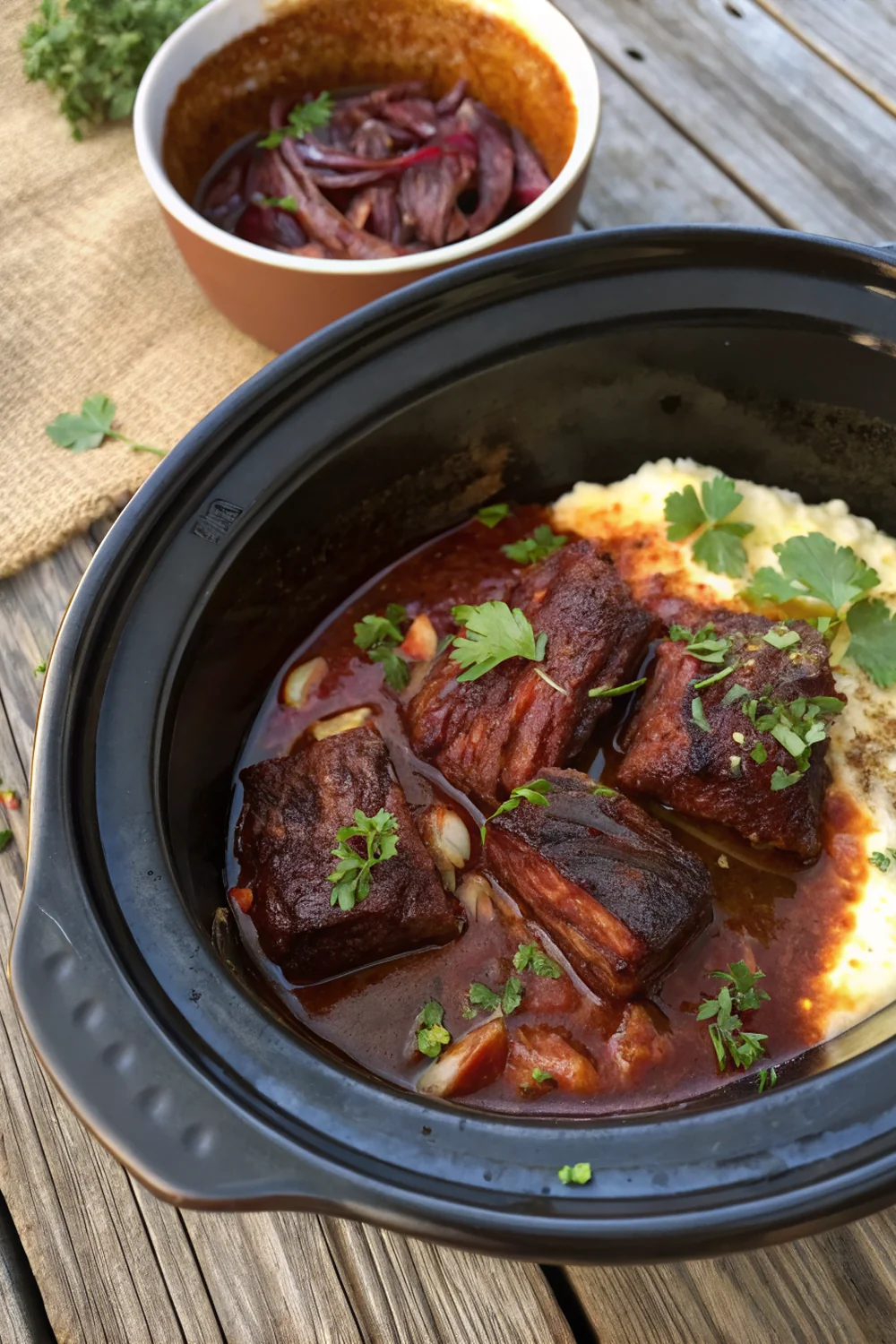
Chef Mia's slow-cooker boneless beef short ribs: 8 hours LOW in coffee-paprika braising liquid. Falling-apart Texas BBQ flavor, no smoker required.
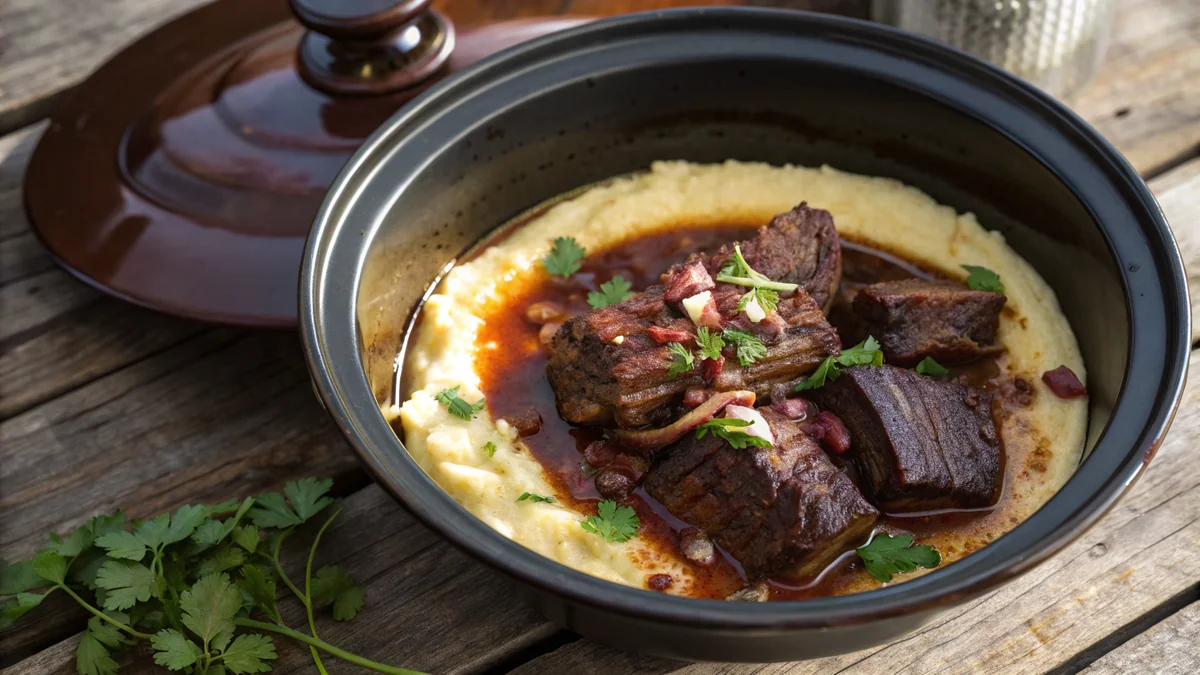
Quick answer: Slow-cooker boneless beef short ribs cook 8 hours on LOW in a coffee-paprika braising liquid that mimics the deep flavor profile of a Central Texas brisket without requiring a smoker. Sear the short ribs hard in cast iron first (2 minutes per side, deep mahogany crust), build a braising liquid with brewed coffee, smoked paprika, fire-roasted tomatoes, onion, and garlic, then transfer everything to a slow cooker and forget about it. The collagen breaks down completely over 8 hours; defat the liquid before serving over creamy polenta, mashed potatoes, or warm flour tortillas.
I started making slow-cooker beef short ribs the same week I first stood in line at Franklin BBQ in Austin and watched Aaron Franklin himself slice brisket at the counter. I had spent years trying to recreate that brisket flavor at home with my offset smoker, with mixed results. Some weekends the bark came out beautiful; other weekends a sudden temperature swing or a weather change reset everything. The slow-cooker short ribs were my home-kitchen workaround - a way to get the same falling-apart, deep-coffee-and-paprika beef flavor without spending 14 hours feeding a fire.
The trick that took me years to figure out is that the flavor profile of Central Texas BBQ - the post-oak smoke, the salt-and-pepper rub, the long collagen breakdown - can be partially replicated in a slow cooker by leaning hard on coffee, smoked paprika, and a long, gentle cook. Coffee adds bitter-toasted depth that mimics smoke; smoked paprika adds the actual smoke note via dried wood-cured peppers; the 8-hour LOW setting on a slow cooker breaks down beef collagen exactly the way a 12-hour 250F smoker does. The result is not brisket - I will not insult Aaron Franklin or any pit master by pretending it is - but it is a credible, weeknight-friendly Texas-flavored beef dish.
Boneless short ribs are the right cut for this method. They are essentially short rib meat without the bone, sometimes labeled chuck short ribs or country-style boneless short ribs. They have the same collagen-rich, fatty marbling that makes traditional bone-in short ribs so rich after a long braise, but they are easier to portion, easier to fit in a slow cooker, and faster to sear. A 3-pound package of boneless short ribs from HEB or your local butcher feeds 4-6 people; the leftover braising liquid the next day, reduced and spooned over polenta, is one of the best second dinners in the Texas weeknight playbook. And on the nights when even eight hands-off hours is too many, the same boneless strips cook hot and fast as my beef short ribs in the air fryer, medium-rare and sliced thin in under 15 minutes.
Boneless vs Bone-In: The Slow-Cooker Advantage
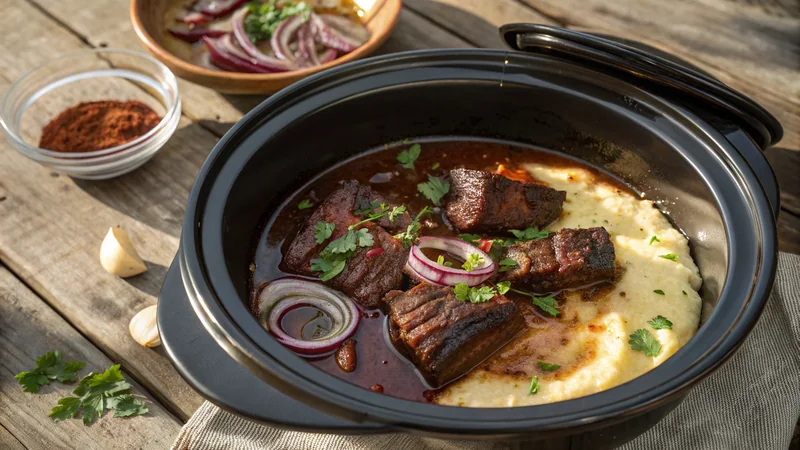
Bone-in beef short ribs are the steakhouse and BBQ-pit standard - the bone adds visual drama, contributes some flavor through bone marrow, and traditionalists will tell you nothing replaces them. For a slow cooker, though, the boneless version is functionally better. The bones take up significant crock space (a 6-quart slow cooker holds about 3 lb of bone-in short ribs versus 4 lb of boneless), and they do not transfer enough heat or flavor over an 8-hour LOW braise to justify the space cost.
Boneless short ribs come from the same chuck section but with the bones removed at the butcher shop. They are sometimes labeled boneless chuck short ribs, country-style short ribs, or boneless beef ribs. The marbling and collagen content are essentially identical to bone-in - same cut of muscle, same fat content. The only difference is the bones are gone, which means more meat per pound for your money and more flexibility in how you portion the cook. And when the package says country-style and the day says smoke instead of braise, my smoked beef country style ribs take these same strips to the pit for bark instead of gravy. One label to read carefully: the thin cross-cut strips sold as flanken are the same muscle sawed for a completely different job, the quick hot fire of my flanken beef short ribs, and they turn stringy in a braise this long.
If your butcher does not stock boneless short ribs specifically, you can substitute with chuck roast cut into 4-inch chunks - the chuck section is the same primal cut, just from a slightly different muscle. The cooking method and times are identical. The flavor will be 90% the same; the texture is slightly less buttery (chuck roast has slightly less marbling than short rib specifically), but the difference is small enough that most diners would not catch it in a blind test.
For a bone-in version of a similar slow-cooked beef rib dish, see Chef Mia's slow-cooker beef back ribs - same long, low method, different cut and presentation.
The Coffee-Paprika Braise: Texas Without a Smoker
Coffee + smoked paprika is the flavor combination that gives this dish its Texas BBQ character without a smoker. Brewed coffee (not espresso, not instant) brings the bitter-toasted, almost burned-sugar depth that real wood smoke contributes to a brisket bark. Smoked paprika brings actual wood-cured pepper smoke - the paprika is dried over oak fires in Spain, and that smoke compound transfers directly to the dish. Together they read as smoky, even though no actual smoke has touched the meat.
Use cold brew or strong drip coffee, not espresso. Espresso has a different bean roast profile (heavier, more chocolate-and-burnt) that comes through too aggressively. A standard medium-roast drip or cold brew at full strength is the right balance - present in the background, never identifiable as coffee in the final dish. If your kitchen does not run on coffee, brew a single cup specifically for the braise; do not use leftover morning coffee from the carafe (it has oxidized and tastes flat).
Smoked paprika comes in two forms: sweet (pimentón dulce) and bittersweet (pimentón agridulce). Sweet is the everyday default; bittersweet adds slightly more intensity and is the Spanish chef move. Either works. Avoid hot smoked paprika (pimentón picante) for this dish - it adds heat that competes with the ancho chile powder and unbalances the savory profile. Spanish brands (La Chinata, La Dalia) are noticeably better than supermarket house brands; the difference is real and worth the extra dollar.
Ancho chile powder rounds out the spice trio. Anchos are dried poblanos, and the powder brings sweet-fruit-and-raisin notes that complement the bitter coffee and smoky paprika. If you cannot find ancho specifically, regular chili powder works as a substitute (it is usually a blend of ancho + cayenne + cumin + oregano + garlic), though the flavor will read slightly more generic Tex-Mex than Texas BBQ. Gebhardt's chili powder, the legacy Texas brand from San Antonio, is an excellent substitute.
8 Hours LOW vs 4 Hours HIGH: Why LOW Always Wins
Most slow cookers offer two settings: LOW (around 200F at the food temperature) and HIGH (around 300F). Beef short ribs technically reach fork-tender after 4 hours on HIGH, and many recipes recommend it as a faster alternative. Do not do this. The 8-hour LOW setting is the right call for any collagen-heavy cut, and the difference in the final dish is significant.
The science: collagen breaks down into gelatin most efficiently at temperatures between 160F and 180F (71-82C) over a long period. The slow cooker LOW setting holds the dish in this exact window for hours. The HIGH setting bumps the temperature to 200F+, which is past the optimal collagen breakdown range and into the territory where muscle fibers start to seize and dry out. Short ribs on HIGH 4 hours come out tender but slightly fibrous; short ribs on LOW 8 hours come out buttery, with the collagen fully gelatinized and the muscle fibers slipping apart with no resistance.
The other reason for LOW: it is more forgiving. If you are gone for 9 hours instead of 8, LOW will not overcook the dish - the temperature plateau just holds, and the meat keeps developing flavor. HIGH cooks aggressively; another hour on HIGH after the meat is done dries out the lean fibers and turns the texture stringy. LOW is the cook-it-and-forget-it setting, which is the reason the slow cooker exists in the first place.
If you absolutely must use HIGH (you started the cook late, your slow cooker only does HIGH), set HIGH for 4-4.5 hours and check at the 4-hour mark. The texture will not be as silky as the LOW version, but it will be perfectly serviceable. Reduce the cooking time accordingly if you choose this route.
The Defatting Step (Don't Skip)
After 8 hours of slow cooking, the braising liquid carries a substantial amount of rendered fat from the short ribs - about 1/3 to 1/2 cup floating on top. If you serve the liquid directly without defatting, the sauce coats every plate with a greasy film that obscures the underlying beef-coffee-paprika flavor. The defatting step takes 5 minutes and is non-negotiable for a clean, restaurant-quality result.
The easiest method: pour the liquid through a fine mesh sieve into a fat separator - the dedicated kitchen tool with a spout that pours from the bottom of the cup, leaving the floating fat behind in the top. Fat separators run $10-15 at any kitchen store. If you do not have one, use a tall glass measuring cup. After 5 minutes of standing, the fat rises to the top in a clear yellow layer. Skim it off with a spoon, working slowly to avoid churning the fat back into the liquid.
A nuclear-option method: refrigerate the strained liquid overnight. The fat solidifies into a yellow disc on top of the liquid, which you lift off in one piece the next day. This method is the cleanest defatting result possible, but requires planning ahead by a day. Useful for prep-ahead Sunday dinners where you cook the short ribs Saturday and serve them Sunday.
Save the rendered fat in a small jar for cooking. Beef tallow from a 3-pound short rib braise is excellent for searing other meats, frying potatoes, or flavoring stir-fried vegetables. It keeps refrigerated for 2 weeks or frozen for 6 months. Goldee's BBQ in Fort Worth famously brushes their brisket slices with warm beef tallow at the slicer; the same trick works on roasted potatoes or grilled corn.
Serving Options: Polenta, Mashed, or Tortillas
The fork-tender short ribs need a starch base to soak up the rich braising sauce. Three Texas-friendly options, in order of formality: creamy polenta (most upscale, restaurant-style), mashed potatoes (most family-friendly, Sunday dinner), or warm flour tortillas (most casual, build-your-own beef tacos for the leftover-friendly weeknight version).
Creamy polenta. Bring 4 cups chicken or beef stock to a boil in a heavy saucepan. Whisk in 1 cup yellow polenta (medium grind, not instant) gradually to prevent lumps. Reduce heat to low, cook 25-30 minutes stirring every 5 minutes, until thick and tender. Stir in 1/2 cup grated Parmesan + 2 tbsp unsalted butter. Season with salt and pepper. The polenta should be the consistency of thick oatmeal - just pourable. Serve in shallow bowls with the short ribs on top.
Mashed potatoes. Boil 3 lb peeled russet potatoes in salted water for 18-22 minutes until fork-tender. Drain, return to the hot pot for 60 seconds to dry. Mash with 6 tbsp butter, 3/4 cup warm cream or whole milk, 1 tsp salt. Don't over-whip; you want fluffy, not gluey. The russet variety gives the right starch profile for mashed; Yukon Golds work but produce a denser mash.
Warm flour tortillas. Heat 8 large flour tortillas (10-inch) directly over a gas flame for 10 seconds per side, or in a hot dry skillet for 30 seconds per side. Wrap in a clean kitchen towel to keep warm. Set out the short ribs in a serving bowl with two forks for shredding. Diners build their own beef tacos with the shredded meat, sauce, fresh cilantro, diced onion, lime wedges, and a sprinkle of cotija cheese. This is the leftover-friendly option that turns Sunday dinner into Tuesday lunch.
Variation: serve over seasoned Texas Roadhouse-style rice, Texas cornbread for a Hill Country approach, or grilled wedges of cast iron cornbread. For broader BBQ context, see the Ultimate Texas BBQ Guide.
Boneless Beef Short Ribs Slow Cooker Recipe
Ingredients
- 3 lb (1.4 kg) boneless beef short ribs, cut into 4-inch chunks
- 2 teaspoons kosher salt
- 1 teaspoon coarse black pepper
- 2 tablespoons (28 g) high-smoke-point oil (avocado, grapeseed)
- 1 large yellow onion, sliced thin
- 4 cloves garlic, smashed
- 2 tablespoons tomato paste
- 1 cup (240 ml) brewed strong coffee (cold brew or strong drip, NOT espresso)
- 1 cup (240 ml) beef broth
- 1 14.5 oz (411 g) can fire-roasted diced tomatoes (drained)
- 2 tablespoons Worcestershire sauce
- 2 tablespoons brown sugar
- 1 tablespoon smoked paprika (sweet or bittersweet)
- 1 tablespoon ancho chile powder
- 1 teaspoon ground cumin
- 2 bay leaves
- Fresh parsley or cilantro, for garnish
- Polenta, mashed potatoes, or warm flour tortillas, to serve
Instructions
- Pat the short ribs dry and season hard. Remove the boneless short ribs from packaging. Pat completely dry with paper towels - dry meat sears clean, wet meat steams. Season all sides aggressively with kosher salt and black pepper, pressing the seasoning into the meat. Let rest at room temperature 15-20 minutes while you prep the other ingredients - cold meat from the fridge does not sear well.
- Sear in cast iron, 2 minutes per side. Heat a 12-inch cast iron skillet over medium-high heat for 4-5 minutes until smoking. Add 1 tablespoon of oil, swirl, let it shimmer 30 seconds. Add 4-5 short rib chunks (don't crowd; work in batches if needed) in a single layer. Sear undisturbed 2 minutes per side until each side has a deep mahogany crust. Transfer seared chunks to the slow cooker insert. Repeat with remaining chunks.
- Bloom the spices. Reduce heat under the skillet to medium. Add the sliced onion to the residual fat (about 2 tablespoons should remain). Cook 4-5 minutes until starting to brown. Add the smashed garlic, smoked paprika, ancho chile powder, and cumin. Stir for 60 seconds until the spices are fragrant - this blooms the spices in the fat, amplifying their flavor 5x compared to dumping them straight into the slow cooker.
- Build the braising liquid. Add the tomato paste to the skillet, stir for 30 seconds until darkened. Pour in the brewed coffee + beef broth + drained tomatoes + Worcestershire + brown sugar. Scrape up all the fond (browned bits) from the bottom of the skillet with a wooden spoon - that fond is the flavor backbone. Bring to a simmer, then pour the entire mixture over the short ribs in the slow cooker.
- Add bay leaves and set the slow cooker. Tuck the 2 bay leaves into the liquid in the slow cooker, distributed across the crock. Cover. Set to LOW for 8 hours. Do not lift the lid during the cook - every lift loses 20 minutes of heat and disrupts the slow simmer that breaks down collagen. Walk away. Go to work, run errands, watch a movie.
- Hour 7.5 fork test. After 7.5 hours, lift the lid for the first time. Insert a fork into one of the short rib chunks and twist gently. The meat should shred with no resistance - the collagen has broken down completely and the muscle fibers are slipping apart. If there is any resistance, recover and cook another 30 minutes. Most slow cookers hit this point at exactly 8 hours; some run cooler and need 8.5 to 9.
- Defat the braising liquid. When the short ribs are fork-tender, carefully transfer them to a serving platter using a slotted spoon (they may fall apart - that is fine). Tent the platter loosely with foil to keep warm. Pour the braising liquid through a fine mesh sieve into a fat separator (or a tall glass measuring cup). Let stand 5 minutes. The fat will rise to the top in a clear yellow layer. Skim off and discard with a spoon, or pour off the bottom (defatted) liquid through the fat separator's spout. About 1 to 1.5 cups of clear, deeply flavored sauce remains.
- Reduce the sauce on the stove. Optional but worth the 5 minutes: pour the defatted braising liquid into a small saucepan, bring to a hard simmer over medium-high heat for 5-8 minutes until reduced by about half and the sauce coats the back of a spoon. Taste and adjust seasoning - it may need a pinch more salt. Pour over the short ribs on the platter, or set in a small pitcher alongside for diners to spoon over their own.
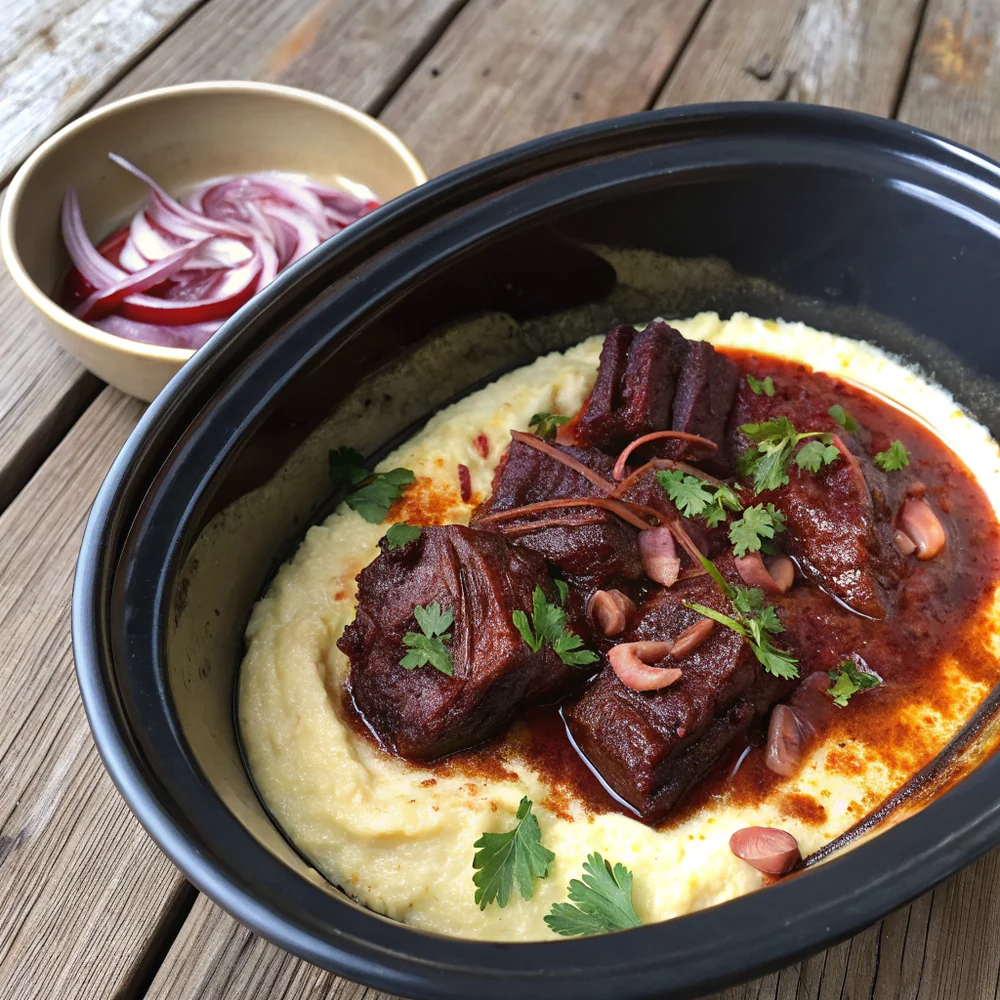
- Serve over polenta, mashed, or tortillas. Three classic Texas pairings: creamy polenta (1 cup polenta cooked in 4 cups stock with 1/2 cup grated Parmesan and 2 tbsp butter), mashed potatoes (russets, butter, cream, salt), or warm flour tortillas for build-your-own beef tacos (the leftover-friendly option). Spoon the short ribs over your chosen carb, pour the reduced sauce on top, garnish with fresh parsley or cilantro. Serve with a green salad and a glass of red wine for the full Sunday-dinner experience.
Frequently Asked Questions
Can I cook these short ribs on HIGH for 4 hours instead?
Technically yes, but the texture suffers. LOW for 8 hours holds the meat in the optimal 160-180F collagen-breakdown range; HIGH for 4 hours pushes past 200F and starts seizing the muscle fibers. The result is acceptable but slightly fibrous compared to the silky LOW version. Use HIGH only if you absolutely cannot do an 8-hour LOW cook, and check fork-tenderness at 4 hours.
Do I have to sear the short ribs first?
Yes - the sear is essential, not optional. The Maillard reaction during the 2-minute-per-side sear creates the flavor compounds that make this dish taste like Texas BBQ rather than pot roast. Skipping the sear and dumping raw short ribs into the slow cooker produces fork-tender meat with no depth of flavor; the sauce ends up tasting flat. Add 5-7 minutes of skillet time for a 50% better final dish.
Can I substitute the coffee?
If you don't drink coffee, replace with 1 cup of strong beef broth + 1 tbsp molasses + 1 tsp instant espresso powder (this gives you the bitter-roasted character without the actual brewed coffee). Or skip entirely and use 2 cups beef broth + 2 tbsp Worcestershire - the dish loses some of its Texas BBQ character but is still excellent. Coffee is the signature ingredient that makes this recipe distinctive; keep it if you can.
Can I cook these short ribs in a Dutch oven instead?
Yes - braise in a Dutch oven at 300F for 3.5 to 4 hours, covered. Same recipe, same ingredients, just translate the slow cooker LOW to a 300F oven. Check fork-tenderness at 3.5 hours. The Dutch oven version often has slightly more concentrated flavor due to the higher temperature, but the slow cooker is more forgiving and easier to leave unattended. My beef short ribs in the oven guide walks that full braise, sear to reduced sauce.
How do I know when the short ribs are done?
Fork test, not temperature. Insert a fork into one of the short rib chunks and twist gently. The meat should shred with absolutely no resistance - the muscle fibers slip apart and the fork comes out clean. If there is any pull-back or resistance, cook another 30 minutes and test again. Internal temperature is around 200-205F when fully tender, but the fork test is more reliable than thermometer reading because collagen breakdown varies by cut.
Can I freeze leftover slow-cooker short ribs?
Yes - the dish freezes beautifully. Cool completely, transfer the meat + defatted sauce to freezer-safe containers (1-2 cups per container for easy portioning), freeze up to 3 months. Thaw overnight in the fridge, reheat gently in a covered skillet over low heat with a splash of beef broth for 8-10 minutes, stirring occasionally. The texture and flavor are nearly identical to fresh.
What's the best slow cooker for this recipe?
A 6-quart oval slow cooker with LOW and HIGH settings is the standard. Crock-Pot, Hamilton Beach, and Cuisinart all make reliable models in the $40-80 range. The oval shape fits 4-inch chunks of short rib better than round. Avoid the very small 3-4 quart models for this recipe (not enough capacity) and the very large 8-quart programmable models (often run hotter than advertised; can dry out the meat by hour 7).
How does this compare to <a href='https://www.texanrecipes.com/texas-bbq-brisket/'>real smoked Texas brisket</a>?
It does not compare directly - smoked brisket is its own thing, with bark, smoke ring, and the unmistakable post-oak flavor that only 12 hours over wood can produce. Slow-cooker short ribs are a related but different dish: same beef family, same long collagen breakdown, similar Texas flavor profile via coffee and smoked paprika. Think of slow-cooker short ribs as the weeknight cousin of brisket - 90% of the satisfaction in 1/4 of the active time, with no smoker required.