Southern Comfort Food
Buttermilk Biscuits and Sausage Gravy
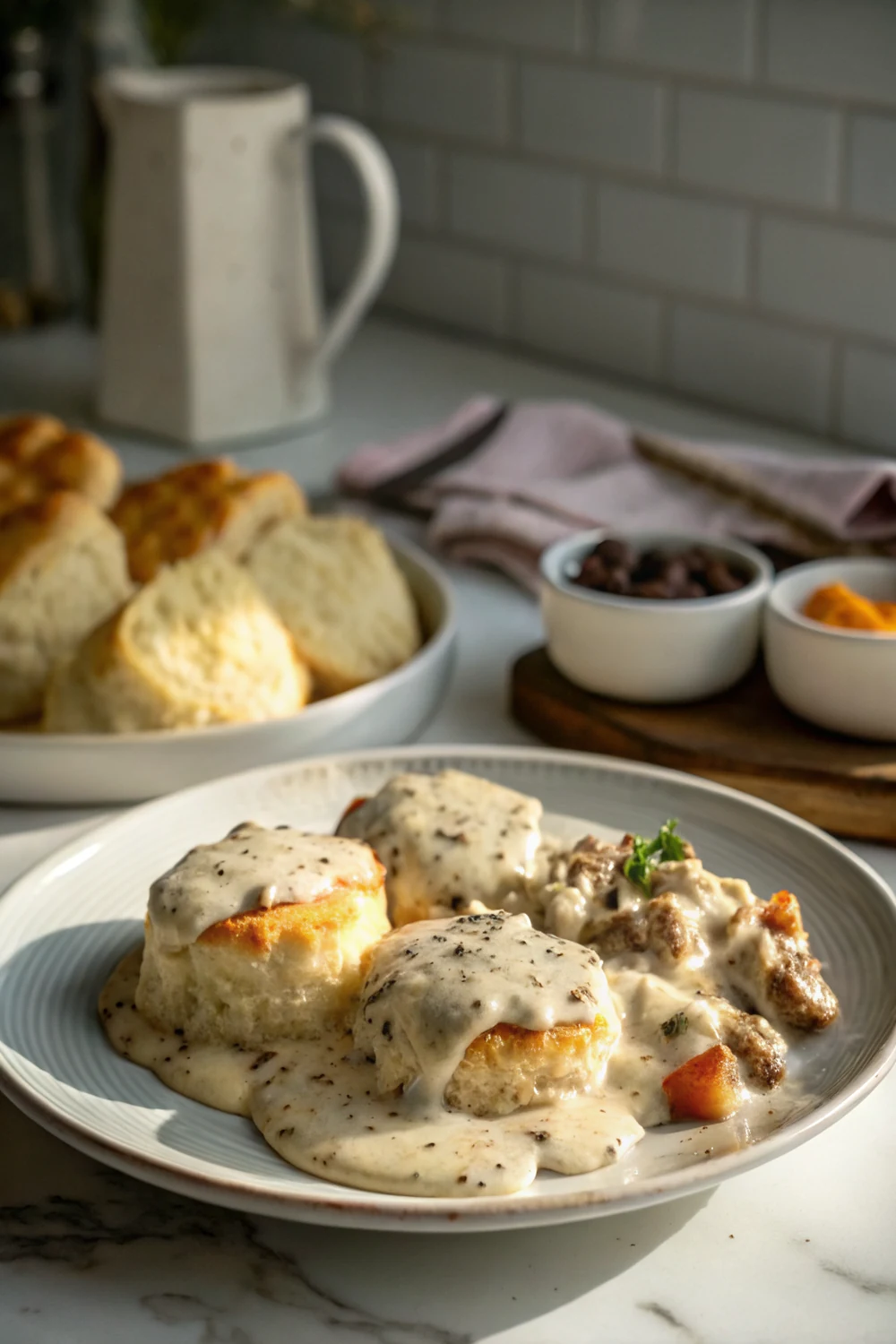
Texas buttermilk biscuits and white peppered sausage gravy by Chef Mia. Cold-butter folding technique, sage breakfast sausage, whole milk base.
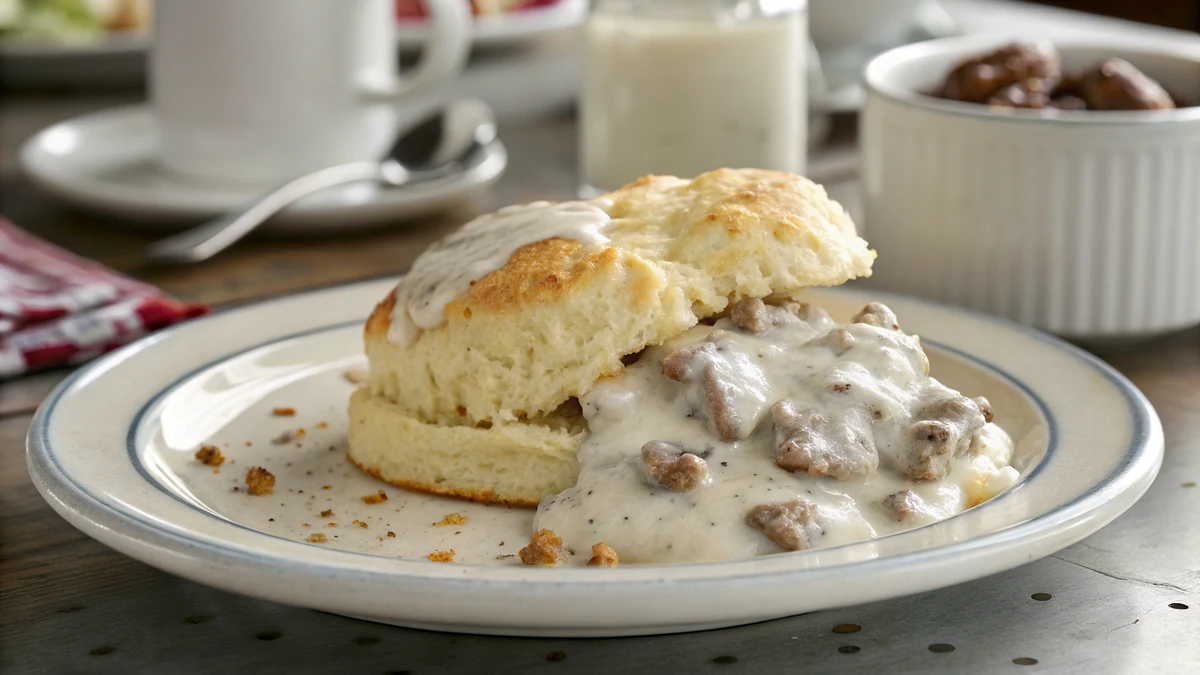
Quick answer: Texas-style biscuits and gravy starts with cold-folded buttermilk biscuits (cold butter cut into flour, folded for layers, baked at 425°F for 15 minutes). The sausage gravy is browned breakfast sausage (sage, salt, peppered), flour roux, whole milk, salt, and a generous amount of fresh-cracked black pepper. Pour gravy over split warm biscuits and serve immediately. Allergens: gluten, dairy.
Biscuits and gravy is the Texas breakfast plate that defines weekend mornings. Every diner along I-35 from Dallas to San Antonio serves a version, and every Texas grandmother has her own technique. The biscuits should be flaky, slightly tangy from buttermilk, and tall enough to split open and pour gravy into. The gravy should be thick enough to coat a fork, white from the milk, and aggressively peppered.
I learned to make biscuits the same way I learned everything else: in my grandmother's kitchen in Lockhart, watching her fold cold butter into flour with a pastry cutter. She made biscuits twice a week, every Tuesday and Saturday, for sixty years. She never measured anything for the gravy; the proportions were committed to muscle memory. This recipe represents the proportions I've calibrated over fifteen years of making her biscuits.
Pair these biscuits with anything: gravy as below, butter and jam, country ham, or honey from a Hill Country farmer's market. For other Texas breakfasts, see our migas for a Tex-Mex breakfast or our Austin breakfast tacos.
Three Things to Know About Biscuits and Gravy
Cold butter is non-negotiable. The flaky layers in a biscuit come from chunks of cold butter trapped between layers of flour-and-buttermilk dough. When the biscuits bake, the butter chunks turn to steam, pushing the dough layers apart. If your butter is even slightly warm when you mix it in, the butter melts into the dough rather than staying in discrete chunks, and you get dense biscuits.
Buttermilk, not regular milk. The acidity in buttermilk reacts with the baking soda to produce extra lift and creates a subtle tang in the finished biscuit. Regular milk substituted 1:1 produces flat-tasting, flat-rising biscuits. If you don't have buttermilk, make a substitute: 1 cup of whole milk + 1 tablespoon of lemon juice or white vinegar, let sit 5 minutes. The substitute is acceptable; the real thing is better.
Sage breakfast sausage is the Texas standard. Jimmy Dean Original (the silver tube) and Owens Sausage (Texas-made) are the canonical breakfast sausages. The sage flavor anchors the gravy. Italian sausage (fennel-forward) doesn't work for this dish; it's a different category entirely. Hot breakfast sausage is fine if you like more heat.
Choosing the Right Flour
White Lily Self-Rising Flour is the Southern standard. White Lily is milled from soft winter wheat, which has lower protein than all-purpose flour, producing tender biscuits. It is the flour every Southern grandmother used. Available at H-E-B in Texas and most Southern groceries; harder to find outside the South.
King Arthur All-Purpose Flour is my pragmatic choice when White Lily is not available. Slightly higher protein than White Lily, but consistent and reliable. Adjust by adding 1 extra tablespoon of butter to compensate for the higher protein.
Avoid bread flour and all-purpose flours marketed as 'high-protein.' These produce tough biscuits because the high protein develops gluten quickly. If a biscuit recipe specifies AP flour, use a regular-protein AP (King Arthur AP is 11.7% protein, Gold Medal AP is 10.5%, both work).
The Cold-Butter Folding Method
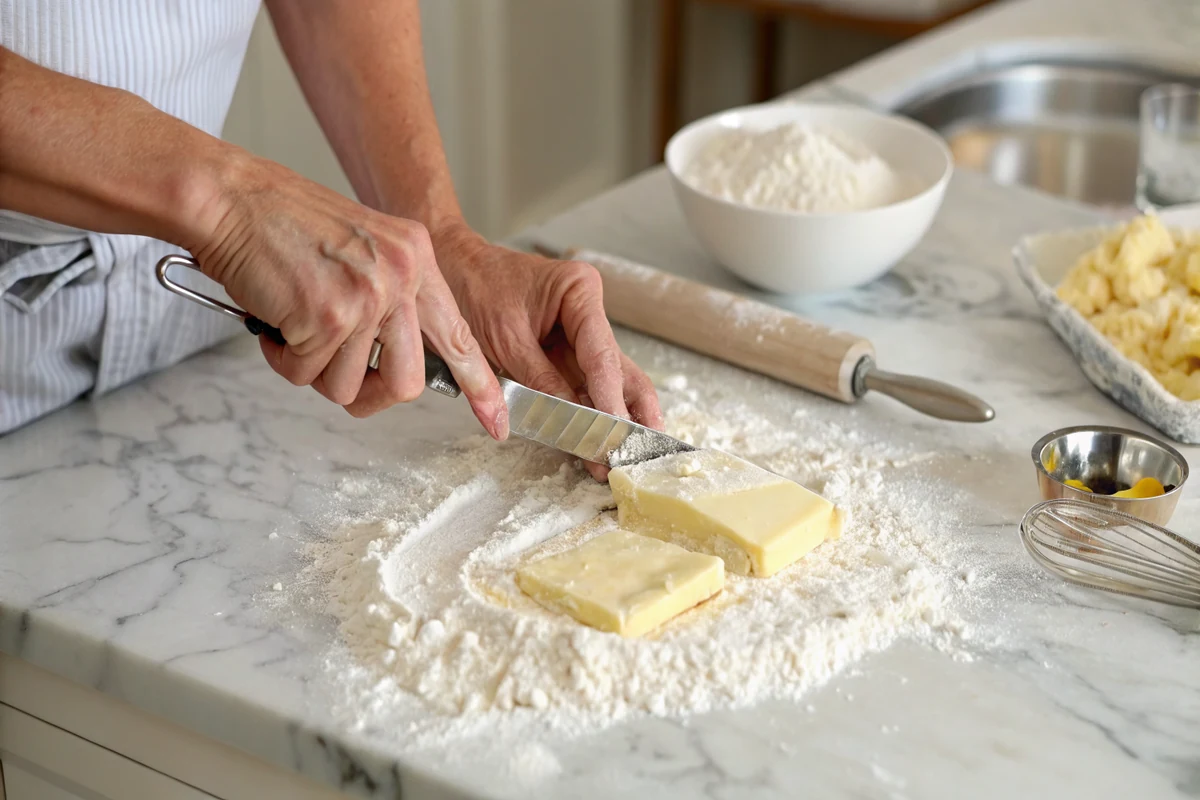
Cube the butter and freeze it briefly. Cut 1 stick of butter into 1/4-inch cubes and place in the freezer for 5 to 10 minutes before mixing. The butter should be hard, not just cold. Frozen butter chunks resist warming during the mixing step.
Use a pastry cutter for the first cut. The pastry cutter (a U-shaped tool with curved blades) is the right tool for cutting cold butter into flour. Two knives or your fingertips work but slower. Avoid food processors; they over-mix and warm the butter.
Fold the dough in thirds like a letter, twice. After bringing the dough together, pat into a rectangle, fold in thirds (like folding a business letter into an envelope), rotate 90 degrees, fold in thirds again. This creates 9 layers of dough separated by butter. The folding makes the biscuits flaky.
Mistakes to Avoid
Warm butter. The biggest cause of dense biscuits. Cold butter must stay cold throughout the mixing step. If your kitchen is hot, work near a cold sink, or chill the bowl in the fridge between steps.
Over-mixing the dough. Mix only until barely combined. The shaggy, ragged-looking dough is the goal. Smooth, well-mixed dough produces tough biscuits.
Twisting the biscuit cutter. Twisting seals the edges and prevents the biscuits from rising tall. Press straight down and lift straight up.
Spreading biscuits far apart on the baking sheet. Biscuits placed barely touching (1/4 inch apart) rise taller than biscuits with 2 inches of space. The touching sides support each other during the rise.
Skipping the buttermilk. Regular milk substituted 1:1 makes biscuits that taste flat. Always use real buttermilk or a buttermilk substitute (1 cup milk + 1 tablespoon vinegar, rest 5 minutes).
Draining the sausage fat. The fat is the foundation of the gravy. Without it, the gravy is flat and dry. Cook the sausage and leave all the rendered fat in the pan.
Adding cold milk to the gravy. Cold milk on a hot roux can cause lumps. Use room-temperature milk, added gradually with constant whisking.
Under-seasoning the gravy. Sausage gravy needs aggressive black pepper, more salt than you think, and a generous hand. Texas gravy is well-seasoned, not subtle.
Variations Worth Trying
Chocolate gravy variation. In some Texas households, chocolate gravy made with cocoa, sugar, and butter is poured over biscuits instead of sausage gravy for breakfast. This is a Hill Country and East Texas tradition that surprised me when I learned it.
Spicy version. Use Jimmy Dean Hot or Owens Hot Country sausage and add 1/2 teaspoon of cayenne to the gravy. This is for cooks who want their breakfast to wake them up.
Bacon gravy. Substitute 8 oz of chopped bacon for the sausage. Cook the bacon to crispy, leaving the bacon fat in the pan, then proceed with the roux and milk. The result is bacon gravy with bacon crumbles.
Black pepper gravy (extra pepper). Triple the black pepper. This is the East Texas truck-stop diner version; the gravy is dramatically peppered, with visible flecks of pepper in every spoonful.
Tomato gravy version. Add 1 tablespoon of tomato paste to the roux before adding the milk. This is a Texas Hill Country variation that gives the gravy a slight reddish tinge and acidic note.
Storage and Reheating
Refrigerator
Biscuits keep 2 days at room temperature in an airtight container, 4 days in the fridge. They reheat best in a 350°F oven for 5 minutes (wrapped in foil) or in a toaster oven. Microwave reheating turns biscuits rubbery; avoid it.Freezer
Unbaked biscuits freeze beautifully. Cut the biscuits, place on a sheet pan, freeze 1 hour until firm, then transfer to a freezer bag. Bake from frozen at 425°F for 18 to 20 minutes (5 minutes longer than fresh). Baked biscuits also freeze for 3 months wrapped tightly. Sausage gravy freezes acceptably in 1-cup portions for 2 months.Reheating
Reheat the gravy in a saucepan over low heat, whisking constantly, with 1/4 cup of milk added per cup of gravy to loosen (the gravy thickens significantly in the fridge). Reheat biscuits in a 350°F oven for 5 minutes wrapped in foil.Tips for the Best Biscuits and Gravy
Freeze your butter the night before. Frozen butter (not just cold) gives the flakiest layers. Slice into cubes while still hard.
Use a metal bowl that has been chilled in the freezer. Stainless steel bowls hold cold longer than plastic. Chill for 10 minutes before starting.
Place biscuits seam-side-up if your dough has visible folds. The seam-side-up biscuits show off the layered structure when they bake and look impressive.
Add a pinch of dried sage to the gravy if your sausage is mild. Most commercial sausage has enough sage, but some house brands skip it. A pinch of dried sage in the gravy brings back the breakfast sausage profile.
Crack the black pepper fresh. Pre-ground black pepper from a shaker tastes flat in this dish. A fresh-cracked pepper grinder makes a noticeable difference. Be aggressive; gravy should be peppered enough that you see it.
What to Serve With Biscuits and Gravy
Other breakfast plates: Scrambled eggs (the gravy moonlights as the sauce for the eggs), bacon strips on the side, fried potatoes, or grits (the dual-carb plate). Fresh-squeezed orange juice cuts through the richness.
Drinks: Strong black coffee (canonical), sweet iced tea, Mexican Coca-Cola in a glass bottle, or Topo Chico for a less sweet option.
For brunch (when biscuits and gravy goes upscale): A bloody mary with Tito's vodka (Texan-made), a mimosa, or a Hill Country Mary made with Pace Picante Sauce in place of horseradish. When the table wants cornbread instead of biscuits, my buttery skillet cornbread mops up gravy just as well.
Buttermilk Biscuits and Sausage Gravy Recipe
Ingredients
- For the buttermilk biscuits (makes 8 biscuits):
- 2 1/2 cups all-purpose flour (King Arthur or White Lily)
- 1 tablespoon baking powder
- 1/2 teaspoon baking soda
- 1 teaspoon coarse kosher salt
- 1 tablespoon granulated sugar
- 1/2 cup (1 stick) unsalted butter, very cold, cut into 1/4-inch cubes
- 1 1/4 cups cold full-fat buttermilk (well-shaken)
- 2 tablespoons melted butter, for brushing tops
- For the sausage gravy:
- 1 lb sage breakfast sausage (Jimmy Dean Original or Owens Sausage)
- 1/4 cup all-purpose flour
- 3 cups whole milk, at room temperature
- 1 teaspoon coarse kosher salt
- 2 teaspoons fresh-cracked black pepper
- 1/2 teaspoon dried sage (optional, if your sausage is mild)
- 1/4 teaspoon white pepper (optional, for traditional flavor depth)
Instructions
- Preheat oven and prep ingredients. Preheat the oven to 425°F. Line a baking sheet with parchment paper. Take the butter out of the fridge and cube it into 1/4-inch pieces; return to the fridge while you mix the dry ingredients. Measure out the buttermilk and return it to the fridge until needed.
- Mix the dry ingredients. In a large mixing bowl, whisk together the flour, baking powder, baking soda, salt, and sugar until evenly distributed. The baking powder and baking soda need to be well-distributed throughout the flour so the biscuits rise evenly.
- Cut in the cold butter. Add the cold cubed butter to the dry ingredients. Using a pastry cutter (or two knives, or your fingertips), cut the butter into the flour until the largest pieces are pea-sized and the smallest are like coarse sand. Stop while there are still visible butter chunks; over-mixing here makes biscuits dense.
- Add buttermilk and stir minimally. Pour the cold buttermilk over the flour-butter mixture all at once. Stir with a wooden spoon until just barely combined, about 8 to 10 strokes. The dough will look shaggy and uneven; this is correct. Do not over-stir. Excessive mixing develops gluten and makes tough biscuits.
- Turn out and fold for layers. Turn the shaggy dough out onto a lightly floured work surface. Gather it together with your hands. Pat into a rough rectangle. Fold the dough in thirds like a letter (fold the bottom third up, then the top third down). Rotate 90 degrees and fold in thirds again. Pat into a 1-inch-thick rectangle. The folding creates the flaky layers that distinguish good biscuits.
- Cut the biscuits. Use a 2.5-inch round biscuit cutter (or a glass of similar size) to cut straight down through the dough without twisting. Twisting seals the biscuit edges and prevents them from rising tall. You should get 6 to 8 biscuits from this dough; gather scraps, pat together once, and cut the remaining 2 biscuits.
- Bake the biscuits. Place the biscuits on the prepared baking sheet with sides barely touching (touching helps them rise tall). Brush the tops with melted butter. Bake at 425°F for 15 to 17 minutes, until tops are deeply golden brown and the biscuits have risen tall and tight. They are done when a toothpick comes out clean from the center.
- Brown the sausage for the gravy. While the biscuits bake, heat a large skillet or cast iron pan over medium-high heat. Add the breakfast sausage and break into small crumbles with a wooden spoon. Cook 8 to 10 minutes, stirring occasionally, until the sausage is no longer pink and the edges are crispy brown. Do not drain the fat; the rendered fat is the foundation of the gravy.
- Make the roux. Sprinkle the 1/4 cup of flour evenly over the cooked sausage and stir to coat. Cook 2 minutes, stirring constantly, until the flour disappears into the sausage and the mixture looks pasty. This cooks out the raw flour taste and prepares the gravy to thicken.
- Add milk and simmer. Gradually pour in the room-temperature milk, about 1 cup at a time, whisking continuously to prevent lumps. Bring to a simmer over medium heat. Cook 4 to 6 minutes, whisking occasionally, until the gravy thickens to coat the back of a wooden spoon. Add the salt, pepper, optional dried sage, and optional white pepper. Taste and adjust seasoning.
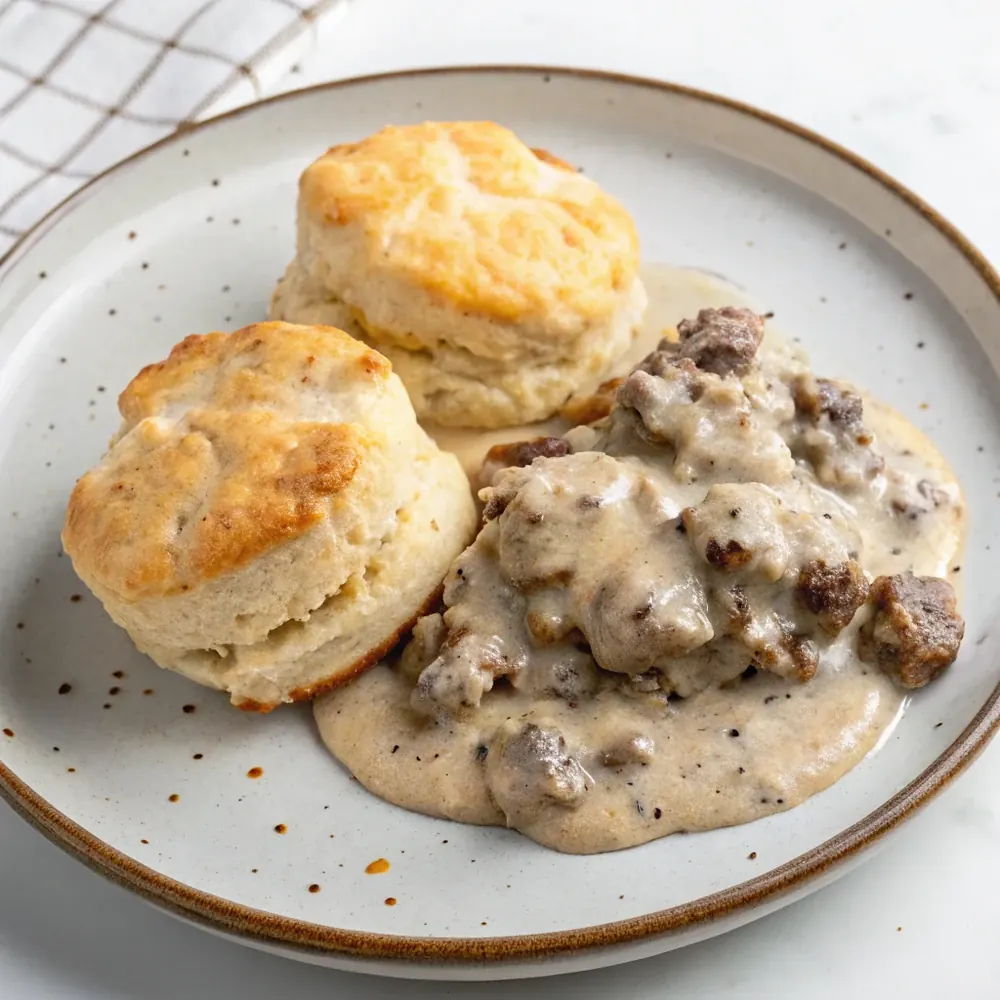
- Serve immediately. Split a warm biscuit horizontally and place open-side up on a plate. Ladle 1/2 cup of sausage gravy over the biscuit halves, making sure to get sausage crumbles on each piece. Top with a few extra cracks of black pepper. Serve immediately while everything is hot.
Frequently Asked Questions
Why are my biscuits flat?
Three possible causes. First, your butter was too warm during mixing. Second, you twisted the biscuit cutter. Third, your baking powder is old (test by adding 1 teaspoon to 1/4 cup of hot water; it should fizz vigorously). Cold butter, straight-down cutter motion, and fresh baking powder fix most flat-biscuit issues.
Can I use salted butter?
Yes, but reduce the salt in the recipe by 1/2 teaspoon. Salted butter (Land O Lakes Salted, Kerrygold) has about 1/4 teaspoon of salt per 1/2 cup, which throws off the total seasoning. The buttery-salty profile of salted-butter biscuits is excellent if you adjust.
What sausage do you recommend?
Jimmy Dean Original (silver tube) is the canonical American breakfast sausage. Owens Country Sausage (Texas-made, available at H-E-B) is the Texas equivalent. Both are sage-forward, well-seasoned, and produce excellent gravy. Avoid Italian sausage (fennel) and chorizo (paprika).
Can I make the gravy ahead?
Yes, with caveats. The gravy thickens significantly in the fridge. Reheat over low heat with 1/4 cup of milk per cup of gravy added gradually, whisking constantly. Ideally make gravy 1 hour before serving and keep warm on the lowest stove setting.
Is biscuits and gravy a Texas thing or a Southern thing?
It's a Southern thing that Texas embraced enthusiastically. Biscuits and gravy is found across the South from Georgia to East Texas, in roadside diners, church potlucks, and family kitchens. The Texas version differs slightly from the Carolina or Tennessee versions in the gravy seasoning (more pepper, sometimes a touch of cayenne).
Can I make this gluten-free?
Yes, with adjustments. Use a gluten-free 1-to-1 flour blend (King Arthur Measure for Measure is reliable) for the biscuits. The gravy roux can use cornstarch instead of flour (mix 2 tablespoons of cornstarch with 1/4 cup cold milk into a slurry, then whisk in). The texture will be slightly different but the dish works.
How do I know when the gravy is done?
When it coats the back of a wooden spoon. Dip the spoon into the gravy, lift it out, and run your finger across the back. If the gravy stays in place where you ran your finger (doesn't drip into the gap), it's done. If it runs back together, simmer 2 more minutes.
Can I freeze the biscuits and gravy together?
Yes, in single portions. Place a split biscuit in a freezer-safe container, top with 1/2 cup of gravy, freeze. Reheat in the microwave at 50% power for 2 minutes, then 100% power for 30 seconds. The biscuit will be slightly softer than fresh but acceptable. Better to freeze them separately.