Tex-Mex Recipes
Stuffed Bell Peppers Without Rice
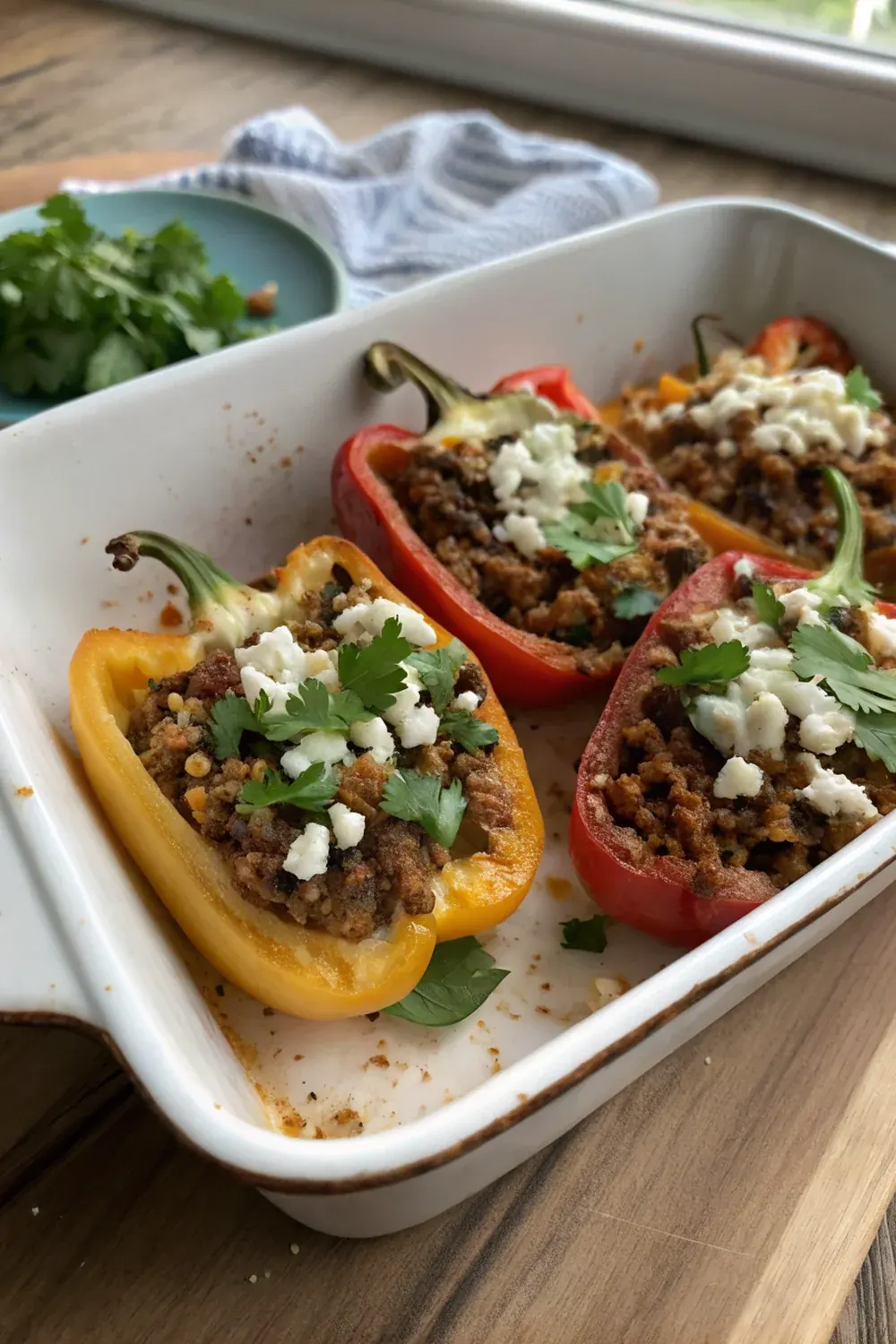
Chef Mia's keto stuffed bell peppers: cauliflower rice swap, ground beef + chorizo Tex-Mex filling, Monterey Jack and cotija. Low-carb 30-min weeknight.
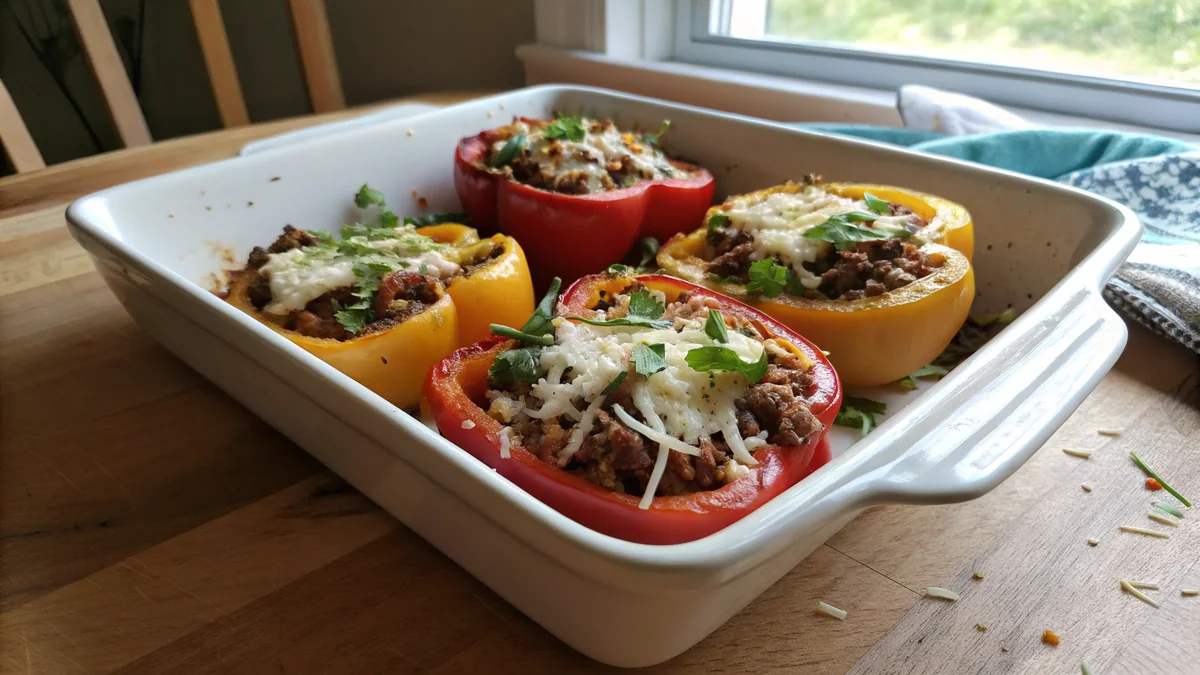
Quick answer: Stuffed bell peppers without rice swap traditional white rice for finely riced cauliflower, keeping the Tex-Mex stuffing structure (ground beef, chorizo, onion, garlic, tomato, cumin, chili powder) at full flavor while cutting carbs to about 9 grams per pepper. Cook the cauliflower rice in the same skillet as the meat to drive off moisture, stuff into halved bell peppers, top with Monterey Jack and cotija, and bake at 375F for 25 minutes until the cheese is bubbling and the peppers are tender-firm.
I started making stuffed bell peppers without rice during a stretch a few years back when a friend in Austin was doing a strict keto reset and we used to cook together on Sunday nights. He had been eating Tex-Mex his entire life - growing up in San Antonio, working a kitchen in Austin during college, the whole arc - and the rice carve-out was the hardest part of the diet for him. The peppers were the test case. If I could make a stuffed pepper that hit the same flavor as the version his abuela made, without the rice, the rest of the menu would feel like a real meal instead of a punishment plate.
The fix turned out to be simpler than either of us expected. Cauliflower rice, finely processed and cooked hard in the skillet to drive off moisture, behaves almost identically to white rice in a Tex-Mex stuffing context. It absorbs the meat juices, holds the cumin and chili powder, and gives the stuffing the same loose-but-cohesive texture you want when you cut into a pepper at the table. The trick is the moisture management. Cauliflower rice that sits raw in the filling weeps water during the bake and turns the peppers soggy. Cauliflower rice that gets sautéed first behaves like rice.
The version below is the one we settled on after maybe a dozen Sunday tests. It is now the version I make for any keto guest at the table, and frankly the version I make for myself even when carbs are not on the chopping block - cauliflower rice is lighter, the peppers cook faster without raw rice that needs simmering, and the leftovers reheat better. About 9 grams of net carbs per stuffed half, depending on the size of your pepper. That is true low-carb territory and it tastes like Tex-Mex, not like a compromise.
Why Stuffed Peppers Without Rice Work (Math and Flavor)
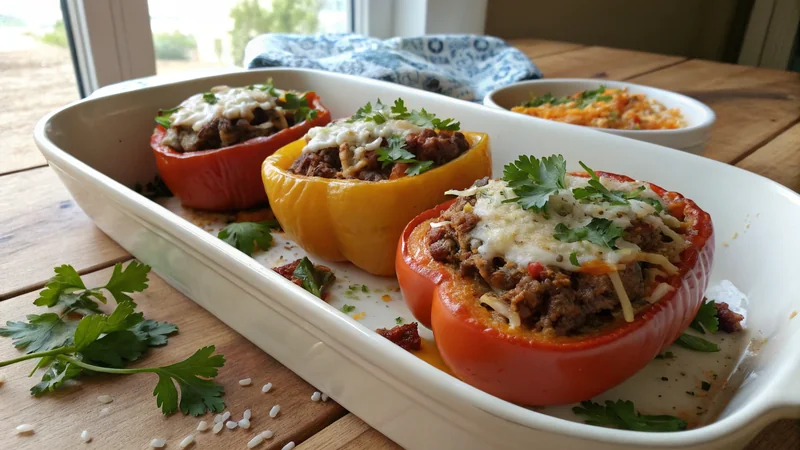
A standard Tex-Mex stuffed bell pepper with white rice carries about 28 to 32 grams of total carbs per half - most of it from the rice itself. Swap the rice for cauliflower rice and you are down to about 9 grams of net carbs per half. The math is not subtle. For a strict keto plan (under 20 grams of net carbs daily), one rice-stuffed pepper half can represent more than half your daily carb budget; a cauliflower-rice version barely registers. For a moderate low-carb plan, the swap means you can have two halves comfortably and still have room for guacamole and a margarita on the side. If you are building a whole low-carb cookout menu around this logic, my keto BBQ sides roundup runs the same math across fourteen dishes.
The flavor case is just as strong. White rice is structural in a stuffed pepper - it absorbs juice and holds shape - but it brings nothing on its own. Cauliflower rice, when properly seared and dry, brings a faint nuttiness and a slightly toothier texture that holds the cumin and chili powder more clearly than rice does. Most blind tasters I have run through this swap actually prefer the cauliflower version once they get past the fact that they are eating a vegetable instead of a starch.
The third reason is practical: cauliflower rice cooks in 5-6 minutes in the skillet. Raw white rice in a stuffed pepper requires either pre-cooking it separately (extra step) or simmering it in the filling for 18 minutes (extra time). The cauliflower version is a one-skillet stuffing process that is faster, simpler, and easier to clean up. Even when carbs are not the issue, the time savings are real.
Cauliflower Rice: Fresh, Frozen, or Make Your Own
You have three options for the cauliflower rice. Fresh cauliflower rice from the produce section is the highest quality - it is the closest in texture to white rice and has the lowest moisture content. It is also the most expensive at about $4-5 per pound. Frozen cauliflower rice is half the price, has more moisture, and needs an extra 2-3 minutes of cooking to drive off the water - but it works fine. Making your own from a head of cauliflower is the cheapest option and gives you the most control over the rice grain size.
To make your own: cut a head of cauliflower into florets, removing the tough core. Pulse in batches in a food processor until the pieces are the size of grains of rice - about 8-10 short pulses, not continuous. You want rice-sized, not paste. Stop when the largest pieces are still slightly bigger than a grain of rice; the pulse-too-long bits become mush in the pan. One medium head yields about 4 cups of riced cauliflower, exactly the amount this recipe needs.
If you are using frozen, thaw fully first - either overnight in the fridge or 5 minutes in the microwave - then drain in a colander or squeeze in a clean kitchen towel to remove excess water. Frozen cauliflower rice that goes into the pan still wet will steam instead of sauté and will bring water into the filling that you cannot recover. Driving the water out before it touches the meat is the key to a Tex-Mex texture that does not soak the peppers during the bake.
The Tex-Mex Filling: Beef + Chorizo + Spices
The combination of ground beef and Mexican chorizo is the move that makes this recipe taste like Austin Tex-Mex rather than a low-carb compromise. Mexican chorizo (the soft, raw, deeply spiced version - not the cured Spanish kind) brings garlic, vinegar, paprika, and chili heat that is impossible to replicate with dry spices alone. The 1 lb beef + 8 oz chorizo ratio is the sweet spot: enough chorizo to set the flavor, enough beef for body, low enough chorizo to keep the dish from being too rich.
If you cannot find Mexican chorizo, you can fake it with ground beef plus 1 tablespoon smoked paprika, 1 teaspoon ground coriander, 2 teaspoons garlic powder, 1 teaspoon Mexican oregano, 1 teaspoon cumin, and 1 tablespoon apple cider vinegar mixed in at the end. The texture will not be quite right (chorizo has a softer, oilier crumb) but the flavor will be close. Look for Mexican chorizo at any Latin grocery, or in the refrigerated section near the breakfast sausages of larger supermarkets.
The spice blend is purposely simple. One tablespoon each of cumin and chili powder is the Tex-Mex foundation. Smoked paprika adds depth without bringing additional heat. Mexican oregano (different from Mediterranean oregano - more citrusy, more peppery) is the optional finisher that distinguishes Austin Tex-Mex from generic taco seasoning. If you are using a pre-blended chili powder like Gebhardt's or Mexene (the classic Texas brands), you can skip the additional cumin since they already have it baked in.
Drain the canned tomatoes thoroughly. Fire-roasted diced tomatoes carry a lot of liquid that will turn the filling into chili if you add it all in. I usually drain over a fine mesh strainer for 2 minutes, then press lightly with a spoon to release more juice. The tomato chunks should look dry, not wet, when they hit the pan.
Cheese Topping: Monterey Jack and Cotija
Two cheeses do two different jobs on top of these peppers. Monterey Jack melts into a smooth cap that holds the filling under it during the bake and gives you the photogenic golden-bubbling top that says stuffed pepper at first glance. It melts cleanly without breaking, browns nicely under the broiler, and has a mild flavor that lets the spiced filling underneath do the talking.
Cotija is the Mexican aged cheese that crumbles like feta but carries a deeper, saltier flavor. It does not melt - it sits on top of the melted Monterey Jack as a crumble that adds bright salt and textural contrast. Sprinkle it on after the bake while the peppers are still warm; the residual heat softens it slightly without melting it down. If you cannot find cotija, queso fresco works as a milder substitute, or feta as a non-traditional but workable swap.
Avoid pre-shredded cheese for this dish. Pre-shredded cheese is coated in cellulose powder to prevent clumping in the bag, and the coating prevents clean melting. Shred your own Monterey Jack from a block; it costs the same and melts twice as well. Five minutes with a box grater while the filling cooks down in the skillet.
For a richer version, add 1/2 cup grated sharp cheddar to the Monterey Jack mix. The cheddar deepens the flavor and brings a touch more browning. For a more authentic Tex-Mex look, add 1/4 cup queso quesadilla, the soft Mexican melting cheese that is closer to Oaxacan string cheese in pull and stretch. Both are excellent upgrades; the basic Monterey Jack version is the weeknight default.
Common Mistakes and How to Avoid Them
Mistake one: under-cooking the cauliflower rice. Wet cauliflower rice in the filling means soggy peppers in the bake. Cook the cauliflower until it is dry and slightly browned in the skillet before adding tomatoes. If you can see liquid pooling, keep going. The visual cue is when the pan looks dry to the bottom and the cauliflower has lost its raw white color.
Mistake two: not draining the tomatoes. Canned diced tomatoes carry a lot of juice that will leak out during the bake and pool around the peppers. Drain over a strainer for 2 minutes, then press lightly. Some pooling at the bottom of the dish is fine and tastes good as a sauce; a swimming pool of liquid is not.
Mistake three: over-baking the peppers. Bell peppers go from tender-firm to limp in about 5 minutes at 375F once they hit the breaking point. Test with a knife at 25 minutes; if it slides in with slight resistance, they are done. Limp peppers are still edible but they lose the textural contrast that makes a stuffed pepper feel like a structured dish instead of a casserole.
Mistake four: using lean ground beef. 80/20 is the right ratio for stuffed peppers. Leaner beef (90/10 or 93/7) dries out during the bake and the filling becomes crumbly. The 20% fat in 80/20 keeps the filling cohesive and rich. If your only option is leaner beef, add 1 extra tablespoon of olive oil to the pan when you cook the meat.
Mistake five: skipping the cover-then-uncover bake sequence. Covered for the first 18 minutes traps steam that softens the peppers. Uncovered for the last 7-10 minutes browns the cheese. Bake the whole thing uncovered and the peppers stay a bit firm; bake the whole thing covered and the cheese never browns. The two-phase bake is doing two different jobs.
Variations and Storage
Variation: vegetarian. Replace the beef and chorizo with 1.5 lb of plant-based ground (Beyond, Impossible) plus 1 tablespoon olive oil to compensate for missing fat. Add 1 can drained black beans for protein. The filling lacks chorizo's depth but works well with extra cumin and smoked paprika. About 12 grams net carbs per half due to the beans.
Variation: ground turkey. Swap the beef for 1 lb 93/7 ground turkey, but add 2 tablespoons olive oil to the pan since turkey lacks the fat content of beef. Keep the chorizo. The result is leaner, slightly drier, but still excellent.
Variation: pure carnivore. Skip the cauliflower rice entirely; use 2 lb total of ground beef plus chorizo, double the spices. The result is denser, more like a meat-stuffed pepper, with about 5 grams net carbs per half. Closer to what carnivore-diet eaters look for.
Variation: smoked. Take the assembled peppers to a 275F smoker for 45 minutes instead of the oven. Post oak or pecan smoke is the right wood. The peppers pick up smoke flavor and the cheese still browns beautifully. This crosses into Texas BBQ territory and is the version I make when I am already smoking something else.
Storage: leftover stuffed peppers keep 4 days in the fridge in an airtight container. Reheat in a 325F oven for 12-15 minutes to maintain texture; the microwave makes the peppers limp but is fine for office lunch. Freeze whole stuffed peppers (after assembling, before baking) for up to 3 months; thaw in the fridge overnight, then bake from there with an extra 10 minutes covered. For the fuller stuffed peppers cluster, see Chef Mia's classic taco-stuffed bell peppers with rice, the indulgent four-cheese stuffed peppers, the fire-kissed grilled stuffed peppers, or the broader Ultimate Tex-Mex Recipes Guide.
Stuffed Bell Peppers Without Rice Recipe
Ingredients
- 6 large bell peppers (any color), halved lengthwise, seeds and ribs removed
- 1 lb (450 g) ground beef (80/20)
- 8 oz (225 g) Mexican chorizo, casings removed (omit and double the beef for milder version)
- 1 medium yellow onion, diced
- 3 cloves garlic, minced
- 12 oz (340 g) riced cauliflower (about 4 cups), fresh or frozen and thawed
- 1 14.5 oz (411 g) can fire-roasted diced tomatoes, drained well
- 1 tablespoon ground cumin
- 1 tablespoon chili powder (or 2 teaspoons ancho + 1 teaspoon chipotle for layered heat)
- 1 teaspoon smoked paprika
- 1 teaspoon kosher salt, plus more to taste
- 1/2 teaspoon dried Mexican oregano
- 1.5 cups (170 g) shredded Monterey Jack cheese
- 1/2 cup (60 g) crumbled cotija cheese, for finishing
- Fresh cilantro, lime wedges, sliced avocado, sour cream, to serve
Instructions
- Preheat the oven to 375F. Set a rack to the middle position. Preheat the oven to 375F (190C). Lightly oil a 9x13 inch baking dish (or a similar-size white ceramic dish for the open-oven look). Have your halved bell peppers ready, cut-side up, in the dish - they bake right where they sit.
- Sear the chorizo first. Heat a 12-inch skillet over medium-high heat for 1 minute. Add the chorizo (no oil needed - chorizo renders its own fat) and cook, breaking up with a wooden spoon, for 4-5 minutes until the meat starts to crisp at the edges and the fat has rendered. Mexican chorizo is much wetter and more spiced than Spanish; it should release a deep red-orange fat that will flavor the rest of the filling.
- Add ground beef and aromatics. Add the ground beef to the chorizo. Break up with the spoon and cook 4-5 minutes until no longer pink. Push the meat to one side of the pan; in the cleared space, add the diced onion and a pinch of salt. Cook 3-4 minutes, stirring occasionally, until softened and slightly golden. Add the garlic and stir into the meat for 30 seconds until fragrant.
- Drive moisture out of the cauliflower rice. This is the make-or-break step. Add the riced cauliflower directly to the skillet and toss to coat in the meat fat. Cook 5-6 minutes, stirring every minute, until the cauliflower has lost most of its moisture and starts to brown lightly at the edges. Frozen-thawed cauliflower rice has more water and may need 7-8 minutes. The mixture should look loose and dry, not wet. If liquid pools in the pan, keep cooking until it evaporates.
- Add tomatoes and spices. Add the well-drained fire-roasted tomatoes, cumin, chili powder, smoked paprika, salt, and Mexican oregano. Stir thoroughly. Cook another 2-3 minutes, until the spices are fragrant and the mixture holds together when you push a spoon through it. Taste and adjust salt - the cotija topping will add saltiness, so leave a touch of room. Remove from heat.
- Stuff the peppers. Spoon the filling into the halved peppers, mounding generously above the rim - about 1/2 to 2/3 cup per half depending on pepper size. Press the filling down gently to compact. Distribute the Monterey Jack evenly over the tops, about 2 tablespoons per half. The cheese will form the cap during the bake.
- Bake covered, then uncovered. Cover the baking dish loosely with foil (don't seal tight; you want a little steam escape). Bake 18 minutes covered. Remove the foil and bake another 7-10 minutes uncovered, until the cheese is bubbling, lightly browned, and the peppers are tender-firm when pierced with a knife. Total bake time is about 25-28 minutes. Larger peppers may need 5 more minutes.
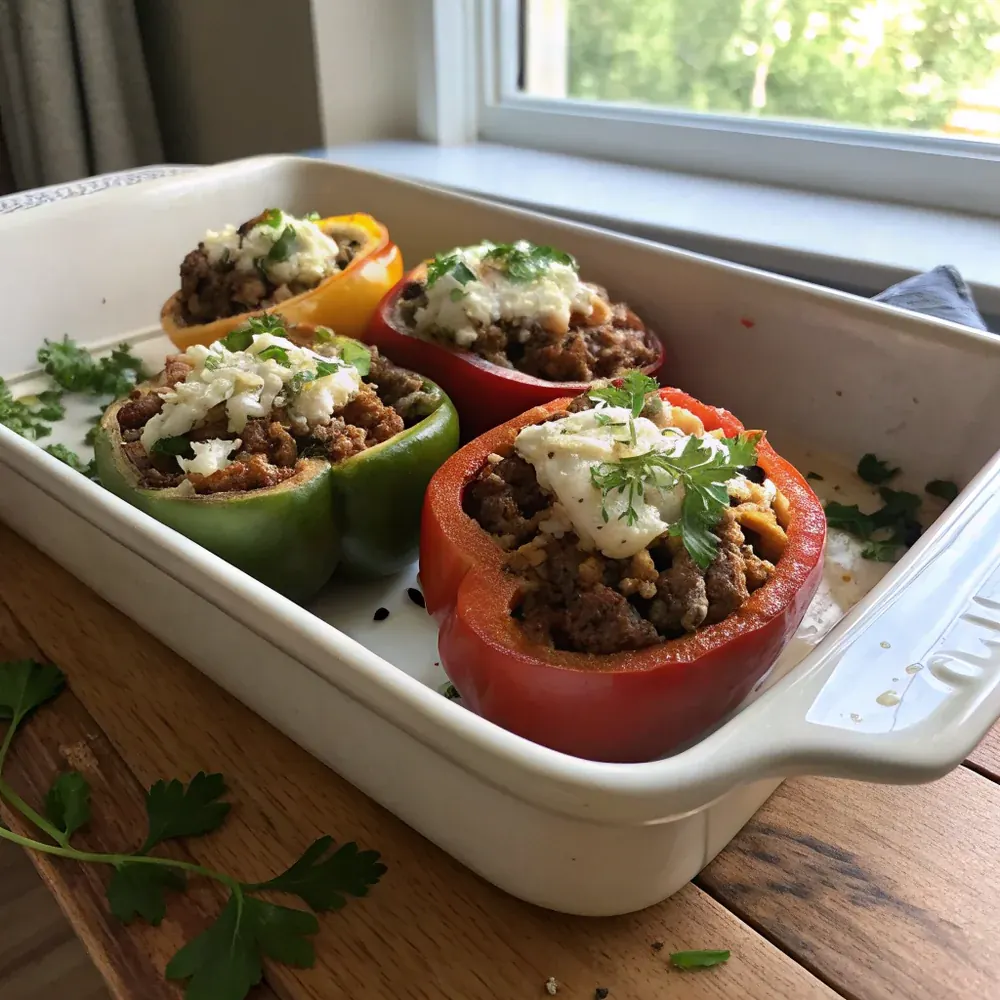
- Finish with cotija and cilantro. Pull the dish from the oven and let rest 5 minutes - this firms the filling and lets the cheese set. Sprinkle the crumbled cotija over the tops while still warm; it doesn't melt the way Monterey Jack does, which is the textural contrast you want. Scatter chopped fresh cilantro over the top. Serve directly from the dish with lime wedges, sliced avocado, sour cream, and hot sauce on the side.
Frequently Asked Questions
How many carbs are in stuffed bell peppers without rice?
About 9 grams of net carbs per stuffed pepper half (one serving = 2 halves = ~18 grams net carbs), depending on pepper size. The carbs come almost entirely from the bell pepper itself (red and yellow have slightly more sugar than green) and from the small amount of canned tomatoes in the filling. By comparison, a traditional rice-stuffed bell pepper carries 28-32 grams per half. The cauliflower rice swap saves about 20 grams of carbs per pepper.
Can I use frozen cauliflower rice?
Yes - frozen riced cauliflower works fine, but it has more moisture than fresh and needs an extra 2-3 minutes of cooking time to drive off the water. Thaw fully first (overnight in the fridge or 5 minutes in the microwave), then drain or squeeze dry in a clean towel before adding to the skillet. The flavor and final texture are nearly identical to fresh cauliflower rice once the moisture is removed.
Do I have to pre-cook the bell peppers?
No - this recipe bakes the peppers raw with the filling, which is faster and keeps the peppers tender-firm rather than limp. If you prefer softer peppers, blanch the halves in boiling water for 3 minutes before stuffing, or microwave them for 2 minutes. Soft-pepper preference is personal; the raw-bake method is the Tex-Mex standard at most Austin Tex-Mex restaurants.
Can I make stuffed bell peppers without rice ahead?
Yes - assemble the peppers fully (raw peppers + cooked filling + cheese on top), cover tightly, and refrigerate up to 24 hours before baking. When ready to cook, bake from cold for 30-35 minutes (an extra 5-10 minutes vs the standard recipe) to compensate. The filling itself can be made up to 3 days ahead and stored separately, then assembled and baked the day of.
What if I can't find Mexican chorizo?
Use 1 lb of standard ground breakfast sausage (mild or hot) plus 1 tablespoon smoked paprika and 1 tablespoon apple cider vinegar mixed in at the end. Or skip the chorizo entirely and double the ground beef to 2 lb total - the result is milder but still good. Avoid Spanish chorizo (the cured, hard kind); it has a completely different texture and won't crumble into the filling the way Mexican chorizo does.
Are these stuffed bell peppers gluten-free?
Yes, naturally gluten-free as written. The filling has no breadcrumbs, no flour, no soy sauce. Double-check that your chorizo and chili powder are GF-certified (most are, but some commercial brands include wheat as a thickener). The cauliflower rice swap also makes them grain-free, suitable for paleo and Whole30 with minor adjustments (skip the cheese for Whole30).
How do I keep stuffed bell peppers from being soggy?
Three rules: (1) cook the cauliflower rice hard until it is dry and lightly browned before adding tomatoes; (2) drain the canned tomatoes thoroughly before adding; (3) bake covered for 18 minutes then uncovered for 7-10 minutes - the uncovered phase evaporates surface moisture and lets the cheese brown. If you follow all three, the peppers come out structured, not soupy.
Can I cook these stuffed peppers in an air fryer?
Yes - assemble as written, then air-fry at 350F for 18-22 minutes in a basket-style air fryer, checking at 15 minutes for cheese browning and pepper tenderness. The result is similar to oven-baked but with slightly crispier cheese tops. Best for cooking 4-6 halves at a time depending on basket size; larger batches should still go in the oven for even cooking.