Texas BBQ
Texas BBQ Mop Sauce
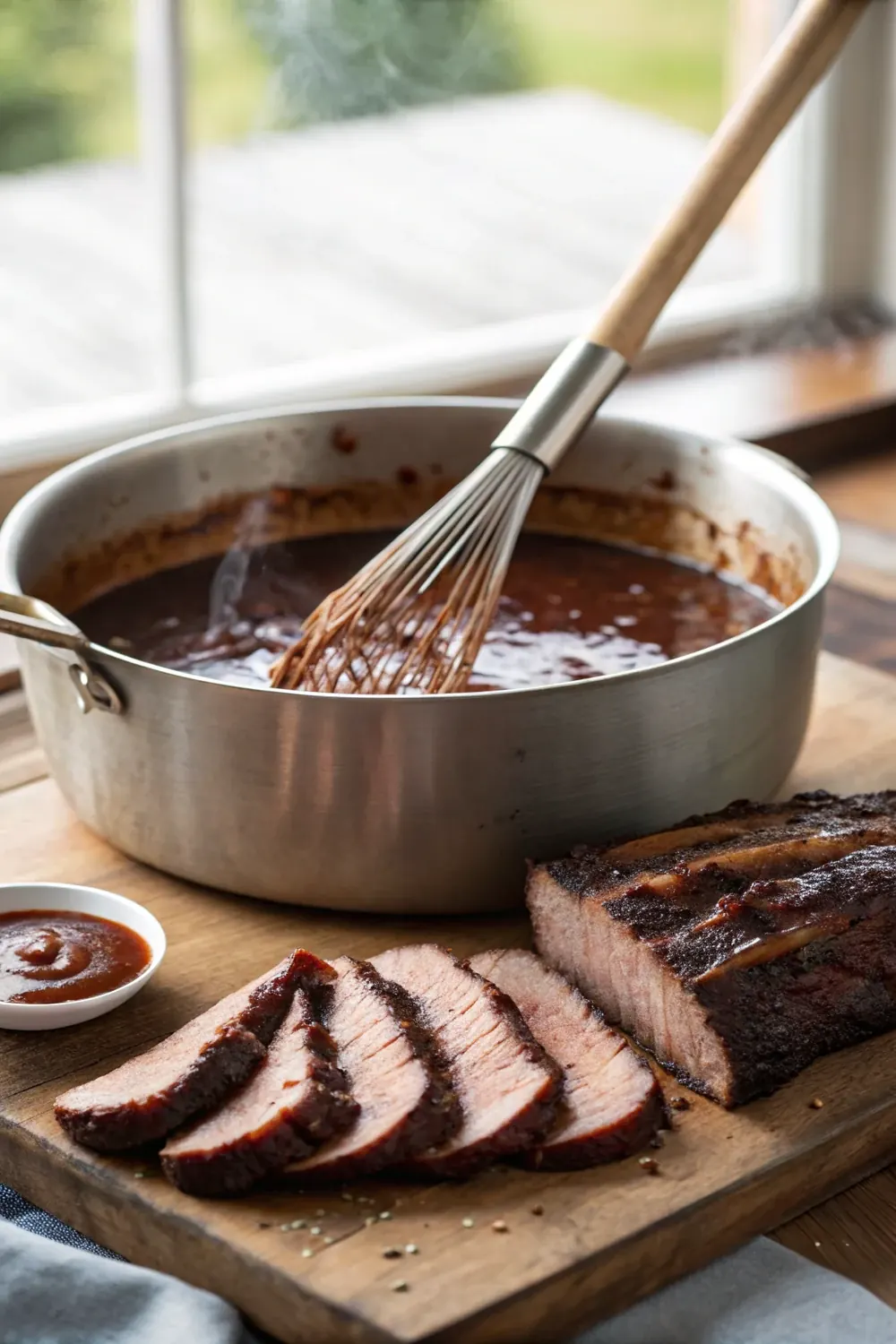
Chef Mia's Texas BBQ mop sauce: a thin vinegar, beef stock, and Worcestershire basting liquid you swab on brisket and ribs through a long post oak smoke.
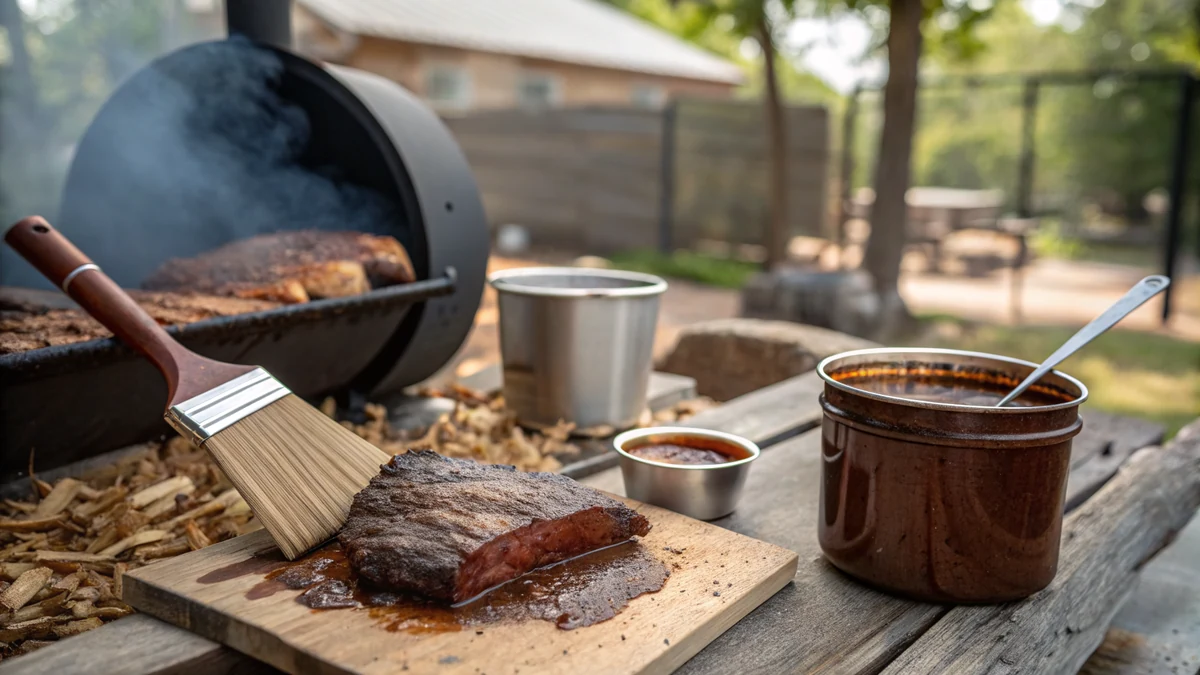
Quick answer: A Texas BBQ mop sauce is a thin, vinegar-based basting liquid you swab on brisket, ribs, and pork during a long smoke to keep the surface moist and build bark, not a thick sauce you serve at the table. The classic Central Texas version is beef stock, apple cider vinegar, Worcestershire, a little oil, and the same salt-and-pepper-heavy rub you put on the meat, simmered five minutes and applied warm with a cotton mop or a brush. Start mopping only after the bark has set, usually three to four hours in, then swab lightly once an hour. Makes about 3 cups, enough for one packer brisket.
A mop sauce is one of the oldest tools in Texas BBQ, and it is the one most home cooks misunderstand. It is not a barbecue sauce. You do not serve it. It is a thin, watery, vinegar-and-stock basting liquid that pitmasters swab onto big cuts of meat during a long smoke, traditionally with an actual cotton floor mop scaled down to the size of a dish brush. The name is literal. On the competition circuit and at the old Central Texas meat markets, a mop kept a brisket from drying out across twelve hours over post oak, and it is still the cheapest insurance a backyard cook has against a leathery cook.
I came to mopping the hard way, by ruining a brisket without it. My first few cooks came off the smoker with a surface like a catcher's mitt, because I let the long heat dry the exterior faster than the inside could render. A mop fixes exactly that. The liquid cools and re-moistens the surface, lays down another coat of seasoning every hour, and gives smoke something tacky to cling to so the brisket builds a darker bark. This recipe is the simple beef-stock mop I keep on the side burner every time I light the smoker, and I will tell you exactly when and how to use it.
Mop Sauce Is Not BBQ Sauce: Know the Difference
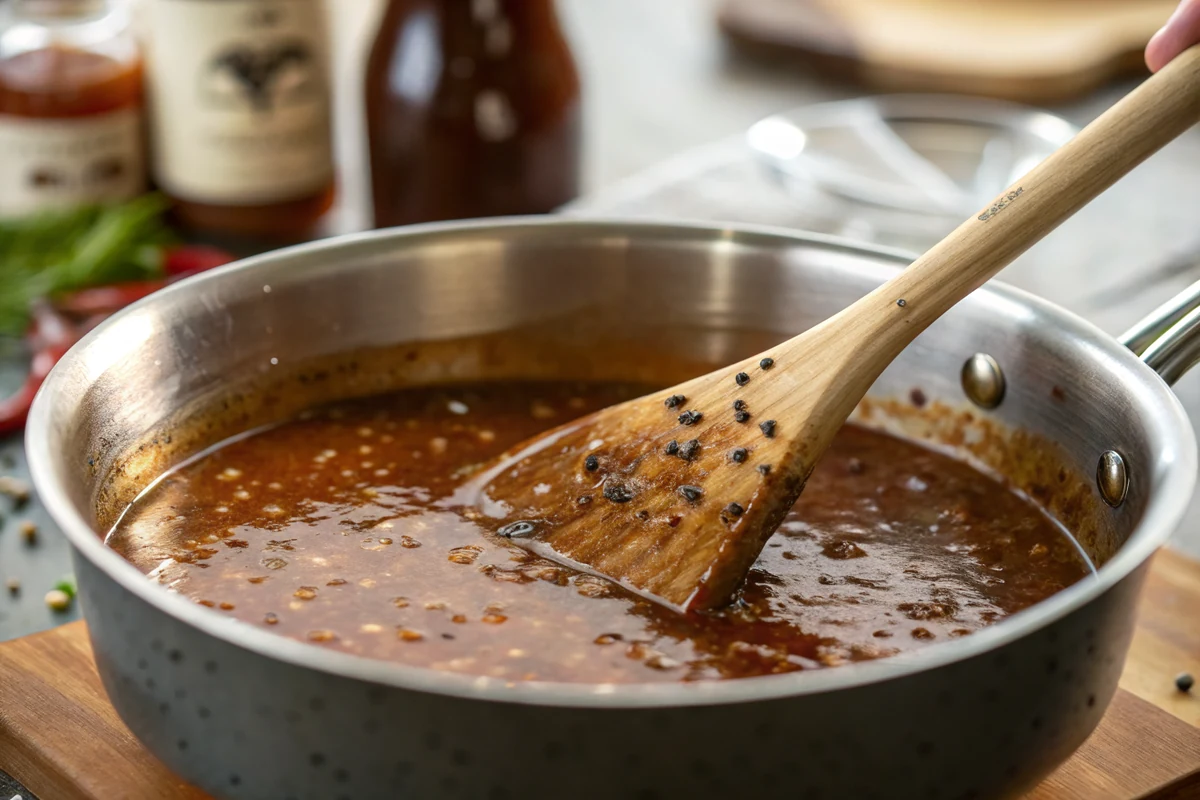
The first thing to get straight is that a mop and a barbecue sauce are two completely different tools that happen to share a flavor family. A Texas BBQ sauce is a finishing sauce, thicker and a little sweeter, served on the side of the plate so each person can add it to taste. A mop is a working liquid used only during the cook, thin as broth and sour with vinegar, that never sees the table. Confuse the two and you will either serve a watery sauce nobody wants or baste your brisket with something so thick and sugary it burns.
The thinness is the point, not a flaw. A mop has to be watery so it spreads in a fast, even coat and cools the meat's surface a touch, which slows moisture loss across a long cook. Sugar is the enemy here, because sugar over direct heat for hours turns to bitter char. That is why the Central Texas mop leans on beef stock, vinegar, and pepper rather than ketchup and brown sugar. Save the sweet, thick stuff for the squeeze bottle at dinner.
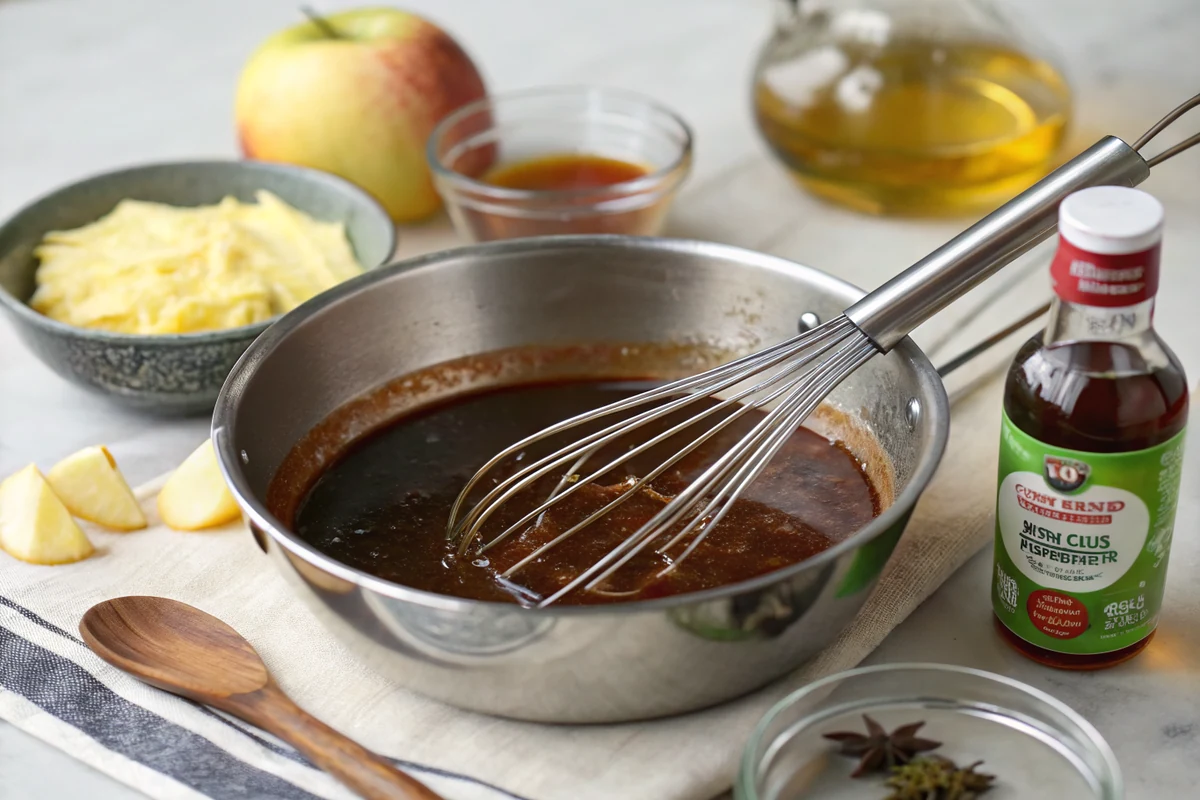
Historically the mop earned its name in the old commercial pits, where a pitmaster cooking a whole hog or a dozen briskets literally used a small cotton mop on a stick to slap basting liquid across yards of meat. Backyard cooks scaled it down to a dish-mop or a brush, but the principle never changed. It is a humble, savory, vinegary liquid whose entire job is to keep big cuts happy through hours of smoke, and it has been doing that job in Texas since long before bottled sauce existed.
The Central Texas Mop: Stock, Vinegar, and a Lot of Pepper
My mop is built to match the way Central Texas seasons beef, which means it starts from salt, coarse black pepper, and beef. Low-sodium beef stock gives it a savory body that tastes like the meat it is going on, so every swab reinforces the brisket's own flavor rather than competing with it. If you have drippings saved from a previous cook, a splash of those in place of some stock makes the mop taste even more like the real thing.
Apple cider vinegar is the working ingredient. It brings the tang that cuts the richness of a fatty packer brisket, and the mild acidity helps tenderize the very surface of the meat over a long cook. Half a cup to two cups of stock is the ratio I like; enough to taste it clearly without making the mop aggressively sour. White vinegar is sharper and fine in a pinch, but cider vinegar's gentle apple note suits smoked beef and pork better.
The pepper is where it becomes unmistakably Texan. I load the mop with coarse, 16-mesh black pepper and a tablespoon of the same salt-and-pepper rub that is already on the meat. That coarse pepper is the signature of a Lockhart-style brisket, and carrying it into the mop keeps the whole cook singing one clear note. Worcestershire adds a deep umami background, and a little oil or rendered tallow gives the thin liquid just enough fat to cling to the bark instead of sheeting off.
Keep the sugar out and keep it simple. You will see mop recipes online loaded with honey, brown sugar, and fruit juice, and those belong to a different, glazier school of barbecue. For Central Texas beef cooked low and slow over post oak, a mop should taste savory, sharp, and peppery, full stop. The meat, the smoke, and the rub are doing the heavy lifting; the mop is there to support them, not to add a fourth loud flavor.
When to Start Mopping (and Why Timing Is Everything)
The most common mopping mistake is starting too soon. For the first few hours, the rub is dissolving into the moist surface of the meat and slowly drying into a tacky layer that will become bark. If you swab liquid across that surface before it sets, you wash the rub right off and rinse away the foundation of your bark. On a brisket, that means waiting a full 3 to 4 hours before the mop touches the meat.
You will know the bark has set when you can touch the surface and it feels tacky and dry rather than wet and smeary, and the rub no longer rubs off on your finger. That is the green light. Until then, leave the lid closed and let the smoke and heat do their work. Patience here is the same patience that gets you through the stall: the cook rewards the person who leaves the meat alone early and only intervenes once the surface can take it.
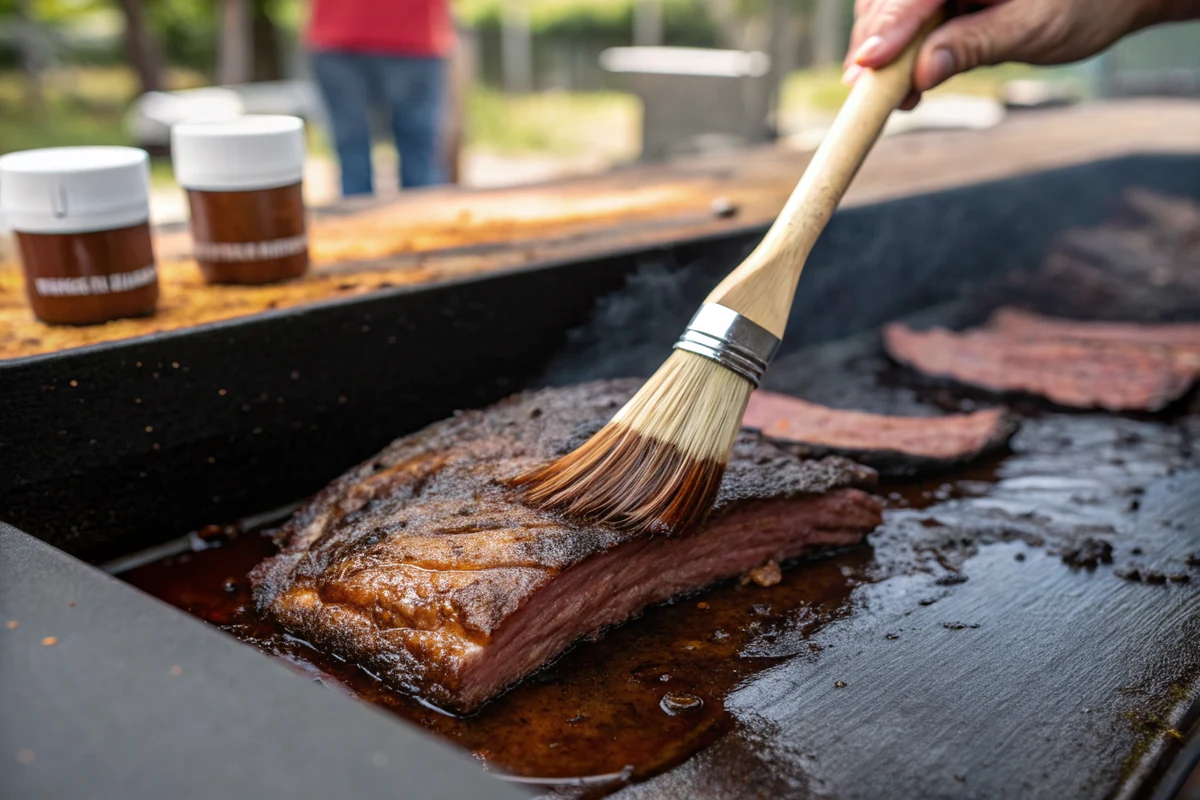
Once you start, mop lightly and about once an hour, no more. Every time you open the lid you lose heat and add cook time, and a chamber that keeps dropping temperature is a chamber fighting the stall. A quick swab and a fast close is the move. Stop mopping when you wrap the meat in butcher paper, because inside the wrap the meat bastes itself in its rendered juices and the mop has nothing left to add.
How to Apply It: Mop, Brush, or Spritz
The traditional tool is a cotton barbecue mop, a small version of a string floor mop with a wooden handle, and there is a reason it survived. The cotton head holds a lot of thin liquid and lays it down in a soft, even coat without dragging at the bark. You can find them cheaply at any barbecue supply, and they wash clean. Soak a new one in water first to rinse out any cotton dust, and store it dry between cooks so it does not sour.
A silicone basting brush is the easy modern substitute, and it works fine as long as you are gentle. Use a soft hand and dab rather than scrub, because a stiff brush worked hard across fresh bark can scrape it loose. A brush holds less liquid than a mop, so you will reload more often, but for a single backyard brisket or a couple of rib racks it is perfectly good and easier to clean.
A spray bottle, what cooks call a spritz, is the third option and a slightly different animal. A spritz of straight cider vinegar and water cools the surface and adds tang without depositing much body or seasoning. I think of the spritz and the mop as cousins: the spritz is lighter and faster, the mop adds more flavor and a thin protective coat. On a long brisket I often spritz early for moisture and switch to the seasoned mop later for flavor and bark.
Whichever tool you use, the same hygiene rule applies. The mop touches the surface of raw and partly cooked meat, so the leftover liquid in the pot is not safe to serve. Keep it for basting only, hold it hot during the cook, and pour out whatever is left when you wrap. It costs pennies to make a fresh batch and it is not worth the risk of using a contaminated mop as a finishing sauce. For that, make a proper Texas BBQ sauce.
What to Mop: Brisket, Ribs, Pork, and Chicken
Brisket is the cut a mop was born for. A whole packer spends twelve hours or more over post oak, and that is exactly the kind of long, dry cook where an hourly swab of seasoned stock pays off in moisture and bark. Start after the bark sets, mop once an hour, and give it a last coat before the butcher-paper wrap. The same approach scales straight to beef ribs and chuck, any big beef cut going low and slow for the long haul.
Pork takes a mop happily, and you can lean the flavor a little sweeter and fruitier if you like. For a pork shoulder destined to become pulled pork, I sometimes swap part of the beef stock for apple juice or add a spoon of it, since pork loves that gentle fruit note. Spare ribs and baby backs benefit from a lighter touch; they are smaller and finish faster, so a couple of mops in the back half of the cook is plenty.
Chicken and turkey are the exception where you go easy. Poultry skin is trying to dry out and crisp, and a wet mop fights that, leaving you with flabby, rubbery skin. If you mop a bird at all, do it sparingly and only on the meat side, or skip the mop and spritz lightly instead. For poultry I usually let the skin render undisturbed and save the mopping energy for the beef.
No matter the cut, the mop is a supporting player in a bigger method. If you are still dialing in your fire, your wood, and your rub, those matter far more than the mop does. Get a clean post oak fire and a heavy hand of salt and pepper right first, lean on the Ultimate Texas BBQ Guide for the fundamentals, and let the mop be the small hourly habit that carries a good cook across the finish line.
Storing, Scaling, and Troubleshooting Your Mop
This recipe makes about three cups, enough for a single packer brisket or two racks of ribs across a full cook. It scales cleanly: double or triple it for a whole-hog day or a smoker packed with multiple briskets. Any mop that has not touched raw meat keeps in a sealed jar in the fridge for up to a week, so I often make a double batch and save half for the next weekend rather than mixing it fresh each time.
If your mop tastes too sharp, it is too heavy on vinegar; stir in more beef stock to round it out. If it tastes flat and watery, it needs more salt, more pepper, and a shot more Worcestershire, since a mop has to be assertively seasoned to leave any trace on the meat. If it sheets straight off the bark without clinging, whisk in another spoon of oil or tallow so it has enough fat to grab the surface.
Watch the salt if you scale up or reduce the liquid, because salt concentrates fast and a mop that cooks down can turn brutally salty by the end of a long day. Start with low-sodium stock so you control the salt yourself, and taste the mop now and then through the cook. If it has reduced in the warmer, loosen it with a splash of water or stock to bring it back to that thin, broth-like consistency that spreads in an even coat.
Mop, Spritz, or Inject: Three Ways to Add Moisture
A mop is one of three tools Texas cooks use to fight moisture loss on a long smoke, and it helps to know how it sits next to the other two. A spritz is the lightest touch, a fine mist of vinegar and water from a spray bottle that cools the surface and adds a faint tang without depositing much seasoning. It is fast, it does not disturb the bark, and it is my pick for the early hours of a cook when I want moisture but the bark is still fragile.
A mop is the middle option and the one this recipe is about. Because it carries beef stock, fat, and the same coarse pepper rub that is on the meat, it does more than a spritz: it lays down a thin, seasoned, slightly tacky coat that smoke clings to, which deepens both the bark and the color over a long cook. It also cools the surface and slows drying, the same as a spritz, but with flavor and body the spray cannot match. The tradeoff is that you open the lid and lose a little heat each time.
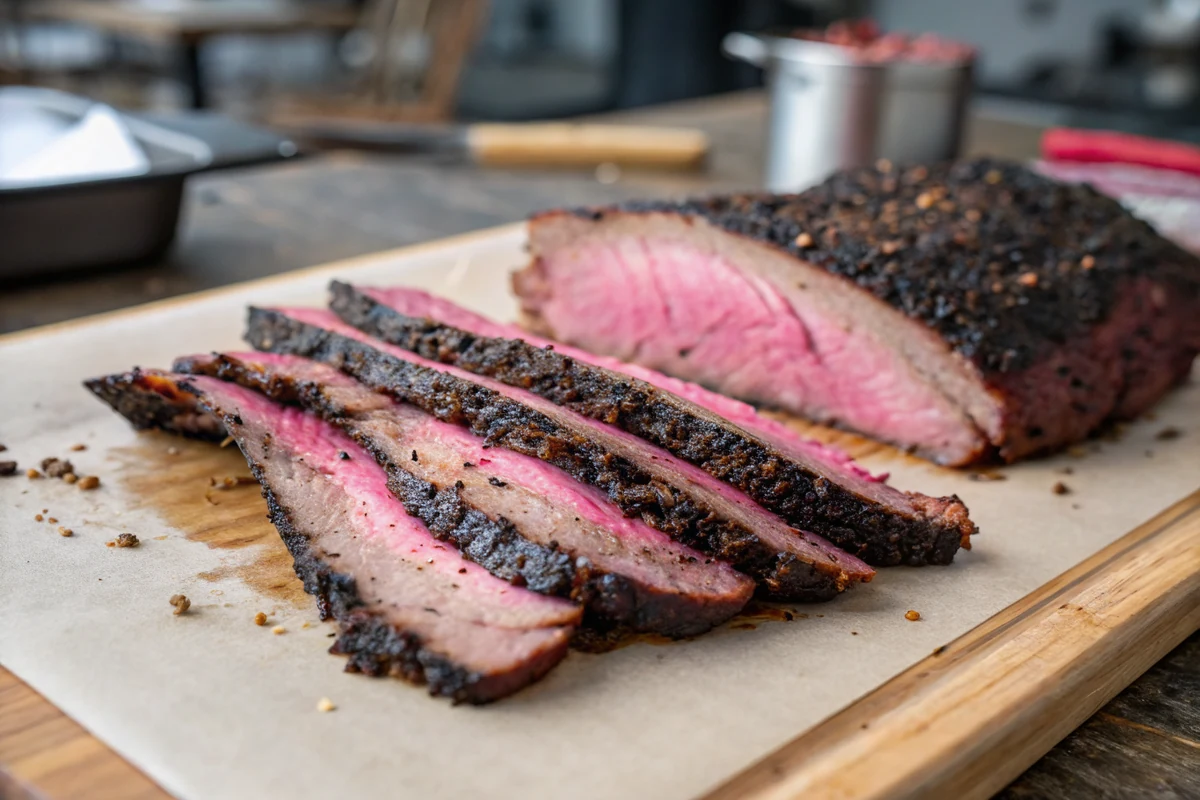
Injecting is the third and most aggressive tool, and it works from the inside rather than the surface. A meat injector pushes a thin broth deep into the muscle before the cook, which guards against a dry interior on lean cuts. Competition cooks lean on it hard. For honest backyard Central Texas brisket I usually skip it, because a well-managed fire, a heavy salt-and-pepper rub, and an hourly mop get me a juicy result without it. Injecting is a fine tool, just a different one.
The three are not mutually exclusive, and on a big cook I often use two of them. I will spritz lightly through the first few hours for gentle moisture, then switch to the seasoned mop once the bark sets to build flavor and color into the back half. Pick the combination that fits your cut and your patience, but whatever you do, treat all three as support for the fundamentals rather than a fix for a fire you have not learned to manage yet.
Texas BBQ Mop Sauce Recipe
Ingredients
- 2 cups (475 ml) beef stock (low-sodium)
- 1/2 cup (120 ml) apple cider vinegar
- 1/4 cup (60 ml) water
- 2 tablespoons Worcestershire sauce
- 2 tablespoons neutral oil or rendered beef tallow
- 1 tablespoon coarse black pepper
- 1 tablespoon kosher salt
- 2 teaspoons of your brisket rub (equal parts salt and 16-mesh pepper)
- 1 teaspoon hot sauce (optional, for a faint background heat)
- 1/2 teaspoon garlic powder (optional)
Instructions
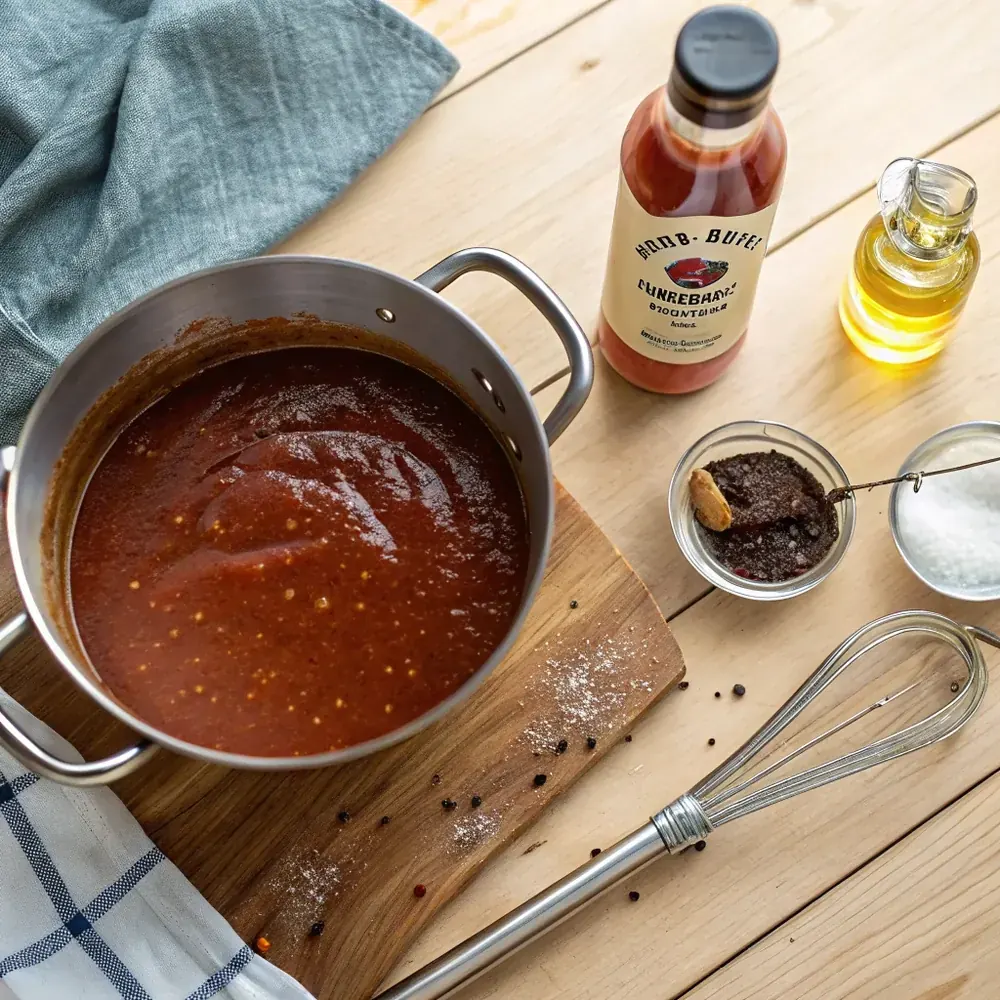
- Combine the base. In a small saucepan, combine the beef stock, apple cider vinegar, water, Worcestershire, and oil or tallow. These five ingredients are the whole backbone of a Central Texas mop: savory stock for body, vinegar for tang and tenderizing, and a little fat so the liquid clings instead of running straight off the meat.
- Season to match the meat. Stir in the black pepper, salt, the 2 teaspoons of brisket rub, and the optional hot sauce and garlic powder. Matching the mop's seasoning to the rub already on the meat is the key: every swab reinforces the same flavor instead of muddying it. Keep it heavy on coarse black pepper, the way Central Texas brisket has been seasoned for a century.
- Simmer five minutes. Bring the mop to a gentle simmer over medium heat, then drop it to low and cook 5 minutes, stirring once or twice, just to dissolve the salt and marry the flavors. Do not reduce it. A mop is supposed to be thin and watery, closer to a seasoned broth than a sauce. If it cooks down too far, add a splash more stock or water.
- Hold it warm by the smoker. Keep the mop warm on a side burner or at the edge of the smoker throughout the cook. Warm liquid will not shock the surface temperature of the meat the way cold liquid does, and a cold splash can stall your cook. A small slow cooker on the warm setting is the easiest way to hold it hands-off for a twelve-hour brisket day.
- Wait for the bark to set. Do not touch the meat with the mop for the first 3 to 4 hours. The surface needs time to dry and form a tacky bark first. Mopping too early washes the rub straight off and you end up with a pale, streaky exterior. Once the bark has set and will not smear when you touch it, you are ready to start basting.
- Mop lightly, about once an hour. Open the smoker, swab a thin coat of warm mop over the top and sides of the meat with a cotton mop or a silicone brush, and close the lid quickly. Work fast, because every minute the lid is open drops the chamber temperature. Once an hour is plenty; over-mopping cools the meat, washes off bark, and stretches the cook for no benefit.
- Stop before the wrap. Give the meat a final light mop right before you wrap it in butcher paper or foil (usually when the bark is set and the internal temp is pushing through the stall around 165F). After the wrap, the meat self-bastes in its own juices and the mop has done its job. Discard any leftover mop that touched raw-meat surfaces; do not serve it.
Frequently Asked Questions
What is Texas BBQ mop sauce?
Texas BBQ mop sauce is a thin, vinegar-based basting liquid swabbed onto large cuts of meat during a long smoke to keep the surface moist, lay down extra seasoning, and help smoke cling for a better bark and smoke ring. The Central Texas version is beef stock, apple cider vinegar, Worcestershire, a little oil, and coarse black pepper and salt. It is a working liquid used only during the cook, not a sauce you serve at the table. The name comes from the small cotton mop traditionally used to apply it.
What is the difference between mop sauce and BBQ sauce?
A mop sauce is thin, savory, and sour, used only during cooking to baste meat and build bark; it is never served. A BBQ sauce is thicker, often sweeter, and served at the table so people can add it to taste. Crucially, mop sauce is low in sugar because sugar burns over hours of heat, while finishing sauces can carry sweetness since they go on at the end or on the side. The two solve different problems: one supports the cook, the other dresses the plate.
When should I start mopping my brisket?
Wait until the bark has set, usually 3 to 4 hours into the cook. If you mop before the rub has dried into a tacky surface, you wash the seasoning off and end up with a pale, streaky exterior and weak bark. Test it by touching the surface: when it feels tacky and dry and the rub no longer comes off on your finger, you are ready. After that, mop lightly about once an hour, and stop when you wrap the meat.
How often should you mop meat while smoking?
About once an hour is the sweet spot for brisket and large cuts. More often than that and you lose too much heat opening the lid, cool the meat, wash off bark, and stretch the cook for no benefit. Work fast: open, swab a thin coat over the top and sides, and close quickly. Smaller or faster-cooking cuts like ribs need only a couple of mops in the back half of the cook. Stop mopping entirely once you wrap the meat.
Can I make mop sauce without beef stock?
Yes. Beef stock adds savory body that suits brisket, but you can use water as the base and lean harder on Worcestershire, salt, and pepper for flavor. For pork, apple juice or a mix of apple juice and water is a classic base that adds a gentle fruit note. Chicken stock works for poultry. The non-negotiables are the vinegar for tang, a little fat so it clings, and enough seasoning to leave a trace on the meat.
Do you serve mop sauce on the meat?
No. Mop sauce touches the surface of raw and partly cooked meat throughout the smoke, so the leftover liquid in the pot is not safe to serve and should be discarded when you wrap the meat. It is also too thin and sour to work as a table sauce. If you want something to put on the finished brisket, make a separate finishing sauce. A proper Texas BBQ sauce, served on the side, is the right tool for the plate.
Does mopping help bark formation?
Used correctly, yes. Once the bark has set, a thin mop adds a tacky, seasoned coat that gives wood smoke something to cling to, which deepens both the bark color and the smoke ring over a long cook, while the moisture keeps the surface from drying into a hard crust. The key is timing: mopping too early, before the bark sets, does the opposite and washes the rub off. Wait for the surface to set, then mop lightly and let the smoke build on top of it.