Tex-Mex Recipes
Texas Chicken Spaghetti Casserole
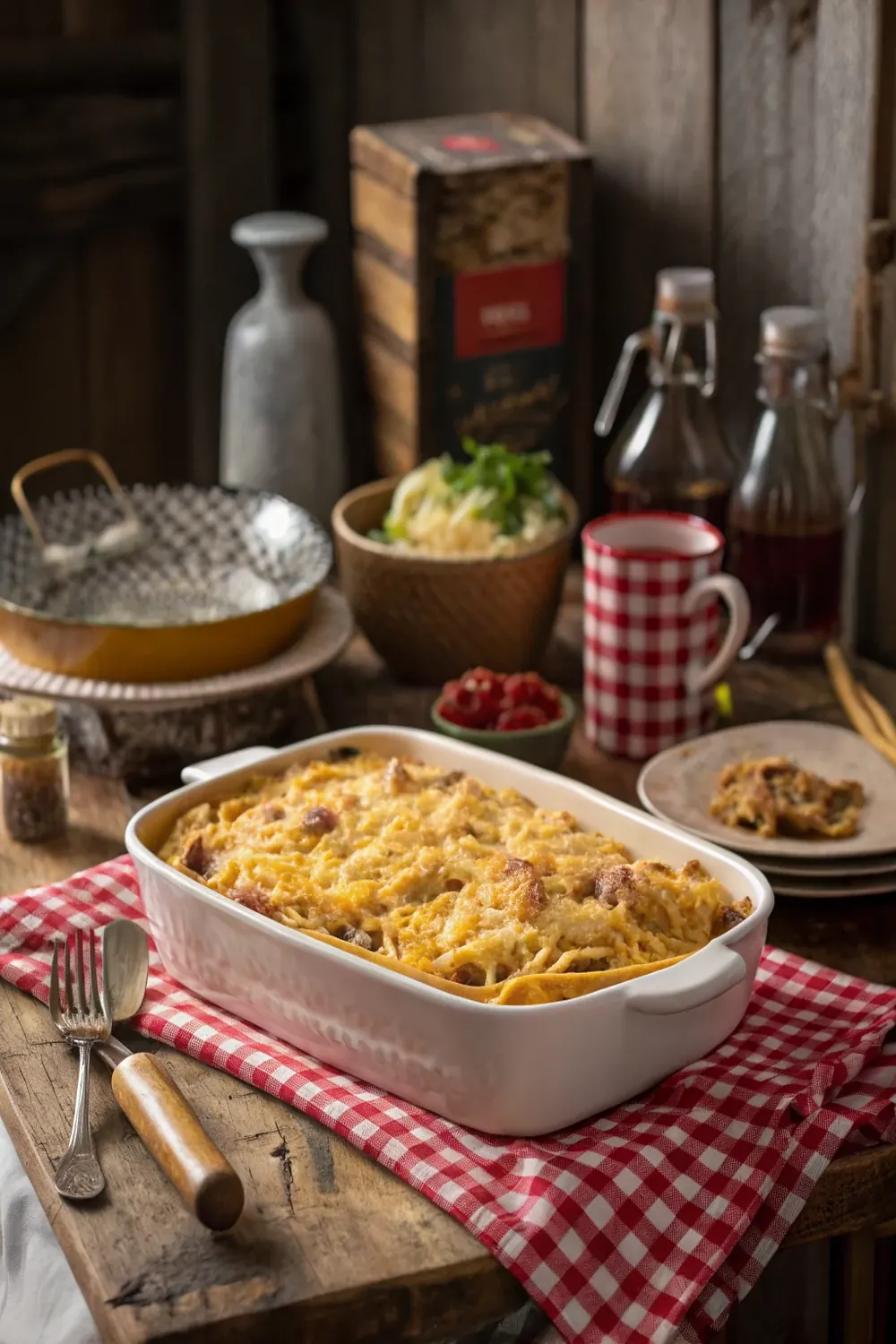
Texas chicken spaghetti casserole with Rotel, Velveeta, and shredded chicken. The church potluck classic by Chef Mia. 350°F for 30 minutes.
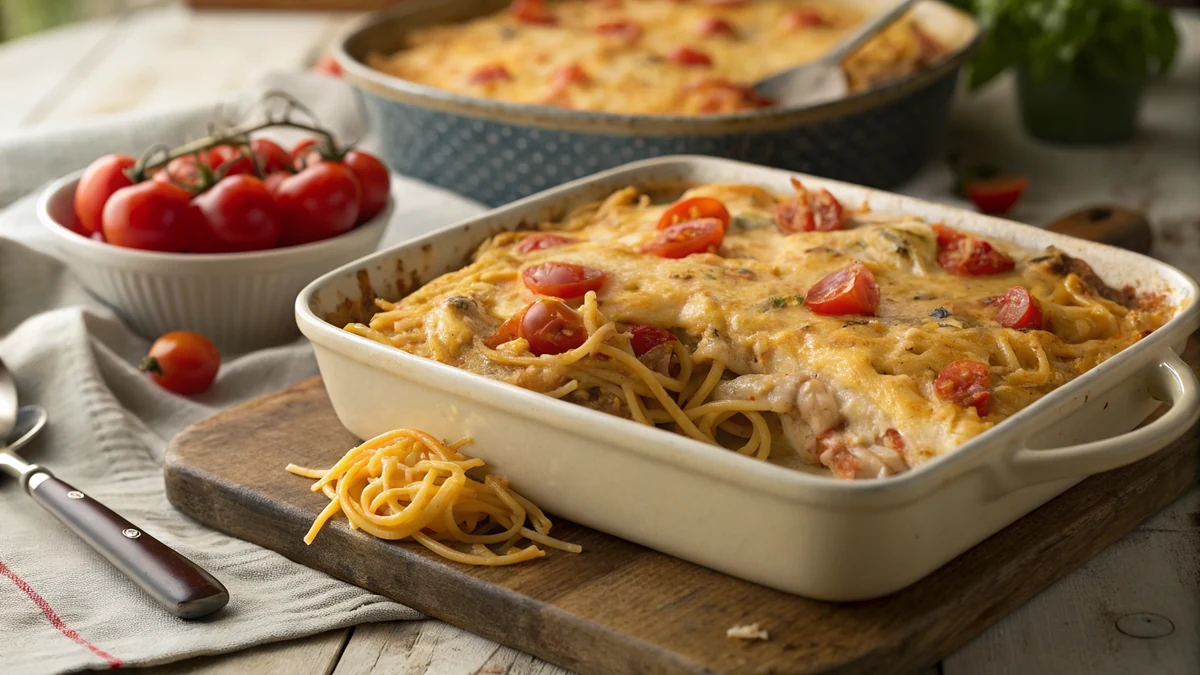
Quick answer: Texas chicken spaghetti casserole layers cooked spaghetti, shredded rotisserie chicken, melted Velveeta cheese, a can of Rotel tomatoes and green chilies, and cream of mushroom soup in a 9x13 baking dish. Bake at 350°F for 30 minutes until bubbly and lightly browned on top. This is the Texas church-potluck classic, feeds 8 to 10, and reheats beautifully for next-day lunch. Allergens: gluten, dairy, soy.
Texas chicken spaghetti is the casserole that travels best to a church potluck, a wedding shower, and a funeral. It has been the default Texas covered dish for at least sixty years, trading the potluck table with King Ranch chicken. The recipe lives in every Junior League cookbook from the 1960s onward, in every PTA cookbook, and on the back of countless Velveeta and Rotel labels. The ingredients are pantry staples; the result is comforting and reliable.
I make this casserole when someone in our family has had a hard week. It is a casserole that says 'I love you' in the language of Velveeta and shredded chicken. My mother brought it to my college dorm during finals week in the 2010s, and I have brought it to friends who just had babies, who just lost parents, and who just moved into new houses. It is the casserole that travels in foil pans and arrives still warm.
This is the canonical Texas version with Velveeta, Rotel, and cream of mushroom. The fancier modern versions (homemade cheese sauce, fresh tomatoes, gourmet pasta) miss the point. The canonical version is the comfort. Pair with a green salad and buttermilk biscuits on the side, and that's the potluck plate.
Three Things to Know About Texas Chicken Spaghetti
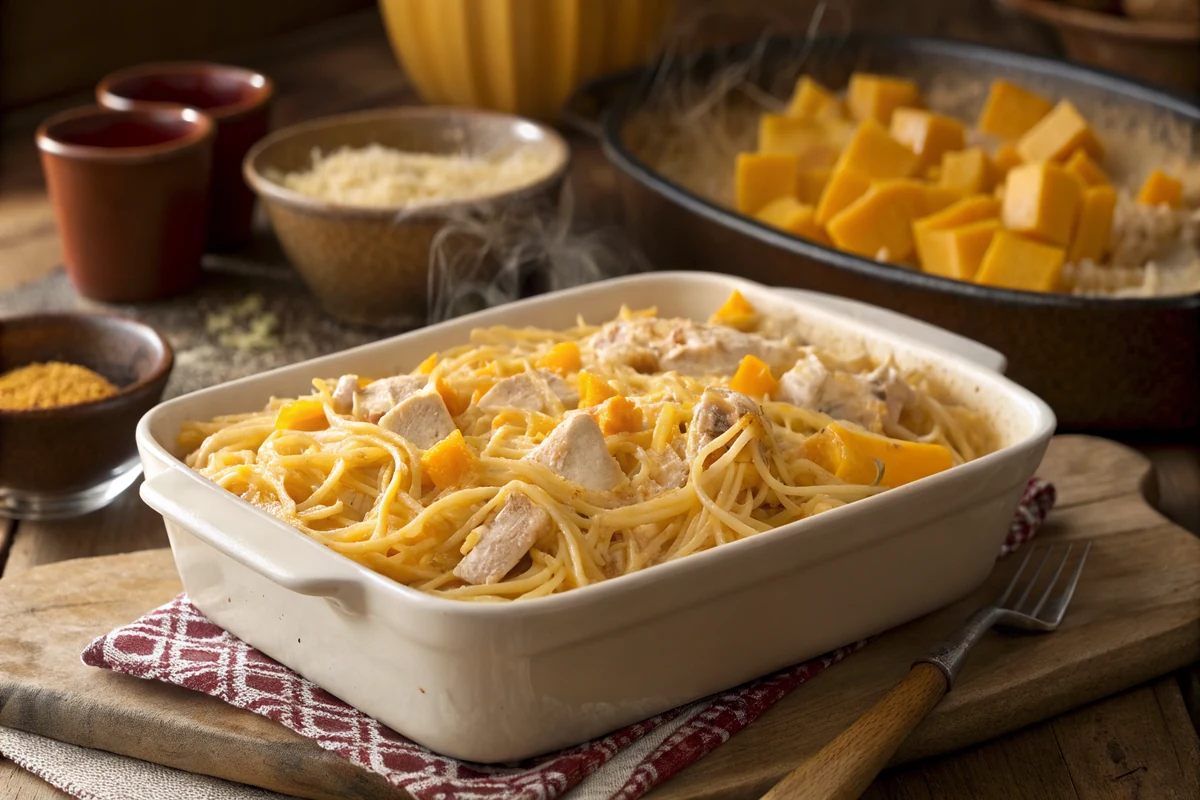
Velveeta is the canonical cheese. Yes, Velveeta. The processed cheese product. It melts smoothly without breaking, holds its texture during the bake, and gives the casserole the slightly tangy, salty, completely-uniform melt that defines the dish. Substituting with 'real' cheese (sharp cheddar, gruyere, fontina) produces a different casserole that breaks during baking and tastes like restaurant pasta, not Texas potluck. Trust the Velveeta.
Rotel is non-negotiable. Rotel diced tomatoes and green chilies is the canned product that gives this casserole its identity. The combination of tomato and mild green chili is calibrated specifically for this category of Tex-Mex/Tex casseroles. Substituting with fresh tomato and chopped jalapeño changes the flavor; canned Rotel has a specific cooked-down quality that fresh ingredients do not replicate. The gold can (Original) is the standard heat level; the white can (Mild) is acceptable for kid-friendly versions.
It travels in a 9x13 foil pan. If you are making this for someone else, use a disposable aluminum 9x13 foil pan instead of a glass baking dish. The pan goes from your oven to their fridge to their oven (or microwave) without you having to retrieve it. This is the operational detail that makes chicken spaghetti the Texas potluck and condolence casserole; the foil pan is part of the gift.
Choosing the Right Pasta
Thin spaghetti or angel hair is the traditional choice. The thinner strands cook faster, absorb the sauce more evenly, and integrate into bites with the chicken. Regular spaghetti is acceptable; the thicker strands give a slightly chunkier final texture. Avoid linguine and fettuccine (too wide, will not integrate). Avoid penne or other tube pastas (different category of casserole entirely).
Cook the pasta one minute LESS than package directions. This is the most-missed instruction. The pasta finishes cooking during the 30-minute bake. If you cook it to package directions, the final pasta is overcooked and mushy. Pull it slightly al dente; it will be perfect after baking.
Rinse the pasta briefly under cold water after draining. This stops the cooking immediately and washes off some surface starch so the strands stay distinct rather than clumping. This is a departure from Italian pasta tradition (which insists on not rinsing), but for casserole pasta, rinsing is correct.
The Velveeta Melt Technique
Cube the Velveeta before melting. A 1-pound block of Velveeta should be cut into 1/2-inch cubes. Smaller cubes melt faster and more evenly than larger chunks. Skip the cubing and you get a long melting time with some lumps.
Melt over low heat. Velveeta melts smoothly at low temperatures and breaks (separates into oil and solid) at high temperatures. Add the Velveeta to the warm cream-soup base over low heat, stirring continuously until completely melted before adding the next handful. The total melting time should be 4 to 5 minutes.
Stir continuously while melting. Velveeta is forgiving but not infinitely so. Stirring keeps each cube in contact with hot liquid and prevents the bottom from scorching. A wooden spoon or silicone spatula works best.
Mistakes to Avoid
Overcooking the pasta. The most common mistake. Cook 1 minute less than package directions. The pasta finishes during the bake.
Using real cheese instead of Velveeta. The recipe was developed around Velveeta's specific melting properties. Substituting with 'real' cheese gives a different and inferior result. If you cannot bring yourself to use Velveeta, substitute with American cheese (also processed), not aged cheddar.
Skipping the Rotel. The combination of tomato and green chili in the can is calibrated for this dish. Fresh tomatoes and jalapeño do not substitute; they're a different flavor.
Letting the cheese sauce boil. High heat causes Velveeta to break (the fat separates from the solid). Keep the heat at low or low-medium, no higher.
Skipping the rest. The 10-minute rest after baking lets the sauce set so the casserole holds its shape. Skipping the rest gives you a runny, puddle-y casserole on the plate.
Using rotisserie chicken that is too dry. Sometimes grocery store rotisserie chicken has been sitting too long and the meat is dry. Look for chickens still hot under the lamp. Use the breast and thigh meat; skip the wings (too small to be worth the trouble).
Overbaking. 30 to 35 minutes at 350°F is the window. Past 40 minutes, the edges dry out and the cheese on top goes too dark.
Variations Worth Trying
Spicy version. Use Rotel Original (gold can) plus 1/2 teaspoon of cayenne and 1 chopped jalapeño in the aromatic sauté. The casserole goes from mild to medium-hot.
Smoked chicken version. Substitute 4 cups of smoked chicken (leftover from your smoker) for the rotisserie chicken. The smoke flavor adds significant depth. This is a more BBQ-adjacent variation.
Mushroom-heavy. Add 1 cup of sautéed sliced cremini or button mushrooms to the aromatic sauté. The mushrooms reinforce the cream of mushroom soup base and add textural interest.
Pimento topping. Drain a 4-oz jar of diced pimentos and sprinkle over the top before adding the cheddar. The pimentos add color and slight sweetness. This is a more Southern (less Texan) variation.
Make-ahead lunch version. Assemble the casserole, cover with foil, and refrigerate up to 24 hours before baking. Add 10 minutes to the bake time to compensate for the cold start. This makes it ideal for next-day events. If creamy Texas chicken casseroles are your weakness, the King Ranch chicken bake is the tortilla-layered classic to make next.
Storage and Reheating
Refrigerator
The baked casserole keeps 5 days in the fridge, tightly covered. The pasta will absorb more sauce as it sits, so the casserole gets denser over time. Add 2 tablespoons of milk per portion when reheating to loosen.Freezer
Assembled but unbaked, the casserole freezes well for 3 months. Wrap the 9x13 tightly in plastic wrap and then foil. Thaw 24 hours in the fridge before baking. Add 15 minutes to the bake time. Baked-and-frozen casserole also works but the texture is slightly more compromised on thaw.Reheating
The 350°F oven is best for whole-pan reheats: cover with foil, bake 20 minutes, then uncover and bake 5 more minutes. For single-portion microwave reheating, plate the serving, splash with 1 tablespoon of milk, cover with a damp paper towel, and microwave at 50% power for 90 seconds.Tips for the Best Texas Chicken Spaghetti
Use a rotisserie chicken from H-E-B if you're in Texas. The H-E-B rotisserie chicken is excellent and the easy way to get the 4 cups of shredded meat. Pull the meat while the chicken is still warm; it shreds easier.
Save the cooking water from the pasta. Reserve 1/2 cup of starchy pasta water before draining. If the casserole looks dry before going in the oven (sometimes happens with older Velveeta), splash a tablespoon or two of the pasta water in to loosen.
Layer the cheese in stages. Half the shredded cheddar (1 cup) mixed into the cheese sauce, the other half (1 cup) on top before baking. This gives cheese throughout the casserole AND a golden-brown crust on top.
Garnish matters. Chopped cilantro or parsley adds a fresh herbal note that cuts through the richness. Skip the garnish and the casserole tastes one-dimensional.
Serve immediately after the rest. The casserole is at its best within 30 minutes of coming out of the oven. After an hour, the pasta starts absorbing too much sauce and the texture changes.
What to Serve With Texas Chicken Spaghetti
Sides that balance the richness: green salad with vinaigrette, sliced cucumber with lime and salt, steamed broccoli, or roasted asparagus. Anything green and lightly dressed cuts through the dairy-heavy casserole.
Bread: buttermilk biscuits are the Texas standard. Texas Roadhouse rolls are a strong second.
Drinks: Sweet tea (canonical Texas potluck), unsweetened iced tea with lemon, or a cold beer (Lone Star, Shiner Bock). For special occasions, a Texas red wine like a Pedernales Cellars Tempranillo holds up to the rich casserole.
Texas Chicken Spaghetti Casserole Recipe
Ingredients
- 1 lb thin spaghetti or angel hair pasta
- 4 cups cooked shredded chicken (1 rotisserie chicken yields about 4 cups)
- 1 can (10 oz) Rotel diced tomatoes and green chilies (Original heat, the gold can)
- 1 can (10.5 oz) cream of mushroom soup (Campbell's)
- 1 can (10.5 oz) cream of chicken soup (Campbell's)
- 1 lb Velveeta cheese, cubed
- 1 cup whole milk
- 1 medium yellow onion, diced (about 1 cup)
- 1 medium green bell pepper, diced (about 1 cup)
- 3 garlic cloves, minced
- 2 tablespoons unsalted butter
- 1 teaspoon coarse kosher salt
- 1/2 teaspoon black pepper
- 1 teaspoon Mexican oregano
- 1/2 teaspoon garlic powder
- 2 cups shredded sharp cheddar cheese (Cracker Barrel)
- 1/2 cup chopped fresh cilantro or parsley, for garnish (optional)
Instructions
- Preheat the oven and prep the pan. Preheat the oven to 350°F. Lightly grease a 9x13 baking dish with butter or cooking spray. Set out all the ingredients before you start cooking; this casserole moves quickly once you begin assembling.
- Cook the spaghetti. Bring a large pot of salted water to a rolling boil. Cook the spaghetti 1 minute LESS than the package directions (you want it slightly under, since it will finish cooking in the casserole). Drain in a colander, rinse briefly under cold water to stop cooking, and set aside.
- Sauté the aromatics. In a large heavy-bottomed pot or Dutch oven, melt 2 tablespoons of butter over medium heat. Add the diced onion and bell pepper. Sauté 6 to 8 minutes until the onion is translucent and the bell pepper is softened. Add the minced garlic, salt, pepper, Mexican oregano, and garlic powder. Cook 1 minute more, stirring.
- Add the cream soups and Rotel. Pour in the cream of mushroom soup, cream of chicken soup, and the entire can of Rotel (juice and all). Add the 1 cup of whole milk. Whisk until smooth. Bring to a gentle simmer over medium heat, about 4 to 5 minutes.
- Melt in the Velveeta. Reduce heat to low. Add the cubed Velveeta a handful at a time, stirring continuously, until each addition melts before adding the next. The mixture should be smooth, glossy, and a uniform pale orange color. Do not let it boil; high heat causes the cheese to separate.
- Add the chicken. Stir in the 4 cups of shredded cooked chicken. Mix gently to coat every piece in the cheese sauce. The sauce should be loose, not thick; this is intentional because the pasta will absorb liquid during baking.
- Toss with spaghetti. Pour the cooked spaghetti into the cheese-chicken mixture. Toss gently with tongs until every strand is coated. The mixture will look very saucy at this stage; resist the urge to reduce. The pasta needs the moisture for the bake.
- Transfer to baking dish. Pour the chicken spaghetti mixture into the prepared 9x13 baking dish. Spread evenly with a spatula, pushing the mixture into the corners. The dish should be packed to the brim but not overflowing.
- Top with cheddar and bake. Sprinkle the 2 cups of shredded sharp cheddar evenly over the top of the casserole, covering the surface completely. Bake uncovered at 350°F for 30 to 35 minutes, until the cheese on top has melted, browned in spots, and the edges are bubbling vigorously.
- Rest and serve. Pull the casserole from the oven and let it rest 10 minutes before serving. The resting time lets the sauce set so the casserole holds its shape on the plate instead of collapsing into a puddle. Garnish with chopped cilantro or parsley if desired. Serve with a green salad and bread on the side.
Frequently Asked Questions
Can I make this casserole ahead?
Yes. Assemble the casserole up to 24 hours in advance and refrigerate (covered) before baking. Add 10 to 15 minutes to the bake time to compensate for the cold start. This is how Texas grandmothers prep for church potlucks: assemble Saturday night, bake Sunday morning before church.
Can I substitute the Velveeta?
Yes, but the result is different. The closest substitute is American cheese (Land O Lakes deli American), which has similar melting properties. A homemade cheese sauce with 1 cup whole milk + 2 tablespoons flour + 2 cups shredded mild cheddar also works but is more work and changes the flavor profile.
Is this gluten-free?
Not as written. To make gluten-free, substitute the spaghetti with a gluten-free pasta (Banza chickpea pasta works well texturally, brown rice pasta is the traditional GF choice). Verify the cream of mushroom and cream of chicken soups are gluten-free; Pacific Foods Organic versions are. Velveeta and Rotel are naturally gluten-free.
What size pasta do I use?
Thin spaghetti or angel hair is traditional. Regular spaghetti is acceptable. Avoid linguine, fettuccine (too wide), and penne or any tubular pasta (different category of casserole).
Can I use canned chicken?
Technically yes, but the texture is inferior. Canned chicken is finely shredded and slightly mushy. If using canned, drain it thoroughly and use 2 (12.5 oz) cans. The result will work but won't match a rotisserie chicken version.
Why is my casserole watery?
Three possible causes. First, you cooked the pasta to package directions (cook 1 minute less). Second, you skipped the 10-minute rest after baking. Third, your Rotel had more liquid than usual; you can drain off a tablespoon or two before adding if the casserole looks too wet.
Can I make this in a slow cooker?
Yes, but only the assembly. Sauté the aromatics and make the cheese sauce on the stovetop, then transfer to a slow cooker with the cooked pasta and chicken. Cook on low for 2 hours, stirring once. The texture will be slightly creamier and less browned than the oven version.
Can I add vegetables?
Yes. Diced bell pepper is already in the recipe; you can also add 1 cup of frozen peas, 1 cup of frozen corn, or 1 cup of sautéed sliced mushrooms. Add them when you stir in the chicken.