Southern Comfort Food
Texas Roadhouse Rolls
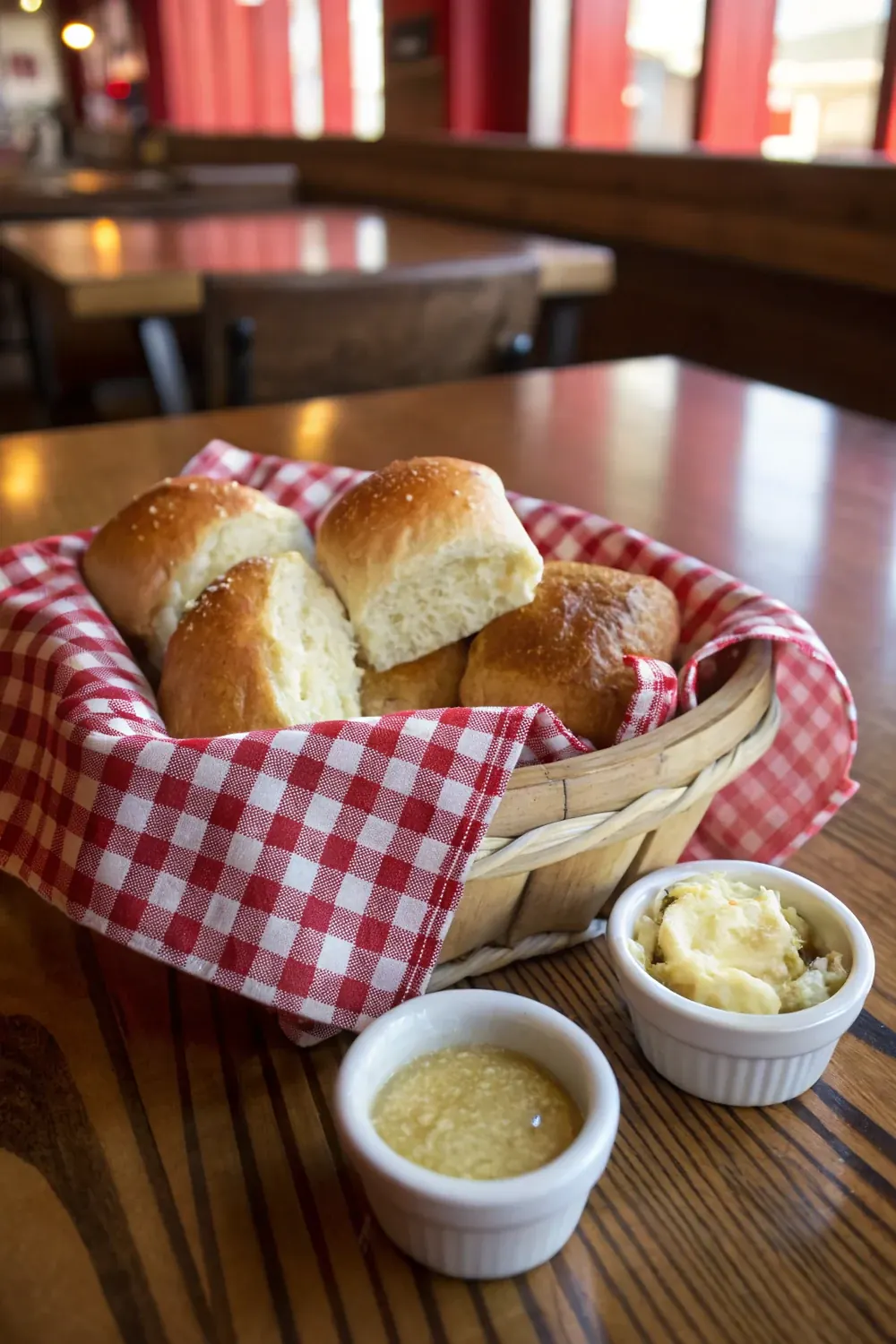
Copycat Texas Roadhouse dinner rolls and cinnamon honey butter. Pillowy yeasted rolls, golden buttery tops, served warm. 18 rolls in 3 hours.
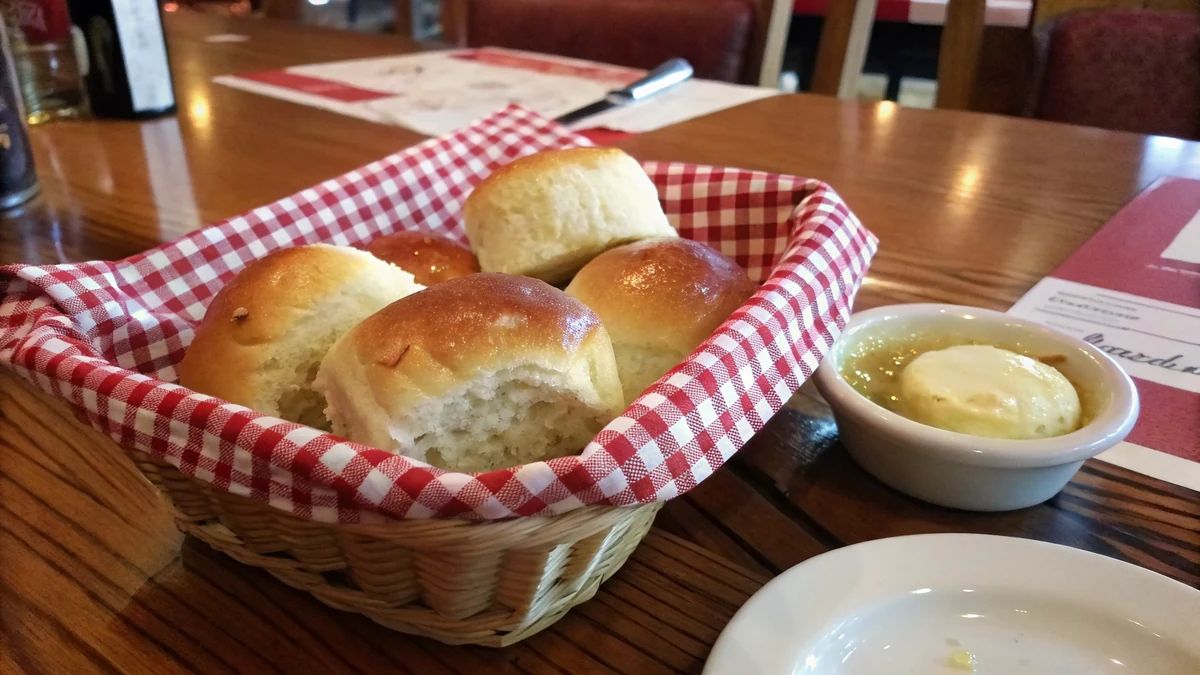
Quick answer: Copycat Texas Roadhouse rolls are slightly sweet enriched yeasted dinner rolls made with milk, sugar, honey, butter, and one egg, kneaded smooth, risen until doubled, cut into squares, proofed again, then baked at 350F for about 13 minutes and brushed with melted butter. The companion cinnamon honey butter is whipped softened butter blended with honey, cinnamon, and powdered sugar in roughly equal parts. The recipe below makes 18 rolls plus a generous bowl of honey butter in about 3 hours total, most of it hands-off rising time.
I have a confession that may cost me some Hill Country credibility. I love the bread basket at Texas Roadhouse. I know the chain was actually founded in 1993 in Clarksville, Indiana, not Texas. I know the cowboy-boot logo and the line-dancing servers are corporate Americana, not Lone Star authenticity. I know there are 50 better restaurants within ten miles of any Texas Roadhouse, including Hill Country steakhouses my own family runs. None of that matters when a warm basket of those rolls lands on the table with a ramekin of cinnamon honey butter, and you tear one open and steam rises out of it, and you spread the butter and it melts into the crumb. There is a reason every Texan I know secretly orders an extra basket to go.
These rolls are an enriched yeasted dough, slightly sweet because the dough has both granulated sugar AND a spoonful of honey, with milk and butter and a single egg to make the crumb pillowy and tender. After two rises they get cut into squares (not rolled into balls, that is the secret to the Texas Roadhouse shape) and baked until golden, then brushed with melted butter the moment they leave the oven. The cinnamon honey butter on the side is half the appeal: whipped softened butter, honey, cinnamon, and powdered sugar in nearly equal parts. The recipe below makes 18 rolls plus enough honey butter for a crowd, in about 3 hours including the two rises.
The Texas Roadhouse Bread Basket Phenomenon
Texas Roadhouse, despite the name, was founded in 1993 in Clarksville, Indiana, by Kent Taylor, and the cowboy-boot branding is corporate Americana more than Lone Star authenticity. Texans know this. We also do not particularly care, because the rolls are very good and the cinnamon honey butter is the kind of small detail that elevates a chain-restaurant bread basket into something people actually crave. There is a real and ongoing debate at Texas family dinners about whether the Roadhouse rolls are better than the rolls at Saltgrass Steakhouse (founded 1991 in Houston, genuinely Texan, slightly denser and less sweet roll) or the rolls at Logan's Roadhouse (a competitor chain with a similar yeasted roll, generally agreed to be the lesser version).
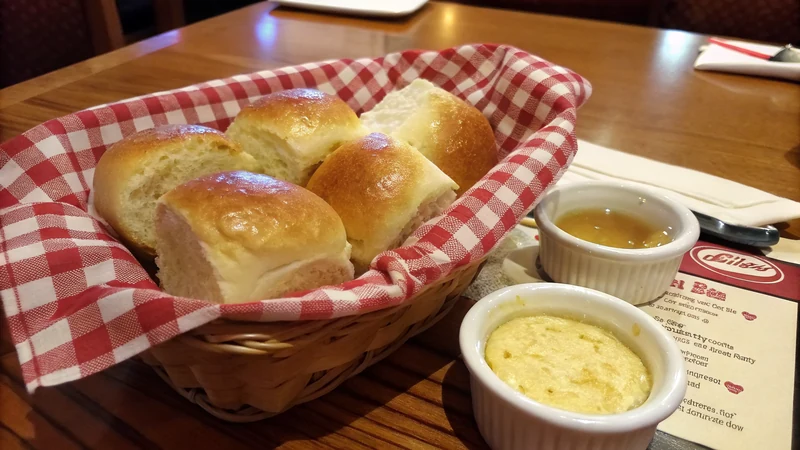
The bread basket arrives at Texas Roadhouse within seconds of being seated, before water in some locations, before the server has finished greeting the table. This is intentional. The rolls are a loss leader; they hook you while you read the menu, and they get refilled aggressively throughout the meal. The cinnamon honey butter, served in a small ramekin, is what separates the Roadhouse basket from generic steakhouse bread. Lupe Tortilla in Houston serves a different style of bread (chips and queso, mostly), but the steakhouse category in Texas is dominated by warm yeasted rolls, and Texas Roadhouse arguably set the standard.
Making these at home means you control the warmth, the butter quality, and the honey butter ratio. A homemade Roadhouse roll, pulled from the oven 5 minutes ago and brushed with European-style butter, is genuinely better than the restaurant version. You serve them with copycat green beans, seasoned rice, and house ranch dip for a full Roadhouse meal at your own table.
Yeasted Dinner Roll Mechanics
A yeasted dinner roll is a system of four interacting elements: gluten (from the flour), sugars (granulated and honey, which feed the yeast and tenderize the crumb), fats (butter and the egg yolk, which coat gluten strands and produce a softer crumb), and liquid (milk, which adds protein and lactose for browning). When you mix and knead, you are developing the gluten network that will trap the carbon dioxide bubbles the yeast produces. When you proof, the yeast eats the sugars and exhales CO2, and the gluten network stretches to hold the gas. When you bake, the gas expands rapidly (oven spring), the gluten sets, the starches gelatinize, and the crust browns via the Maillard reaction with milk proteins and milk sugars.
Each ingredient has a job. Reduce the sugar and the rolls will be less sweet and less brown (sugar feeds the Maillard reaction). Reduce the butter and the crumb will be drier and chewier. Reduce the egg and the crumb will be less yellow and less tender. Reduce the milk and substitute water and you will have a leaner roll that resembles a hamburger bun more than a dinner roll. The proportions in the recipe above are tuned to mimic the Texas Roadhouse profile: slightly sweet, very soft, mildly buttery, with a fine even crumb that pulls apart in soft pillowy layers.
Bread flour vs all-purpose: for these rolls, all-purpose is correct. Bread flour has more gluten (12 to 13 percent protein vs 10 to 11 percent for all-purpose) and produces a chewier crumb closer to a sandwich roll. All-purpose gives the soft pillowy crumb that defines a Roadhouse roll. King Arthur all-purpose, Gold Medal all-purpose, and HEB all-purpose all work; for technical reference on flour protein and crumb structure see King Arthur's baking blog.
The Sweet Dough Difference
Texas Roadhouse rolls are noticeably sweeter than a classic Parker House roll, the New England dinner roll standard, and noticeably less sweet than a Hawaiian-style sweet roll like Kings Hawaiian. They occupy a middle ground that is distinctly American restaurant style: sweet enough that you taste honey on the back of your palate, not so sweet that they feel like a dessert pastry. The dough in the recipe above has both granulated sugar (1/4 cup) AND honey (2 tablespoons), which is the signature Roadhouse move. Pillsbury Crescent rolls, by contrast, get their sweetness from sugar alone and have a flaky laminated structure rather than a yeasted pillowy crumb.
The honey is not just for sweetness. Honey is hygroscopic, meaning it attracts and holds water, which keeps the rolls soft for longer after baking. A Roadhouse roll made with the honey-plus-sugar combination will stay soft and tender for 2 days at room temperature; a sugar-only version of the same recipe will dry out by the next morning. Honey also adds subtle floral notes (more pronounced with wildflower or orange blossom honey) that elevate the rolls beyond a generic sweet bun.
Compared to Parker House rolls (which have a similar enriched dough but are folded into the signature half-moon shape with a butter brush in the fold) and to Pillsbury frozen dinner rolls (which use dough conditioners and emulsifiers for shelf stability), the Roadhouse style is closer to a slightly sweeter Parker House without the fold. The square cut and the cinnamon honey butter accompaniment are the two signatures that make these distinctly Roadhouse style.
Yeast Selection: Instant vs Active Dry vs Fresh
Three forms of baker's yeast are common in American home kitchens: instant yeast, active dry yeast, and fresh (cake) yeast. For Texas Roadhouse rolls I prefer instant yeast, specifically Red Star Platinum Superior Baking Yeast or SAF Instant Yeast. Instant yeast does not need to be bloomed in warm water; it can be mixed directly into the dry ingredients and will activate as the dough hydrates. It is slightly more potent than active dry, gram for gram, and produces a more predictable rise.
Active dry yeast (the standard Fleischmann's or Red Star Active Dry packets) works fine in this recipe; just bloom it in the warm milk for 5 to 10 minutes until foamy before adding the other ingredients. If the yeast does not foam, it is dead and you need a fresh packet. Yeast packets have expiration dates; check them. A packet of active dry yeast contains about 2 1/4 teaspoons, which is one tablespoon minus a pinch, the exact amount this recipe calls for.
Fresh cake yeast is rare in American home kitchens and not necessary for this recipe; it adds a slightly different flavor (more yeasty, less neutral) but requires careful refrigeration and a short shelf life. Stick to instant or active dry. Whatever you use, the milk temperature matters: 105 to 115F is the sweet spot. Below 100F and the yeast is sluggish; above 120F and the heat starts killing yeast cells. A digital thermometer is worth the 15 dollars.
The Two-Rise Method
Like most enriched yeasted doughs, Texas Roadhouse rolls use a two-rise method: a bulk ferment (first rise) where the whole dough proofs in a single bowl until doubled, and a shaped proof (second rise) where the cut squares puff on the baking sheet before going into the oven. Each rise has a job. The first rise builds flavor and structure; the yeast produces CO2 and also organic acids and alcohols that contribute to bread flavor. The second rise gives the shaped rolls their final puff and lift, so they bake up tall and pillowy instead of dense and flat.
The first rise takes 1 to 1.5 hours in a warm kitchen, longer in cold weather. Do not rush it. Underproofed bulk-fermented dough will produce dense rolls with a tight crumb. The dough is ready when it has visibly doubled and a finger pressed into the surface leaves an indent that fills back slowly. If your kitchen is cold, place the bowl in a turned-off oven with just the oven light on; the bulb gives off about 10 to 15F of warmth, which is perfect for proofing.
The second rise is shorter, 30 to 45 minutes, and the rolls should look puffed but not fully doubled. Overproofed second rises produce rolls that collapse during baking or develop a coarse open crumb. Underproofed second rises produce dense rolls that do not get the oven spring lift. The right stage is when the rolls feel light and pillowy when touched and a gentle finger indent springs back partially.
Shaping Technique: Square Cut vs Hand-Rolled
The square-cut shape is the Texas Roadhouse signature. Most American dinner rolls (Parker House, Kings Hawaiian, generic home-baked rolls) are rolled into balls and arranged in a pan. The Roadhouse style is different: the dough is patted into a rectangle, then cut with a bench scraper or sharp knife into squares, which are arranged on the sheet pan and allowed to rise together. The square cut produces a roll with two flat sides (top and bottom) and four straight pull-apart edges where the rolls touched their neighbors. The pull-apart edges are soft, slightly steamy, and pillowy; the top and bottom are slightly more set and golden.
Why squares instead of balls? The square cut is faster (no individual shaping required), produces a more consistent size if you cut accurately, and the pull-apart edges create that signature Roadhouse texture. If you hand-roll the dough into balls, you will get more rounded individually-defined rolls with crusty exteriors all around; that is fine, but it is not the Roadhouse style.
For the square cut, pat (do not aggressively roll) the dough into a 10 by 14 inch rectangle about 1/2 inch thick. Use a sharp knife or bench scraper to trim the edges square (the trimmings can be re-rolled or baked separately as baker's treats). Cut a 3 by 6 grid for 18 squares, or a 4 by 5 grid for 20 slightly smaller squares. Lift each square with the bench scraper and arrange on the baking sheet with a small gap between rolls so they connect during the second rise.
The Egg Wash and Butter Brush Choice
Texas Roadhouse rolls are NOT brushed with egg wash before baking. Many American dinner roll recipes call for an egg wash (whisked egg with a splash of milk or water) brushed on the tops before the oven, which produces a shiny, deeply browned crust. The Roadhouse style is different: no pre-bake brushing at all. The tops are bare during the bake, which produces a softer, more matte golden top. The signature gloss and buttery flavor come from the post-bake butter brush, when 3 tablespoons of melted butter are brushed onto the hot tops the second they come out of the oven.
This matters more than it sounds. An egg-washed roll has a slightly chewy, lacquered crust. A butter-brushed-after-bake roll has a soft, pliable, buttery crust that almost stays slightly damp from the absorbed butter. The Roadhouse texture is the second style, and it is what makes the rolls feel like restaurant bread basket rolls rather than home-baked dinner rolls.
Use real unsalted butter for the brush, not margarine, not salted butter (the salt content is unpredictable), and not olive oil. If you have European-style butter (Plugra, Kerrygold), use it here; the higher butterfat content (around 82 to 84 percent vs 80 percent for standard American butter) gives a noticeably richer flavor on the crust. Brush generously while the rolls are still hot from the oven; the butter will absorb into the steam-soft crust and create the signature glossy finish.
The Cinnamon Honey Butter Formula
The cinnamon honey butter is half the appeal, and getting the ratio right is the difference between memorable and forgettable. The formula I use after a lot of testing: 1 cup softened unsalted butter (2 sticks), 1/4 cup honey, 1/4 cup powdered sugar, 1 1/2 teaspoons ground cinnamon, and a pinch of kosher salt. Whipped in a stand mixer with the whisk attachment for 4 to 5 minutes total, the result is pale, fluffy, almost mousse-like, and tastes balanced rather than dominated by any single ingredient.
Some copycat recipes online use a 1:1 ratio of butter to honey, which produces a runny, overly sweet butter that does not whip stiff and weeps liquid on the plate. Others skip the powdered sugar entirely, which results in a butter that tastes flat and grainy from the cinnamon. The powdered sugar is essential: it dissolves invisibly, sweetens evenly, and contributes to the light fluffy texture. The cinnamon should be a fresh jar; cinnamon loses potency after 6 months and an old jar will give you a dusty, lifeless butter.
The butter must be truly soft to whip properly. Pull it from the fridge 2 to 3 hours before making the butter, or in a pinch microwave each stick in 5-second pulses on 50 percent power until soft but not melted. Cold butter will not incorporate the honey and powdered sugar smoothly and will produce a grainy curdled-looking mixture. If yours separates, keep whipping; it usually comes back together as the butter warms slightly from the friction.
Cast-Iron vs Sheet Pan Bake
Three vessels work well for Roadhouse rolls: a parchment-lined half-sheet pan, a buttered 9x13 inch baking pan, or a 12-inch cast-iron skillet. Each gives a slightly different result. The sheet pan produces the most uniform rolls with slightly crisper edges (more surface exposed to hot air). The 9x13 pan produces softer, taller rolls with more steamy pull-apart edges where the rolls touch the pan walls. The cast-iron skillet produces the most dramatic-looking presentation: a circular arrangement of square rolls with deeply golden bottoms from the iron's heat retention.
For a cast-iron bake, butter the skillet generously (2 tablespoons of softened butter rubbed across the bottom and sides), arrange the dough squares snugly inside (edges touching, no gaps), and proceed with the second rise and the bake. The cast-iron bottom heat will set the rolls' bottoms quickly and create a slightly crisp golden underside that contrasts beautifully with the pillowy top. For a Texas Sunday supper presentation, the cast-iron version is the showpiece.
Whichever vessel you use, do not crowd the rolls so tightly that they have no room to expand, and do not space them so widely that they bake as individual rolls instead of as pull-apart squares. The Roadhouse texture depends on the rolls touching during the second rise and the bake so they connect at the edges, creating the soft pillowy pull-apart sides. A 1/2 inch gap between dough squares before the second rise is the right starting distance for a sheet pan.
Doubling, Freezing, and Make-Ahead Strategy
These rolls scale well for a holiday crowd. Doubling the recipe (36 rolls) works exactly as written; use two sheet pans or two 9x13 pans, and bake on two oven racks with a pan rotation halfway through. Tripling is the practical limit for a home stand mixer; beyond that, the dough quantity exceeds the bowl capacity and the dough hook struggles to knead evenly. For larger batches, mix in two or three separate batches rather than scaling up a single dough.
For make-ahead freezing, two strategies work. Par-bake method: bake the rolls at 350F for 10 minutes (just until set but pale, not yet browned), cool completely, freeze on a sheet pan until solid, then transfer to a freezer bag. To serve, place frozen par-baked rolls on a baking sheet and finish at 350F for 8 to 10 minutes until golden, then brush with melted butter. Fully-baked method: bake fully, cool completely, freeze, then thaw at room temperature and reheat at 300F for 5 minutes wrapped in foil. The par-bake method produces fresher-tasting rolls; the fully-baked method is faster on the serving day.
The cinnamon honey butter freezes well too. Scoop the whipped butter into a parchment-lined log, wrap tightly, and freeze for up to 2 months. Thaw overnight in the fridge, then bring to room temperature and re-whip briefly with a fork or hand mixer to restore the fluffy texture. A frozen log of honey butter and a freezer bag of par-baked rolls is the make-ahead Thanksgiving move, and it works beautifully.
The Restaurant Version vs Homemade Differences
The actual Texas Roadhouse uses commercial-scale equipment and techniques that home kitchens cannot match: large floor mixers, walk-in proofing rooms held at a precise 80 to 85F with controlled humidity, conveyor ovens, and dough conditioners (mono- and diglycerides, dough enhancers like ascorbic acid) that extend shelf life and standardize texture. The restaurant rolls are made fresh daily but from a centrally mixed and shipped dough or a centrally formulated mix, not from scratch in each location's kitchen.
What this means for the home cook is that your homemade rolls will taste slightly different from the restaurant version, and in most ways better. Fresher butter (you control the brand), no dough conditioners, no preservatives, and pulled from the oven 10 minutes ago rather than 2 hours ago and warmed under a heat lamp. The trade-off is that your rolls will not have the exact uniform texture of the restaurant version (commercial proofing produces extremely consistent results) and they will not stay fresh for 24 hours under a heat lamp the way the dough-conditioner version does.
If you want to get closer to the restaurant texture, two tricks help: use European-style butter for the post-bake brush (more butterfat, richer flavor), and proof the dough in a turned-off oven with the light on (steady 80F is closer to a commercial proofer than a typical kitchen counter). For a deep dive into the science of enriched yeasted doughs and the difference between home and commercial bread baking, the team at Serious Eats has published technical pieces on dough hydration, proofing temperatures, and crumb structure that are worth reading.
Mistakes to Avoid
Killing the yeast with hot milk. Anything above 120F starts damaging yeast cells; above 140F kills them outright. Warm the milk to 110F and check with a thermometer if you have one. If you scald the milk on the stove, let it cool back down before adding the yeast.
Using cold butter for the honey butter. Cold butter will not whip smooth and will produce a grainy, separated honey butter. The butter must be truly soft (a finger pressed into it leaves a clean indent without resistance) before whipping. Pull it from the fridge 2 to 3 hours ahead, or microwave in 5-second pulses at 50 percent power until soft but not melted.
Overproofing the second rise. Rolls that overproof on the sheet pan collapse during the bake and develop a coarse, open, almost stringy crumb. The second rise should take 30 to 45 minutes and the rolls should look puffed but not fully doubled. If they look airy and fragile, get them into the oven immediately.
Underproofing the first rise. A first rise cut short produces dense rolls with a tight crumb and a flat-tasting yeast flavor. Wait until the dough has truly doubled, even if it takes 2 hours in a cold kitchen.
Adding too much flour. The dough should be soft and slightly tacky, not stiff and dry. If you keep adding flour to make the dough easier to handle, you will end up with a dry tight roll. Slightly sticky dough is correct; resist the urge to dust heavily.
Skipping the post-bake butter brush. This is the step that makes Roadhouse rolls taste like Roadhouse rolls. Brush the hot tops with melted butter the instant they come out of the oven, not 5 minutes later when they have cooled.
Using salted butter for the honey butter. Salt content in salted butter varies wildly by brand. Use unsalted butter and add a measured pinch of kosher salt yourself; you will get a more predictable, balanced honey butter.
Variations
Cheesy garlic rolls. Brush the rolls with melted butter mixed with 2 cloves of grated garlic and 1 tablespoon of chopped parsley immediately after baking, then sprinkle with 1/2 cup of grated parmesan. Genuinely excellent with a steak dinner.
Herb rolls. Add 2 tablespoons of finely chopped fresh herbs (rosemary, thyme, or chives) to the dough during the final knead. The herbs distribute through the crumb and add a savory note that pairs with roast meats.
Jalapeno-cheddar rolls. Add 1/2 cup of finely diced pickled jalapenos and 1 cup of shredded sharp cheddar to the dough during the final knead. Texas Hill Country style, perfect with chili or smoked brisket.
Whole wheat blend. Substitute 1 cup of the all-purpose flour with whole wheat flour for a slightly nuttier, denser roll. The texture loses some pillowy lightness; this is a trade I am willing to make for the deeper flavor on occasion.
Maple honey butter. Substitute pure maple syrup for the honey in the cinnamon honey butter for a different but equally compelling sweet butter. A teaspoon of maple extract amplifies the flavor.
Salted honey butter. Increase the salt in the honey butter to 1/2 teaspoon and skip the cinnamon for a savory-sweet salted honey butter that pairs with biscuits, cornbread, or these rolls.
Bourbon vanilla butter. Add 1 teaspoon of vanilla extract and 1 teaspoon of bourbon to the honey butter for a Texas Hill Country variation. Excellent with breakfast biscuits or hot rolls at a holiday breakfast.
What to Serve With Roadhouse Rolls
These rolls are the bread basket course for a Texas steakhouse-style dinner. The canonical service is alongside chicken-fried steak with cream gravy, ribeye with peppercorn butter, smoked brisket with white bread (yes, you serve TWO breads), or a pot of cowboy-butter-topped Texas chili. The rolls absorb any spare juices, sauces, or pot liquor on the plate, and the cinnamon honey butter is sweet enough to balance smoky or spicy mains.
For a full Texas Roadhouse copycat meal at home, serve these rolls alongside copycat green beans with bacon, buttery skillet corn, seasoned long-grain rice, a bowl of copycat Roadhouse chili to start, and a small bowl of house ranch dip for raw vegetables. A grilled ribeye, sirloin, or platter of grilled steak kabobs completes the meal. For dessert, a slice of buttermilk pie stays in the Texas comfort food register.
These rolls also work for Thanksgiving dinner, holiday breakfast (split open and used as the base for a fried egg sandwich), and Sunday family dinners. For more Texas comfort food and bread recipes, browse the bread category. For more on classic American enriched yeasted dough techniques, see the food sections of Bon Appetit and the recipe archive at the New York Times Food section, both of which have published reliable enriched-dough recipes worth comparing to this one.
Chef Mia's Kitchen Notes
The first time I made these rolls I used Pillsbury all-purpose flour from my pantry, Fleischmann's active dry yeast, and a stick of Land O'Lakes butter for the brush. They were very good. The second time I used King Arthur all-purpose flour, Red Star Platinum instant yeast, and Plugra European-style butter for the brush. The improvement was real and noticeable, mostly from the Plugra; the butter brush is where the rolls earn their restaurant flavor, and better butter shows. The yeast change made the rise slightly more predictable but did not change the final taste in a meaningful way.
The sugar I use is Imperial Sugar, the Texas-owned brand from Sugar Land founded in 1843 (now part of Imperial-Savannah and headquartered in Sugar Land still). It is the same granulated sugar as any major brand, but I like supporting a Texas company when the price is identical. The honey I use is whichever local Hill Country wildflower honey I have in the pantry; Round Rock Honey or any local Austin-area beekeeper works. A clover honey from the grocery store is fine; avoid super-dark honeys like buckwheat, which would dominate the dough flavor.
I usually make a double batch and freeze half as par-baked rolls. The cinnamon honey butter recipe makes more than you need for 18 rolls; I keep the leftover in the fridge and use it on biscuits, cornbread, and toast for the next two weeks. For a Texas holiday spread or a Sunday family dinner, this is one of the most over-delivering recipes I make; the effort-to-reward ratio is extremely favorable. The dough is forgiving, the bake is fast, and the cinnamon honey butter elevates the whole basket into something people remember.
Texas Roadhouse Rolls Recipe
Ingredients
- For the rolls:
- 1 cup (240 ml) whole milk, warmed to 110F
- 1/4 cup (50 g) granulated sugar (Imperial Sugar if you have it)
- 2 tablespoons (30 ml) honey, any mild variety
- 2 1/4 teaspoons (1 packet) instant yeast (Red Star Platinum or SAF instant preferred)
- 1 large egg, room temperature
- 1/4 cup (55 g) unsalted butter, melted and slightly cooled
- 1 1/2 teaspoons kosher salt
- 4 to 4 1/2 cups (480 to 540 g) all-purpose flour, plus more for dusting
- For brushing after baking:
- 3 tablespoons (42 g) unsalted butter, melted
- For the cinnamon honey butter:
- 1 cup (2 sticks, 225 g) unsalted butter, softened to room temperature (Plugra or Kerrygold for special occasions)
- 1/4 cup (60 ml) honey
- 1/4 cup (30 g) powdered sugar
- 1 1/2 teaspoons ground cinnamon
- Pinch of kosher salt
- Equipment:
- Stand mixer with dough hook (recommended), or a large mixing bowl and a sturdy wooden spoon
- Half-sheet baking pan with parchment paper, or a 9x13 inch baking pan, or a 12-inch cast-iron skillet
- Bench scraper or sharp knife for cutting the dough into squares
- Hand mixer or stand mixer with whisk attachment for the honey butter
- Kitchen scale (optional but encouraged for the dough)
Instructions
- Activate the yeast and mix the wet ingredients. Warm the milk to 110F (just barely warm to the touch, not hot, or you will kill the yeast). Pour the warm milk into the bowl of a stand mixer. Whisk in the granulated sugar and honey until dissolved, then sprinkle the instant yeast across the surface. Let it sit for 5 minutes; if you are using instant yeast it does not strictly need to bloom, but the rest gives the sugars time to dissolve and the temperature time to equalize. Whisk in the egg, melted butter, and salt until smooth.
- Add the flour and knead the dough. Add 4 cups of the flour to the wet ingredients. Attach the dough hook and mix on low until a shaggy dough forms, about 2 minutes. Increase to medium-low and knead for 6 to 8 minutes, adding the remaining flour 2 tablespoons at a time only if the dough is wetter than slightly tacky. The finished dough should be smooth, soft, slightly tacky to the touch but not sticky, and should pull cleanly away from the sides of the bowl while leaving a small smear at the bottom. It should feel like a baby's earlobe, soft and supple.
- First rise (bulk ferment). Lightly grease a large bowl with butter or neutral oil. Form the dough into a ball, place it seam-side down in the bowl, turn once to coat, and cover with plastic wrap or a damp kitchen towel. Let it rise in a warm spot for 1 to 1.5 hours, or until doubled in size. In a Texas summer kitchen this can take as little as 50 minutes; in winter near 65F it can take closer to 2 hours. The dough is ready when a finger pressed gently into the surface leaves an indent that fills back slowly, not quickly.
- Shape into squares (the Roadhouse signature shape). Lightly flour a clean counter and turn the dough out, gently deflating it. Pat and stretch the dough into a rectangle about 10 by 14 inches and roughly 1/2 inch thick; do not roll it thinner. Using a bench scraper or sharp knife, trim the edges square, then cut the rectangle into 18 squares (a 3 by 6 grid works cleanly). Do not over-handle; you want the squares to stay puffy and rectangular, not get rolled into balls. The square cut is what gives Texas Roadhouse rolls their signature look and their pull-apart pillowy texture.
- Second rise on the baking sheet. Arrange the dough squares on a parchment-lined half-sheet pan or in a buttered 9x13 inch pan, leaving about 1/2 inch between each square so they touch and connect during the rise. (For a cast-iron bake, butter a 12-inch skillet generously and arrange the squares snugly inside, edges touching.) Cover loosely with a clean kitchen towel and let them rise in a warm spot for 30 to 45 minutes, or until they have puffed up by about half their size and feel light and pillowy when gently touched. While they rise, preheat the oven to 350F.
- Bake at 350F until golden. Bake the rolls on the center rack at 350F for 12 to 14 minutes, until the tops are evenly golden brown and the rolls have risen into puffy connected squares. Begin checking at 11 minutes; ovens vary, and the difference between golden and dark is two minutes. The internal temperature of a roll in the center should read about 190F on an instant-read thermometer if you want to be technical. Pull them as soon as the tops are an even light caramel color.
- Brush with melted butter immediately. The instant the rolls come out of the oven, brush the tops generously with the 3 tablespoons of melted butter. The hot rolls absorb the butter, giving them their signature glossy buttery top and a subtle salty richness on the crust. Do not skip this step; the butter brush is what makes Texas Roadhouse rolls taste like Texas Roadhouse rolls and not like a generic homemade dinner roll. Use real butter, not margarine; a European-style butter like Plugra has more butterfat and tastes noticeably richer if you have it.
- Make the cinnamon honey butter (while the rolls bake). Place the softened butter (it must be truly soft, not cold, or it will not whip smooth) in the bowl of a stand mixer with the whisk attachment, or in a large bowl with a hand mixer. Whip the butter on medium-high for about 2 minutes, until it is pale, light, and fluffy. Add the honey, powdered sugar, cinnamon, and salt, and whip on medium for another 2 to 3 minutes, scraping the sides of the bowl twice, until the mixture is smooth, light, and homogeneous. It should look like cinnamon-tinted whipped cream and have no visible streaks.
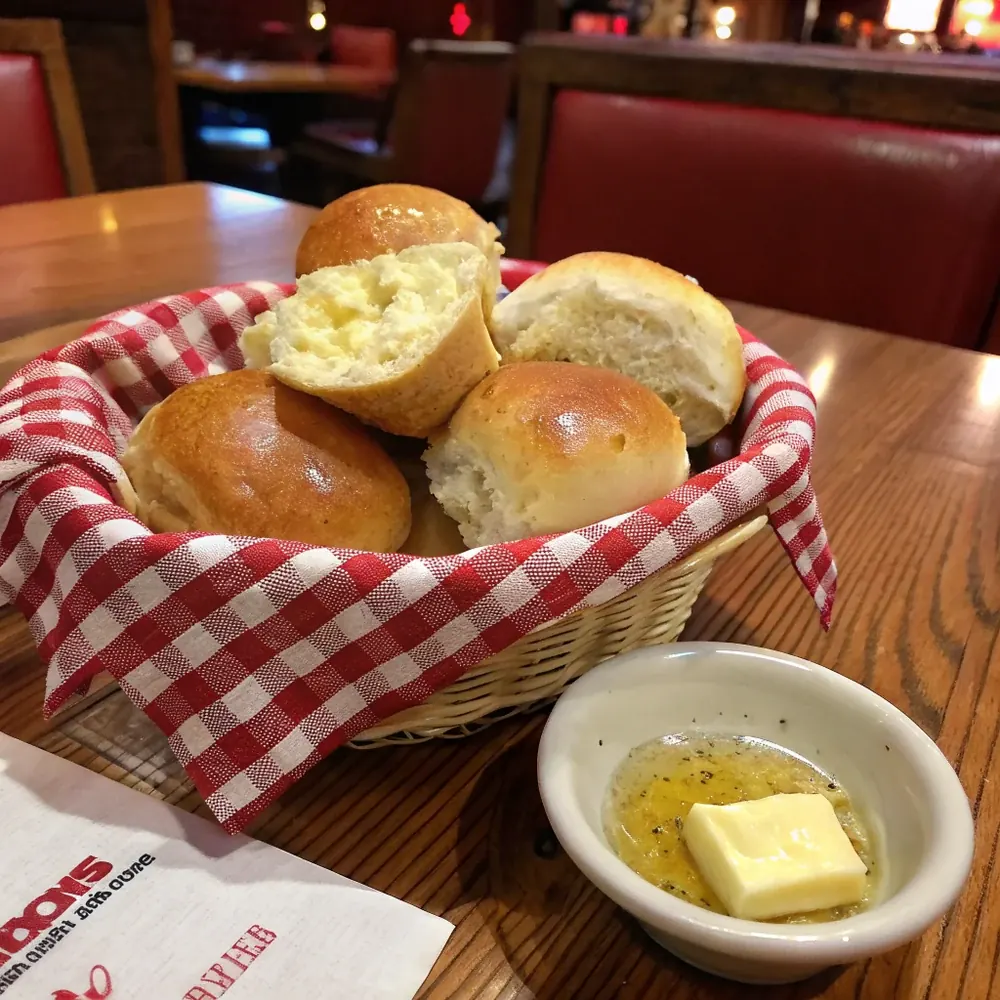
- Serve warm in a bread basket. Transfer the warm rolls to a cloth-lined basket or bread plate. Spoon the cinnamon honey butter into a small ramekin and serve alongside, with a butter knife. The rolls should be warm enough that the butter melts slightly into the crumb when you spread it. If serving for a crowd, keep additional rolls warm in a 200F oven, covered with a clean kitchen towel, for up to 30 minutes. Leftover rolls keep in a zip-top bag at room temperature for 2 days; reheat at 300F for 5 minutes wrapped in foil.
- Store and reheat the honey butter. The cinnamon honey butter keeps in an airtight container in the refrigerator for up to 2 weeks. Before serving, let it sit at room temperature for 30 minutes and re-whip briefly with a fork or hand mixer to restore its fluffy texture; cold honey butter is hard to spread and loses its whipped lightness. For freezing, scoop the honey butter into a parchment-lined log, wrap tightly, and freeze for up to 2 months; thaw overnight in the fridge before re-whipping.
Frequently Asked Questions
Is Texas Roadhouse actually from Texas?
No. Texas Roadhouse was founded in 1993 in Clarksville, Indiana, by Kent Taylor, despite the Texan branding. The cowboy-boot logo, the line-dancing servers, and the Texas-themed decor are corporate Americana, not Lone Star authenticity. That said, the chain is beloved across Texas and the rolls have become an honorary Texas bread basket staple. Truly Texas-founded steakhouse chains include Saltgrass Steakhouse (founded 1991 in Houston) and Lupe Tortilla (Houston), both of which serve their own breads but neither has reached the cultural fame of Roadhouse rolls.
Can I use active dry yeast instead of instant yeast?
Yes. Active dry yeast works in this recipe; bloom it in the warm milk for 5 to 10 minutes until the surface looks foamy before adding the rest of the ingredients. If the yeast does not foam, it is dead and you need a fresh packet. A standard yeast packet contains 2 1/4 teaspoons, which is the amount this recipe calls for. Instant yeast (Red Star Platinum, SAF Instant) is slightly more potent and does not require blooming, but the difference in the final rolls is minor.
Why are my rolls dense and tight?
The most common cause is underproofing on the first rise. The bulk ferment should take 1 to 1.5 hours and the dough should visibly double; if you cut it short, the rolls will be dense and tight. Other causes: too much flour added during kneading (dough should be soft and slightly tacky, not stiff), dead or weak yeast (check the expiration date), or milk too hot at mixing time (above 120F damages yeast). The dough should feel supple and pull away cleanly from the bowl after kneading; if it feels stiff and dry, you have added too much flour.
Can I make the dough the night before?
Yes. After kneading, place the dough in the greased bowl, cover tightly with plastic wrap, and refrigerate overnight (up to 24 hours). The cold ferment slows the yeast and deepens the flavor. The next day, let the dough come to room temperature on the counter for 30 to 45 minutes before shaping; it will continue rising as it warms. Proceed with the square cut, second rise, and bake as written. Cold-fermented Roadhouse rolls have a slightly more complex yeasty flavor and a slightly chewier crumb, both improvements in my view.
Does the cinnamon honey butter need to be refrigerated?
Yes, after a few hours. Butter at room temperature for short periods (a few hours of dinner service) is fine, but for longer storage refrigerate the cinnamon honey butter in an airtight container for up to 2 weeks, or freeze in a parchment-lined log for up to 2 months. Before serving, let it sit at room temperature for 30 minutes and re-whip briefly with a fork or hand mixer to restore the fluffy texture. Cold honey butter is hard to spread and loses its whipped lightness.
Can I make these rolls in a bread machine?
You can use a bread machine on the dough cycle (mix and first rise only), then turn the dough out for the square cut, second rise, and bake in a conventional oven. Do not bake the rolls in the bread machine; the shape will be wrong and the texture will not match. For most home bakers, a stand mixer with a dough hook is more practical than a bread machine for this recipe. Hand-kneading also works fine; expect 10 to 12 minutes of kneading on a lightly floured counter.
Why is my honey butter grainy or separated?
The most common cause is butter that was not soft enough when you started whipping. Cold or even cool butter will not incorporate the honey and powdered sugar smoothly and will produce a grainy, curdled mixture. The fix: keep whipping. As the butter warms slightly from the friction of the whisk, it will usually come back together. If it still looks broken after 5 minutes of whipping, microwave the bowl for 5 seconds at 50 percent power to soften the butter slightly and re-whip. Truly soft (not melted) butter is the key to a smooth fluffy honey butter.