Texas Desserts
Texas Christmas Candy Recipes
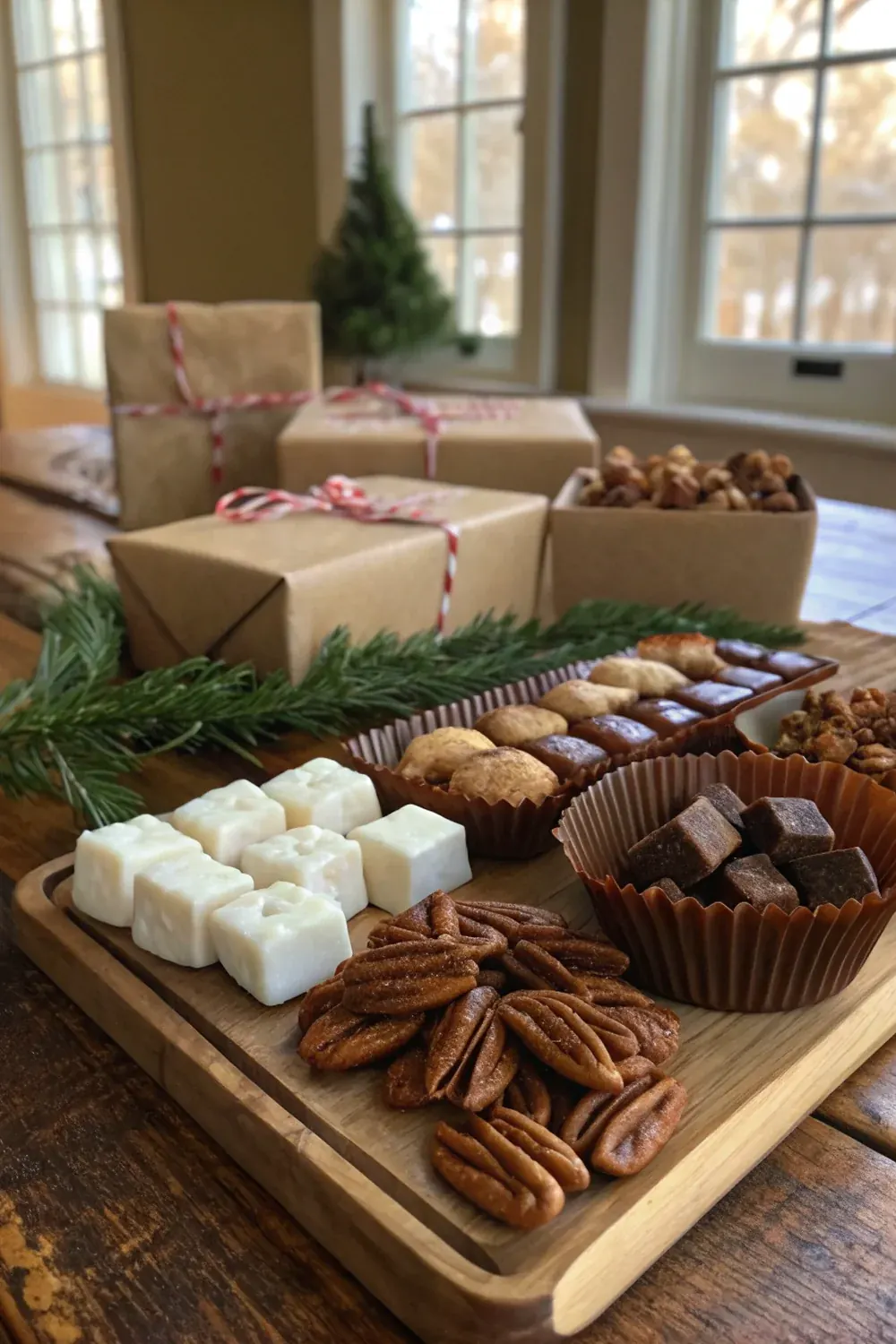
Chef Mia's 8 Texas Christmas candy recipes: pecan pralines, divinity, peanut brittle, fudge, salted caramels, toffee bark, Christmas crack.
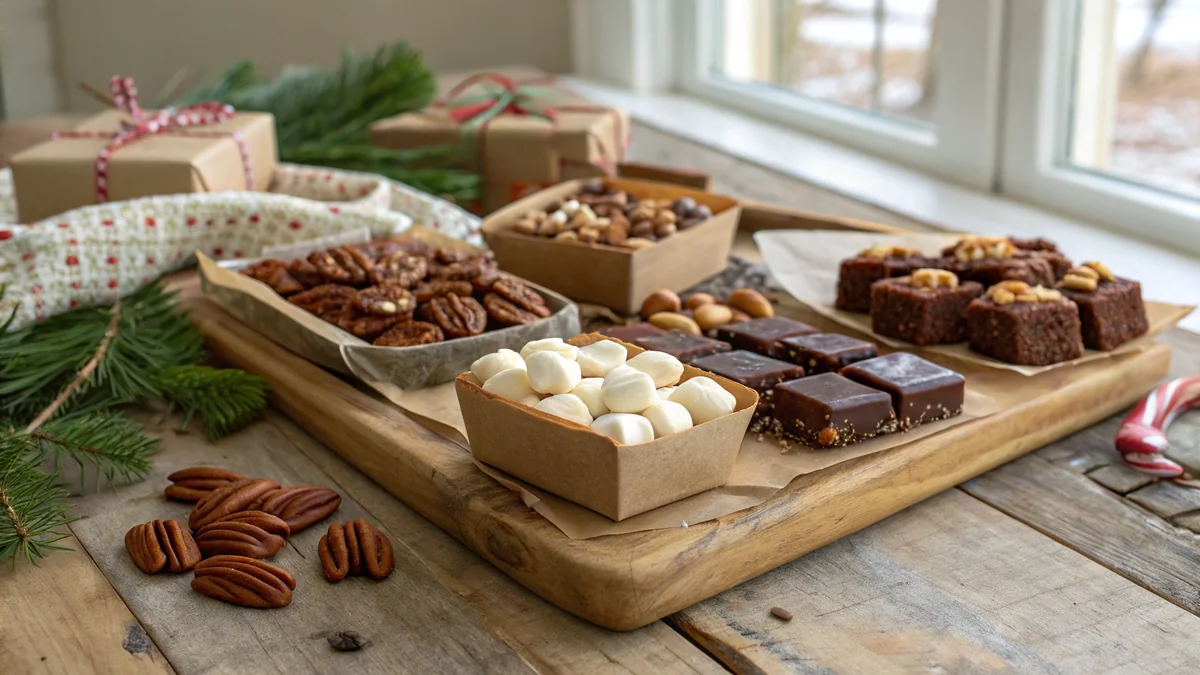
Quick answer: Eight Texas Christmas candy recipes for the holiday gift box and the family dessert table: pecan pralines (the canonical Texas candy), divinity (the white whipped sugar classic), bourbon pecan truffles, peanut brittle, salted caramel pecans, three-flavor fudge, toffee bark, and Christmas crack (saltine toffee). Each recipe is 15 minutes to 1 hour of active cooking, with overnight setting times. Total Christmas candy production for a Hill Country gift run: 6-8 hours of work spread across 2-3 days. The result fills a dozen kraft paper boxes with hand-made sweets that beat any store-bought holiday gift.
When I was a kid, the week before Christmas was the candy week at my grandmother's house in Fredericksburg. She had a German-Texan kitchen that smelled like brown sugar, butter, and toasted pecans for seven days straight. Pecan pralines stacked on parchment paper covered every flat surface. Divinity in white pillowy pieces filled tin cans labeled in her handwriting. Peanut brittle cooled in slabs on the back porch where the cooler December air helped it set. By Christmas Eve, she had filled twenty kraft paper boxes with assortments and was driving them around the Hill Country to neighbors, the church congregation, and her grown children's families. The candy gift run was the holiday tradition that mattered most in our family.
The Hill Country Christmas candy tradition has roots in the German-Texan baking heritage that came to Fredericksburg, New Braunfels, and the surrounding settlements in the 1840s. German immigrants brought butter-and-sugar candy techniques (toffees, brittles, pralines, divinity) that combined with the Texas pecan harvest to produce a uniquely Texan winter sweet repertoire. By the early 1900s, every Hill Country grandmother had her own variations on these candies, and the recipes were passed down through generations alongside the German Christmas traditions of Stollen bread, gingerbread houses, and the Christmas markets that still run in Fredericksburg today.
The eight recipes in this collection are the ones I have made enough Christmases now to feel they belong in any Texas Christmas candy lineup. Pecan pralines are non-negotiable; they are the canonical Texas candy and the one most beloved family members will ask for first. Divinity is the white-pillow classic that many people have not eaten in years and rediscover with delight when it shows up in a gift box. The other six round out the assortment with different textures (chewy caramels, crunchy brittle, rich fudge, crisp toffee bark, salty-sweet Christmas crack) and flavor profiles. Make all eight for the full Texas Christmas candy box; pick three or four for a smaller gift run. The active time per candy ranges from 15 minutes (Christmas crack) to 1 hour (pecan pralines done properly); the total time investment for all eight is 6-8 hours spread across 2-3 days.
Christmas Candy in the Hill Country (the Tradition)
The German-Texan settlements of the Hill Country - Fredericksburg, New Braunfels, Boerne, Comfort, and the smaller settlements between - have been making Christmas candy for over 175 years. The tradition arrived with the German immigrants who founded these towns in the 1840s and 1850s, fleeing political unrest in Europe and bringing with them centuries-old butter-and-sugar candy techniques. By the late 1800s, every Hill Country household had a candy week between Thanksgiving and Christmas Eve, during which the kitchen was given over almost entirely to making sweets for gifting and family consumption.
The combination of German baking technique and Texas ingredients produced a uniquely Texan candy repertoire. Pecans, native to East Texas and abundant in the Hill Country, became the central nut of the Texas Christmas candy box - prized over the European hazelnuts and almonds that German tradition would otherwise have called for. Pecan pralines are the canonical example: a French Creole recipe (originally from New Orleans) that adopted Texas pecans and German butter-and-sugar technique. Divinity, peanut brittle, fudge, toffee bark - all are similarly hybridized Texan-German-Southern hybrids.
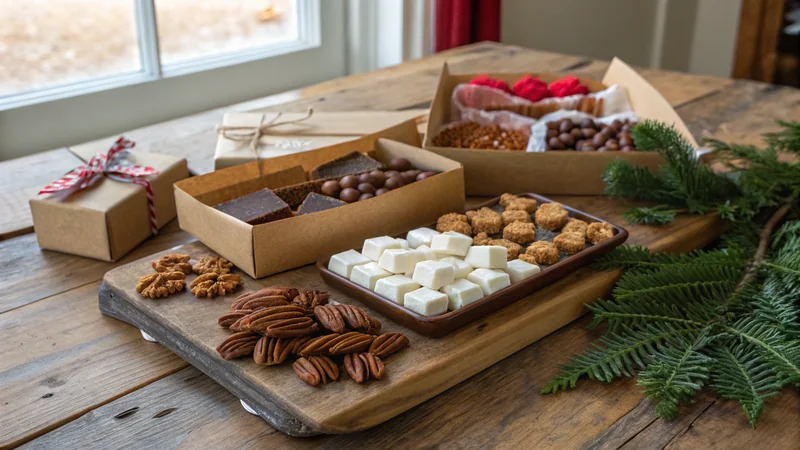
The tradition has not died. Drive through Fredericksburg in the second week of December and you will see candy boxes for sale at every German bakery, every farmstand, and every church bake sale. The recipes are mostly the same as they were a century ago. The kraft paper boxes with their evergreen-and-ribbon ties are mostly the same. The grandmothers who hand them out are mostly the same in spirit if not in person. Making the candy yourself - rather than buying it - is the move that connects you to the tradition. The store-bought versions are good; the homemade versions are how it has always been done.
If you want to do a candy gift run for the first time, plan 2-3 days of kitchen work, expect about 8-12 small gift boxes worth of output from the eight recipes in this collection, and budget about $80-100 in ingredients (pecans are the major expense, especially if you don't have access to a Hill Country pecan tree or a Texas grower). The total time investment is 6-8 hours of active work spread across the 2-3 days, plus various overnight rests.
Equipment: Candy Thermometer (Essential)
Candy work is the most temperature-sensitive cooking you will do. Six of the eight recipes in this collection require precise temperature reading at specific stages: soft-ball (235F), firm-ball (245F), hard-ball (260F), soft-crack (285F), or hard-crack (300F). A 5-degree miss in any of these temperatures changes the texture of the finished candy from chewy to brittle, or from soft to crystallized, or from glossy to grainy. The candy thermometer is the non-negotiable piece of equipment.
Get a real candy thermometer, not a meat thermometer. Candy thermometers read to at least 400F (meat thermometers usually max out at 220F, useless for candy work). Look for a clip that attaches to the side of the saucepan so the thermometer stays in the candy mixture without being held. The Polder, Wilton, and CDN brands all make excellent candy thermometers in the $15-25 range. An instant-read digital thermometer with a clip-on probe works as a substitute and is more accurate, but glass candy thermometers are the traditional and reliable choice.
Calibrate your thermometer before the first batch. Place the thermometer in a pot of water and bring to a boil. The thermometer should read 212F at sea level (lower at altitude - subtract 1F per 500 feet of elevation). If it reads differently, note the difference and adjust each candy recipe accordingly. A thermometer that reads 5F low will under-cook every candy if you don't adjust.
Other essential equipment: a heavy-bottomed 3-quart saucepan (thin pans burn the sugar at the bottom before the rest reaches temperature), parchment paper or silicone mats for cooling, a wooden spoon (sugar at high temperatures degrades plastic spoons), a buttered spatula for spreading hot toffee and brittle, and clean glass jars for water-rinsing the spoon between candy batches. A candy gift box collection: kraft paper boxes (Amazon, Michaels), tissue paper, evergreen sprigs and red ribbon for finishing.
Pecan Pralines: The Texas Standard
Pecan pralines are the canonical Texas candy and the one your Hill Country grandmother would make first. The technique is straightforward but unforgiving - you need to hit the soft-ball stage (235F) precisely, beat the cooled mixture until it loses its shine, and drop quickly before it sets in the saucepan. Done right, the resulting pralines are creamy, slightly grainy in texture, holding pecan halves in a deep amber caramelized sugar matrix. Done wrong, they are either too hard (over-cooked past 240F) or too soft (under-cooked under 230F).
The technique that took me years to nail: stir constantly while heating to prevent sugar crystallization on the pan walls; remove from heat exactly at 235F; stir in pecans, vanilla, and salt; beat with a wooden spoon for 90 seconds until the mixture loses its glossy shine and starts to thicken slightly; drop immediately by tablespoonfuls onto parchment paper. The 90 seconds of beating is the calibration window. Beat too short and the pralines stay glossy and run; beat too long and they crystallize in the pan before you can drop them.
Pecans matter. Use Texas-grown pecans when possible (HEB carries Texas pecans seasonally; the San Saba River area is the canonical Texas pecan growing region). Pecan halves rather than pieces are traditional - each praline holds 6-8 pecan halves visibly, making the candy as decorative as it is delicious. Toast the pecans first at 350F for 8 minutes before adding to the praline mixture; toasted pecans have deeper flavor and hold up better in the cooked sugar.
Storage: pecan pralines keep 2 weeks in an airtight container at room temperature, or 1 month frozen. Stack with parchment paper between layers to prevent sticking. They make excellent gifts in small kraft paper boxes lined with parchment paper.
Divinity: The White Pillowy Classic (and Why Texas Humidity Matters)
Divinity is the white-pillow candy of Christmas: hot sugar syrup beaten into stiff egg whites until the mixture loses its shine and forms ribbons. The result is light, airy, slightly sweet, with a delicate texture somewhere between marshmallow and meringue. Many people have not eaten divinity in years - it has fallen out of fashion at supermarkets - and rediscover it with delight when it shows up in a homemade Christmas candy box.
The critical issue with divinity: it is humidity-sensitive. The sugar syrup needs to crystallize on cooling, and humidity in the air interferes with the crystallization, producing a soft, sticky, never-quite-setting candy. Make divinity on a dry day, or in an air-conditioned kitchen with the AC running. Texas humidity in early December can be unpredictable; check the weather forecast before committing to a divinity batch. The general rule: if the relative humidity is above 50%, do not attempt divinity. Wait for a drier day.
The technique: cook sugar, corn syrup, and water to 260F (hard-ball stage). Meanwhile, whip 2 egg whites to stiff peaks in a stand mixer. With the mixer running, slowly drizzle the hot syrup down the side of the bowl into the egg whites. Continue beating 5-7 minutes until the mixture loses its glossy shine and forms thick ribbons that hold their shape on the beater. Quickly fold in vanilla and chopped pecans if using, and drop by tablespoonfuls onto parchment paper.
If your divinity stays glossy after 7 minutes of beating, the syrup didn't reach the right temperature - try again with a calibrated thermometer. If it sets too quickly to drop, beat slightly less time next batch. Practice makes perfect with divinity; expect to ruin one batch on your first attempt while you learn the visual cue for the right consistency.
Multi-Candy Production Strategy
Making all 8 candies for a full gift box run is a serious project. The strategy that has worked for me over the years: split the work across 2-3 days to avoid candy fatigue, sequence the recipes by equipment needs (run all the candy-thermometer recipes back-to-back to keep the saucepan and thermometer in continuous use), and clean up between batches.
Day 1 morning: pecan pralines (30 min), divinity (45 min), peanut brittle (25 min). All three use the same heavy-bottomed saucepan and candy thermometer. Wash between recipes; the residual sugar on the pan affects the next batch's texture.
Day 1 afternoon: salted caramel pecans (25 min), toffee bark (30 min), Christmas crack (20 min). All three involve cooked sugar at high temperatures and finish on sheet pans.
Day 2: bourbon pecan truffles (30 min + 2 hr chill) and fudge three ways (90 min total + 3 hr cooling). Both are no-thermometer-required and chill rather than cook to set. Day 2 is the lower-stress kitchen day.
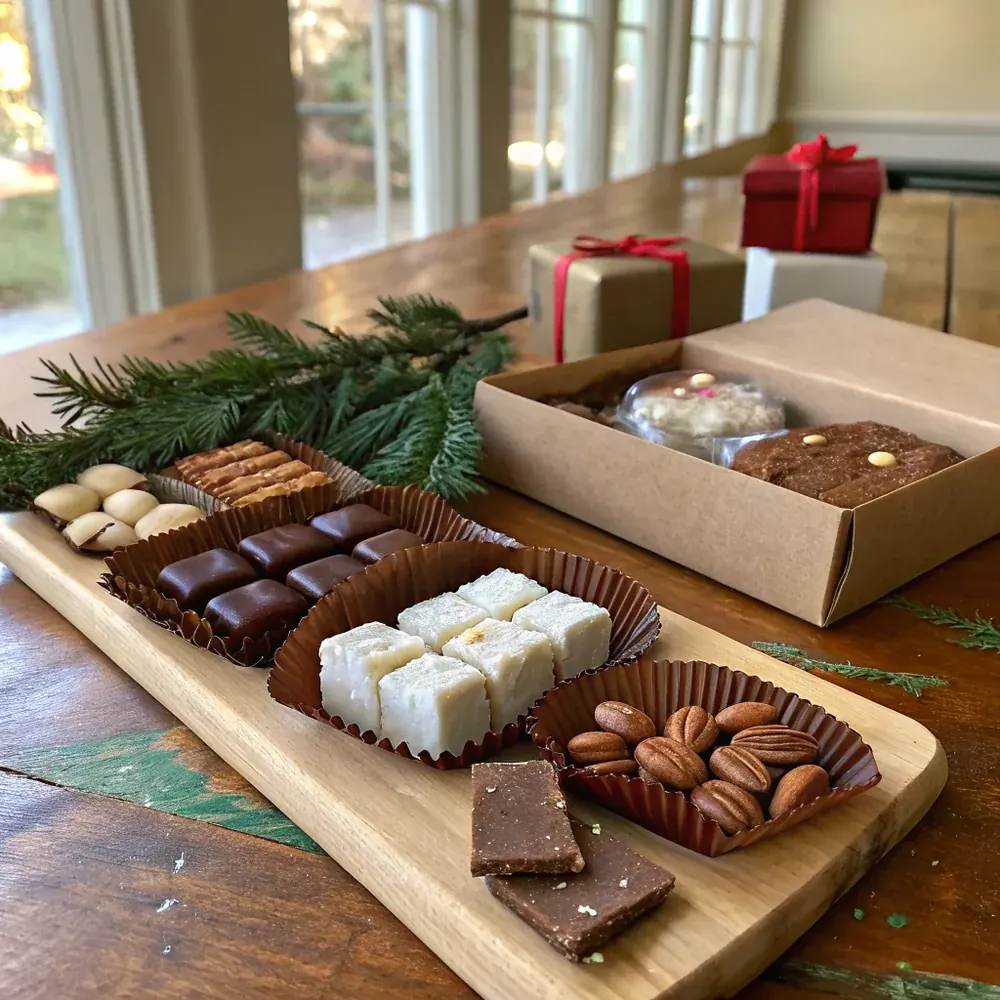
Day 3: pack the gift boxes. Line each kraft paper box with parchment paper. Arrange a sample of each candy in a corner; layer the rest with parchment between layers. Tie with red ribbon and an evergreen sprig. Each box holds about 25-30 individual pieces total. Distribute to neighbors, family, the church congregation, the mailman. The full output of this collection fills 8-12 boxes depending on how generous you are per box.
Storage and Gifting Tips
Most of these candies keep 2-4 weeks at room temperature in airtight containers. The chocolate-coated candies (truffles, toffee bark, Christmas crack) keep best refrigerated to prevent the chocolate from blooming (white film from temperature changes). The non-chocolate candies (pralines, divinity, peanut brittle, fudge) are fine at room temperature.
For travel: stack candies in tins or rigid boxes with parchment paper between layers to prevent sticking. Soft candies (pralines, fudge) need rigid packaging that doesn't crush. Brittles and crack tolerate light pressure. Truffles need to stay cool for travel longer than 4 hours; pack with a small ice pack.
Gift box assembly: line a kraft paper box with parchment paper or tissue paper. Arrange the candies in sections (one section per type) using small parchment paper dividers. Add a label or tag listing what's in the box (pecan pralines, divinity, etc.) - especially helpful for people with allergies. Tie with red and green ribbon. Add an evergreen sprig (cedar from the yard, fir trim from the Christmas tree) for the final visual touch.
For larger production runs (church bake sale, neighborhood gifting), double or triple each recipe; the candy thermometer technique scales proportionally with no change in cook time. The fudge recipes are the easiest to double; pecan pralines and divinity are slightly trickier to scale because the beating step requires the right pan-to-mixture ratio.
For broader Texas dessert context, see the Ultimate Texas Desserts Guide for the complete dessert tradition, Texas pecan pie for the canonical Thanksgiving pecan dessert, or buttermilk sweet potato pie for the Thanksgiving table companion to this Christmas candy collection.
Texas Christmas Candy Recipes Recipe
Ingredients
- FOR PECAN PRALINES (24 pieces):
- 1 cup (200 g) granulated sugar, 1 cup (220 g) packed dark brown sugar, 1/2 cup (120 ml) heavy cream, 4 tbsp butter, 1.5 cups pecan halves, 1 tsp vanilla, 1/2 tsp salt
- FOR DIVINITY (24 pieces):
- 2.5 cups (500 g) granulated sugar, 1/2 cup (120 ml) light corn syrup, 1/2 cup (120 ml) water, 2 large egg whites, 1 tsp vanilla, 1 cup chopped pecans (optional)
- FOR BOURBON PECAN TRUFFLES (20 truffles):
- 8 oz (225 g) dark chocolate, 1/2 cup (120 ml) heavy cream, 2 tbsp bourbon, 1.5 cups finely chopped toasted pecans, 1/4 cup unsweetened cocoa powder for dusting
- FOR PEANUT BRITTLE (1 large slab):
- 2 cups (400 g) granulated sugar, 1 cup (240 ml) light corn syrup, 1/2 cup (120 ml) water, 2 cups raw peanuts, 4 tbsp butter, 2 tsp baking soda, 1 tsp vanilla, 1/2 tsp salt
- FOR SALTED CARAMEL PECANS (4 cups):
- 4 cups pecan halves, 1 cup (200 g) granulated sugar, 1/2 cup (120 ml) heavy cream, 4 tbsp butter, 1 tsp flake sea salt, 1/2 tsp cinnamon (optional)
- FOR FUDGE THREE WAYS (chocolate / peanut butter / maple - 1 9x9 pan each):
- Per flavor: 3 cups sugar, 1 cup (240 ml) heavy cream, 1/2 cup butter, plus the flavor base (chocolate chips, peanut butter, or maple syrup)
- FOR TOFFEE BARK (1 large sheet):
- 1 cup (227 g) butter, 1 cup (220 g) packed brown sugar, 1.5 cups chocolate chips, 1 cup chopped pecans, 1 tsp flake salt
- FOR CHRISTMAS CRACK (saltine toffee - 1 sheet pan):
- 40 saltine crackers, 1 cup (227 g) butter, 1 cup (220 g) packed brown sugar, 2 cups chocolate chips, 1 cup chopped pecans or holiday sprinkles
- EQUIPMENT: candy thermometer (essential), heavy-bottomed saucepan, parchment paper, sheet pans, KRAFT PAPER GIFT BOXES, evergreen sprigs and ribbon for finishing
Instructions
- Day 1 prep - read this entire recipe first. Christmas candy week is real. Plan 2-3 days for the full set of 8 candies. Day 1 is the heat-intensive candies (pralines, divinity, brittle, salted caramel pecans, toffee bark, Christmas crack - all cooked at high temps). Day 2 is the no-cook or low-cook candies (truffles, fudge - both involve melting and chilling rather than candy thermometer work). Day 3 is packing and gifting. Make sure you have a candy thermometer that reads to at least 350F; this is non-negotiable for accurate candy work. Read this entire recipe before starting; some candies cannot be left mid-cook.
- Pecan pralines - 30 min active. In a heavy 3-quart saucepan, combine 1 cup granulated sugar, 1 cup brown sugar, 1/2 cup heavy cream, and 4 tbsp butter. Cook over medium heat, stirring constantly, until the mixture reaches 235F (soft-ball stage) on a candy thermometer - about 8-10 minutes. Remove from heat. Stir in 1.5 cups pecan halves, 1 tsp vanilla, 1/2 tsp salt. Beat with a wooden spoon for 90 seconds until the mixture loses its shine and starts to thicken slightly. Drop quickly by tablespoonfuls onto parchment paper. Let set 45 minutes. Yield: 24 pralines. The Texas standard.
- Divinity - 45 min active (humidity-sensitive). Critical: divinity does not work in humid Texas weather. Make on a dry day or in air-conditioned kitchen. In a heavy saucepan, combine 2.5 cups granulated sugar, 1/2 cup light corn syrup, 1/2 cup water. Cook over medium-high heat without stirring until thermometer reads 260F (hard-ball stage) - about 12-15 minutes. Meanwhile, beat 2 egg whites to stiff peaks in a stand mixer. With the mixer running on medium, slowly drizzle the hot syrup down the side of the bowl into the egg whites - takes about 90 seconds total. Continue beating 5-7 minutes until the mixture loses its shine and forms ribbons. Add 1 tsp vanilla and 1 cup chopped pecans if using. Drop by tablespoonfuls onto parchment paper. Let set 2 hours.
- Bourbon pecan truffles - day 2, no-cook 30 min + chill. Heat 1/2 cup heavy cream just to a simmer. Pour over 8 oz chopped dark chocolate in a bowl. Let sit 1 minute, then stir until smooth. Stir in 2 tbsp bourbon. Refrigerate 2 hours until firm enough to scoop. Roll into 20 balls (about 1 tbsp each). Roll each ball in finely chopped toasted pecans, then dust with cocoa powder. Refrigerate until ready to gift. Keeps 2 weeks refrigerated.
- Peanut brittle - 25 min active. Lightly grease a sheet pan. In a heavy saucepan, combine 2 cups sugar, 1 cup corn syrup, 1/2 cup water. Cook to 240F (soft-ball stage), stirring occasionally - about 8 minutes. Add 2 cups raw peanuts. Continue cooking, stirring constantly, until the thermometer reads 300F (hard-crack stage) - about 12 more minutes. The mixture turns deep golden. Remove from heat. Quickly stir in 4 tbsp butter, 2 tsp baking soda (the soda makes the brittle airy and crisp), 1 tsp vanilla, 1/2 tsp salt. The mixture will foam up. Pour onto the greased sheet pan and spread thin with a buttered spatula. Cool completely (30 minutes), then break into shards.
- Salted caramel pecans - 25 min active. Toast 4 cups pecan halves at 350F for 8 minutes. Set aside. In a heavy saucepan, combine 1 cup sugar, 1/2 cup heavy cream, 4 tbsp butter. Cook to 245F (firm-ball stage), about 8 minutes. Remove from heat. Stir in 1 tsp flake sea salt and 1/2 tsp cinnamon if using. Add the toasted pecans. Stir until evenly coated. Spread on parchment-lined sheet pan in a single layer. Sprinkle with additional flake salt. Cool completely. Break apart into clusters.
- Fudge three ways - day 2, chocolate / peanut butter / maple. Each batch: in a heavy saucepan, combine 3 cups sugar, 1 cup heavy cream, 1/2 cup butter. Cook to 234F (soft-ball stage), about 10 minutes. Remove from heat. For chocolate fudge: stir in 2 cups chocolate chips and 1 tsp vanilla. For peanut butter fudge: stir in 1 cup smooth peanut butter and 1 tsp vanilla. For maple fudge: stir in 1/2 cup maple syrup, 1 tsp maple extract, 1 tsp vanilla. Pour into 9x9 pan lined with parchment. Cool completely (3 hours). Cut into 36 squares. Make all three for the full assortment, or pick the family favorite.
- Toffee bark - 30 min active + cool. In a heavy saucepan over medium heat, combine 1 cup butter and 1 cup brown sugar. Stir constantly with a wooden spoon for 8-10 minutes until the mixture reaches 285F (soft-crack stage) and turns deep amber. Pour onto a parchment-lined sheet pan and spread thin with a buttered spatula (about 1/4 inch thick). Sprinkle 1.5 cups chocolate chips over the hot toffee. Wait 60 seconds for the chocolate to melt, then spread smooth with a spatula. Sprinkle 1 cup chopped pecans and 1 tsp flake salt over the chocolate. Cool 30 minutes at room temperature, then refrigerate until set (1 hour). Break into shards.
- Christmas crack (saltine toffee) - 20 min active. Preheat oven to 400F. Line a rimmed sheet pan with foil. Arrange 40 saltine crackers salt-side-up in a single layer covering the pan. In a saucepan over medium heat, combine 1 cup butter and 1 cup brown sugar. Bring to a boil and cook 3 minutes, stirring constantly. Pour the toffee mixture evenly over the saltines, covering completely. Bake 5-7 minutes until bubbling. Remove from oven, immediately sprinkle 2 cups chocolate chips over the top. Wait 60 seconds for the chocolate to melt, then spread smooth with a spatula. Sprinkle with 1 cup chopped pecans or holiday sprinkles. Refrigerate 1 hour until completely set. Break into shards.
Frequently Asked Questions
How do I keep my candy from being grainy?
Two rules: (1) stir constantly while heating the sugar mixture to prevent crystallization on the pan walls (the granular crystals fall back into the mix and seed crystallization throughout); (2) hit the temperature target precisely with a calibrated candy thermometer. Most graininess comes from one of these two errors. If you do get graininess, the candy is still edible but the texture is wrong; eat it yourself rather than gifting.
Why won't my divinity set?
Almost always humidity. Divinity is the most humidity-sensitive candy in the collection; it requires sub-50% relative humidity to set properly. If your divinity stays sticky after 8 hours, the air is too humid. Solution: wait for a drier day, run the AC to dry the kitchen air, or make divinity in winter when humidity is naturally lower. Test by checking the forecast before starting.
Do I really need a candy thermometer?
Yes - 6 of the 8 recipes require precise temperature reading. The 'cold water test' (drop a bit of hot sugar syrup into cold water and feel the texture) is the traditional fallback method but is dramatically less reliable than a thermometer. Buy a Polder or Wilton thermometer for $15-25; it pays for itself in candy success on the first batch.
How long do these candies keep?
Pecan pralines: 2 weeks at room temp. Divinity: 1 week at room temp (gets stale fast). Bourbon pecan truffles: 2 weeks refrigerated. Peanut brittle: 1 month at room temp. Salted caramel pecans: 2 weeks at room temp. Fudge: 2 weeks at room temp, 1 month refrigerated. Toffee bark: 2 weeks refrigerated. Christmas crack: 2 weeks refrigerated. All freeze well for 2-3 months.
Can I make these candies dairy-free?
Most can, with substitutions. Replace butter with vegan butter (Earth Balance, Miyoko's). Replace heavy cream with full-fat coconut milk. Truffles work with dairy-free dark chocolate (most dark chocolate is naturally dairy-free; check labels). Divinity is naturally dairy-free. Fudge and toffee bark require some recipe adjustments for vegan butter; the maple fudge is the easiest dairy-free conversion.
What's the safest candy to make first if I'm new to candy work?
Christmas crack (saltine toffee). It uses minimal candy thermometer work, takes 20 minutes, and is nearly impossible to mess up. The technique - boiling butter and brown sugar for 3 minutes - is straightforward, and the saltine cracker base provides structure that more sophisticated candies don't have. Start with Christmas crack; once you've made one batch, you'll have the confidence for the more thermometer-dependent recipes.
Can I use a stand mixer to beat divinity?
Yes - a stand mixer is much easier than hand-beating divinity. Set the mixer to medium speed; whip the egg whites to stiff peaks first, then drizzle the hot syrup in. Continue beating until the mixture loses its shine. Hand-beating divinity is the traditional method but takes 10+ minutes of arm work; the stand mixer is the practical choice for anyone making divinity more than once.
Is there a non-pecan version of these candies?
Yes - substitute walnuts, almonds, or hazelnuts for pecans in any recipe with no other changes. The flavor profile shifts (each nut has its own character) but the technique is identical. For nut-free versions, omit the nuts entirely or substitute with sunflower seeds, pumpkin seeds, or sprinkles. The basic candy techniques (sugar work, divinity beating, fudge cooling) don't depend on the nut for their texture.