Texas Desserts
Texas Lemon Blueberry Pound Cake
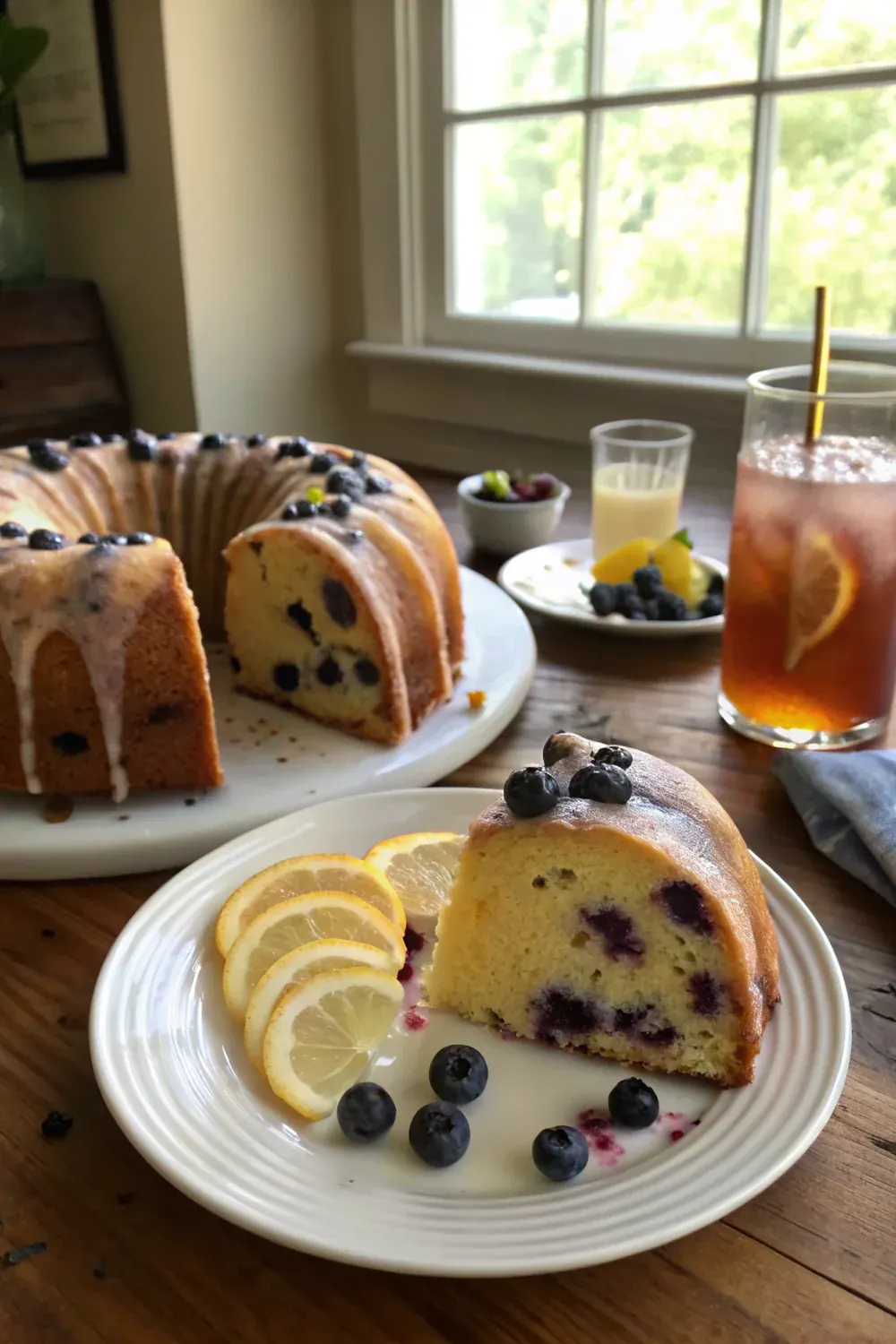
Chef Mia's Texas lemon blueberry pound cake: East Texas blueberries, lemon glaze, sour cream tang. The spring-summer brunch staple from Hill Country.
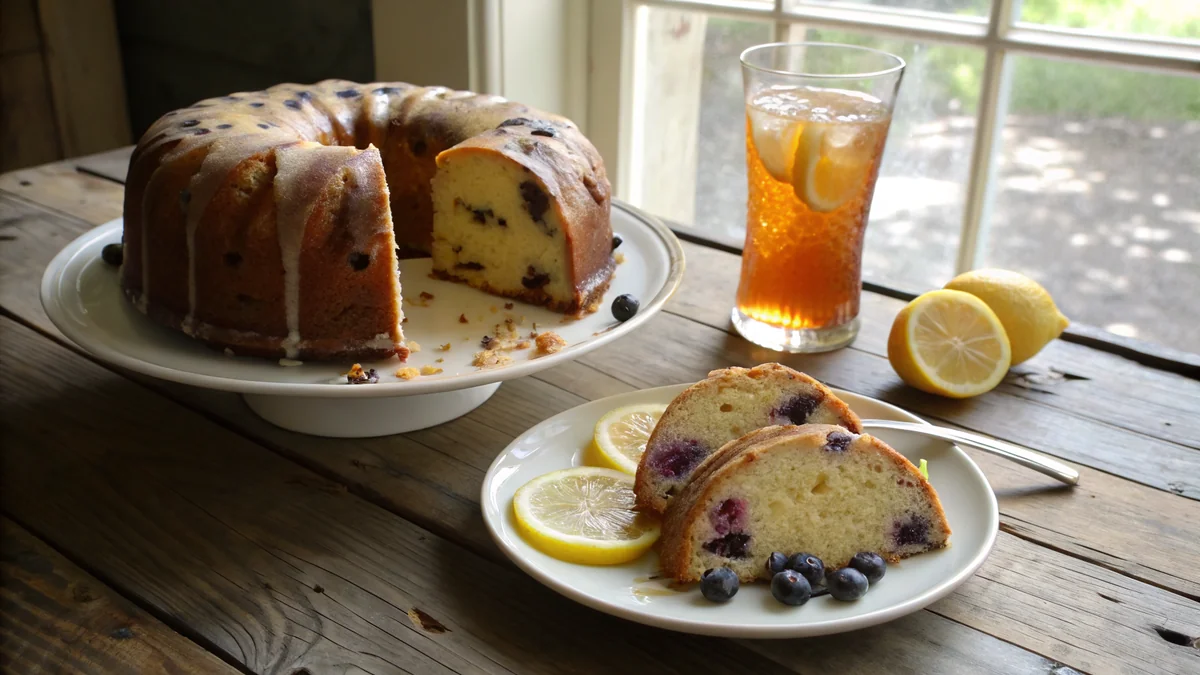
Quick answer: A Texas lemon blueberry pound cake folds fresh East Texas blueberries (coated lightly in flour to prevent sinking) into a buttery sour cream pound cake batter, finished with bright lemon glaze. Bake in a loaf pan at 350F for about 60 minutes (or in a Bundt pan for 65-70 minutes) until a toothpick inserted in the center comes out clean. The sour cream is the secret weapon - it adds tang to balance the sweetness and produces an unusually moist, fine-crumbed cake. Make in May-July when Texas blueberries are at peak season.
There is a specific moment in late May or early June every year in the Texas Hill Country when the East Texas blueberries hit the farmer's markets in Austin. Boggy Creek Farm in East Austin gets them. Green Gate Farms gets them. The Sustainable Food Center markets get them. The blueberries are at their fattest, sweetest, most-bursting-with-juice peak for about three weeks before the heat moves them past their best window. Every year I have lived in Austin, my favorite Hill Country neighbor Pat would call me the day she got her quart of blueberries from the market and ask me to come over for brunch on the porch. The brunch always included her lemon blueberry pound cake.
Pat's pound cake was the cake of those Hill Country brunches. It was dense, buttery, moist beyond what a pound cake had any right to be, and shot through with whole blueberries that hadn't sunk to the bottom of the loaf the way blueberries usually do in cake batter. The lemon glaze on top added a bright, tangy finish that made the dense cake feel lighter than it actually was. Served alongside a glass of iced tea or a Texas sparkling rosé from William Chris Vineyards, the cake was the entire reason for those brunches.
The recipe below is Pat's recipe with my own minor adjustments after fifteen years of making it. The two structural keys are the sour cream (instead of buttermilk - sour cream is denser and produces a moister, finer crumb) and the flour-coated blueberries (the technique that prevents them from sinking through the batter during the bake). The active prep time is about 20 minutes; the bake is 60 minutes for a loaf pan or 65-70 minutes for a Bundt. The cake is best the second day, after the flavors have melded and the crumb has firmed up. Make this in May-July when Texas blueberries are at peak; it works year-round with frozen blueberries but the difference between fresh-peak and frozen is real.
Why Pound Cake? (Dense, Sturdy, Travels Well)
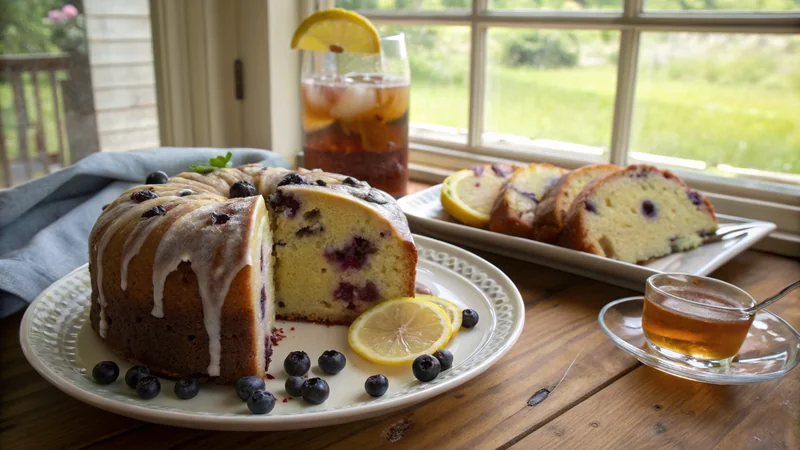
Pound cake is the structural opposite of sponge cake or chiffon cake. Where those airy cakes are built around whipped egg whites for lift and have light, delicate crumbs, pound cake is built around generous butter, sugar, eggs, and flour - heavy, dense ingredients that produce a dense, buttery, fine-crumbed cake. The name pound cake originally referred to the recipe ratio: a pound of butter, a pound of sugar, a pound of eggs, a pound of flour - producing a remarkably consistent dense cake that has been baked the same way for over 250 years.
The density is the appeal, not a problem. Pound cake's structural sturdiness makes it ideal for several specific situations: as a brunch cake that can sit out for hours without losing texture; as a travel-friendly dessert that survives picnic baskets and car trips intact; as a base for layered desserts like trifle (see Texas Christmas trifle) where lighter cakes would dissolve; as a make-ahead dessert that holds 5-7 days at room temperature without significant texture decline.
The Texas adaptation of pound cake usually adds local ingredients: lemon for citrus brightness, blueberries for fruit interest, sour cream for moisture and tang. The lemon-blueberry combination in particular has become a Texas Hill Country brunch staple over the last 30 years, partly because of the East Texas blueberry harvest (May-July) and partly because the lemon-blueberry flavor profile pairs beautifully with the iced tea and sparkling wine that show up at Hill Country gatherings.
If you have only made box-mix yellow cakes or chocolate sheet cakes, pound cake will feel like a different food category entirely. The crumb is finer, the flavor is butter-forward, the texture is dense but not heavy. The combination of dense-but-tender is what distinguishes a great pound cake from a brick. The sour cream and proper creaming technique in this recipe are what produce that combination.
Texas Blueberries Season (May-July Peak)
Texas grows excellent blueberries, primarily in East Texas (Tyler, Nacogdoches, Athens) where the soil is acidic and the climate suits the bush. The peak harvest runs from late May through mid-July, with the absolute best berries appearing in the first three weeks of June. By August, the heat has pushed the harvest past its peak; berries available later in summer are usually from cold-storage or imported from cooler regions.
The best Texas blueberries come from the small East Texas farms that supply the Austin and Houston farmer's markets. Boggy Creek Farm in East Austin, Green Gate Farms, the SFC Farmers Market, and the Saturday Farmer's Market in Round Rock all regularly carry East Texas blueberries during peak season. Whole Foods and Central Market also carry Texas blueberries during peak weeks; HEB carries them inconsistently. Look for berries that are deep blue with a faint silvery bloom (a dusty white film); the bloom is a natural protective coating that indicates fresh, unwashed berries.
Frozen blueberries work in this recipe but produce a slightly different result. Frozen-thawed berries release more juice into the batter than fresh, which can produce slightly streaky blue-purple swirls in the finished cake. To minimize this, use frozen berries directly from the freezer (don't thaw); the cold berries hold their juice better during the brief mixing phase. Wild Maine blueberries (smaller, denser) work even better than the larger cultivated frozen blueberries.
Out of season, you can substitute with fresh blueberries from California, Mexico, or Chile (in winter). The flavor isn't quite as concentrated as Texas-grown summer berries, but the cake still works well. Avoid the giant cultivated blueberries from Peru that show up at supermarkets in deep winter - they are watery and lack the sweetness of seasonal berries.
If your blueberries are very tart (sometimes happens with end-of-season berries), increase the sugar in the recipe by 2 tablespoons. If the berries are very sweet, reduce by 2 tablespoons. The pound cake itself is sweet enough to compensate for moderate sourness in the berries.
Sour Cream vs Buttermilk (Why Sour Cream Wins for Pound Cake)
Many pound cake recipes call for buttermilk; this recipe calls for sour cream. The substitution is intentional and meaningful. Sour cream is significantly thicker than buttermilk - 18-20% fat for full-fat sour cream vs 1-2% for buttermilk - and that fat content produces a noticeably moister, finer-crumbed pound cake than buttermilk versions.
The chemistry: butter + flour + sugar + eggs is the basic pound cake formula, with the dairy ingredient providing the additional moisture and tang. Buttermilk is mostly water with a small amount of fat; it adds moisture but doesn't significantly enrich the batter. Sour cream is mostly fat (with cultured tang); it adds both moisture and richness. The result is a slightly denser but dramatically moister cake.
Use full-fat sour cream, not low-fat or fat-free. Daisy, Knudsen, Borden, and HEB house brands all make excellent full-fat sour creams. The fat content is what produces the moisture; reducing the fat content reduces the cake's tenderness.
If you only have buttermilk and don't want to make a separate trip to the store, you can substitute 1 cup of buttermilk for the 1 cup of sour cream, but the cake will be slightly drier and less rich. To partially compensate, add 2 tablespoons of additional softened butter to the creamed butter-sugar mixture. The result is acceptable but not as outstanding as the sour cream version.
Greek yogurt (full-fat) is another acceptable substitute for sour cream - the texture and tang are similar enough that the cake still works well. Avoid regular yogurt (too thin) and low-fat or non-fat Greek yogurt (not enough richness). For more general buttermilk-vs-sour cream technique discussion, the broader Southern baking tradition explores this question in buttermilk pie, where buttermilk is the right choice for the lighter custard texture.
Anti-Sink Technique: Coating Blueberries with Flour
The classic problem with blueberry pound cake is that the blueberries sink to the bottom of the cake during baking, leaving the top half dry and the bottom half saturated with purple-blue blueberry juice. The flour-coating technique is the standard solution and is what separates a professional-looking blueberry pound cake from an amateur one.
The technique: toss the 2 cups of fresh (or frozen-still-frozen) blueberries with 2 tablespoons of all-purpose flour just before folding into the batter. The flour coats each berry with a thin barrier that absorbs surface moisture and creates a grippy texture. The grip increases the friction between the berry and the surrounding cake batter, slowing the rate at which the berries sink during the bake.
Fold the floured berries gently into the batter, distributing evenly with about 12-15 spatula folds. Don't overmix - the goal is even distribution, not full incorporation. Some berries will inevitably end up in the bottom third of the batter; that's fine. The flour coating reduces sinking by 60-80%, which means most berries stay suspended in the upper two-thirds of the cake during baking. The top of the finished cake should show plenty of berries when sliced.
An alternative anti-sink technique is to layer the batter and berries in stages: pour 1/3 of the batter into the pan, scatter 1/3 of the berries, repeat. This forces the berry distribution through structural placement rather than chemical adhesion. The technique works but is more fiddly; the flour-coating method is simpler and produces similar results.
Frozen berries (used straight from the freezer) actually have an advantage here - the cold berries are denser and slightly less prone to sinking than fresh berries. If you're using frozen, the flour coating is still recommended but slightly less critical. Don't thaw frozen berries before using; thawed-then-folded berries release juice that streaks the cake batter blue-purple.
Loaf vs Bundt Pan and the Lemon Glaze
This recipe works in either a loaf pan or a Bundt pan, and the choice depends on aesthetics and serving plan. Loaf pans (9x5 inch) produce two cakes from this recipe (since one batch is enough for two loaves). Loaves are easier to slice cleanly, easier to wrap and freeze, and more practical for everyday brunch service. The Bundt pan produces one large dramatic cake that is the showpiece move - the central tube creates a hole that catches the lemon glaze in pretty drips, and the fluted exterior gives the cake decorative ridges that no loaf pan replicates. Either pan, serve it barely warm with a scoop of honey lavender ice cream melting into the glaze.
For a brunch with 10-12 people, the Bundt is the showier choice; the loaves are the practical choice if you want to gift one and serve the other, or if you want to freeze leftovers more easily. Bake time differs slightly: 60 minutes for loaves, 65-70 minutes for the larger Bundt (the deeper cake takes longer to cook through to the center).
Pan release is critical for both. Pound cake is dense and benefits from a thorough greasing-and-flouring of the pan before baking. Use a pastry brush to apply softened butter to every surface of the pan (the corners, the center tube of the Bundt, the rims), then dust with flour, tapping out excess. Skipping this step results in the cake sticking and tearing during release. Some bakers use baking spray with flour (Baker's Joy is the popular brand) as an alternative; both methods work.
The lemon glaze is poured over the fully cooled cake. Don't glaze a warm cake - the glaze melts into the surface and disappears rather than forming the white-shellac coating you want. Wait until the cake is completely cool to the touch (about 60-90 minutes after coming out of the oven). Drizzle the glaze in a thin stream from a spoon or small pitcher, letting it run down the sides naturally. A double glaze (apply once, let dry 15 minutes, apply again) gives a thicker shellac for visual drama.
Variation: lemon syrup instead of glaze. For a different finishing technique, brush the warm cake with a simple lemon syrup (1/4 cup sugar + 1/4 cup lemon juice, simmered 2 minutes) instead of the glaze. The syrup soaks into the cake from the top, producing a moister crumb without the white glaze coating on the exterior. This is the more traditional pound cake finish; the glaze is the more visual finish.
Texas Lemon Blueberry Pound Cake Recipe
Ingredients
- FOR THE POUND CAKE:
- 3 cups (375 g) all-purpose flour, plus 2 tablespoons for coating berries
- 1 teaspoon baking powder
- 1/2 teaspoon kosher salt
- 1.5 cups (340 g) unsalted butter, softened
- 2 cups (400 g) granulated sugar
- Zest of 3 lemons (about 3 tablespoons)
- 5 large eggs, room temperature
- 1 cup (240 ml) full-fat sour cream
- 1/4 cup (60 ml) fresh lemon juice (about 2 lemons)
- 2 teaspoons pure vanilla extract
- 2 cups (300 g) fresh blueberries (Texas blueberries May-July, or frozen)
- FOR THE LEMON GLAZE:
- 2 cups (240 g) powdered sugar
- 4-5 tablespoons fresh lemon juice
- 1 teaspoon lemon zest
- 1/4 teaspoon vanilla extract
- Optional: extra fresh blueberries and lemon slices for garnish
Instructions
- Preheat oven and prep pan. Preheat oven to 350F (175C). Generously butter a 10-inch Bundt pan or two 9x5 inch loaf pans, then dust with flour, tapping out excess. The thorough greasing is critical - pound cakes are dense and dependent on clean release. For Bundt pans, pay extra attention to the corners and the center tube.
- Whisk dry ingredients. In a medium bowl, whisk together 3 cups flour, baking powder, and salt. Set aside. Reserve 2 tablespoons of additional flour for coating the blueberries.
- Rub lemon zest into sugar (the flavor-extraction trick). In a large mixing bowl, combine 2 cups granulated sugar and zest of 3 lemons. Rub the zest into the sugar with your fingers for 30 seconds until the sugar is fragrant and yellow-tinged. This rubbing technique extracts the essential oils from the zest into the sugar, dramatically intensifying the lemon flavor compared to just adding zest to the batter. The sugar should smell distinctly lemon when you are done.
- Cream butter and lemon sugar. Add the softened butter to the lemon sugar. Beat with an electric mixer on medium-high for 4-5 minutes until pale yellow, fluffy, and noticeably increased in volume. The creaming step incorporates air into the butter, which gives the dense pound cake its lift. Don't skip this step or shorten it; the 4-5 minutes of creaming makes the difference between a dense brick and a cake.
- Add eggs one at a time. Add the 5 eggs one at a time, beating 30 seconds between each addition. Scrape down the bowl after every 2 eggs. The mixture should remain pale and fluffy throughout. If it starts to curdle or separate, the butter is too cold; let warm slightly and continue. Beat in the vanilla extract after the last egg.
- Alternate flour and sour cream additions. In a small bowl, whisk together the sour cream and lemon juice. Add to the batter in three additions, alternating with the dry flour mixture (in three additions): start with flour (1/3), then sour cream (1/2), then flour (1/3), then sour cream (1/2), then flour (1/3). Mix on low speed just until each addition is incorporated. Don't overmix; over-mixed batter develops gluten and produces a tough cake.
- Coat blueberries with flour and fold in. In a small bowl, toss the 2 cups of fresh blueberries with the reserved 2 tablespoons of flour until each berry is lightly coated. The flour coating absorbs surface moisture and creates a slight grippy texture that helps the berries stay suspended in the batter during baking - the anti-sink technique. Fold the floured berries into the batter gently with a spatula, distributing evenly with about 12-15 folds. Don't overmix.
- Pour into pan and smooth top. Scrape the batter into the prepared pan(s), distributing evenly. Smooth the top with a spatula. Tap the pan firmly on the counter twice to release any trapped air bubbles. The batter should fill about 2/3 of the pan; pound cake rises modestly but doesn't double in size like sponge cake.
- Bake until golden and set. Bake at 350F: loaf pans for 55-60 minutes; Bundt pan for 65-70 minutes. The cake is done when a toothpick inserted into the center comes out clean (or with just a few moist crumbs - not wet batter), the top is deep golden brown, and the sides have started to pull away from the pan. Tent with foil if the top browns too fast (after 30 min for loaf, 40 for Bundt).
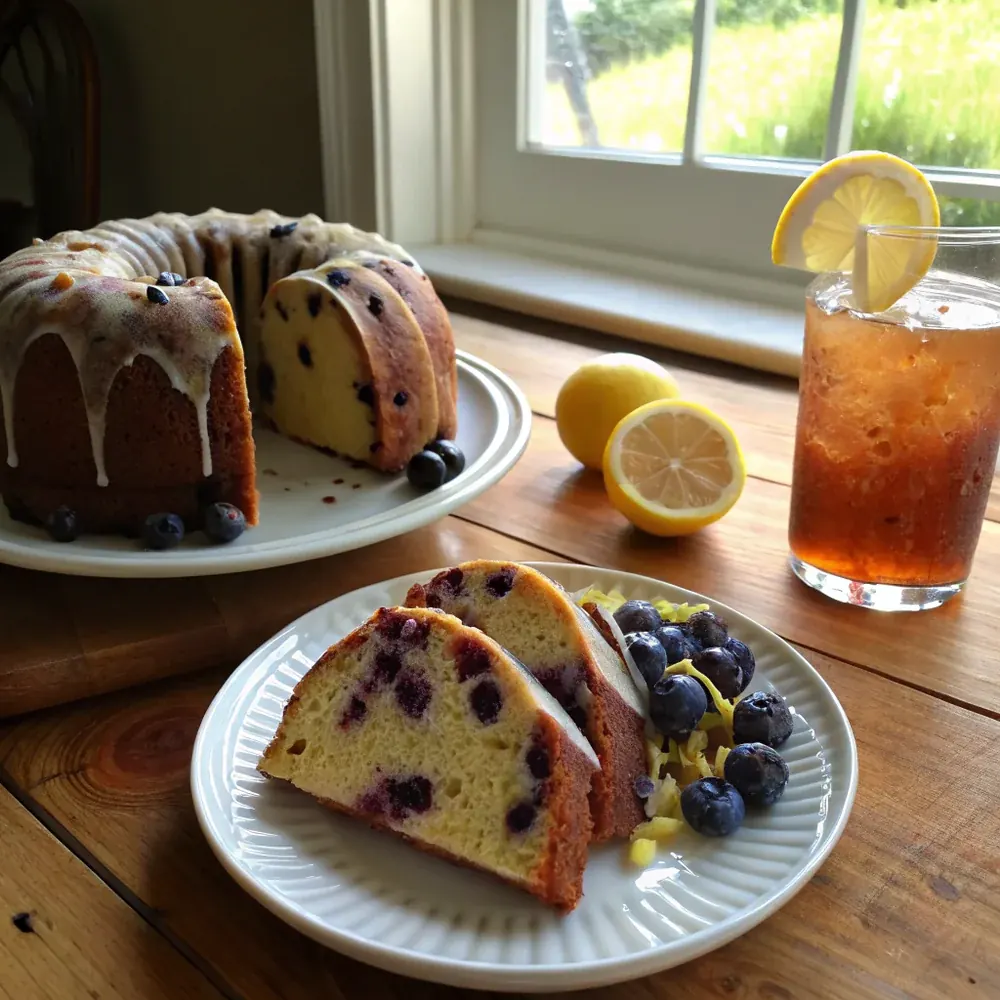
- Cool, glaze, and serve. Cool the cake in the pan for 15 minutes on a wire rack, then invert onto the rack and cool completely (about 60-90 minutes). Make the glaze: whisk together 2 cups powdered sugar, 4-5 tablespoons lemon juice, 1 teaspoon lemon zest, and 1/4 teaspoon vanilla until smooth and pourable. Drizzle over the fully cooled cake, letting it run down the sides. Garnish with extra fresh blueberries and lemon slices. Slice and serve - or wait 24 hours for the cake to develop fuller flavor (it actually improves on day 2). Pair with iced tea, hot coffee, or Texas sparkling rosé from <a href='https://www.texanrecipes.com/ultimate-texas-desserts-guide/'>the Hill Country wine region</a>.
Frequently Asked Questions
Can I use frozen blueberries instead of fresh?
Yes - frozen blueberries work in this recipe. Use them directly from the freezer without thawing; thawed berries release juice that streaks the batter blue-purple. The flour coating is still recommended but slightly less critical for frozen berries (they're denser and less prone to sinking). Wild Maine frozen blueberries are particularly good - smaller, denser, and more flavorful than the larger frozen cultivated blueberries.
Why did my blueberries sink to the bottom of the cake?
Most likely the berries weren't coated with flour before folding into the batter. The flour coating creates a grippy surface that slows sinking during baking. Toss 2 cups of berries with 2 tablespoons of all-purpose flour before folding into the batter. The technique reduces sinking by 60-80%. Other contributing factors: berries weren't fresh (overripe berries sink faster), batter was too thin (overmixed), or the cake was baked at too low a temperature (slow cooking gives berries more time to sink).
Can I make this cake without sour cream?
Yes, but the texture suffers. Substitute 1 cup of full-fat Greek yogurt (equivalent richness, slight texture difference) or 1 cup of buttermilk + 2 tablespoons of additional butter (less rich but still works). Avoid regular yogurt (too thin) and low-fat substitutes (not enough fat for proper moisture). The full-fat sour cream is the optimal choice.
Can I make Texas lemon blueberry pound cake gluten-free?
Yes - substitute a 1:1 gluten-free flour blend (King Arthur, Bob's Red Mill) for both the cake flour and the berry-coating flour. The pound cake structure relies more on butter and eggs than on gluten development, so the GF version works very similarly. Texture may be slightly more crumbly; handle the cooled cake gently when slicing. The lemon glaze is naturally gluten-free.
How long does the pound cake keep?
Up to 5 days at room temperature in an airtight container or wrapped tightly in plastic. The cake actually improves on day 2-3 as the flavors meld and the crumb firms up. Refrigerate up to 1 week if your kitchen is warm. Freezer storage: up to 3 months wrapped tightly in plastic and foil. Thaw overnight in the fridge or 4 hours at room temperature.
Can I make this in muffin tins or a loaf pan?
Yes to both. For loaf pans (9x5 inch), the recipe makes 2 loaves; bake 55-60 minutes. For muffin tins, fill 24 muffin cups about 2/3 full, bake 22-26 minutes at 350F. The mini-muffin version is excellent for brunch buffets and party platters. Adjust the lemon glaze proportionally - drizzle on each muffin or loaf after cooling.
Why is my pound cake dry?
Three likely causes: (1) the batter was overmixed after adding flour (developing gluten which toughens the texture); (2) the cake was overbaked (a few moist crumbs on the toothpick is the right doneness, not perfectly clean); (3) the butter wasn't softened enough for the creaming step (cold butter doesn't incorporate air properly). Solutions: mix on low speed only just until flour is incorporated, check doneness at the lower end of the bake time, and ensure butter is room temperature (cool but not cold) before creaming.
Can I use lemon extract instead of fresh lemon juice and zest?
You can, but the flavor is dramatically less complex. Fresh lemon zest contains essential oils that lemon extract approximates only superficially. The recipe is designed around fresh lemons - the zest of 3 lemons + 1/4 cup juice provides the bright, fresh flavor that defines the cake. If you have only extract, substitute with 2 teaspoons lemon extract + 2 tablespoons milk (replacing the lemon juice). Result: acceptable, but the cake loses its distinctive Hill Country brunch character.