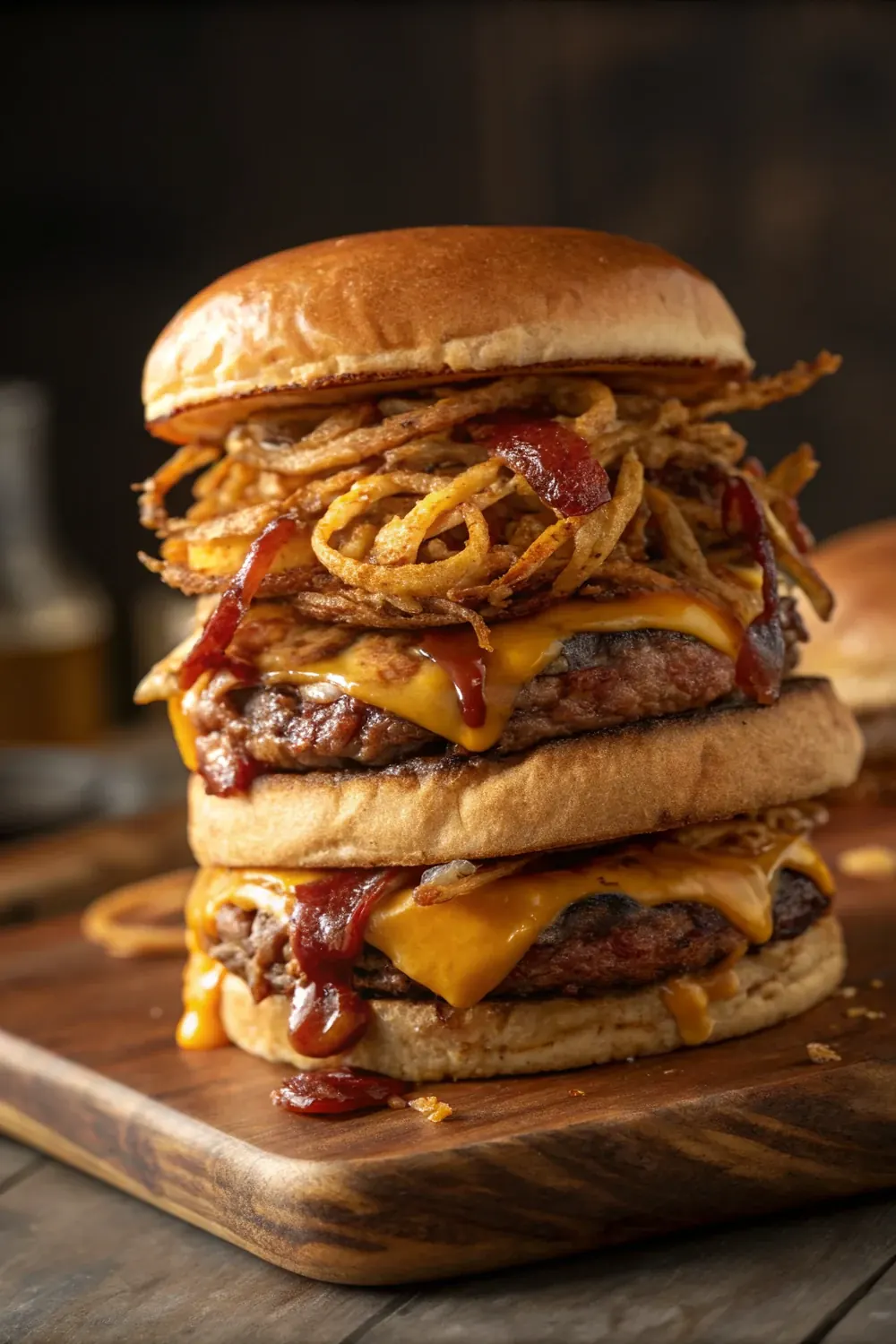
Texas BBQ
Texas Roadhouse Smokehouse Burger Copycat
Hand-form 80/20 chuck loosely and brush the BBQ sauce on in the final minute only, or it burns onto the crust. Onion strings fried separately stay crunchy.
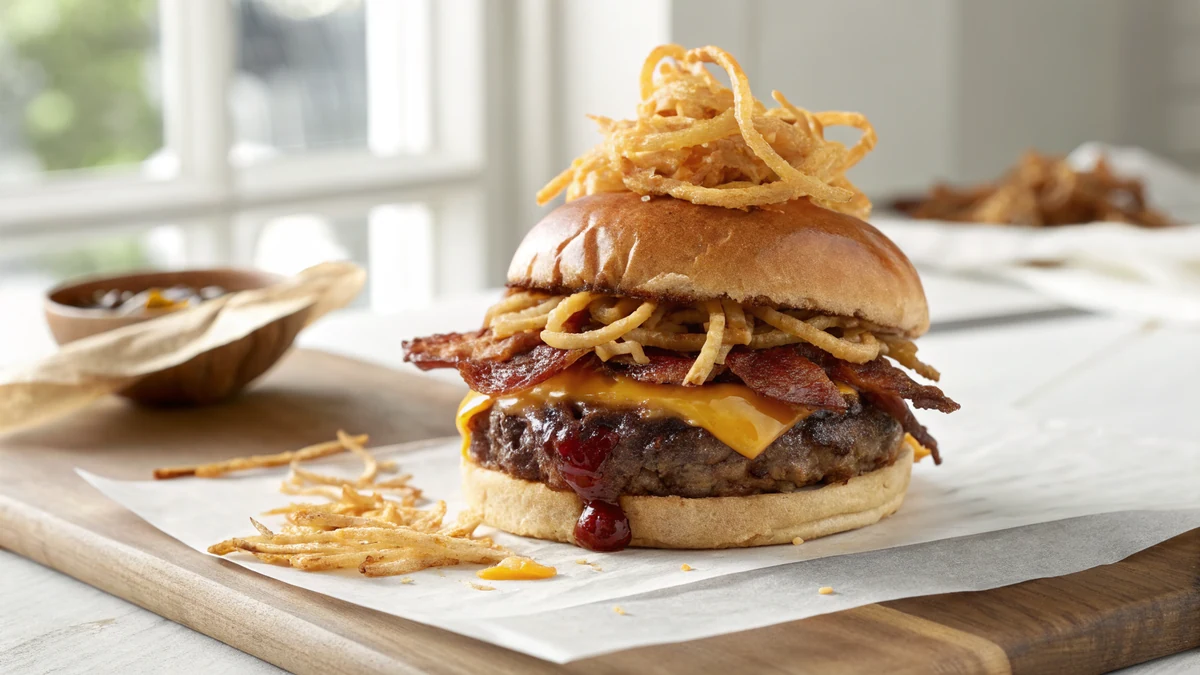
Quick answer: To make the Texas Roadhouse smokehouse burger, hand-form 80/20 ground chuck into four loose patties, season them simply with salt and pepper, and sear them hard on a screaming-hot cast iron skillet or grill until a deep crust forms. While they cook, fry a batch of crispy onion strings, crisp up some bacon, and warm your BBQ sauce. In the last minute, brush each patty with BBQ sauce and melt American or cheddar cheese on top. Build it on a buttered, toasted bun with more BBQ sauce, the bacon, and a tangle of crispy fried onion strings. The keys are not overworking the meat, getting real color on the crust, and piling on enough onion strings for crunch. It is a smoky, copycat bbq bacon burger that beats the drive-through every time.
The smokehouse burger is the one I order when I want everything at once. Smoky BBQ sauce, salty bacon, gooey cheese, and that pile of crispy fried onion strings that crunch in every bite. It is messy in the best way, the kind of burger you have to lean over your plate to eat. For a long time I figured a steakhouse burger like this was out of reach at home, but it turns out it is mostly about technique and a little patience.
What makes this one sing is the contrast. You have the deep, beefy crust on a hand-pattied patty, the sweet-smoky sauce, the snap of bacon, and then those frizzled onion strings on top doing all the textural heavy lifting. Skip the strings and it is just a fine bacon burger. Pile them on and suddenly it tastes like the booth at the restaurant.
I will walk you through the whole thing, from the beef blend to the onion strings to the order you stack everything in. If you love this style, my easy BBQ burger recipe is a simpler cousin worth bookmarking too. Grab some good chuck and let me show you how the smokehouse burger comes together.
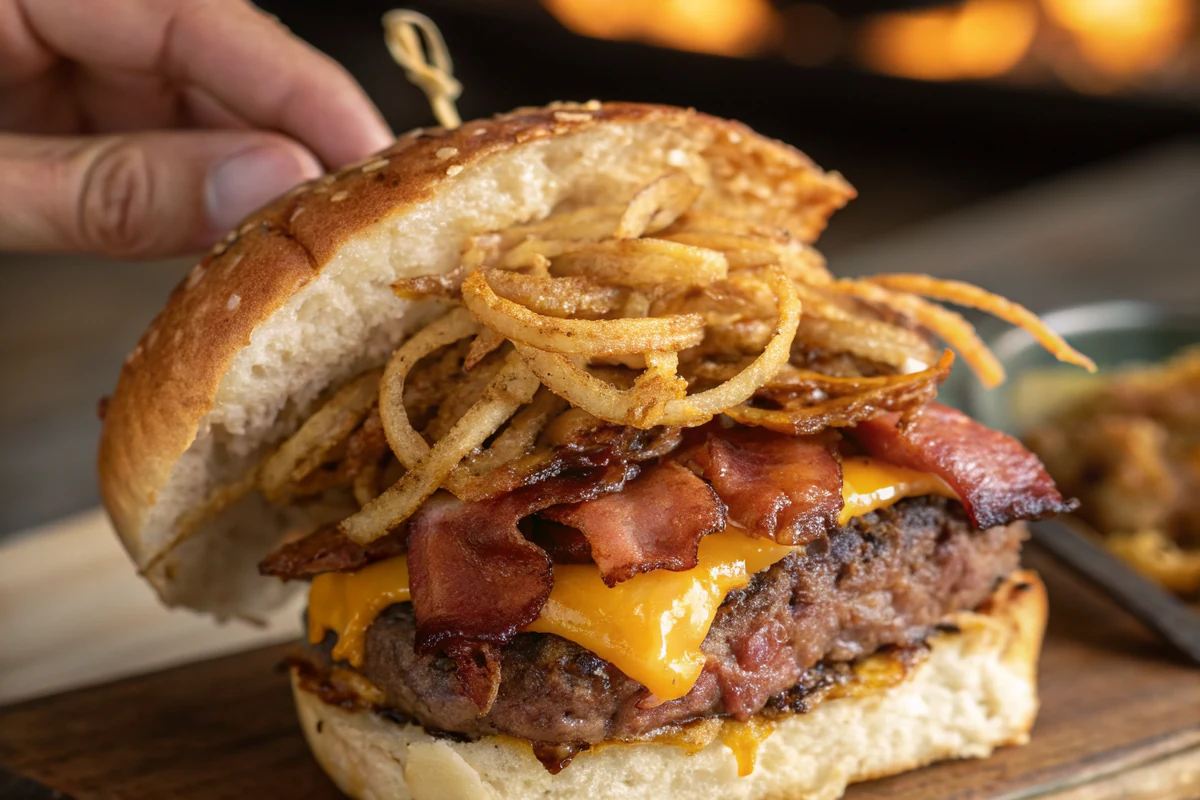
What Is the Texas Roadhouse Smokehouse Burger
The smokehouse burger is Texas Roadhouse's loaded BBQ bacon burger, and it leans hard into smoky, savory, crunchy territory. At its core is a hand-pattied beef burger, seared for a deep crust, then dressed with BBQ sauce, melted American or cheddar cheese, crispy bacon, and a generous pile of crispy fried onion strings, all on a buttered, toasted bun. It is a steakhouse take on the classic backyard burger.
What sets it apart from a plain cheeseburger is the combination of textures and that smoky sweetness. The BBQ sauce brings sweet and tangy notes, the bacon adds salt and chew, and the onion strings deliver a shattering crunch that you do not get from raw or grilled onions. Together they make a burger that feels indulgent and a little over the top in the best way.
Recreating it at home is genuinely doable. There is no secret ingredient, just good beef, real bacon, a sauce you like, and onion strings you fry yourself. The result is a copycat smokehouse burger that tastes like the restaurant for a fraction of the price, and you control exactly how saucy and loaded you want it.
The Beef Blend and Fat Ratio
Start with 80/20 ground chuck, meaning 80 percent lean and 20 percent fat. That fat ratio is the single most important choice you will make, because the fat is what keeps the patty juicy and helps build that rich, browned crust as it sears. Go leaner, like 90/10, and you end up with a dry, crumbly burger no matter how careful you are.
Ground chuck specifically comes from the shoulder and has the ideal beefy flavor and fat content for burgers. If you can grind your own or have the butcher grind it fresh, even better, since the texture stays loose and tender. A blend with some brisket or short rib mixed in is fantastic too, but plain chuck is the reliable, affordable workhorse.
Keep the meat cold right up until it hits the heat. Cold fat sears better and holds the patty together, while warm, overworked meat turns dense and greasy. I portion my patties straight from the fridge and season them at the last second so they go onto the hot surface cold and ready to crust up fast.
Seasoning the Patties
I keep the seasoning deliberately simple, just kosher salt and black pepper, and plenty of it. This is a steakhouse-style burger, so you want the beef flavor front and center, not buried under a dozen spices. Salt and pepper let the chuck taste like itself, and the BBQ sauce and bacon bring all the extra flavor you need on top.
Timing matters more than people think. Salt the patties right before they hit the heat, not minutes ahead, because salt sitting on raw meat starts to draw out moisture and dissolve the proteins, giving you a denser, sausage-like texture. A last-second, generous seasoning on both sides keeps the inside loose and juicy.
If you want a touch more smokehouse character, you can add a pinch of smoked paprika or garlic powder to the salt and pepper. I usually do not bother, since the sauce and bacon carry the smoke. But a whisper of smoked paprika on the crust is a nice nod to the name if you are chasing that flavor.
Smashing Versus Hand-Forming
There are two roads to a great burger and both work here. Hand-forming gives you a thicker, juicier patty with a tender, steakhouse-like bite, which is closer to the restaurant version. You shape loose patties a little wider than the bun, dimple the center so they cook flat, and sear them without pressing. This is my default for the smokehouse burger.
Smashing is the other route, where you press a loose ball of beef thin onto a screaming-hot surface for about thirty seconds, maximizing crust at the cost of thickness. Smashed patties have incredible browned, lacy edges, and if that crunchy crust is what you crave, smash two thin patties and stack them for one burger.
Whichever you choose, the cardinal rule is the same once the patty hits the heat. Do not move it, do not press it, do not fuss with it. Let the crust form, flip it once, and leave it be. The biggest mistake home cooks make is mashing the spatula down, which squeezes out the juices and steams the meat instead of searing it.
Getting a Deep Seared Crust
The crust is everything, and it comes down to high heat and patience. You want your cast iron skillet, griddle, or grill grates genuinely hot before the beef goes on, hot enough that the patty sizzles aggressively on contact. A medium pan gives you gray, steamed meat, while a ripping-hot surface delivers that deep brown, savory crust that makes a burger taste like more than the sum of its parts.
That browning is the Maillard reaction, the same chemistry that makes a steak crust and toasted bread taste so good. It only happens at high temperatures and only on a dry surface, which is why you pat patties dry, season at the last second, and leave them alone for a full three minutes per side before flipping.
Cast iron is my top pick because it holds heat like nothing else and gives the most even, restaurant-quality sear indoors. On the grill, build a hot zone and cook the patties directly over it. Either way, cook the burgers to a safe internal temperature of 160F for ground beef, as recommended in the USDA safe temperature chart, using an instant-read thermometer to be sure.
Choosing and Warming the BBQ Sauce
The BBQ sauce is what earns this burger the smokehouse name, so use one you genuinely love. A thick, sweet-and-smoky Kansas City style sauce is the classic match, clinging to the patty without running everywhere. Tangier or spicier sauces work too if that is your taste, but stay away from thin, watery ones that just soak into the bun and disappear.
Warming the sauce makes a real difference. A cold spoonful straight from the fridge dulls the burger and cools the patty, while gently warmed sauce melts into the cheese and stays glossy and clingy. I warm mine in a small pan or the microwave for a few seconds while the patties cook so it is ready the moment I need it.
If you want to go fully homemade, my Texas BBQ sauce is built for exactly this kind of burger, with a deep, smoky sweetness and just enough tang to cut the richness of the bacon and cheese. Brush it on the patty in the last minute, then add a little more in the build for that double layer of sauce.
Crispy Bacon, Done Right
Bacon is a non-negotiable on a smokehouse burger, and getting it properly crisp matters. Limp, floppy bacon slides right out of the burger on the first bite, while crisp bacon shatters and stays put. I reach for thick-cut bacon because it holds up under the sauce and onion strings without going soggy and brings a meatier, smokier bite.
Cook it low and slow starting in a cold skillet, or lay it on a rack in a 400F oven, which renders the fat evenly and gets it flat and crisp without curling. Either way, drain it well on paper towels so it does not add greasiness to an already rich burger. Two slices per burger is the sweet spot, crisscrossed so every bite gets some.
Do not toss that bacon fat. A spoonful in the skillet to sear the patties layers in even more smoky, savory flavor and helps build the crust. It is a small trick that makes the whole burger taste more like the restaurant, where everything is cooked on a flat-top seasoned by years of bacon and beef.
Frying Crispy Onion Strings
The crispy onion strings are the signature move on this burger, the topping that takes it from a regular bacon burger to a true smokehouse burger. The quick version, slice a large onion as thin as you possibly can, soak the strands in buttermilk for at least fifteen minutes, then dredge them in seasoned flour and fry in small batches at 375F until golden, about one to two minutes.
The buttermilk soak does double duty. It softens and slightly sweetens the onion and gives the flour something to grip, so you get a thin, craggy, shatteringly crisp coating. Season the flour with paprika, garlic powder, salt, pepper, and a pinch of cayenne if you like a little warmth. Shake off the excess flour before the strings hit the oil.
Fry in small handfuls so the oil temperature does not crash, and pull the strings the moment they turn golden, since they go from perfect to burnt fast. Drain on a wire rack rather than paper towels so they stay crisp, and salt them the second they come out. Pile them high on the burger, because they collapse a little and you want plenty of crunch in every bite.
Cheese, Bun, and the Melt
Cheese choice is personal, but American and sharp cheddar are the two that belong on a smokehouse burger. American melts into that classic glossy, gooey blanket that hugs the patty, while cheddar brings a sharper, tangier punch that stands up to the BBQ sauce. I often use one slice of each for the best of both, melting and flavor.
To get a proper melt, lay the cheese on the patty in the last minute of cooking, right over the brushed-on BBQ sauce, then cover the pan or close the grill lid to trap the heat. The melted cheese acts like glue, helping anchor the bacon and onion strings so your towering burger does not slide apart on the first bite.
The bun matters more than people give it credit for. A sturdy brioche or potato bun, buttered and toasted on the cut side, gives you a golden, slightly crisp surface that resists going soggy under all that sauce and juice. Toast it in the same hot skillet or on the grill until just golden. A flimsy untoasted bun is the fastest way to a sad, collapsing burger.
Assembly Order and Make-Ahead Tips
Stacking order is not just for looks, it controls how the burger holds together and how each bite tastes. I spread a little BBQ sauce on the toasted bottom bun first, then the sauced and cheesed patty, the bacon, and finally the crispy onion strings, with one more drizzle of sauce before the top bun. Putting the cheese and bacon under the strings keeps the strings on top where their crunch shows.
A lot of this burger can be prepped ahead so dinner comes together fast. Cook the bacon, fry the onion strings, and warm the sauce before you ever sear a patty. The onion strings reheat beautifully in a hot oven or air fryer for a couple of minutes if you make them earlier, and the bacon can be cooked hours ahead and recrisped.
Form your patties ahead too, then keep them cold and covered until the moment they hit the heat. The one thing you should never do ahead is build the assembled burger, since the strings go soft and the bun turns to mush. Sear the patties last, build right before serving, and eat immediately for the full hot, crisp, saucy experience.
Sides and Serving Ideas
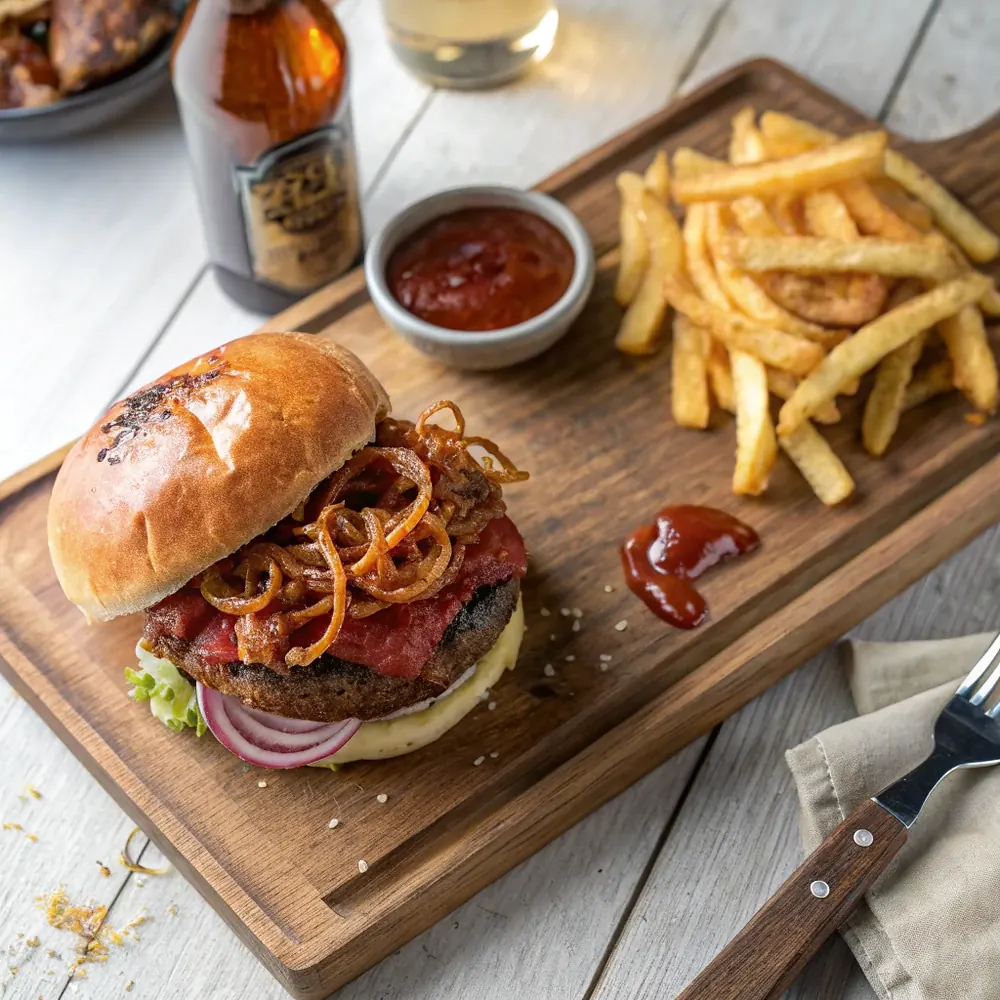
A smokehouse burger this loaded deserves sides that keep up without competing. Crispy fries or seasoned potato wedges are the obvious, crowd-pleasing match, and they soak up any extra BBQ sauce on the plate. A pile of onion rings doubles down on the fried-onion theme if you are feeding a hungry crowd at a cookout.
Something cool and crunchy balances all that richness. A tangy coleslaw, a crisp dill pickle spear, or a simple green salad cuts through the bacon and cheese and resets your palate between bites. I almost always put a bowl of pickles on the table, because the acidity is exactly what a sweet, smoky, fatty burger wants alongside it.
If you want to lean into the steakhouse vibe, a side of the Texas Roadhouse portobello mushroom sauce makes a fantastic optional topping or dipper, adding an earthy, savory layer that plays beautifully with the seared beef. Set out extra BBQ sauce and napkins, pour something cold, and you have a burger night that beats any drive-through.
Texas Roadhouse Smokehouse Burger Copycat Recipe
Ingredients
- For the burgers:
- 2 pounds 80/20 ground chuck
- 1 1/2 teaspoons kosher salt
- 1 teaspoon black pepper
- 4 slices American or sharp cheddar cheese
- 8 slices thick-cut bacon
- 1/2 cup BBQ sauce, plus more for serving
- 4 burger buns
- 2 tablespoons butter, softened, for toasting
- For the crispy onion strings:
- 1 large yellow onion, very thinly sliced
- 1 cup buttermilk
- 1 cup all-purpose flour
- 1 teaspoon paprika
- 1 teaspoon garlic powder
- 1/2 teaspoon salt
- 1/4 teaspoon black pepper
- 1/4 teaspoon cayenne pepper (optional)
- Vegetable or peanut oil, for frying (about 4 cups)
Instructions
- Soak the onion strings. Slice the onion as thin as you can, separate the rings into strands, and soak them in the buttermilk for at least 15 minutes while you prep everything else. The soak softens the onion and helps the seasoned flour cling for a crispier crust. You can do this up to an hour ahead and leave it in the fridge.
- Cook the bacon. Lay the bacon in a cold skillet, set it over medium heat, and cook it slowly, turning once, until it is deep and crisp, about 10 to 12 minutes. Cooking from cold renders the fat evenly and keeps it from curling. Drain it on paper towels. Save a spoonful of the bacon fat if you want to cook your patties in it for extra flavor.
- Form the patties. Divide the chuck into four loose balls and gently press each into a patty a little wider than your buns, since they shrink as they cook. Press a shallow dimple into the center of each so they cook flat instead of puffing into a dome. Handle the meat as little as possible, just enough to hold together. Season both sides generously with salt and pepper right before cooking.
- Fry the onion strings. Heat 2 inches of oil to 375F. Whisk the flour, paprika, garlic powder, salt, pepper, and cayenne in a bowl. Lift the onions from the buttermilk a handful at a time, dredge in the seasoned flour, shake off the excess, and fry in small batches for 1 to 2 minutes until golden. Drain on a rack and salt right away. Work in batches so the oil stays hot.
- Sear the patties. Get a cast iron skillet or grill ripping hot. Lay the patties down and do not touch them for 3 minutes, until a deep brown crust forms. Flip once and cook the second side 2 to 3 minutes for medium. Resist pressing them with a spatula, which squeezes out the juices and the crust you worked for.
- Sauce and melt the cheese. In the last minute of cooking, brush the top of each patty with a spoonful of BBQ sauce, lay a slice of cheese over it, and cover the pan or close the grill lid for about 60 seconds so the cheese melts fully over the sauce. The melted cheese helps lock the bacon and onion strings in place when you build the burger.
- Toast the buns. Spread the cut sides of the buns with softened butter and toast them face down in a hot dry skillet or on the grill for about a minute, until golden and crisp. A toasted bun is the structural backbone here, since a soft, untoasted bun turns to mush under all that BBQ sauce and juice.
- Build the burger. Spread a little BBQ sauce on the bottom bun, then stack the sauced and cheesed patty, two slices of bacon, and a generous tangle of crispy onion strings. Add another drizzle of BBQ sauce if you like, crown it with the top bun, and press gently. Serve right away while the patty is hot and the strings are still crisp.
Frequently Asked Questions
What is on a Texas Roadhouse smokehouse burger?
The smokehouse burger is a hand-pattied beef burger topped with BBQ sauce, melted American or cheddar cheese, crispy bacon, and a pile of crispy fried onion strings, all served on a buttered, toasted bun. It is a loaded BBQ bacon burger with a steakhouse feel, leaning into smoky, sweet, and crunchy flavors. The combination of seared beef, smoky sauce, salty bacon, and shattering onion strings is what makes it stand out from a plain cheeseburger.
How do you make the Texas Roadhouse smokehouse burger at home?
Hand-form 80/20 ground chuck into loose patties, season with salt and pepper, and sear them hard on cast iron or a grill until a deep crust forms. While they cook, fry crispy onion strings, crisp some bacon, and warm your BBQ sauce. In the last minute, brush each patty with BBQ sauce and melt cheese on top, then build the burger on a toasted bun with more sauce, bacon, and a generous tangle of onion strings. Cook the beef to a safe 160F.
What kind of beef is best for a smokehouse burger?
Use 80/20 ground chuck, which is 80 percent lean and 20 percent fat. That fat ratio keeps the patty juicy and helps build a deep, browned crust, while leaner beef turns out dry and crumbly. Ground chuck from the shoulder has the ideal beefy flavor for burgers. Freshly ground meat stays looser and more tender, but standard packaged 80/20 chuck works perfectly and is the affordable, reliable choice.
How do you make crispy onion strings for a burger?
Slice a large onion as thin as possible and separate the strands, then soak them in buttermilk for at least 15 minutes. Dredge them in flour seasoned with paprika, garlic powder, salt, pepper, and a pinch of cayenne, shake off the excess, and fry in small batches in 375F oil for one to two minutes until golden. Drain on a wire rack and salt right away. The buttermilk soak helps the coating cling for maximum crunch.
Should I smash or hand-form the patties?
Both work for a smokehouse burger. Hand-forming gives a thicker, juicier, steakhouse-style patty, which is closest to the restaurant version, while smashing creates thin patties with extra crispy, lacy browned edges. If you love crust, smash two thin patties and stack them. Whichever you choose, never press the patty with a spatula while it cooks, since that squeezes out the juices and ruins the crust you are trying to build.
What BBQ sauce works best on a smokehouse burger?
A thick, sweet-and-smoky Kansas City style BBQ sauce is the classic match, since it clings to the patty without running off into the bun. Use one you genuinely enjoy, and warm it slightly before brushing it on so it melts into the cheese and stays glossy. A homemade Texas-style BBQ sauce works beautifully here. Avoid thin, watery sauces that just soak into the bun and disappear under the other toppings.
Can I make smokehouse burger components ahead of time?
Yes, most of the burger preps ahead nicely. Cook the bacon, fry the onion strings, warm the sauce, and form the patties before you start searing. The onion strings recrisp in a hot oven or air fryer in a couple of minutes, and the bacon can be cooked hours early and recrisped. The one thing not to do ahead is assemble the full burger, since the strings go soft and the bun turns soggy, so build it right before serving.
What sides go with a smokehouse burger?
Crispy fries, seasoned potato wedges, or onion rings are the classic crowd-pleasing matches and they soak up extra BBQ sauce. To balance the richness, add something cool and crunchy like tangy coleslaw, a dill pickle spear, or a crisp green salad. A side of portobello mushroom sauce makes a great optional topping for the steakhouse feel. Set out extra BBQ sauce and plenty of napkins, because this burger is gloriously messy.