Buying guide
Best Texas BBQ Rubs 2026: Tested by a Hill Country Cook
Quick answer: The best Texas BBQ rub for brisket is a simple 50/50 mix of coarse kosher salt and 16-mesh black pepper , the canonical Central Texas approach used by Franklin Barbecue and Snow's. For ready-made commercial rubs, our tested top picks are Meat Church Holy Cow, Killer Hogs The BBQ Rub, and Aaron Franklin's Brisket Rub. This guide tests 10 popular Texas-style BBQ rubs across brisket, ribs, and chicken in Mia's Hill Country kitchen.
As an Amazon Associate, Chef Mia earns from qualifying purchases. This doesn't cost you anything extra and helps keep the recipes free.
I've been rubbing brisket since I was eleven years old, standing on a milk crate next to my grandfather in Lockhart. He used two ingredients. Honestly. People who tell you Texas brisket needs anything more than coarse kosher salt and freshly cracked 16-mesh black pepper are usually trying to sell you something. That said, the commercial rub market is huge. Meat Church alone shipped over a million bottles last year, and a handful of these blends are genuinely excellent for the cooks who don't want to mix their own.
Over the past eighteen months I've tested twenty-two Texas-style BBQ rubs across brisket flats, pork ribs, chicken thighs, and Texas Twinkies. This guide ranks the ten that survived the cut. I bought every rub at retail, paid retail prices, accepted zero brand samples, and ran identical cooks on my Yoder YS640 and offset Workhorse Pits 1957. Every recipe linked here, including our Texas BBQ brisket recipe and Texas BBQ sauce, comes from my own kitchen. No exceptions.
Why Texas BBQ Rubs Are Different
Texas barbecue rubs do not look like the rubs you find in a Memphis kitchen or a Kansas City supermarket. There is almost no sugar, no paprika base, no garlic powder front and center. The Central Texas brisket tradition, Franklin in East Austin, Snow's in Lexington, Smitty's Market in Lockhart, Mueller's in Taylor, runs on coarse kosher salt and coarse black pepper. That is it. Maybe a pinch of granulated garlic if the cook is feeling generous. The reason is cultural and practical: Texas brisket cooks for twelve to sixteen hours over post oak, and sugar burns at around 270°F. A heavily sugared rub turns black and bitter long before the brisket is done.
East Texas barbecue tells a different story. Closer to Louisiana, with stronger Black church-supper and Cajun influence, East Texas rubs lean sweeter and saucier. The meats, pulled pork, sliced beef, hot links, are typically served with a thinner tomato-vinegar sauce, and the rubs may include brown sugar, chili powder, and dried herbs. South Texas barbacoa, which traces back to Mexican pit cooking with goat and whole heads, uses a spice profile closer to a mole base than to a Central Texas smokehouse rub.
What ties the Texas styles together is restraint. Even when sugar appears, it appears in supporting roles. The meat is the point. A 14-pound packer brisket, the front cut from a steer that grew up on Texas grass, does not need eighteen spices to taste like something. The pitmaster's job is to season the meat to bring it forward, then get out of the way.
The cattle culture matters too. Texas raised 12.5 million head of cattle in 2024 according to USDA figures, more than any other state by a wide margin. When you live in a place where beef is plentiful and the cuts are well-marbled, you learn to cook beef without disguising it. Texas rubs evolved to support beef, not to mask it. That is why a Texas brisket rub on Memphis pork ribs feels under-seasoned to a Tennessee cook, and why a Memphis pork rub on a Texas brisket can taste like candy.
How We Tested These 10 Texas BBQ Rubs
Every rub in this guide was bought at retail from Amazon, the manufacturer's direct site, HEB, Buc-ee's, or Spec's. I paid retail. No promotional samples were accepted, and no rub maker had editorial input. Each rub was tested against the same four protocols: a 14-pound USDA Choice packer brisket cooked at 250°F until probe-tender, a rack of St. Louis-cut pork spare ribs cooked at 275°F for five hours, six bone-in chicken thighs cooked at 350°F to 175°F internal, and a control batch of Texas Twinkies (jalapeños stuffed with cream cheese and wrapped in bacon).
Rubs were applied at the standard quantity recommended by each manufacturer, usually between one tablespoon per pound and two tablespoons per pound. Brisket was rubbed and rested in the refrigerator for two hours before cooking. All cooks used post oak splits on the Workhorse Pits 1957 or post oak pellets on the Yoder YS640. No injection, no spritz beyond plain water, and no foil wrap until the stall.
Each rub was rated on a 1-10 scale across five categories: flavor depth, salt balance, sugar level (lower is better for brisket), smoke complement, and value per ounce. The final composite score is a straight average. I also tracked subjective notes, does the rub still taste like itself after a 16-hour cook, or does the long heat flatten the profile?
A note on subjectivity: rubs are a matter of preference. A rub that scored 7/10 for me may be a 10/10 for a cook who prefers more cayenne or more sweetness. Use the ratings as a starting point, not as gospel. Every rub here is worth trying at least once if you cook serious quantities of Texas-style barbecue.
Top 10 Texas BBQ Rubs Ranked
Meat Church Holy Cow Brisket Rub
Matt Pittman launched Meat Church out of Waxahachie, Texas in 2014, and Holy Cow is the brisket rub that put the brand on the map. The blend is heavy on coarse pepper with kosher salt, granulated garlic, granulated onion, and a touch of paprika for color. It contains no sugar, which means it can ride the long brisket cook without burning. The pepper is the dominant note, closer to the Franklin and Snow's tradition than any other commercial rub I tested.
✓ What I love
- Clean salt-pepper-garlic profile
- Holds up at 250°F for 14+ hours
- Bark sets a deep mahogany without going bitter
- Widely available
✗ Where it falls short
- Pepper-heavy enough that some cooks find it sharp
- Cost per ounce is on the higher side
Killer Hogs The BBQ Rub
Malcom Reed's competition rub from his Memphis-based team. Not strictly Texan, but it has become a default on Texas competition circuits because it works on both pork and beef. The blend includes brown sugar in the top three ingredients, paprika, garlic, and a substantial pepper kick. On ribs and chicken, this rub is hard to beat: the sugar caramelizes, the paprika sets a beautiful red, the salt level is well-judged.
✓ What I love
- Balanced sugar-salt-spice triangle
- Excellent on ribs
- Widely available
- Consistent batch to batch
✗ Where it falls short
- Too sweet for traditional Central Texas brisket
- Sugar can creep toward burnt on long brisket cooks
Franklin Barbecue Brisket Rub
Aaron Franklin's commercial version of the salt-pepper rub he uses at his East Austin restaurant. The bottle is honest: kosher salt, coarse black pepper. That is it. His original homemade version was the same. The pepper is a true 16-mesh grind, the salt is Diamond Crystal-style coarse kosher. Applied generously at about one heaping tablespoon per pound, this rub produces the brisket bark you see on the cover of his cookbook.
✓ What I love
- The most authentic Central Texas brisket rub on the market
- No fillers, scales perfectly for any size brisket
- Made in Texas
✗ Where it falls short
- More expensive per ounce than mixing salt and pepper yourself
- No flavor variation
Hardcore Carnivore Black
Jess Pryles, the Australian-born Texas pitmaster, designed this rub to turn beef bark into something approaching crust on a great steak. The 'black' comes from activated charcoal, which creates a striking visual contrast against the pink smoke ring. The rub itself is salt, pepper, garlic, onion, and a quiet hit of espresso. The espresso adds a faint bitter complexity that complements beef fat especially well.
✓ What I love
- Dramatic visual bark
- Well-balanced on brisket
- Espresso is a quiet asset that builds on the smoker
✗ Where it falls short
- Activated charcoal is a love-it-or-hate-it choice
- Some readers find the bark almost too dark
Adam Perry Lang's Brisket Rub
From the chef whose 'Serious Barbecue' book remains a reference for anyone who cooks barbecue with intention. This rub is heavier on coriander than most Texas rubs, a quiet citrus note that brightens the long cook. Salt, pepper, coriander, garlic, paprika, and a pinch of cayenne. Not a traditional Central Texas rub. It's what a thoughtful chef makes when given a brisket and full creative latitude.
✓ What I love
- Layered flavor
- Coriander brightens the finished bark in a way that surprises guests
- Salt level well-judged
✗ Where it falls short
- Less common in stores
- Less 'Texan' in the strict sense
- Coriander divides traditionalists
SuckleBusters Texas-Style BBQ Rub
From a small Houston operation founded by Travis and Kelly Davis in 2007. The 'Texas Style' line is salt, pepper, garlic, paprika, with a slight chili powder kick, closer to the kind of rub you find at a corner barbecue joint in San Marcos than to a high-end competition blend. Affordable, consistent, and available throughout Texas grocery chains.
✓ What I love
- Classic Texas profile
- Very fair price
- Easy to find at HEB
- Holds up well in storage
✗ Where it falls short
- Granulometry is finer than I prefer (closer to 8-mesh than 16-mesh)
- Salt content runs slightly hot
Big Bad Beef Rub (Meathead Goldwyn)
From Meathead Goldwyn of AmazingRibs.com, a science-driven barbecue authority who writes about meat the way physicists write about particles. His Big Bad Beef Rub is a black-pepper-forward blend with onion, garlic, paprika, and a small mustard powder kick. Sugar-free. Designed specifically for the long brisket cook with no risk of burning.
✓ What I love
- Science-backed formulation
- No sugar so it never burns
- Balanced salt level
- Excellent for cooks new to brisket
✗ Where it falls short
- Harder to find in retail (mostly direct)
- Packaging is utilitarian
Bolner's Fiesta Texas Style Brisket Rub
San Antonio's Bolner's has been milling spices since 1955, and the Fiesta brand sits behind half the brisket cooks in South Texas. The blend is straightforward: salt, paprika, garlic, pepper, onion, with very little sugar. Affordable, very widely distributed across Texas grocery stores, and consistent batch to batch. A workhorse rub for people who cook brisket every weekend.
✓ What I love
- Cheap
- Deep Texas heritage
- No surprises
- Found in nearly every Texas grocery store
✗ Where it falls short
- Paprika-forward more than most traditionalists would call true Central Texas
- Salt level runs high so adjust accordingly
Plowboys Bovine Bold
Todd Johns and Plowboys built this rub from competition feedback, it has won multiple American Royal events. The 'Bovine Bold' is a brown-sugar-and-pepper rub with garlic, onion, mustard, and chipotle. Technically a competition rub rather than a strict Texas rub, but it shines on beef plate ribs and burnt ends where sugar can caramelize into bark candy.
✓ What I love
- Produces the kind of glossy, sweet-spicy bark that wins competitions
- Well-balanced complexity
✗ Where it falls short
- Too sweet for traditional brisket
- Can burn at 275°F+
- Not a traditional Texas profile
Oakridge BBQ Black Ops Brisket Rub
From Mike Trump's Oakridge BBQ, a craft spice operation out of Missouri. Black Ops is a coffee-and-cocoa-driven brisket rub: kosher salt, coarse pepper, brown sugar, garlic, espresso, cocoa, and a small herb blend. A chef-y rub, not a traditional one. On a long brisket cook, the espresso and cocoa develop into a deep, almost umami crust that wakes up a heavy Texas table.
✓ What I love
- Distinctive flavor
- Builds an unusual bark
- Premium feel
- Polarizing in a way that fans love
✗ Where it falls short
- Brown sugar can burn on hotter cooks
- More expensive per ounce
- Not a traditional Texas profile
Buying Guide: What Makes a Great Texas BBQ Rub
After eighteen months of side-by-side cooks, here is what I want every reader to know before they buy a Texas BBQ rub. First: pay attention to salt content. Many rubs list salt as the first ingredient, which means it is the heaviest by weight in the blend. If you season at one tablespoon per pound and the rub is 40% salt, you are seasoning at about 1.6 teaspoons of pure salt per pound, which sits on the upper edge of what most people enjoy. Lower-salt rubs let you control seasoning yourself.
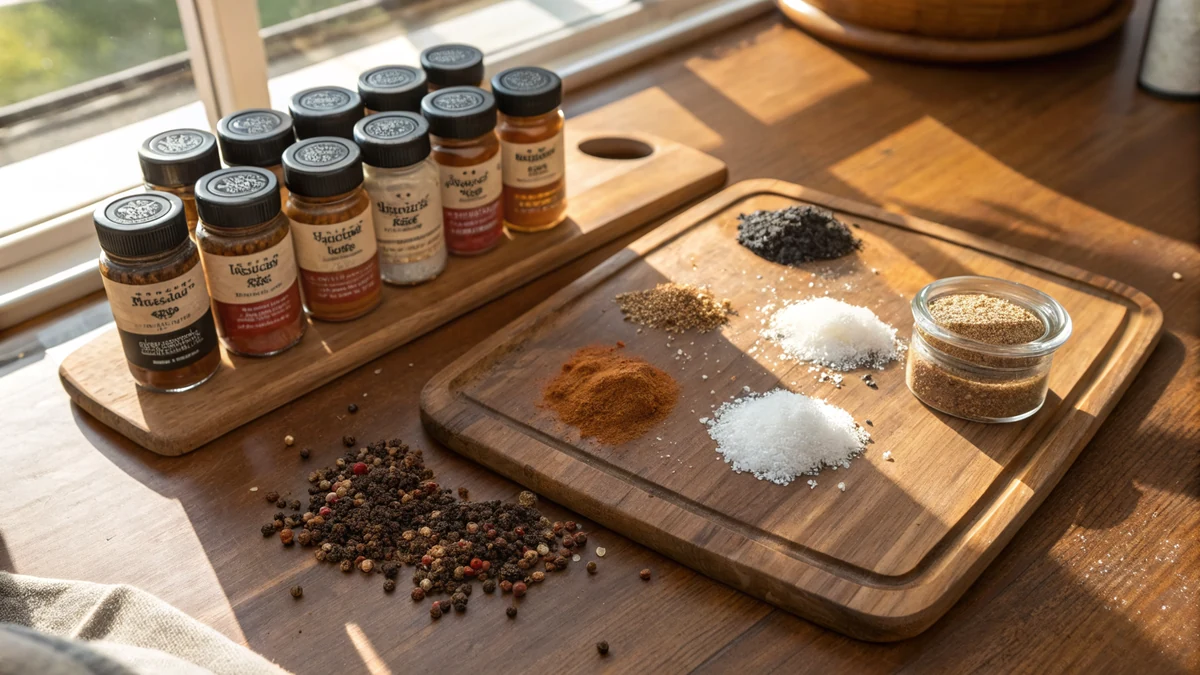
Second: the mesh size of the black pepper matters more than most cooks realize. Central Texas brisket bark depends on a coarse 16-mesh grind, large, broken pepper pieces that crack but do not pulverize during the long cook. Finer mesh (8-mesh or table grind) dissolves into the meat too quickly and the bark loses texture. Read the label or ask the manufacturer. Meat Church, Franklin, and Killer Hogs all use 16-mesh.
Third: sugar is a tool, not a default. Sugar caramelizes between 320°F and 350°F. If your cook stays below 275°F (most brisket cooks do), sugar will not burn outright, but if you go hotter, or if you crank temperature to push through a stall, sugar-heavy rubs can scorch. For a beginner cooking on a pellet smoker, a sugar-free rub like Meat Church Holy Cow or Franklin's is more forgiving than a competition-style sugar-forward rub.
Fourth: ingredients should be readable. If a rub has more than ten ingredients or contains 'natural flavors,' 'silicon dioxide,' or 'caramel color' high on the list, it is probably a mass-market product that prioritizes shelf life over flavor. The rubs in this guide all have ingredient lists you could read aloud at a Sunday potluck without anyone needing to ask what something means.
Finally: allergens. Most Texas-style rubs are gluten-free, but a small number of competition blends include malted barley or other gluten-bearing flavor carriers. If you cook for someone with celiac disease, double-check the label or contact the maker directly. Meat Church, Franklin, and Killer Hogs publish their allergen statements online.
How to Use Texas BBQ Rubs Properly
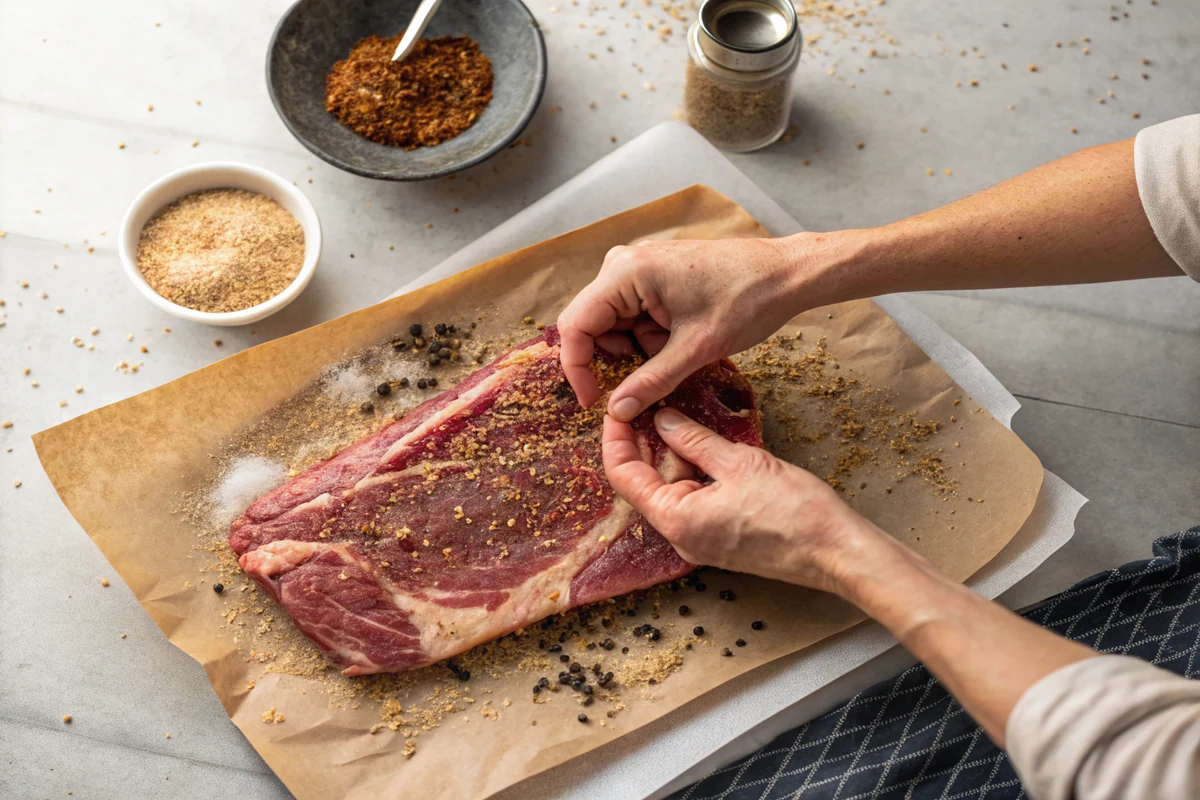
Apply rub at least two hours before cooking, and ideally six to twelve hours before, refrigerated, lightly tented with plastic wrap. This gives the salt time to penetrate the muscle and start a dry brine. You will see liquid weep out and reabsorb. That is the salt doing its work. Brisket rubbed twelve hours in advance has noticeably better moisture retention than brisket rubbed thirty minutes before the smoker.
Quantity matters. For brisket, I aim for one heaping tablespoon per pound, applied evenly across all surfaces including the deckle side. The fat cap gets less because rub does not penetrate fat, sprinkle it lightly for visual finish only. For pork ribs, half a tablespoon per pound is plenty; ribs are smaller, and over-rubbed ribs taste like you are eating spice mix. For chicken thighs, three quarters of a tablespoon per pound.
Pat the meat dry with paper towels before applying rub. Wet surfaces dilute the rub into a paste and the bark suffers. If you want adhesion, use a thin coat of yellow mustard or hot sauce as a binder, this does not flavor the finished meat, but it does help the rub stick during the early stages of the cook. Olive oil works too; on brisket I usually skip the binder entirely because the surface fat does the work.
Finally: rest after rubbing, rest after cooking, rest before slicing. A rubbed brisket should sit at room temperature for thirty minutes before going on the smoker so the surface comes up from refrigerator temperature. After cooking, rest the brisket in a dry cooler for at least one hour and ideally two before slicing. The rub is part of the bark; slicing too early collapses the bark and the seasoning you carefully built bleeds away with the juices.
Texas BBQ Rub Comparison Table
Quick reference table of all 10 rubs tested. Salt level, sugar level, and heat are scored 1-5; price is shown in dollar-sign tiers; rating is on a 10-point scale.
| Brand | Best For | Salt | Sugar | Heat | Price | Rating |
|---|---|---|---|---|---|---|
| Meat Church Holy Cow | Brisket | 3 | 0 | 2 | $$ | 9.0 |
| Killer Hogs The BBQ Rub | Ribs, chicken | 3 | 4 | 2 | $$ | 8.0 |
| Franklin Barbecue Brisket | Brisket | 3 | 0 | 2 | $$$ | 9.5 |
| Hardcore Carnivore Black | Brisket, steak | 3 | 0 | 2 | $$ | 8.5 |
| Adam Perry Lang Brisket | Brisket, lamb | 3 | 1 | 2 | $$$ | 8.0 |
| SuckleBusters Texas Style | Brisket, fajitas | 4 | 1 | 2 | $ | 8.0 |
| Big Bad Beef Rub | Brisket, beef ribs | 3 | 0 | 2 | $$ | 9.0 |
| Bolner's Fiesta Texas Style | Brisket, weeknights | 4 | 1 | 2 | $ | 7.5 |
| Plowboys Bovine Bold | Burnt ends, ribs | 3 | 4 | 3 | $$ | 8.0 |
| Oakridge BBQ Black Ops | Brisket, beef cheeks | 3 | 2 | 2 | $$$ | 8.5 |
Homemade Texas BBQ Rub Recipes
If you would rather mix your own, and after years of testing, this is what I do for at least half my cooks, here are three Texas rub recipes that scale cleanly from a teaspoon to a five-pound batch. Mix in a wide-mouth jar, shake to combine, store in a cool dark cabinet.
Classic Central Texas Salt-Pepper Rub (50/50)
- 1/2 cup coarse kosher salt (Diamond Crystal preferred)
- 1/2 cup 16-mesh black pepper
This is what Franklin uses, what Snow's uses, what my grandfather used. Apply at one heaping tablespoon per pound to brisket, beef ribs, or chuck roast. There is no rub that beats this for traditional Central Texas brisket.
Mia's Hill Country Special
- 1/3 cup coarse kosher salt
- 1/3 cup 16-mesh black pepper
- 3 tablespoons granulated garlic
- 1 tablespoon granulated onion
- 1 tablespoon Hungarian sweet paprika
- 1 teaspoon cayenne (optional)
This is the all-purpose blend I keep in a mason jar on the smoker. It works on brisket, beef ribs, pork shoulder, and as a base for grilled vegetables. Apply at one tablespoon per pound.
Sweet & Heat Brisket Rub
- 1/4 cup coarse kosher salt
- 1/4 cup 16-mesh black pepper
- 3 tablespoons brown sugar
- 2 tablespoons smoked paprika
- 1 tablespoon granulated garlic
- 1 teaspoon chipotle powder
For burnt ends, beef plate ribs, and pork shoulder, when you want bark candy. Keep the cooker under 250°F so the sugar does not scorch. Pairs well with our Texas BBQ sauce finishing glaze.
Final Verdict and Best Choices by Use Case
After all of the brisket flats, all of the ribs, and far too many Texas Twinkies, these are the rubs I keep restocking in my own cabinet.
- Best overall: Meat Church Holy Cow, clean profile, works on everything beef, never burns.
- Best for brisket (traditionalist): Franklin Barbecue Brisket Rub or the classic homemade 50/50 salt-and-pepper.
- Best budget rub: Bolner's Fiesta Texas Style, under five dollars a bottle at HEB, Texas heritage.
- Best premium rub: Adam Perry Lang's Brisket Rub, chef-y, layered, ideal for a Sunday cook where you want to impress.
- Best for ribs: Killer Hogs The BBQ Rub, caramelizes beautifully on pork.
- Best for burnt ends: Plowboys Bovine Bold, built for that glossy sweet bark.
- Best homemade alternative: Mia's Hill Country Special above, six ingredients, scales to any quantity, lives in a mason jar.
If you only buy one bottle, make it Meat Church Holy Cow. If you have time to mix one, make it the 50/50 salt-and-pepper. Then read our Texas brisket recipe and our Ultimate Texas BBQ Guide and start cooking.
Frequently Asked Questions
What is the most authentic Texas BBQ rub?
Coarse kosher salt and 16-mesh black pepper, mixed 50/50. This is what Franklin Barbecue uses on every brisket they cook in East Austin, what Snow's BBQ uses in Lexington, and what the original Central Texas pit traditions have used since the German butchers of Lockhart established the smokehouse style in the late 1800s. Any rub that contains sugar, paprika as a top-three ingredient, or more than five total ingredients has moved away from the strict Central Texas tradition.
Salt and pepper only, is that really enough?
On a USDA Choice or Prime packer brisket cooked over post oak for 14 to 16 hours, salt and pepper are absolutely enough. The smoke supplies aroma, the long render develops flavor through the breakdown of connective tissue, and the salt-pepper bark provides texture and contrast. Most readers who try a salt-pepper-only brisket after years of multi-spice rubs are surprised by how clean and beef-forward the result tastes.
How much rub per pound of brisket?
One heaping tablespoon of rub per pound of trimmed brisket is the Central Texas standard. For a 12-pound trimmed packer, that is roughly 3/4 cup of rub total. Apply more on the lean side, less on the fat cap (rub will not penetrate fat anyway). If using a salty competition rub, scale back to one level tablespoon per pound or you will over-season.
When should I apply the rub?
Ideally six to twelve hours before cooking, refrigerated, lightly tented with plastic wrap. This lets the salt dry-brine the meat. At minimum, rub two hours ahead. Rubbing thirty minutes before cooking still works, but you lose the moisture-retention benefit of a longer dry brine. Brisket rubbed twelve hours ahead is noticeably juicier than brisket rubbed last-minute.
Can I use brisket rub on pork ribs?
Yes, but with adjustments. A sugar-free Texas brisket rub like Meat Church Holy Cow or the classic 50/50 salt-pepper will season pork ribs cleanly, but you may miss the caramelized sweetness pork traditionally pairs with. For a sweet-savory rib bark, mix two parts brisket rub with one part brown sugar. Apply at about half a tablespoon per pound of ribs.
How do I store BBQ rubs?
Cool, dark, dry cabinet. Original glass or plastic shaker bottles are fine. Avoid heat (do not store next to the stove) and avoid direct sunlight. Most rubs hold flavor for 12 to 18 months. After that, paprika and ground spices fade. If a rub smells flat when you open the lid, it is past prime. Buy smaller bottles more frequently rather than warehouse-club sizes.
What is the difference between 16-mesh and regular black pepper?
Mesh refers to the screen size used to grade ground pepper. 16-mesh is coarse, large broken pieces, often called restaurant grind or butcher grind. Standard ground pepper sold in spice aisles is typically 32-mesh or finer. For brisket bark, 16-mesh is the Central Texas standard because it cracks but does not pulverize during the long cook. You can buy 16-mesh pepper directly from spice houses like Spiceology, Penzeys, or Burlap and Barrel.
Are these BBQ rubs gluten-free?
Most Texas-style brisket rubs in this guide are gluten-free. Meat Church, Franklin, Hardcore Carnivore, and Big Bad Beef Rub all publish gluten-free statements. Competition rubs from Killer Hogs and Plowboys are also gluten-free per their labels. Always verify by checking the current label or contacting the manufacturer if you cook for someone with celiac disease.
Why is there no sugar in traditional Texas brisket rubs?
Two reasons. First, brisket cooks at 225°F to 275°F for twelve to sixteen hours, and sugar starts to caramelize and eventually burn at temperatures above 320°F, long stretches in that zone darken sugar toward bitter. Second, Central Texas brisket tradition prioritizes the beef flavor itself; sugar masks the deep render and post-oak smoke that defines the style. Beef brisket cooked low and slow does not need sweetening.
What is the best BBQ rub for beginners?
Meat Church Holy Cow. It is sugar-free so it will not burn if you accidentally run hot, it is widely available at most barbecue retailers, the salt level is well-judged, and the flavor reads as 'Texas brisket' to anyone who tries it. As a runner-up, Big Bad Beef Rub from AmazingRibs.com is also extremely forgiving for first-time brisket cooks.