Tex-Mex Recipes
Coconut Tres Leches Cake
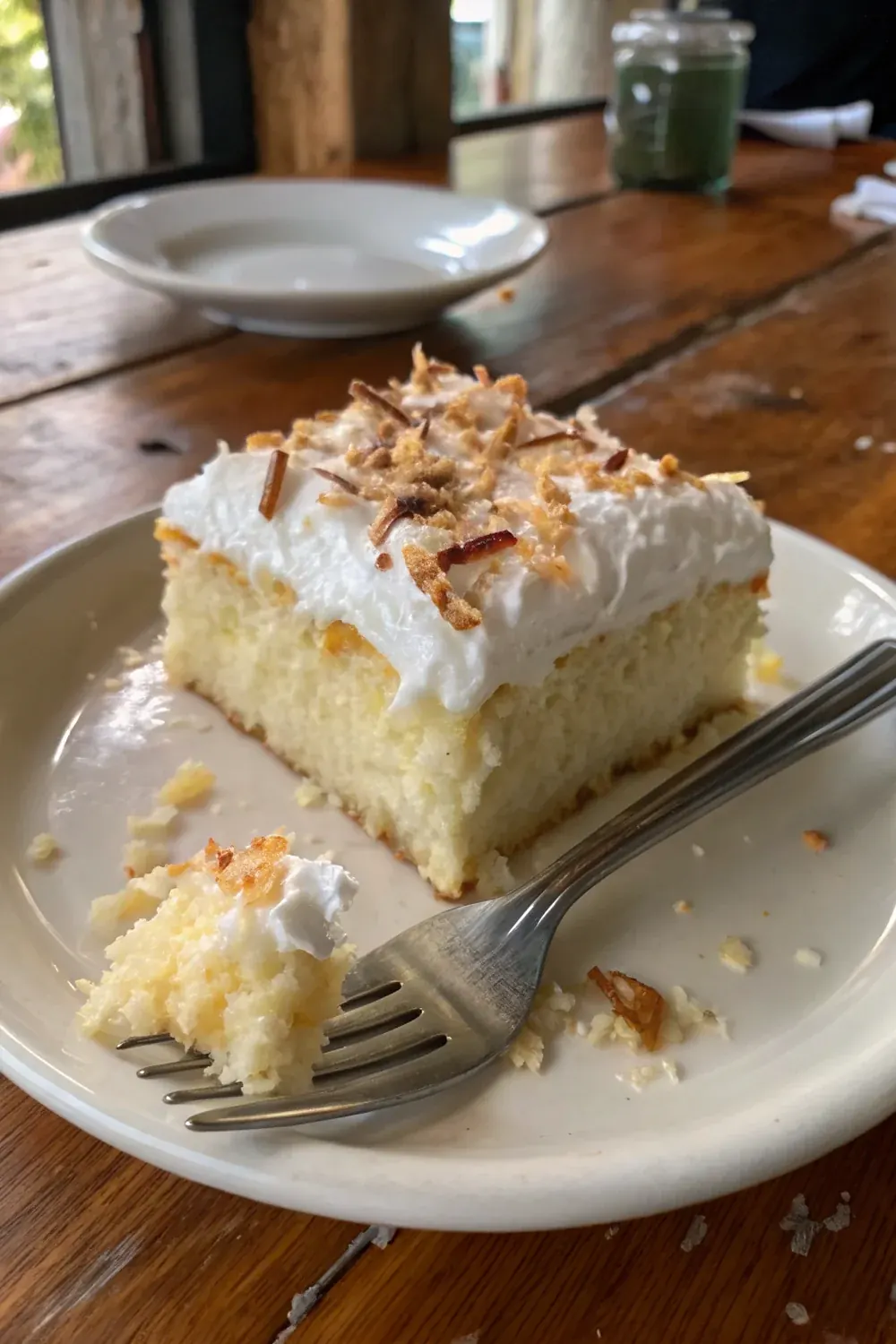
Chef Mia's coconut tres leches cake: classic three-milk soak with coconut milk twist, toasted coconut topping, whipped cream finish.
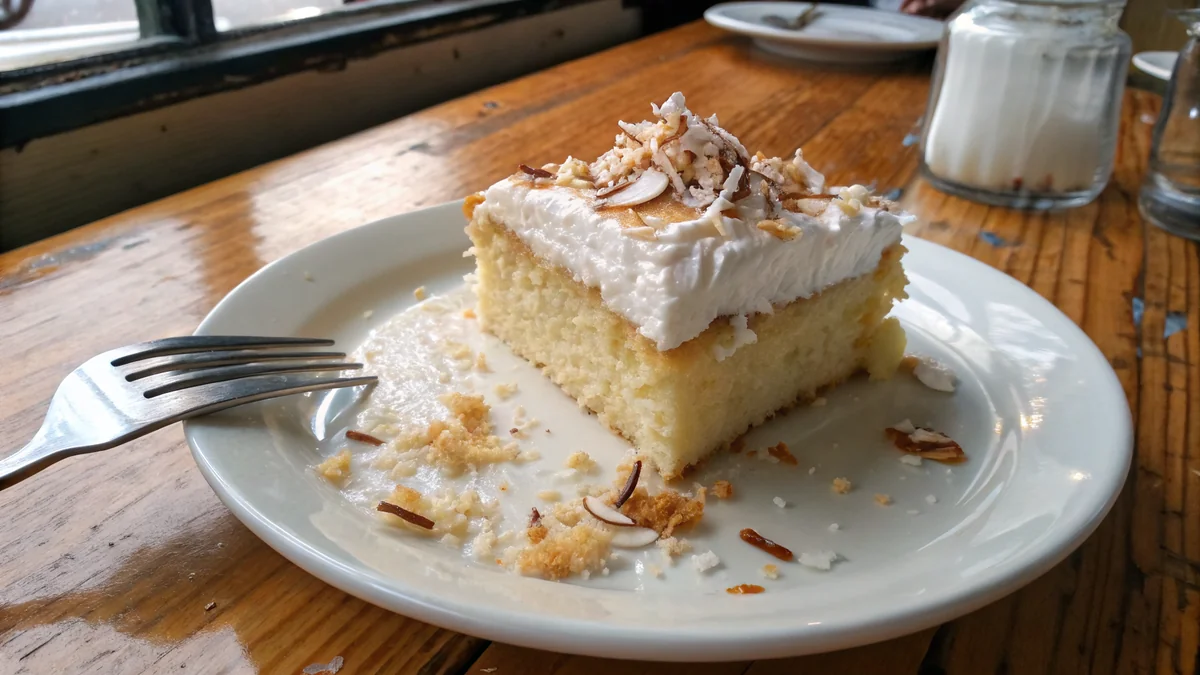
Quick answer: Coconut tres leches cake is a sponge cake soaked in three milks (evaporated milk, sweetened condensed milk, and coconut milk in place of the traditional whole milk or cream) until completely saturated, then topped with fresh whipped cream and toasted coconut shavings. Bake the sponge cake at 350F for 30 minutes, cool, poke holes throughout the top, drizzle the milk mixture slowly until the cake absorbs it all, then refrigerate 4 hours minimum. The result is the wettest, richest, most decadent dessert in the Tex-Mex playbook - and the one that disappears first at any San Antonio Sunday gathering.
I learned to make coconut tres leches cake from my friend Maria, who grew up in the King William neighborhood of San Antonio in a Mexican family that had been there for four generations. Her mother ran a small panaderia out of the front of their house in the 1990s, and on Sundays after church the kitchen filled with the smell of vanilla, condensed milk, and toasted coconut. The tres leches cake was always the centerpiece of the dessert table at their family gatherings, and it disappeared before the buttermilk pies and the pecan empanadas - which is saying something, because in a Texas-Mexican family those are not small competitors.
Maria's family version of the recipe used a slightly unusual twist: instead of the traditional three milks (evaporated, sweetened condensed, and whole milk or cream), they substituted coconut milk for the whole milk. The result was a tres leches cake with subtle coconut perfume running through the entire soak, finished with a dusting of toasted coconut shavings on the whipped cream topping. The change is small but transformative. The coconut adds a tropical-Tex-Mex coastal note that sits beautifully alongside the dairy richness of the evaporated and condensed milks.
If you have ever eaten at Mi Tierra Cafe in San Antonio's Market Square, or at any of the legendary panaderías in Houston's Heights neighborhood (La Mexicana, El Bolillo), you know this dessert. It is the cake that Texas Mexican families bring to potlucks, christenings, quinceañeras, and Sunday Funday. The recipe below is Maria's family version with my own minor adjustments after twenty years of making it - slightly less sugar in the soak, a touch of dark rum in the milk mixture, and toasted coconut on top instead of just shredded. The total active prep time is about 30 minutes; the chill time of 4 hours is non-negotiable. Make it the day before; it actually improves with a 24-hour rest in the fridge.
What Is Tres Leches? (the Three Milks Explained)
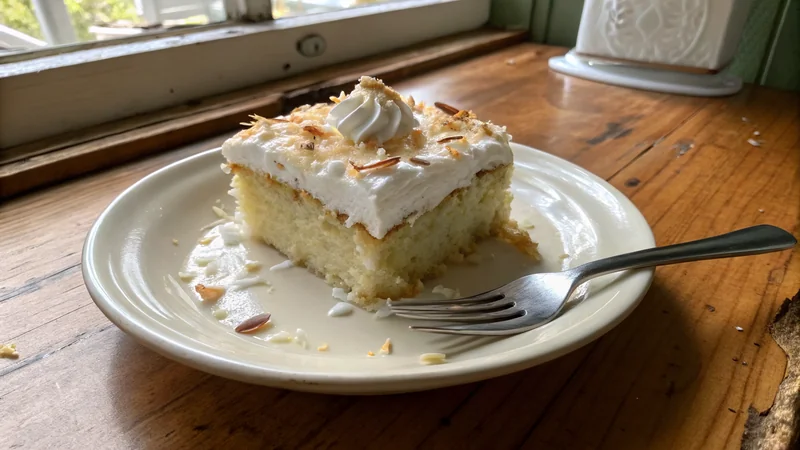
Tres leches translates literally as three milks. The dish is a sponge cake (Mexican bizcocho) soaked in a mixture of three different milk products - traditionally evaporated milk (leche evaporada), sweetened condensed milk (leche condensada), and either whole milk or heavy cream (leche entera o crema). Each milk does a different job: evaporated milk provides body, sweetened condensed milk provides sweetness and dairy depth, and the third milk thins the mixture to soaking consistency. The cake absorbs all three milks completely over a 4-24 hour rest, transforming a relatively dry sponge into a wet, custard-saturated dessert.
The dish originated in Latin America - probably in Nicaragua or Mexico in the late 1800s, with claims and counter-claims from various countries. By the 20th century it had become a standard dessert across Latin America and into the Texan-Mexican borderland kitchens of South Texas. San Antonio Mexican-American families have been making variations of tres leches for generations; it is one of the canonical dishes of Tejano cuisine.
The coconut variation we are making today is one of dozens of regional twists. Other common versions include cuatro leches (adding a fourth milk - usually crema or cajeta), tres leches con frutas (topped with fresh tropical fruit), café tres leches (with a coffee component in the soak), and the increasingly popular dulce de leche tres leches (drizzled with caramel sauce). The coconut version is particularly Texas-coastal in feel; it pairs beautifully with the ranch-and-coast geography of South Texas.
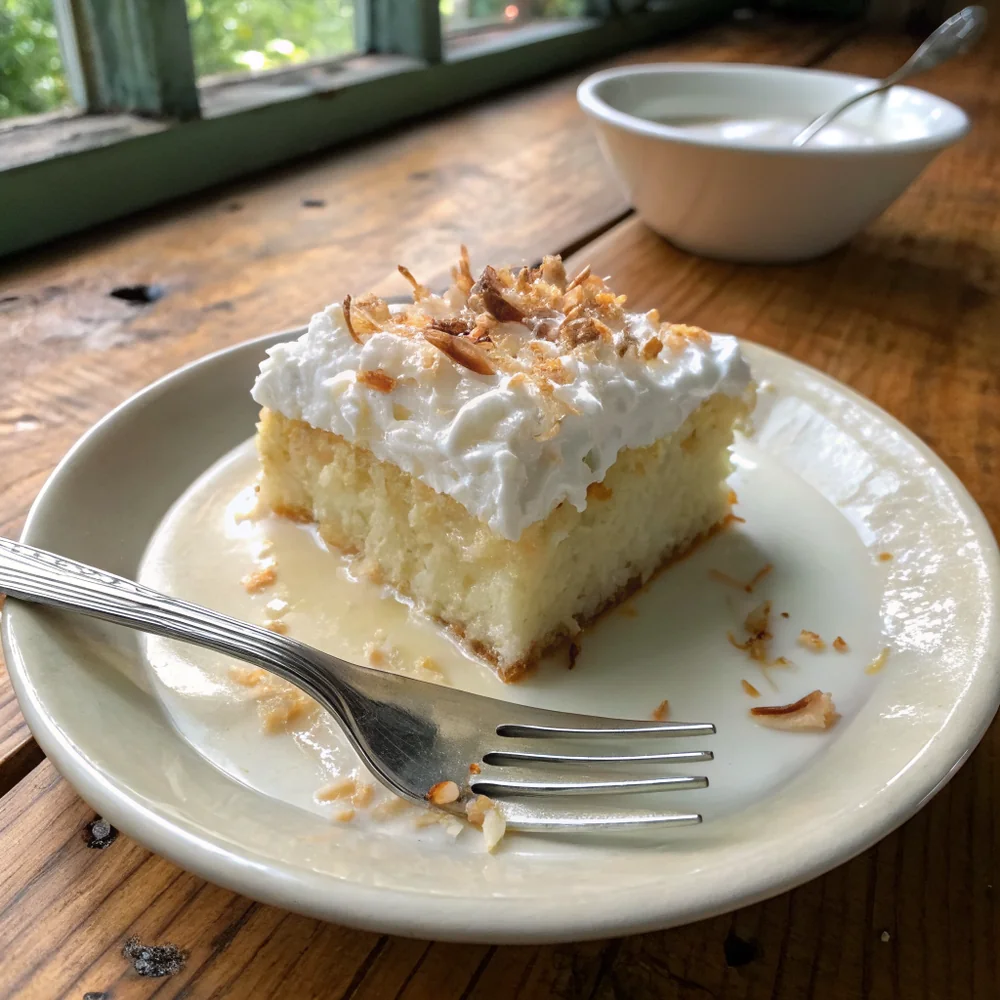
The texture is the entire point. A properly soaked tres leches is wet to the touch when you cut it - the slice should leave a milky pool on the plate, and the spoon should pick up some of that pooled liquid. A dry-cut tres leches is under-soaked. A flooded tres leches is over-soaked. The 24-hour rest in the fridge is the calibration window that lets the cake reach the right level of saturation.
The Coconut Twist (Substituting Coconut Milk for Whole Milk)
The traditional third milk in tres leches is whole milk or heavy cream. The coconut variation replaces the whole milk with full-fat canned coconut milk (not the watery cans labeled 'lite' coconut milk; those are too thin). The substitution is straightforward 1:1 - 13.5 oz of full-fat coconut milk replaces 1.5 cups of whole milk in the soak mixture. The fat content is similar (coconut milk is about 19% fat; heavy cream is 36%, whole milk is 3.5%, so coconut milk sits in between).
The coconut milk adds a subtle but distinct tropical perfume to the entire cake. It does not taste overtly like coconut on its own; it reads more like a faint coconut shadow underneath the dairy and the vanilla. The toasted coconut topping is what makes the coconut character explicit and satisfying; without the topping, the cake reads as a slightly different tres leches but not specifically as coconut. Both layers (the soak and the topping) are essential to the variation.
Use full-fat coconut milk only. Lite coconut milk is mostly water and produces a thin, washed-out soak. Coconut cream (the very thick canned product) is too rich and makes the soak too heavy. The 13.5 oz can of regular full-fat coconut milk (Aroy-D, Chaokoh, Native Forest, Whole Foods 365 brand) is exactly what you want. Shake the can thoroughly before opening - coconut milk separates in the can, and unshaken cans give you mostly water on top and solid coconut cream on the bottom.
The dark rum in the soak is optional but recommended. One tablespoon adds a faint molasses-and-vanilla depth that sits behind the dairy without identifying as alcohol. The alcohol is mostly evaporated by the time you serve (and in any case, the amount per slice is small). Bourbon or coconut rum work as substitutions. For an alcohol-free version, replace with 1 teaspoon of additional vanilla extract.
The Sponge Cake Base (From Scratch vs Box-Shortcut)
The traditional tres leches uses a sponge cake (Mexican-style bizcocho) made from scratch with whipped egg whites for structure - no butter, no oil. The result is a relatively dry, light cake that absorbs the three-milk soak completely. Pound cakes, butter cakes, and oil-based cakes do not work for tres leches because they have too much fat to absorb the milks; the soak rolls off the surface instead of soaking in.
The from-scratch sponge cake recipe in this method takes about 20 minutes of active work and is straightforward: whisk dry ingredients, beat egg yolks with sugar, fold in whipped egg whites, bake at 350F for 30 minutes. The trickiest step is the egg-white folding; over-mixed batter loses air and produces a denser cake. Use a spatula and a figure-8 folding motion; stop when no white streaks remain.
Box cake shortcut: yellow cake mix can be used as a substitute for the from-scratch sponge. Use a standard 15 oz box of yellow cake mix prepared per package directions, baked in a 9x13 pan. The result is slightly sweeter than the from-scratch version (boxed cakes have more sugar) but works for the soak. Reduce the granulated sugar in the soak from the recipe by 2 tablespoons to compensate. This shortcut saves about 15 minutes of active prep time and is what many Texas Mexican family kitchens actually do during the busy holiday season.
Avoid box cake mixes labeled super moist or pudding in the mix - they have too much fat and the sponge soaks unevenly. Standard yellow or white cake mix works; chocolate cake mix produces an interesting variation but changes the entire dessert profile.
The Soaking Method: Slow Drizzle, Pause, Refrigerate
The soaking step is the most important single moment in tres leches. Done well, the cake absorbs every drop of the milk mixture and ends up uniformly wet throughout. Done poorly, the milk pools on top and the cake under-soaks. Three rules: poke many holes, drizzle slowly, and refrigerate overnight.
Poke holes: 50-60 holes total, evenly distributed across the surface, going about 3/4 of the way down through the cake. Use a fork or a thin skewer. The holes give the milk a path into the interior; without holes, the surface saturates and stops the rest of the milk from getting in. Some bakers skip the holes entirely (their grandmothers did not poke holes); without holes, the cake works but takes 36+ hours of fridge time to fully soak. Holes accelerate the process.
Drizzle slowly: pour the milk mixture in a steady spiral pattern starting from the outside edge and working inward. Pause every 1 cup of mixture (about a third of the total) and let the cake absorb. The cake will look like a flooded mess after the first cup - that is correct. After the second cup, the surface starts to look less flooded as the absorption catches up. By the third cup, the cake is uniformly wet but no standing pools.
Refrigerate immediately: as soon as the cake is fully soaked, cover with plastic wrap and refrigerate. The first 4 hours are when the bulk of the soak distributes through the cake; the next 20 hours are when the texture stabilizes and the flavors meld. Do not refrigerate less than 4 hours; the cake will be unevenly soaked. Do not refrigerate more than 72 hours; the cake structure starts to break down past day 3.
Use a glass or ceramic 9x13 dish for the soak. Metal pans can react with the dairy and milk acids over the long fridge time, producing a slightly metallic taste. Glass and ceramic are inert and produce the cleanest flavor.
Whipped Cream Topping and Toasted Coconut
Fresh whipped cream is the right topping for tres leches. The Mexican tradition is whipped cream made from heavy cream + sugar + vanilla, applied right before serving so it stays fresh and fluffy on the plate. Cool Whip and other stabilized whipped toppings are common American substitutes - they hold their shape longer in the fridge and travel better to potlucks - but the texture is wrong. Real whipped cream is the upgrade that distinguishes a homemade tres leches from a grocery-store version.
To whip cream properly: use very cold heavy cream (35% fat or higher) and a chilled metal mixing bowl. Beat with electric mixer on medium-high speed, gradually adding sugar and vanilla. Stop when soft-medium peaks form - the cream should hold a peak that flops over slightly when you lift the beaters. Over-whipped cream turns grainy and eventually becomes butter; under-whipped cream is too liquid to spread. Aim for the moment between the two.
If you must use a stabilized topping, mix 1 tablespoon of cornstarch + 1 tablespoon of cold water into a slurry, then whisk into the cream as you whip. The cornstarch holds the whipped cream stable for 6-8 hours in the fridge without weeping. This is the move for travel-friendly tres leches that needs to last from your kitchen to a Sunday potluck. Avoid Cool Whip outright - it has a fake-sweet flavor that works against the dairy depth of the cake.
Toasted coconut is the texture and flavor amplifier. Spread 1/2 cup of sweetened shredded coconut on a sheet pan and bake at 325F for 8-10 minutes, stirring every 3 minutes, until deep golden brown. Cool completely before using - warm coconut weeps oil onto the whipped cream and makes it soggy. Sprinkle the toasted coconut over the whipped cream right before serving. Toasted coconut chips (the larger flake-style coconut) are an excellent garnish on top of the shredded.
Make-Ahead Champion (and Storage Tips)
Tres leches is one of the great make-ahead desserts. The soak step requires at least 4 hours, ideally 24 hours, of fridge time before serving. This means the cake must be made the day before any event - which is actually a feature, not a bug. The day-of work is just whipping the cream and toasting the coconut, both 5-minute tasks. The cake itself is bulletproof in the fridge for 48 hours. If the same table needs a second make-ahead dessert, my Texas lemon blueberry pound cake holds just as gracefully and covers the fruit end of the spread.
For larger events: bake and soak the cake on day -1 or -2. Store covered in the fridge. Whip the cream and toast the coconut on serving day, less than 1 hour before serving. Top the cold cake with the fresh cream and coconut, slice, plate. The wet cake stays cold and the fresh whipped cream stays fluffy - an ideal combination for any temperature condition.
For travel: whip the cream + cornstarch stabilizer combo described above. Top the cake at home, transport in the dish (cover loosely with plastic wrap propped on toothpicks to keep the wrap off the cream). The cake holds for 4-6 hours in a cooler at potluck temperatures. Sprinkle the toasted coconut at the destination, not before travel - coconut on whipped cream during transport gets squished and loses the textural pop.
Storage: covered in the fridge for up to 3 days from the day it was made. The texture continues to evolve for the first 24 hours (improving), holds steady for the next 24 hours, and starts to break down on day 3 (the cake gets too saturated and the structure goes mushy). Plan to serve within 48 hours of baking. Freezing tres leches is not recommended - the texture changes drastically when frozen and thawed.
For more Texan dessert pillars, see buttermilk pie for a related custard-pie tradition, Texas pecan pie for the canonical pecan dessert, or the Ultimate Texas Desserts Guide for the broader category.
Coconut Tres Leches Cake Recipe
Ingredients
- FOR THE SPONGE CAKE:
- 1 cup (125 g) all-purpose flour
- 1.5 teaspoons baking powder
- 1/4 teaspoon kosher salt
- 5 large eggs, separated
- 1 cup (200 g) granulated sugar, divided (3/4 cup + 1/4 cup)
- 1/3 cup (80 ml) whole milk
- 1 teaspoon pure vanilla extract
- FOR THE THREE MILK SOAK:
- 1 12 oz (354 ml) can evaporated milk
- 1 14 oz (397 g) can sweetened condensed milk
- 1 13.5 oz (400 ml) can full-fat coconut milk (NOT lite)
- 1 tablespoon dark rum (optional but recommended)
- 1 teaspoon pure vanilla extract
- FOR THE TOPPING:
- 1.5 cups (360 ml) heavy whipping cream, very cold
- 3 tablespoons (38 g) granulated sugar
- 1 teaspoon pure vanilla extract
- 1/2 cup (40 g) sweetened shredded coconut, toasted
- Optional: 1/4 cup toasted coconut chips for garnish, lime zest
Instructions
- Preheat the oven and prep the pan. Preheat the oven to 350F (175C). Lightly grease a 9x13 inch baking dish (glass or ceramic preferred for the soak step). Do not flour the pan; it interferes with the cake's ability to absorb the milk soak. The cake stays in the same dish from oven to fridge to table.
- Whisk dry ingredients. In a medium bowl, whisk together the flour, baking powder, and salt. Set aside. This is a sponge cake (no butter or oil); the structure comes from whipped egg whites and the right ratio of flour to liquid.
- Beat egg yolks with sugar. In a large mixing bowl, beat the 5 egg yolks with 3/4 cup of the granulated sugar using an electric mixer on medium-high for 4-5 minutes until the mixture is pale yellow, thick, and ribbons off the beaters when lifted. Beat in the whole milk and vanilla extract until just combined - 30 seconds. Add the flour mixture and fold in gently with a spatula until just incorporated, no lumps.
- Whip egg whites to soft peaks. In a separate clean dry bowl, beat the 5 egg whites with an electric mixer on medium-high until soft peaks form, about 2 minutes. Add the remaining 1/4 cup of sugar gradually while continuing to beat. Continue beating until stiff peaks form - the whites should hold a peak when you lift the beaters and not flop over. About 3-4 more minutes.
- Fold whites into batter and bake. Add 1/3 of the whipped egg whites to the yolk batter and stir gently to lighten. Add the remaining whites and fold in with a spatula using a figure-8 motion until no white streaks remain - about 30 folds. Do not overmix; you want to preserve as much air as possible. Pour the batter into the prepared 9x13 pan, smoothing the top. Bake 30 minutes until the cake is golden brown on top, springs back when lightly pressed, and a toothpick inserted in the center comes out clean.
- Cool the cake completely. Pull the cake from the oven and set on a wire rack. Cool to room temperature, 60-90 minutes. Do not soak a warm cake - the heat causes the milks to curdle slightly and the texture goes wrong. The cake should be cool to the touch all the way through.
- Whisk the three milk soak. While the cake cools, whisk together the evaporated milk, sweetened condensed milk, coconut milk (shake the can well first; coconut milk separates), dark rum if using, and vanilla extract in a large measuring cup or bowl. The mixture should be uniformly smooth and pale tan in color. Set aside.
- Poke holes and soak the cake. Once the cake is fully cool, use a fork or skewer to poke holes throughout the surface - about 50-60 holes total, evenly distributed, going about 3/4 of the way down through the cake. Slowly drizzle the three-milk mixture over the entire surface in a steady spiral pattern. Pause every cup or so to let the cake absorb the liquid before adding more. The cake will look completely flooded by the end - that is correct. Use all of the milk mixture; the cake absorbs an astonishing amount.
- Refrigerate 4 hours minimum, ideally 24. Cover the dish with plastic wrap and refrigerate at least 4 hours, ideally overnight. The cake needs this time to fully absorb the soak and develop its signature wet-saturated texture. After 24 hours, the texture is at its peak - dense, milky, almost custard-like in the most-soaked spots. Do not refrigerate the cake more than 72 hours; it starts to break down structurally past day 3.
- Whip the cream and serve. Just before serving, whip the cold heavy cream with the 3 tablespoons of sugar and 1 teaspoon vanilla extract until soft-medium peaks form, about 2-3 minutes. Spread the whipped cream evenly over the top of the chilled cake. Sprinkle the toasted shredded coconut over the whipped cream. For garnish, scatter optional toasted coconut chips and a fine grating of lime zest. Slice into 12 squares with a sharp knife dipped in hot water and wiped between cuts. Serve cold; the wet-cold-cream-and-cake contrast is the entire texture moment.
Frequently Asked Questions
Why is my tres leches cake not absorbing the milk?
Two likely causes: (1) you used a butter cake or oil cake instead of a sponge cake - the fat blocks absorption; (2) you didn't poke enough holes (or any holes) to let the milk into the interior. Solution: use a from-scratch sponge cake (no butter or oil) or a yellow box cake mix, and poke 50-60 holes throughout the surface before drizzling the soak. Refrigerate at least 4 hours, ideally 24, for full absorption.
Can I make tres leches cake gluten-free?
Yes - substitute a 1:1 gluten-free flour blend (King Arthur, Bob's Red Mill) for the all-purpose flour. The sponge cake structure relies more on the whipped egg whites than on the flour gluten development, so the GF version works almost identically. The texture may be slightly more delicate; handle the cake gently when transferring. The soaking and topping steps are unchanged.
Is tres leches cake supposed to be wet?
Yes - that is the entire point. A properly soaked tres leches is visibly wet when sliced; the slice should leave a milky pool on the plate and the cake should feel saturated when bitten. If your cake is dry, it is under-soaked (more soaking time needed, or more holes poked). If it is so wet it falls apart on the fork, it is over-soaked (use less liquid next time, or shorter chill). The sweet spot is wet-but-cohesive.
Can I make tres leches cake without alcohol?
Yes - skip the dark rum entirely. The cake works perfectly without it. The rum adds a faint molasses-vanilla depth that supports the dairy and coconut, but it is not essential. For alcohol-free, replace with 1 extra teaspoon of vanilla extract or 1 teaspoon of almond extract for an interesting variation.
How long does tres leches cake keep in the fridge?
Up to 3 days from baking, including the soaking time. The cake improves on day 1 (full saturation), holds at peak texture on day 2, and starts to break down on day 3 (the cake gets too saturated, the structure goes mushy). Plan to serve within 48 hours of baking. Top with whipped cream and toasted coconut just before serving for best texture.
Can I use Cool Whip instead of fresh whipped cream?
You can, but the cake suffers. Cool Whip has a stabilized texture that holds longer but a slightly artificial-sweet flavor that conflicts with the dairy depth of the soaked cake. Real whipped cream + 1 tablespoon cornstarch slurry whipped in produces a stable cream that holds 6-8 hours and tastes correct. The 5 minutes of whipping fresh cream is worth the upgrade in flavor.
What's the difference between tres leches and cuatro leches?
Cuatro leches adds a fourth milk to the traditional three. The fourth milk varies by family and region: Mexican crema, cajeta (caramelized goat milk syrup), dulce de leche, or even a flavored milk like horchata. The result is richer, sweeter, and slightly more complex than tres leches. The coconut tres leches version in this recipe could become a coconut cuatro leches with the addition of cajeta drizzled over the top before the whipped cream.
Can I freeze tres leches cake?
Not recommended - the texture changes drastically when frozen and thawed. The cake structure breaks down further during freezing, and the wet, soaked texture turns into something between mush and ice crystals on thawing. If you absolutely must freeze, freeze the unsoaked sponge cake (before the soak step), then thaw, soak, and serve fresh. The unsoaked sponge freezes well for up to 3 months.