Texas BBQ
Cowboy Cut Ribeye
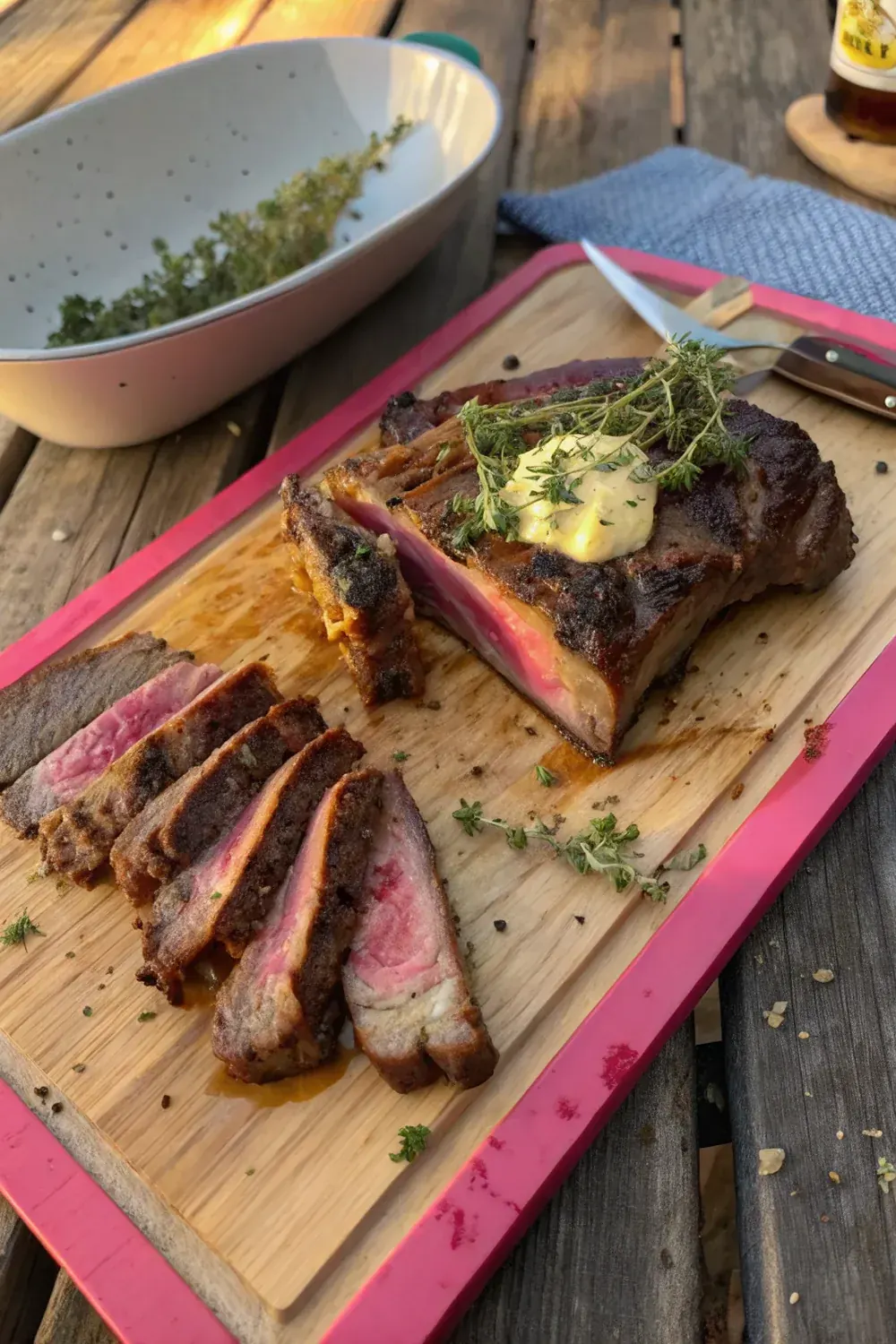
Chef Mia's cowboy cut ribeye: 2-inch bone-in steak reverse-seared at 250F, finished cast-iron with cowboy butter for steakhouse char in 45 min.
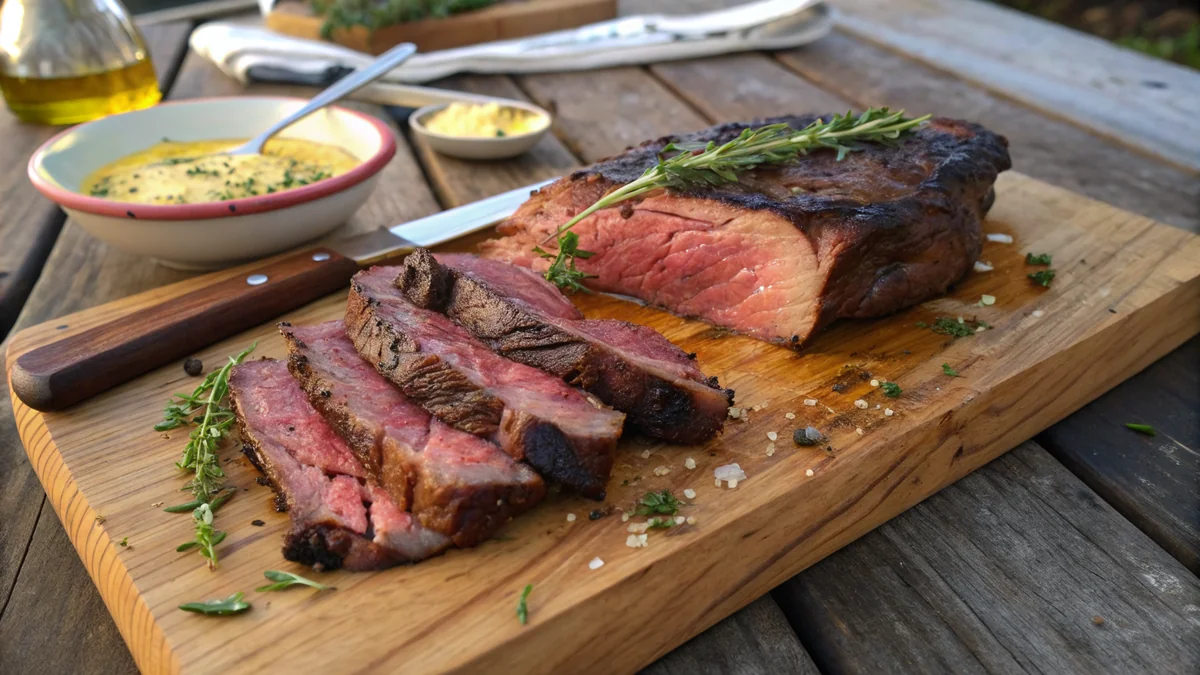
Quick answer: A cowboy cut ribeye is a bone-in ribeye cut at least 2 inches thick, with the rib bone trimmed short and clean (unlike the long-bone tomahawk). The reverse-sear method nails it at home: dry-brine 24 hours with kosher salt, roast at 250F until the internal temperature hits 115F (about 30-35 minutes), then sear hard in a screaming-hot cast iron skillet for 90 seconds per side. Rest 10 minutes, finish with cowboy butter, and slice thick against the grain.
The first cowboy cut ribeye I ever paid attention to came on a wooden board at Perry's Steakhouse in Houston, set down in front of me like a piece of furniture. Two and a half inches thick, bone-in, the kind of cut that arrives with a steak knife planted upright in the meat for theater. The waiter sliced it tableside, fanned the slabs across the board, and walked away. I remember thinking it was the most patient piece of beef I had ever eaten - mahogany crust, a uniform pink interior from edge to edge, the bone giving up just enough fat to gloss every slice.
Years later, I figured out what made that steak work was not the steakhouse mystique. It was the reverse-sear: low and slow first, hard sear last. Done at home in a 250F oven and a screaming cast iron skillet, the result is functionally identical to a wood-fired Pappas Bros plate without the $80 ticket. The trick is the 2-inch rule. Anything thinner overcooks before the crust forms; anything thicker tips into roast territory. Two to two-and-a-half inches is the sweet spot where reverse-sear does its best work.
The version below is the one I make on Sunday evenings when I want one excellent steak instead of two acceptable ones. It splits a single cowboy cut between two people because that is honest cowboy proportions: a Hill Country rancher I buy from runs his cattle on Onion Creek, and his standing rule is that one bone-in ribeye feeds two adults if there is cornbread on the table. I have never argued with him. One last note before the recipe: the pan matters nearly as much as the beef, and my cast iron skillet guide ranks the ones that hold true sear-grade heat.
Why a Cowboy Cut Ribeye, Not a Standard Ribeye
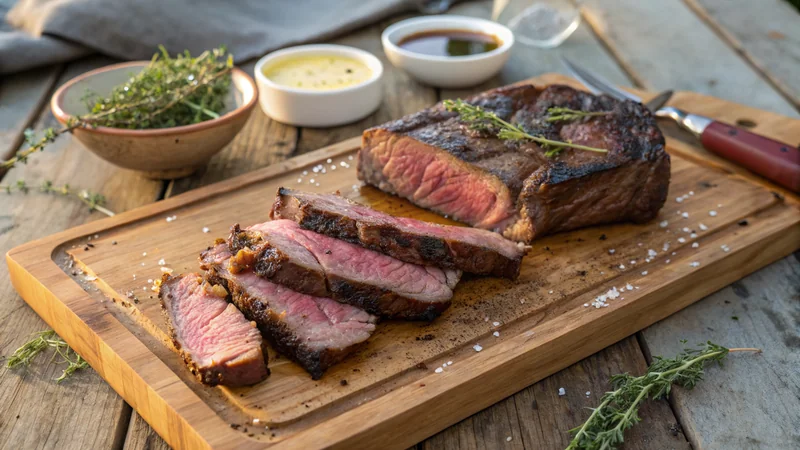
Most ribeye steaks at the meat counter come boneless and cut about 1 to 1.25 inches thick. They cook fast, they sear easy, and they are perfectly fine. A cowboy cut is something different. It is a bone-in ribeye, cut from the rib primal, with a 4 to 5-inch rib bone trimmed and frenched short. The thickness is the part that matters most - 2 to 2.5 inches, often closer to 2.5, weighing 1.5 to 1.8 lb. That extra inch changes everything about the cook.
Thicker steaks reverse-sear better than thinner ones because they have enough mass to absorb a slow oven cook without turning into roast. By the time the inside hits 115F, the outside is dry to the touch and ready to sear. A 1-inch ribeye cooked the same way would be medium-well by the time you got the crust. The 2-inch rule is not a marketing flourish; it is the geometry that makes the method work.
The bone matters too, though probably less than steakhouse menus suggest. Some cooks claim the bone insulates the meat and changes the flavor; the science says the bone barely transfers heat at all. What the bone actually does is hold structure during the high-heat sear, give the meat something to bend against, and provide a 30-second rendering edge of fat at the chine end. Plus, it looks like a steak from a Western. That counts.
Cowboy Cut vs Tomahawk: What's the Difference
The cowboy cut and the tomahawk are siblings, not twins. Both are bone-in ribeyes cut from the rib primal. The difference is the rib bone: a cowboy cut has the bone trimmed short, usually 4 to 5 inches, with the meat coming nearly to the end. A tomahawk has the entire long rib bone left in, frenched clean, often 8 to 10 inches long. Same meat, different bone, different price.
On the cooking side, the two cook identically. The bone is the bone, whether it sticks out 5 inches or 10. On the eating side, the cowboy cut is the practical version - it fits in a cast iron skillet, it fits on a normal plate, and the price is reasonable. Tomahawks are a presentation cut. They look incredible on Instagram, they are awkward to cook at home (the long bone hits the oven walls in a 22-inch oven), and they cost 30-40 percent more for the same eating experience. At the opposite end of the price sheet sits the beef cross rib steak, a chuck shoulder cut with none of the glamour and enormous flavor per dollar: my pick for the Tuesdays between cowboy cut occasions.
If you walk into a butcher shop and ask for a cowboy cut, you will sometimes hear it called a cowboy steak, a long-bone ribeye, or just a 2-inch bone-in ribeye. The names blur. The thing to specify is thickness: at least 2 inches, ideally 2.5. The bone length is cosmetic.
The Reverse-Sear Method, Explained
Reverse-sear flips the conventional sequence. Instead of searing first and finishing in the oven (the steakhouse method, which works for thinner steaks), you cook low and slow first, then sear hard at the end. The benefits are concrete: edge-to-edge pink doneness with no grey band, a drier surface that crusts cleanly, and total temperature control because you can pull the steak at the exact internal temp you want.
The oven phase is gentle. At 250F, the steak warms slowly and evenly. The inside drifts up to 115F over 30 to 40 minutes for medium-rare. There is almost no way to overshoot - you have a wide window to check, probe, and pull. Some cooks go even lower, 200F or 225F, for a longer cook with even more uniform color. The trade-off is time. 250F is the practical middle.
The sear phase is fast. Once the steak hits 115F, you pull it, rest five minutes, and slam it into a cast iron skillet that has been heating empty over high flame for at least five minutes. The skillet should be smoking. Two coats of oil, 90 seconds per side, then a butter baste for 60 seconds. The crust forms in under three minutes total because the surface is bone-dry from the dry brine and the oven phase. A wet steak refuses to crust; a dry steak crusts the moment it hits the iron.
Cowboy Butter: The Finishing Move
Cowboy butter is a Texas compound butter built around garlic, parsley, lemon zest, Dijon, paprika, and a hit of cayenne. It melts the moment it touches a hot steak, glossing the slices with herbs and acid. A 2-inch ribeye that has been seared, basted, and rested is already an excellent steak; cowboy butter is what makes it a great one.
I treat cowboy butter as the standard finish for any cast iron steak. The butter you basted with in the skillet is rich and savory but flat. The cowboy butter you spoon over the slices at the table is bright - lemon and parsley and Dijon, with a cayenne kick that wakes the palate. It is the difference between a steakhouse plate and a date-night plate.
Make a batch ahead. The full recipe takes 10 minutes and keeps two weeks in the fridge or three months frozen. A pat on a bowl of mashed potatoes is also legal. So is melting it over corn on the cob. The ribeye gets the first call, but the butter makes anything else better too.
Resting and Slicing Against the Grain
If you do everything else right and skip the rest, you have a ten-out-of-ten cook executed at six. A 2-inch ribeye needs a full 10 minutes off heat before the knife touches it. The carryover bumps the internal temp from 125F at the pull to 130-132F at the slice - exactly medium-rare. The juices, which during the sear were pushed toward the center under heat, redistribute back toward the surface so the slices stay moist when sliced.
Tent loosely with foil during the rest. Sealed-tight foil traps steam and softens the crust you just worked to build. A loose tent slows heat loss without trapping moisture. If your kitchen runs cold and you worry about a 10-minute drop, set the cutting board on a folded towel near the warm stove.
Slicing is where most home cooks lose ten dollars worth of steak. The grain on a ribeye runs in roughly one direction across the eye - look for the long fibers running parallel. Cut perpendicular to those fibers. Slice thick - about 1/2-inch slabs - because thicker slices stay warmer and feel more luxurious to eat. Thin-sliced ribeye cools in 30 seconds and loses the chew that makes a 2-inch cut worth the price.
Run the knife along the bone first to free the eye, then slab the ribeye against the grain. Some cooks like to leave the bone in for presentation and let diners cut their own. Either approach is fine. The bone, gnawed at the end of the meal, is one of the cook's privileges.
Mistakes to Avoid
Do not skip the dry brine. Salting 24 hours ahead pulls moisture, then re-absorbs it - the surface ends up bone-dry and the interior fully seasoned. A steak salted just before cooking has wet exterior salt water that prevents a clean sear. The dry brine is free, takes 60 seconds of work, and changes the result more than any other single step.
Do not skip the room-temperature rest. A cold-from-the-fridge steak takes 50% longer in the oven and the temperature gradient between surface and center stays wide. Bring it to room temp on a wire rack for at least 60 minutes before the oven phase.
Do not move the steak in the skillet during the sear. The crust forms in the first 60 seconds of contact. Moving the steak interrupts that contact and resets the crust formation. Set it down, walk away for 90 seconds, flip once, walk away another 90 seconds. Touch only to flip and to baste.
Do not use butter in the screaming hot pan. Butter burns at around 350F; you need the pan well above 500F for a good sear. Use high-smoke-point oil (avocado, grapeseed, refined canola) for the sear, then add butter only after dropping heat to medium-low for the baste phase. Butter in a 500F pan goes black in seconds.
Do not slice immediately. The single biggest difference between a perfect-looking steak and a perfect-eating steak is a 10-minute rest. Pour a glass of wine. Set out the cowboy butter. Let the meat finish what it started.
What to Serve With Cowboy Cut Ribeye
A cowboy cut is not a weeknight dish; it is a centerpiece. Serve it on the board, sliced, with the bone displayed for cowboy energy. Underneath: thick slabs of Texas cornbread to catch the juices, or a bowl of mashed potatoes with a pat of cowboy butter melting on top. Either works.
The classic Texas steakhouse plate goes: ribeye, baked potato with sour cream and chives, a plate of Texas Roadhouse-style green beans with bacon, and a piece of cornbread. Add a Caesar salad if the table is fancy, a wedge salad if the table is real Texas. A bottle of cabernet or a malbec on the side.
For a smaller pairing, a single cowboy cut sliced over a Caesar salad with shaved Parmesan is one of the best meals two people can share. The leftovers, if there are any, become a steak sandwich the next day - sliced thin on toasted sourdough with horseradish cream and watercress. For the broader Texas BBQ context, see the Ultimate Texas BBQ Guide or, for the wider beef pillar, Texas brisket.
For sauce options, cowboy butter is the default, but a Bearnaise, a bright Texas de Brazil chimichurri, or a peppercorn cream all work. A spoonful of sauteed portobello mushroom sauce over the sliced steak is the steakhouse move I reach for most. Texas tradition leans toward cowboy butter or no sauce at all. Anything that hides the crust is a missed opportunity. A great steak needs no sauce, but for grilled nights when the family wants one, keep a jar of homemade Texas BBQ sauce handy.
Cowboy Cut Ribeye Recipe
Ingredients
- 1 bone-in cowboy cut ribeye, 2 to 2.5 inches thick (about 1.5-1.8 lb / 700-820 g), USDA Choice or Prime
- 1 tablespoon (15 g) kosher salt, Diamond Crystal preferred
- 1 tablespoon (8 g) coarse black pepper, freshly cracked
- 2 teaspoons garlic powder
- 1 teaspoon onion powder
- 2 tablespoons (28 g) high-smoke-point oil (avocado, grapeseed, or refined canola)
- 3 tablespoons (42 g) unsalted butter, for basting
- 4 garlic cloves, smashed
- 4 sprigs fresh thyme
- 2 sprigs fresh rosemary (optional)
- Flake sea salt (Maldon or Jacobsen), for finishing
- Cowboy butter or compound butter, for serving (see cross-link below)
Instructions
- Dry-brine 24 hours ahead. Pat the steak completely dry with paper towels. Rub all sides with kosher salt - about 1 teaspoon per pound. Set on a wire rack over a sheet pan, uncovered, in the fridge for 12-24 hours. The salt draws moisture to the surface, then re-absorbs it, seasoning the interior and drying the exterior so it sears clean. This step is the single biggest difference between a great cowboy cut and a fine one.
- Bring to room temperature. Pull the steak from the fridge 60 to 90 minutes before cooking. A cold steak takes longer in the oven and the inside lags the outside, which is exactly the problem reverse-sear is designed to fix. Set on a wire rack over a sheet pan and let it warm up. The surface should feel cool but not refrigerator-cold when you press it.
- Heat the oven to 250F. Set a rack to the middle position. Preheat to 250F (121C). Mix the pepper, garlic powder, and onion powder in a small bowl. Press the seasoning evenly into all sides of the steak - top, bottom, edges, and around the bone. Do not add more salt; the dry brine handled it.
- Roast to 115F internal. Place the seasoned ribeye on the wire rack over the sheet pan and slide into the 250F oven. Insert a leave-in probe thermometer into the thickest part, away from the bone. Roast 30 to 40 minutes, until the internal temperature reads 115F (46C) for medium-rare. Pull a few degrees earlier if you want rare, a few later for medium. Carryover during the sear will add 10-15F.
- Heat the cast iron screaming hot. While the steak rests on the counter for 5 minutes after the oven, heat a 12-inch cast iron skillet over high heat for at least 5 minutes - until you see the first wisp of smoke off the dry surface and a drop of water vaporizes instantly. Open a window. Add the oil, swirl, and let it shimmer for 30 seconds. The oil should look almost ready to smoke.
- Sear 90 seconds per side. Set the steak in the skillet, away from you, to avoid splatter. Do not move it for 90 seconds. Listen for the steady hiss; if you hear hissing fade, the pan is not hot enough. After 90 seconds, flip with tongs - the crust should be deep mahogany, almost black-brown. Sear the second side another 90 seconds. Use tongs to stand the steak on its fat edge for 30 seconds to render.
- Baste with butter, garlic, and thyme. Reduce heat to medium-low. Add butter, smashed garlic cloves, thyme sprigs, and rosemary if using. As the butter foams, tilt the pan toward you and spoon the herbed butter over the top of the steak continuously for 60 seconds. The butter picks up garlic and herb flavor and lacquers the crust. Internal temperature should now read 125-130F (52-54C) for medium-rare.
- Rest on a board for 10 minutes. Transfer the steak to a wooden cutting board. Tent loosely with foil. Rest 10 minutes - non-negotiable. The carryover finishes the cook, juices redistribute, and the slice will be edge-to-edge pink instead of grey-rimmed. A 2-inch steak that gets sliced immediately bleeds onto the board and dries out the slices. Be patient.
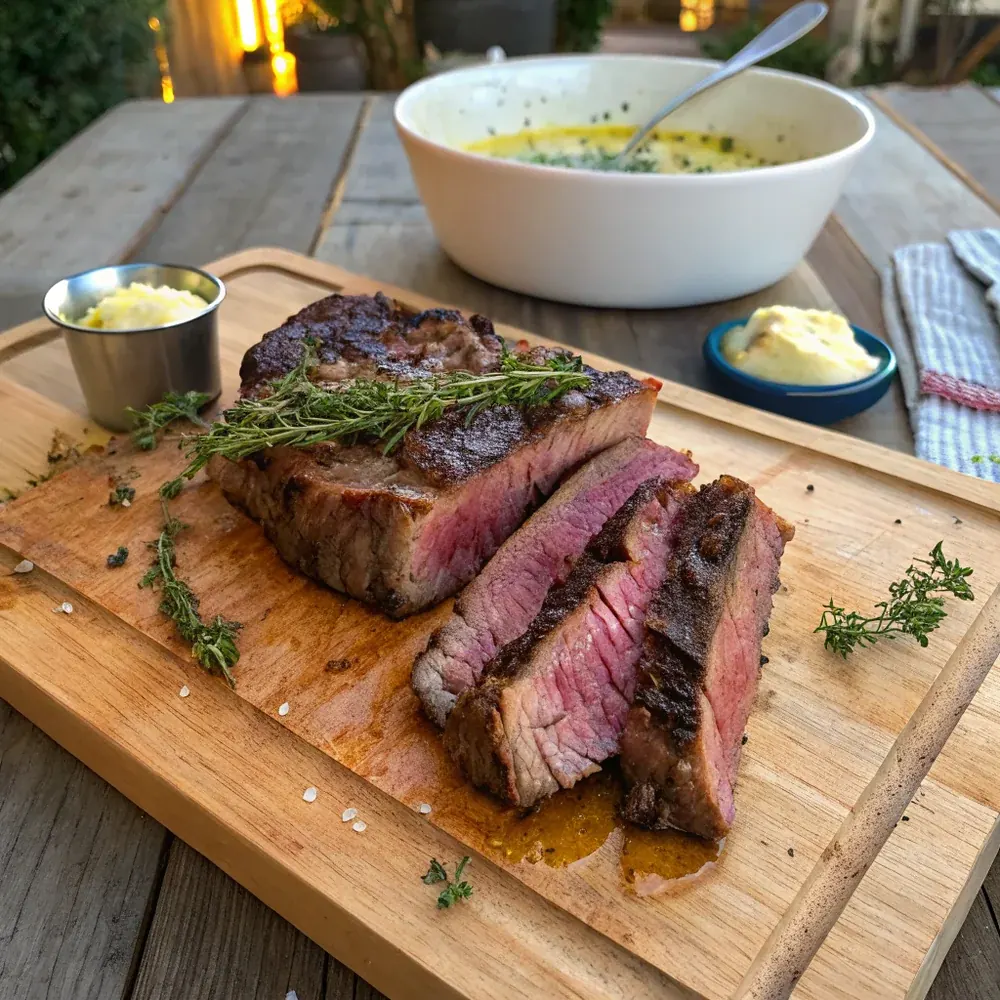
- Slice against the grain. Locate the grain - it runs in roughly one direction across the eye of the ribeye, away from the bone. Slice off the bone first by running your knife along the bone curve. Then slice the ribeye into thick slabs - about 1/2-inch (1.25 cm) - perpendicular to the grain. Fan the slices across the board so the pink interior shows. Sprinkle with flake salt.
- Finish with cowboy butter. Spoon a generous tablespoon of <a href='https://www.texanrecipes.com/cowboy-butter-for-steak/'>Chef Mia's cowboy butter</a> over the warm slices, or set a ramekin alongside for dipping. The butter melts on contact, glossing each slice with garlic, parsley, lemon, mustard, and a hit of cayenne. Serve immediately, family-style on the board, with bread or potatoes underneath to catch the juice.
Frequently Asked Questions
What is the difference between a cowboy cut and a tomahawk?
Same meat, different bone. Both are bone-in ribeye cut at least 2 inches thick. A cowboy cut has the rib bone trimmed to 4 to 5 inches; a tomahawk has the full 8 to 10-inch rib left in and frenched. They cook identically. The cowboy cut is the practical version - it fits in a cast iron skillet, weighs less, and costs 30-40% less for the same eating experience.
How long do you reverse-sear a 2-inch ribeye?
Roast at 250F for 30 to 40 minutes until the internal temperature hits 115F (medium-rare target). Then sear in a screaming-hot cast iron skillet for 90 seconds per side, plus 60 seconds of butter baste. Total active cook time is about 45 minutes, plus 10 minutes of rest before slicing. The dry brine the day before is non-active but essential.
What internal temperature for medium-rare cowboy ribeye?
Pull from the oven at 115F (46C). After the cast iron sear and butter baste, internal temp will rise to 125-130F (52-54C). During the 10-minute rest, carryover finishes the cook at 130-132F, which is solid medium-rare with edge-to-edge pink. For medium, pull at 122F. For rare, pull at 110F.
Can I cook a cowboy cut on a grill instead of cast iron?
Yes - reverse-sear works on a grill too. Set up two-zone heat: indirect side around 250F for the slow phase, direct side ripping hot for the sear. Cook over indirect until 115F internal, then move to direct heat and sear 90 seconds per side. The crust is slightly different from cast iron - more open, less uniform - but excellent. Charcoal with a chunk of post oak adds smoke character.
Why dry-brine 24 hours instead of salting just before cooking?
Salt applied 24 hours ahead pulls moisture from the surface, then the meat re-absorbs the salty liquid into the interior. The exterior dries out fully (essential for a clean sear), and the interior is uniformly seasoned all the way through, not just on the surface. A steak salted 5 minutes before cooking has wet, salty water on top and bland meat underneath.
Do I need to baste with butter?
Not strictly required - a 90-second per side dry sear gives you a great crust on its own. The butter baste adds flavor (garlic, thyme, browned milk solids), helps the crust lacquer evenly, and looks dramatic at the table. Skip it if you are short on time or want a cleaner beef-only profile. The dry brine and the sear are non-negotiable; the baste is the upgrade.
Can I use boneless ribeye instead?
Yes, but adjust expectations. A 2-inch boneless ribeye reverse-sears identically and tastes 95% the same. The bone-in version has slightly more rendered fat near the bone end, looks better on a board, and is the traditional cowboy cut. If you can only get boneless 2-inch ribeyes, the method works without modification - just skip the bone-edge render step in the sear.
Why is my cast iron sear coming out grey instead of mahogany?
Three usual causes: pan not hot enough (preheat 5 full minutes empty until smoking); steak surface still wet (dry brine 24 hours, pat with paper towel right before searing); pan crowded (one steak at a time in a 12-inch skillet, don't squeeze in two). The crust comes from direct contact between dry meat and screaming-hot iron. Any moisture or temperature drop turns it grey.