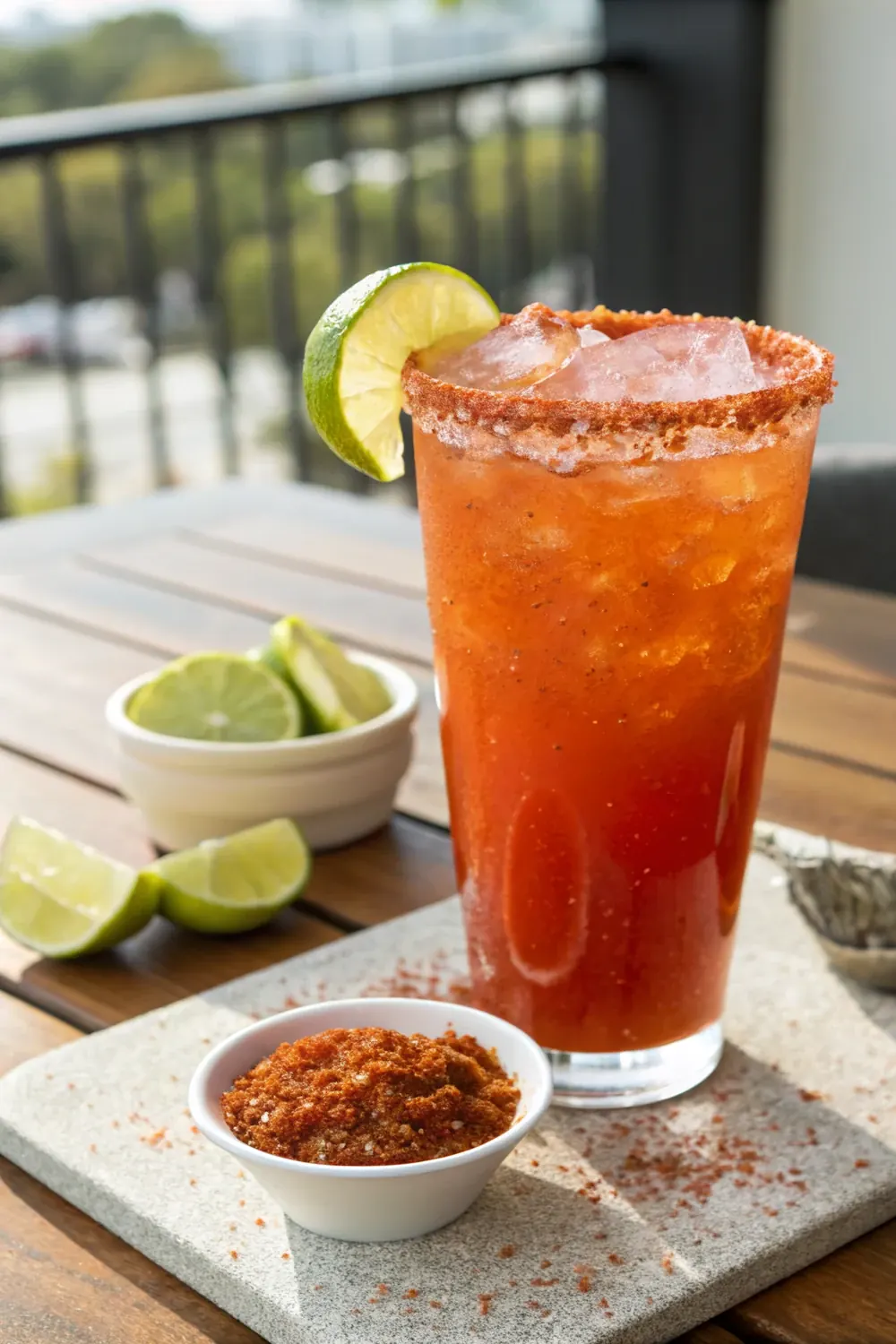
Tex-Mex Recipes
Texas Michelada
Texas michelada with Mexican lager, fresh lime, Worcestershire, hot sauce, Maggi, and a Tajin salt rim. The savory-spicy beer cocktail in 5 minutes.
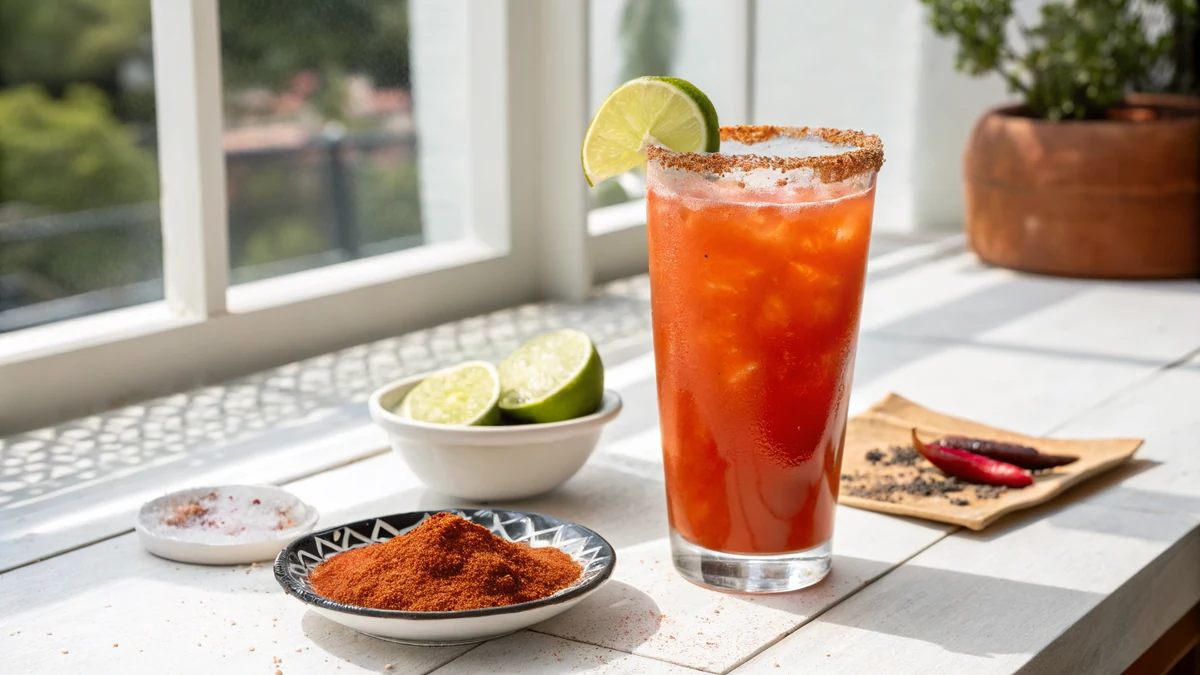
Quick answer: A Texas michelada is a savory-spicy beer cocktail of cold Mexican lager, fresh lime juice, Worcestershire, hot sauce, Maggi seasoning, and a Tajin-and-salt rim, served in a chilled pint glass over ice. The border-town style is clear (no tomato or Clamato), bright with lime, and built for brunch alongside breakfast tacos and migas. The drink came up from northern Mexico and crossed into Texas in the 1970s. Total time 5 minutes.
I had my first proper michelada at a brunch counter in El Paso, eight in the morning, after driving up from Juarez the night before. The bartender salted and Tajin-rimmed a pint glass without asking, squeezed a whole lime into the bottom, hit it with three shakes of Worcestershire, two shakes of Valentina, and a tiny pour of Maggi from the brown bottle. Then she cracked a cold Modelo Especial and poured it slowly down the side of the glass to keep the head. She passed it across the counter with a lime wedge on the rim and said, only half joking, that this was breakfast. I drank it with chilaquiles and was sold for life.
The michelada is not a Texas invention. It came up from northern Mexico, possibly from Michel Esper at a club in San Luis Potosi in the 1940s, or from the Spanish phrase mi chela helada (my cold beer) shortened over time. Either way, the drink crossed the Rio Grande in the 1970s and 1980s and became a brunch staple from El Paso to Houston. There are two styles: the clear Texas-border michelada and the Cubana or Vampiro version with tomato or Clamato. This recipe is the clear border-town version, the one you get at La Tipica in El Paso or Curra's in Austin on a Saturday morning. Total time 5 minutes. If brunch calls for citrus instead of beer, the Texas paloma is the move, and my Texas cocktails guide covers the whole state lineup.
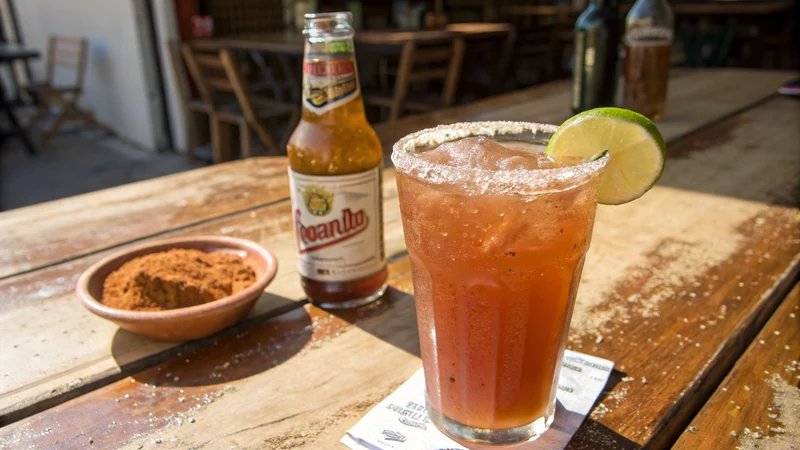
The Two Origin Stories: Michel Esper and Mi Chela Helada
There are two competing origin claims for the michelada, and depending on which Mexican bartender you ask, you will get a confident answer either way. The first credits Michel Esper, a regular at the Club Deportivo Potosino in San Luis Potosi in the 1940s, who supposedly ordered his beer with lime, salt, ice, and hot sauce so often that bartenders started calling the drink Michel-ada (the way Michel does it). This is the formal claim you see in Mexican drink histories.
The second claim is simpler. Mi chela helada is Spanish slang for my cold beer (chela being the colloquial term for beer in Mexico, helada meaning cold). Over time, mi-chela-helada contracted to michelada and the name stuck. Both stories are widely repeated; neither is fully verified, and both are probably partly true.
What is not in dispute is the geography. The michelada was already a fixture in northern Mexico (Chihuahua, Coahuila, Nuevo Leon, San Luis Potosi) by the 1950s, served at family parties, ranch lunches, and football matches. From there, with cross-border family ties and constant traffic, the drink moved into south Texas in the 1970s and into the rest of the state by the 1990s.
Crossing the Rio Grande: How the Michelada Became a Texas Brunch Drink
The michelada crossed into Texas through the natural border-town channels: El Paso (paired with Ciudad Juarez), Brownsville (paired with Matamoros), McAllen and Laredo (the rest of the Rio Grande Valley). Mexican families with cousins on both sides of the river brought the drink north. By the 1980s, El Paso bars like La Tipica were serving micheladas as a default order.
From the border, the drink moved into the major Texas Tex-Mex cities. In San Antonio, Mi Tierra (the 24-hour Mercado Mexicano restaurant founded in 1941) and La Fonda on Main started offering micheladas at Saturday brunch. In Austin, Polvos on South 1st became the canonical Tex-Mex michelada spot, with Curra's Grill on Oltorf close behind, Trudy's for the college crowd, and Justine's on the east side serving a modern version. In Houston, Ninfa's on Navigation (the original from 1973) and the El Tiempo Cantina chain made the michelada a brunch fixture.
By the 2010s, the michelada had crossed out of the Tex-Mex restaurant box and into mainstream Texas brunch. Non-Mexican brunch spots in Austin and Houston started serving micheladas alongside mimosas and Bloody Marys. But the canonical Texas michelada remains what it always was: a cheap pint of Mexican lager, fresh lime, Worcestershire, hot sauce, Maggi, and a Tajin salt rim.
Texas Border Style vs Cubana / Vampiro (The Tomato Question)
There are two main styles of michelada, and the difference is whether tomato or Clamato juice goes in the glass. The Texas border style (this recipe) is clear: lime, Worcestershire, hot sauce, Maggi, beer, ice, salt-and-Tajin rim. The flavor is bright, savory, and dry. This is the style at most El Paso, Brownsville, and Laredo bars, and at the older Tex-Mex restaurants in San Antonio and Houston.
The Cubana or Vampiro style adds tomato juice or Clamato (a tomato-clam juice blend popular in Mexico and Canada). The result is closer to a Bloody Mary made with beer: thicker, redder, more meal-like. The Vampiro version often comes with shrimp, celery, sometimes cucumber or mango. Mexican bars in central and southern Mexico (Mexico City, Guadalajara) default to the Cubana style; northern Mexico and Texas default to the clear style.
Both are correct. At Polvos in Austin, ask for the Vampiro with Clamato or the regular sin Clamato. This recipe focuses on the Texas border-town clear version because it is the more common Texas style and lets the beer and lime shine. The Vampiro variation is in the variations section.
The Mexican Lager (And Why Not IPA)
The beer choice matters, and the rule is simple: pale Mexican lager, full stop. The canonical brands are Modelo Especial (the Texas default), Tecate (slightly lighter and crisper), Pacifico (a bit drier, more pilsner-like), Carta Blanca (an old-school choice from Monterrey), and Bohemia (slightly more malty). All are pale lagers in the 4 to 5 percent ABV range, all are designed to be drunk cold and refreshing, and all play well with the salt-lime-savory seasoning blend. Negra Modelo (a Vienna-style dark lager) is acceptable for a slightly richer michelada but is the minority pick.
What does not work: IPAs, stouts, porters, sours, hazy beers, hop bombs, or anything with a strong personality of its own. The michelada is a vehicle for the seasoning blend, and the beer needs to be a clean canvas. An IPA's hops fight the lime and Worcestershire and the result is a muddy unpleasant drink. A stout is too heavy and the chocolate notes clash with the salt. A sour is already acidic and the lime pushes it over the edge. Use a pale lager.
If you cannot get Mexican lager, the closest substitutes are American light lagers (Coors Banquet, PBR, Budweiser, but also any Pilsner-style craft lager). They are not quite the same as Modelo or Tecate but they will work. Avoid wheat beers (the banana-clove yeast notes fight the seasoning). The Mexican lager is preferred for a reason: it was developed in northern Mexico for the same hot-weather conditions and pairs natively with the food culture.
The Lime: One Whole Fresh Lime, Always
The lime is the brightness of the drink, and there is exactly one rule: use fresh lime juice, never bottled. One whole lime, juiced into the glass, gives you about 1.5 to 2 tablespoons of juice, which is the right amount for a 12 oz lager. Roll the lime on the counter with your palm before cutting to release more juice from the cells. Cut in half, juice into the glass with a hand juicer or your fingers, and let some of the pulp fall in. The pulp is fine; it adds texture.
Bottled lime juice has no aromatic oil, has been pasteurized (which kills the bright top notes), and often contains preservatives that taste like cleaning product. The difference between fresh and bottled in a michelada is the difference between drinkable and undrinkable. This is one of the few cocktails where the lime is the loudest single flavor in the glass, and using bottled juice is the most common mistake people make at home.
Texas limes (often imported from Mexico via the Pharr-Reynosa bridge in the Rio Grande Valley) are the canonical fruit. They are smaller and more aromatic than Persian limes, but Persian limes are perfectly fine and more available at most American grocery stores. Avoid Key limes for the michelada (they are too acidic and the flavor profile is wrong; save them for Key lime pie). One large Persian lime per drink is the standard.
The Worcestershire-Maggi-Hot Sauce Trinity
Three bottles do the savory work, each with a specific role. Worcestershire sauce (Lea and Perrins is canonical) brings deep umami, anchovy salt, vinegar tang, and tamarind sweetness. It is the savory backbone of the drink. Three to four dashes per glass is the right amount; more and the drink tastes like Caesar dressing. The British-Indian colonial origin of Worcestershire is funny and irrelevant; the bottle lives in every Mexican kitchen now.
Maggi seasoning (the slim brown bottle, from Switzerland in 1886, ubiquitous in Mexico since the mid-twentieth century) is the secret weapon. Maggi is a hydrolyzed wheat-protein liquid that tastes like concentrated savory bouillon. Half a teaspoon per glass adds a depth of flavor you cannot quite name but immediately miss when absent. If you do not have Maggi, soy sauce is a workable substitute (use slightly less).
The hot sauce is your choice, and Texans have opinions. Valentina Black Label (Mexican, Guadalajara, the spicier version) is the canonical El Paso choice and my default. Tabasco (Louisiana, classic) is the old-school move at older Tex-Mex spots. Cholula (Mexican, milder, vinegary) is the safe-for-everyone option. Tapatio (made in Vernon, California, slightly funky) is widely used in Tex-Mex restaurants. Avoid fancy artisanal hot sauces; the michelada is a cheap-bottle drink and the cheap bottles are the right ones.
The Tajin and Salt Rim (The Chile-Lime Mineral Crystal)
Tajin Clasico is a Mexican seasoning blend of mild chile peppers, dehydrated lime, and salt, in fine crystal form. Launched in 1985 by a Guadalajara company, it is now sold in every grocery store in Texas (HEB, Walmart, Whole Foods, Target). The flavor is mild heat (about 1,000 Scoville, less than a jalapeno), bright lime acidity, and clean salt.
The 50/50 mix of Tajin and kosher salt is the El Paso bartender standard. Pure Tajin is too intense on the lip; pure salt is boring. The blend gives the chile-lime kick without overwhelming, and the salt extends rim coverage so the drink stays seasoned through the last sip. Some bars add a pinch of citric acid or Sal de gusano (Oaxacan worm salt) for extra brightness.
To rim properly: wet only the outside 1/4 inch with a lime wedge, press into the Tajin-salt mix on a shallow plate, rotate to coat evenly, tap off excess. Wetting only the outside keeps the seasoning from sliding into the drink (a wet inside rim makes the salt collapse into the beer and turn it gritty). Done correctly, the rim looks like a frosted red-orange ring.
The Optional Vampiro Garnish: Shrimp and Celery
If you are pushing the michelada toward the Vampiro or Cubana style, the canonical garnishes are a single cooked shrimp on a skewer and a stalk of celery. The shrimp is the Texas Gulf Coast move, popular at brunch spots in Houston and Galveston, referencing the seafood-rich drinks of Veracruz and Tampico. Skewer one shrimp through the tail and rest it across the glass; eat it after a few sips when the seasoning has soaked in.
The celery stalk is more of a Bloody Mary crossover and signals that the drink is meant to be a meal. A 6-inch stalk from the inner heart is standard. Some Tex-Mex spots also add cucumber, a wedge of mango (especially in summer), or a pickled jalapeno. All are variations on the abundance principle.
The clear Texas border-town michelada does not require these garnishes; a single lime wedge on the rim is the canonical look. For a fancier brunch presentation, set out a garnish board with shrimp, celery, cucumber, and pickled jalapenos, and let guests pick their own. This is the move at upscale Tex-Mex brunches in Austin and Houston.
Brunch Culture: The Michelada in San Antonio and Austin
In San Antonio, the michelada is a Saturday-and-Sunday brunch standard. Mi Tierra at El Mercado runs 24 hours, and a 9 AM michelada with chilaquiles is the canonical post-Friday-night reset. La Fonda on Main has been serving micheladas with breakfast tacos since the 1990s. Rosario's on South Alamo is the more modern spot. The San Antonio michelada culture is family-oriented and tied to the Mercado-Mexicano weekend tradition.
In Austin, the brunch michelada scene runs through Polvos, Curra's Grill, Trudy's, and Justine's. Polvos on South 1st is the most canonical Tex-Mex brunch spot in the city, with a salsa bar and a michelada unchanged since the 1990s. Curra's Grill on Oltorf is famous for migas. Trudy's pulls the UT crowd with a strong-pour Sunday brunch. Justine's on the east side serves a French-influenced brunch but still does the michelada right.
Pair the michelada with the right brunch food. Chilaquiles (tortilla chips in salsa verde or roja, topped with cheese, eggs, and cream) is the most common pairing. Migas (scrambled eggs with tortilla strips, peppers, and onions) is the Austin-Tex-Mex move. Breakfast tacos work with everything. For a heartier brunch, try the michelada with queso flameado as a shared appetizer.
Kitchen Notes (Or Bar Notes, Really)
I keep a bottle of Maggi seasoning, a bottle of Valentina Black Label, and a bottle of Worcestershire on a single shelf in my kitchen, because the three together are the michelada trinity and I do not want to fish for one of them mid-build. Add a jar of Tajin and a pint of kosher salt, and you have a self-sufficient michelada station. The whole setup costs about 12 dollars and lasts six months of weekend brunches.
The pint glass matters more than people think. A 16 oz Texas pint (the slightly tapered conical glass) is the canonical vessel because it holds a full 12 oz beer plus ice plus seasoning. A 12 oz tumbler is too small (you spill on the pour) and a 20 oz pint is too big (the beer-to-ice ratio gets weird). If you want to go full Tex-Mex restaurant, get the chunky thick-walled Mexican beer mug (the chabela or the cazadora) which is a wider top, narrower bottom shape that bartenders in El Paso and Juarez prefer.
Always chill the glass. Always use fresh lime. Always pour the beer slowly to keep the head. Always refresh with the rest of the bottle as you drink. These are the four habits that separate a great michelada from a mediocre one. For more cocktail recipes that pair with Tex-Mex brunch, see the Texas margarita recipe for the canonical alternative, or the ranch water cocktail for the lighter Hill Country choice.
Mistakes to Avoid
Bottled lime juice instead of fresh. The single biggest mistake. Bottled lime juice tastes like cleaning product. Squeeze a fresh lime every time. One whole lime per drink.
IPA, stout, or fancy craft beer. The michelada is built for pale Mexican lager. IPAs fight the lime; stouts are too heavy. Use Modelo, Tecate, Pacifico, Carta Blanca, or Bohemia.
Skipping the rim. The Tajin-and-salt rim is half the drink. Without it, you have a beer with lime and Worcestershire, not a michelada. Always rim the glass.
Wetting the inside of the glass for the rim. The Tajin will slide into the drink and turn it gritty. Wet only the outside 1/4 inch of the rim with a lime wedge.
Warm beer or warm glass. The drink relies on cold-on-cold. Chill the glass in the freezer for 30 minutes minimum, and use a beer that has been refrigerated for at least 4 hours.
Crushed ice instead of cubes. Crushed ice melts in 90 seconds and waters the drink. Use 1-inch cubes or 2-inch rocks.
Forgetting the Maggi. The half-teaspoon of Maggi seasoning is the secret savory depth. Without it, the drink tastes flat and one-note. Soy sauce works as a substitute in a pinch.
Fancy artisanal hot sauce. The michelada is a Valentina-and-Tabasco drink, not a habanero-bourbon-shrub drink. Stick to cheap supermarket hot sauces from the Mexican aisle.
Variations
Vampiro / Cubana (with Clamato). Add 4 oz of Clamato or tomato juice before the beer. The drink becomes thicker and redder, more Bloody-Mary-like. Garnish with shrimp and celery. The most common variation in central Mexico and at upscale Tex-Mex brunch spots.
Mango michelada. Add 2 oz of fresh mango juice or pulp before the beer. The fruit-forward sweetness balances the savory Worcestershire. A summer favorite at McAllen and Brownsville Rio Grande Valley brunch spots.
Mangonada michelada. Use mangonada syrup (mango, lime, chile, chamoy) instead of plain mango. The result is sweet-tart-salty-spicy. A Mexican street-corner favorite crossing into Texas brunch spots.
Smoky mezcal michelada. Float 1/2 oz of mezcal on top of the finished drink. The smoky agave layer pairs beautifully with grilled brunch foods. A modern Austin variation.
Pickle juice michelada. Add 1 tablespoon of dill pickle brine. The vinegar tang amplifies the lime and Worcestershire. The Texas Hill Country variation.
Spicy chamoy rim. Coat the rim with chamoy paste before dipping in the Tajin-salt mix. A sticky sweet-tart-spicy red-orange ring. A South Texas favorite at quinceanera brunches.
Big-batch pitcher. Multiply the seasoning blend by six and stir into a pitcher with ice. Pour into rimmed glasses, then top each with a beer at the table. The Sunday brunch party move.
Pair these with queso flameado as an appetizer, or use the michelada alongside breakfast tacos and migas. For more drinks, see the Texan Recipes homepage.
What to Serve With a Michelada
The michelada is a brunch drink, and it pairs natively with Tex-Mex morning food. The canonical pairings: chilaquiles (tortilla chips in salsa with eggs and cheese), migas (Tex-Mex scrambled eggs with tortilla strips and peppers), breakfast tacos (bacon-and-egg, chorizo-and-egg, potato-and-egg, in a flour tortilla), huevos rancheros (fried eggs on a tortilla with ranchero salsa), and barbacoa tacos with cilantro and onion. The savory-citrus profile of the michelada cuts the richness of the eggs and meat and resets the palate between bites.
For lunch and afternoon pairings, the michelada works with grilled food: carne asada, fajitas, grilled shrimp tacos, ceviche. The Pacific-style ceviche from the Texas Gulf Coast (shrimp marinated in lime with cucumber, avocado, and tomato) is the platonic michelada partner. Queso flameado as a shared appetizer also works, especially with the heat of the chorizo cutting against the cool lime.
For background reading on the Texas michelada culture, Eater Texas has covered the drink (austin.eater.com) and Texas Monthly has profiled border-town drinks more broadly (texasmonthly.com). Both are good sources for the Tex-Mex restaurant scene from El Paso to Houston. Avoid the trend pieces from out-of-state magazines that try to make the michelada into a craft cocktail; the drink is at its best when it stays a five-minute brunch beer with lime and hot sauce.
Texas Michelada Recipe
Ingredients
- For the rim:
- 1 tablespoon Tajin Clasico seasoning
- 1 tablespoon kosher salt (or fine sea salt)
- 1 lime wedge for wetting the rim
- For the cocktail:
- 1 (12 oz) Mexican lager, cold (Modelo Especial, Tecate, Pacifico, Carta Blanca, or Bohemia)
- 1 whole lime, juiced (about 1.5 to 2 tablespoons fresh juice)
- 3 to 4 dashes Worcestershire sauce
- 3 to 4 dashes hot sauce (Valentina Black Label, Tabasco, Cholula, or Tapatio)
- 1/2 teaspoon Maggi seasoning (the brown bottle, from Switzerland but ubiquitous in Mexico)
- 1 cup ice cubes
- For garnish:
- 1 lime wedge for the rim
- Optional: 1 cooked shrimp, skewered (for a Vampiro-style garnish)
- Optional: 1 stalk celery (for a Bloody Mary crossover look)
- Optional pinch of black pepper or extra Tajin on top
- Equipment:
- 1 chilled pint glass (16 oz Texas pint, frozen for 30 minutes if possible)
- Small shallow dish for the rim mix
- Citrus juicer or your hand
Instructions
- Chill the beer and the glass. Put a 16 oz pint glass in the freezer for at least 30 minutes before you start (overnight is fine). Keep the Mexican lager in the coldest part of the refrigerator, ideally near the back, until the moment you build the drink. A michelada is a cold-glass cold-beer drink. A warm glass kills the head, melts the ice fast, and waters down the seasoning. If you forgot to chill the glass, fill it with ice water for 5 minutes and dump it before building.
- Prepare the Tajin and salt rim. On a small shallow plate, mix 1 tablespoon Tajin Clasico with 1 tablespoon kosher salt. Stir with a spoon until the chile-lime crystals are evenly distributed through the salt. The 50/50 ratio is the El Paso bartender standard. Pure Tajin is too sharp on the lip, pure salt is boring. The blend is what you want. If you only have Tajin, cut it with a pinch of kosher salt by feel.
- Rim the glass. Take the chilled glass out of the freezer. Run a lime wedge around the outside top edge of the glass (just the outer 1/4 inch of the rim, not the inside). Press the wet rim into the Tajin-salt mix and rotate the glass to coat evenly. Tap off any excess. Wetting only the outside keeps the seasoning from sliding into the drink and turning it gritty. The rim should look like a frosted ring of red-orange chile-salt.
- Juice the lime fresh. Cut a whole lime in half and juice it directly into the bottom of the rimmed glass. You want about 1.5 to 2 tablespoons of juice, which is one large or two small Texas limes. Use fresh limes only. Bottled lime juice is too sour, has no aromatic oil, and tastes like cleaning product. The fresh juice is non-negotiable. If your lime is hard, roll it on the counter with your palm before cutting to release more juice.
- Build the seasoning blend in the glass. Into the lime juice at the bottom of the glass, add 3 to 4 dashes of Worcestershire sauce, 3 to 4 dashes of your chosen hot sauce (Valentina Black Label is the canonical Texas-border choice; Tabasco is the old-school move), and 1/2 teaspoon of Maggi seasoning. Stir briefly with a bar spoon to combine. The blend should look dark red-brown with a strong savory smell. This trinity (Worcestershire, hot sauce, Maggi) plus the lime is the soul of the drink.
- Add ice. Fill the glass to about 3/4 full with ice cubes. Use real ice, not crushed. Crushed ice melts too fast and dilutes the drink in 90 seconds. Cube ice keeps the michelada cold for the full pour. Some El Paso bars use a few large rocks instead of small cubes, which is a beautiful move if you have a 2-inch ice mold. Either way, fill generously. The ice will displace some of the seasoning blend up the sides of the glass.
- Pour the beer slowly. Open a cold Mexican lager (Modelo Especial is the default; Tecate, Pacifico, Carta Blanca, and Bohemia are all correct). Pour it slowly down the inside wall of the glass at an angle, keeping the head minimal but not zero. A 12 oz beer will roughly fill the glass to within an inch of the rim. You will not use the whole bottle in one pour; the rest stays in the bottle for refresh pours as you drink. Stop pouring when the foam reaches the rim.
- Garnish, drink, and refresh. Add a lime wedge to the rim. If you are doing a Vampiro-style garnish, skewer a cooked shrimp or a stalk of celery and rest it across the top. Drink immediately while the head is fresh and the ice is still firm. As the level drops, top up with the remaining beer from the bottle (this is the canonical refresh; the seasoning at the bottom of the glass continues to flavor each new pour). One bottle of beer typically fills the glass twice. When the bottle is empty, build a fresh one.
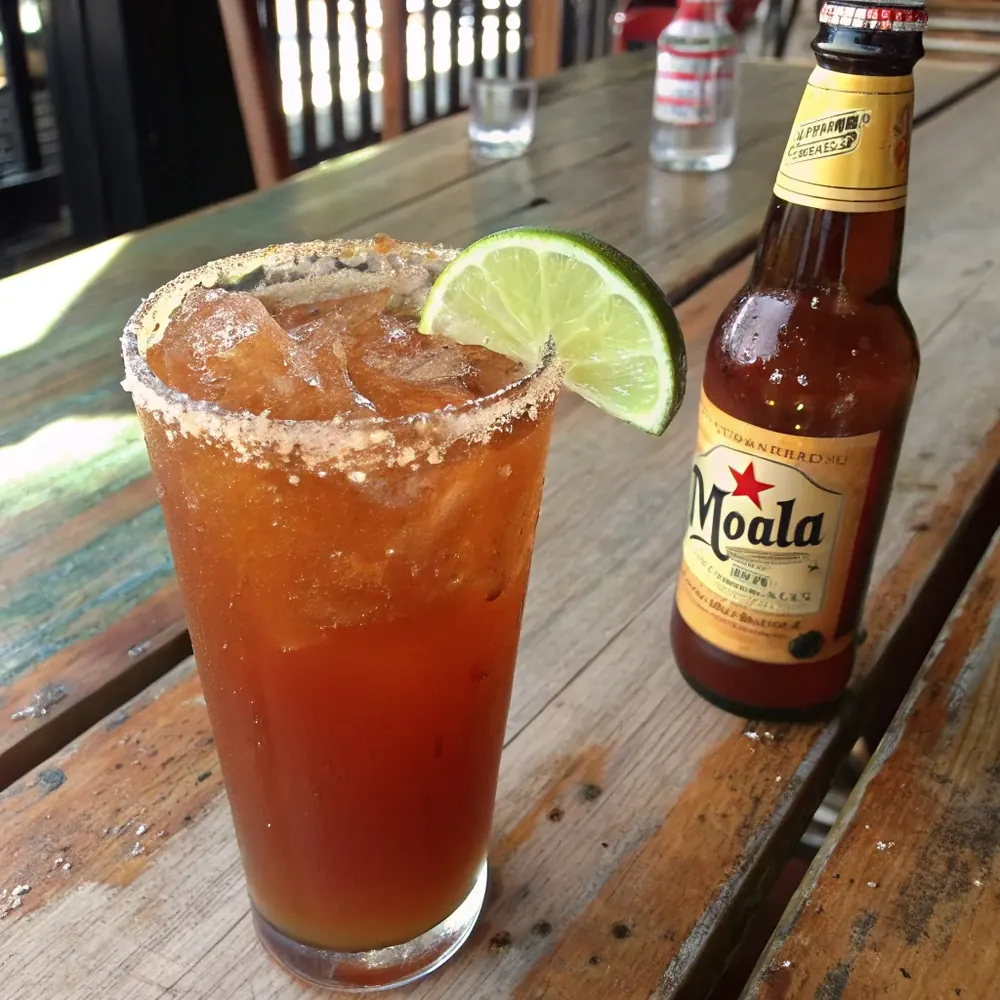
Frequently Asked Questions
What is a michelada?
A michelada is a savory-spicy Mexican beer cocktail of cold pale lager, fresh lime juice, Worcestershire, hot sauce, Maggi seasoning, and ice, served in a chilled pint glass with a Tajin-and-salt rim. The Texas border-town version is clear (no tomato or Clamato) and bright with lime; the Cubana or Vampiro version adds tomato juice or Clamato and is closer to a Bloody Mary made with beer. The drink originated in northern Mexico and crossed into Texas in the 1970s and 1980s.
What is the best beer for a michelada?
Pale Mexican lager. The canonical brands are Modelo Especial (the default in Texas), Tecate, Pacifico, Carta Blanca, and Bohemia. All are 4 to 5 percent ABV pale lagers and play well with the savory-citrus seasoning blend. Avoid IPAs, stouts, hazy beers, sours, and wheat beers; their strong flavors fight the seasoning. American light lagers (Coors Banquet, PBR) work as substitutes if you cannot get Mexican lager.
What is the difference between a michelada and a Chelada?
A Chelada is the simpler version: just beer, lime juice, salt rim, and ice. No Worcestershire, no Maggi, no hot sauce. A michelada is the more elaborate drink with the full savory-spicy seasoning blend. Pre-mixed canned Cheladas (Bud Light Chelada, Modelo Chelada) are vaguely related but contain tomato and lime concentrate and are sweeter than the real thing. For an authentic drink, build it fresh in a glass.
What is Maggi seasoning and where do I find it?
Maggi seasoning is a Swiss-origin liquid seasoning made from hydrolyzed wheat protein, sold in a slim brown bottle. It tastes like concentrated savory bouillon with notes of soy sauce and beef stock, and has been ubiquitous in Mexican kitchens since the mid-20th century. Find it in the international or Latin American aisle of any HEB, Walmart, Whole Foods, or Mexican grocery in Texas. If you cannot find Maggi, soy sauce is a workable substitute (use slightly less).
Can I make a michelada without Tajin for the rim?
Yes, with adjustments. Without Tajin, mix 1 tablespoon kosher salt with 1/2 teaspoon chili powder and a tiny pinch of citric acid (or unsweetened lemonade powder). This approximates the Tajin profile. Plain salt also works but the drink loses its signature chile-lime rim. Tajin is widely available in any Texas grocery store; getting a bottle is the easier path.
Is a michelada a brunch drink or an all-day drink?
Both, but it is most commonly served at brunch in Texas. The savory-spicy-citrus profile pairs natively with Tex-Mex morning food (chilaquiles, migas, breakfast tacos, huevos rancheros), and the moderate ABV (about 4 percent) makes it a manageable morning cocktail. The strongest Texas association is the Saturday-Sunday late-morning brunch table at Mi Tierra in San Antonio, Polvos in Austin, and Ninfa's in Houston.
How spicy is a michelada?
Mild to moderate, depending on the hot sauce. The standard build (3 to 4 dashes of Valentina Black Label or Tabasco) is gently spicy on the back of the tongue but not painful, comparable to a medium salsa. The Tajin rim adds a touch more chile heat with each sip. For more heat, use Yucateco habanero or Cholula Chili Lime. For less heat, use Cholula Original or skip the hot sauce entirely.