Tex-Mex Recipes
Texas Margarita
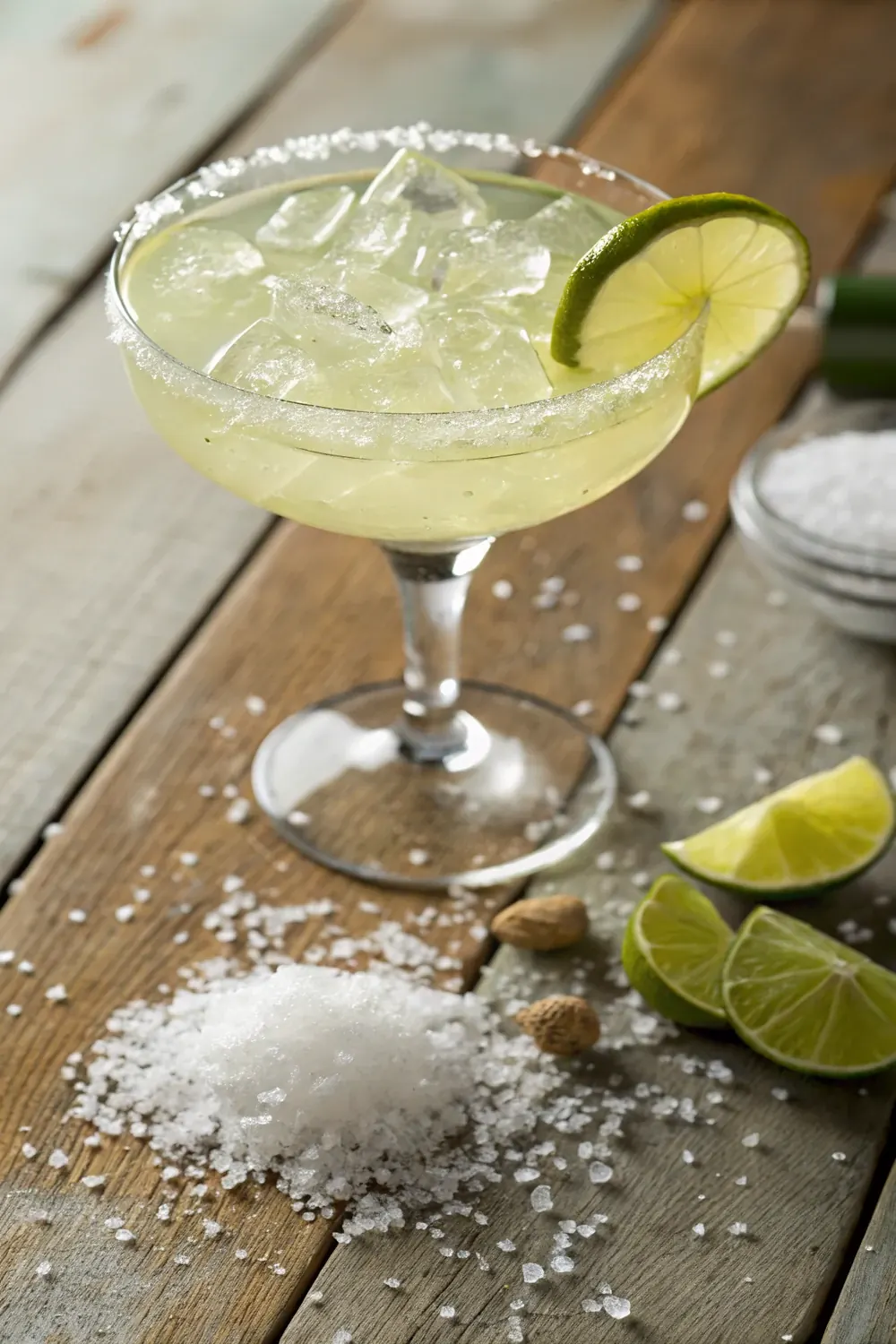
Authentic Texas margarita with blanco tequila, Cointreau, fresh lime juice, kosher salt rim. The 3-2-1 ratio Tex-Mex pros use. 5 minutes.
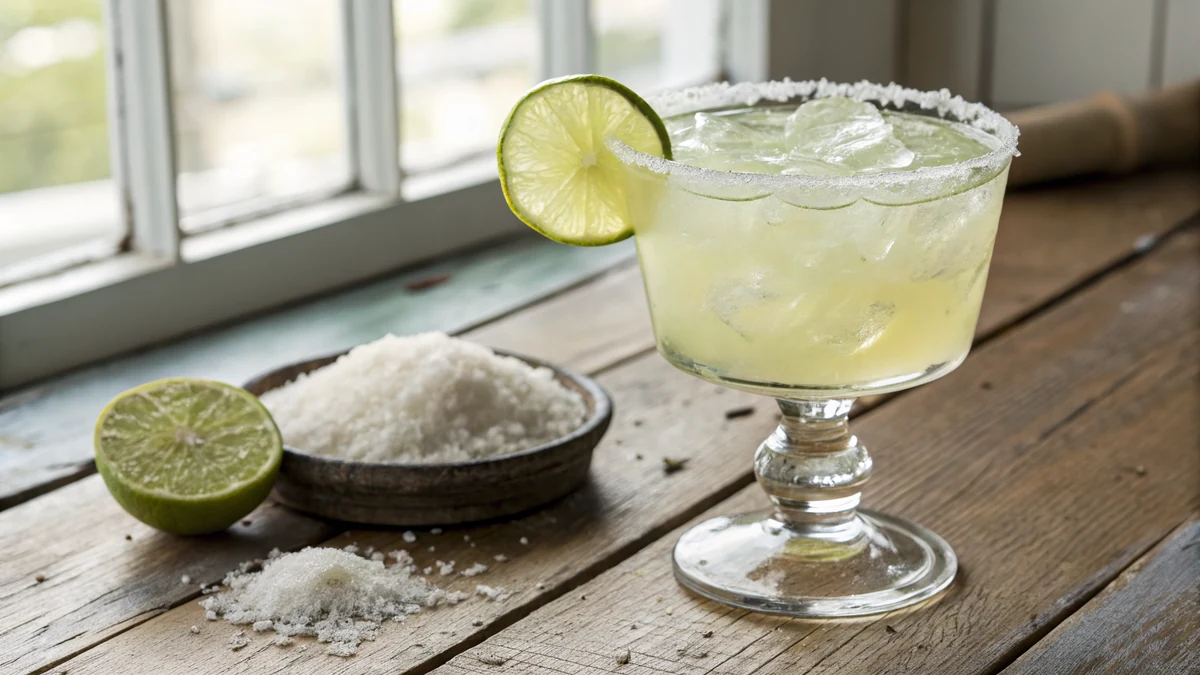
Quick answer: A Texas margarita is fresh-squeezed lime juice, blanco tequila, and Cointreau shaken hard with ice and served on the rocks in a salt-rimmed glass. The classic Tex-Mex ratio is 3-2-1 (1.5 oz tequila, 1 oz Cointreau, 0.5 oz lime), though many Texans prefer a tarter 2-1-1 build. No sour mix, no bottled lime, no simple syrup, no shortcuts. Total time 5 minutes from cold glass to first sip.
I learned to make margaritas the right way at a friend's bar in Dallas, three blocks from the original Mariano's Mexican Cuisine where Mariano Martinez invented the world's first frozen margarita machine in 1971. The bartender there had a sign taped to the well that read "Sour Mix Stays Out," and he meant it. He squeezed every lime to order, measured the tequila with a jigger, and shook the drink hard for a full ten seconds. The margarita he made me was tart, cold, balanced, and tasted nothing like the slushy neon-green thing I had been ordering at chain restaurants for a decade. That drink rewired my brain about what a margarita is supposed to be.
The Texas margarita is a rocks margarita built on three ingredients: blanco tequila, Cointreau (or a quality triple sec), and fresh-squeezed lime juice. That is the entire recipe. The salt rim, the glass, the ice, and the shake all matter, and we will get into every one of them, but the build is three things in a 3-2-1 ratio. Mariano's frozen machine turned the margarita into a Texas state beverage in spirit if not in law, and the original frozen machine itself now lives in the Smithsonian's National Museum of American History. The recipe below is the rocks version, the version Texans drink at home and at every Tex-Mex bar from Mi Cocina in Dallas to Pappasito's in Houston. Total time 5 minutes. When the occasion calls for something lighter, ranch water is the margarita's minimalist cousin, and my Texas cocktails guide lines up all nine state classics side by side.
Mariano Martinez and the Frozen Margarita Machine (Dallas, 1971)
Every conversation about the Texas margarita starts at Mariano's Mexican Cuisine in Dallas. In 1971, Mariano Martinez was running the family's Tex-Mex restaurant on Greenville Avenue and watching his bartenders struggle to keep up with the volume of frozen margaritas the menu demanded. Hand-crank blenders were slow, inconsistent, and noisy. Mariano had a flash of inspiration after watching a soft-serve ice cream machine at a 7-Eleven, and he hired a technician to convert a similar machine to dispense pre-mixed frozen margaritas. The result was the world's first frozen margarita machine, and it changed Tex-Mex bars forever.
The original machine ran continuously at Mariano's for years. In 2005, Mariano donated the machine to the Smithsonian, where it now sits in the National Museum of American History as a recognized piece of American culinary history. Read the Texas Monthly coverage of the donation if you want the full story; the short version is that Mariano's machine is the reason every Tex-Mex restaurant from El Paso to Texarkana can pour you a frozen margarita on demand.
The frozen margarita is a Texas invention layered onto an older cocktail. The rocks margarita is older and is the version this recipe focuses on. But you cannot tell the story of the Texas margarita without acknowledging that Dallas put the drink on the map and made it scalable for a Saturday-night Tex-Mex restaurant rush.
The Rocks Margarita Origin Debate
The rocks margarita is older than the frozen one and its origin is contested. Two stories dominate. The first is Carlos "Danny" Herrera, who claimed to have invented the drink at his restaurant Rancho La Gloria near Tijuana in 1938 for a customer named Marjorie King who could only drink tequila. Herrera's version was tequila, Cointreau, and lime served over crushed ice with a salt rim. The second is Margarita Sames, a Dallas socialite who claimed she invented the drink at her Acapulco vacation home in 1948 for a houseful of guests that included Tommy Hilton (of the hotel family), who is said to have added the cocktail to the bar menu at Hilton hotels.
Other origin stories exist (a bartender in Galveston in the late 1940s, a hostess in Juarez in 1942), and none of them can be definitively proven. What is undisputed is that the drink exists by name in print by the early 1950s, that the recipe (tequila plus orange liqueur plus lime) is essentially the same in all the origin stories, and that Texans embraced it harder than any other state in the union.
The Margarita Sames story is the one Texas claims most enthusiastically because Sames was a Texan. Whether or not she invented the drink, she introduced it to a generation of Dallas and Houston society in the late 1940s, and the cocktail became inseparable from Texas Tex-Mex culture from that point forward.
The 3-2-1 Ratio (And When to Adjust It)
The classic Tex-Mex bar ratio is 3-2-1: 3 parts blanco tequila, 2 parts orange liqueur, 1 part fresh lime juice. In standard cocktail measures, that translates to 1.5 oz tequila, 1 oz Cointreau, 0.5 oz lime. This ratio produces a balanced drink that is more tequila-forward than tart, with the orange liqueur softening the agave bite and the lime providing brightness. It is the ratio a confident bartender pours from muscle memory.
The 3-2-1 was good enough for Mariano's, good enough for Mi Cocina, and good enough for most Tex-Mex bars in Texas. But Texans who like their margaritas tarter (a meaningful percentage of the population) shift to a 2-1-1: 2 oz tequila, 1 oz Cointreau, 1 oz lime. This is the ratio Pappasito's in Houston tends toward, and it is also what Polvos in Austin pours when you order a margarita on the rocks. The 2-1-1 is brighter, more lime-forward, and slightly more refreshing on a 100F Texas afternoon.
A third option is the 2-1-0.75: 2 oz tequila, 1 oz Cointreau, 0.75 oz lime. This is the David Embury ratio (from his 1948 The Fine Art of Mixing Drinks) and it sits between the two. Pick the ratio that matches your taste; do not pretend there is only one correct answer. What matters is that all three ratios use real tequila, real Cointreau, and real lime, in measured proportions. The mistake is not the ratio; the mistake is sour mix.
Tequila Selection: Blanco vs Reposado vs Anejo
Use blanco tequila (also called silver or plata) for a margarita. Blanco is unaged and tastes of green agave, citrus pith, white pepper, and earth. The clean unaged profile is what you want in a cocktail where lime and orange are the supporting notes; an aged tequila adds wood and vanilla that fight with the citrus. The Tex-Mex bar standard is 100% agave blanco, and any tequila that says "100% de agave" on the label qualifies. Avoid mixto (also called "gold" tequila in cheap brands) - it is only 51% agave and the rest is corn or cane neutral spirit, and it tastes like rubbing alcohol in a cocktail.
Recommended blancos for margaritas, in rough price order: Espolon Blanco (excellent value, around $25), Olmeca Altos Plata (around $25-30), Tequila Ocho Plata (around $40-50, single-estate, exceptional), El Tesoro Plata (around $50-55, traditional production), Casamigos Blanco (around $50, smoother but pricey for what it is), Don Julio Blanco (around $50, the Tex-Mex bar workhorse), Herradura Silver (around $40, classic). All of these will produce an outstanding margarita.
Reposado tequila (aged 2-12 months in oak) and anejo tequila (aged 1-3 years) make different drinks. A reposado margarita is softer and more caramel-forward, sometimes called a "Tommy's-style" margarita when paired with agave nectar. An anejo margarita is heavier, slightly bourbon-like, and not the canonical Tex-Mex profile. Save your reposado and anejo for sipping neat or for old-fashioned-style cocktails. For a Tex-Mex margarita, use blanco. Pair the leftover tequila with a small bowl of queso flameado and a plate of chips.
Cointreau vs Triple Sec vs Agave (the Tommy's Question)
Cointreau is the orange liqueur of record for a real margarita. Cointreau is a French triple sec made from sweet and bitter orange peels at 40% ABV, and it has a clean orange-bitter-sweet profile that complements tequila perfectly. The Tex-Mex bar standard is Cointreau, and most Texans who care about their margarita will only accept Cointreau. The next best option is Pierre Ferrand Dry Curacao (44% ABV, slightly drier and more orange-forward, exceptional in cocktails). Both produce a margarita with structure and depth.
Generic triple sec (Hiram Walker, DeKuyper, Bols) is what most chain Tex-Mex bars actually use, and it is fine but not great. Generic triple sec is around 15-30% ABV and sweeter than Cointreau, which means the cocktail comes out flatter and more candy-tasting. If you only have generic triple sec, reduce it to 0.75 oz and bump the tequila to 1.75 oz; the higher tequila ratio compensates for the cheaper liqueur. Grand Marnier is a different category (cognac-based orange liqueur) and produces a Cadillac margarita, which is a separate drink.
The Tommy's Margarita (created at Tommy's Mexican Restaurant in San Francisco in the 1990s) replaces the orange liqueur with agave nectar entirely: 2 oz tequila, 1 oz lime, 0.5 oz agave. It is delicious, tequila-forward, and a legitimate variation, but it is not the canonical Texas margarita. Texans stick with Cointreau or triple sec because the orange-bitter complexity is part of what makes the drink a margarita rather than a tequila sour. If you want to do a Tommy's at home, do it as a separate experiment, not as a substitute for the classic.
Fresh Lime Juice (Persian vs Key)
Fresh lime juice is non-negotiable. The whole margarita stands on the lime juice; if the juice is bottled, the drink is broken. Bottled lime juice (Real Lime, ReaLime, the green plastic squeeze bottle) is preserved with sodium metabisulfite and tastes metallic and slightly cooked. Sour mix is even worse; it is high-fructose corn syrup with citric acid and yellow food coloring, and it is the single biggest reason chain-restaurant margaritas taste cheap. Squeeze fresh limes to order, every single time.
Persian limes (also called Tahiti limes) are the standard supermarket lime: large, bright green, oval, mostly seedless. One half of a healthy Persian lime gives roughly 0.5-0.75 oz of juice. Persian limes are slightly less acidic than key limes and produce a softer, rounder margarita. Key limes (also called Mexican limes) are smaller, rounder, more yellow when ripe, more aromatic, and more acidic. One whole key lime gives roughly 0.5 oz. Key limes produce a brighter, more aromatic, slightly funkier margarita that is closer to what the Tijuana origin recipe would have used in 1938.
Either lime works; key limes are more authentic but harder to find outside of Texas Mexican grocery stores (Fiesta Mart, La Michoacana, Mi Tienda). I keep both in my kitchen when I can. Squeeze them within 30 minutes of using; lime juice oxidizes fast and turns bitter and dull within an hour. The Mexican elbow citrus juicer (the yellow handheld squeezer) is the best tool for the job; it inverts the lime half and extracts more juice with less effort than a hinged squeezer or a reamer.
Ice and Dilution
The ice in a margarita does two jobs. The shaker ice chills and dilutes the drink to drinking temperature; the rocks-glass ice keeps the drink cold while you sip it. Use fresh hard ice from the freezer for both. Soft wet ice from a melting tray dilutes too fast and produces a watery margarita.
For the shaker, fill the tin two-thirds with standard cubes. For the rocks glass, the bar move is one large clear ice cube (2-inch silicone molds are widely available and produce restaurant-quality ice). The large cube melts more slowly than smaller cubes because it has less surface area relative to volume, which means the drink stays cold longer without thinning out. If you do not have a large cube, 4-5 standard cubes will work; just drink the cocktail faster.
The shake adds about 20-25% dilution by volume, which is correct. Under-shaking produces a warm strong drink; over-shaking (which is hard to do, but possible with very wet ice) produces a thin watery drink. Shake hard for 10-12 seconds, until the tin is painfully cold to hold. The painful cold is the signal that the drink is ready.
The Salt Rim: Kosher, Tajin, or Sugar
Kosher salt is the standard. Diamond Crystal or Morton's coarse kosher salt produces a clean, bright salt pop that contrasts with the citrus and the agave. Avoid table salt (too fine, dissolves immediately and tastes harsh) and avoid sea salt with iodine (the mineral note is wrong for a cocktail). The Tex-Mex bar trick is to use a half-rim or a third-rim rather than a full rim, which lets the drinker choose salty or non-salty sips. A full rim forces salt on every sip and can overwhelm the cocktail.
Tajin is the Tex-Mex spicy upgrade. Mix 1 teaspoon of Tajin chile-lime seasoning with 1 tablespoon of kosher salt and use that as the rim. The chile and lime in the Tajin echo the cocktail and add a low-level heat that makes the drink extra craveable. Mi Cocina serves the Mambo Taxi (a frozen margarita with sangria float) on a Tajin rim, and the rim is half the appeal. For a more intense rim, use straight Tajin with no salt at all; the seasoning has plenty of salt already.
Sugar rims are wrong for a margarita. A sugar rim is for a daiquiri or a lemon drop. Salt rims are for tequila drinks, and the salt-citrus-agave triangle is the entire flavor argument of the cocktail. The one exception is a sweet-and-spicy Tajin-and-sugar rim (half-and-half), which works on certain frozen margaritas but never on a rocks one. Stick with kosher salt or salt-Tajin.
Glassware and Presentation
The canonical glass for a Texas rocks margarita is a double rocks glass (also called a double old-fashioned), 8-10 oz capacity, heavy bottom, straight-sided or slightly tapered. The double rocks glass holds the cocktail comfortably with one large ice cube and gives the drink room to breathe. A single rocks glass (6-7 oz) is too small for a properly diluted margarita.
The traditional margarita coupe (the wide-mouthed sloped glass that looks like a cross between a champagne coupe and a martini glass) is for a margarita-up, served strained without rocks. The margarita coupe is what you see at upscale Tex-Mex spots like Javier's in Dallas or La Fonda on Main in San Antonio. Most Texans drink rocks margaritas in rocks glasses; the coupe is reserved for the up version, which is a slightly different drink (no rocks means no in-glass dilution, so the up margarita gets shaken longer to compensate).
Avoid the giant cactus-stemmed restaurant margarita glass that holds 16-20 oz. It is a presentation choice for tourist-trap Tex-Mex spots and it leads to over-poured drinks that warm up too fast. A proper Tex-Mex margarita is a 4.5-5 oz drink in an 8-10 oz glass with a salt rim and a lime wheel. The drink should disappear in 8-10 minutes; the glass is sized for that pace.
Frozen vs Rocks: Which Is the "Real" Texas Margarita
Both are real. Texans drink frozen margaritas on hot afternoons and rocks margaritas in the evening, and the same Tex-Mex restaurant menu offers both. The frozen margarita is the Mariano's invention (Dallas 1971, machine in the Smithsonian) and is built on a slightly different recipe: more sugar, more orange liqueur, less tequila per oz, and the dilution comes from the blender ice rather than from a shake. A frozen margarita is essentially a margarita slushy with a salt rim.
The rocks margarita is the older, drier, more cocktail-like version. It is the drink to order if you want to taste the tequila, and it is the drink to make at home if you want to nail the cocktail-bar craft. The rocks version is what serious bartenders pour, and it is what every cocktail book from David Embury (1948) to Dale DeGroff (2002) describes as a margarita.
If you want a frozen margarita at home, blend the same 3-2-1 build with 1.5 cups of crushed ice in a high-powered blender for 20-30 seconds, then pour into a salt-rimmed glass. Add 0.25 oz agave nectar to the build to compensate for the dilution from the ice. The frozen version benefits from a slightly sweeter build; the rocks version does not need it. Both have their place; pick based on the temperature outside and the time of day.
Mistakes to Avoid
Sour mix. Sour mix is high-fructose corn syrup with citric acid and yellow food coloring. It is in every chain restaurant margarita and it is the single biggest reason those drinks taste cheap. Never, ever use it.
Bottled lime juice. Same problem as sour mix. Bottled lime juice (ReaLime, the green plastic squeeze bottle) is preserved and tastes metallic. Squeeze fresh limes to order.
Mixto tequila. Mixto is 51% agave and 49% neutral spirit (corn or cane). It tastes harsh and rubbing-alcohol-like in a cocktail. Always use 100% agave; the bottle will say "100% de agave" or "100% blue weber agave" on the label.
Reposado or anejo for the build. Aged tequila adds oak and vanilla that fight with the citrus. Use blanco for the cocktail; save reposado and anejo for sipping.
Pre-batched in a bottle. The lime juice oxidizes within an hour and the drink turns bitter and dull. Build per drink. If you must batch for a party, batch the tequila and Cointreau ahead and add fresh lime per drink.
Sweet glass rim. Sugar rims are for daiquiris. Salt rims are for tequila drinks. Stick with kosher salt or salt-Tajin.
Weak shake. Shake hard for a full 10-12 seconds. A weak shake produces a warm under-diluted margarita. The tin should be painfully cold when you stop.
Pouring shaker ice into the glass. The shaker ice has already partially melted. Strain over fresh ice in a chilled glass. The fresh ice keeps the drink cold without further diluting it.
Variations
Texas Ranch Water. 1.5 oz blanco tequila, 0.5 oz fresh lime juice, top with Topo Chico (Mexican mineral water from Monterrey). Built in a highball over ice with a lime wedge. The West Texas highball that has gone national in the last five years; lighter than a margarita and infinitely drinkable.
Spicy Paloma-Margarita. Replace 0.5 oz of the Cointreau with 0.5 oz of fresh grapefruit juice and add 2 thin jalapeno slices to the shaker. Shake hard, double-strain over fresh ice in a Tajin-rimmed glass. Tex-Mex bars from Lupe Tortilla to Curra's in Austin run a version of this on summer menus.
Mezcal margarita. Replace half the tequila with mezcal (1 oz blanco tequila + 0.5 oz mezcal). The smoke layer changes the cocktail entirely and makes it pair beautifully with smoked or grilled food. Use a salt-and-Tajin rim. This is the version I order at Polvos in Austin when I want something different.
Cadillac margarita. Replace the Cointreau with Grand Marnier and add a 0.5 oz Grand Marnier float on top. The cognac base adds richness and depth. Order this at Mi Tierra in San Antonio for the full Tex-Mex Cadillac experience.
Frozen margarita. Same 3-2-1 build plus 0.25 oz agave nectar, blended with 1.5 cups crushed ice for 20-30 seconds. Pour into a salt-rimmed rocks glass or a margarita coupe. The Mariano's-style version that put Dallas on the cocktail map.
Strawberry-jalapeno margarita. Muddle 3 fresh strawberries and 2 thin jalapeno slices in the shaker before adding the build. Shake hard, double-strain over fresh ice. Mi Cocina serves a version of this called the Mambo Taxi when topped with a sangria float.
Pairing With Tex-Mex Food
Margaritas pair with everything Tex-Mex. The classic progression is queso flameado or chips and salsa to start, fajitas or enchiladas as the main, and a flan for dessert. The margarita carries through the queso course beautifully and most of the main course; if you order a second margarita with dessert, switch to a Tommy's-style or a frozen so the cocktail does not fight with the flan.
For a full home spread, build a Tex-Mex menu of queso flameado as the appetizer, beef and cheese enchiladas as the main, and a tray of Austin-style breakfast tacos for next-morning brunch. The margarita is the throughline cocktail for the entire evening.
For drinks beyond margaritas, a Mexican lager (Modelo Especial, Tecate, Pacifico) or a michelada is the canonical Tex-Mex companion. For a non-alcoholic option, a virgin margarita made with the same fresh lime, agave, and sparkling water (no tequila, no Cointreau) is a real cocktail in its own right and not just an afterthought. Serve it in the same glass with the same salt rim; it deserves the presentation.
Chef Mia's Bar Notes
I keep three blancos on my bar at all times: Espolon for daily mixing, Olmeca Altos Plata for guests, and Tequila Ocho Plata for special drinks. The Espolon is around $25 and pours a margarita that is indistinguishable from a $15 cocktail at any Tex-Mex restaurant in Texas. Do not over-spend on tequila for cocktails; save the expensive bottle for sipping neat.
I batch the salt rim mix in a small jar: 1/2 cup kosher salt + 2 tablespoons Tajin, mixed and stored on the bar. When I am rimming a glass, I dip into the jar, never into a fresh plate. The jar saves prep time and the salt-Tajin ratio is consistent.
I squeeze limes by the dozen on Saturday morning, store the juice in a sealed jar in the fridge, and use it within 24 hours. Lime juice keeps for about a day in the fridge before it starts turning bitter. For a single-drink home setup, I squeeze to order.
The Hawthorne strainer is the right tool, but a fine mesh strainer over the rocks glass produces a silkier drink (the small ice shards from the shake are filtered out). Use both in series for the smoothest pour: Hawthorne on the tin, fine mesh over the glass.
Texas Margarita Recipe
Ingredients
- 1.5 oz (45 ml) blanco tequila (100% agave; Espolon, Olmeca Altos, El Tesoro, Tequila Ocho, or Casamigos)
- 1 oz (30 ml) Cointreau (or a quality triple sec like Pierre Ferrand Dry Curacao)
- 0.5 oz (15 ml) fresh-squeezed lime juice (about half a Persian lime or one large key lime)
- Optional: 0.25 oz (7 ml) agave nectar, only if your limes are extra tart
- For the salt rim:
- 2 tablespoons kosher salt (Diamond Crystal or Morton's coarse)
- 1 lime wedge for moistening the rim
- Optional: 1 teaspoon Tajin chile-lime seasoning, mixed half-and-half with the salt for a Tex-Mex spicy rim
- For garnish:
- 1 lime wheel or wedge
- Equipment:
- Boston shaker or cobbler shaker
- Hawthorne strainer (or fine mesh strainer for a cleaner pour)
- Jigger with 1.5 oz / 0.75 oz markings
- Citrus juicer (handheld Mexican elbow or a hinged squeezer)
- Rocks glass (also called an old-fashioned or double rocks glass), 8-10 oz capacity
- Large clear ice cube or 4-5 standard cubes for the glass
Instructions
- Chill the rocks glass. Set an empty rocks glass in the freezer for at least 5 minutes before you start, or fill it with ice water while you prep the rest. A cold glass keeps the drink colder longer and slows dilution. The Tex-Mex bars that pre-chill their glassware (Mi Cocina, Javier's, Mi Tierra) make noticeably colder margaritas than the ones that pull a glass from a shelf.
- Prepare the salt rim. Spread the kosher salt on a small plate in an even layer. Run a fresh lime wedge around the outside top edge of the chilled rocks glass to moisten about 1/3 of the rim (a half-rim is more elegant than a full rim and lets the drinker choose salt or no-salt sips). Press the moistened edge into the salt and rotate gently to coat. Brush off any salt that fell inside the glass; salt belongs on the rim, not in the drink.
- Juice the limes fresh. Cut a Persian lime in half across its equator and squeeze 0.5 oz of juice through a small strainer into a measuring jigger. One healthy half of a Persian lime gives roughly 0.5-0.75 oz; one whole key lime gives roughly 0.5 oz. Do not use bottled lime juice, do not use the green plastic lime-shaped bottle, and do not use sour mix. The juice must be fresh, and ideally squeezed within the last 30 minutes; lime juice oxidizes and turns bitter quickly.
- Build the drink in the shaker. Add 1.5 oz blanco tequila, 1 oz Cointreau, and 0.5 oz fresh lime juice to a Boston shaker tin. If your limes are unusually tart or you prefer a slightly sweeter cocktail, add 0.25 oz agave nectar. Do not add simple syrup; agave is the appropriate sweetener for a tequila drink and dissolves cold without stirring. The 3-2-1 ratio (1.5-1-0.5) is the Mariano's-style standard; Texans who like a tarter drink shift to 2-1-1 (2 oz tequila, 1 oz Cointreau, 1 oz lime) or 2-1-0.75.
- Fill the shaker with ice. Fill the shaker tin two-thirds with fresh, hard ice. The ice should be cold from the freezer, not ice that has been sitting out softening. Cold hard ice chills the drink without over-diluting; soft wet ice waters the drink down. If your ice tastes like the freezer, run it under cold water for two seconds to rinse off any freezer odor before adding.
- Shake hard for 10-12 seconds. Seal the shaker tin and shake hard for 10-12 seconds. The shake does three things: it chills the drink to about 28-32F, it adds the right amount of dilution from the melting ice (roughly 20-25% by volume), and it aerates the drink slightly which softens the bite of the tequila. A weak shake produces a warm under-diluted margarita. Shake until the tin is painfully cold to hold.
- Strain over fresh rocks. Pull the chilled rocks glass from the freezer. Add fresh ice to the glass: one large clear ice cube (the bar move) or 4-5 standard cubes. The fresh ice in the glass is critical; do not pour the spent shaker ice into the glass because it has already partially melted. Set a Hawthorne strainer over the shaker tin and strain the cold margarita over the fresh ice in the glass. For a silkier texture, double-strain through a fine mesh strainer to catch any small ice shards.
- Garnish and serve. Cut a thin lime wheel and slit it halfway through the radius, then perch it on the rim of the glass. Alternatively, drop a lime wedge directly into the drink for a Tex-Mex bar look. Serve immediately. The first sip should be cold enough to make your teeth ache slightly, the salt rim should pop on alternating sips, and the drink should taste tart-bright-bracing rather than syrupy or sweet. If you taste sour mix, something has gone wrong.
Frequently Asked Questions
What is the difference between a Texas margarita and a regular margarita?
There is not a single official "Texas margarita" recipe; the term refers culturally to the Tex-Mex bar style of margarita, which is the rocks version with a salt rim built on blanco tequila, Cointreau, and fresh lime juice in a 3-2-1 ratio. What makes it Texan is the embrace of the cocktail by Tex-Mex restaurants from Mariano's to Pappasito's, Mariano Martinez's invention of the frozen margarita machine in Dallas in 1971, and the cultural designation of the margarita as the unofficial Texas state cocktail.
Can I use bottled lime juice or sour mix?
No. Bottled lime juice is preserved and tastes metallic; sour mix is high-fructose corn syrup with food coloring. Both are the single biggest reason most chain-restaurant margaritas taste cheap. Squeeze fresh limes to order, every single time. If fresh limes are not available, drink something else; do not make a margarita with bottled juice.
What tequila is best for margaritas?
Use 100% agave blanco (silver) tequila. Recommended brands in rough price order: Espolon Blanco (around $25, excellent value), Olmeca Altos Plata, El Tesoro Plata, Tequila Ocho Plata, Casamigos Blanco, Don Julio Blanco, Herradura Silver. Avoid mixto (51% agave, 49% neutral spirit) - it tastes harsh in cocktails. Avoid reposado and anejo for the cocktail; they add oak and vanilla that fight with the lime.
What is the difference between Cointreau and triple sec?
Cointreau is a French triple sec made from sweet and bitter orange peels at 40% ABV with a clean, balanced, slightly bitter orange profile. Generic triple sec (Hiram Walker, DeKuyper, Bols) is 15-30% ABV and sweeter, with a flatter candy-orange profile. Cointreau makes a noticeably better margarita because the higher proof and drier finish balance the lime and tequila better. Pierre Ferrand Dry Curacao is an excellent alternative.
What is the 3-2-1 ratio?
The 3-2-1 ratio is the classic Tex-Mex bar margarita build: 3 parts blanco tequila, 2 parts orange liqueur, 1 part fresh lime juice. In standard cocktail measures, that is 1.5 oz tequila, 1 oz Cointreau, 0.5 oz lime. The 3-2-1 is tequila-forward and balanced. Texans who like a tarter drink shift to 2-1-1 (2 oz tequila, 1 oz Cointreau, 1 oz lime), which is brighter and more lime-forward. Both ratios are correct; pick based on your taste.
Should I salt the rim of a margarita?
Yes, traditionally. Use kosher salt (Diamond Crystal or Morton's coarse) and rim only the outer edge of the glass on a half-rim or third-rim, which lets the drinker choose salty or non-salty sips. Avoid table salt (too fine) and sea salt with iodine (wrong mineral note). For a Tex-Mex spicy upgrade, mix the salt half-and-half with Tajin chile-lime seasoning. Sugar rims are wrong for a margarita; they are for daiquiris and lemon drops.
Where is the original Mariano's frozen margarita machine now?
The original frozen margarita machine, invented by Mariano Martinez at Mariano's Mexican Cuisine in Dallas in 1971, was donated to the Smithsonian in 2005 and is now in the collection of the National Museum of American History in Washington, D.C. Mariano converted a soft-serve ice cream machine to dispense pre-mixed frozen margaritas, which solved the volume problem of his Tex-Mex restaurant's bar. The invention transformed Tex-Mex bars across Texas and the country.