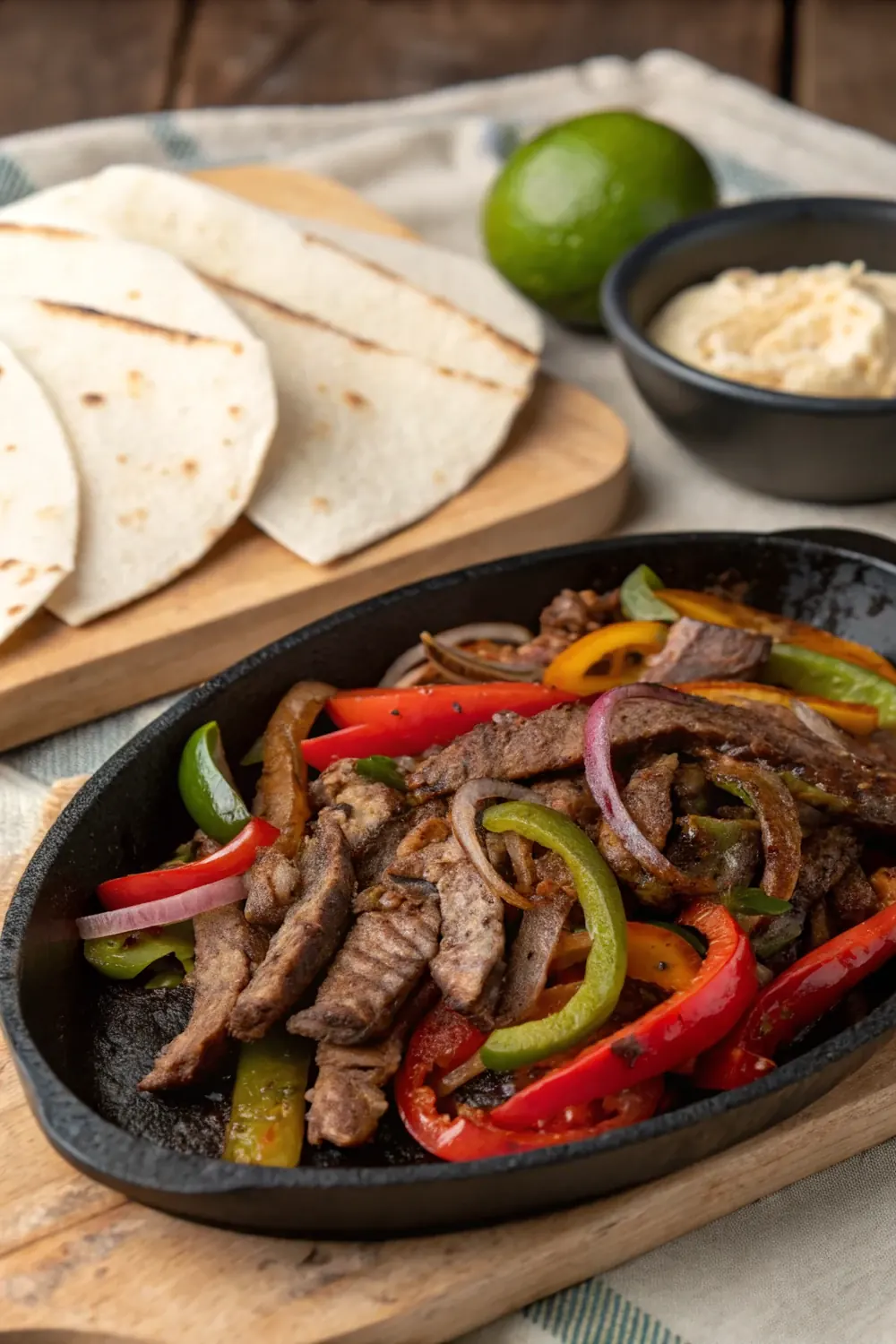
Tex-Mex Recipes
Pappasito's Fajita Marinade
Chef Mia's Pappasito's fajita marinade copycat from Houston: citrus, soy, Worcestershire, garlic, and cumin for sizzling skirt steak fajitas you slice thin.
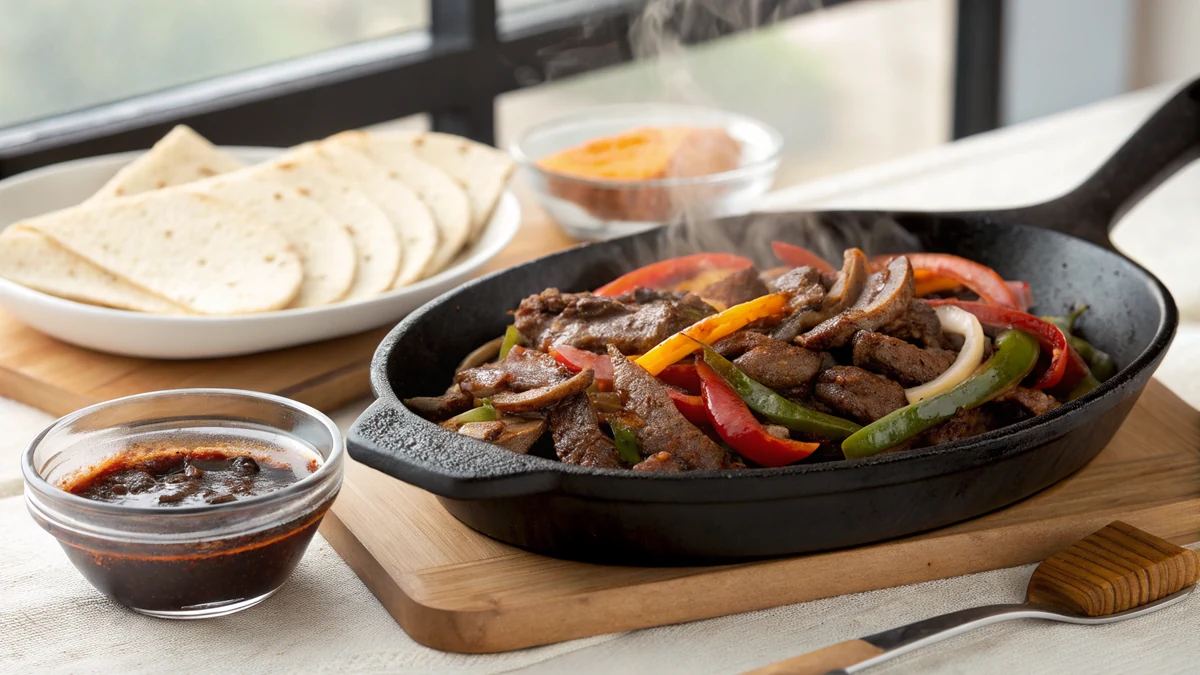
Quick answer: Pappasito's fajita marinade is the citrusy, savory soak that makes their sizzling skirt steak so tender and flavorful. It is built on fresh lime juice, orange juice, soy sauce, Worcestershire, vegetable oil, garlic, ground cumin, and black pepper. To use it, whisk it together, pour it over 2 to 2.5 pounds of trimmed skirt steak, and marinate 4 to 8 hours in the fridge, never past 24 because the citrus turns the meat mushy. Pat the steak dry, grill it screaming hot for 3 to 4 minutes per side to a medium-rare 130F to 135F, rest it, then slice thin across the grain. Char some onions and peppers alongside and serve with warm tortillas.
The first time I ate at Pappasito's Cantina in Houston, the fajitas came out on a cast iron skillet so hot it was spitting and hissing across the whole table. The skirt steak was charred on the edges, pink in the middle, and so tender I could pull it apart with a fork. I asked our server what was in the marinade and got a polite smile and nothing else. So I did what any stubborn Hill Country cook does. I went home, took notes from memory, and started testing batches until I landed on the citrus and soy marinade I am sharing with you today.
What makes this marinade special is the balance. It is tangy from lime and orange, savory and deep from soy and Worcestershire, earthy from cumin, and punchy from a lot of garlic. It tenderizes the skirt steak without turning it to mush, as long as you respect the timing. I have made this dozens of times for backyard cookouts and weeknight dinners, and it never fails to make people ask for the recipe. The trick is not just the marinade. It is the hot grill, the rest, and slicing against the grain. I will walk you through all of it.
The Pappasito's Story and What Makes Their Fajitas Different
Pappasito's Cantina is a Houston institution. The Pappas family opened it in the 1980s, and it grew into one of the most beloved Tex-Mex spots in Texas, famous above almost anything else for its fajitas. If you have ever sat at one of their tables, you know the moment. A skillet arrives sizzling so loudly the whole room turns to look, loaded with charred skirt steak, onions, and peppers, steam pouring off it. That theater is part of the experience, but the real magic is in how tender and flavorful that meat is.
What sets Pappasito's fajitas apart from a sad, gray plate of restaurant fajitas is the quality of the cut and the marinade behind it. They use genuine skirt steak, the original fajita cut, and they marinate it long enough to be tender without losing that beefy chew. The flavor is layered, tangy and savory and earthy all at once, never one-note. It tastes like it was thought about.
I am not going to claim I have their exact proprietary recipe locked in a vault. What I have is a marinade I reverse-engineered over many batches in my own Hill Country kitchen, tasting against my memory of those Houston dinners. It gets remarkably close. More importantly, it teaches you the principles, citrus plus soy plus aromatics, that make any fajita meat sing. Nail this and you stop missing the restaurant.
The Marinade Ingredient by Ingredient
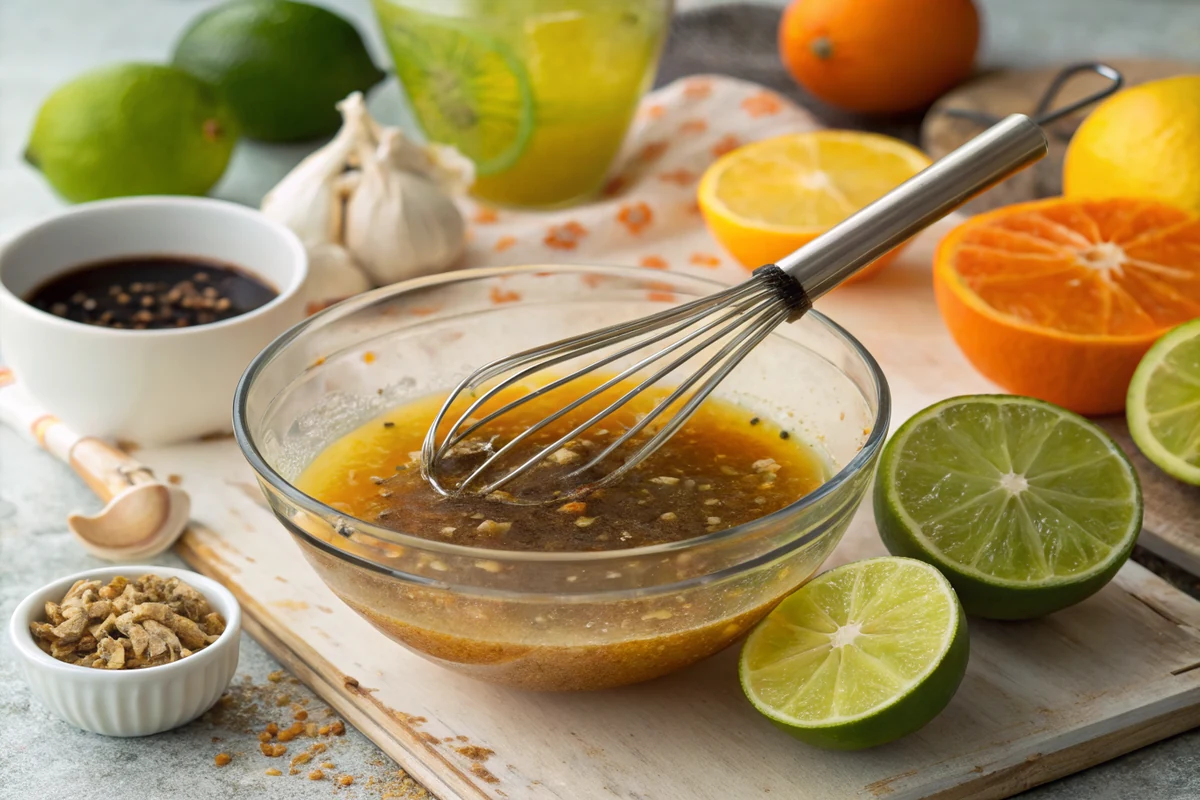
Every piece of this marinade is doing a specific job, so let me walk you through it. The base brightness comes from a half cup of fresh lime juice and a half cup of fresh orange juice. The lime brings sharp, clean tang and the orange softens it with a little sweetness, and together their acid gently tenderizes the surface of the skirt steak. I always squeeze fresh here. Bottled juice tastes flat and slightly bitter, and citrus is the heart of this thing.
Next come the savory builders. A third cup of soy sauce and a quarter cup of Worcestershire bring deep umami, that meaty, almost mushroomy savoriness that makes the beef taste like more than just beef. Soy also adds salt and helps the steak brown. Worcestershire layers in tang, anchovy depth, and a little molasses sweetness. Together they give the marinade its dark, complex backbone underneath all that bright citrus up top.
Then the aromatics and oil. Six cloves of minced garlic might sound like a lot, but fajitas want bold garlic, and grilling mellows it. A full tablespoon of ground cumin brings that warm, earthy, unmistakably Tex-Mex note. Black pepper and salt season it through. A third cup of vegetable oil carries all those fat-soluble flavors into the meat and helps it sear rather than stick. That balance, tangy, savory, earthy, is the whole game.
If you want to play, the optional add-ins each do something. A splash of pineapple juice adds enzymes that tenderize and a tropical sweetness. A splash of beer brings a faint maltiness and helps with browning. Chopped cilantro stirs in fresh, herbal brightness. None are required, and the core marinade is complete without them, but they are fun levers to pull when you feel like it.
Skirt Steak vs Flank Steak
Skirt steak is the original fajita cut, and it is what Pappasito's and most serious Tex-Mex kitchens use. It comes from the diaphragm area of the cow, it is long, thin, and loosely textured, and it is loaded with beefy flavor and good marbling. That loose grain is exactly what makes it perfect for fajitas. It soaks up marinade fast, it cooks in minutes, and when you slice it right it is wonderfully tender. It is my first choice every single time I make this.
Flank steak is the most common substitute, and it works well, so do not stress if skirt is hard to find. Flank comes from the lower belly, it is leaner and a bit thicker than skirt, and it has a tighter grain. It is still full of flavor and takes this marinade beautifully. The main differences are that flank is a touch less tender and the grain runs in a more obvious single direction, which honestly makes it easier to slice correctly against the grain.
A few notes on buying and handling either cut. Skirt steak can be sold as inside skirt or outside skirt. Outside skirt is more tender and a bit pricier, but either works here. Whichever cut you grab, look for good marbling and a deep red color, and plan to trim the membrane off skirt before marinating. Both cuts are thin, both cook fast and hot, and both demand that you slice across the grain at the end. Get the cut home and the rest of the method is the same.
How Long to Marinate and the Citrus Trap
Timing the marinade is where most home cooks either win or lose with this recipe, so pay attention here. The sweet spot is 4 to 8 hours in the refrigerator. That is long enough for the citrus, soy, and garlic to work their way into the skirt steak, tenderize it, and load it with flavor all the way through, not just on the surface. When I am planning fajitas for dinner, I mix the marinade and get the steak soaking in the morning, and by evening it is perfect.
You can get away with a shorter soak in a pinch. Even 2 hours will give you noticeably more flavor and tenderness than no marinade at all, so if you got a late start, do not panic. The flavor just will not penetrate as deeply. On the flip side, if you want to prep ahead, you can mix the marinade a day or two early and keep it in the fridge separately, then add the meat when your window opens.
Here is the trap, and it is a real one. Do not marinate this steak longer than 24 hours, and honestly I would not push much past the 8 hour mark. The lime and orange juice are acidic, and acid that sits on meat too long stops tenderizing and starts denaturing. The proteins on the surface break down too far, leaving the outside mushy, grainy, and chalky, almost like it is already cooked. More marinade time is not better. It actively ruins the texture.
If you genuinely need to hold the meat longer than a day before cooking, marinate it without the citrus juices, then stir the lime and orange in during the last few hours. That gives you the deep savory soak of soy, Worcestershire, and garlic without the acid doing slow damage the whole time. For almost everyone, though, a 4 to 8 hour soak the same day is the easy, foolproof path to tender fajitas.
Grilling Skirt Steak Hot and Fast
Skirt steak is thin, which means the cooking philosophy is simple: ripping hot and very fast. You want maximum char on the outside before the inside has time to overcook. Get your grill as hot as it will go, or heat a cast iron skillet until it is almost smoking. A lukewarm grill is the enemy here. It will gray the meat and steam it instead of giving you that blistered, charred crust that makes fajitas taste like fajitas.
Pat the steak dry before it touches the heat, because surface moisture is the other thing that kills a sear. Lay the steak down and resist every urge to poke or move it. Give it a solid 3 to 4 minutes on the first side so a real crust can form, then flip it once and give the second side another 3 to 4 minutes. Because skirt is so thin, this whole process is fast, often under 10 minutes total. Stay close and pay attention.
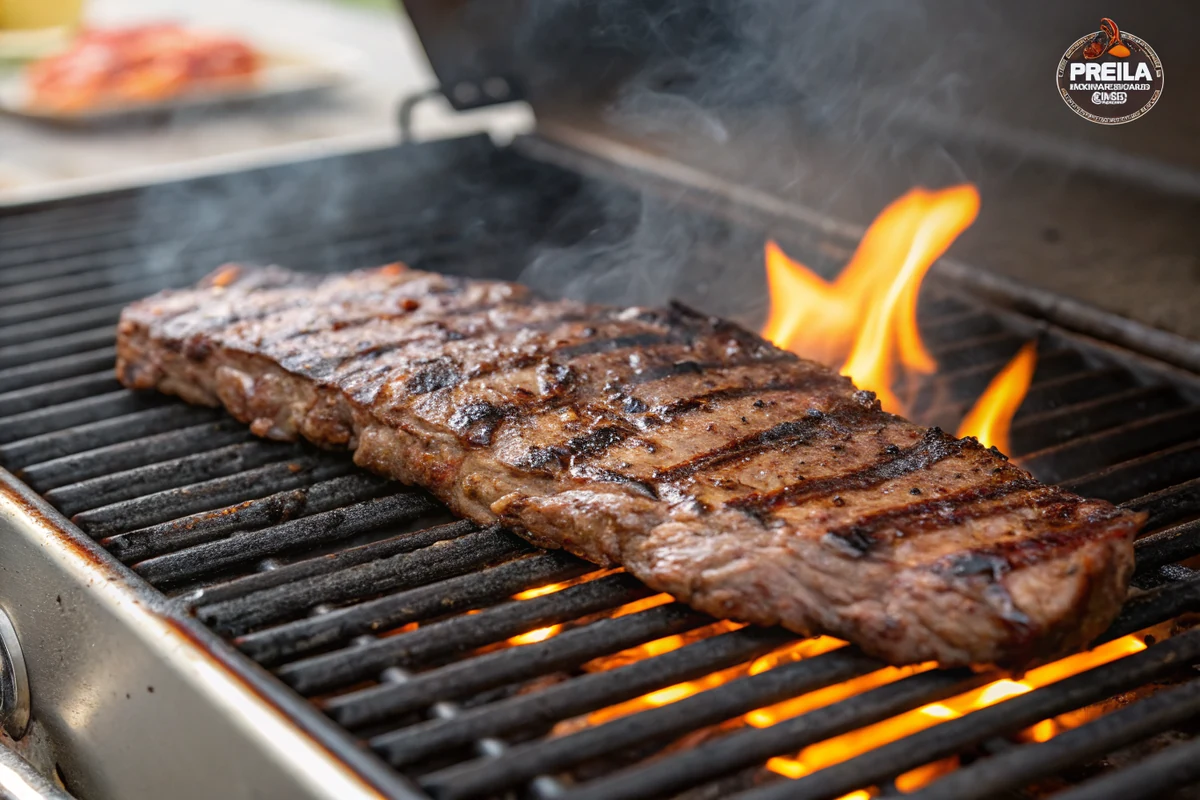
Use a thermometer rather than guessing. For skirt steak, medium-rare at 130F to 135F is the target, and that keeps it tender and juicy. Past medium, this thin cut starts to toughen and dry out fast, so I never take it beyond about 140F. The window between perfect and overdone is narrow because the steak is so thin, which is exactly why hot and fast wins. A quick sear locks in char while leaving the center pink and tender.
If you do not have an outdoor grill, a cast iron skillet or a grill pan on the stove does a great job, just open a window because it will smoke. You can also use the broiler, positioning the steak a few inches under a screaming-hot element. Whatever your heat source, the rule does not change: get it as hot as possible, cook the steak quickly, and pull it at medium-rare. That is how you get the Pappasito's char at home.
Slicing Against the Grain, the Make-or-Break Step
I cannot stress this enough: how you slice the steak matters just as much as how you cooked it. You can grill a perfect medium-rare skirt steak and absolutely ruin it at the cutting board by slicing the wrong way. Skirt and flank steaks have long, prominent muscle fibers, often called the grain, running in one clear direction. Those fibers are what make these cuts chewy if you leave them long.
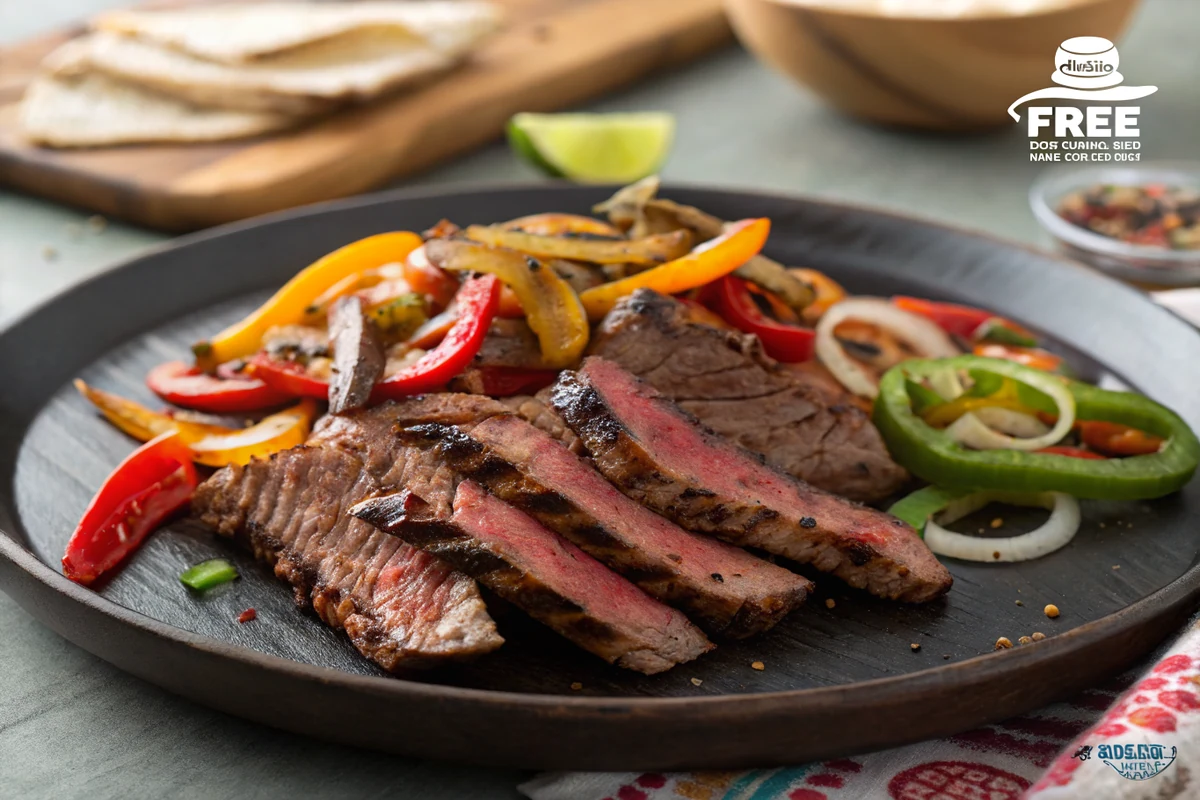
The fix is to slice across the grain, also called against the grain. Look at the steak and find the direction those long fibers run. Then turn your knife so it is perpendicular to them and cut straight down through the fibers, slicing them into short little segments. When the fibers are short, each bite breaks apart easily and eats tender. When you slice with the grain instead, you leave those fibers long and intact, and the meat eats like a chewy rubber band no matter how well you cooked it.
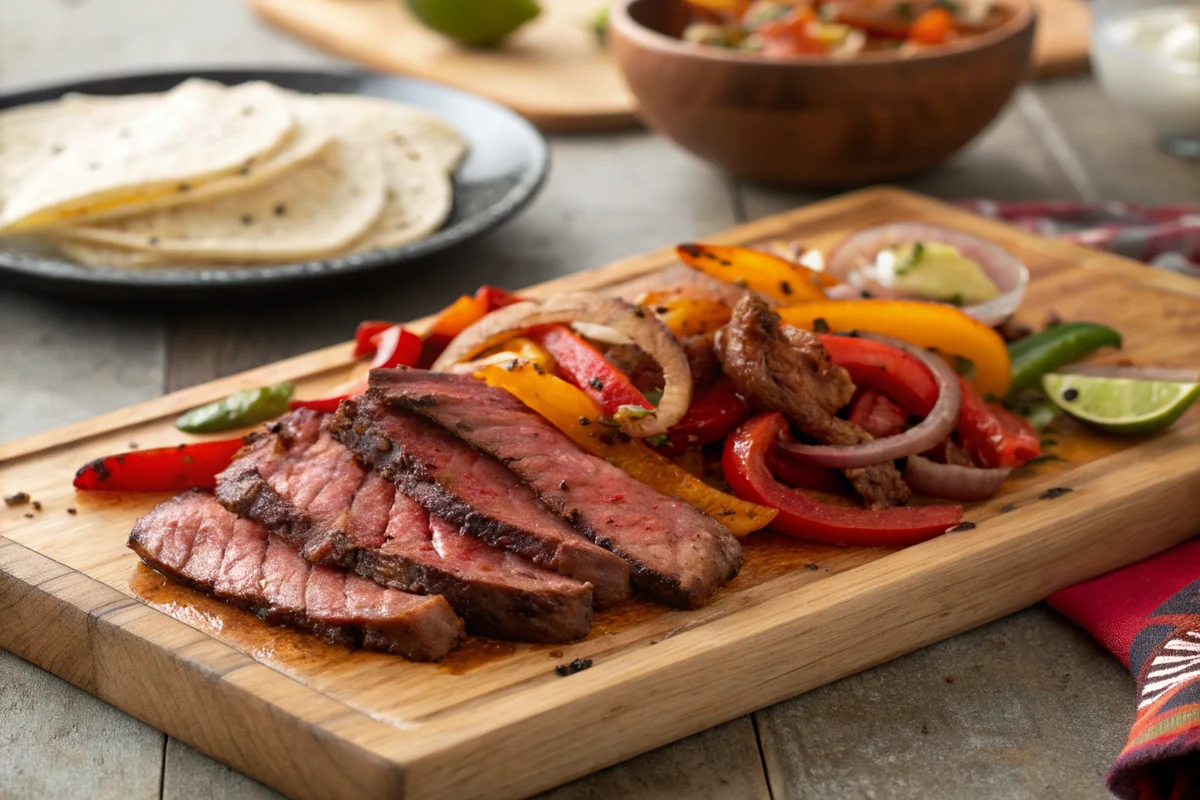
Cut the slices thin, around a quarter inch, with a sharp knife. Thin slices across the grain are the signature of good fajita meat, the strips that fold easily into a tortilla. With skirt steak, the grain can sometimes shift direction along the length of the piece, so check as you go and adjust your knife angle to stay perpendicular. It takes ten extra seconds of looking. It is the single biggest tenderness lever you have.
Charring the Onions and Peppers
The vegetables are not an afterthought. Properly charred onions and bell peppers are half of what makes a plate of fajitas taste like fajitas, sweet, smoky, and a little blistered against the savory beef. I slice my onions thick, into wedges or fat half-moons, so they hold together on the grill instead of falling apart. For the peppers, I use a mix of colors, red, yellow, and green, sliced into wide strips. The colors look gorgeous on the skillet too.
Cook them over high heat, the same screaming heat you used for the steak. If you are on a grill, a grill basket or a flat griddle pan keeps the slices from slipping through the grates. In the kitchen, a cast iron skillet with a little oil does beautifully. The goal is char and blister, not a soft, watery saute. You want the edges to catch some color and pick up a little smoke, while the centers stay slightly toothsome. That takes about 8 to 10 minutes of high heat and occasional tossing.
Timing-wise, I usually start the vegetables right as the steak comes off to rest, so they finish just as I am done slicing. A pinch of salt and a squeeze of lime over them at the end wakes everything up. If you want to lean even more into the Pappasito's feel, a little of the leftover sliced steak char mingling with the peppers on a hot skillet is exactly the smoky, sizzling combination you are chasing. Do not skip the char. Soft, pale vegetables make sad fajitas.
Building the Fajita Plate
Now for the fun part, assembling everything into the meal. The classic move is a sizzling cast iron skillet. If you have one, heat it screaming hot, pile the sliced steak and charred vegetables on, and carry it straight to the table so it hisses and steams the way it does at the restaurant. If you do not have a skillet to serve on, a warm platter works fine. Either way, get the protein and vegetables out fast while everything is still hot.
Warm tortillas are non-negotiable. Cold, stiff tortillas crack and ruin the whole experience. Flour tortillas are the traditional Tex-Mex choice for fajitas and they fold beautifully, but corn tortillas are great too if you want a more rustic, gluten-free bite. Warm them on the grill or a dry skillet until they are pliable and lightly spotted, then wrap them in a clean towel to keep them soft. For a homemade upgrade, my buttery tortilla recipe is worth the extra effort.
Then come the toppings, where everyone builds their own. I set out guacamole, pico de gallo, sour cream, shredded cheese, and lime wedges so people can dress their fajitas however they like. A side of Mexican rice and some refried or charro beans rounds it into a full Tex-Mex feast. The beauty of fajitas is that the hot, sizzling centerpiece does the heavy lifting and the toppings let everyone make it their own. Set it all out and let the table go to work.
Using the Marinade on Chicken and Shrimp
This marinade is not just for beef. It is genuinely excellent on chicken, and chicken fajitas are a fantastic use for it. Use boneless skinless thighs for the most flavor and forgiveness, or breasts if you prefer leaner meat, and pound them to an even thickness so they cook evenly. The marinating time is shorter than for steak. Chicken only needs about 2 to 4 hours, because the acid works faster on poultry and can turn it mushy if you leave it overnight. Grill it hot to 165F, then slice.
Shrimp take to this marinade beautifully too, but the timing shrinks dramatically. Shrimp are delicate and the citrus will start to cook them, ceviche-style, if they sit too long, turning them rubbery before they ever hit the grill. Marinate shrimp for no more than 20 to 30 minutes, just long enough to grab the flavor. Then thread them on skewers and grill them fast over high heat, only a couple of minutes per side until they are pink and opaque. They make a quick, gorgeous fajita filling.
You can also lean into a mixed platter, which is what I do when I am feeding a crowd with different tastes. Marinate the steak, chicken, and shrimp separately so each gets its right amount of time, then grill them in stages and pile them all onto one big sizzling skillet. Add the charred peppers and onions and you have a Tex-Mex spread that rivals any restaurant. For a different protein night entirely, this citrusy garlic flavor base also plays well with the seasoning on my crispy chicken tacos.
My Hill Country Kitchen Notes and Mistakes to Avoid
After making these more times than I can count, let me hand you the hard-won lessons so you can skip the mistakes I made. The number one error is over-marinating. I once let a beautiful skirt steak sit in the citrus for two full days thinking longer meant more flavor, and I pulled out a mushy, chalky mess that no amount of grilling could save. Respect the 4 to 8 hour window, never past 24, and the acid stays your friend instead of your enemy.
The second mistake is grilling too cool. If your grill or skillet is not ripping hot, the steak grays and steams instead of charring, and you lose the smoky crust that defines fajitas. Get the heat as high as it goes and pat the meat bone dry first. The third mistake is overcooking this thin cut past medium-rare. Skirt and flank toughen fast, so pull them at 130F to 135F and use a thermometer rather than guessing. Thin steak gives you almost no margin for error.
The fourth, and the one that breaks the most hearts, is slicing with the grain instead of against it. People grill a gorgeous steak and then saw it the long way and wonder why it is chewy. Always find the grain and cut perpendicular to it. And the fifth is skipping the rest. Give that steak 5 to 10 minutes before you cut, or you pour the juices onto the board. Do those five things right and you will make fajitas your friends beg for.
A couple of final notes from my kitchen. I always make extra marinade, because leftover sliced fajita steak is incredible the next day in tacos, on a salad, or folded into eggs for breakfast. A cold beer alongside, or a tart michelada, is the perfect partner for the smoky, citrusy beef. And do not be shy with the lime at the table. A fresh squeeze right before you eat ties the whole sizzling plate together and tastes exactly like a Houston evening at Pappasito's.
Pappasito's Fajita Marinade Recipe
Ingredients
- For the marinade:
- 1/2 cup fresh lime juice (about 4 limes)
- 1/2 cup fresh orange juice
- 1/3 cup soy sauce
- 1/4 cup Worcestershire sauce
- 1/3 cup vegetable oil
- 6 cloves garlic, minced
- 1 tablespoon ground cumin
- 1 teaspoon black pepper
- 1 teaspoon salt
- Optional: 1/4 cup pineapple juice
- Optional: a splash of beer (about 1/4 cup)
- Optional: 1/4 cup chopped fresh cilantro
- For the fajitas:
- 2 to 2.5 lb skirt steak (or flank steak)
- 2 large onions, sliced thick
- 3 bell peppers, sliced (mix of colors)
- Flour or corn tortillas, to serve
Instructions
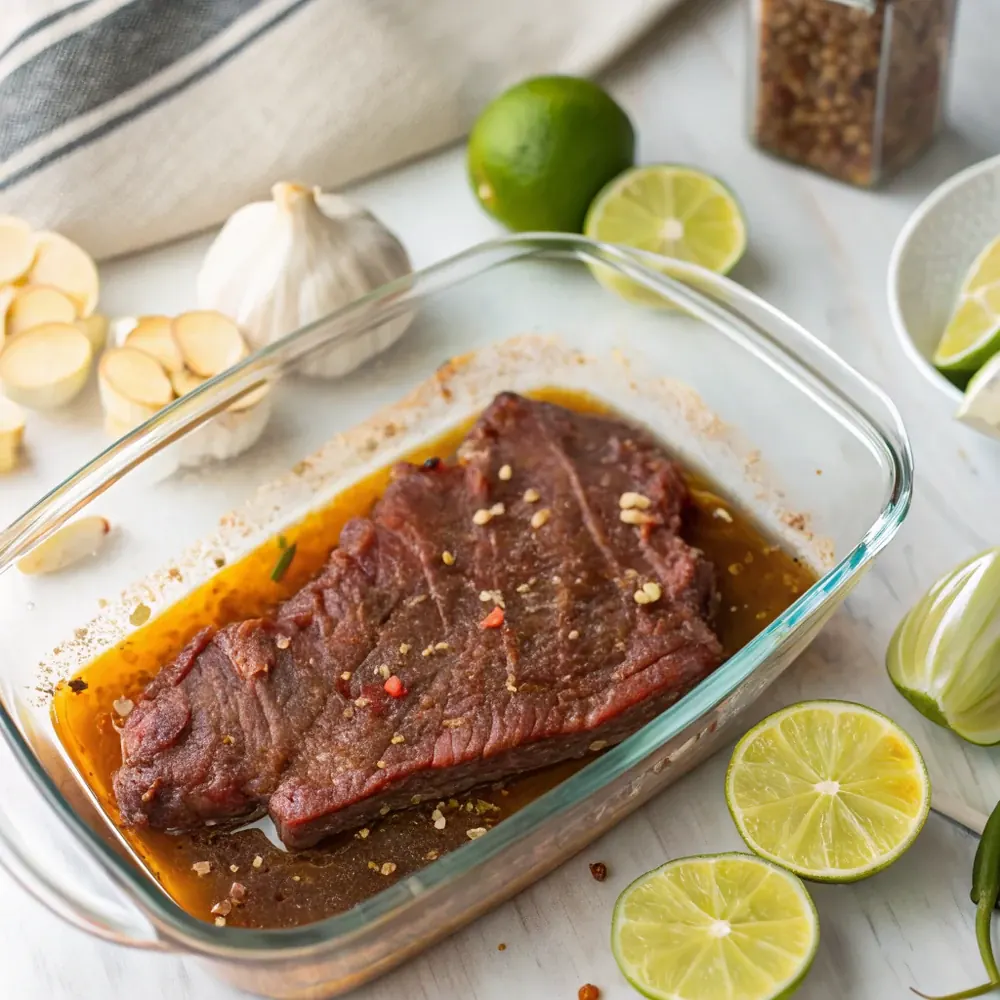
- Whisk the marinade. In a large bowl, whisk together the fresh lime juice, orange juice, soy sauce, Worcestershire, vegetable oil, minced garlic, ground cumin, black pepper, and salt. If you are using the optional pineapple juice, beer, or chopped cilantro, add them now. Whisk until the oil emulsifies a little and everything looks unified. Give it a taste. It should be bright and tangy up front, deeply savory underneath, and smell like garlic and cumin. This is the whole flavor engine of the dish, so get it balanced before the meat goes in.
- Trim the skirt steak. Lay the skirt steak on a board and look for the thin, silvery membrane running along the surface. Slide a sharp knife just under it and peel it away, working in strips. That membrane never breaks down and turns chewy and tough on the grill, so taking a few minutes here pays off in every bite. Trim off any thick chunks of hard fat too, but leave the thin marbling. If your skirt steak is one long piece, cut it into two or three more manageable lengths so it fits your dish and your grill.
- Marinate 4 to 8 hours. Put the trimmed steak in a zip-top bag or a shallow dish and pour the marinade over it, turning to coat every surface. Seal it up and refrigerate for 4 to 8 hours. This window is the sweet spot, long enough for the citrus and soy to penetrate and tenderize, short enough that the acid does not wreck the texture. Do not push past 24 hours under any circumstances. The lime and orange juice will start breaking down the proteins too far and leave the surface mushy and chalky instead of tender.
- Pull and pat dry. Take the steak out of the marinade and let it sit on the counter for about 20 to 30 minutes to take the chill off, which helps it cook evenly. Pat both sides completely dry with paper towels. This step matters more than people think. A wet surface steams on the grill and refuses to sear, while a dry surface chars and builds that crust. Season the steak with a little salt right before it goes on the heat. Discard the used marinade. Never reuse it as a sauce.
- Grill screaming hot. Get your grill or a cast iron skillet as hot as it will go, ripping hot, before the steak touches it. Lay the skirt steak down and leave it alone for 3 to 4 minutes, until it has a deep char and releases easily. Flip once and grill the other side another 3 to 4 minutes. You are aiming for a medium-rare internal temperature of 130F to 135F on an instant-read thermometer. Skirt steak is thin and cooks fast, so this happens quickly. Hot and fast is the only way to get char without overcooking the inside.
- Rest the steak. Move the grilled skirt steak to a board or plate and let it rest for a full 5 to 10 minutes before you cut it. While it cooked, the juices rushed toward the center, and resting lets them settle back through the whole steak so they stay in the meat instead of flooding your board. If you slice into it the second it comes off the heat, you literally pour your juiciness away. Tent it loosely with foil if your kitchen is cold. This pause is not optional if you want tender, juicy fajitas.
- Slice thin across the grain. This is the make-or-break step. Look at your rested skirt steak and find the direction the muscle fibers run, those long visible lines. Position your knife perpendicular to them and slice thin, about a quarter inch, cutting across the grain. Skirt steak has long, tough fibers, and cutting against them shortens those fibers so every bite is tender instead of chewy and stringy. Cut it the wrong way, with the grain, and even a perfectly grilled steak will eat like a rubber band. A sharp knife and the right angle make all the difference.
- Char the vegetables and serve. While the steak rests, throw your thick-sliced onions and bell peppers onto the hot grill or into the cast iron skillet with a little oil. Cook them over high heat, tossing now and then, until they are softened with charred, blistered edges, about 8 to 10 minutes. You want color and a little smoke on them, not a soft saute. Warm your tortillas on the grill until they are pliable and spotted. Pile the sliced steak and charred vegetables onto a hot skillet or platter, and serve right away with the warm tortillas and your favorite toppings.
Frequently Asked Questions
What cut of meat is best for fajitas?
Skirt steak is the original and best cut for fajitas, which is what Pappasito's and most Tex-Mex kitchens use. It is thin, loosely grained, well marbled, and packed with beefy flavor, and it soaks up marinade fast. Flank steak is the most common substitute and works very well, though it is a touch leaner and tighter grained. Both are thin cuts that need to be cooked hot and fast and sliced thin against the grain. Either one will give you tender, flavorful fajitas with this marinade.
How long should I marinate the steak?
The sweet spot is 4 to 8 hours in the refrigerator, which is long enough for the citrus, soy, and garlic to penetrate and tenderize the meat. A shorter 2 hour soak still adds plenty of flavor if you are short on time. The hard rule is to never marinate longer than 24 hours, and honestly I would not push much past 8. The lime and orange juice are acidic, and too long in the marinade breaks down the surface proteins and leaves the meat mushy and chalky instead of tender.
Can I use this marinade on chicken?
Absolutely, it makes excellent chicken fajitas. Use boneless skinless thighs for the most flavor, or breasts if you want leaner meat, and pound them to an even thickness so they cook evenly. Marinate chicken for a shorter time than steak, about 2 to 4 hours, since the acid works faster on poultry. Grill it hot until it reaches 165F in the thickest part, rest it, then slice it thin. The same marinade also works beautifully on shrimp, but only for 20 to 30 minutes since citrus cooks shrimp fast.
What is the difference between skirt steak and flank steak?
Both are thin, flavorful cuts perfect for fajitas, but they come from different parts of the cow. Skirt steak comes from the diaphragm area, is looser grained, more marbled, and very tender when sliced right, which is why it is the classic fajita cut. Flank steak comes from the lower belly, is leaner, slightly thicker, and has a tighter, more obvious grain that actually makes it easier to slice against. Skirt is my first choice, but flank is a great and widely available substitute that takes this marinade just as well.
Why do I have to slice fajita steak against the grain?
Skirt and flank steaks have long, tough muscle fibers that run in one clear direction, called the grain. If you slice with the grain, you leave those fibers long and the meat eats chewy and stringy no matter how well you cooked it. Slicing across the grain, perpendicular to those fibers, cuts them into short little segments so every bite is tender. It is the single biggest factor in tenderness after the cut and the cook. Always find the grain and turn your knife perpendicular to it before slicing thin.
Can I freeze the marinade or the meat in it?
Yes to both. You can freeze the marinade on its own in a sealed container for up to 3 months, then thaw it in the fridge before using. Even better, you can freeze the raw steak right in the marinade in a zip-top bag, and it will marinate as it thaws. Just be careful with timing on thaw day, since the meat keeps marinating once liquid. Thaw it in the fridge and cook within a day so the citrus does not over-soften the texture. Never reuse marinade that touched raw meat as a sauce.
Is there pineapple or beer in Pappasito's marinade?
Pappasito's keeps their exact recipe private, so I cannot confirm what is or is not in it. My copycat is built on the flavors I can taste, citrus, soy, Worcestershire, garlic, and cumin, which gets remarkably close. Pineapple juice and beer are popular optional add-ins in many Tex-Mex fajita marinades. Pineapple adds enzymes that tenderize and a tropical sweetness, while beer brings a faint maltiness and helps with browning. I include both as optional in this recipe because they are delicious, not because I know they are in the original.