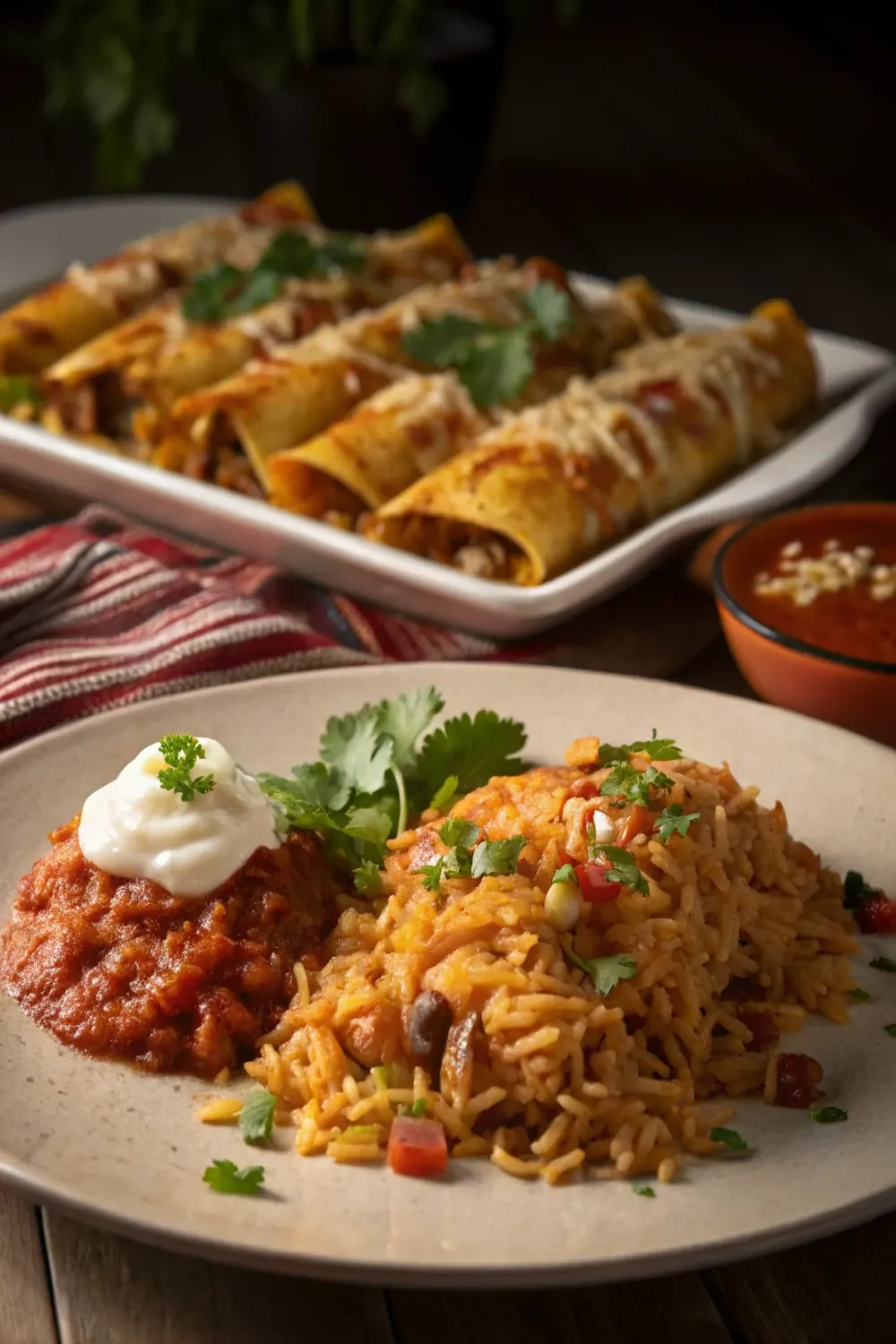
Tex-Mex Recipes
Authentic Mexican Rice
Authentic Mexican rice the Tex-Mex way: toasted long-grain rice with tomato sauce, bouillon, and onion. Fluffy not mushy. Chef Mia's Hill Country method.
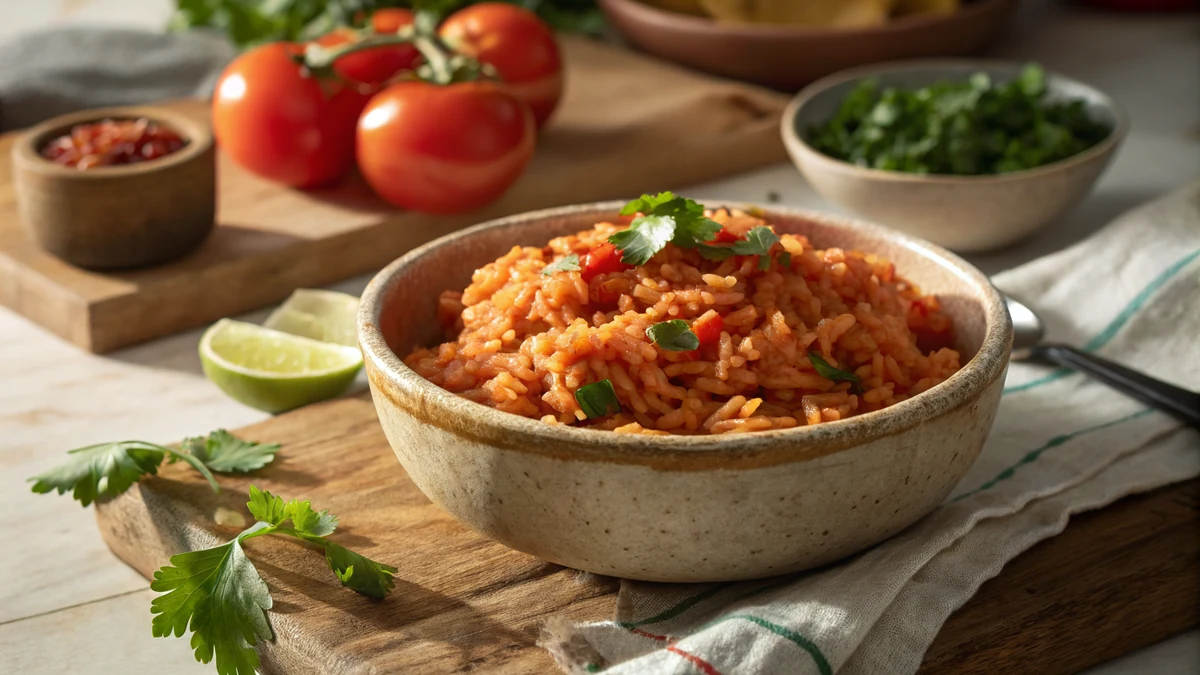
Quick answer: Authentic Mexican rice is made by toasting long-grain white rice in oil until golden brown, then simmering in tomato-flavored broth with onion and garlic. The toasting step is non-negotiable; it prevents the rice from going mushy and gives the finished dish its distinctive nutty flavor. Use 1 cup of rice to 2 cups of liquid (broth + tomato sauce), cover and simmer 20 minutes, then rest 10 minutes off heat. Fluff with a fork and serve.
Mexican rice (also called Spanish rice in some Texas households) is the side dish that anchors every Tex-Mex plate. Done right, it is fluffy, distinctly red-orange from the tomato, faintly nutty from the toasted rice, and seasoned through every grain. Done wrong, it is mushy, pale, and bland. The difference comes down to one step: toasting the rice in hot oil before adding liquid.
My mother made Mexican rice every Sunday alongside enchiladas or fajitas. She learned the recipe from her mother, who learned it from her mother. The technique came north with Mexican families who settled in Central Texas in the early twentieth century. The toasting step in particular is something Tex-Mex grandmothers do without thinking about it; the modern home cook learns it from a cookbook.
Pair Mexican rice with Tex-Mex beef enchiladas, fajitas, or refried beans. It travels well in the fridge for the week and is the foundation of leftover bowls (rice + beans + leftover protein + salsa = lunch). For a different rice direction, see our Texas Roadhouse rice.
Three Things to Know About Mexican Rice
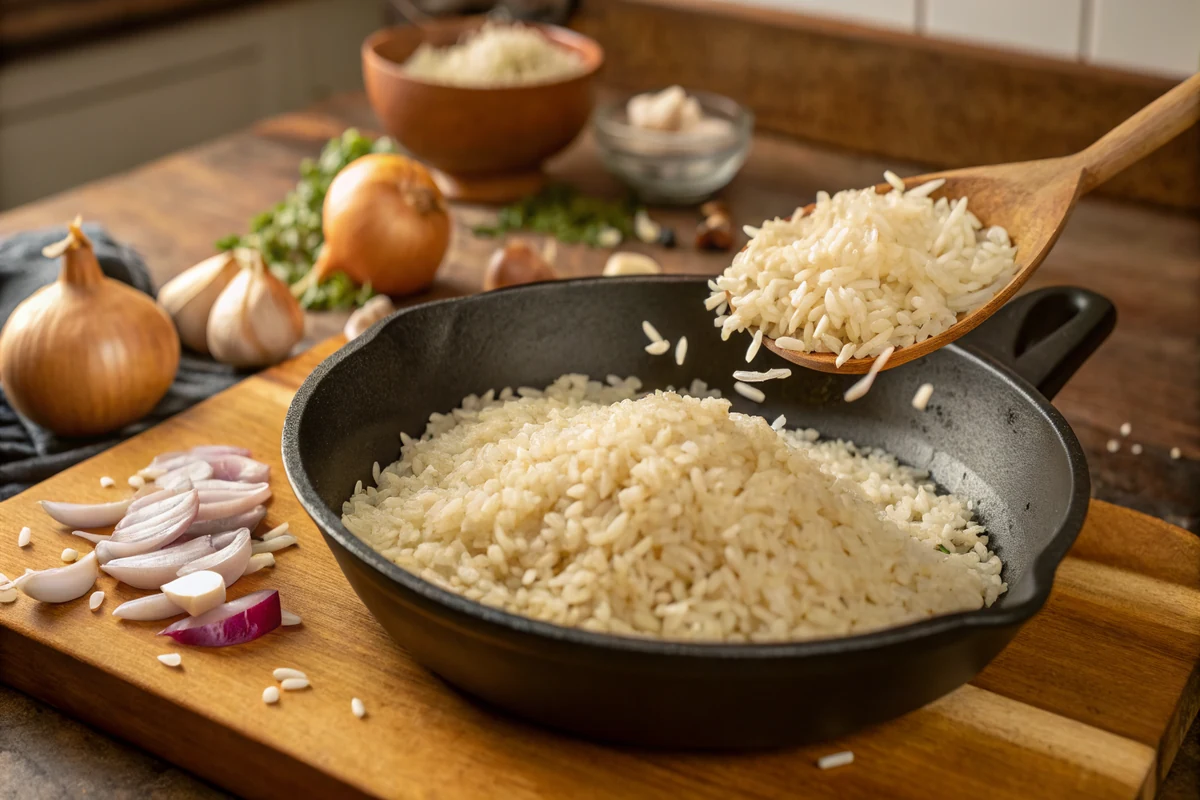
Toasting the rice is the most important step. Untoasted rice goes mushy because the starch on the grain surface absorbs water immediately and turns sticky. Toasted rice has had that surface starch broken down by heat, which creates a barrier that lets water in slowly and evenly. Skip toasting and the rice will be sticky and clumpy. Do it for 5 to 7 minutes and the rice will be fluffy and distinct.
Use long-grain rice, never short or medium grain. Long-grain rice (the standard supermarket white rice, Mahatma or Riceland or Carolina) has the right starch profile for Mexican rice. Short-grain (sushi rice, Arborio) is too starchy and goes sticky. Medium-grain (Calrose) is a fallback but produces a slightly stickier result. Brown rice does not work for Mexican rice because the timing and water ratio are different.
The liquid ratio matters. The classic ratio is 1 cup rice to 2 cups liquid (broth + tomato sauce). If the liquid is too low, the rice undercooks (you get hard centers). Too high, the rice goes mushy. Measure both the rice and the liquid carefully. The 1:2 ratio works for any quantity; for 2 cups of rice, use 4 cups of liquid (3 cups broth + 1 cup tomato sauce).
Choosing the Right Rice
Mahatma Long Grain White Rice is the canonical Tex-Mex choice and is the rice I grew up with. Available at every H-E-B and most Texas grocery stores. Riceland Long Grain White (Arkansas-grown) is the second choice. Carolina Long Grain White (Carolina Rice) is a third acceptable option. All three are interchangeable.
Parboiled (converted) rice like Mahatma Gold or Uncle Ben's also works and is more forgiving for new home cooks. It is precooked, so it absorbs less water and is harder to overcook. The flavor is slightly nuttier than regular white rice. Use the same 1:2 ratio but reduce the simmer time to 15 minutes.
Avoid jasmine and basmati rice for Mexican rice. Both are aromatic rice varieties that bring their own flavor profiles (jasmine: floral; basmati: nutty). Those flavors fight the cumin and tomato in Mexican rice. Save jasmine and basmati for Thai and Indian cooking. Long-grain neutral white rice is the right tool.
The Toasting Method
Heat the oil first, then add the rice. The oil should be hot enough that the rice sizzles immediately on contact. Cold oil with rice added produces soggy rice that absorbs the oil rather than toasting. The right temperature is the same as for shallow-frying: 350°F to 375°F (shimmering oil that does not yet smoke).
Stir constantly. Toasting rice requires continuous stirring with a wooden spoon. Stationary rice grains burn on the bottom while the rest stays raw. Moving rice grains brown evenly. Five to seven minutes of stirring is the cost of fluffy rice.
Look for golden brown, not blackened. The rice should turn a uniform tan-to-golden-brown color, with the occasional darker grain. Black grains mean you went too far; the bitter burnt flavor will permeate the finished dish. Pull the rice off the heat as soon as the majority of grains are golden.
Mistakes to Avoid
Skipping the toasting step. This is the number one cause of mushy Mexican rice. The toasting takes 5 to 7 minutes and is the single biggest difference between authentic and home-style versions. Never skip it.
Lifting the lid during simmering. Every time you peek, you release steam and drop the temperature. The rice stops cooking until you replace the lid and the temperature recovers. Set a timer for 20 minutes and walk away.
Using the wrong rice. Short-grain or medium-grain rice produces sticky clumps. Brown rice has different timing and water ratios. Aromatic rice (jasmine, basmati) clashes with the tomato and cumin. Long-grain white is the only correct choice.
Adding too much liquid. The 1:2 ratio (rice:liquid) is precise. More liquid produces mushy rice; less produces undercooked rice. Measure both ingredients.
Stirring during the simmer. Stirring rice during the covered simmer breaks the grains and releases starch, making the result sticky. Cover, simmer, and do not touch.
Skipping the rest. The 10-minute rest off heat is where the rice finishes cooking via residual heat and steam. The grains tighten and the texture sets. Skipping the rest gives you slightly wet rice.
Using a wooden spoon to fluff. Wooden spoons crush rice grains. Always use a fork (or a rice paddle if you have one). Lift the rice from the bottom up; do not stir.
Variations Worth Trying
Tomato-free version (white Mexican rice). Skip the tomato sauce and use 2 cups of chicken broth as the full liquid. Add 1/4 cup of finely diced poblano or jalapeño for color. Serve alongside red dishes like enchiladas, where a white rice complements the red plate.
Cilantro lime rice (Chipotle style). Add the zest and juice of 2 limes plus 1/4 cup of finely chopped cilantro to the cooked rice during the fluffing step. This is a popular variation, but it is more Mexican-American than authentic Tex-Mex.
With sofrito. Sauté 1/2 cup of finely chopped onion + 1 chopped bell pepper + 2 cloves garlic in the oil before adding the rice to toast. The vegetables add depth and a slightly different flavor profile. This is more common in Mexican (not Tex-Mex) home kitchens.
Spicy version. Add 1 chopped fresh jalapeño (seeds removed for less heat, or kept in for more) along with the onion. Or add 1/4 teaspoon of cayenne to the liquid. Tex-Mex Mexican rice is traditionally mild; the spicy version is a modern variant.
Black bean Mexican rice (one-pot meal). Stir 1 cup of drained and rinsed black beans into the rice before serving. The combination is a one-pot vegetarian meal that's filling and complete.
Storage and Reheating
Refrigerator
Mexican rice keeps 5 days in the fridge in a sealed glass container. The rice will firm up significantly when cold; this is normal. Sprinkle 1 tablespoon of water over the rice before reheating to add moisture back.Freezer
Mexican rice freezes well for 3 months in 1-cup portions in freezer bags. Thaw overnight in the fridge before reheating, or reheat directly from frozen by microwaving in 30-second bursts until warmed through.Reheating
Microwave on 50% power for 90 seconds per cup, stirring once halfway through. The lower power prevents the edges from drying out before the center is warm. Alternatively, reheat in a covered skillet over low heat with 1 tablespoon of water added, stirring every minute, for 4 to 5 minutes.Tips for the Best Mexican Rice
Use a heavy-bottomed pot. Thin pots have hot spots that scorch rice on the bottom. Heavy cast iron, enameled cast iron (Le Creuset), or thick-bottomed stainless steel all work well. The Dutch oven my grandmother used for Mexican rice was a 5-quart enameled cast iron that her mother gave her.
Match the burner to the pot. The flame or coil should not extend beyond the pot's bottom. A small pot on a large burner gets a hot ring around the edges and an undercooked center.
Bouillon vs. broth. Knorr chicken bouillon is what most Texas grandmothers use because it has the right concentration of salt and chicken flavor. Substitute with low-sodium chicken broth and add 1/2 teaspoon of bouillon paste (Better Than Bouillon) for the same flavor.
Toast in batches if doubling. For 2+ cups of rice, toast in batches of 1 cup at a time. Crowding the pan prevents even browning.
Tomato paste vs. tomato sauce. Tomato sauce (smooth, watery) is the traditional choice. Some modern recipes use 2 tablespoons of tomato paste + 1/2 cup additional broth; this works but gives a slightly more concentrated tomato flavor than the traditional version.
What to Serve With Mexican Rice
Tex-Mex mains: Tex-Mex beef enchiladas, fajitas, chicken enchiladas, tamales, or taco soup. Mexican rice is the universal Tex-Mex side.
Sides alongside the rice: refried beans (canonical) or a bowl of brothy charro beans, Texas trash dip for the table, buttery flour tortillas, sliced avocado, and a simple salad of chopped tomato + lime + cilantro.
Drinks: Texas margarita, a cold Mexican lager (Tecate, Modelo Especial), Topo Chico with lime, or for the family table, Mexican Coca-Cola in a glass bottle (the original cane-sugar version sold at H-E-B).
Authentic Mexican Rice Recipe
Ingredients
- 1 cup long-grain white rice (Mahatma, Riceland, or any good long-grain)
- 2 tablespoons vegetable oil or rendered fat
- 1/4 cup diced yellow onion (about 1/4 of a medium onion)
- 2 garlic cloves, minced
- 1 1/2 cups chicken broth (or 1 1/2 cups water + 2 teaspoons Knorr chicken bouillon)
- 1/2 cup tomato sauce (Hunt's tomato sauce, the small 8 oz can)
- 1 teaspoon coarse kosher salt
- 1/2 teaspoon ground cumin
- 1/4 teaspoon Mexican oregano
- 1/2 cup frozen peas and carrots (optional, traditional in some households)
- 2 tablespoons chopped fresh cilantro, for garnish
- Lime wedges, for serving
Instructions
- Rinse the rice (skip if using parboiled). Place the rice in a fine-mesh strainer and rinse under cold water for 30 seconds, agitating with your fingers. Stop when the water runs almost clear. This removes excess starch that would otherwise make the rice clumpy. If you are using parboiled rice (Mahatma Gold), skip this step.
- Heat the oil and start toasting. In a heavy-bottomed saucepan or 10-inch skillet with a tight-fitting lid, heat the oil over medium-high heat for 60 seconds until shimmering. Add the rinsed rice (it should sizzle on contact). Stir continuously with a wooden spoon.
- Toast to golden brown. Cook the rice in the oil for 5 to 7 minutes, stirring constantly, until the grains turn a uniform golden brown color (some grains will be slightly darker, which is fine). The rice should smell toasty and nutty, like popcorn. Do not let it burn; if you see black spots, you have gone too far.
- Add onion and garlic. Add the diced onion to the toasted rice. Cook 2 minutes, stirring, until the onion softens slightly. Add the minced garlic and cook 30 seconds more, until fragrant. The garlic will toast quickly; do not let it burn.
- Add liquid and seasonings. Pour in the 1 1/2 cups chicken broth, the 1/2 cup tomato sauce, the salt, cumin, and Mexican oregano. Stir to distribute. The mixture should be a uniform reddish color. If using the peas and carrots, stir them in now.
- Bring to a boil, then reduce. Bring the rice mixture to a full boil over medium-high heat (about 90 seconds). Once boiling, immediately reduce the heat to the lowest setting on your stove and cover the pot with a tight-fitting lid.
- Simmer covered 20 minutes. Let the rice cook undisturbed at the lowest heat for 20 minutes. Do not lift the lid. Do not stir. The rice is cooking via steam, and lifting the lid releases the steam and drops the temperature. Set a timer.
- Rest off heat 10 minutes. After 20 minutes, remove the pot from the heat (keep the lid on). Let it rest for 10 minutes on a cool burner. This final resting step is where the rice grains finish absorbing residual moisture and firm up. Skipping the rest gives you slightly wet rice.
- Fluff and garnish. Remove the lid. Use a fork (not a spoon, which crushes the grains) to fluff the rice gently from the bottom up. The grains should be distinct, tender, and a uniform red-orange color. Transfer to a serving bowl, garnish with chopped cilantro and lime wedges, and serve.
Frequently Asked Questions
Why is my rice mushy?
Three possible causes. First, you skipped the toasting step; toasted rice resists getting mushy. Second, your liquid ratio is off; the rice may have absorbed too much water. Third, you lifted the lid during simmering, which can change the cooking time. Toasting fixes 80% of mushy rice problems.
Can I make Mexican rice in a rice cooker?
Yes, with adjustments. Toast the rice and aromatics in a skillet first (do not skip this step, even with a rice cooker). Transfer the toasted rice mixture to the rice cooker, add the liquid and seasonings, and cook on the white rice setting. The rice cooker's standard ratio (1:2) matches Mexican rice. Just remember the toasting still happens in a skillet before the rice cooker takes over.
Can I use brown rice?
Yes, with major adjustments. Brown rice requires 2 1/2 cups of liquid per 1 cup of rice (not 1:2) and 40 to 45 minutes of simmering (not 20). The toasting step still applies. The result will be denser and chewier than white rice Mexican rice, with a nuttier flavor. It's a legitimate variation but tastes noticeably different.
What's the difference between Mexican rice and Spanish rice?
In Texas, the two terms are used interchangeably. Technically, Spanish rice is more often the dry, sautéed version popularized in the US (often boxed Rice-A-Roni style). Mexican rice is the version made in Mexican and Tex-Mex households with tomato, cumin, and onion. In practice, Texas grandmothers call both names the same dish.
Can I make this vegetarian?
Yes, easily. Substitute vegetable broth for the chicken broth, or use water with 1 teaspoon of Better Than Bouillon vegetable base. The rest of the recipe stays the same. Add 1/2 cup of frozen corn kernels in the last 10 minutes for a complete vegetarian side.
Why do I need to rinse the rice?
Long-grain white rice has surface starch from milling. Rinsing removes that starch, which would otherwise make the rice clumpy. The rinse takes 30 seconds and improves the final texture noticeably. Parboiled (converted) rice does not need rinsing because the parboiling process removes the surface starch.
Can I double this recipe?
Yes. Double everything (2 cups rice, 3 cups broth, 1 cup tomato sauce, double seasonings), use a larger pot, and toast in two batches (1 cup at a time) for the best browning. The simmer time stays at 20 minutes plus 10 minutes resting. Be sure your pot is wide enough that the rice layer is no more than 1 inch deep; deeper layers cook unevenly.
Is Mexican rice gluten-free?
Yes, as written. All ingredients (long-grain rice, vegetable oil, onion, garlic, chicken broth, tomato sauce, spices) are naturally gluten-free. Verify your specific chicken bouillon brand if you're using one (some bouillons contain wheat-derived flavoring). Knorr bouillon cubes are gluten-free as of current formulation.