Tex-Mex Recipes
White Queso Dip
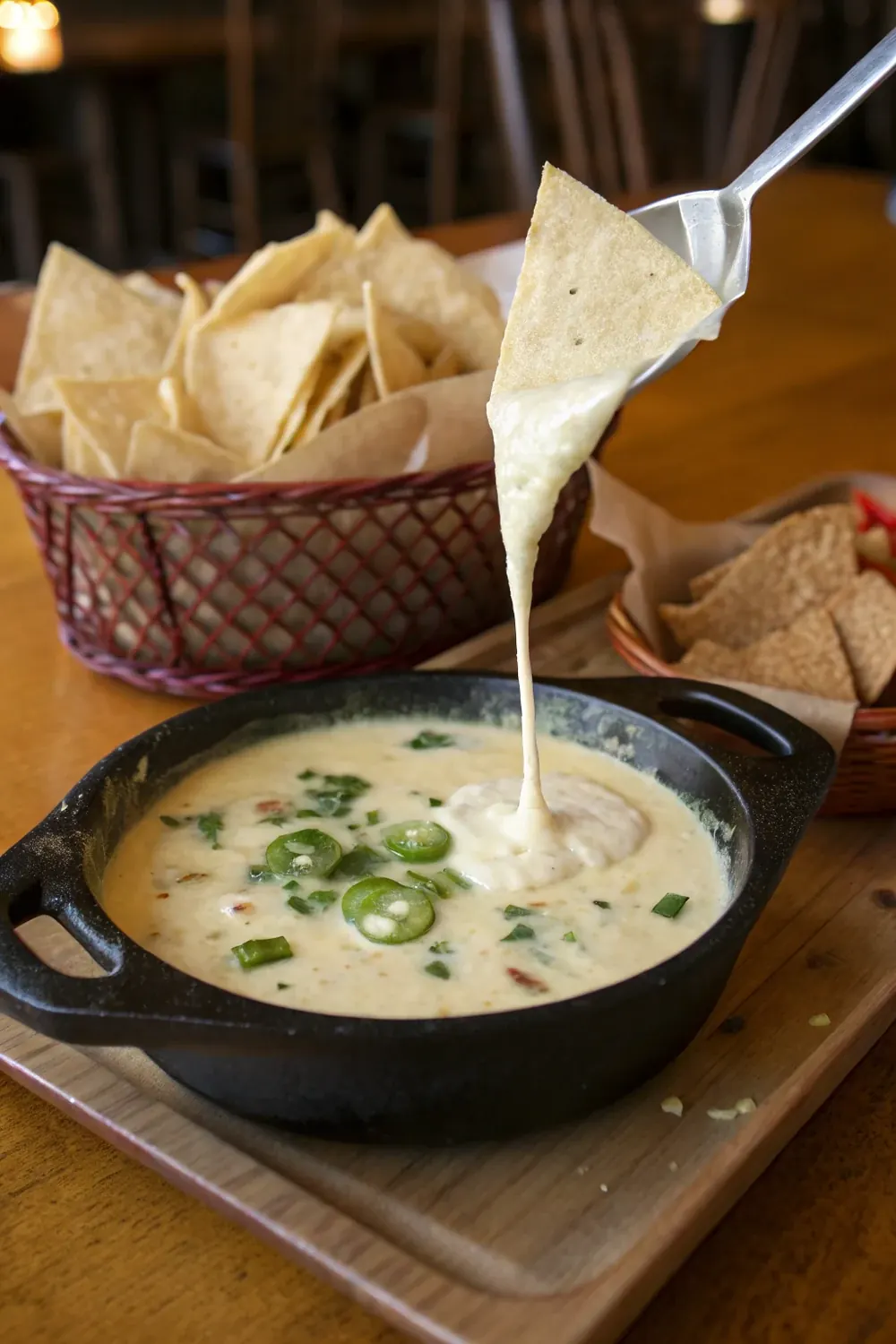
Smooth, pourable white queso dip with white American cheese, green chiles, garlic, and cumin. Chuy's-style restaurant queso, ready in 15 minutes.
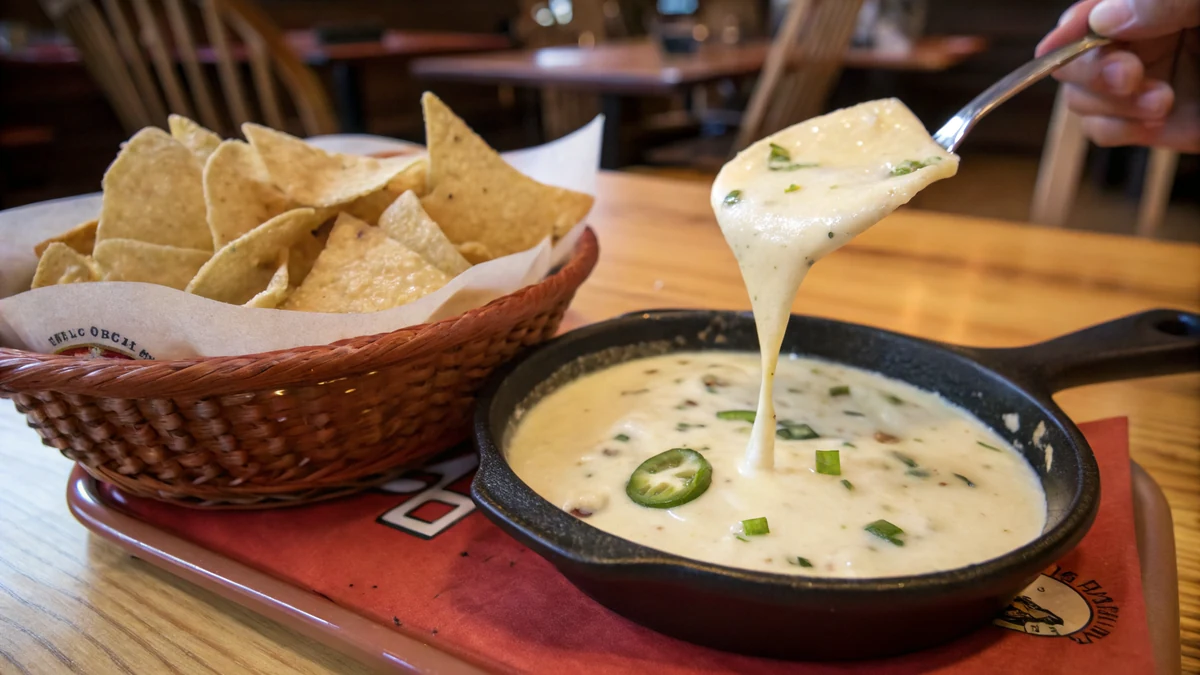
Quick answer: White queso dip is the smooth, pourable Tex-Mex restaurant cheese dip you scoop with chips at Chuy's, Pappasito's, and Mi Cocina. The base is white American cheese (Boar's Head or Land O Lakes deli) melted slowly with milk, cream, and butter, finished with diced green chiles, garlic, cumin, and lime. White American is the secret, its emulsifier salts keep the queso flowing instead of breaking. Total time 15 minutes; serves 8.
I will be honest with you. I have a Tex-Mex addiction, and the front line of that addiction is the white queso dip ramekin that lands on the table thirty seconds after I sit down at Chuy's on Barton Springs in Austin. It is creamy. It is pourable. It runs off a Tostitos Scoop and pools at the bottom of the chip the way a sauce should, not the way a cheddar dip clumps and grabs. For years I tried to recreate it at home with shredded Monterey Jack, with Velveeta, with cheddar plus cornstarch, with every cheese-melting trick I could find on the internet. None of it tasted like Chuy's. None of it tasted like Mi Cocina or Pappasito's Cantina either. The texture was always wrong, grainy, plasticky, broken, or weirdly stiff.
The breakthrough was a tip from a line cook at a Tex-Mex spot in Houston (he asked me not to name the restaurant). The secret is white American cheese. Not Velveeta, not Monterey Jack, not Chihuahua, not Oaxaca. White American, the kind sold sliced at the deli counter (Boar's Head white American, Land O Lakes deli white American, or Kraft Deli Deluxe white). It melts smoother than any other cheese on the planet because it is built with emulsifier salts (sodium citrate, sodium phosphate) that keep the proteins from clumping. Once I started using white American, my home queso suddenly tasted like the ramekin on a Chuy's table. The recipe below is that recipe. Total time fifteen minutes; the texture is the restaurant's. That same white-American melt is what makes my Boulders enchiladas so good.
Tex-Mex Restaurant Queso Lineage
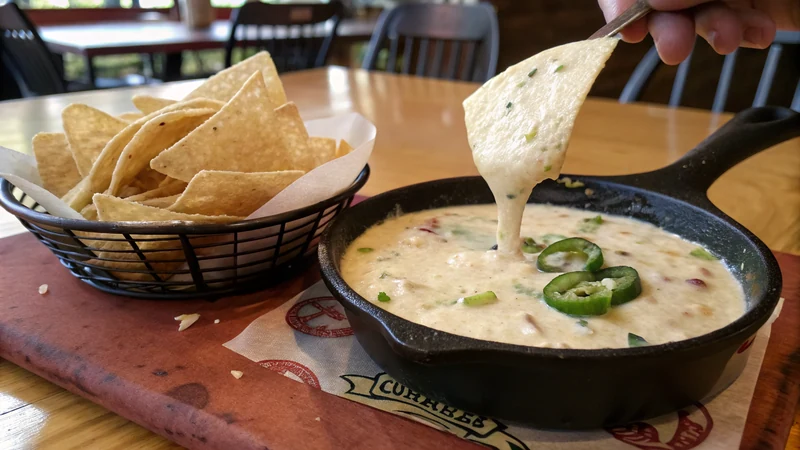
White queso did not always exist on the Tex-Mex menu. The oldest Tex-Mex restaurant in Texas, El Fenix in Dallas (founded 1918 by Mike Martinez), did not put queso on its original menu. Mama Ninfa Laurenzo opened Ninfa's on Navigation in Houston in 1973 with fajitas as the lead, and queso joined the fajita-era menu shortly after. Pappasito's Cantina (founded 1983 by the Pappas brothers, Houston) and Lupe Tortilla (founded 1983, also Houston) standardized the table-side queso ramekin in the 1980s, and by the time Chuy's opened in Austin in 1982, queso had become the appetizer everyone ordered.
Mi Cocina opened in Dallas in 1991 (Mico Rodriguez) and turned the queso ramekin into an art form, particularly the Mambo Taxi-and-queso opening order that defined Highland Park lunch culture. La Fonda on Main in San Antonio (founded 1932) and Mi Tierra (Market Square, since 1941) each serve their house versions. The throughline is white American cheese, green chiles, and the smooth pourable texture.
What Tex-Mex restaurants share is the format: a ceramic ramekin or mini cast iron, free chips on the table, queso as the opener before fajitas or enchiladas. The dip is meant to be eaten in the first ten minutes of dinner. By the time the entrees arrive, the ramekin is empty and a second one is on the way.
The White American Cheese Secret
White American is a processed cheese, real cheese (typically a blend of cheddar and Colby) melted and reformed with emulsifier salts (sodium citrate, sodium phosphate). Those salts are the magic. They bind the casein proteins to the fat and water in a stable matrix, which means white American melts into a smooth flowing sauce instead of breaking into oily, grainy clumps the way pure natural cheeses do.
Buy the cheese sliced from the deli counter, not the plastic-wrapped Kraft Singles in the dairy aisle. Boar's Head white American is the gold standard at HEB and Whole Foods. Land O Lakes deli white American is widely available at Kroger, Tom Thumb, and Albertsons. Kraft Deli Deluxe white is the budget option and works well. Ask the deli to slice it thick (1/4 inch is easier to tear than paper-thin). One pound serves 8.
Yellow vs white matters for the look but not the function. Yellow American and white American melt the same way; white American just looks cleaner in queso blanco, where the dip is supposed to be ivory and not orange.
Other Cheeses That Fail (And Why)
Cheddar fails for white queso. Sharp, mild, white cheddar, all of them. Cheddar is a natural cheese without added emulsifiers, so when it melts above 150F, the proteins squeeze out the fat and the cheese breaks into oil pools and rubbery curds. Some recipes try to rescue cheddar with cornstarch or evaporated milk, but the texture never matches a real restaurant queso.
Velveeta is technically the right kind of product (a processed cheese with emulsifier salts) and Velveeta queso is fine on its own, but Velveeta has a plasticky processed-cheese flavor that does not taste like Chuy's or Pappasito's. Velveeta plus Ro-Tel is a great Super Bowl dip in its own right, but for restaurant-style white queso, white American is the move. The flavor is cleaner and dairier.
The yellow side of the same family, deli yellow American melted into evaporated milk with roasted green chiles and tomato, is its own recipe and its own page: my chile con queso is the classic Austin bowl, and the two pages together cover both colors of Tex-Mex queso.
Monterey Jack, Chihuahua, Oaxaca, mozzarella, and queso fresco all fail for different reasons. Jack and Chihuahua are excellent in queso flameado where you want pull-apart melted cheese, but they break when used as the base of a flowing queso. Oaxaca stays in strands. Mozzarella is too watery. Queso fresco does not melt at all. None of these are queso blanco cheeses.
Green Chiles: Hatch vs Canned vs Ro-Tel
Green chiles are essential to Tex-Mex white queso, but the source matters less than you might think. The canonical option is canned diced green chiles, mild, drained well. Old El Paso, Hatch Valley brand, and HEB Texas-Style green chiles all work. The chiles add a mild grassy brightness without much heat. Drain them well, pressing out the liquid with a fork, otherwise the queso turns watery.
Fresh roasted Hatch chiles are the upgrade. From August through October, Hatch chile season hits Texas hard (HEB roasts them in store parking lots) and you can buy a bag of fresh-roasted Hatch peppers, peel them, dice them, and use 1/2 cup in place of the can. The flavor is fresher and brighter. If you cannot find Hatch, Anaheim or Poblano roasted, peeled, and diced are close substitutes.
Ro-Tel (canned tomatoes with green chiles) is a different product. Ro-Tel queso is a Texas tradition, but Ro-Tel makes the queso pinkish-red because of the tomato, which is not the canonical white queso look. If you want Ro-Tel queso, use it instead of the diced green chiles, but know that you are making Ro-Tel queso, not queso blanco. Both are valid; they are just different dishes.
Roasting season is short, from early August to about mid September, and it is worth planning around. I buy two full sacks every year, roast and freeze them in one afternoon, and cook from that stash until the following summer. My roundup of Hatch chile recipes covers the roasting, peeling, and freezing method along with the dozen dishes I put the stash into, starting with this queso.
Cumin: The Tex-Mex Backbone
Ground cumin is the spice that turns plain melted cheese into Tex-Mex queso. The flavor profile leans heavily on cumin (sometimes called "comino" on the spice rack at HEB), and a half teaspoon per pound of cheese is the right amount. Less and the queso tastes plain dairy; more and it tastes muddy.
Toast cumin if you want maximum flavor. Heat a dry skillet over medium for 30-60 seconds, add the half teaspoon of pre-ground cumin, and toast until fragrant. A queso made with toasted cumin tastes noticeably more restaurant-like than one with raw cumin from the jar.
Other spices: a pinch of dried Mexican oregano (more citrus-forward than Mediterranean) adds a subtle herbal note. A pinch of garlic powder reinforces the fresh garlic. Smoked paprika pushes the queso toward Spanish-tapas territory. Cumin, garlic, and oregano is the canonical Tex-Mex spice trio.
Milk vs Cream Ratio
The milk-to-cream ratio sets the richness and the flow. My base is 1 cup whole milk to 1/2 cup heavy cream for 1 pound of cheese, with 2 tablespoons of cream reserved for finishing. The 2:1 ratio gives the queso enough fat to feel restaurant-rich without being so heavy it clumps in your stomach after a single chip.
Whole milk is non-negotiable. 2% or skim thins the queso too much and adds a watery edge. If all you have is 2%, add an extra tablespoon of butter to compensate. Lactose-free whole milk works fine. Half-and-half can sub for the milk-cream combination at a 1.5 cup total volume.
Evaporated milk is the Tex-Mex restaurant trick if you want extra silk. Replace the whole milk with a 12 oz can of evaporated milk and skip the heavy cream (just keep the 2 tablespoon finishing cream). Evaporated milk is concentrated, so the protein content is higher and the queso melts even smoother. Some Tex-Mex spots swear by it.
The Right Consistency
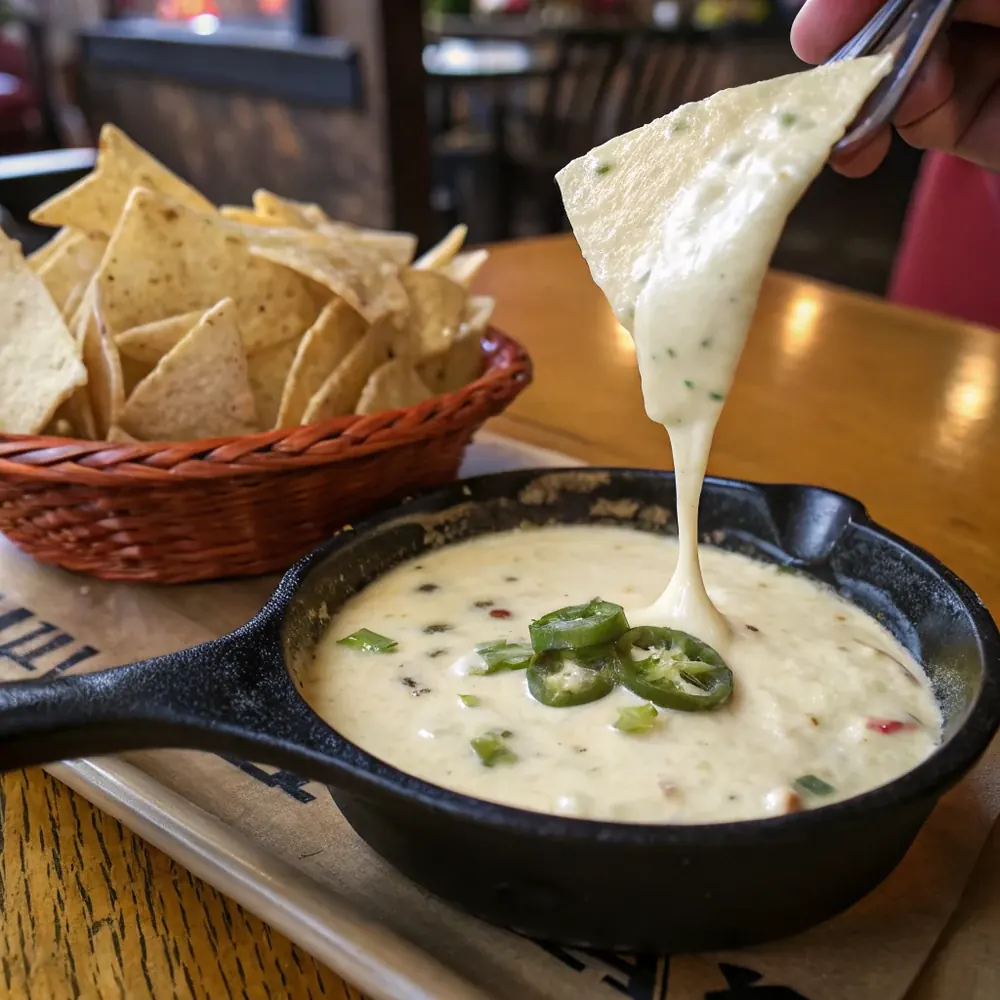
Pourable but not watery is the target. The queso should ribbon off a spoon in a steady stream, coat the back of a spoon thickly, and pool slightly at the bottom of a tortilla chip without running off. If you tip the ramekin gently, the queso flows in a slow even stream rather than a fast splash or a stuck glob. That is the Chuy's, Pappasito's, Mi Cocina texture.
Too thick? The queso sits in a stiff scoop and the chip cannot break through. Fix: stir in 1 tablespoon of warm cream at a time over low heat until it loosens. Too thin? The queso runs off the chip and pools on the plate. Fix: simmer over low for 1-2 minutes more to tighten the cheese, or whisk in an extra ounce of white American.
The queso thickens as it cools. Even at the right consistency hot, a queso sitting at room temperature for 10 minutes will start to tighten. Serve hot. Use a pre-warmed ramekin (run it under hot tap water, then dry it before transferring). The first chip should glide through the queso effortlessly.
Holding Strategy for Parties
For a Tex-Mex party where guests arrive over an hour or two, you cannot keep one batch of queso perfect for the whole event. The trick is a low-and-slow hold plus a willingness to refresh. Set the saucepan over the lowest burner on your stove (or a 1.5-quart slow cooker on warm). Stir every 10-15 minutes. If it has tightened, stir in 1-2 tablespoons of warm milk or cream to bring it back to flow.
The queso holds well for about 90 minutes on warm. Beyond that, the texture starts breaking, proteins release fat, and the queso turns oily and grainy. For longer events, make a fresh batch every 60-75 minutes. A pound of cheese makes 8 servings, and white American is cheap enough that two batches over a 3-hour party is no big deal.
Reheating leftover queso the next day works for personal eating but not for hosting. Microwave on 50% power in 30-second bursts, stirring between each, with a splash of milk to loosen. The texture is decent but never restaurant-fresh.
Mia's Kitchen Notes
My Austin chips-and-queso ritual is real. I have a standing first-Saturday-of-the-month visit to Chuy's on Barton Springs, and the white queso is the reason. Over years of trying to recreate it, I went through every cheese in the HEB dairy case before the line cook in Houston told me to use white American. That tip cut my failure rate from 90% to 0%.
I keep a pound of Boar's Head white American in the deli drawer as a permanent fixture. It lasts about 3 weeks well-wrapped, enough for two queso batches or a week of deli sandwiches. The pre-packaged stuff is fine but the deli version melts smoother.
The single most useful tool is a heavy-bottom saucepan. Thin saucepans scorch the cheese on the bottom and burnt cheese ruins the batch. My everyday queso pan is a 2-quart enameled cast iron. A 2-quart All-Clad stainless works just as well. Avoid thin aluminum.
Mistakes to Avoid
Microwaving the cheese. Microwave melting causes white American to break almost every time. The microwave heats unevenly, blasts pockets of cheese above 180F, and the proteins separate from the fat. Always melt on the stovetop over low heat with constant stirring.
Using shredded cheese from a bag. Pre-shredded bagged cheese is dusted with cornstarch or potato starch to prevent clumping in the bag. Those starches cling to the cheese surface and interfere with the smooth melt. Buy a block (or sliced from the deli) and tear it yourself. The 90 seconds of extra prep time is worth a smoother queso.
Skipping the green chiles. White queso without green chiles is just melted cheese sauce. The chiles are what makes it Tex-Mex. Even a half can of mild diced chiles transforms the dish. Do not skip.
Confusing queso fresco with white queso. Queso fresco is a fresh crumbly Mexican cheese (similar to feta in texture) used as a topping for tacos and enchiladas. It does not melt and it is not a queso blanco ingredient. Beginners sometimes buy queso fresco thinking it is the white queso cheese; it is not.
High heat. Cooking the queso on medium or medium-high causes the cheese to break. Always melt on low. Patience is the queso virtue. Rushing the melt is the fastest way to ruin the texture.
Watery green chiles. If you do not drain the canned green chiles well, the extra liquid thins the queso and pools on top. Press out the liquid with a fork before adding to the cheese. Pat with a paper towel if needed.
Using yellow American cheese. Yellow American melts the same way as white American but the queso turns orange-yellow, not the canonical ivory color. For queso blanco specifically, use white. (Yellow American is fine for a different dish, like a Velveeta-style chili con queso.)
Variations
Queso compuesto. The Tex-Mex layered variation. Top the white queso with seasoned ground beef (taco-style), guacamole, pico de gallo, and a drizzle of sour cream. Each scoop has cheese, meat, avocado, and salsa in one bite.
Spicy chipotle queso. Add 1-2 tablespoons of finely minced chipotle in adobo to the queso along with the green chiles. The smoky-spicy chipotle adds heat and depth. A favorite at Tex-Mex spots in Austin like Polvos and Curra's.
Hatch green chile queso. Replace the canned green chiles with 1/2 cup of fresh roasted, peeled, diced Hatch chiles (in season August-October at HEB). Fresher, brighter, with visible green flecks.
Bob Armstrong dip. The Matt's El Rancho original from 1971, named for a Texas politician who was a regular. Top the queso with seasoned taco meat, guacamole, and pico de gallo. The queso that put Matt's on the Texas Monthly map.
Vegan cashew queso. Soak 1.5 cups raw cashews in hot water 1 hour, drain, blend with 1 cup water, 2 tablespoons nutritional yeast, 1/2 teaspoon cumin, 1/2 teaspoon smoked paprika, 1 clove garlic, 1 tablespoon lemon juice, and the green chiles. Heat over low until warm.
Smoked queso. Smoke this white queso in a tin-foil pan on the smoker at 225F for 1 hour with hickory or pecan wood. Add 1/2 lb cooked Mexican chorizo before smoking for full smoked-chorizo-queso flavor.
What to Serve With White Queso Dip
Tortilla chips are the canonical scoop, and the full restaurant opening is this queso next to a cold bowl of restaurant-style salsa - sharp against rich, and the two empty at the same speed. Tostitos Scoops are ideal for pourable queso (the cup shape holds the dip), but the bigger restaurant-style chips (HEB Texas-Style, On the Border Cantina Thins) are what most Tex-Mex spots serve. Avoid thin grocery-store chips. Texas Monthly covers the queso landscape at texasmonthly.com/food.
Pair the queso with a Tex-Mex dinner. Open with the queso and a margarita, then move into fajitas or enchiladas. Try Austin breakfast tacos for brunch, San Antonio puffy tacos for a Mi Tierra-style dinner, or queso flameado as a second cheese course.
Drinks: a margarita on the rocks, a Mexican lager (Modelo, Tecate, Pacifico), or a michelada. For non-alcoholic, agua fresca (jamaica or horchata) or a Topo Chico with lime. For more Tex-Mex starters, see the Tex-Mex Recipes category.
White Queso Dip Recipe
Ingredients
- For the queso base:
- 1 lb (455 g) white American cheese, sliced from the deli (Boar's Head, Land O Lakes, or Kraft Deli Deluxe), torn into rough pieces
- 1 cup whole milk
- 1/2 cup heavy cream
- 2 tablespoons unsalted butter
- 2 cloves garlic, finely minced
- 1/2 teaspoon ground cumin
- 1/4 teaspoon white pepper
- Pinch of kosher salt (taste first, the cheese is salty)
- For finishing:
- 1 (4 oz / 113 g) can diced green chiles, mild (Hatch Valley brand if you can find it, or Old El Paso), drained
- 2 tablespoons heavy cream (reserved for finish)
- 1 teaspoon fresh lime juice
- 1 tablespoon finely chopped fresh cilantro (optional)
- For serving:
- Tortilla chips (Tostitos Scoops are ideal for pourable queso, or thicker restaurant-style chips)
- Pickled jalapeno slices
- Pico de gallo
- Lime wedges
- Equipment:
- Heavy-bottom saucepan, 2-3 quart, or a small enameled cast iron
- Wooden spoon or silicone spatula
- Small ramekin or warm cast iron mini-skillet for serving
Instructions
- Warm the cream and milk. In a heavy-bottom 2-3 quart saucepan, combine the whole milk, the 1/2 cup heavy cream, and the butter over medium-low heat. Warm until the butter is fully melted and the dairy is steaming but not boiling, about 3-4 minutes. Stir occasionally to keep the bottom from scorching. The dairy needs to be hot before the cheese goes in, otherwise the cheese sits on cold liquid and will not melt evenly.
- Add the white American in batches. Reduce the heat to low. Add the torn white American cheese a small handful at a time, stirring constantly with a wooden spoon or silicone spatula until each batch is fully melted before adding the next. This takes 5-7 minutes total. Do not rush. Adding the cheese all at once causes it to clump on the bottom and scorch. The constant stirring and slow incorporation is what gives white queso its signature smooth flowing texture.
- Stir in garlic and cumin. Once the cheese is fully melted and smooth, add the minced garlic, ground cumin, and white pepper. Stir for 30-60 seconds until the garlic loses its raw bite and the cumin smells warm and toasted. The cumin is the Tex-Mex backbone here, do not skip it. White pepper instead of black keeps the queso visually clean.
- Add the green chiles. Drain the can of diced green chiles well, pressing out excess liquid with a fork (extra liquid will thin the queso too much). Stir the drained chiles into the cheese. Cook for 1-2 minutes to warm the chiles through and let their flavor meld. The chiles add a mild Hatch-style brightness without much heat. If you want more heat, add a pinch of cayenne or a finely diced fresh jalapeno here.
- Adjust to flow consistency. Now is the moment to set the texture. The queso should be smooth, glossy, and pourable, the consistency of warm caramel sauce. If it is too thick, stir in the reserved 2 tablespoons of heavy cream a teaspoon at a time until it flows. If it is too thin (rare with white American), simmer for 1-2 minutes more on low to tighten. Aim for a queso that ribbons off a spoon in a steady stream, not a glob.
- Finish with lime and cilantro. Off the heat, stir in the fresh lime juice. The lime brightens the dairy and cuts the richness, the same trick Tex-Mex restaurants use to keep the queso from feeling heavy. Taste for salt now, the white American is already salty so you may not need any. Stir in the chopped cilantro if using. The cilantro is optional but it gives the dip a subtle restaurant-fresh note.
- Transfer to a ramekin or skillet. Transfer the queso to a small warmed ceramic ramekin (the way Chuy's serves it) or a mini cast iron skillet (the way Pappasito's Cantina sometimes serves it). A pre-warmed serving vessel keeps the queso hot longer at the table. Set the ramekin on a small plate, surround with tortilla chips, pickled jalapenos, and a wedge of lime. Serve immediately while the queso is at maximum flow.
- Hold strategy for parties. For a crowd, set the saucepan over the lowest burner or transfer to a small slow cooker on warm. Stir every 10-15 minutes and add a splash of warm milk or cream if it tightens. The queso holds well for about 90 minutes; beyond that the texture starts breaking. For best results, make a fresh batch every hour rather than holding one giant batch all night.
Frequently Asked Questions
What kind of cheese is used for white queso dip at Tex-Mex restaurants?
White American cheese, sliced from the deli counter. Brands like Boar's Head, Land O Lakes, and Kraft Deli Deluxe all work. White American is a processed cheese with built-in emulsifier salts (sodium citrate, sodium phosphate) that keep the queso melting smoothly without breaking. Restaurants like Chuy's, Pappasito's, and Mi Cocina use white American as the base. Cheddar, Monterey Jack, and other natural cheeses do not produce the canonical Tex-Mex queso texture.
Why does my homemade queso turn grainy or oily?
Most likely you used a natural cheese (cheddar, Jack, mozzarella) without added emulsifiers, or you cooked the queso at too high a heat. Natural cheeses break above 150-160F, releasing oil and forming rubbery curds. The fix is to switch to white American cheese, which contains emulsifier salts that prevent breaking. Cook on low heat with constant stirring, and add the cheese in small batches to a warm dairy base. Both changes are necessary for a smooth queso.
Can I make white queso without American cheese?
You can make a queso, but it will not be the smooth, pourable, restaurant-style white queso. To approximate the texture without American cheese, use a melting blend of Monterey Jack with sodium citrate (1/4 teaspoon per pound of cheese, available on Amazon as "Sodium Citrate" or "Cheese Melting Salt"). The sodium citrate mimics what white American has built in. Without it, natural cheeses will break and turn grainy. Velveeta is another option but the flavor is plasticky.
What is the difference between white queso and queso flameado?
White queso is a smooth, pourable cheese dip served in a small ramekin, scooped with chips. The base is white American cheese melted with cream, milk, green chiles, and cumin. Queso flameado is a different dish: melted Oaxaca cheese in a cast iron skillet, topped with browned Mexican chorizo and flambeed tableside with tequila. Queso flameado is meant to be eaten in pull-apart cheese strands with tortillas, not scooped with chips. Both are Tex-Mex cheese dishes, but the textures, cheeses, and presentations are different.
Is white queso the same as queso blanco?
In Tex-Mex restaurants the names are used interchangeably. "White queso," "queso blanco," and "queso dip" all refer to the smooth pourable white American cheese-based dip with green chiles. In some Mexican-American contexts, "queso blanco" can refer specifically to a fresh white Mexican cheese (like queso fresco or panela), but in Texas Tex-Mex menus, queso blanco means the dip. Context matters. If you order "queso blanco" at Pappasito's or Mi Cocina, you are getting the white queso dip.
How do I keep white queso warm and smooth at a party?
Use the lowest setting on your stove or transfer to a small slow cooker on warm. Stir every 10-15 minutes. Each time you stir, check the consistency; if it has tightened, stir in 1-2 tablespoons of warm milk or cream to restore the flow. The queso holds for about 90 minutes before the texture starts breaking. For longer parties, make fresh batches every 60-75 minutes rather than trying to hold one giant batch all night. Pre-warmed ramekins (rinsed in hot water) help individual servings stay hot at the table.
Can I freeze leftover white queso?
Not really, freezing breaks the dairy emulsion and the queso turns grainy and watery on thaw. Leftover queso is best stored in the fridge in an airtight container for up to 3 days, then reheated on the stovetop over low heat with a splash of milk, stirring constantly until smooth. Microwave reheating works in 30-second bursts at 50% power but the texture is never as good as fresh. For best results, make smaller batches more often rather than trying to preserve a big batch.