Texas BBQ
Texas BBQ Chicken Thighs
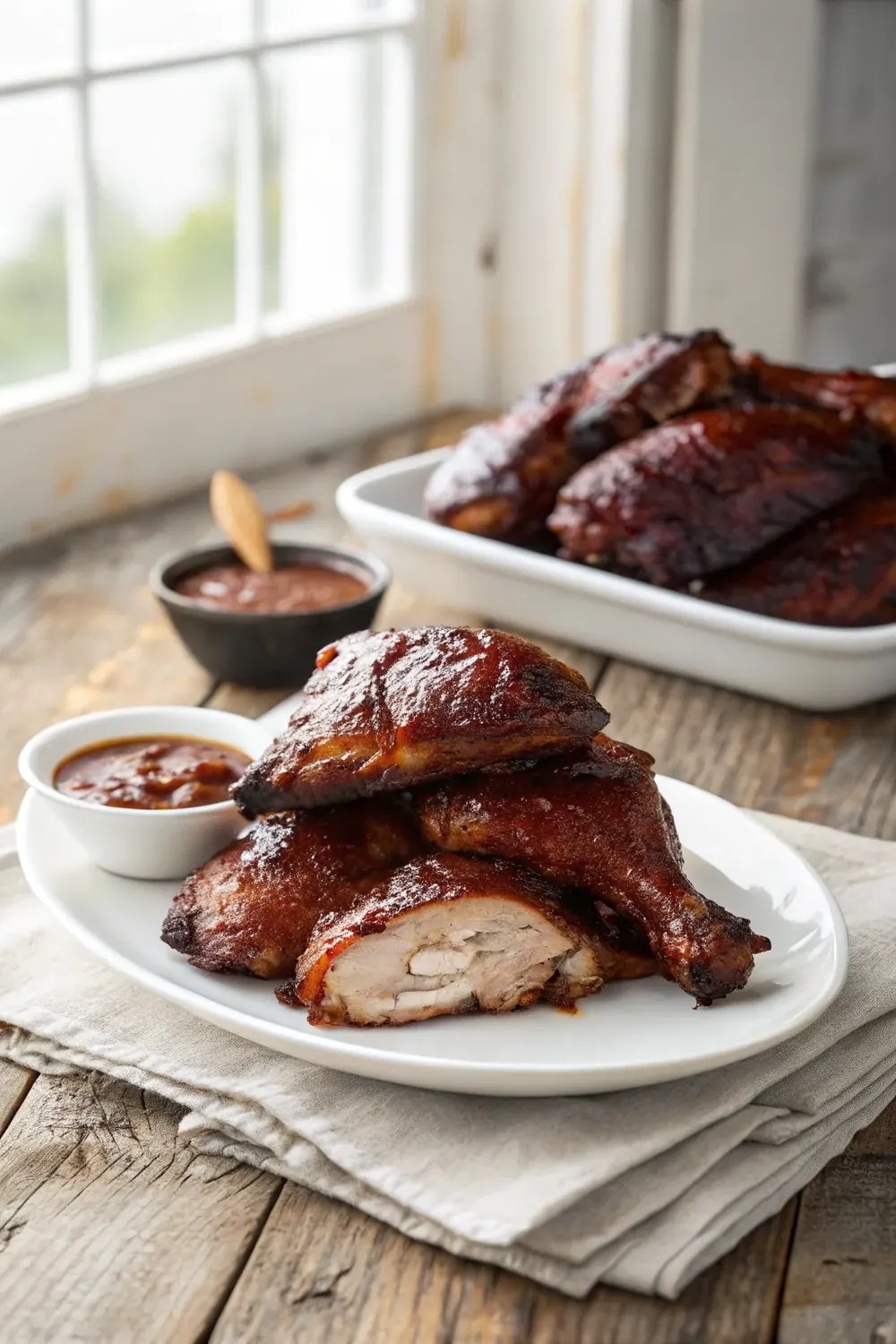
Texas BBQ chicken thighs by Chef Mia: brined bone-in thighs smoked at 275°F over post oak, finished with crispy mahogany skin and a sauce glaze.
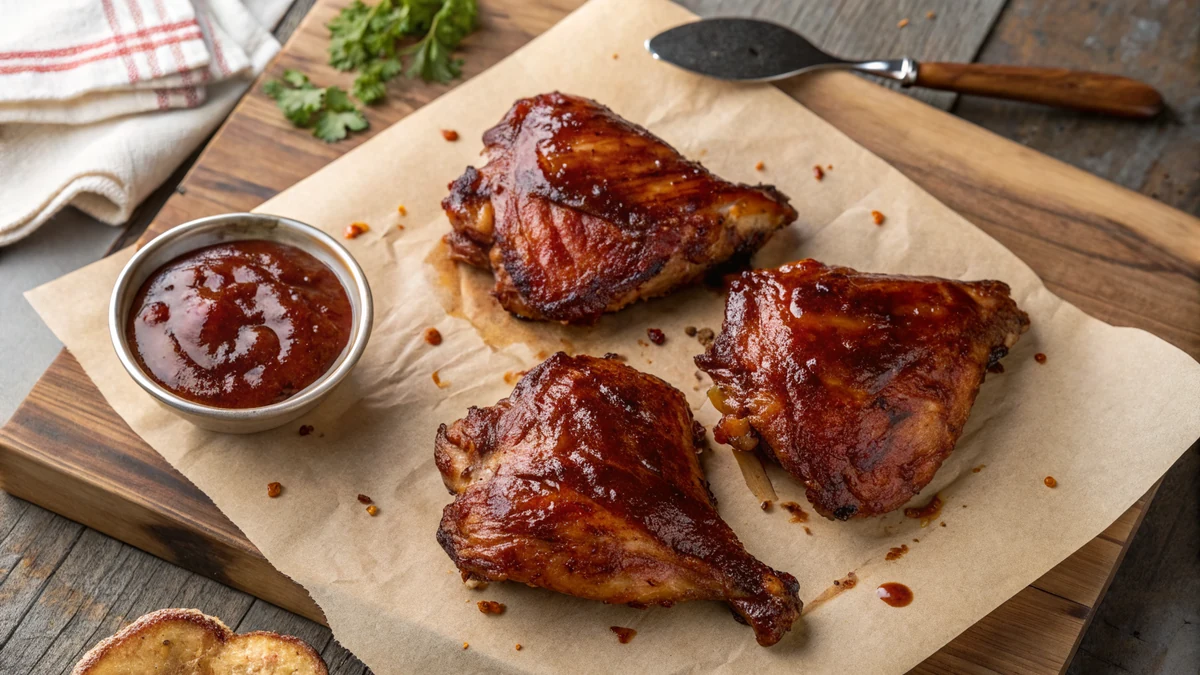
Quick answer: For Texas BBQ chicken thighs, brine bone-in skin-on chicken thighs in salt-sugar water for 2 hours, pat dry, season with a salt-pepper-paprika rub, and smoke at 275°F over post oak for 90 minutes until the internal hits 170°F. Brush the skin with melted butter and a thin layer of warm Texas BBQ sauce in the final 15 minutes, then crank the smoker to 350°F for 5 minutes to crisp the skin. Rest 5 minutes before serving.
Chicken thighs are the forgiving cut. Brisket punishes mistakes; thighs absolve them. That is why every Texas backyard cook I respect serves chicken thighs at family gatherings and saves brisket for the high-stakes Sunday cook. A rack of bone-in skin-on thighs is what you put on the smoker when you want the smoker to do good work without standing watch for fourteen hours.
The trick with smoked chicken thighs is the skin. Cheap rendered fat at low smoker temperatures (225°F) gives you flabby rubbery skin that no one wants. Crank the smoker to 275°F and the skin renders properly. Finish at 350°F for the last five minutes and the skin crisps to mahogany. That two-step temperature move is what separates church-potluck smoked chicken from sandwich-shop chicken.
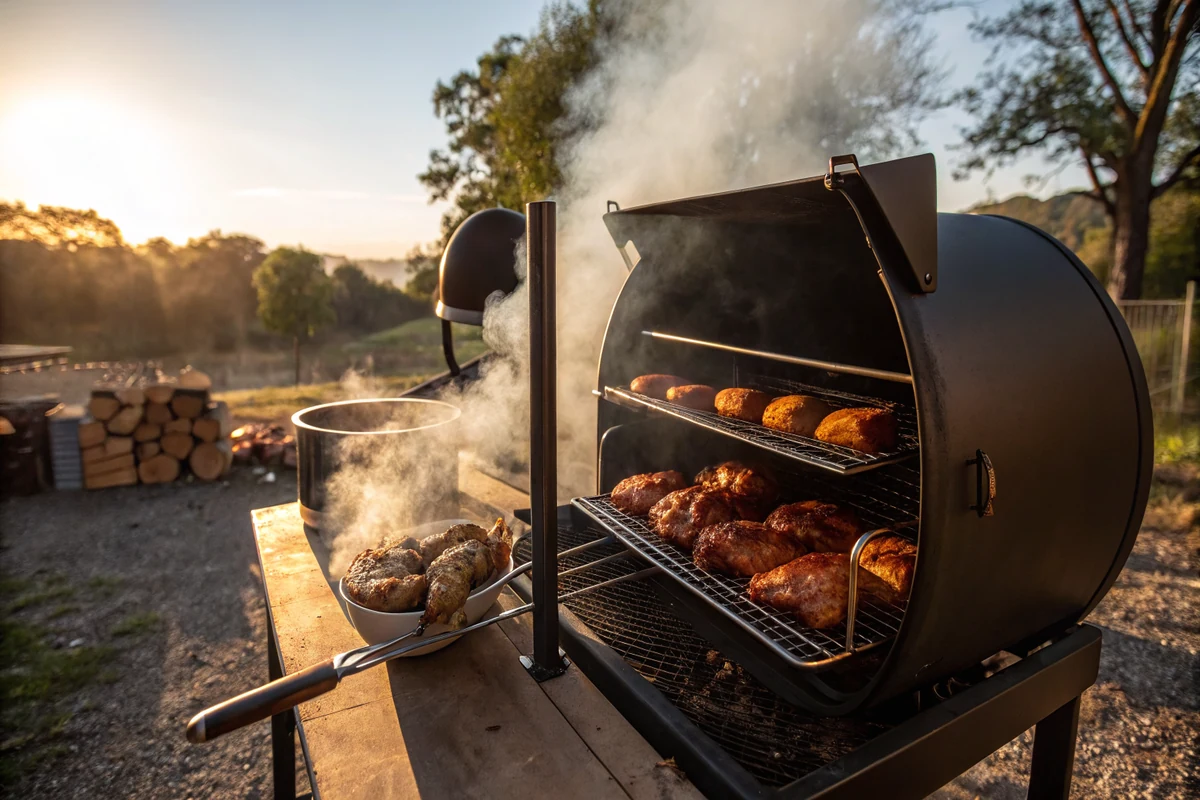
I cook these every other Saturday when my Yoder YS640 is already running for ribs or burnt ends. They go on the top shelf, take 90 minutes, and feed eight people. Pair with our Texas BBQ sauce brushed on at the finish and serve with cornbread and Texas potato salad. That is a backyard Saturday in Lockhart.
Three Things to Know About Smoked Chicken Thighs
Bone-in skin-on is non-negotiable. Boneless skinless thighs cook in 35 minutes and never develop the smoke depth or crispy skin that makes BBQ chicken worth the effort. The bone slows the cook, the fat under the skin renders into the meat, and the skin is the prize. If you have to use boneless thighs, smoke them for 30 minutes then sear in a cast iron skillet for crispness.
Brine first or the meat goes dry. Chicken thighs have less collagen than brisket and less fat than pork shoulder, so a 90-minute smoke at 275°F will dehydrate them without help. A 2-hour salt-sugar brine pulls moisture into the cells and locks it in during cooking. The brine also seasons the meat from the inside, not just the surface. Skip the brine and you get well-seasoned but dry chicken.
Skin crispness is a temperature problem, not a time problem. At 225°F (low and slow brisket territory), chicken skin renders too slowly and ends up rubbery. At 275°F, it renders in about an hour. At 350°F finishing temperature for the last 5 minutes, it crisps to mahogany. Cooks who chase low-and-slow temperatures for chicken get rubber skin; cooks who push 275 to 350 get the prize.
Choosing the Right Chicken Thighs
Bone-in skin-on chicken thighs are the only correct cut for Texas BBQ. At H-E-B in Texas, look for the 6-pack of fresh thighs in the meat case, typically 5 to 7 oz each. Outside of Texas, any grocery store butcher counter has them. Look for thighs with skin that has not been trimmed (some packers trim aggressively, leaving exposed meat).
Air-chilled thighs (Bell & Evans, Mary's, some Whole Foods house brands) crisp better than water-chilled thighs because they have less surface moisture. Air-chilling is more expensive but the skin difference is noticeable on the smoker. If your local store does not carry air-chilled, water-chilled is fine; just dry the skin more aggressively before rubbing.
Avoid frozen thighs unless you plan ahead. Frozen-and-thawed chicken releases more liquid during the brine, which dilutes the brine concentration and weakens the seasoning. If you must use frozen, thaw 24 hours in the fridge, then brine for 1.5 hours instead of 2. Never brine partially frozen chicken; the cold core does not absorb salt evenly.
The Two-Stage Temperature Method
Stage 1 is 275°F for 60 to 90 minutes. This is where the smoke flavor penetrates the meat and the skin starts to render. The fat under the skin liquefies and bastes the meat from the inside. The smoke ring (a thin pink layer just under the skin) develops here. Keep the smoker temperature steady; fluctuations between 250 and 300°F are fine, but excursions above 320 or below 240 will compromise the texture.
Stage 2 is 350°F for 5 minutes at the very end. This is the crispness step. The smoker chamber heats up enough to drive the remaining skin moisture out and concentrate the sugars from the glaze. Five minutes is the sweet spot; ten minutes overcooks the meat. Watch the skin color; when it goes from rust to mahogany, pull immediately.
If your pellet smoker has a sear setting (Yoder, Camp Chef SmokeBox, Traeger Super Smoke), use that for the final 5 minutes. Offset cooks can crack open the firebox vent and add a small split for a quick temperature spike. Kamado cooks can open the bottom vent fully for 5 minutes. The mechanism varies; the principle is the same.
Mistakes to Avoid
Smoking at 225°F. Chicken needs hotter air to render skin properly. 225°F is brisket territory and leaves chicken skin rubbery. Always smoke chicken at 275°F minimum.
Skipping the brine. Without brine, the 90-minute smoke at 275°F dries the meat out. The brine pulls moisture and salt into the cells before cooking starts. It is non-negotiable for great BBQ chicken.
Brining longer than 4 hours. The salt concentration penetrates fully in 2 hours; longer makes the meat ham-textured and overly salty. If you cannot cook at the 2-hour mark, pull the thighs from the brine, pat dry, and refrigerate dry on a rack until you are ready to smoke.
Saucing too early. Pouring BBQ sauce on at the start of the cook means the sugar burns to bitter black over 90 minutes. Always apply sauce in the last 15 minutes, after the skin has rendered. Brushing the sauce in a thin layer (not pouring) prevents pooling and lets the glaze caramelize evenly.
Stacking thighs on the rack. Thighs need air space for smoke to circulate. Overlapping creates steamed zones where the skin never crisps. Always single-layer the thighs with at least 1 inch between them.
Not patting the skin dry. Wet skin from the brine cannot crisp. Press paper towels firmly against every thigh until the skin is fully dry. The 60 seconds of drying changes the outcome.
Using mesquite. Mesquite smoke is too aggressive for chicken; it leaves a bitter creosote note. Stick with post oak (cleanest), pecan (slightly sweeter), or hickory (deeper smoke). For pellets, the same rule applies; reach for oak or pecan blends, skip mesquite.
Variations Worth Trying
Buffalo-style finish. After the smoker, toss the thighs in a sauce of 1/4 cup melted butter + 1/2 cup Frank's RedHot sauce + 1 teaspoon honey. The smoky-Buffalo combination is unconventional but unforgettable. Pair with blue cheese dressing for dipping.
Alabama white sauce finish. Replace the Texas BBQ sauce glaze with Alabama white sauce (mayo, vinegar, sugar, pepper). This is a Northern Alabama tradition but works beautifully on smoked thighs. Serve at room temperature; do not heat.
Honey-mustard glaze. In the last 15 minutes, brush the skin with a mixture of 1/4 cup honey + 2 tablespoons Dijon mustard. The sweet-tangy combination caramelizes into a sticky glaze.
Spicy chipotle rub. Add 1 tablespoon chipotle powder and 1 teaspoon ground cumin to the dry rub. The smoke from the smoker plus the chipotle smoke from the rub creates a layered smoke experience.
Lemon-herb. Skip the smoked paprika in the rub and add 1 tablespoon dried oregano, 2 teaspoons dried thyme, and the zest of 2 lemons. Cook the same way. This is a Mediterranean-meets-Texas variation.
Storage and Reheating
Refrigerator
Smoked chicken thighs keep 4 days in the fridge, wrapped tightly in foil or in a glass container. The skin will go soft during refrigeration; this is expected. To recrisp, reheat as described below.Freezer
Wrap each thigh individually in plastic wrap, then group them in a labeled freezer bag. They keep 2 months in the freezer at quality. Thaw overnight in the fridge before reheating. Frozen-then-reheated chicken can match fresh-smoked if reheated correctly.Reheating
The 350°F oven is the right tool. Place the thighs skin-side up on a wire rack over a sheet pan, into a 350°F oven for 12 minutes. The rack lets air circulate underneath, and the dry oven heat re-crisps the skin. Brush with a tablespoon of melted butter before reheating to help the skin re-crisp. Avoid microwaves (they steam the skin into rubber).Tips for the Best Texas BBQ Chicken Thighs
Use a probe thermometer. Eyeballing chicken doneness is the source of most BBQ chicken disasters. A Thermapen or Thermoworks Smoke probe in the thickest thigh, reading 170°F, removes the guesswork.
Brush butter under the skin (advanced). Slide a finger between the skin and the meat to create a pocket. Brush 1 teaspoon of melted butter into the pocket of each thigh before applying the rub. The butter renders into the meat during cooking and bastes from the inside.
Apply rub the night before. If you have time, rub the thighs 8 to 12 hours in advance and store skin-up on a rack in the fridge uncovered. The dry air circulation gives you the crispest skin possible. This is what BBQ joints with the best chicken do.
Warm the BBQ sauce before brushing. Cold sauce from the fridge bottle thickens on contact with the hot skin and creates a thick uneven layer. Warm 1/2 cup of Texas BBQ sauce in a saucepan over low heat for 3 minutes before brushing.
Plate two thighs per adult. The third thigh sounds appealing but most adults are full after two. Plan accordingly. A 6-thigh batch feeds 3 hungry or 4 normal adults with sides.
What to Serve With BBQ Chicken Thighs
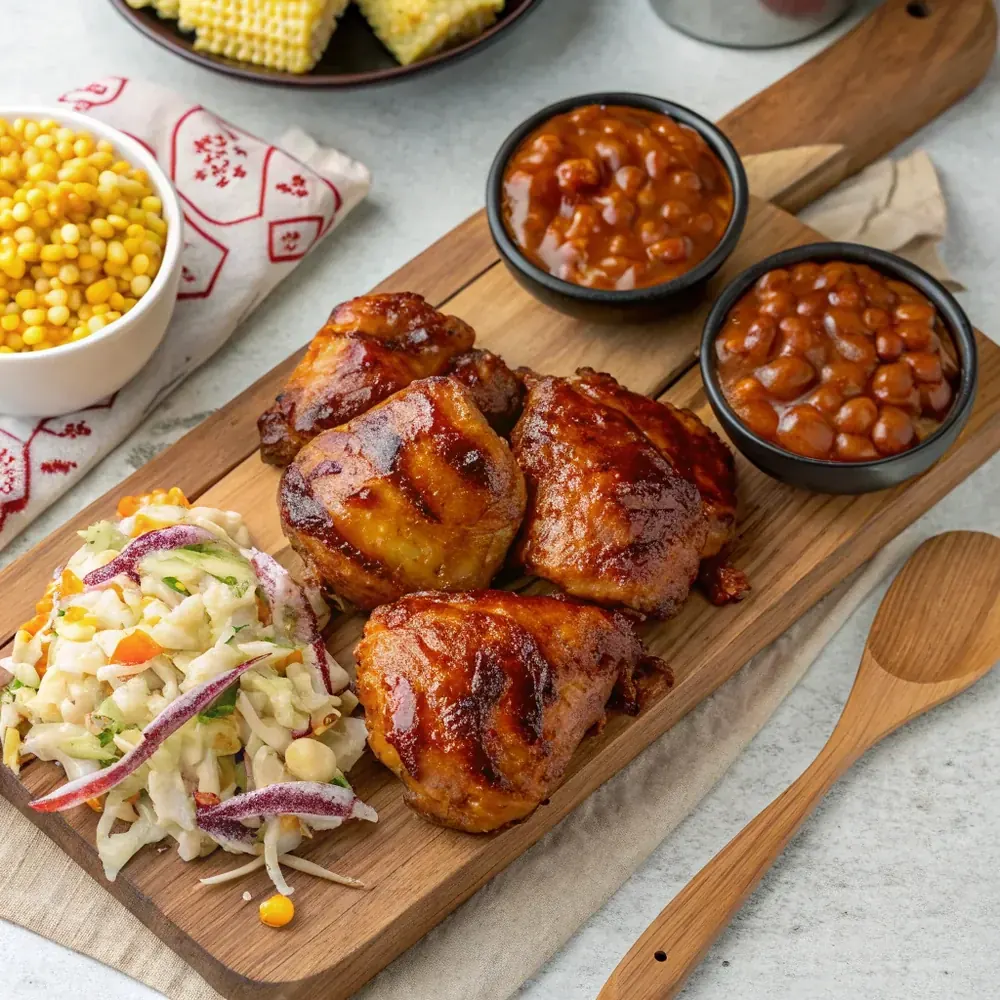
Classic Texas plate: Texas-style cornbread, mustard-based potato salad, BBQ baked beans, sliced raw white onion, and dill pickle spears. That is a backyard Saturday dinner in Lockhart.
Lighter plates: a green salad with vinaigrette, grilled corn on the cob, Mexican rice for a Tex-Mex tilt, and sliced ripe tomato with flaky salt.
Drinks: a cold Lone Star, Topo Chico with lime, sweet iced tea, or a Texas Hill Country red wine like a Pedernales Cellars Tempranillo. The brined smoked chicken pairs surprisingly well with red wine, which is unusual for poultry but works because of the dense smoke flavor. Prefer drumsticks and an oven over the smoker? My oven-baked BBQ chicken legs hit the same sticky notes indoors.
Texas BBQ Chicken Thighs Recipe
Ingredients
- 6 bone-in skin-on chicken thighs (about 6 oz each, 2 1/4 lb total)
- For the brine:
- 4 cups cold water
- 1/4 cup coarse kosher salt
- 2 tablespoons brown sugar
- 2 garlic cloves, smashed
- 1 bay leaf
- For the rub:
- 2 tablespoons coarse kosher salt
- 2 tablespoons 16-mesh black pepper
- 1 tablespoon smoked paprika
- 1 teaspoon granulated garlic
- 1 teaspoon granulated onion
- 1/2 teaspoon cayenne (optional)
- For the finish:
- 3 tablespoons unsalted butter, melted
- 1/2 cup Texas BBQ sauce, warmed
- Post oak wood (splits for offset or pellets for pellet smoker)
Instructions
- Brine the thighs. Combine 4 cups water, 1/4 cup kosher salt, 2 tablespoons brown sugar, smashed garlic, and bay leaf in a large bowl or zip-top bag. Whisk until salt and sugar dissolve. Add the chicken thighs, submerge, and refrigerate 2 hours. Do not over-brine; 4+ hours starts to give a hammy, cured texture.
- Pat completely dry. Pull the thighs from the brine, rinse briefly under cold water, and pat each one bone-dry with paper towels. Skin moisture is the enemy of crispy skin. Press paper towels firmly against the skin to absorb every drop. Drying takes 60 seconds and pays off in the final crisp.
- Mix and apply the rub. In a small bowl, combine 2 tablespoons salt, 2 tablespoons 16-mesh pepper, 1 tablespoon smoked paprika, 1 teaspoon each granulated garlic and onion, and 1/2 teaspoon cayenne if using. Sprinkle generously over both sides of the dried thighs, then let them sit 15 minutes at room temperature while the smoker preheats.
- Preheat the smoker to 275°F. Bring your smoker to a steady 275°F with post oak. This is hotter than brisket temperature on purpose. At 275°F the chicken skin renders properly; at 225°F it stays flabby. Use post oak for the cleanest smoke flavor; pecan is a strong second choice. Avoid mesquite (too strong for chicken).
- Place skin-side up on the rack. Arrange the thighs skin-side up on the smoker rack, leaving an inch of space between each so smoke flows freely. Close the lid and walk away for 60 minutes. Do not open the smoker during this stretch; every peek loses 25°F of chamber temperature and adds 10 minutes to the cook.
- Check temperature at 60 minutes. Probe the thickest part of one thigh (avoiding the bone) with an instant-read thermometer. You are looking for 155°F. If the thighs are still in the 140s, give them another 15 minutes. The cook continues to 170°F final, so you have a 15-degree window to apply the glaze.
- Brush with butter and sauce at 165°F. When the thighs hit 165°F internal, brush the skin generously with melted butter, then a thin layer of warm Texas BBQ sauce. Close the lid for another 5 minutes. The butter renders the skin's remaining moisture; the sauce caramelizes into a glaze without burning. This double-brush is the difference between flabby and crisp.
- Crisp the skin at 350°F. Open the smoker, increase the temperature to 350°F (for pellet smokers, switch to high; for offsets, add a fresh split to the firebox). Cook 5 more minutes, then check that the thighs hit 170°F internal and the skin is deep mahogany and glossy. Pull immediately when the skin is crisp; another 2 minutes overcooks the meat.
- Rest 5 minutes and serve. Transfer the thighs to a platter and let them rest 5 minutes. The juices redistribute and the skin stays crisp because the thighs are not steaming on a covered plate. Serve with extra warm BBQ sauce on the side. Plate two thighs per adult.
Frequently Asked Questions
Can I use chicken breasts instead of thighs?
Yes, but the result is markedly inferior. Chicken breasts have less fat, less collagen, and no skin (typically), so they dry out faster at 275°F. If you must use breasts, brine for 90 minutes only, smoke at 250°F (lower than the thigh temperature) for 45 to 60 minutes to 160°F internal, and pull the moment they hit temperature. The skin on bone-in skin-on breasts can crisp but it requires gentler handling than thighs.
How long do I brine the chicken?
Two hours is the sweet spot. The salt concentration penetrates fully in that time, the meat seasons throughout, and the cells absorb moisture. Less than 90 minutes does not penetrate fully. More than 4 hours starts to give the meat a hammy, cured texture and over-seasons the surface. Set a timer.
Why isn't my chicken skin crispy?
Three reasons in order of likelihood: smoker too low (you cooked at 225°F instead of 275°F), skin not patted dry before rub (residual brine moisture prevents crisping), no final high-heat finish (you skipped the 350°F crisping step). Fix one or more and the next batch will be crispy.
Can I cook these on a regular grill instead of a smoker?
Yes, with adjustments. Set up the grill for indirect cooking (coals on one side, chicken on the other). Add 2 to 3 wood chunks (post oak or pecan) to the coals for smoke. Cook at 275°F (use a grill thermometer; lid closed) for 90 minutes to 170°F internal. Move directly over the coals for the final 5 minutes to crisp the skin. A kettle grill works perfectly for this.
Is the brine necessary if I'm short on time?
It is the difference between dry chicken and juicy chicken. If you absolutely cannot brine for 2 hours, do a 30-minute brine; it helps but does not fully penetrate. A no-brine version requires lowering the smoker to 250°F and cooking to 165°F internal (lower target) to prevent drying. The skin will not crisp as well at 250°F, so plan accordingly.
Can I make these gluten-free?
Yes, easily. The brine, rub, and butter are all naturally gluten-free. Check your Texas BBQ sauce label; most commercial brands are gluten-free but some contain malt vinegar derivatives. Our homemade Texas BBQ sauce is gluten-free as written.
What's the best wood for smoking chicken?
Post oak is the Texas standard and our preferred choice. It produces clean, balanced smoke that complements chicken without overwhelming. Pecan is slightly sweeter and also excellent. Hickory is stronger but acceptable. Mesquite is too aggressive for chicken (it leaves a bitter note). Fruitwoods like apple and cherry work for milder flavor profiles but lean away from the Texas BBQ aesthetic.
How do I know when chicken is done?
Internal temperature is the only reliable measure. Probe the thickest part of the thigh, avoiding the bone, with an instant-read thermometer. The safe minimum is 165°F, but for fork-tender thigh meat, pull at 170°F. Visual cues (clear juice, no pink at the bone) are unreliable for smoked chicken because the smoke ring stays pink even when fully cooked. Trust the thermometer.