Southern Comfort Food
Texas Thanksgiving Turkey Brine
24-hour wet brine with kosher salt, brown sugar, apple cider, rosemary. The Hill Country method that turns supermarket turkey into a juicy showpiece.
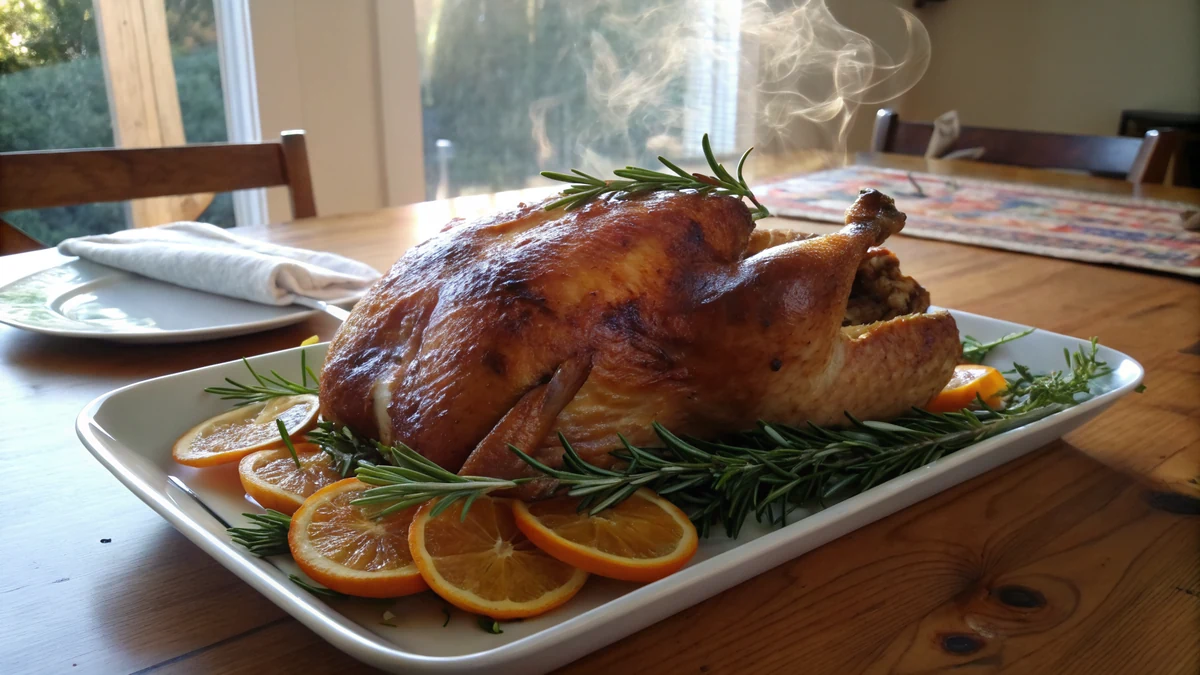
Quick answer: A Hill Country Thanksgiving turkey brine is a 24-hour wet soak in salted, sweetened, aromatic liquid that seasons the bird from edge to bone and keeps the breast juicy through a long oven roast. The ratio is one cup of kosher salt per gallon of water, plus brown sugar, bay leaves, peppercorns, rosemary, garlic, and apple cider. The bird is then rinsed, air-dried for crispy skin, and roasted hot-then-low.
The first Thanksgiving I cooked on my own was in a tiny rental kitchen in Fredericksburg, the year I moved out to the Hill Country and decided to figure out my grandmother's turkey without calling her. I called her three times. The first call was about the brine ratio (one cup of kosher salt per gallon, she said, do not argue), the second was Diamond Crystal versus Morton (Diamond Crystal, always), and the third was about the apple cider, which she insisted on adding the way her own mother had, half a gallon stirred in at the very end.
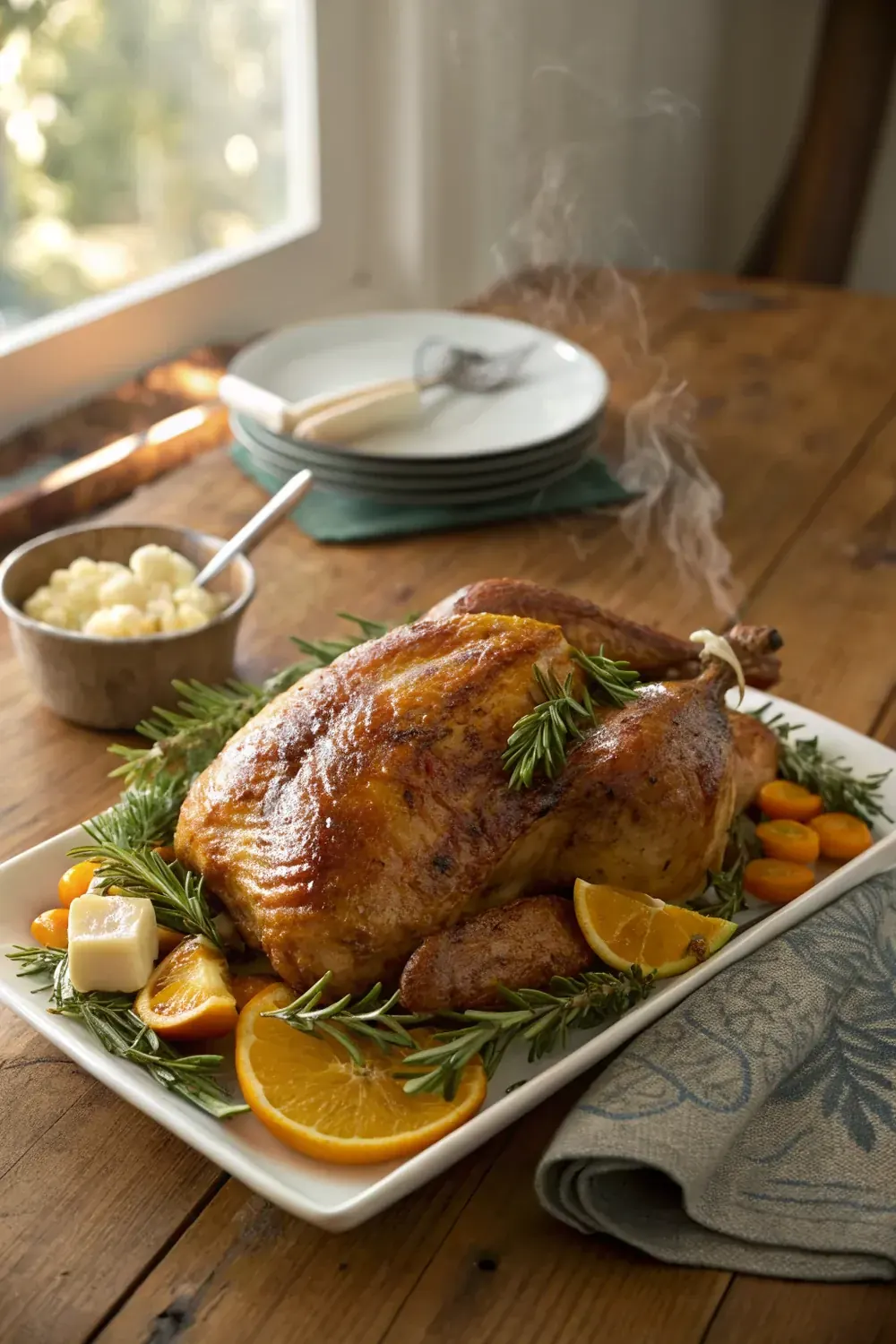
What came out of that oven, twenty-eight hours after the turkey first went into the brine, was the bird that ruined every dry supermarket turkey I had ever eaten. The breast was juicy clear through, the thigh meat had pulled away from the bone, and the skin was the color of an old saddle. I have cooked a brined Hill Country turkey every Thanksgiving since, and the method below is the one I keep coming back to. Twenty-four hours in the brine, four hours air-drying, hot start and a low finish in the oven. That is the whole trick. And while the bird rests, dessert is already handled if you baked my Texas pumpkin pie the night before.
Hill Country Thanksgiving Tradition
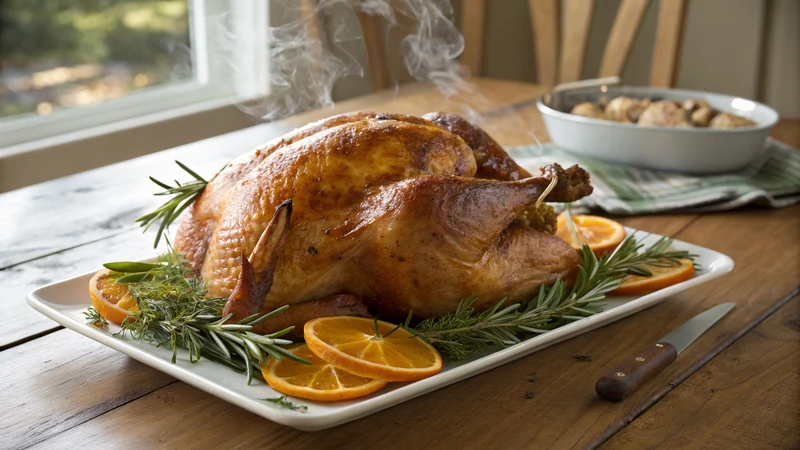
Thanksgiving in the Hill Country is its own quiet thing. The towns of Fredericksburg, Boerne, Comfort, and Bandera all settled by German and Alsatian families in the 1840s and 1850s, and the food traditions in those kitchens absorbed Texas barbecue, Tex-Mex, and ranch cooking without ever giving up the sausage-making and brining instincts the immigrants brought with them from the old country. The first time I saw a turkey go into a brine bucket, I was a kid at my grandmother's house outside Fredericksburg, and I remember being mostly alarmed at the size of the bucket.
What I did not understand then was that the German butcher tradition (think Dziuk's in Castroville, Opa's in Fredericksburg, the Kreuz Market sausage line in Lockhart) had been brining meats for generations before the wet-brine-the-Thanksgiving-turkey movement showed up in American food magazines in the 1990s. Bon Appetit's Thanksgiving feature from the late 90s is genuinely how the rest of the country learned what Texas grandmothers had been doing for decades.
The Hill Country style is not subtle. Apple cider in the brine, plenty of fresh rosemary, brown sugar to balance the salt, and the bird sits the full 24 hours. Pioneer Woman Ree Drummond out in Pawhuska does a similar style across the Oklahoma line, but the cider and the Texas-grown herbs are what make this version feel like home.
Why Brining Works (Osmosis and Denaturation)
There is real chemistry behind a brine, and once you understand it, the whole Thanksgiving day plan makes sense. A wet brine works through two mechanisms at the same time. The first is osmosis, where the salt-and-sugar solution outside the meat is more concentrated than the natural fluids inside the muscle cells, so water moves out of the cells, then quickly returns carrying salt and sugar with it. The end result is meat that holds about 10 percent more moisture than unbrined meat going into the oven.
The second mechanism is protein denaturation. The salt unwinds the muscle proteins (specifically myosin) and lets them swell and trap water. The denatured proteins also lose their ability to contract as forcefully when heated, which means the muscle fibers do not squeeze as much moisture out during roasting. This is why a brined turkey breast can hit 160F internal and still taste juicy, while an unbrined breast at the same temperature tastes like cardboard.
The sugar plays a third role: it helps the skin brown more deeply during the hot 425F start. Sugar caramelizes at lower temperatures than meat sears, so a brined turkey gets a head-start on the mahogany color of a great Thanksgiving bird. Salt seasons, sugar browns, time does the work.
The 1-Cup-Per-Gallon Salt Ratio Rule
If you remember nothing else from this recipe, remember the ratio. One cup of Diamond Crystal kosher salt per gallon of water. That is the canonical wet-brine concentration that has been used by Hill Country grandmothers, Texas barbecue pitmasters, and recipe-tested American food magazines for decades. It works because the salt concentration in the brine is high enough to drive osmosis effectively but low enough that the bird does not turn into a salt cured ham.
The trap is that not all kosher salts are equal. Diamond Crystal kosher salt is flaky and light; Morton kosher salt is denser and saltier by volume. If you use Morton, drop the brine ratio to three-quarters of a cup of Morton per gallon of water. If you use table salt (please do not), drop it further to half a cup per gallon. Mixing these up is the single most common reason a Thanksgiving turkey turns out too salty. Read the box, measure carefully.
The water can be partly substituted with apple cider, beer, or stock for flavor, but the salt-to-total-liquid ratio still has to hold. For my Hill Country brine, two gallons of total liquid means two cups of Diamond Crystal salt, even though half a gallon of that liquid is apple cider.
Choosing the Turkey (Size, Fresh vs Frozen, Brand)
A 12-14 pound turkey is the Goldilocks size for a Hill Country brine. Smaller than 10 pounds and the breast over-salts before the thighs are seasoned; larger than 16 pounds and the brine cannot penetrate the bird in 24 hours, plus the roasting time stretches to over four hours and the breast dries out. If you are feeding more than 14 people, cook two 12-pound birds rather than one 22-pound monster.
Fresh vs frozen: a fresh, never-frozen turkey from a local Hill Country farm or a high-end grocer will give you the best texture, but a frozen turkey from HEB, Walmart, or your regular grocery store works completely fine after a thorough thaw (24 hours per 4 pounds in the fridge, no shortcuts). What you absolutely must do is read the label for the words basted, self-basting, enhanced, or contains up to X percent solution. Those birds have already been injected with a saltwater solution at the factory, and brining them on top of that produces inedibly salty meat.
Brand recommendations: in Texas, my preferred order is Diestel Family Ranch heritage turkey (no enhancement, around $7-9/lb at Whole Foods or Central Market), then HEB Hill Country Fare fresh turkey (un-enhanced, Texas-raised), then a standard Butterball frozen (un-enhanced version). Avoid the Butterball Premium Basted line for brining; that one is pre-injected. Read the fine print on the label. On sizing the bird to the table rather than to whatever the store stacked highest, my guide to how much turkey per person has the charts by crowd size and by cut.
The Brine Vessel (Bucket, Cooler, or Bag)
You need a vessel that holds about 3 gallons of brine plus a 14 lb turkey, fully submerged, at refrigerator temperature for 24 hours. There are three working options and I have used all three.
5-gallon food-safe bucket. The classic Hill Country choice. A new bucket from a hardware store (look for the HDPE-2 recycling code) holds the brine and the bird with room for a weight on top. Never reuse a bucket that previously held paint or chemicals. Buy a fresh bucket dedicated to food.
48-quart cooler. A standard Igloo or Coleman cooler with a few frozen ice packs holds 38-40F for 24 hours. Place the turkey in the cooler with the brine and add 2-3 large frozen ice blocks. Check the temperature every 6-8 hours and add fresh ice if needed.
Extra-large brining bag. Reynolds and Cabela's sell food-grade brining bags rated for a whole turkey. The bag goes inside a stockpot or large bowl in the fridge to catch any leak. Bags use less brine because they conform to the bird, but they do leak occasionally.
The Brine Ingredients Explained
Salt and sugar are the workhorses; everything else is flavor. The kosher salt drives osmosis and seasoning. The brown sugar balances the salt, helps with browning, and adds a faint molasses depth. The apple cider contributes orchard sweetness and a mild fruit-acid that softens the meat texture, similar to what acidic marinades do but more gently. Use unfiltered cloudy cider from a Hill Country orchard (Love Creek Orchards in Medina is my source) or any farm-stand variety, not the clear filtered juice.
Bay leaves and peppercorns add a savory backbone, the same flavor base used in French court bouillon and German pickling brines. Whole allspice berries are the secret ingredient German butchers in Boerne and Fredericksburg have been adding for over a century, bringing a warm clove-cinnamon-pepper note that reads as Thanksgiving without screaming pumpkin spice.
Fresh rosemary, thyme, and orange finish the herbal layer. Rosemary is essential, thyme is supportive, and orange peel adds a top note of brightness. Smashed garlic and a quartered onion build the savory base. The brine should smell like Thanksgiving when it is simmering. If it does not, you forgot something.
Dry Brine vs Wet Brine Debate
Every Thanksgiving the food internet relitigates wet brine versus dry brine, and both work, but they do different things. A wet brine (this recipe) submerges the bird in a salty liquid, adds about 10 percent extra moisture to the meat, and gives a uniformly seasoned, juicy result. A dry brine rubs salt directly onto the skin and refrigerates the bird uncovered for 1-3 days, which seasons the meat without adding moisture and produces extra-crispy skin because of the long air-dry.
Wet brine is the Hill Country tradition and is the right call for a 12-14 lb supermarket bird that needs moisture insurance. Dry brine is more popular in fancier American cooking magazines and is a great choice for a heritage breed bird where you want to preserve the natural flavor without diluting it.
I do both, depending on the bird. For a Diestel heritage turkey or a small farm bird, dry brine. For a Butterball or HEB grocery turkey, wet brine, every time. Pick your method based on the turkey, not the internet argument.
Drying the Skin After the Brine
This is the step nobody tells you about, and it is the difference between a brined turkey with sad floppy skin and a brined turkey with skin you can crack with a spoon. After the 24-hour brine, the bird's skin is saturated with brine liquid. If you put a wet-skin turkey directly into a 425F oven, the skin will steam first, then try to brown second, and the result will be a pale, slightly rubbery surface that disappoints everyone at the table.
Pat the bird dry with paper towels, then set it on a V-rack over a sheet pan in the fridge uncovered for at least 4 hours, ideally 8-12. The cold dry air pulls residual moisture out of the skin and tightens it against the meat. Some pitmasters call this the pellicle stage, the same drying step they do before smoking salmon.
If your fridge does not have room for a 14 lb bird uncovered overnight, clear out a shelf the night before Thanksgiving, or set the bird in a cold garage at 35-38F. Hill Country November weather is often cold enough for porch-drying overnight; keep the bird elevated and protected from wildlife.
Roasting Strategy: 425F Start to 325F Finish
There are two competing thoughts on roasting temperature, and the right answer is to use both. Start at 425F for the first 30 minutes. The high initial heat sets the skin, kicks off the Maillard browning, and gets the surface mahogany-colored before the interior has time to overcook. The brined skin browns faster than unbrined skin because of the residual sugar from the brine, so 30 minutes is plenty.
Then drop to 325F for the rest of the roast. Lower roasting temperature lets the breast cook gently to 160F internal without crossing into dry-cardboard territory while the thigh cooks through to 165F. A constant high temperature would burn the outside before the thighs are safe; a constant low temperature would never set the skin properly. The hot-then-low method splits the difference.
Total roasting time at this method for a 12-14 lb brined turkey is typically 2.5 to 3.5 hours, but trust the thermometer, not the clock. Brined birds cook slightly faster because the salted moisture conducts heat efficiently. Check the thigh at the 2-hour mark and every 15 minutes after. Pull at 165F thigh, and let carryover do the rest. The drippings in the bottom of that pan are the base of the gravy, and a wet-brined bird leaves them salty, so the seasoning waits until the very end: my turkey gravy walks the whole finish. The rest of the meal, dish by dish, is mapped in my Texas Thanksgiving guide.
Two notes for cooks who are not roasting. A wet-brined bird headed for the fryer has to be rinsed, patted bone dry, and left uncovered in the refrigerator overnight, because water and 350F oil do not coexist; my deep fried turkey explains why I dry brine that bird instead. For a breast alone on the pit, the ratio scales down by weight and the skin behaves better after a dry brine, which is how my smoked turkey breast is written.
Basting, Tenting, and Resting
Basting is optional but I do it because my grandmother did. Every 45 minutes after the temperature drops to 325F, spoon or brush the pan drippings over the breast and thighs. Each baste re-glosses the skin and refreshes the brown color. Some chefs argue basting cools the oven; in practice, the door is open for under 20 seconds and the impact is negligible.
Tenting is for when the breast browns faster than the thigh cooks. A loose foil tent over just the breast reflects heat away and lets the thighs catch up. I tent at the 90-minute mark for almost every bird. Remove the tent for the last 15 minutes to re-crisp the skin.
Resting is the most important and most-skipped step. After the bird hits 165F at the thigh, transfer it to a carving board, tent loosely with foil, and rest at minimum 30 minutes. Forty-five is better. During the rest, the muscle fibers relax and reabsorb the juices the cooking process forced toward the edges. A turkey carved hot pours its juice onto the cutting board, every time.
My Hill Country Kitchen Notes
The first year I did this brine, I forgot the apple cider, simmered everything else, and tasted the brine, and it tasted exactly correct. I almost skipped the cider. I did not, because my grandmother had specifically said to add it, and after that bird came out of the oven I understood why. The cider does not make the brine taste like cider. It makes the finished turkey taste rounder, fuller, like the difference between a 2D photo and a 3D object. Do not skip the cider.
I keep a spare 5-gallon food-safe bucket in the garage just for Thanksgiving. It lives in a cabinet for 364 days a year and earns its keep on the 365th. The bucket cost $4 at Home Depot and has been in service for nine Thanksgivings, washed thoroughly between uses.
If you can plan ahead, brine the day before Thanksgiving Eve, dry-air the bird through Thanksgiving Eve night, and roast Thanksgiving morning. That schedule sounds long but it spreads the work across two evenings and frees up the day-of for sides, gravy, and the actual hosting. Texas scalloped potatoes can also be assembled the night before and baked while the turkey rests.
Mistakes to Avoid
Brining a self-basting or pre-injected turkey. Read the label. If it says contains up to X percent solution, basted, or enhanced, that bird is already brined at the factory. A second brine produces inedibly salty meat. Buy an un-enhanced bird.
Mixing up Diamond Crystal and Morton kosher salt. Morton is denser and twice as salty by volume. Use 1 cup Diamond Crystal OR 3/4 cup Morton per gallon of water. This is the most common Thanksgiving brine mistake.
Skipping the air-dry. A wet-skin turkey will not crisp in the oven, no matter how high the temperature. The 4-hour minimum air-dry in the fridge is the secret to crispy skin.
Putting the turkey in warm brine. The brine must be fully chilled to 40F or below before the bird goes in. Warm brine is a food safety risk and an uneven seasoning risk.
Brining longer than 36 hours. The texture turns spongy and the seasoning gets too aggressive past 36 hours. Twenty-four hours is the sweet spot. Set a timer and pull the bird on schedule.
Adding salt to the bird after brining. The brine has handled the seasoning. Rub butter, oil, and pepper on the skin before roasting, but do not add additional salt. Black pepper, yes; salt, no.
Carving immediately out of the oven. A 30-minute rest is non-negotiable. Cutting hot pours the juice onto the board instead of keeping it in the meat.
Variations on the Hill Country Brine
Spatchcock variation (Pollo Loco style). Some Texas pitmasters spatchcock the turkey (cut out the backbone and flatten) before brining, then air-dry and roast flat at 425F. Total roasting time drops to about 80-90 minutes for a 12 lb bird, and it cooks more evenly. The brine and ratios stay identical.
Beer brine. Replace half a gallon of water with two six-packs of Shiner Bock or any dark Texas lager. The malt sugars amplify the browning power and add a faint hop bitterness that pairs with the rosemary.
Bourbon-maple variation. Replace half a gallon of water with 3 cups bourbon and 1 cup pure maple syrup. Skip the brown sugar since the maple does that work.
Smoked turkey. Brine 24 hours, air-dry overnight, then smoke at 275F over post oak or pecan to 165F internal (about 4-5 hours for a 12 lb bird). This is how Central Texas barbecue joints serve Thanksgiving turkey.
Chile-citrus brine (Tex-Mex direction). Replace the rosemary and thyme with 4 dried guajillo chiles, 2 dried ancho chiles, and an extra orange. Pair with masa stuffing and tamales for a full South Texas Thanksgiving.
Smaller-bird brine. For a 6-8 lb turkey breast, halve the brine recipe and brine for only 12 hours. Same air-dry and roasting strategy.
What to Serve With the Turkey
A Hill Country brined turkey is the centerpiece, and the sides should support without competing. The canonical Texas Thanksgiving plate at my table is roasted turkey, cornbread dressing, mashed potatoes or scalloped potatoes, green beans with bacon, cranberry-jalapeno relish, and a pie. Keep the sides honest; the bird is the headline.
Texas scalloped potatoes are my preferred starch because they bake at the same temperature window the turkey rests at, so the timing is forgiving. Cornbread brisket sandwiches make great use of any leftover turkey on Friday morning, just swap the brisket for shredded brined turkey breast.
For dessert, a double-crusted sweet potato pie finishes the meal in the most Texas way possible. Pair with strong coffee and a small glass of bourbon.
For drinks, a Texas Hill Country white wine (a Becker Vineyards Viognier from Stonewall, or a William Chris Mourvedre Rose) holds up to the brined turkey beautifully. For non-drinkers, a homemade apple cider warmer with cinnamon sticks echoes the brine itself.
Texas Thanksgiving Turkey Brine Recipe
Ingredients
- For the brine:
- 2 gallons cold water (divided, half for boiling and half for chilling)
- 2 cups Diamond Crystal kosher salt (or 1.5 cups Morton kosher salt)
- 1 cup packed light brown sugar
- 1/2 gallon apple cider (unfiltered, the cloudy farm-stand kind)
- 10 bay leaves
- 2 tablespoons whole black peppercorns
- 1 tablespoon whole allspice berries
- 1 head garlic, halved crosswise (no need to peel)
- 1 large yellow onion, quartered
- 1 large bunch fresh rosemary (about 8 sprigs)
- 1 small bunch fresh thyme (about 10 sprigs)
- 2 oranges, quartered (peel and all)
- 1 cup ice cubes (to help the brine cool fast)
- For roasting:
- 1 whole turkey, 12-14 lb, fully thawed (HEB Hill Country Fare, Butterball, or Diestel Family Ranch)
- 1/2 cup unsalted butter, softened
- 2 tablespoons olive oil
- 1 teaspoon freshly ground black pepper
- 1 yellow onion, quartered (for the cavity)
- 1 head garlic, halved (for the cavity)
- Fresh rosemary, thyme, and sage sprigs (for the cavity)
- Equipment:
- 5-gallon food-safe bucket OR 48-quart cooler OR extra-large brining bag
- Heavy roasting pan with V-rack
- Instant-read thermometer (Thermapen or ThermoWorks)
- Kitchen twine, basting brush, foil tent
Instructions
- Build the brine concentrate. In a large stockpot, combine 1 gallon of the water with the kosher salt, brown sugar, bay leaves, peppercorns, allspice, halved garlic head, quartered onion, rosemary, thyme, and quartered oranges. Bring to a steady simmer over medium-high heat, stirring until the salt and sugar fully dissolve, about 5-6 minutes. Once the salt and sugar are gone and the kitchen smells like a Hill Country smokehouse in October, pull the pot off the heat. The concentrate is hot and very strong; you will dilute and chill it next.
- Cool the brine to fridge temperature. Pour the remaining 1 gallon of cold water and the half-gallon of apple cider into the hot brine concentrate. Stir well. The cold liquid will drop the temperature significantly, but the brine still needs to be fully cold (40F or below) before the turkey goes in. Add the cup of ice cubes and let the pot sit on the counter for 15 minutes, then transfer the brine to your brining vessel and refrigerate (or set in a cooler with ice) until fully chilled. <strong>Never put a turkey into warm brine.</strong> Warm liquid is a food safety risk and the salt will not penetrate evenly.
- Submerge the turkey for 24 hours. Remove the turkey from its packaging, pull out the giblet bag and neck (save them for gravy), and rinse the bird inside and out. Lower the turkey breast-side-down into the cold brine in your bucket, cooler, or brining bag. The turkey must be fully submerged; if it floats, weight it with a clean dinner plate. Cover and refrigerate (or hold in a cooler at 38-40F with ice packs) for 24 hours. Do not brine longer than 36 hours total. Past that point the meat texture turns spongy and the seasoning gets aggressive.
- Rinse and pat the turkey dry. After 24 hours, lift the turkey out of the brine and discard the brine (it has done its job, do not reuse it). Rinse the bird thoroughly inside and out under cold running water for 2-3 minutes, paying attention to the cavity and the wing pits where salt can pool. Pat the entire turkey very dry with paper towels, including under the skin where you can reach. Wet skin will not crisp in the oven; this drying step is non-negotiable.
- Air-dry the skin in the fridge. Set the patted-dry turkey on a V-rack inside a roasting pan or sheet pan. Place it uncovered in the refrigerator for at least 4 hours, or ideally overnight (8-12 hours). The cold dry fridge air pulls remaining surface moisture out of the skin and tightens it, which is the single biggest factor in getting <em>truly crispy</em> Thanksgiving skin. Skip this step and the bird will steam in the oven instead of roast. This is the secret nobody tells you on Thanksgiving morning.
- Roast hot at 425F for the first 30 minutes. Heat the oven to 425F. Pull the turkey out of the fridge 45 minutes before roasting to take some of the chill off (a fully cold bird shocks the oven and slows the roast). Rub the turkey all over with the softened butter and olive oil, then dust with freshly ground pepper. <strong>Do not add salt</strong>, the brine has handled the seasoning. Stuff the cavity loosely with the quartered onion, halved garlic, and fresh herbs. Tie the legs together with kitchen twine. Roast at 425F for 30 minutes to set the skin and start the browning.
- Drop to 325F and roast to temperature. After the 30-minute hot start, lower the oven to 325F and continue roasting until the deepest part of the thigh registers 165F on an instant-read thermometer (165F at the thigh, 160F at the breast for a juicy bird, since carryover will bring it up another 5 degrees during the rest). For a 12-14 lb brined turkey, total roast time is typically 2.5 to 3.5 hours, but always trust the thermometer over the clock. If the breast browns faster than the thighs cook, tent the breast loosely with foil. Baste with pan drippings every 45 minutes.
- Rest, carve, and serve. Pull the turkey when the thigh hits 165F and transfer it to a clean carving board. Tent loosely with foil and rest <strong>at least 30 minutes</strong> (45 is better) before carving. Resting is when the juices redistribute back into the meat; cut a turkey too early and all that brine-driven moisture pours out onto the board. Carve in the kitchen, not at the table, so you can lift the breasts off whole and slice across the grain. Reserve all pan drippings for gravy.
Frequently Asked Questions
How long should I brine a turkey?
Twenty-four hours is the Hill Country standard, and it is the sweet spot. Less than 18 hours and the brine has not fully penetrated the breast meat to the bone; more than 36 hours and the texture turns spongy and the seasoning gets too aggressive. Set a timer when the bird goes in and pull it on schedule. For a smaller turkey (under 10 lb) or a turkey breast only, drop the brine time to 12 hours.
Diamond Crystal vs Morton kosher salt, does it matter?
Yes, significantly. Diamond Crystal kosher salt is flaky and light; Morton kosher salt is denser and roughly twice as salty by volume. The Hill Country canonical ratio is 1 cup Diamond Crystal per gallon of water. If you only have Morton, drop the ratio to 3/4 cup per gallon. Mixing these up is the single most common reason a Thanksgiving turkey turns out too salty. Read the box, measure carefully, and never substitute table salt at the same volume.
Can I brine a frozen turkey?
Not directly. The bird must be fully thawed before it goes into the brine. Brining a still-frozen turkey traps the cold core and prevents the brine from penetrating evenly, plus the bird may not reach a safe temperature in time. Thaw the turkey in the refrigerator at 24 hours per 4 pounds (so a 12-lb turkey thaws in 3 days, a 14-lb in 3.5 days). Plan backwards from Thanksgiving accordingly. Quick thaws in cold water are a backup but slower than people expect.
Can I brine a Butterball or self-basting turkey?
No. Butterball Premium Basted, most store brand basted turkeys, and any bird whose label reads contains up to X percent solution have already been injected with a saltwater solution at the factory. Brining on top of that produces inedibly salty meat. Buy an un-enhanced turkey for brining: Diestel, the Butterball un-basted line, HEB Hill Country Fare fresh, or any heritage breed bird. Read the fine print on the label before you buy.
Why is my brined turkey dry even with the brine?
Almost always one of three causes. First, the bird was overcooked (target 165F at the deepest part of the thigh, 160F at the breast, then rest 30 minutes for carryover). Second, the bird was carved too early without resting (the juices end up on the cutting board instead of in the meat). Third, the bird was a self-basting or enhanced turkey that was already injected at the factory and could not absorb additional brine. Use an instant-read thermometer, rest 30 minutes minimum, and buy un-enhanced turkeys.
Can I use a brining bag instead of a bucket?
Yes, brining bags work well for a single Thanksgiving turkey. Reynolds, Cabela's, and several outdoor-cooking brands sell food-grade bags rated for a whole turkey. Place the bag inside a stockpot or large bowl to catch any leak (bags leak occasionally), and refrigerate the whole setup. Bags use slightly less brine because they conform to the bird, but they are otherwise identical in result to a bucket or cooler. Always set a sheet pan under any bagged brine.
Do I need to rinse the turkey after brining?
Yes, for two reasons. First, the bird's surface is coated in concentrated brine after 24 hours, and rinsing prevents the skin from being too salty. Second, rinsing washes away any trapped peppercorns, herbs, or aromatics that would burn on the skin during roasting. Rinse inside and out under cold running water for 2-3 minutes, paying attention to the cavity and wing pits where salt pools. Pat very dry afterwards. The rinse-and-dry sequence is essential for both food safety and skin texture.