
Free pitmaster tool
BBQ Wood Pairing Tool
Choosing the right smoking wood is one of the easiest ways to make your barbecue taste better, and one of the easiest ways to ruin it if you get it wrong. I built this tool to take the guesswork out of it. Pick what you are cooking, and it tells you the woods that work, how much smoke the cut wants, why the pairing makes sense, and the combinations a Texan would tell you to avoid.
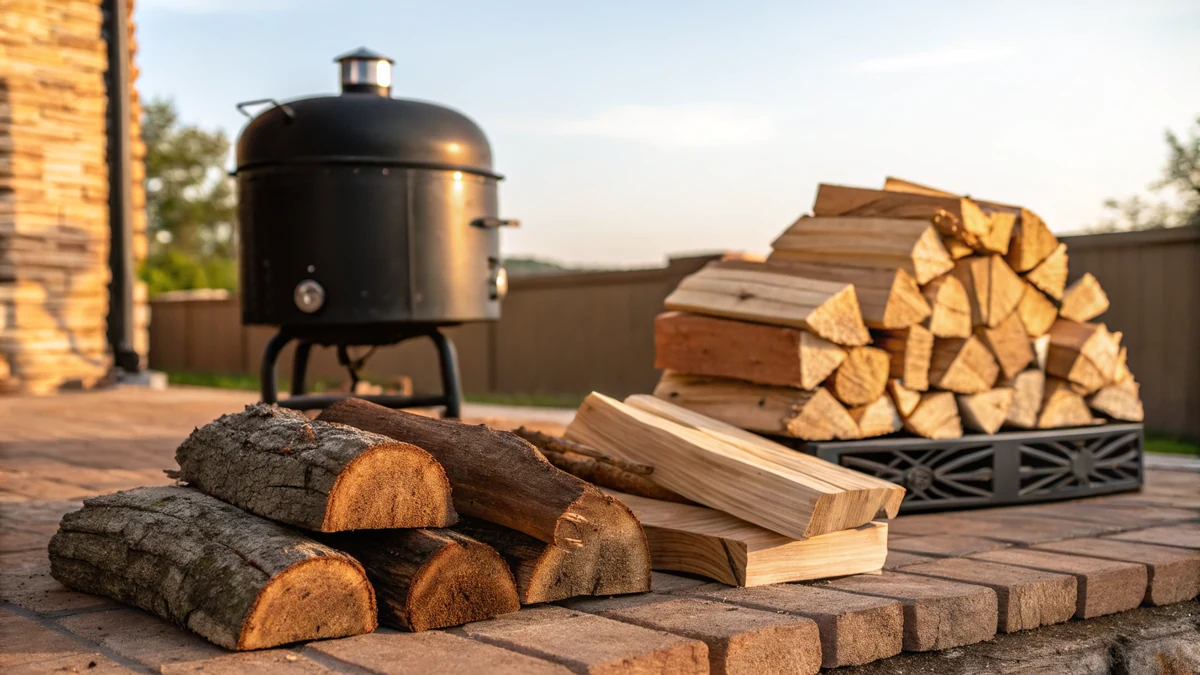
The short version: match the strength of the wood to the strength of the meat. Big, fatty beef like brisket and beef ribs can take bold woods, and in Texas that means post oak first, with hickory and pecan close behind. Pork and lamb like a medium smoke, often hickory blended with sweeter fruit woods. Delicate foods like chicken, turkey, and fish want light, sweet woods such as apple, cherry, and alder. And mesquite, the famous Texas wood, burns hot and harsh, so it belongs on quick cooks, not long ones. Use the tool above to get a specific pairing for whatever you are smoking.
Pairings are a starting point, not a rulebook. Your fire, your pit, and your taste matter as much as the wood.
How Wood Pairing Actually Works
The whole idea behind pairing wood to meat comes down to one principle: match the intensity of the smoke to the intensity of the food. A thick, fatty, assertively flavored cut like brisket can absorb a lot of strong smoke and only get better. A delicate piece of fish or a chicken breast will be bullied by that same smoke and end up tasting bitter and one-note. Everything else is a variation on that balance.
Cook time is the other half of the equation. The longer a piece of meat sits in the smoke, the more flavor it picks up, so a 14-hour brisket and a 90-minute rack of fish are playing completely different games. That is why a wood that is perfect for a quick cook can wreck a long one. Strong woods compound over time, and what tastes bold at hour two can taste acrid at hour ten.
Finally, the cleanliness of your fire matters as much as the species of wood. The goal is always thin, bluish smoke from a fire that is getting plenty of air. Thick white or gray smoke means the wood is smoldering, and that smoke carries creosote, the harsh, ashy compound that ruins barbecue. Good wood burned badly tastes worse than mediocre wood burned well, so manage your fire first and your wood choice second.
Light, Medium, and Strong Smoke
I sort smoking woods into three rough strength bands, and the tool above uses the same scale. Light woods, the fruit woods like apple, cherry, and peach plus alder for fish, give a mild, sweet smoke and gorgeous color. They are forgiving and almost impossible to overdo on quick cooks, which makes them the right call for chicken, turkey, fish, and anything delicate.
Medium woods, mainly oak, pecan, and maple, sit in the middle. They give a clean, balanced smoke that works on a huge range of foods, from pork ribs and pulled pork to sausage and lamb. Pecan in particular is the great diplomat of the wood pile, mild and slightly sweet, and it blends with almost anything. If you only kept two woods on hand, I would tell you to keep oak and pecan.
Strong woods, hickory and mesquite, throw a heavy, bold smoke that can dominate. Hickory is the classic for pork and stands up well to beef, but it can turn bitter if you overdo it. Mesquite is the strongest of all and the trickiest, which is why it gets its own section below. The rule of thumb is simple: the bigger and fattier the cut, the more smoke it can handle.
Post Oak: The Texas Signature
If there is one wood that defines Central Texas barbecue, it is post oak. Walk into any of the legendary smokehouses around Lockhart, Taylor, or Elgin and you will find ricks of post oak seasoning in the yard. It is the wood behind the brisket that made this region famous, and for good reason. Post oak burns clean and steady, holds a temperature well, and throws a mellow, savory smoke that flatters beef without ever turning sharp.
That steadiness is the secret. A long brisket cook lives or dies on temperature stability, and post oak gives you a fire that behaves. The flavor is bold enough to stand up to a fatty packer or a slab of smoked beef short ribs, yet clean enough that it never overwhelms. It is the wood I default to for brisket, beef ribs, and Texas sausage, and the tool above flags it as the signature choice for all three.
If you cannot find post oak where you live, a regular white or red oak is the closest stand-in, with pecan as a slightly sweeter alternative. The point is to start from a clean, steady base wood and build from there. Once you have your wood sorted, my brisket smoking time calculator maps out the full cook hour by hour, and my Texas BBQ brisket recipe walks through the trim, rub, and wrap.
The Fruit Woods: Apple, Cherry, and Peach
Fruit woods are the gentlest, sweetest smoking woods, and they are the ones I reach for whenever the food is delicate or I want beautiful color. Apple is mild and faintly sweet, the friendliest wood there is, and it does lovely things to pork and poultry. Cherry is similar but adds a deeper, almost reddish mahogany color to the bark, which is why competition cooks love it on ribs and turkey.
Peach and other stone-fruit woods fall in the same family, mild and sweet with a soft, fragrant smoke. None of these woods will overpower your food, which is both their strength and their limit. On a big beef cut they can get lost, but on chicken, turkey, fish, and pork ribs they are close to perfect. They also blend beautifully into a base of oak or hickory when you want a hint of sweetness without going all-in.
Because fruit woods are so forgiving, they are the best place for a beginner to start. It is genuinely hard to oversmoke a chicken with apple wood. If you are just learning to read your pit and your fire, lean on the fruit woods while you build confidence, then start experimenting with the stronger species as you get a feel for how much smoke your food actually wants.
Hickory, Pecan, Oak, and Maple
Hickory is the backbone of Southern and Midwestern barbecue and the classic wood for pork. It gives that deep, smoky, almost bacon-like flavor that people picture when they think of barbecue. It is strong, though, and a heavy hand can tip pork ribs or a pork shoulder into bitterness, so I often blend it with a fruit wood to soften the edge. On beef it works well as a backup to oak.
Pecan is hickory's milder, sweeter cousin, and it is one of the most useful woods you can own. It is gentle enough for poultry yet flavorful enough for beef and pork, which makes it the great all-purpose wood and a natural blending partner. Oak, especially post oak, is the steady, clean-burning base wood that anchors most Texas cooks. Maple is mild and subtly sweet, lovely on poultry and a nice accent in a blend.
These medium-to-strong woods are where most of your everyday cooking will live once you move past the fruit woods. They give real smoke character without the risk that comes with mesquite. A good starter wood pile for a Texan is post oak as the base, pecan as the all-rounder, hickory for pork, and a fruit wood or two for poultry and color. With those four, you can pair smoke to almost anything on the tool above.
Mesquite: Handle With Care
Mesquite is the wood everyone associates with Texas, and it is the one I see misused most often. It grows wild across South and West Texas, it burns extremely hot, and it throws a heavy, earthy, unmistakable smoke. Used right, it is fantastic. Used wrong, it will make your barbecue taste like an ashtray. The difference comes down to time and quantity.
Mesquite shines on hot, fast cooks. Think cowboy-style steaks seared over coals, fajitas, quail, or anything that spends well under an hour over the fire. In that short window, mesquite gives a bold, primal flavor that no other wood matches. The trouble starts on long cooks. Over many hours, mesquite smoke compounds into something harsh and bitter, which is why I steer people away from it for brisket and pork shoulder.
If you love mesquite and want it on your low-and-slow barbecue, use it as a small part of a blend, a chunk or two mixed into a base of post oak, rather than as your only wood. That gives you the mesquite character without the bitterness. The tool above marks mesquite as a caution wood for the big, long-cooking beef cuts for exactly this reason. Respect it, and it earns its place in the wood pile.
Common Wood Pairing Mistakes
The biggest mistake is oversmoking delicate foods. Chicken, fish, and even pork ribs cook in a short window and pick up smoke fast, so reaching for hickory or mesquite out of habit drowns them. Match the wood to the food, not to your mood. The second mistake is the opposite: using a wood so mild it disappears, like trying to smoke a brisket with nothing but apple wood and wondering why it tastes flat.
Another common error is blaming the wood for what is really a fire problem. Bitter, acrid barbecue is usually the result of a smoldering, air-starved fire producing dirty smoke, not the wrong species. Before you swap woods, make sure you are running a clean fire with thin blue smoke. A well-managed fire of average wood beats a choked fire of premium wood every time.
Finally, do not overthink it. Wood pairing matters, but it is the seasoning on top of good fundamentals, not a magic bullet. Get your fire steady, your rub simple, and your temperature controlled, then use the tool above to pick a sensible wood. The pairings here are a tested starting point, and the rest is a matter of cooking often and learning what your own taste prefers.
Wood Pairing FAQ
What is the best wood for smoking brisket?
Post oak is the Central Texas standard for brisket and the wood I reach for first. It burns clean and steady, throwing a mellow, savory smoke that complements beef without ever turning bitter over a 12 to 16 hour cook. Hickory and pecan are solid backups. Mesquite can add a bold note in small amounts, but too much over a long cook turns the bark acrid, so use it sparingly if at all. The tool above shows brisket as a strong-smoke cut for exactly this reason.
Is mesquite good for smoking?
Mesquite is a Texas classic, but it is the most misunderstood smoking wood. It burns hot and fast and throws a heavy, earthy smoke that turns harsh and bitter past a few hours. That makes it great for quick, hot cooks like fajitas, steaks, or a fast sear, and risky for long cooks like brisket or pork shoulder. If you love mesquite on low-and-slow barbecue, use it as a small part of a blend with post oak or hickory rather than on its own.
What wood should I use for pork ribs?
Pork ribs love a sweeter, milder fruit smoke. Apple and cherry are my go-to choices because they give a gentle sweetness and a deep mahogany color, and a little hickory or pecan adds backbone. Because ribs cook in a shorter window than brisket, smoke builds up fast, so it is easy to oversmoke them. Go lighter than you think, and steer clear of mesquite or a heavy hand of hickory, which can make ribs taste bitter.
Can I mix different smoking woods?
Yes, and blending is one of the best ways to dial in flavor. A common Texas approach is a base of clean-burning post oak or oak for steady heat, with a few chunks of a fruit wood like apple or cherry mixed in for sweetness and color. Pecan blends nicely with almost anything. The key is to let one wood lead and use the others as accents, rather than throwing everything in at once and muddying the flavor.
What is the best wood for smoking chicken and turkey?
Poultry is delicate and absorbs smoke quickly, so lighter is better. Apple, cherry, pecan, peach, and maple all give gentle sweetness and beautiful color without overpowering the bird, and cherry in particular gives turkey and chicken a gorgeous mahogany skin. Avoid mesquite and heavy hickory, which can overwhelm poultry fast and leave the skin tasting bitter, especially on a big turkey that sits in the smoke for hours.
Why does too much smoke make food taste bitter?
Bitter, acrid barbecue usually comes from dirty smoke or too much of a strong wood. When a fire is starved of air, it smolders and produces thick white or gray smoke loaded with creosote, which coats the meat in a harsh, ashy flavor. You want thin blue smoke from a clean, well-fed fire. Choosing a milder wood for delicate foods and avoiding heavy woods like mesquite on long cooks also keeps the smoke flavor balanced rather than overwhelming.
Link to This Tool
This tool is free, runs entirely in your browser, and always will. If it helped you nail a cook, feel free to share it on your forum, blog, or club page. A plain link is plenty:
https://www.texanrecipes.com/bbq-wood-pairing-tool/
Want the rest of the system? Pair this with my brisket smoking time calculator for timing, my Texas BBQ rubs guide for seasoning, and the Ultimate Texas BBQ Guide for the whole philosophy. Questions or a wood you swear by? Write to me.