Texas BBQ
Smoked Beef Short Ribs
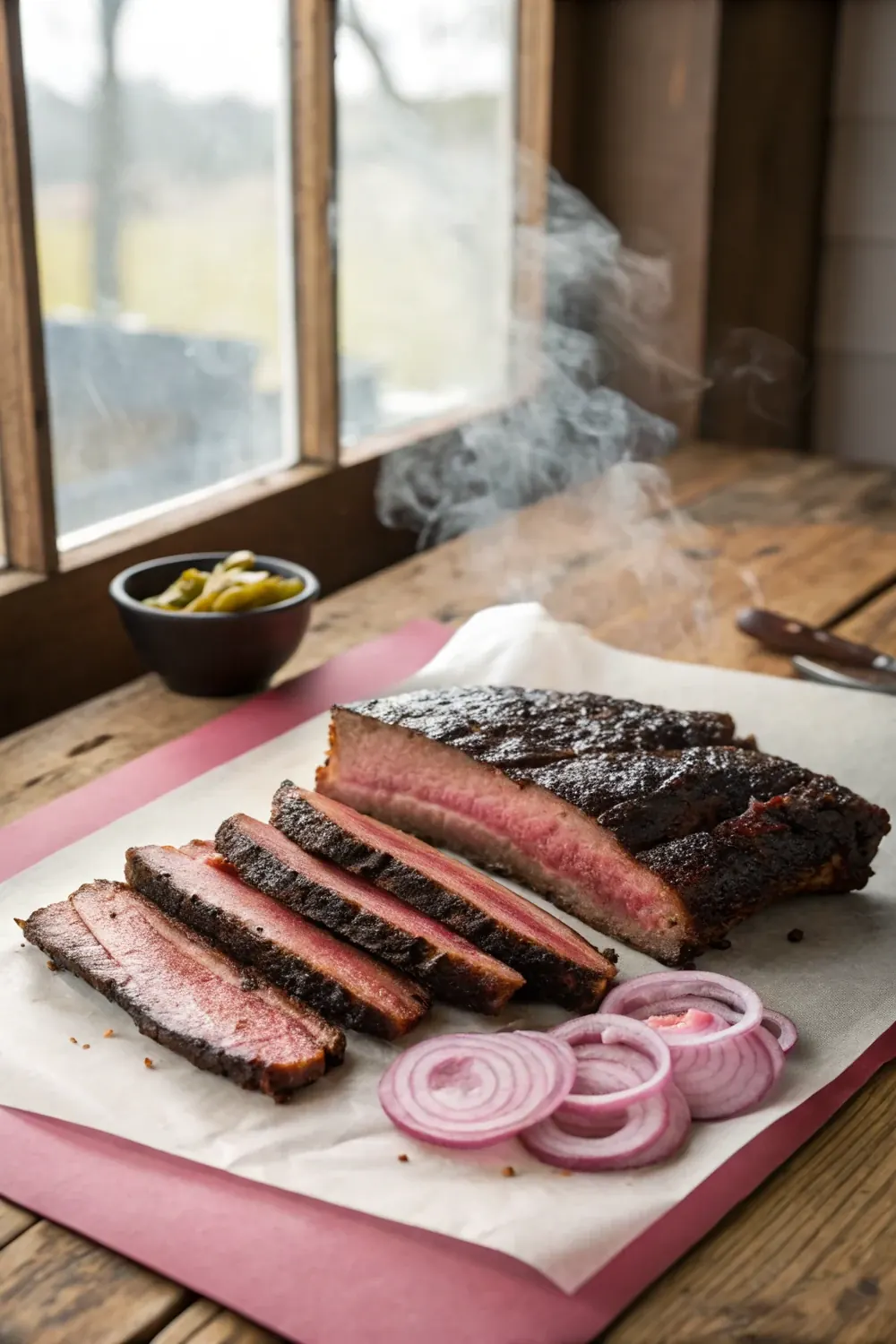
Chef Mia's smoked beef short ribs: thick plate ribs rubbed with salt and pepper, smoked over post oak at 275F to probe-tender 203F for deep bark and beefy bite.
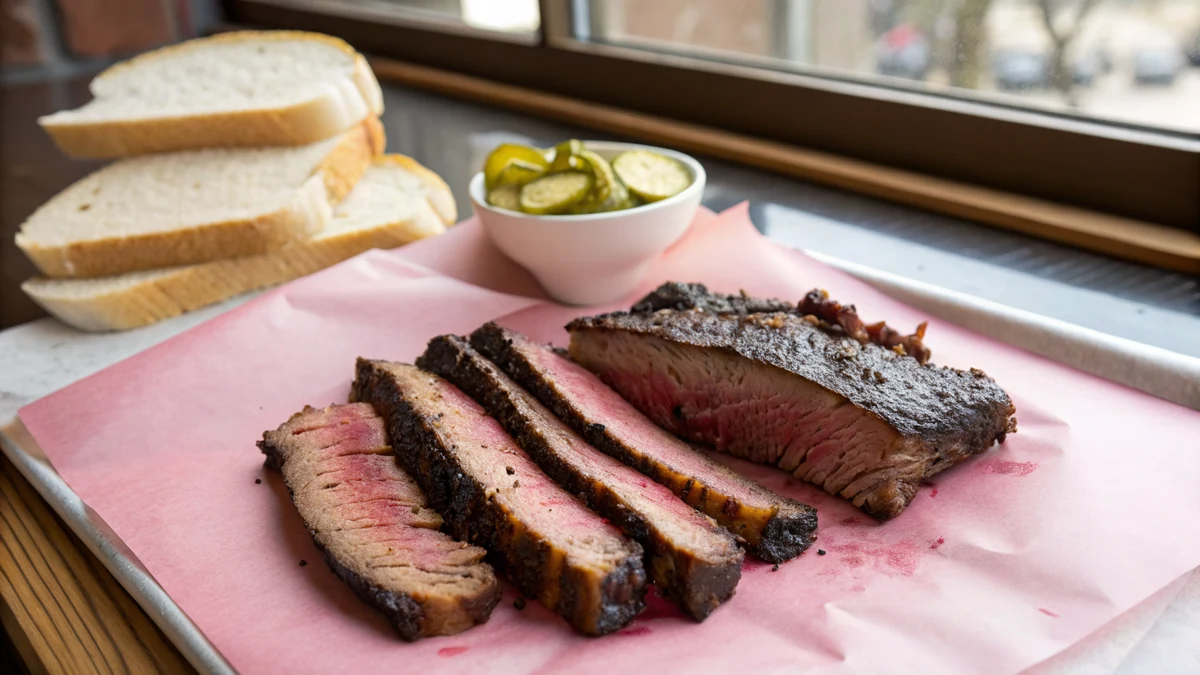
Quick answer: Smoked beef short ribs are thick, meaty plate or chuck ribs seasoned with nothing but coarse salt and black pepper, then smoked over post oak at 275F for about 6 to 8 hours until they probe tender around 203F. Unlike thinner beef back ribs, short ribs carry a deep slab of meat on top of the bone, so they cook like a small brisket and finish with a dark bark and a soft, beefy bite. You rest them an hour, then slice between the bones and serve.
The first time I pulled a rack of beef short ribs off my pit in Lockhart, a friend looked at the size of them and asked if I was cooking dinosaur food. That is honestly the best way to describe a proper plate rib: a heavy slab of beef sitting on a short, thick bone, the kind they slice and sell at Texas joints for the price of a steak. These are not the dainty ribs you gnaw at a chain restaurant. They are a whole different animal.
I want to be clear up front, because the names get tangled. This recipe is for beef short ribs: the chuck and plate cuts that are short and thick, with a heavy slab of meat sitting on the bone. The most common ones at the store are English-cut chuck short ribs, plus boneless short ribs and smaller plate pieces, and the method here suits all of them. If you scored one of the giant three-bone dino plate racks instead, I give that showpiece its own deep dive in my smoked beef ribs recipe, though the salt-and-pepper approach is the same.
What I love about short ribs is how forgiving the cut is once you understand it. The marbling is generous, the connective tissue melts into silk over a long smoke, and the salt-and-pepper Texas approach lets the beef do the talking. If you want the same cut cooked indoors with no fire to mind, my sous vide beef short ribs take a precise, hands-off path to tenderness, my boneless beef short ribs in the slow cooker cover the set-and-forget weeknight route, and my beef short ribs in the oven run the classic braise that makes its own sauce. But for real Texas bark, nothing beats the smoker. Pour yourself something cold, get the post oak going, and let me walk you through the whole cook the way I run it at home.
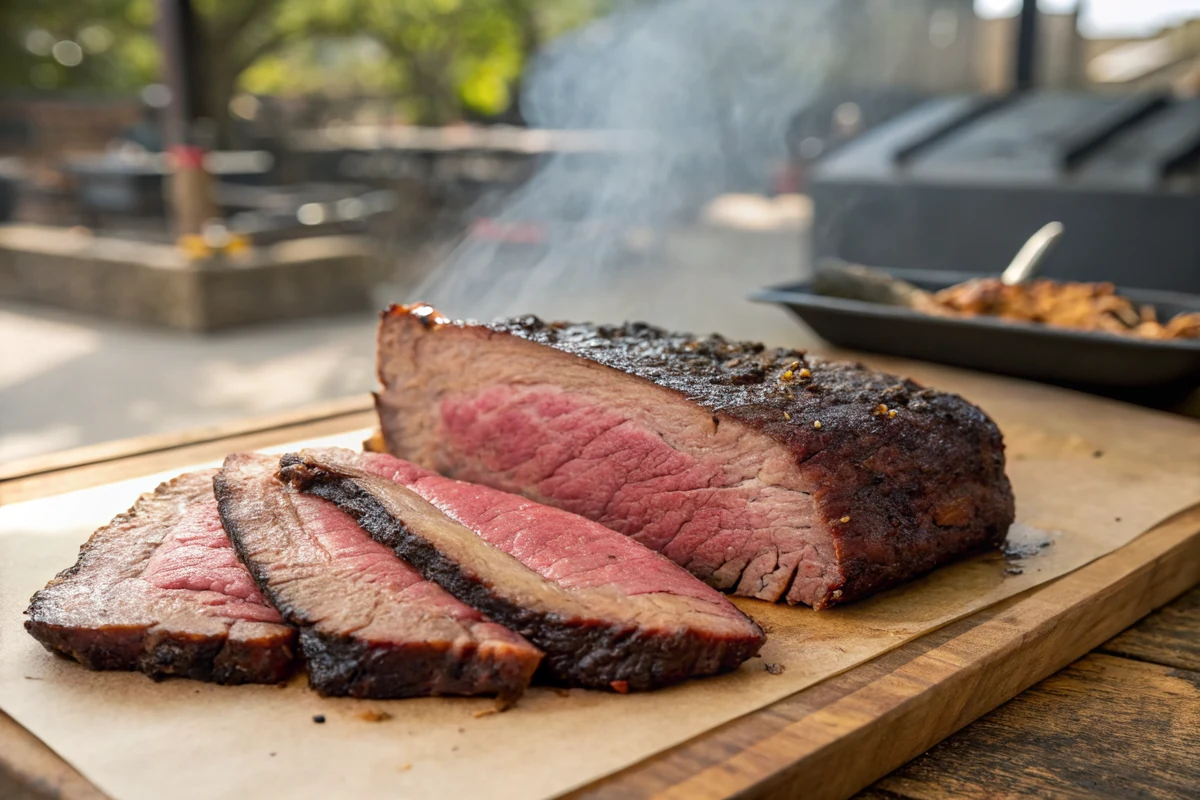
Plate Ribs vs Back Ribs: Know What You Bought
This is the single most important thing to get right, and it trips up more cooks than any cooking step. Beef short ribs and beef back ribs are not the same cut, and they do not cook the same way. Short ribs, the kind this recipe is built for, come from the chuck or the plate. They are short, thick, and carry a heavy slab of meat sitting on top of a stubby bone. A single plate rib can weigh more than a pound.
Beef back ribs, by contrast, are what is left after the butcher removes the ribeye and prime rib roast. The meat mostly lives between the bones rather than on top, so they are flatter, leaner, and finish faster. They are a different cut entirely, and I cook those low and slow in my beef back ribs guide. If you try to run back ribs for the 6 to 8 hours short ribs need, you will dry them out completely.
So before you season anything, look at your meat. Is there a thick, steak-like cap of beef on top of the bone? That is a short rib, and you are in the right place. Are the bones long and curved with the meat tucked down between them? Those are back ribs. Both are delicious, but they are two different cooks, and matching the recipe to the cut is the whole game.
Where Short Ribs Come From on the Steer
Beef short ribs are cut from two areas. Chuck short ribs come from the front, near the shoulder, and tend to be a little leaner with a slightly looser grain. Plate short ribs come from lower on the belly side, just behind the brisket, and they are the big, fatty, glorious slabs you see at the famous Texas joints. Both work beautifully on a smoker, and both follow the same method I lay out here.
The plate ribs usually come as a three-bone slab, often labeled NABP 123A if you want to sound like you know your way around a butcher counter. The chuck ribs are frequently sold English-cut, meaning cut parallel to the bone into individual thick ribs. Either is great. I lean toward plate ribs when I can get them because the fat content keeps them juicy through a long cook. If you land a whole untrimmed three-bone dino plate rack, that big showpiece gets the full treatment in my smoked beef ribs recipe.
What you want to avoid is the thin flanken cut, where the butcher saws across the bones to give you long strips studded with little cross-sections of bone. Those are built for quick Korean-style grilling or braising, not low and slow smoking; if that is what came home with you, my flanken beef short ribs give those strips the screaming-hot fire they actually want. If the package looks like thin straps of meat with coins of bone and today is a smoking day, put it back and ask for plate or English-cut chuck ribs instead.
How to Trim Beef Short Ribs
Short ribs need less trimming than a brisket, which is one of the reasons I love cooking them. The main job is the bone side. There is a tough silver skin and a papery membrane stretched across the bones, and it will not break down in the smoker. Slide a butter knife under one corner, grab it with a paper towel, and peel it off. If it fights you, just score it in a crosshatch so heat can get through.
On the meat side, the fat cap is your friend, so go easy. Knock down any thick, hard lumps of fat that will not render, and trim off the loose, ragged flaps of meat hanging from the edges, because those just burn and turn to leather. Otherwise leave the cap mostly alone. Unlike a brisket, you are not chasing an aerodynamic shape here, just clean edges and an exposed bone side.
Square off the slab so the thickness is roughly even, and if one end is dramatically thinner, position that end away from your firebox during the cook. A little tidy trimming up front means the rub sits cleanly and the bark forms evenly. Save any decent fat trimmings; you can render them for tallow or toss them in a pot of BBQ baked beans for extra smoke flavor.
The Salt and Pepper Rub That Texas Runs On
Central Texas beef does not need a complicated rub, and short ribs are the proof. My standard is a coarse blend of equal parts kosher salt and 16-mesh black pepper. That is it. The 16-mesh grind matters; it is coarse enough to build texture in the bark without turning dusty. Some pitmasters add a spoon of granulated garlic, and I do that when the mood strikes, but the salt and pepper are the backbone.
Apply the rub heavier than feels natural. This is a thick slab of meat, and a timid coat disappears into the bark. I season all sides generously and evenly, patting it on so it sticks. If you want a binder, a thin smear of yellow mustard or hot sauce helps the rub cling without adding any taste you can detect after the smoke. The binder is optional and a little old-fashioned, but it works.
If you want to understand why the simple approach wins, and which coarse grinds and salts actually perform, I break the whole thing down in my best Texas BBQ rubs guide. The short version is that beef this good only needs salt, pepper, smoke, and time. Save the sweet and spicy commercial rubs for chicken and pork, where they have a real job to do.
Why Post Oak Is the Texas Wood for Beef
Post oak is the signature wood of Central Texas BBQ, and it is what I burn for short ribs every time. It throws a clean, mellow smoke that complements beef without bullying it, and it holds a steady temperature, which is exactly what a long cook needs. If brisket built its reputation on post oak, short ribs ride the same rails. The flavor is savory and round, never sharp or medicinal.
If you cannot get post oak, the next best options for beef are a regular white or red oak, hickory used with a light hand, or pecan for a softer, slightly sweet note. The one wood I steer people away from on a long cook is mesquite. It burns hot and fast and turns acrid and bitter past a few hours, which is the opposite of what you want under an 8-hour slab of beef. A little mesquite for a quick sear is fine; a whole short rib cook on mesquite is a mistake.
Matching wood to meat is genuinely one of the highest-leverage choices you make, so I built a free tool for it. My BBQ wood pairing tool lets you pick beef short ribs and instantly see the recommended woods, the smoke intensity, and the combinations to avoid. Use it before your next cook and you will stop second-guessing the wood pile.
Setting Up the Smoker at 275F
I run short ribs at 275F. That temperature is the sweet spot for plate ribs: hot enough to render the heavy fat and push through the cook in a single afternoon, gentle enough that the bark sets dark and the meat stays tender. You can drop to 250F if you want a slightly longer, more forgiving cook, but 275F is my default and it rarely lets me down.
Whatever pit you run, the goal is a stable temperature and clean smoke. You want thin blue smoke curling off the stack, not billowing white or gray, because dirty smoke leaves a bitter, sooty taste on the bark. Get the fire genuinely settled before the meat goes on. If your smoker swings 50 degrees on its own, that instability will hurt you more than any seasoning choice, so fix the fire first.
Put a water pan in the chamber if your smoker tends to run dry; the humidity helps the bark form and buffers temperature swings. Set a leave-in probe thermometer for the pit temperature near grate level, not just the dome gauge, which usually reads high. If you are still shopping for a pit that holds steady, my guide to the best Texas brisket smokers covers the same rigs that handle short ribs.
The Cook: First Hours, Spritz, and the Stall
Lay the ribs on bone side down, fat cap up, with the thickest end pointed toward the firebox where the heat is strongest. Then close the lid and walk away. The first 3 hours are when the bark sets, and every time you open the smoker you dump heat and add 15 minutes to the cook. Patience here pays off in the crust you get at the end.
After about 3 hours, if the surface looks dry, you can spritz lightly with beef broth or plain water every 45 minutes. I treat the spritz as optional. It keeps the surface from drying and can deepen the color, but it also slows the cook slightly by cooling the meat, so I keep it minimal. A heavily spritzed rib is not better than a patient one.
Somewhere around 165 to 175F internal, the ribs will hit the stall, that maddening plateau where the temperature parks for an hour or more while surface moisture evaporates and cools the meat. This is completely normal and identical to what brisket does. Do not panic and crank the heat. Either ride it out for the best bark, or wrap to push through, which I cover next.
To Wrap or Not to Wrap
Texas plate ribs are traditionally run completely naked, no wrap, all the way through. The reward is the deepest, crustiest bark and the fullest smoke flavor, and at the famous joints that is exactly how the big three-bone slabs are cooked. If you have the time and a steady pit, I genuinely prefer the unwrapped path for short ribs. The bark is the best part.
That said, wrapping is a legitimate tool. If your bark is already set and dark by the time you hit the stall, and you need to get to the table sooner, wrap the ribs snugly in pink butcher paper around 170F internal. The paper blocks evaporative cooling so the meat powers through the stall, trimming maybe 45 minutes to an hour off the total. Butcher paper breathes, so it keeps the bark mostly intact, unlike foil, which steams it soft.
My rule of thumb: wrap for the clock, not for the quality. If dinner is at a fixed time and you are running behind, wrap. If you have all afternoon and you want the best possible bark, leave them naked and let the pit do its slow work. The same stall-and-wrap logic governs brisket, and you can plan the whole timeline backward with my brisket smoking time calculator, which works just as well for a long rib cook.
Probe Tender Is the Only Doneness That Counts
Here is the truth about short ribs: the thermometer gets you close, but your hands make the final call. I start checking for doneness around hour 6. The target number is roughly 203F internal, the same neighborhood as brisket, because short ribs are loaded with the same collagen and fat that need a long, hot finish to melt into tenderness.
But do not pull them just because the number flashes 203. Slide a probe or a thin skewer into the meat between the bones, in a few different spots. When it goes in and out with almost no resistance, like pushing into room-temperature butter, the ribs are done. If it drags or feels rubbery anywhere, give them more time, even another 30 to 45 minutes. Collagen finishes on its own schedule, and rushing it leaves the meat tough.
Two same-sized racks can finish an hour apart, so trust the feel over the clock. The probe test is exactly the same skill you use on a brisket, which is why I tell people short ribs are the best way to learn brisket without committing 14 hours and a $90 packer. Get this feel down and the rest of Texas beef opens up to you.
Resting, Slicing, and Serving the Texas Way
When the ribs probe tender, pull them and let them rest. Resist the temptation to cut in right away. A rib straight off the pit is a slab of simmering juices, and slicing immediately spills all of that onto the board. Rest the ribs loosely wrapped or tented for at least an hour, ideally in a dry cooler lined with towels, where they hold safely hot and the juices settle back into the meat.
After the rest, you have two ways to serve. The dramatic move is to slice between the bones into individual ribs, each one a hefty, meaty portion that practically counts as a meal. The other option is to carve the meat off the bone into thick brisket-style slabs, which stretches a three-bone rack to feed more people. I do the single-rib presentation when I want jaws to drop and the carved version for a bigger crowd.
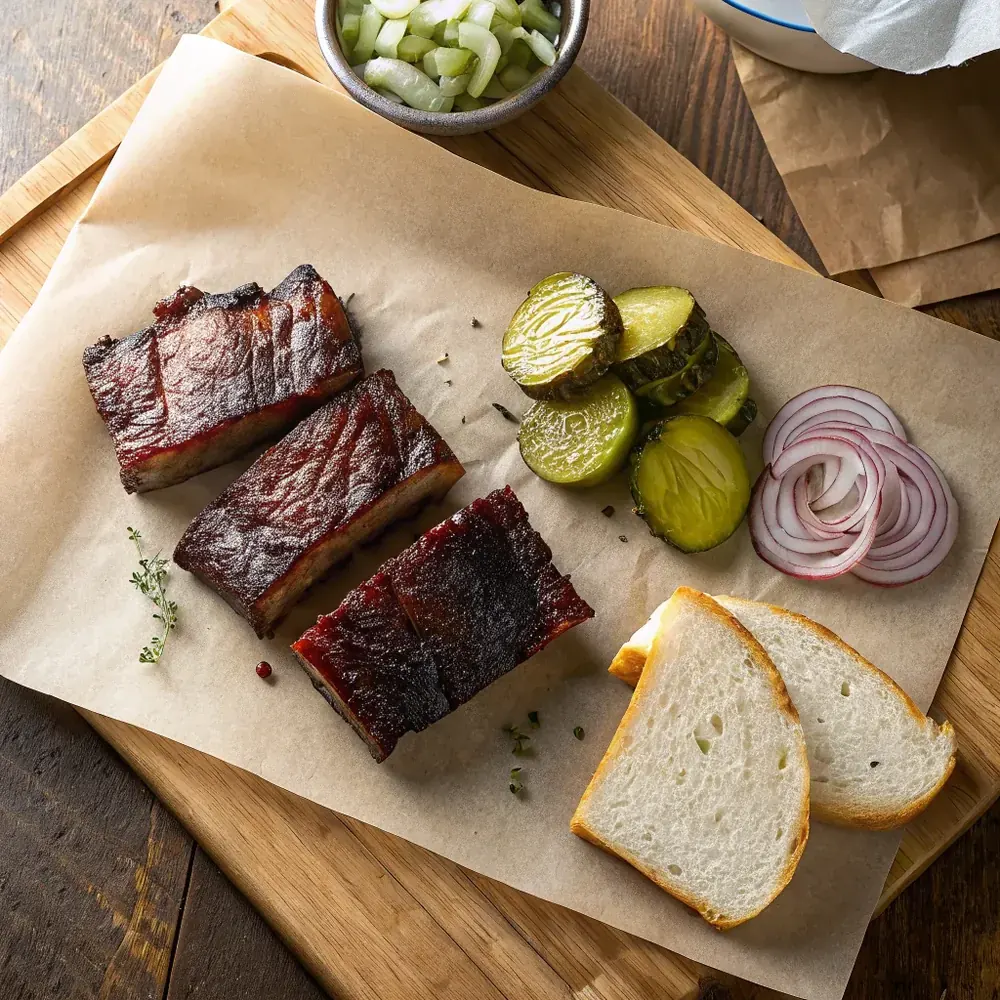
Serve them the Lockhart way: on butcher paper, with white bread, dill pickles, raw onion, and a little sauce on the side, never poured over the top. A scoop of BBQ baked beans and some classic Texas BBQ sides round out the plate. Good beef this rich does not need much company, just a few sharp, cool things to cut the richness.
Short Ribs vs Brisket: Which Should You Smoke?
People ask me all the time whether short ribs or brisket is the better cook, and my honest answer is that short ribs are the smarter place to start. They deliver that same deep, beefy, melt-in-your-mouth payoff as brisket, but in a 6 to 8 hour window instead of 12 to 16, and on a smaller, cheaper piece of meat. If a long cook intimidates you, a rack of short ribs is the gentlest on-ramp into Texas beef.
Brisket is the bigger commitment and the bigger trophy. It has a lean flat and a fatty point that cook at different rates, it takes most of a day, and it punishes mistakes more harshly. Short ribs are more uniform and more forgiving; the heavy marbling gives you a wider window before they dry out. Once you can nail short ribs, my full Texas BBQ brisket recipe will feel a lot less scary.
And do not forget the other beef ribs in this family. Beef back ribs are the leaner, faster, weeknight-friendly cousin, and I cook those in my beef back ribs guide. For the giant three-bone dino plate rack, the restaurant showpiece, see my smoked beef ribs recipe. Between back ribs, short ribs, dino plate ribs, and brisket, you have a complete ladder of Texas beef. The whole philosophy ties together in my Ultimate Texas BBQ Guide.
Make-Ahead, Storage, and Reheating
Short ribs hold and reheat better than almost any other smoked beef, which makes them great for entertaining. If you need to cook ahead, smoke them fully, rest them, then refrigerate the whole rack wrapped tightly. They keep well for 3 to 4 days. The bark softens in the fridge, but the flavor actually deepens overnight, the same way a pot of chili does.
To reheat without drying them out, wrap the ribs in foil with a splash of beef broth and warm them in a low 275F oven until they are hot through, usually 30 to 45 minutes from cold. Avoid the microwave, which heats unevenly and toughens the edges. If you want to revive the bark, unwrap for the last 10 minutes. They will not be quite as crisp as fresh off the pit, but they will be very, very good.
For longer storage, slice the meat off the bone, portion it, and freeze it in vacuum-sealed bags for up to 3 months. Thaw overnight in the fridge and reheat gently in broth. Leftover short rib meat is fantastic chopped into tacos, piled on a sandwich, or stirred into beans. Nothing about this cook has to go to waste, which is one more reason short ribs earn their spot in my regular rotation. Texas purists serve these naked, but a squeeze bottle of Texas BBQ sauce on the side never hurts at my table.
Smoked Beef Short Ribs Recipe
Ingredients
- 3 to 4 pounds English-cut chuck short ribs (thick, individual bones), or a 4 to 5 pound beef plate short rib slab
- 3 tablespoons coarse kosher salt
- 3 tablespoons 16-mesh coarse ground black pepper
- 1 tablespoon granulated garlic (optional)
- 2 teaspoons yellow mustard or hot sauce, as a binder (optional)
- Post oak splits or chunks, enough for a 7 to 8 hour smoke
- 1 cup beef broth or water, in a spray bottle (optional spritz)
- Pink butcher paper, if you choose to wrap
Instructions
- Choose the right ribs. Ask the butcher for thick English-cut chuck short ribs, the meaty individual bones most stores carry, or for a beef plate short rib slab. You want at least an inch of meat sitting on top of the bone. Avoid thin flanken-cut ribs, which are sliced across the bones for braising, not smoking. For a whole three-bone dino plate rack, see my smoked beef ribs recipe instead.
- Trim lightly. Peel the tough silver skin and the papery membrane off the bone side so smoke and seasoning can reach the meat. Leave the fat cap on top mostly intact, just knock down any thick hard knobs. Short ribs need their fat, so trim with a light hand. Square off any loose, ragged edges that would dry out.
- Season with salt and pepper. If you like, smear a thin coat of yellow mustard or hot sauce as a binder; it adds no flavor and just helps the rub stick. Mix the kosher salt, coarse black pepper, and optional granulated garlic, then season every side generously and evenly. The slab is thick, so do not be shy. Let the seasoned ribs sit while the smoker comes up to temperature.
- Fire the smoker to 275F. Set your smoker for a steady 275F and get a clean post oak fire going, thin blue smoke rather than thick white. A stable pit matters more than any technique here. Put a water pan in if your smoker runs dry, and let the temperature settle before the meat goes on.
- Smoke the ribs bone side down. Lay the ribs bone side down, meat and fat cap up, with the thickest end toward your firebox. Close the lid and leave them alone for the first 3 hours. Resist the urge to peek, because every lid lift costs you heat and time. The bark sets during these early hours.
- Spritz and hold steady. After the first 3 hours, if the surface looks dry you can lightly spritz with beef broth or water every 45 minutes or so. This is optional and mostly cosmetic. Keep the pit at 275F. The ribs will push through a stall somewhere around 165 to 175F internal, just like a brisket does.
- Wrap only if you want to (optional). Texas plate ribs are often run completely unwrapped for the deepest bark. If your bark is set and dark by the stall and you want to speed the finish, wrap snugly in pink butcher paper around 170F internal. Wrapping trims maybe an hour off and softens the bark slightly. Either path is legitimate.
- Cook to probe tender, around 203F. Start checking at hour 6. The ribs are done when a probe or skewer slides into the meat between the bones like it is going into warm butter, usually around 203F internal. The number is a guide; the feel is the truth. Total time is generally 6 to 8 hours at 275F depending on thickness.
- Rest, then slice and serve. Rest the ribs loosely tented or wrapped for at least 1 hour, ideally in a dry cooler lined with towels. Then slice between the bones into individual ribs, or carve the meat off the bone into thick slabs. Serve on butcher paper with white bread, pickles, raw onion, and a little sauce on the side.
Frequently Asked Questions
What is the difference between beef short ribs and beef back ribs?
Short ribs come from the chuck or plate and carry a thick slab of meat on top of a short, stubby bone, so they cook long and finish like a brisket. Beef back ribs are trimmed from behind the ribeye, with the meat mostly between the bones, so they are flatter, leaner, and cook faster. This recipe is for short ribs. Beef back ribs are a different cut that cooks faster, so the long timing here would dry them out. And the giant three-bone dino plate rack is its own showpiece, covered in my smoked beef ribs recipe.
How long does it take to smoke beef short ribs at 275F?
Plan on about 6 to 8 hours at 275F for a thick three-bone plate rack, though the exact time depends on the thickness of the meat. Start checking for doneness around hour 6. Short ribs are done by feel, not the clock, so two same-sized racks can finish an hour apart. Pull them when a probe slides in with no resistance, usually around 203F internal.
What internal temperature should smoked beef short ribs reach?
Aim for roughly 203F internal, the same target as brisket, because short ribs are full of collagen and fat that need a long, hot finish to render. But treat 203F as a guide, not a rule. The real test is probe tenderness: slide a skewer into the meat between the bones, and when it goes in like soft butter in several spots, they are done. If it drags, give them more time.
Do I need to wrap beef short ribs?
No. Texas plate ribs are traditionally cooked completely unwrapped for the deepest bark and fullest smoke flavor, and that is how I prefer them. Wrapping in pink butcher paper around 170F internal is optional and mostly a way to push through the stall and finish faster if you are short on time. Wrap for the clock, not for quality. If you have all afternoon, leave them naked.
What is the best wood for smoking beef short ribs?
Post oak is the Central Texas standard and my first choice for beef short ribs. It gives clean, mellow smoke that complements the beef and burns at a steady temperature. Oak, pecan, and a light touch of hickory also work well. Avoid mesquite on a long cook, because it turns bitter and acrid past a few hours. My free BBQ wood pairing tool shows the full breakdown for short ribs.
Why are my smoked short ribs tough?
Almost always because they were pulled too early. Short ribs are loaded with connective tissue that only melts into tenderness when the meat reaches probe-tender doneness around 203F. If they feel rubbery or the probe drags, they are not done yet, even if the clock says they should be. Put them back on for another 30 to 45 minutes and check again. Undercooking, not overcooking, is the usual culprit with this cut.
Can I smoke beef short ribs the day before serving?
Yes, and they hold beautifully. Smoke them fully, rest, then refrigerate the rack wrapped tightly for up to 3 or 4 days. The flavor actually deepens overnight. To reheat, wrap in foil with a splash of beef broth and warm in a 275F oven for 30 to 45 minutes until hot through, unwrapping the last 10 minutes to revive the bark. Avoid the microwave, which toughens the edges.
How many people does a rack of beef short ribs feed?
A three-bone plate rack of about 4 to 5 pounds feeds 3 to 4 people if you carve the meat off the bone, or makes 3 very generous single-rib portions if you slice between the bones and serve them whole. These ribs are rich and heavy, so most people are satisfied with one bone's worth of meat alongside a couple of sides. For a bigger crowd, carve the meat and stretch it across more plates.