Tex-Mex Recipes
Mambo Taxi
The Mambo Taxi only works with dry red sangria floated over a spoon back. Sweet sangria sinks and muddies the blend. No sour mix, one blender, 5 minutes.
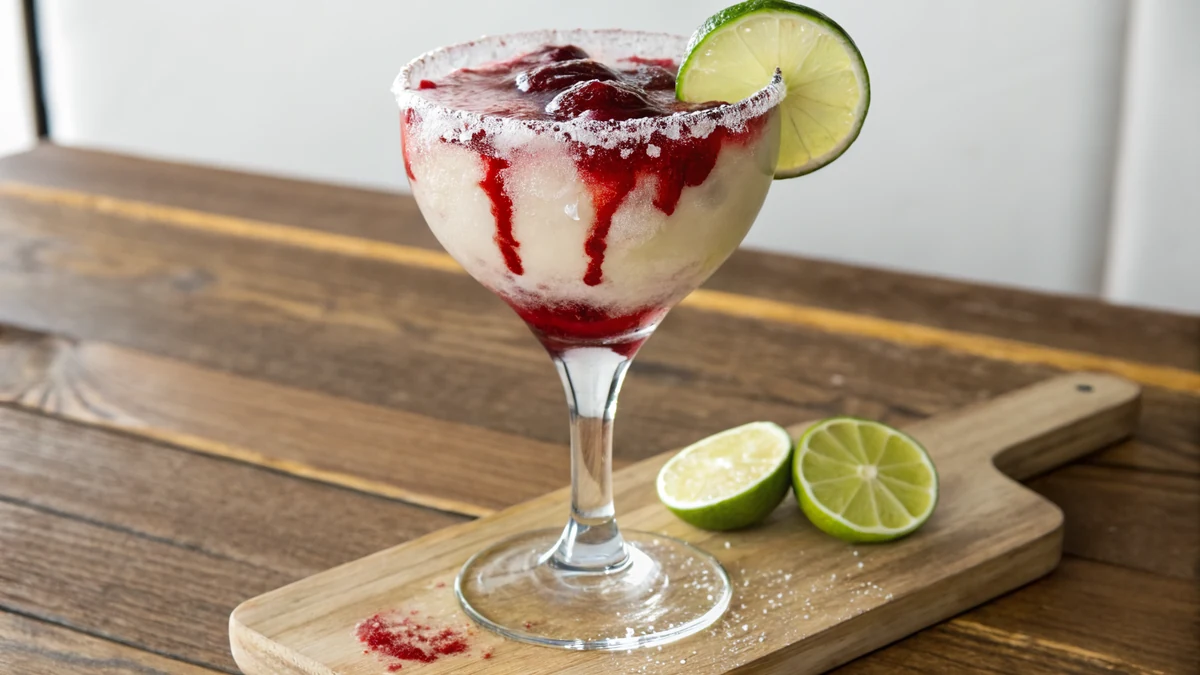
Quick answer: A Mambo Taxi is a frozen margarita wearing a cap of dry red sangria, and you can build the Dallas original at home in 5 minutes: blend 1.5 oz blanco tequila, 1 oz orange liqueur, 1.5 oz fresh lime juice, 0.75 oz agave nectar, and 1.5 cups of ice until thick, pour it into a Tajin-rimmed glass, then float 1.5 oz of chilled dry red sangria over the back of a spoon so it sits on top and bleeds down in red streaks as you drink. No sour mix anywhere near it. The drink was born at Mi Cocina in Dallas, opened in 1991 by Mico Rodriguez, and it became the Highland Park lunch order. It tastes gentle. It is not.
The first time somebody hands you a Mambo Taxi, you assume two drinks collided. Pale frozen margarita underneath, a cap of dark red sangria on top, red streaks crawling down the inside of the glass like weather on a map. Then you take a sip and understand why Dallas has been ordering this thing since 1991. The wine lands first, dry and cool, and the cold tequila-lime slush rolls in right behind it. It is the best-looking cocktail in Texas and one of the easiest to make badly, which is exactly why it gets a full page in my kitchen.
I grew up on rocks margaritas, and I still think a well-shaken rocks marg is the better cocktail on paper. A July afternoon in Texas does not care about paper. The Mambo Taxi is a 5-minute blender job: four ingredients in the jar, a hard blend, a Tajin rim, and one slow pour of chilled dry sangria over the back of a spoon. That last move is the entire trick, and I will teach it properly, along with the Mi Cocina history, the ice math, the pitcher plan for a crowd, and the reasons most copycat versions on the internet come out cloying or watery.
What a Mambo Taxi Actually Is
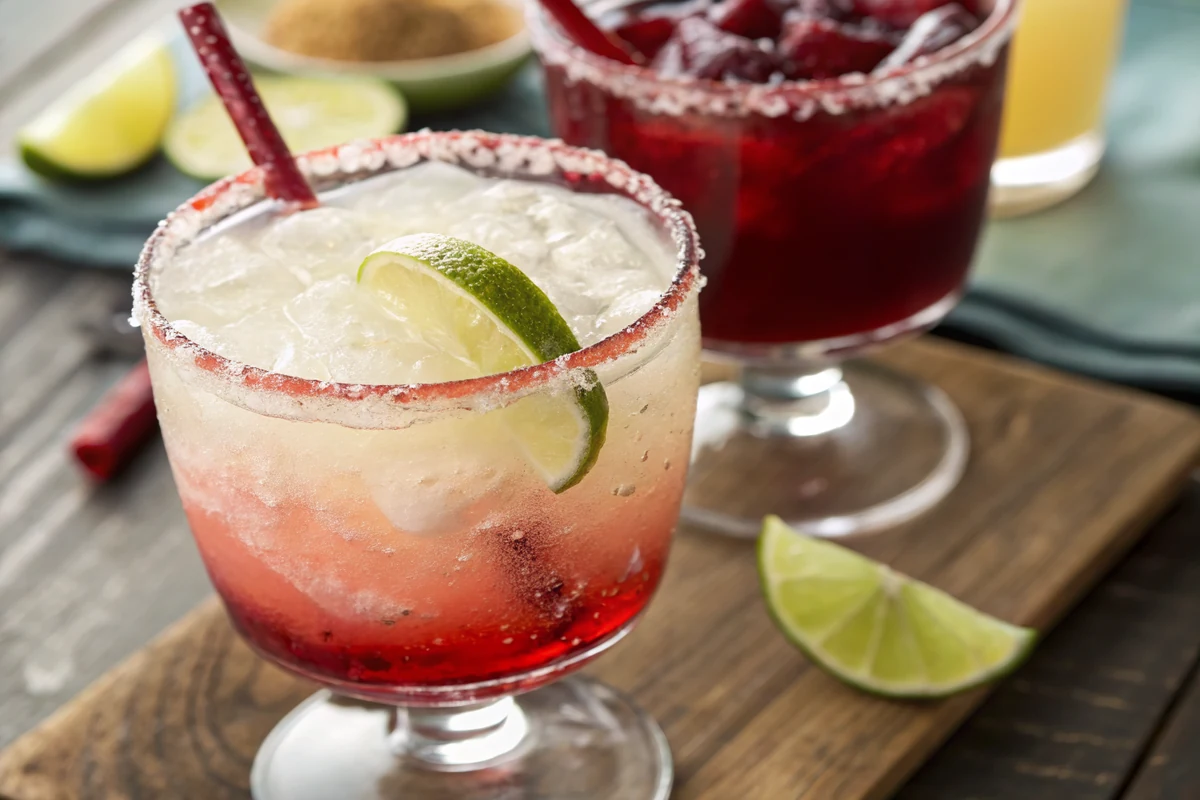
A Mambo Taxi is a frozen margarita with a float of dry red sangria on top, invented at Mi Cocina in Dallas and copied across Texas ever since. The base is a real margarita, blended: 1.5 oz blanco tequila, 1 oz orange liqueur, 1.5 oz fresh lime juice, and 0.75 oz agave nectar, buzzed with 1.5 cups of ice until it is thick enough to mound in the glass. The sangria, 1.5 oz of it, gets poured slowly over the back of a spoon so it sits on the surface as a red cap instead of mixing in. That is the whole drink. No secret syrup, no mix, no shortcuts hiding anywhere.
What separates it from every other frozen margarita is the way it changes as you drink it. The first sip through the straw pulls mostly sangria: dry, fruity, wine-cool. The next few pull the streaks, where the wine has bled down and turned the slush a bruised pink. By the bottom third you are drinking straight frozen margarita, bright and limey. Nobody stirs a Mambo Taxi. The drink is a slow gradient from wine to tequila, and the gradient is the point. Stir it and you own a purple margarita that tastes vaguely of sangria and entirely of regret.
The name promises trouble and the drink delivers it politely. A Mambo Taxi drinks like a fruit slush, all cold and soft edges, while carrying 2.5 oz of liquor plus a wine float. That combination built its reputation: it goes down at lunch speed and lands at cocktail strength. Dallas has spent three decades treating it as both a celebration and a warning label. I will get into the lore at the end of this page, but the short version is that this recipe makes one honest, full-strength Taxi, and one is usually the right number on a school night.
Dallas, 1991: How a Margarita Became an Institution
Mi Cocina opened in Dallas in 1991, founded by Mico Rodriguez, and it did not take long for the place to become the default Tex-Mex spot for the Park Cities crowd. The menu was tight and confident: tortilla soup, brisket tacos, enchiladas, and a frozen margarita crowned with red sangria that nobody had seen before. The Mambo Taxi was on tables almost from the start, and within a few years it was less a menu item than a ritual. Regulars did not walk in and think about what to drink. The drink was decided before they found parking.
The classic order, the one that defined Highland Park lunch culture for a generation, is a Mambo Taxi next to a ramekin of white queso and a basket of warm chips. Ladies who lunch, closings celebrated, birthdays, ordinary Tuesdays. The red-capped margarita became shorthand for a certain kind of Dallas afternoon, the way a cold Shiner is shorthand for a Hill Country porch. Other restaurants cloned it, some openly, and the sangria-float margarita is now a whole Texas genre. But everybody knows where it started, and Mi Cocina still sells them by the tanker load.
Ask about the name and you get lore, not documentation. The story everyone repeats is the one built into the words: the drink mambos, then you taxi. It goes down smooth, you order another, and somewhere in there your car keys become a philosophical question. I have also heard the taxi-yellow theory, that the original base blended out as golden as a cab before the red cap went on. Pick your favorite. Either way the name did half the marketing, because a cocktail that tells you up front you are not driving home has a certain honesty to it.
The Frozen Margarita Base, Done Without Sour Mix
Everything I believe about margaritas starts with the rocks version, and my Texas margarita recipe lays that foundation out in full: the 3-2-1 ratio, 100% agave blanco, lime squeezed to order, a hard 10-second shake. The Mambo Taxi base is that same philosophy pushed through a blender, but frozen drinks play by colder rules. Extreme cold numbs your tongue to both sweetness and acidity, so a rocks build blended straight tastes flat and thin. The frozen build compensates on purpose: more lime, a real dose of agave nectar, and the full ounce of orange liqueur.
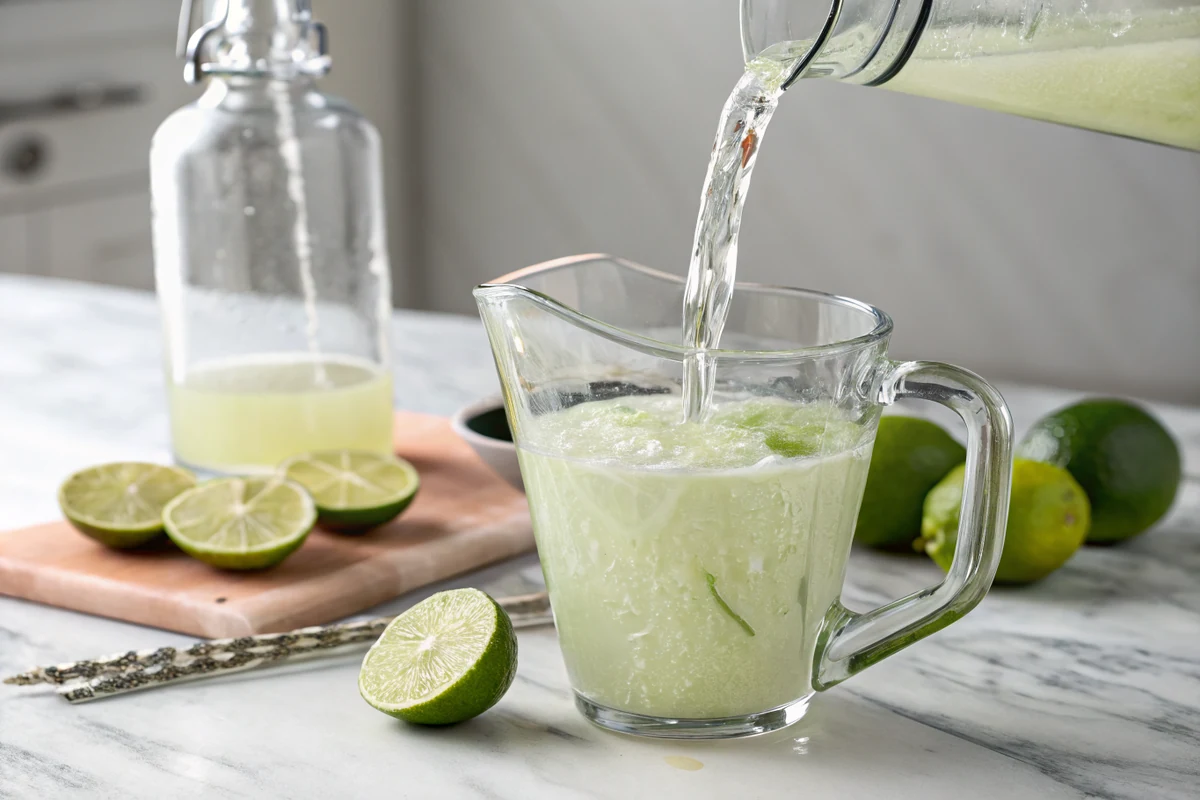
The pinned numbers are 1.5 oz blanco tequila, 1 oz orange liqueur, 1.5 oz fresh lime juice, and 0.75 oz agave nectar. The tequila must say 100% agave on the label; mixto turns harsh and gluey when blended cold. Keep it blanco, because reposado brings oak and vanilla notes that fight the lime instead of backing it. For the orange layer, Cointreau is my default since it stays crisp and defined at freezing temperatures, but a quality triple sec does the job for a third of the price. What you cannot substitute is the fresh lime, which is the next paragraph and also a small sermon.
Notice what is missing: sour mix. Most restaurant frozen margaritas run on a high-fructose lime-flavored syrup that tastes like a melted popsicle, and it is the single biggest reason chain margaritas taste cheap. The Taxi does not need it and never did. Fresh lime juice plus agave nectar covers the sweet-sour axis with actual flavor, and the difference is not subtle: real lime blends into something bright and almost creamy, while sour mix blends into green slushee. One large lime yields the 1.5 oz this drink needs. Squeezing it takes 30 seconds, and it is the biggest quality lever on this page.
Ice Math and Blender Technique
The build puts 4.75 oz of liquid against 1.5 cups of ice, and that ratio is the entire difference between soft-serve and soup. Use hard ice straight from the freezer. Cubes that have been sitting in a bin carry a film of surface water that thins the blend before the blades even start, which is how a Taxi ends up drinkable through a cocktail straw in the bad way. Standard cubes are fine in a strong blender. If your machine is older or cheap, crush the ice first in a bag with a rolling pin so the motor does less fighting.
Load liquids first, ice on top, lid on, then blend on high for 20 to 30 seconds. Listen instead of watching the clock: the sound starts as a rattle and settles into a smooth hum when the ice has fully broken down. The texture test is simple. A straw planted in the middle should stand up for a beat before it leans, and the slush should mound when you spoon it rather than seeking its own level. If you see loose liquid spinning at the bottom of the jar, it needs a few more seconds, not more ice yet.
Corrections are cheap if you make them fast. Too thin: add a small handful of ice and pulse 10 seconds. Blades stalling on a too-thick blend: add half an ounce of lime juice or water to loosen the vortex. And hold the finished drink to the same clock a restaurant does. A frozen margarita starts dying the moment the motor stops, so the glass should already be rimmed and sitting in the freezer before you hit the switch. Blend, pour, float, serve. The whole back half of this drink is a two-minute window, and it shows when you miss it.
The Sangria Float, Ounce by Ounce
The float looks like bartender magic and it is mostly just patience. Thick slush is semi-solid, so a gentle stream of wine spreads across the surface and sits there instead of diving in. Pour fast and the stream carries enough force to drill a tunnel straight to the bottom, where the wine pools and turns your bottom-third margarita muddy. Every failed Mambo Taxi I have ever been served failed right here. The blend was fine, the rim was fine, and then somebody dumped the sangria in like they were watering a plant on the way out the door.

The technique is the spoon-back pour, and it takes one practice run to own. Hold a spoon upside down over the glass, bowl arched up, tip nearly touching the surface of the slush. Pour the sangria in a thin stream onto the back of the spoon and let it sheet off the edges. The spoon absorbs the energy of the pour, so the wine arrives at the surface moving sideways instead of down. Start at the center and spiral slowly outward. The whole 1.5 oz should take about 10 seconds to pour, which will feel absurdly slow the first time. Trust it.
The measurement matters as much as the method. At 1.5 oz, the cap covers the surface, streaks down beautifully, and stays in proportion to the 4.75 oz of margarita underneath. Go to 2.5 oz and the wine overwhelms the top half of the drink; drop to half an ounce and the famous red cap reads as a pink smudge. And the sangria must be cold, straight from the refrigerator. Room-temperature wine melts a crater into the slush on contact and sinks into the hole it just made, taking your presentation and your texture down with it.
Which Sangria: Dry Red, Never Sweet
The margarita underneath is already carrying 0.75 oz of agave nectar and a full ounce of orange liqueur. It has sweetness handled. If the float is one of those soda-sweet bottled sangrias, the finished drink collapses into cough syrup territory, and this is the number one reason homemade Mambo Taxis disappoint people who love the original. The float exists to be the dry counterpoint: wine-forward, fruity around the edges, cool and a little austere against the bright slush below. When in doubt, buy or build the driest red sangria you can find and let the margarita do the sweet talking.
My homemade version takes 5 minutes and beats most bottles: 1 cup of dry red wine (a cheap Spanish garnacha or rioja is perfect, and so is whatever half-drunk bottle is on your counter), 1/4 cup of orange juice, 1 tablespoon of sugar, and a hard squeeze of lime. Stir until the sugar dissolves, chill it, done. That cup floats five Taxis and keeps a week in a sealed jar in the refrigerator, where I would argue it actually improves for the first day or two as the orange settles in. Scale it straight up for a party batch.
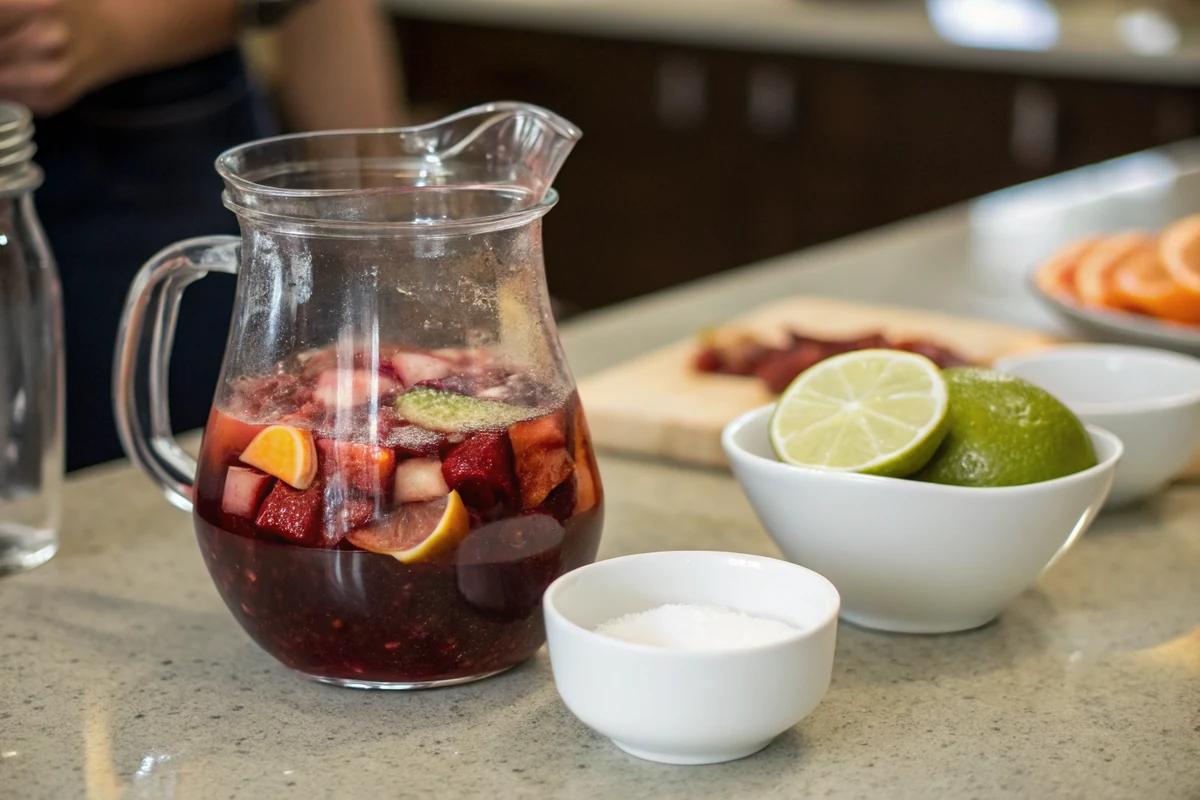
Store-bought works too, with one habit: read the label before it reads you. You want a bottled sangria that lists wine first and does not lean on added sugar or fruit syrup; the dry Spanish imports are generally safer than the domestic party jugs. In a genuine pinch, plain dry red wine with a splash of orange juice stirred in makes a perfectly respectable one-glass float. Leftovers never go to waste in my house: the same sangria pours over ice with soda water for whoever wants something lighter while the blender is running.
The Tajin Rim: Half the Appeal
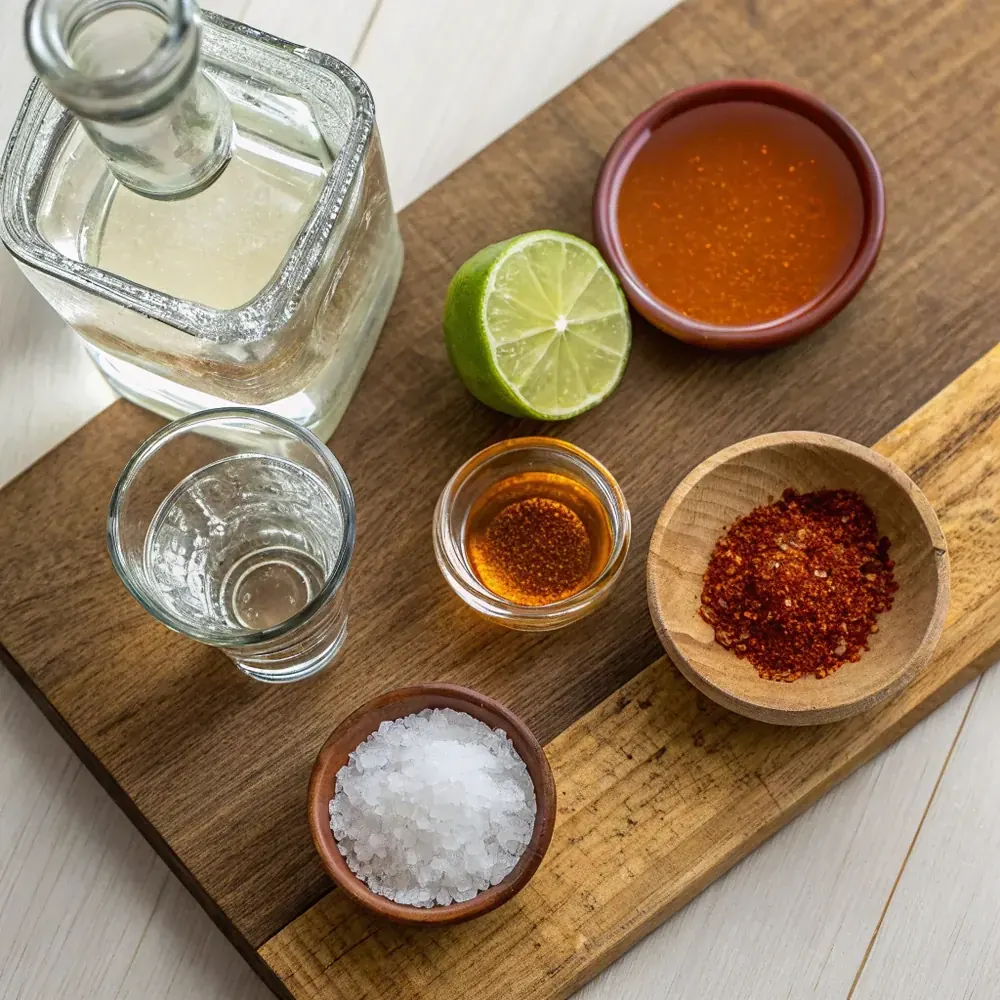
Mi Cocina serves the Mambo Taxi on a Tajin rim, and I will die on this hill: the rim is half the drink. Chile-lime seasoning against a cold, faintly sweet slush does what plain salt does for a rocks margarita, except louder. The chile adds a low hum of heat that makes the next cold sip feel colder, the dried lime echoes the fresh lime in the blend, and the salt sharpens everything it touches. Skip it and the Taxi is still good. Include it and the drink suddenly tastes like the one you remember from the restaurant patio.
Technique first: rim the outside of the glass only. Run a lime wedge around the outer edge of the rim, then hold the glass at a 45-degree angle and roll it through the seasoning on a small plate, rotating as you go. Seasoning on the inside of the rim washes into the drink with the first tilt and turns the top layer salty and muddy. And consider a half rim, the Tex-Mex bar move, which coats only one side of the glass so every drinker can choose the seasoned sip or the clean one. Guests notice that detail every single time.
My house ratio is 1 teaspoon of Tajin cut into 1 tablespoon of kosher salt, which keeps the chile present but polite. Straight Tajin with no added salt is the louder option and it works here, since the seasoning already carries plenty of sodium on its own. What does not work is sugar. A sugar rim belongs on a daiquiri, and on a drink that is already managing agave, orange liqueur, and a wine float, a sweet rim is the straw that breaks it. Salt and chile are the counterweights this cocktail is balanced against. Keep them in the building.
The Strawberry-Jalapeno Taxi and the Lighter Route
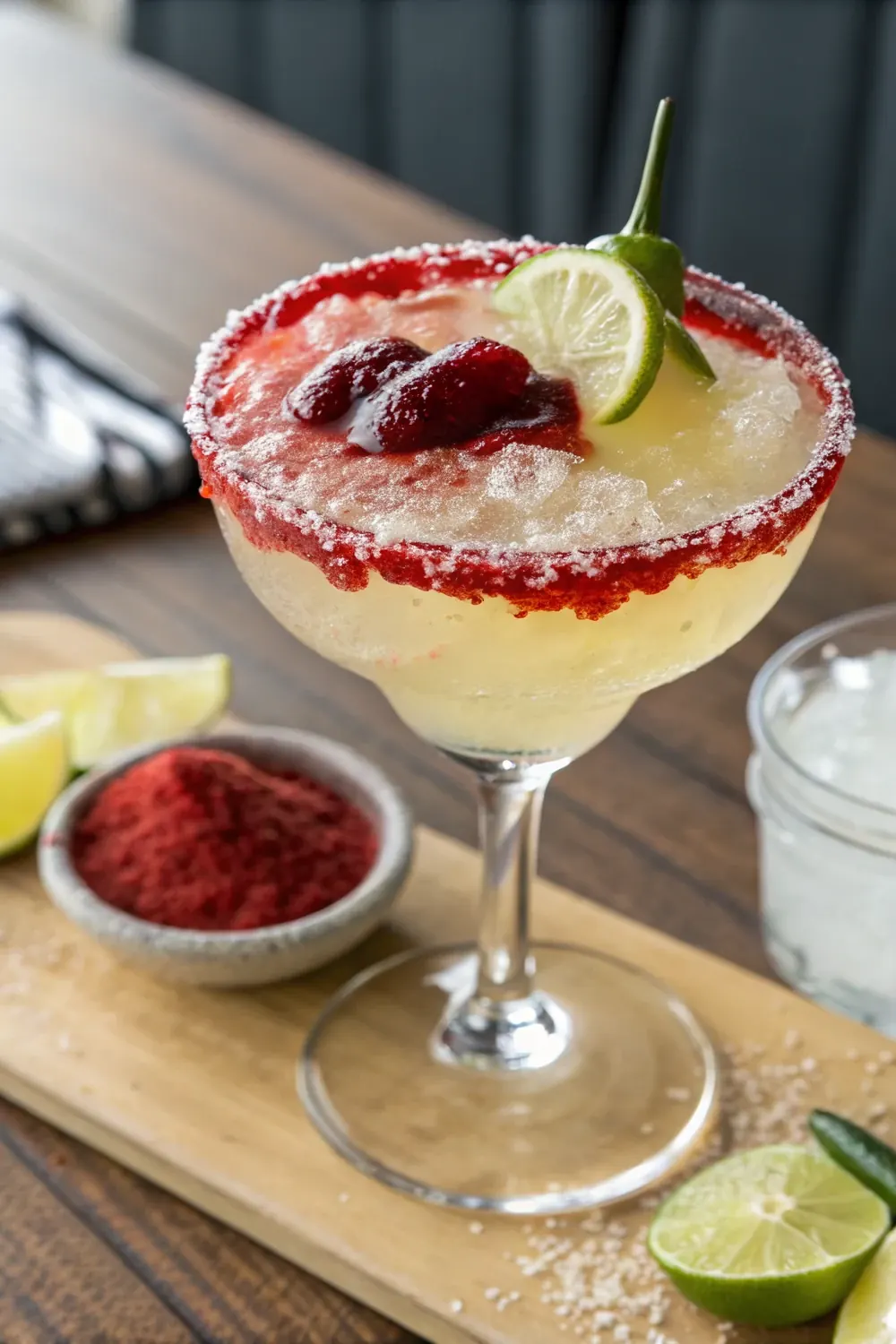
Mi Cocina also runs a strawberry-jalapeno margarita in the same family, topped with the same sangria float, and it converts people who swear they do not do spicy drinks. Building it at home is one step: add 3 hulled ripe strawberries and 2 thin jalapeno slices to the blender jar along with the standard base, then blend as usual. The strawberries turn the slush a rosy coral that looks spectacular under the red cap, and the jalapeno registers as warmth on the finish rather than fire. On looks alone it is the best version of this drink to hand a guest.
Two adjustments keep it balanced. Strawberries bring their own water and sugar, so drop the agave to 0.5 oz and add a small extra handful of ice to hold the texture. For the heat, seeds decide everything: scrape them out of the jalapeno slices for a gentle glow, leave them in if your table likes a real burn, and remember the heat blooms as the drink sits. Blend a few seconds longer than usual so no strawberry chunks survive to clog the straw. The sangria float goes on exactly the same way, spoon-back, slow, 1.5 oz, cold.
I will be honest about the zero-proof question: there is no good virgin Mambo Taxi. Strip out the tequila and the wine and you are holding lime slush with grape juice on it, which is a fine snow cone and a bad cocktail. The honest lighter route keeps the drink wine-forward instead: cut the tequila to 0.75 oz, skip the orange liqueur entirely, bump the agave to a full ounce, and pour a bigger 2.5 oz sangria float. It lands around half the alcohol of the standard build and drinks like a frozen sangria with a tequila accent, which is exactly what a long hot afternoon wants.
Pitcher Math for a Crowd
For eight drinks, the batch base is simple multiplication: 12 oz blanco tequila, 8 oz orange liqueur, 12 oz fresh lime juice (call it 10 to 12 limes), and 6 oz agave nectar. Stir all of that together in a pitcher and park it in the refrigerator up to a few hours ahead; the agave keeps it stable and the cold head start means less ice melt at blend time. Do not add ice to the pitcher, ever. Ice is a per-blend ingredient, and a pitcher of pre-watered margarita base is how party Taxis end up sad and thin by the second round.
Blend to order in rounds of four: 19 oz of base plus 6 cups of ice fills a standard 64 oz blender jar comfortably and takes the same 20 to 30 seconds as a single drink. Rim all eight glasses before anyone arrives and stage them in the freezer, which is the step that makes you look like a professional instead of a host doing arts and crafts mid-party. Blend, pour four, float four, hand them off, repeat. The second batch takes 90 seconds once the assembly line exists, and the blender jar never needs washing between rounds.
Sangria math is friendlier than you would guess: at 1.5 oz per drink, eight Taxis need 12 oz, which is under half of a standard 750 ml bottle. Chill the whole bottle anyway. The float always happens per glass, spoon-back, never in the pitcher and never in the blender; a Mambo Taxi batched red is just a frozen wine margarita, and the whole point of the drink is watching the cap bleed down. Whatever sangria survives the evening pours over ice with soda water the next afternoon, which I consider a feature of the plan rather than a leftover.
What to Serve With a Mambo Taxi
The canonical pairing was settled in Dallas thirty years ago: a Mambo Taxi and a ramekin of white queso, chips still warm from the fryer. My queso blanco dip is built for exactly this job, smooth and pourable with green chile heat that the cold, faintly sweet slush wipes clean between bites. The salt-fat-chile of the queso against the cold-sweet-sour of the drink is one of those pairings that feels engineered, and at Mi Cocina it effectively was. If you make one spread from this page, make that one and stop there.
For a full dinner, the Taxi wants big, saucy Tex-Mex: cheese enchiladas drowning in chili gravy, brisket tacos, fajitas straight off the cast iron with the peppers still hissing. The drink runs cold and slightly sweet, which makes it a better partner for heat and smoke than a dry cocktail would be; it cools chile-laden food the way a mango lassi handles a curry. What it fights with is dessert. After a Taxi, flan or sopapillas push the meal over the sweetness cliff, so if dessert matters to you, plan on coffee or switch the second round to something drier.
If you are building a full Texas drink lineup for a party, my Texas cocktails guide maps the whole field, from ranch water to frozen classics, and it will tell you what to hand the guest who claims not to like margaritas. For the beer-and-spice contingent at the same table, a michelada is the natural counterpart: savory where the Taxi is sweet, built in 3 minutes with no blender required. Between those two, a bag of limes, and a bottle of sangria, you have a drink menu that covers every mood a Texas backyard produces.
Two Is a Commitment: Reputation, Lore, and Mistakes
The standing joke in Dallas is that two Mambo Taxis is a commitment. You will hear people swear the restaurant caps how many you can order, and I pass that along as lore rather than verified policy, but the reputation behind it is earned. The drink stacks 2.5 oz of liquor and a wine float into a package that drinks like a snow cone, which means the math lands well after the straw does. Made from this recipe, one Taxi is roughly two standard drinks wearing a party dress. Respect it the way Dallas learned to, one lunch at a time.
The mistakes that actually ruin the drink are few and specific. Sweet sangria is the big one: a sugary float on top of an agave-sweetened slush turns the whole glass cloying by the third sip, so hold the dry-red line. Stirring the float in is the second, and guests will try; warn them once and let natural consequences teach the rest. Third is the watery blend from soft ice or a timid ratio, which no float can rescue. A proper Taxi is thick enough that the sangria needs a full minute to finish streaking down. If the red hits bottom instantly, the base was soup.
The smaller fouls are quick fixes. Warm sangria melts a crater and sinks, so the bottle lives in the refrigerator until the moment of the pour. A glass filled to the brim leaves the float nowhere to sit, so keep that half inch of headroom. Sour mix has no business within reach of the blender, seasoning inside the rim washes salt into the first sip, and a Taxi built before the guests arrive is a puddle wearing a Tajin rim. Blend last, pour slow, serve immediately. Do those three things and the hardest part of this recipe is stopping at one.
Mambo Taxi Recipe
Ingredients
- 1.5 oz (45 ml) blanco tequila, 100% agave
- 1 oz (30 ml) orange liqueur (Cointreau or a quality triple sec)
- 1.5 oz (45 ml) fresh lime juice (about 1 large lime)
- 0.75 oz (22 ml) agave nectar
- 1.5 cups hard ice, straight from the freezer
- 1.5 oz (45 ml) chilled dry red sangria, homemade or store-bought
- 1 teaspoon Tajin mixed with 1 tablespoon kosher salt, for the rim (optional but the restaurant move)
- Lime wedge, for rimming the glass
- Makes 1 frozen cocktail, about 12 oz
- Equipment:
- Blender, a 12-14 oz glass, and a spoon for the float
Instructions
- Rim and freeze the glass. Stir 1 teaspoon of Tajin into 1 tablespoon of kosher salt on a small plate. Run a lime wedge around the outer edge of a 12 to 14 oz glass, then roll the rim through the mix at a 45-degree angle so the seasoning grips the outside of the glass, not the inside. Park the rimmed glass in the freezer while you blend; a frosty glass buys the slush a few extra minutes of life.
- Load the blender, liquids first. Pour the 1.5 oz blanco tequila, 1 oz orange liqueur, 1.5 oz fresh lime juice, and 0.75 oz agave nectar into the blender jar, then add 1.5 cups of hard ice straight from the freezer. Liquids on the bottom give the blades something to grab, so the ice pulls down into the vortex instead of bouncing on top of it.
- Blend until thick. Blend on high for 20 to 30 seconds, until the sound smooths out and the mixture turns pale, uniform, and thick enough to hold a straw upright for a beat. If the blades stall, pulse a few times to reset the vortex. If it pours like juice, add a small handful of ice and blend 10 more seconds. You are chasing soft-serve texture, not a smoothie.
- Pour and leave headroom. Spoon the frozen margarita into the rimmed glass, stopping about half an inch below the rim. That headroom belongs to the sangria. Mound the slush slightly toward the center; a gently domed surface helps the float sit on top instead of punching straight through to the bottom.
- Float the sangria over the spoon. Hold a spoon face down over the glass with its tip nearly touching the slush, and pour the 1.5 oz of chilled sangria slowly over the back of it. The spoon breaks the fall, so the wine spreads into a red cap and starts bleeding thin streaks down the sides. The whole pour should take about 10 seconds. Rushing it drills a hole through the drink.
- Serve immediately, no stirring. Add a lime wheel and a straw and hand it over the second the float settles. Do not stir. The point of the Taxi is drinking through the layers: wine first, then wine-streaked slush, then pure frozen margarita at the bottom. A frozen drink is on the clock from the moment it leaves the blender, so this is not a cocktail you build ahead.
Frequently Asked Questions
What is in a Mambo Taxi?
A Mambo Taxi is a frozen margarita topped with a float of dry red sangria. The home build: blend 1.5 oz blanco tequila, 1 oz orange liqueur, 1.5 oz fresh lime juice, and 0.75 oz agave nectar with 1.5 cups of ice until thick, pour into a Tajin-rimmed glass, then slowly pour 1.5 oz of chilled dry red sangria over the back of a spoon so it caps the top and bleeds down in streaks. No sour mix, no pre-made margarita mix, and no stirring once the float is on.
What restaurant invented the Mambo Taxi?
Mi Cocina, the Tex-Mex restaurant Mico Rodriguez opened in Dallas in 1991. The sangria-topped frozen margarita became the signature order almost immediately, usually alongside a ramekin of white queso, and it turned into a fixture of Highland Park lunch culture. Plenty of Texas restaurants now serve their own sangria-float margaritas, but the Mambo Taxi name and the format both trace back to Mi Cocina, which still sells them in enormous numbers three decades later.
What sangria should I use for the float?
Dry red sangria, always, because the margarita underneath is already sweetened with agave and orange liqueur. A sweet bottled sangria turns the drink cloying. Homemade takes 5 minutes: stir 1 cup of dry red wine with 1/4 cup of orange juice, 1 tablespoon of sugar, and a squeeze of lime, then chill; that floats five drinks and keeps a week refrigerated. Store-bought works if wine is the first ingredient and added sugar is minimal. Serve it cold from the refrigerator, since warm wine sinks straight through the slush.
Can I make a Mambo Taxi on the rocks instead of frozen?
You can, but you lose half the magic. Shake the same build without the agave increase, strain it over fresh ice, and float the sangria on top; the wine will sit for a moment and then bleed through quickly, since liquid margarita offers far less resistance than thick slush. It tastes good, close to a red wine margarita. The frozen version is canonical for a reason, though: the slush holds the red cap in place and gives you that slow wine-to-tequila gradient as you drink.
How strong is a Mambo Taxi?
Stronger than it tastes, which is the entire legend. The standard build carries 1.5 oz of 80-proof tequila, 1 oz of orange liqueur, and a 1.5 oz wine float, which works out to nearly two standard drinks in a single glass. The cold and the sweetness mute the alcohol on your tongue, so it drinks like a fruit slush and arrives like a cocktail and a half. The Dallas joke is that two is a commitment. Plan rides accordingly and treat the second one as a decision, not a reflex.
Can I make a pitcher of Mambo Taxis for a party?
Batch the base, not the finished drink. For eight servings, stir 12 oz blanco tequila, 8 oz orange liqueur, 12 oz fresh lime juice, and 6 oz agave nectar in a pitcher and refrigerate. Blend in rounds of four with 6 cups of ice per round, about 30 seconds each, into glasses you rimmed and froze ahead. Float each glass individually with 1.5 oz of cold sangria over a spoon; eight drinks need only 12 oz, under half a bottle. Never add ice or sangria to the pitcher itself.
What is the strawberry jalapeno Mambo Taxi?
It is the fruity-spicy sibling Mi Cocina serves with the same sangria float. To make it, add 3 hulled ripe strawberries and 2 thin jalapeno slices to the blender with the standard build, cut the agave to 0.5 oz because the berries bring their own sugar, and add a small extra handful of ice to keep the texture thick. Seed the jalapeno for gentle warmth or leave the seeds in for real heat. Blend until completely smooth, then float the chilled sangria exactly as usual, slowly over the back of a spoon.