Tex-Mex Recipes
Pink Sunset Drink
Chef Mia's pink sunset drink: Tito's vodka, pink lemonade, and cranberry under slow-poured grenadine sunset layers. A 5-minute porch cocktail, no shaker.
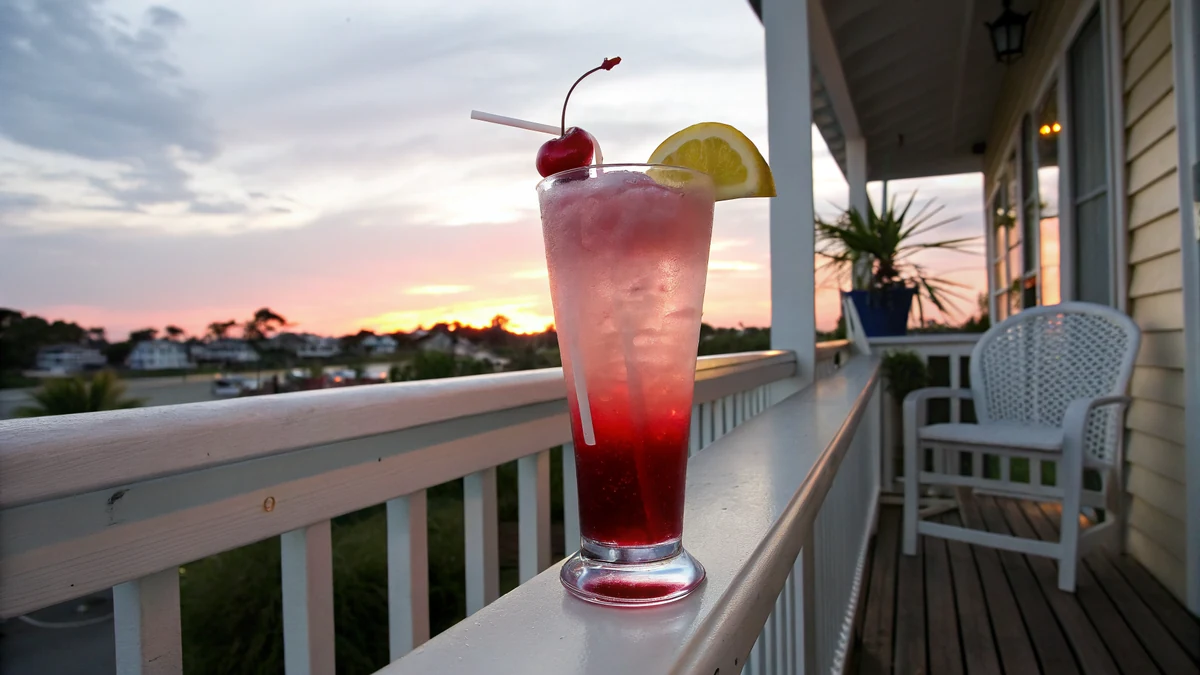
Quick answer: A pink sunset drink is a layered vodka cocktail you build right in a tall glass over ice, no shaker involved: 1.5 ounces of vodka, 3 ounces of pink lemonade, 1 ounce of cranberry juice, then 0.5 ounce of real grenadine poured slowly down the inside of the glass so it sinks straight to the bottom. The grenadine settles into a deep red layer that fades up through coral into pale pink, the same gradient a West Texas sky throws at you around 8:45 on a July evening. Do not stir it. Garnish with a lemon wheel and a cherry and hand it over; the first few sips pull the layers together on their own. Five minutes, one glass, and it is the prettiest easy cocktail on my porch all summer.
Every summer has a house drink, and at my place in Lockhart this is it. The pink sunset drink is what I pour when friends drift onto the porch around dusk and somebody asks for something pretty, cold, and easy, and I do not feel like hauling out the shaker. It is vodka, pink lemonade, and cranberry juice built over ice, with a slow ribbon of grenadine sunk to the bottom so the whole glass shades from deep red up to pale pink. People photograph it before they drink it. Then they drink it fast. Of all the drinks in my Texas cocktails guide, this is the one that gets requested by color instead of by name.
The build takes five minutes and the only technique in it is patience: you pour the grenadine slowly and you do not stir. That is genuinely the entire skill. Below I will give you the exact ounces, the reason the grenadine sinks instead of blending (it is a density trick, and once you understand it you can layer anything), the difference between real pomegranate grenadine and the neon bottle by the maraschino cherries, a scratch pink lemonade that takes five extra minutes, a zero-proof version, and the one adjustment that lets you serve this to a whole party without the gradient dying in a pitcher.
What a Pink Sunset Drink Actually Is
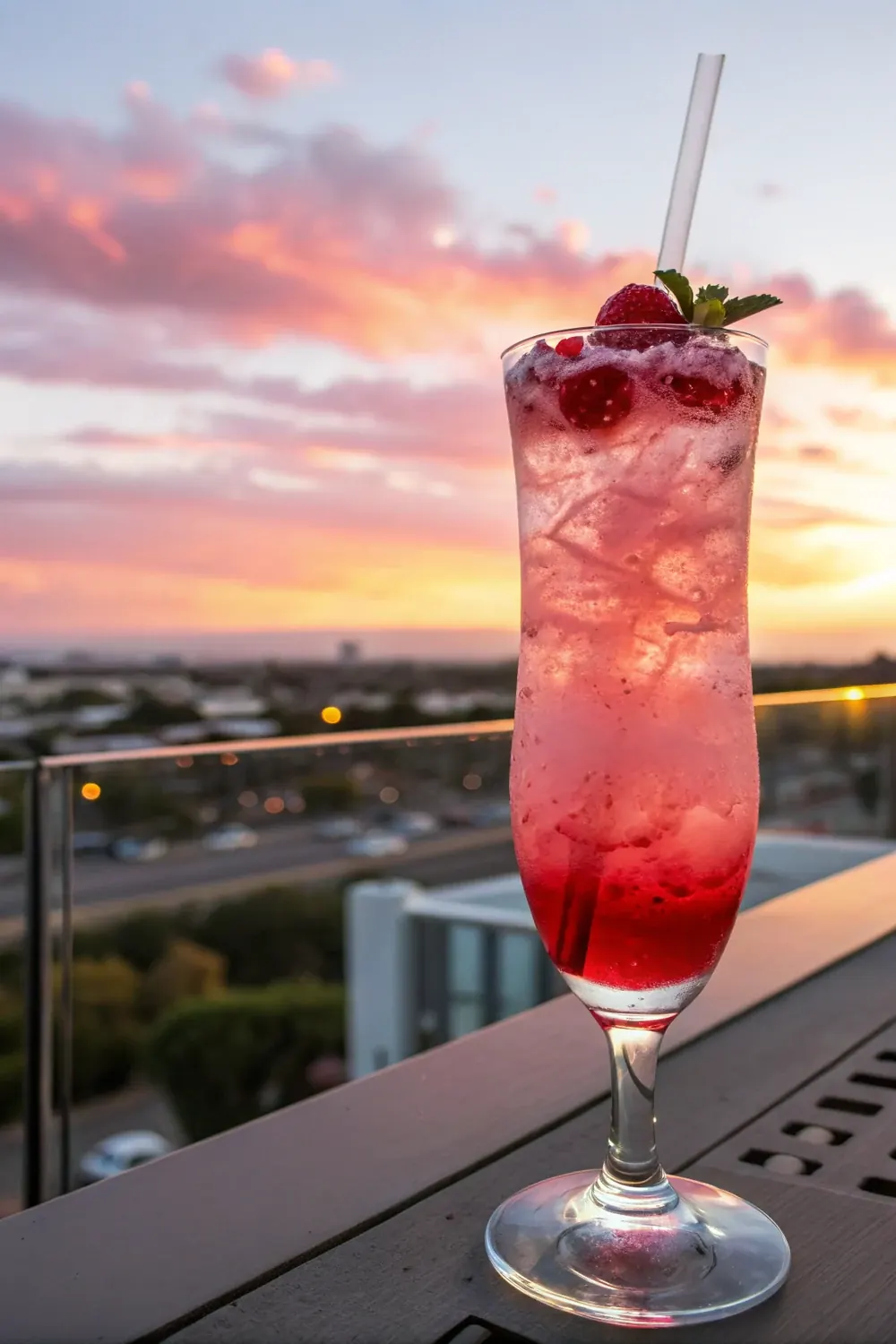
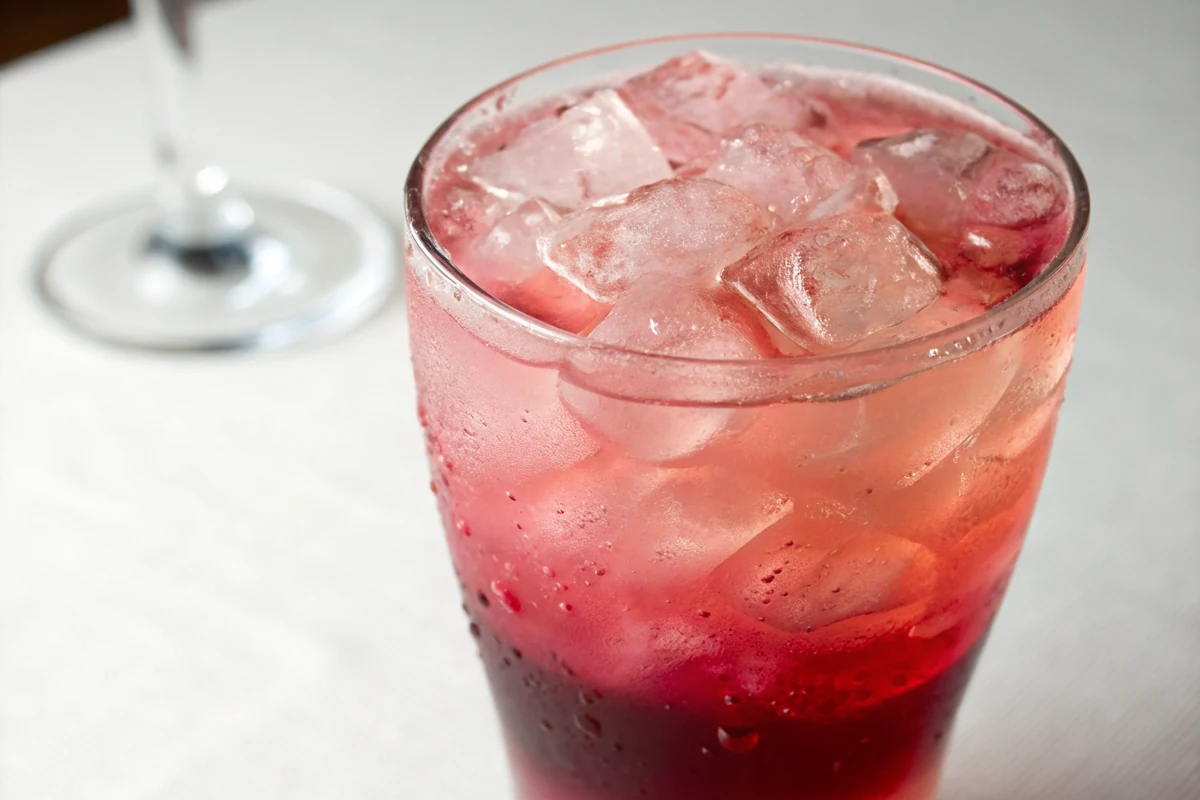
A pink sunset drink is a layered highball: vodka, pink lemonade, and cranberry juice built over ice, with half an ounce of grenadine poured slowly down the side of the glass so it sinks and settles at the bottom. Because the grenadine bleeds gently upward through the ice, you do not get two hard stripes; you get a gradient, deep garnet at the base easing through coral into pale rose at the rim. It is named for exactly what it looks like, and out here that comparison is not a stretch. A July sky over the Hill Country runs the same palette in the same order.
The full build is 6 ounces of liquid: 1.5 ounces of vodka, 3 ounces of pink lemonade, 1 ounce of cranberry juice, 0.5 ounce of grenadine. It goes into a tall 12 to 14 ounce glass packed with ice, gets a lemon wheel and a cherry, and reaches the drinker unstirred. There is no shaker, no strainer, no syrup to cook unless you want to make your own grenadine. On my list of Texas porch drinks, only the margarita and the Jamaican Cowboy ever ask for a shaker. This one asks for a steady hand and fifteen seconds of patience.
I want to be clear about what this drink is for, because it is not a cocktail-nerd cocktail. It is a hospitality drink. It is what you hand a guest who wants something cold and pretty without a tequila conversation, what you pour for a bridal shower or a Friday porch session, what you make two of while the fajitas rest. The flavor is bright and familiar, the look does the entertaining, and nobody has to know the whole thing took less effort than opening a jar of salsa.
Why It Works Without Turning Cloying
Pink drinks carry a reputation, mostly earned, for tasting like melted candy. This one dodges that because the sweetness is outnumbered. Pink lemonade brings real citric acid, and 3 ounces of it sets the drink's whole posture: tart first, sweet second. The cranberry juice adds another sour, faintly bitter voice on top of that. Against those two, the grenadine's half ounce of sugar reads as balance rather than frosting. Measured out, the drink is roughly two parts tart to one part sweet, which is the same territory a good whiskey sour lives in.
The layering does flavor work too, not just photography. Because the grenadine sits at the bottom, the first sips off the top are the driest part of the drink: lemonade, cranberry, and vodka with only a whisper of pomegranate reaching up. As the level drops and the ice shifts, each sip pulls in a little more of the red layer, so the glass sweetens gradually toward the last inch. The drink literally sets with the sun. I did not design that arc on purpose the first time I made it, but I have leaned into it ever since.
Vodka is the right spirit here precisely because it stays out of the way. The drink's personality is citrus, color, and that slow sweet fade, and a neutral spirit lets all three lead. At 1.5 ounces in a 6 ounce build over melting ice, it lands around the strength of a glass of wine, which suits its job. This is a two-hour porch drink, not a race. If you want the same glass to hit harder, make a second one later. The recipe is faster than the excuse you would need for doubling the pour.
The Vodka: An Austin Pour
My bottle for this drink is Tito's, and I will not pretend that is a blind-tasting verdict. It is partly a Texas reflex: the distillery is forty miles up the road in Austin, and pouring an Austin vodka into a drink that imitates a Texas sky feels correct in a way I do not need to defend. But the practical case is real too. Tito's is corn-based, distilled clean, and finishes soft and faintly sweet rather than hot, which matters in a drink with no shaker, no dilution stage, and nothing but cold lemonade standing between the spirit and your palate.
It is the same logic that makes it the pour in my Texas mule, the other vodka drink on this site: when a cocktail is built instead of shaken, the vodka never gets whipped with ice, so any harshness in the bottle walks straight into the glass. A smooth mid-shelf vodka is the whole insurance policy. That said, I will be honest with you about the ceiling here. Three ounces of pink lemonade covers a multitude of sins. Any clean vodka you would drink in a soda works fine; the drink does not reward a forty-dollar bottle.
Hold the line at 1.5 ounces. I have watched people free-pour 2.5 ounces into this drink because it goes down easy, and the result is worse on two fronts. First, the alcohol pushes forward and flattens the citrus. Second, and this surprised me when I tested it, the extra vodka thins the upper layer enough that the grenadine's gradient creeps higher and muddier, because there is less dissolved sugar up top resisting it. A prettier drink and a better-tasting one both live at the standard pour.
Pink Lemonade: The Scratch Batch or the Bottle Test
Here is the quiet secret of pink lemonade: most of it is just lemonade wearing blush. You can make your own in five minutes, and for this drink it is worth it. My batch: 1 cup fresh-squeezed lemon juice (5 to 6 lemons), 3/4 cup sugar dissolved in 1 cup of hot water, 2 cups of cold water, and a 2-tablespoon splash of cranberry juice for the color. That is it. The cranberry splash turns it a natural rose pink and adds a tart echo that ties into the cranberry already in the cocktail. Chill it hard before building.
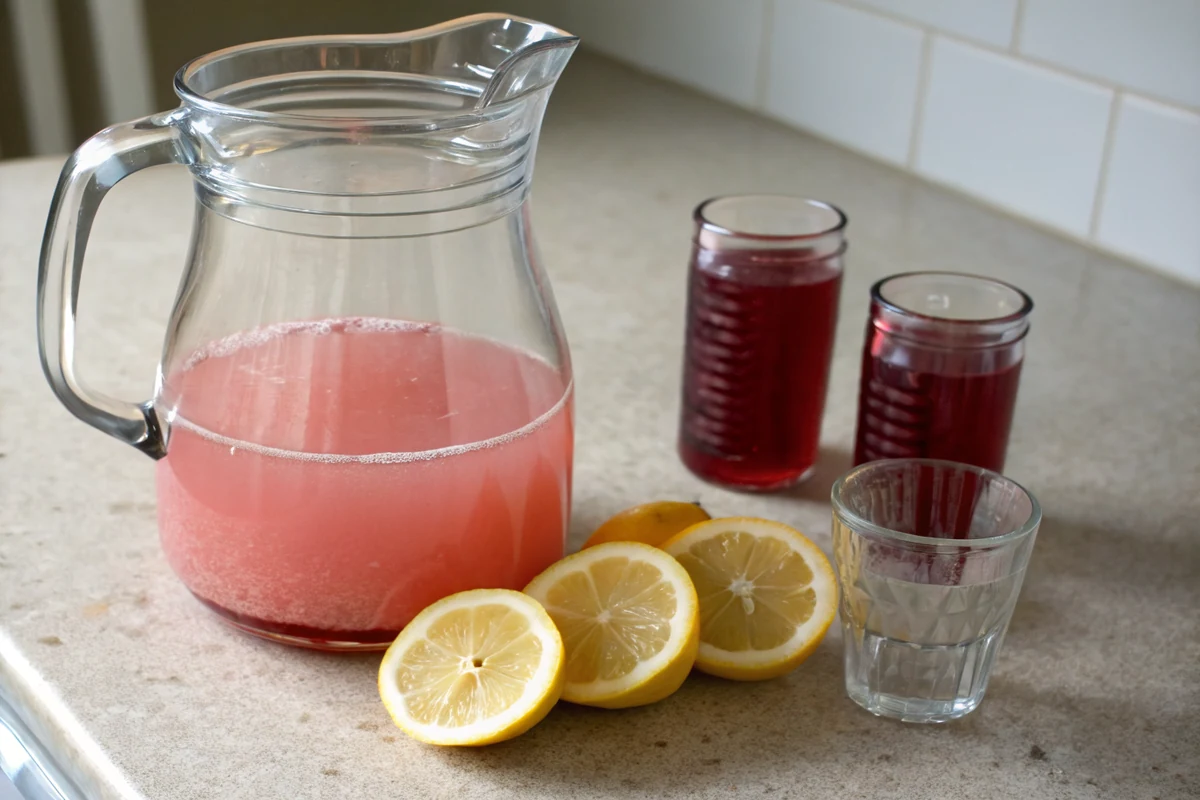
Bottled pink lemonade is a fine shortcut, but the shelf runs from decent to dire, so read the label like you mean it. You want real lemon juice listed high, ideally second or third; if the ingredients open with corn syrup and the color comes entirely from red 40, the drink will taste like a melted popsicle and the gradient will look artificial. The refrigerated cartons near the orange juice are usually better than the shelf-stable bottles near the sodas. Simply-style brands and the fresher store labels both work well here.
Whichever route you take, temperature is not optional. The lemonade is half the drink by volume, and if it goes in at room temperature it starts melting the ice immediately, and meltwater currents are what smear layered drinks into uniform pink soup. I stash the bottle in the coldest part of the fridge the night before, and in deep summer I give it twenty minutes in the freezer before porch hour. Cold, still liquid is the canvas the grenadine needs.
The Cranberry Bridge
The single ounce of cranberry juice is the ingredient people assume is optional, and it is the one I will argue for hardest. Its first job is visual. Grenadine is deep red; pink lemonade is pale pastel. Poured together without help, they meet in an abrupt seam, more traffic light than sunset. The cranberry tints the entire upper body of the drink a warmer mid-pink, so when the grenadine bleeds upward it has somewhere to bleed into. That ounce is the difference between a two-band drink and an actual gradient, the coral middle that makes the sky comparison land.
Its second job is flavor structure. Cranberry is tart and lightly tannic, that dry grip you notice at the sides of your tongue, and it stiffens the drink's spine against the grenadine's sugar. Lemonade alone plus grenadine drifts toward candy by the last third of the glass; lemonade plus cranberry keeps the finish clean the whole way down. I use 100 percent juice blends when I can get them. Ordinary cranberry cocktail also works, since it is what most stores stock, but taste your lemonade first; if both mixers are sweetened generously, trim the grenadine to a scant half ounce.
If you genuinely cannot find cranberry, the nearest substitutes are pomegranate juice, which deepens the color and doubles down on the grenadine's flavor, or a tart cherry juice, which reads a shade darker but keeps the acidity. Skip it entirely and the drink still functions, it just gets simpler and sweeter, a vodka pink lemonade with a red base. Good, not gorgeous. For one ounce of effort, I would not skip the bridge.
Grenadine: The Real Stuff, Not the Neon Bottle
Grenadine has an identity problem. The word comes from grenade, French for pomegranate, and true grenadine is nothing but pomegranate juice and sugar, a tart-sweet, faintly floral red syrup. The squeeze bottle sitting by the maraschino cherries at most grocery stores contains no pomegranate whatsoever: it is high-fructose corn syrup, citric acid, and red dye, and it tastes like sweetened nothing. In a Shirley Temple buried under ginger ale, fine, nobody notices. In this drink, the grenadine is the bottom third of every glass and the last flavor of every sip. It has nowhere to hide.
Real grenadine is easy to find now, and easier to make. Brands built on actual pomegranate juice sit in the cocktail aisle or online for a few dollars more than the neon bottle. Or do what I do: combine 1 cup of pomegranate juice with 1 cup of sugar in a small saucepan, warm and stir until the sugar dissolves, simmer gently for 10 minutes until it coats a spoon, and cool. A squeeze of lemon brightens it; a drop of orange blossom water makes it fancy. It keeps a month in a jar in the fridge and improves every red-syrup drink in your repertoire.
There is a physics bonus to the real stuff, and it matters for this recipe specifically. That homemade syrup is a 1-to-1 sugar solution, dense and heavy, and density is the entire engine of the sunset layers, which gets its own section next. Thin, watery grenadine substitutes, like plain pomegranate juice with no sugar, will not sink; they just swirl in and tint everything. If you swap anything for the grenadine, it must be a true syrup, or the drink loses its signature trick along with its flavor.
The Sunset Pour: Sugar, Density, and Gravity
The gradient is not bartender magic; it is eighth-grade science wearing a nice outfit. Sugar dissolved in water makes the liquid denser, meaning more weight packed into the same space. Grenadine is roughly half sugar, so a given spoonful of it outweighs the same spoonful of lemonade, which is maybe a tenth sugar, and dramatically outweighs vodka, since alcohol is actually lighter than water. Pour the heavy syrup gently into the lighter mixture and gravity does the rest: it slides underneath everything and settles at the bottom of the glass like sediment in a river bend.
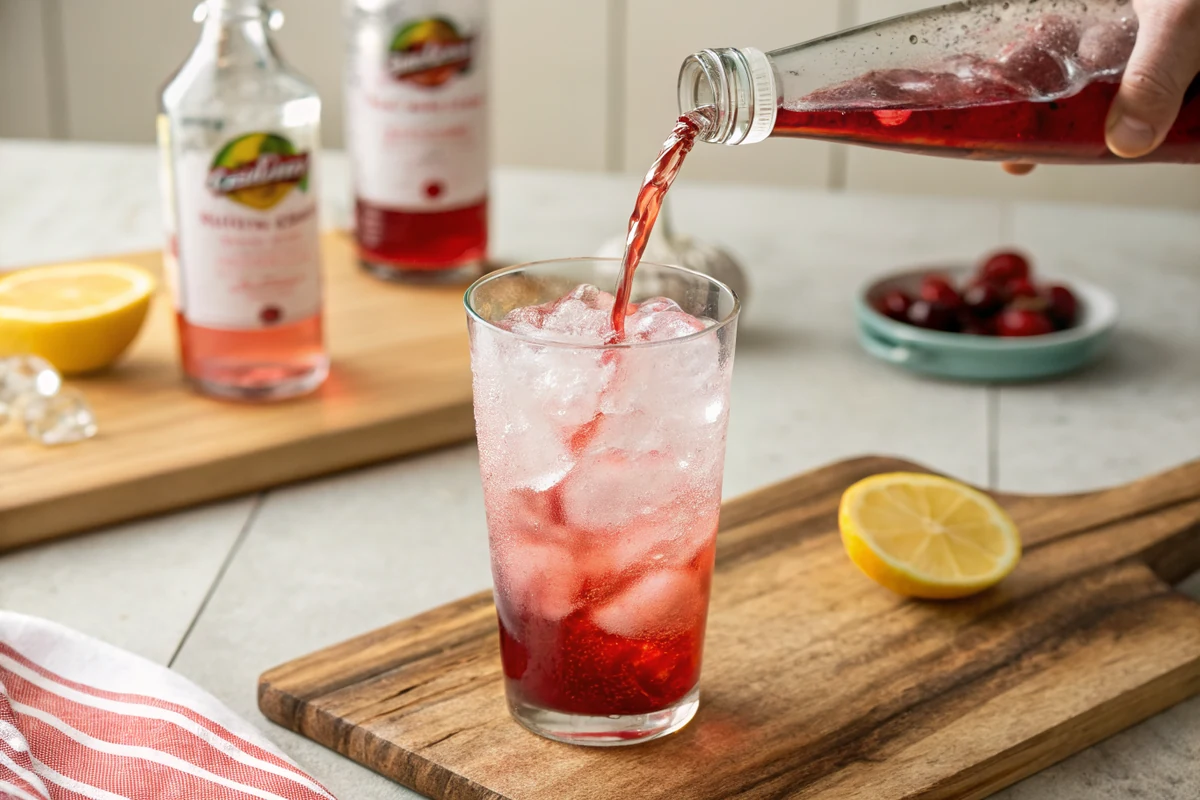
The word gently is carrying that whole paragraph. Density only wins if you do not force the liquids to mix. Pour grenadine fast from a height and it punches into the drink, shatters into swirls, and blends before it can sink, turning everything a uniform pink. Pour it slowly down the inside wall of the glass, 10 to 15 seconds for the half ounce, and it trickles down through the ice with almost no turbulence. The ice is your ally here: every cube it slides across slows it further. Bartenders layer over the back of a spoon; in a packed glass, the ice is the spoon.
Why a gradient instead of two crisp stripes? The boundary between layers is not a wall, it is a truce. Right where the heavy syrup meets the lighter lemonade, a little slow mixing is inevitable, and that thin blended zone is the coral band in the middle. Over a few minutes the zone widens as the layers negotiate, and the shifting ice stirs things imperceptibly, which is exactly why this drink is served the moment it is built. The sunset is a live event. You get about five gorgeous minutes, same as the sky does.
Building It in the Glass, Top to Bottom
Here is the whole build in order, no shaker in sight. Fill a tall 12 to 14 ounce glass to the rim with big, fresh ice cubes. Pour 1.5 ounces of vodka over the ice, then 3 ounces of cold pink lemonade, then 1 ounce of cold cranberry juice. Give that top section one gentle turn with a bar spoon so the vodka does not float in its own stratum; this is the only stir the drink ever receives, and it happens before the grenadine enters the room. Then the slow pour: half an ounce of grenadine down the inside wall, and hands off.
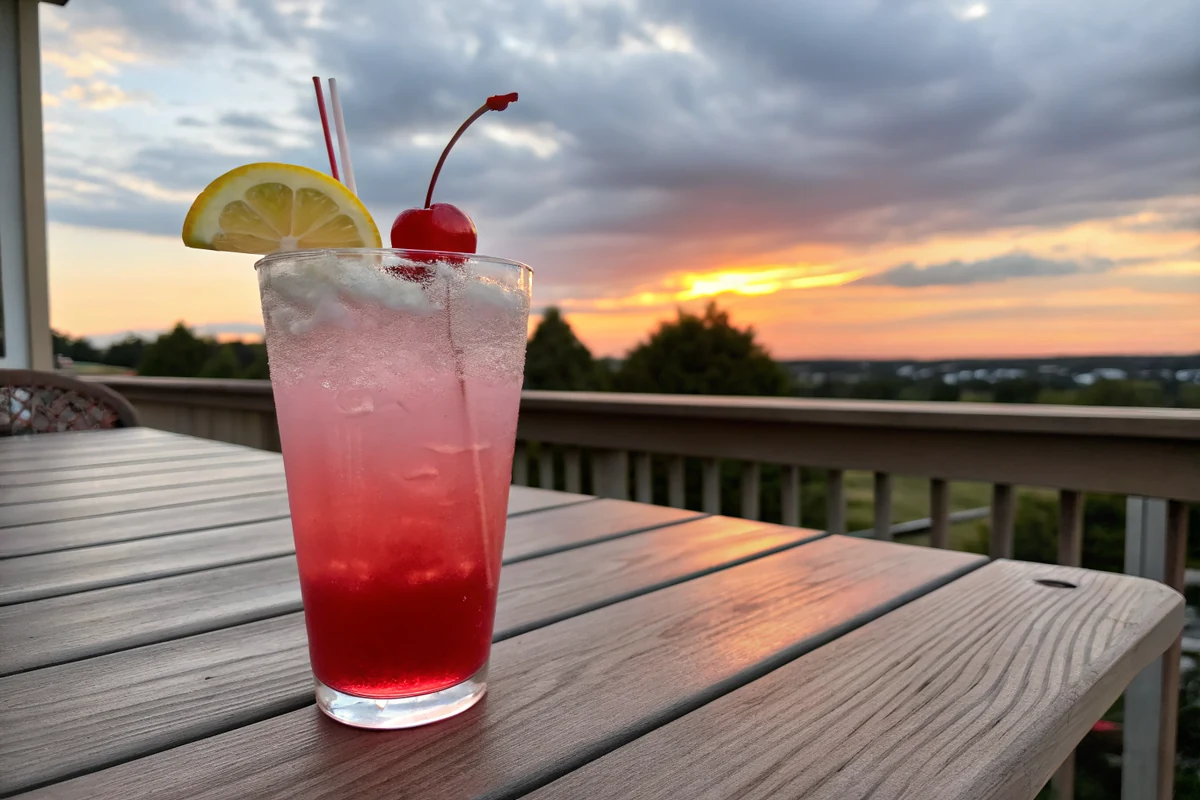
Ice quality is the ingredient nobody lists. You want large cubes straight from the freezer, dry and hard, not the half-melted pebbles that have been sweating in a cooler all afternoon. Wet, small ice does two kinds of damage: it melts fast, diluting the drink before the glass is empty, and its meltwater runs downward in little currents that drag pink into the red zone and fog the boundary. Big fresh cubes melt slowly, hold still, and keep the layers honest. If your freezer makes cloudy crescents, buy a bag of good cubes for company. It costs three dollars and it shows.
Serve it the minute the cherry drops. A straw is a genuine decision here, not an afterthought: sip from the rim and the drink runs tart to sweet as the level falls; sip from a straw and you start at the bottom, in the sweet red band, and work up toward tart. My porch splits about even on which is better. Either way, resist the urge to stir on the guest's behalf. The blending is the drink's second act, and the person holding the glass gets to decide when the curtain goes up.
The Zero-Proof Sunset
The alcohol-free version might get poured more often at my house than the original, because the original's whole appeal, the look, survives the removal of vodka completely untouched. The build: pack the glass with ice, pour in 4 ounces of cold pink lemonade and 1 ounce of cranberry juice, add a 1-ounce splash of soda water for lift, then sink the half ounce of grenadine exactly as before. The soda's gentle sparkle stands in for the vodka's bite, and the layers actually form a touch cleaner, since removing the alcohol makes the upper body slightly denser and more resistant to the syrup's climb.
One technique note for the sparkling version: add the soda water before the grenadine, and pour the grenadine even more slowly than usual. Rising bubbles are tiny stirring rods; they create constant upward traffic in the glass, and a careless syrup pour will get caught in it and scatter. Down the wall, extra slow, and the red layer sets up fine beneath the fizz. If you would rather skip the carbonation question altogether, just use 5 ounces of lemonade, no soda, and accept a slightly sweeter, stiller drink. The kids at my table have formally endorsed both formats.
On a long porch evening I usually have two zero-proof options going: this one for the sunset drama, and a pitcher of Texas iced tea for the people who want something less sweet to sip by the quart. They cover the whole non-drinking crowd between them, and nobody at the table feels like they got the consolation beverage. Same glassware, same lemon wheel, same golden hour. Hospitality is mostly just making sure every hand on the railing has something cold and good in it.
The Pitcher Problem and the Glass-by-Glass Fix
Every party instinct says batch it, and for this drink the instinct is half right. Here is the problem with the other half: grenadine cannot be layered in a pitcher. Pour it in and every ladle, every tilt, every ice shift stirs it through, and within a minute you own a large container of flat, uniform pink. Still tasty, completely unremarkable. The gradient is a per-glass phenomenon; it exists only in an undisturbed column of liquid, and a pitcher is a disturbance with a handle. I learned this in front of twelve guests, so you would not have to.
The fix keeps all the party convenience and all the drama. Batch everything except the grenadine: for 8 drinks, combine 12 ounces of vodka, 24 ounces of pink lemonade, and 8 ounces of cranberry juice in a pitcher and refrigerate it, no ice in the pitcher, so it stays cold without diluting. At serving time, fill each glass with fresh ice, pour the pink base to about an inch below the rim, and then sink half an ounce of grenadine down the wall of each individual glass. The slow pour takes fifteen seconds per drink. Guests wait longer than that for you to find the bottle opener.
Better yet, stop pouring and start hosting: set the pitcher, an ice bucket, a jigger, and the grenadine bottle on the table with a card that says pour pink, then sink the red slowly. The layering trick is so satisfying to execute that guests line up to build their own, and every glass becomes a small performance. I have watched grown men who claim they do not like pink drinks pour three of these just to watch the syrup fall. The pitcher does the work; the grenadine does the show.
Serving It: Glassware, Garnish, Food, and the Mistakes
Glassware first, because this drink is 40 percent visual. It wants a tall, narrow, dead-clear glass: a collins or highball, 12 to 14 ounces. Height stretches the gradient so the color shift reads from across the porch; narrowness keeps the layers deep instead of shallow and smeared. Skip colored glass, skip mason jars with logos, skip anything squat. The garnish stays classic because the drink is already loud: one lemon wheel perched on the rim to flag the citrus, one cherry dropped in to sink partway and echo the red floor. Nothing else. A paper umbrella would be gilding a lily that is already on fire.
Its natural habitat is a porch rail at golden hour, but it earns a place at the table too. The tart lemonade backbone does the same work a squeeze of lime does, so it is genuinely good alongside smoked brisket and ribs, cutting through fat and salt sip by sip. Taco night is the other easy match; it cools a chipotle salsa better than beer does. I pour it at bridal showers, Mother's Day lunches, and any cookout where somebody wants pretty and easy but is not in the mood for a margarita. It is the soft-spoken alternative on a table full of lime and salt.
The mistakes are few and all preventable. Stirring too early is the big one: the drink arrives layered and leaves blended, and the drinker decides when, not the builder. Cheap neon grenadine is second; it tastes like dye and often will not even sink properly. Watery, half-melted ice is third; it dilutes fast and its currents fog the gradient. Warm mixers, same crime. And pouring the grenadine like you are in a hurry undoes everything, so give it the full fifteen seconds. If your crowd runs more minimalist than pink, keep a few Topo Chicos back for a ranch water, and the porch is fully covered.
Pink Sunset Drink Recipe
Ingredients
- 1.5 oz (45 ml) vodka
- 3 oz (90 ml) pink lemonade, well chilled (bottled, or the scratch batch below)
- 1 oz (30 ml) cranberry juice, well chilled
- 0.5 oz (15 ml) grenadine, real pomegranate grenadine
- 1 lemon wheel and 1 maraschino cherry, to garnish
- Ice, large fresh cubes
- Makes 1 cocktail in a 12 to 14 oz tall glass
- Equipment:
- Tall collins or highball glass and a jigger (1 oz = 2 tablespoons); no shaker needed
Instructions
- Chill everything first. Make sure the pink lemonade and cranberry juice are refrigerator-cold before you start. Warm mixers melt the ice on contact, and melting ice creates currents inside the glass that blur the layers before you ever pour the grenadine. Cold liquid over solid ice sits nearly still, which is exactly what a layered drink needs.
- Fill the glass with ice. Fill a tall 12 to 14 ounce glass all the way to the rim with large, fresh-from-the-freezer cubes. A full glass of ice is not generous pouring, it is structure: the cubes slow every liquid you add and give the grenadine a staircase to trickle down instead of a free fall to splash through.
- Pour the vodka. Measure 1.5 ounces of vodka over the ice. This is a standard pour, and I would resist the urge to go bigger; the drink only holds 6 ounces of liquid total, and an extra half ounce of alcohol thins the body enough to soften the layering and sharpen the burn.
- Add the pink lemonade and cranberry. Pour in 3 ounces of pink lemonade, then 1 ounce of cranberry juice. Give this top section one brief, gentle stir with a bar spoon to marry the vodka into the citrus. This is the only stirring the drink ever gets, and it happens before the grenadine exists.
- Sink the grenadine. Hold the jigger with 0.5 ounce of grenadine against the inside wall of the glass and pour slowly, over 10 to 15 seconds, letting it slide down the side and through the ice. It will fall through the lighter liquid and pool at the bottom in a deep red band that fades upward into pink. Do not stir.
- Garnish and serve immediately. Perch a lemon wheel on the rim, drop in a cherry, and hand the drink over while the gradient is sharp. The layers hold for a few minutes and then the first sips blend them naturally, which is part of the fun: the drink starts tart and finishes sweeter, top to bottom.
Frequently Asked Questions
What is in a pink sunset drink?
A pink sunset drink is 1.5 ounces of vodka, 3 ounces of pink lemonade, and 1 ounce of cranberry juice built over ice in a tall glass, finished with 0.5 ounce of real grenadine poured slowly down the side so it sinks to the bottom. The grenadine forms a deep red layer that fades upward into pale pink, like a sunset sky. Garnish with a lemon wheel and a cherry, serve it unstirred, and let the first sips blend the layers naturally.
How do you get the layers in a pink sunset drink?
The layers come from density. Grenadine is roughly half sugar, which makes it much heavier than lemonade and vodka, so if you pour it gently it sinks straight to the bottom of the glass. The technique: fill the glass with ice, add the vodka, lemonade, and cranberry first, then pour the grenadine slowly down the inside wall over 10 to 15 seconds. The ice slows its fall and prevents mixing. Pour fast or stir, and the whole drink turns uniformly pink.
Can I make a pink sunset drink without alcohol?
Yes, and it looks identical. Skip the vodka and use 4 ounces of pink lemonade, 1 ounce of cranberry juice, and a 1-ounce splash of soda water over ice, then sink the 0.5 ounce of grenadine down the side of the glass as usual. Add the soda before the grenadine and pour the syrup extra slowly, because rising bubbles can scatter it. The gradient actually sets up slightly cleaner without alcohol, since the alcohol-free base is a bit denser.
What is grenadine actually made of?
True grenadine is pomegranate syrup: pomegranate juice and sugar, nothing else, with a tart-sweet flavor. The name comes from grenade, the French word for pomegranate. Many cheap grocery-store bottles contain no pomegranate at all, just corn syrup, citric acid, and red dye, and they taste flat in a drink where grenadine is a main flavor. Buy a brand made from real pomegranate juice, or simmer 1 cup of pomegranate juice with 1 cup of sugar for 10 minutes; it keeps a month refrigerated.
Can I batch pink sunset drinks for a party?
Batch the base, never the grenadine. For 8 drinks, combine 12 ounces of vodka, 24 ounces of pink lemonade, and 8 ounces of cranberry juice in a pitcher and keep it cold with no ice in it. At serving time, pour the base over fresh ice in each glass, then sink 0.5 ounce of grenadine down the wall of each individual glass. Grenadine added to the pitcher just stirs through and turns everything uniformly pink; the sunset gradient only forms one glass at a time.
Can I use rum or tequila instead of vodka?
Yes, at the same 1.5 ounce pour. A silver rum pushes the drink toward tropical punch territory and pairs naturally with the grenadine, since that combination is basically the engine of a rum sunrise. Blanco tequila works too and adds a green, peppery edge that leans the drink toward paloma country. Both are good; both are more opinionated than vodka, which stays neutral and lets the citrus, cranberry, and pomegranate carry the flavor. Skip aged spirits, whose barrel notes fight the lemonade.
Why did my layers mix together instead of forming a sunset?
Almost always one of four causes. You poured the grenadine too fast; it needs a slow 10 to 15 second pour down the inside wall of the glass. You stirred after adding it; the only stir happens before the grenadine goes in. Your mixers were warm, which melts ice and creates currents that blend everything. Or your grenadine was not a true syrup; thin substitutes like plain pomegranate juice lack the dissolved sugar that makes grenadine dense enough to sink. Fix those and gravity handles the rest.