Southern Comfort Food
Texas Goulash
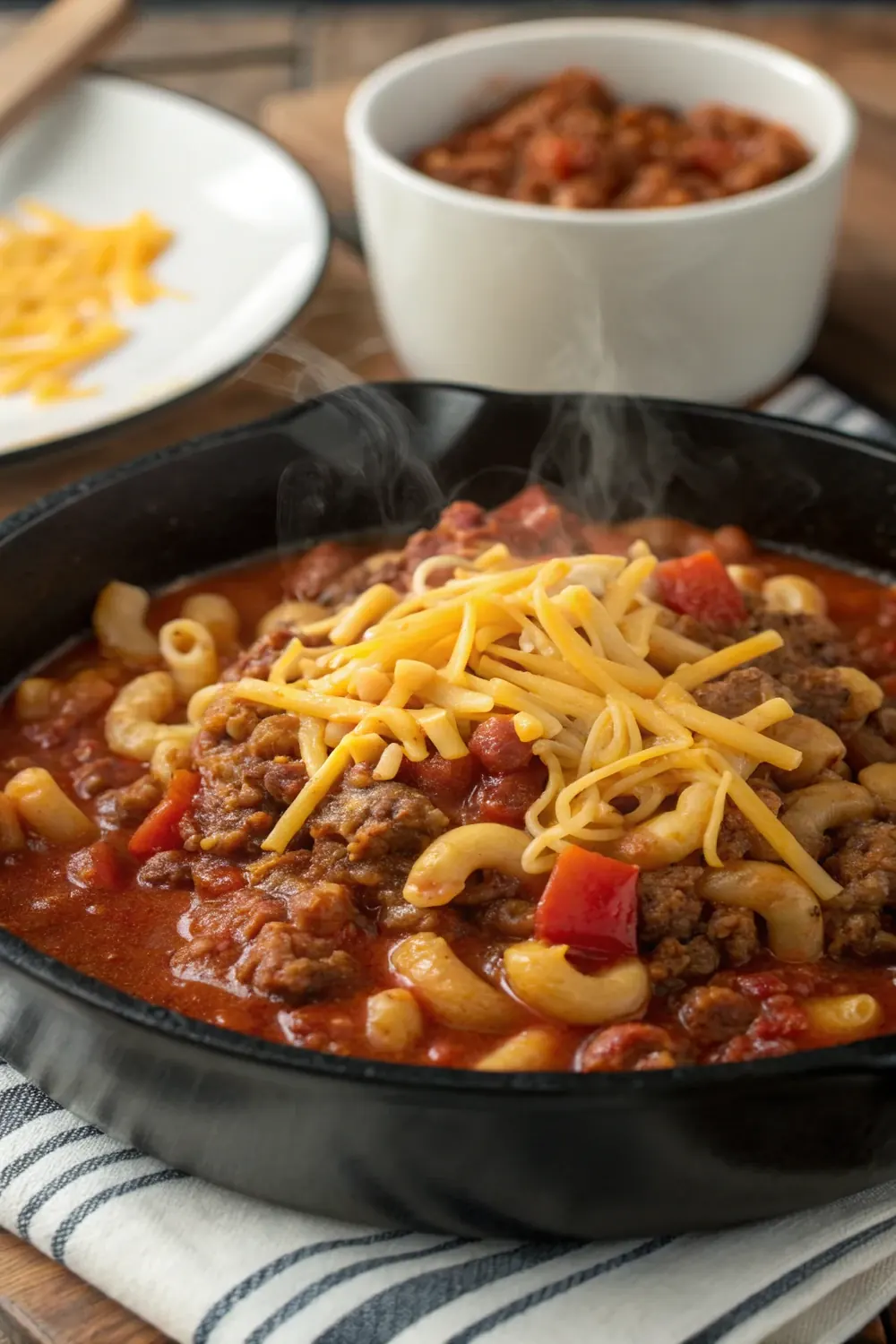
Chef Mia's Texas goulash, ground beef and elbow macaroni simmered in one pot of tomato sauce and finished with cheddar. My exact steps so it never turns mushy.
Quick answer: To make Texas goulash, brown a pound and a half of ground beef in a big pot with diced onion and bell pepper, then stir in garlic, paprika, and Italian seasoning. Add diced tomatoes, tomato sauce, beef broth, Worcestershire, and a couple of bay leaves, and bring it up to a simmer. Stir in the raw elbow macaroni right into the sauce, cover, and cook 12 to 15 minutes until the pasta is tender and most of the liquid is absorbed, stirring now and then so nothing sticks. Pull the bay leaves, fold in shredded cheddar off the heat until it melts, and rest it 5 minutes so the sauce thickens and clings to every noodle. This is American goulash, a stovetop pasta supper, not the Hungarian paprika stew and not the rice-based Texas hash.
Texas goulash is the kind of supper I grew up eating on a Tuesday night, the whole thing made in one big pot, ground beef and elbow macaroni cooked right together in a rich tomato sauce until the noodles drink up all that flavor. It is humble, cheap, and feeds a crowd, and my kids ask for it by name. The thing that makes it goulash and not just pasta with meat sauce is that the macaroni cooks in the sauce instead of getting boiled separately and drained. The starch from the pasta thickens everything and the noodles taste like beef and tomato all the way through.
Let me clear up the confusion right away, because there are three different dishes wearing the goulash name. American goulash, which is what we make in Texas, is this one-pot ground beef and elbow macaroni dish. It is not Texas hash, which is the same idea but built on rice instead of pasta. And it is a world apart from Hungarian goulash, which is a slow-simmered paprika beef stew with no macaroni in sight. I will walk you through my version the way I cook it in my Hill Country kitchen, including the trick that keeps the pasta from turning to mush, so you get a pot of tender, cheesy, saucy comfort every single time.
What Texas Goulash Actually Is
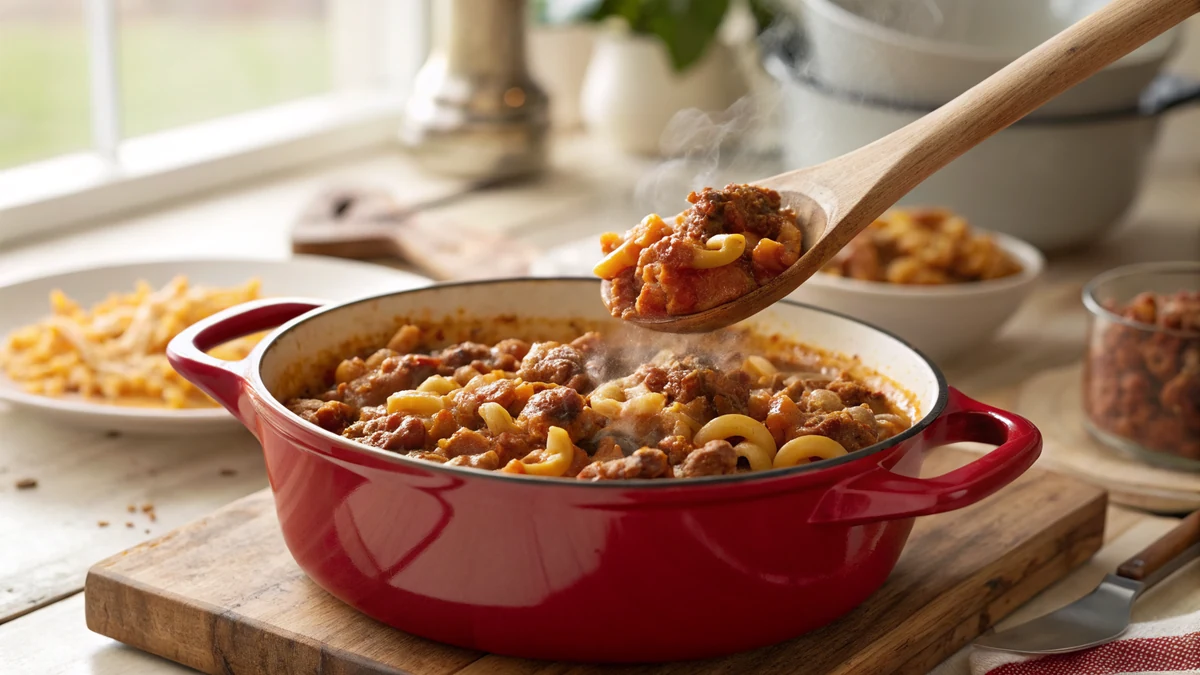
Texas goulash, like American goulash everywhere, is a one-pot supper of ground beef and elbow macaroni simmered together in a seasoned tomato sauce. The defining feature is that the pasta cooks right in the sauce. You brown the beef with onion and bell pepper, build a tomato base with broth and Worcestershire, then pour the raw macaroni straight in and let it cook until tender. The starch from the noodles thickens the sauce, and the noodles soak up all that beefy tomato flavor. It is the definition of cheap, filling comfort food.
What makes it Texan is mostly the generosity and the cheese. Around here we lean on a little extra paprika, a hit of Worcestershire for depth, and a good handful of sharp cheddar folded in at the end to make it rich and a touch creamy. It is the kind of thing that shows up at potlucks, church suppers, and busy weeknights, because it stretches a pound and a half of beef into a pot that feeds six and costs almost nothing. Everybody who grew up in Texas has a version their mama or grandma made.
It belongs squarely in the world of Southern weeknight cooking, the same comfort-food tradition as casseroles and skillet suppers. If you love this style of honest, budget-friendly home cooking, my ultimate Southern comfort food guide is full of dishes built on the same idea, one pot, simple ingredients, big payoff. Goulash is one of those recipes that does not need anything fancy. It needs ground beef, pasta, tomato, and a cook who knows the couple of small tricks that keep it from turning into a sticky, mushy mess.
Texas Goulash vs Texas Hash
This is the mix-up I see most, and it is worth clearing up because the two dishes look almost identical in the pot. Texas goulash uses elbow macaroni cooked in the sauce. Texas hash uses rice instead of pasta. Same browned ground beef, same onion and bell pepper, same tomato base, but the starch is completely different, and that changes the texture and how you cook it. Goulash gives you soft, saucy noodles. Hash gives you tender, separate grains of rice bound in tomato.
The cooking method differs too, because rice and pasta absorb liquid at different rates. Rice needs more liquid and a longer, gentler simmer, while macaroni cooks faster and can go from tender to mushy in a hurry if you walk away. So even though the flavor base is shared, you cannot just swap one for the other without adjusting the liquid and the timing. If rice is what you are after tonight, follow my Texas hash recipe instead, which is dialed in for the grain.
People also confuse American goulash with Hungarian goulash, and those two are barely related. Hungarian goulash, or gulyas, is a slow-cooked beef stew built on a mountain of sweet paprika, with chunks of beef, onions, and sometimes potato, and absolutely no macaroni cooked into it. It is a brothy, deeply spiced stew you eat with bread or over egg noodles served on the side. Our Texas goulash is a quick weeknight pasta dish. Same word, totally different supper, so do not let the name fool you.
Picking Your Ground Beef
I make goulash with 80/20 ground beef, meaning 80 percent lean and 20 percent fat, and that ratio is my sweet spot. The fat carries flavor and keeps the meat from going dry and crumbly in the sauce. Leaner blends like 90/10 work, but the dish tastes a little flat and the beef can turn pebbly. With 80/20 you will render off some grease, which you spoon away, but what stays behind seasons the whole pot. If you only have leaner beef, a tablespoon of olive oil at the start helps make up for it.
Ground chuck is my favorite cut to buy for this, since it is usually right around that 80/20 mark and has a deep, beefy taste. Ground round is leaner and ground sirloin leaner still, both fine if that is what you have, just watch that you do not overcook them into dryness. You can also stretch or swap in ground turkey or ground beef and Italian sausage mixed together, which adds a nice fennel-and-pepper note. Whatever you use, the key is browning it well so it builds real flavor.
Buy a pound and a half for a pot that feeds six with leftovers, which honestly might be the best part, because goulash tastes even better the next day. If you are feeding a bigger crowd, the recipe scales up cleanly. Just keep the ratio of meat to pasta to liquid steady, and use a pot big enough that everything fits with room to stir. Cheaper cuts shine here, so this is not the night to splurge. A solid pack of 80/20 ground chuck is all the goulash asks for.
Building the Flavor Base
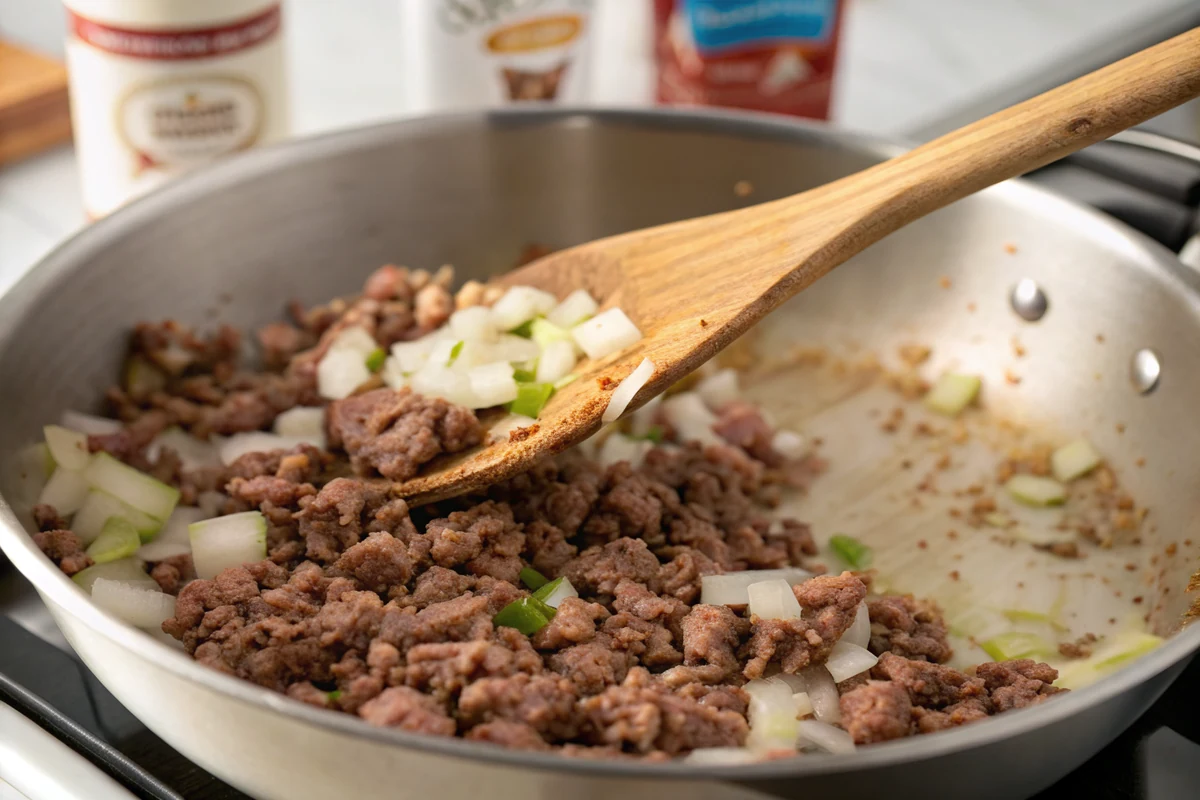
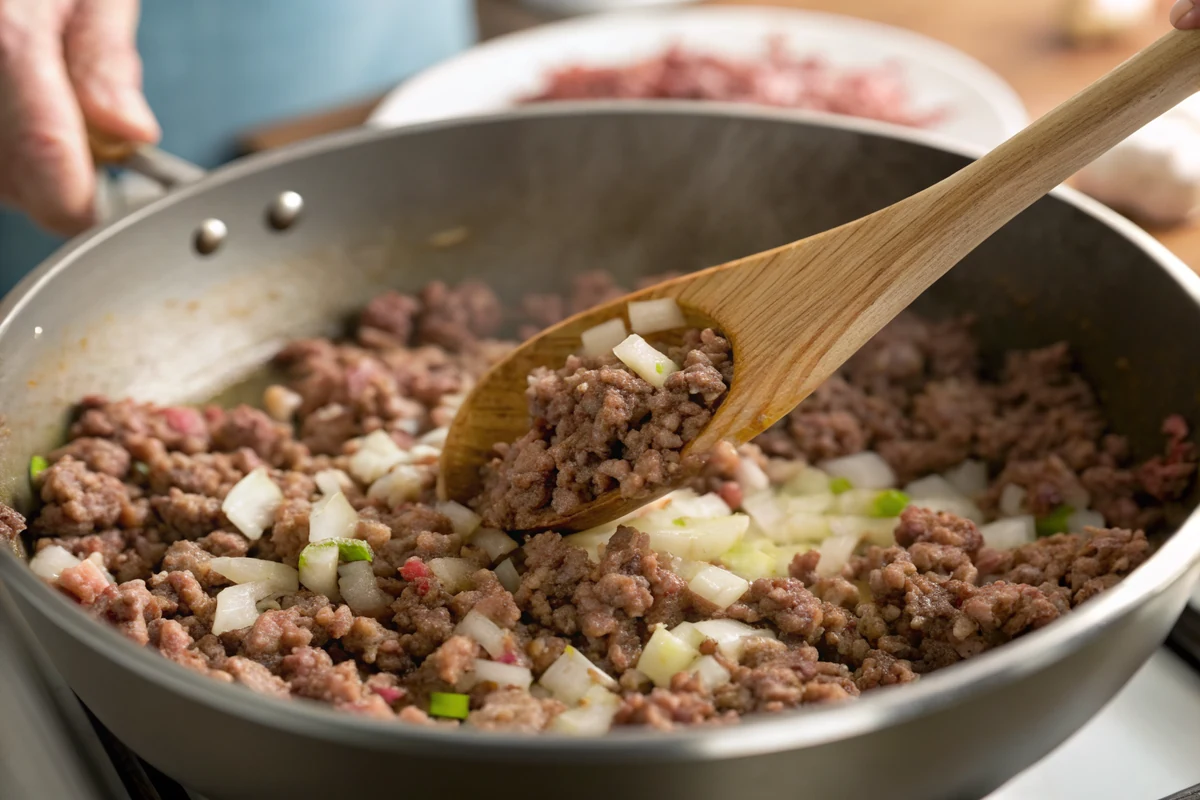
The flavor of good goulash is built in the first few minutes, long before the pasta goes in. I start by browning the beef hard with the diced onion and green bell pepper all together, letting the meat get genuine color and the vegetables soften into the fat. That browning, the dark crusty bits that form on the bottom of the pot, is called fond, and it is loaded with savory flavor. Do not rush this step or crowd the pot, or the beef will steam gray instead of browning, and you will lose that depth.
Once the meat is browned, the garlic and dried spices go in for about a minute. This quick toasting in the hot fat is called blooming, and it makes a real difference, waking up the paprika and Italian seasoning so they taste full and round instead of raw and dusty. Paprika gives goulash its warm color and gentle sweetness, the Italian seasoning brings the herby backbone, and the garlic ties it all together. Keep everything moving so the garlic does not burn, since scorched garlic turns bitter fast.
Then comes the liquid that makes it a sauce: tomato sauce for body, diced tomatoes for texture, beef broth to cook the pasta in, and a good glug of Worcestershire for that deep, savory, almost meaty undertone. The bay leaves steep in as it simmers and add a subtle background note you would miss if they were gone. When you pour the liquid in, scrape the bottom of the pot hard with your spoon to lift all that fond up into the sauce. That scraping step is where a lot of the flavor lives.
Why the Pasta Cooks in the Sauce
The single thing that makes this dish goulash and not just macaroni with meat sauce is that the elbow macaroni cooks directly in the tomato sauce, never boiled separately and drained. This matters for two reasons. First, the noodles absorb the beef and tomato flavor as they cook, so every bite tastes seasoned all the way through instead of like plain pasta with sauce sitting on top. Second, the starch the pasta releases stays in the pot and thickens the sauce naturally, giving you that glossy, clingy texture.
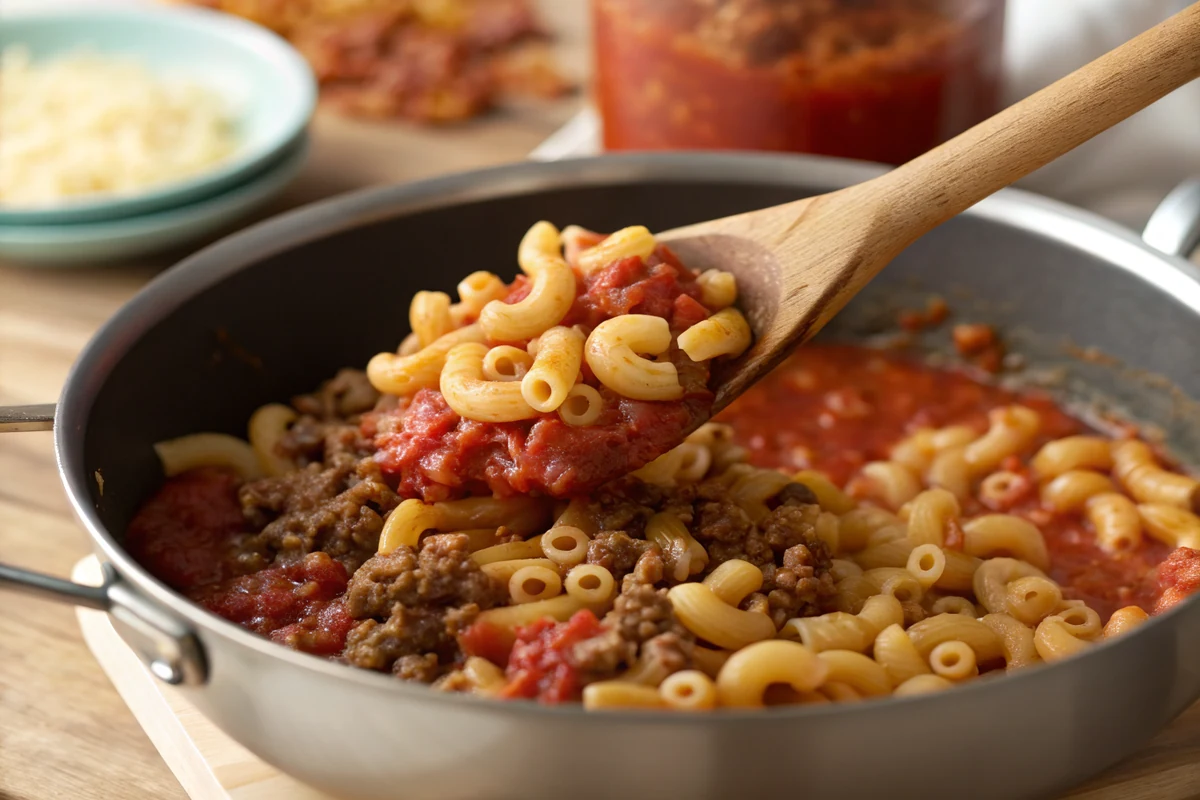
Getting the liquid right is the whole game. You need enough broth and tomato for the macaroni to cook in, since dry pasta drinks up a surprising amount as it softens, but not so much that you end up with soup. My ratio of two cups of dry elbows to the tomato sauce, diced tomatoes, and two cups of broth lands it right. As it simmers covered, the pasta swells and absorbs most of the liquid, leaving a thick sauce. If it tightens up too fast before the noodles are done, just splash in a little more broth.
The catch is that pasta cooked this way will keep drinking liquid even after you turn off the heat, and the starch makes it prone to sticking and overcooking. That is why I stir every few minutes, scraping the bottom, and why I pull it the moment the noodles are tender. Cook it in the sauce and you get all that flavor and body. Walk away from it and you get a scorched, gluey bottom. The payoff is worth the few minutes of attention the pot needs.
Keeping It From Turning Mushy
The number one complaint people have with goulash is mushy pasta, and it is completely avoidable once you know what causes it. The biggest culprit is overcooking. Elbow macaroni goes from tender to falling apart fast, so I start tasting a noodle a couple of minutes before the timer is up and pull the pot the instant the pasta is just tender with a tiny bit of bite left. Remember it keeps cooking in the residual heat, so slightly underdone in the pot is exactly right.
The second cause is too much liquid that the pasta has to sit and soak in. If your sauce is watery, the noodles keep absorbing long after they are cooked and they bloat into mush. Get the liquid ratio right, and if it still looks loose when the pasta is tender, simmer it uncovered for a couple minutes to drive off the extra water rather than letting the noodles drink it all. A thick sauce that clings is the target, not a brothy pot the macaroni is swimming in.
If you are making goulash ahead or expecting leftovers, undercook the pasta slightly on purpose, since it will continue to soften as it sits and reheats. Some folks even cook the macaroni separately and stir it in at the end for make-ahead batches, which I cover in the questions below. And stir gently once the cheese is in, because aggressive stirring on tender noodles tears them up. Treat the cooked pasta kindly and you keep those elbows intact and toothsome instead of pasty.
The Cheese and the Finish
Cheese is what tips Texas goulash from good into genuinely crave-worthy, and I add it at the very end off the heat. Sharp cheddar is my go-to, melted in until it makes the sauce rich and just a little creamy without turning it into a cheese sauce. The trick is to kill the heat first, then fold the shredded cheese in a handful at a time. Cheese added to a screaming-hot pot tends to break, going grainy and oily, but folded into goulash that has stopped boiling it melts smooth and glossy.
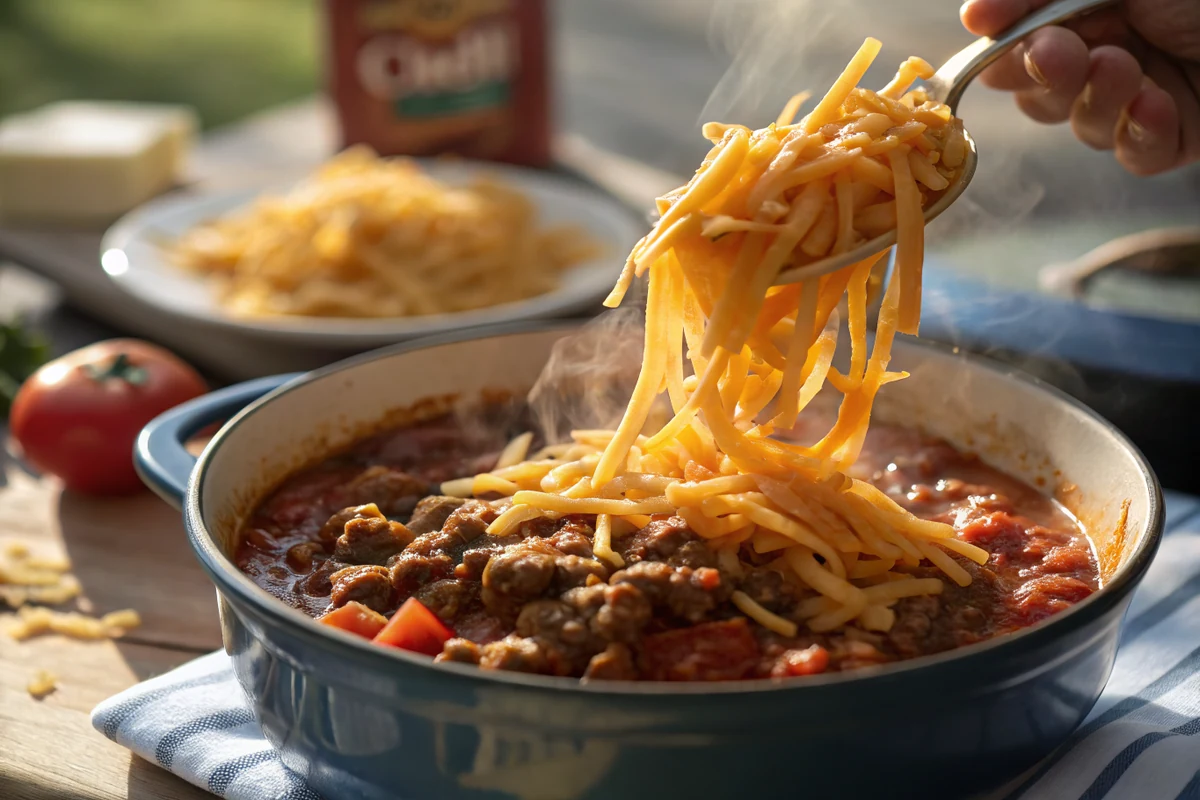
Shred your own cheese from a block if you can, because the pre-shredded bags are coated with anti-caking starch that keeps it from melting as smoothly. A sharp or extra-sharp cheddar gives the most flavor, but you can blend in a little Monterey Jack or Colby for extra meltiness, or even a handful of Velveeta if you want it extra creamy and old-school. Some cooks top the pot with cheese and run it under the broiler for a browned crust, which is delicious if your pot is broiler-safe.
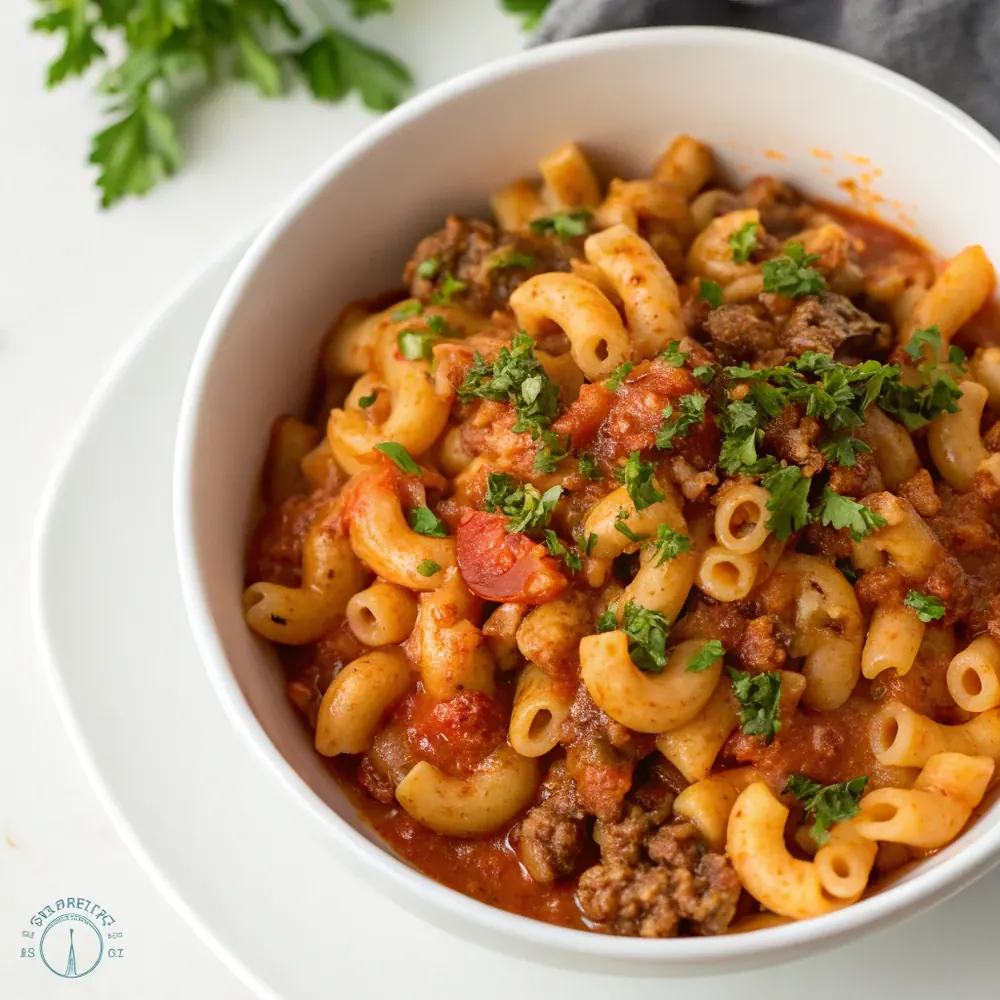
After the cheese melts in, the most important step is patience. Let the goulash rest, covered, off the heat for about 5 minutes. In that short rest the sauce thickens noticeably as it cools slightly and the pasta finishes absorbing, so it goes from a little loose to perfectly thick and clingy. Skip the rest and it can seem runny, then tighten up too much later. Give it those few minutes and you get a pot of goulash where the sauce coats every noodle, finished with parsley and served straight to the table.
Make-Ahead, Storage, and Reheating
Goulash is a champion make-ahead and leftover dish, and honestly it tastes even better the next day once the flavors have had time to meld. To store it, let the pot cool, then transfer it to airtight containers and refrigerate for up to four days. The sauce thickens considerably as it chills, partly because the pasta keeps absorbing, so when you reheat it you will want to loosen it back up. A splash of beef broth or water stirred in as it warms brings it right back to life.
Reheat leftovers gently, either in a pot over medium-low heat with that splash of liquid, stirring often, or in the microwave in short bursts with a stir in between. Low and slow keeps the cheese from breaking and the noodles from turning to paste. If you know going in that you want leftovers, cook the macaroni a touch shy of done, because every reheat softens it further. The goal is goulash that is still tender and saucy on day three, not a solid brick of pasta.
For longer storage, goulash freezes reasonably well, though I will be honest that the pasta texture softens after freezing and thawing, so it is best for a casual lunch rather than company. Cool it completely, pack it flat in freezer bags or containers, and freeze up to three months. Thaw overnight in the fridge and reheat with extra broth to refresh the sauce. If freezing is the plan, slightly undercook the pasta so it survives the trip, and expect a softer, but still tasty, bowl on the other end.
What to Serve With Texas Goulash
Goulash is a complete meal in one pot, beef, pasta, and vegetables all together, so the sides just need to round it out. My number one partner is a wedge of warm, buttery cornbread to mop up the tomato sauce. My cast iron skillet cornbread with its crispy crust is exactly right for dragging through the bowl, and it bakes while the goulash simmers, so the timing works out perfectly. A simple green salad with a sharp vinaigrette on the side cuts the richness nicely too.
Because goulash is hearty and saucy, I like something fresh and crunchy alongside to balance it. A crisp green salad, some garlicky sauteed green beans, or even just sliced cucumbers and tomatoes in a little vinegar keep the meal from feeling too heavy. Garlic bread or Texas toast is another classic move, basically swapping cornbread for a buttery, griddled slice to soak up the sauce. Kids in my house are happy with goulash and a pile of buttered corn, and that is a perfectly good Tuesday.
If I am stretching it into more of a Tex-Mex leaning spread, a scoop of Mexican rice on the side gives a nice change of pace, and a pot of BBQ baked beans turns it into a real cookout plate. Goulash plays well with almost anything simple and comforting, so I do not overthink it. Bread to mop the sauce, something green for balance, and maybe a sweet side. The goulash is the star, so let the sides keep it company without competing.
My Hill Country Kitchen Notes
After making goulash more times than I can count, a few habits stand out. Brown the beef properly, do not rush it into the sauce while it is still gray, because that browning is where the deep flavor starts. Bloom the spices in the fat for a minute so the paprika and herbs taste full. And taste and adjust the salt at the end, since the long simmer and the starchy pasta can mute the seasoning, and a finished pot of goulash often just needs another pinch of salt to come fully alive on the spoon.
The two mistakes I had to learn the hard way both involve the pasta. First, stir it while it simmers, scraping the bottom every few minutes, or the starchy noodles will weld themselves to the pot and scorch, and burnt goulash is a sad thing. Second, pull it from the heat while the macaroni still has a hair of bite, because it keeps cooking as it rests and reheats. An extra two minutes of simmering is the difference between tender elbows and a sticky, overcooked pot.
Goulash is endlessly forgiving and easy to make your own. I will throw in a can of drained corn or some sliced mushrooms when I have them, a pinch of red pepper flakes when I want a little heat, or a splash more Worcestershire when the pot tastes like it needs depth. It is honest, frugal cooking that fills a table without emptying your wallet. If this kind of cheap, comforting one-pot supper is your love language, you will feel right at home in my Southern comfort food recipes.
Texas Goulash Recipe
Ingredients
- For the goulash:
- 1 1/2 lb ground beef (80/20)
- 1 large yellow onion, diced
- 1 green bell pepper, diced
- 4 garlic cloves, minced
- 1 tablespoon olive oil (if needed)
- 1 (15 oz) can tomato sauce
- 1 (14.5 oz) can diced tomatoes, with juice
- 2 cups beef broth
- 2 tablespoons Worcestershire sauce
- 1 tablespoon Italian seasoning
- 1 1/2 teaspoons paprika
- 2 bay leaves
- 1 1/2 teaspoons kosher salt (more to taste)
- 1 teaspoon black pepper
- 2 cups dry elbow macaroni
- For finishing:
- 1 1/2 cups shredded sharp cheddar cheese
- Chopped fresh parsley, to serve (optional)
Instructions
- Brown the beef with onion and pepper. Set a large pot or deep skillet over medium-high heat. Add the ground beef along with the diced onion and bell pepper. Break the meat up with a wooden spoon into fine crumbles and cook 7 to 9 minutes, until the beef is well browned and no pink remains and the onion has softened. Browning the meat properly, not just graying it, is where a lot of the deep savory flavor in this dish comes from, so let it get some color.
- Add the garlic and spices. Stir in the minced garlic, paprika, Italian seasoning, salt, and black pepper, and cook about 1 minute until the garlic smells fragrant and the spices toast in the hot fat. This quick bloom wakes up the dried herbs and paprika so they taste round instead of dusty. If the pot looks dry, this is the moment to add the tablespoon of olive oil. Keep it moving so the garlic does not scorch and turn bitter.
- Drain excess grease. If your beef rendered a lot of fat, tilt the pot and spoon off all but a tablespoon or so. With 80/20 beef there is usually a fair amount, and too much grease makes the finished goulash slick and heavy. You want enough fat to carry flavor but not a pool of it. Leaving a little behind is good, because that beef fat seasons the sauce, but a greasy pot will not let the pasta soak up the tomato properly.
- Build the tomato sauce. Pour in the tomato sauce, the diced tomatoes with their juice, the beef broth, and the Worcestershire sauce. Drop in the bay leaves and stir everything together, scraping up any browned bits stuck to the bottom of the pot, because that fond is pure flavor. Bring the sauce up to a gentle simmer. Give it a taste now and adjust the salt, remembering it will concentrate a little as the pasta cooks and absorbs the liquid.
- Stir in the raw macaroni. Add the dry elbow macaroni right into the simmering sauce and stir well so every noodle is submerged and coated. Cooking the pasta in the sauce instead of boiling it separately is what makes this goulash, since the macaroni absorbs the beef and tomato flavor and its starch thickens the sauce. Make sure no noodles are stuck above the liquid line, pushing them down into the sauce so they cook evenly.
- Cover and simmer. Reduce the heat to medium-low, cover the pot, and simmer 12 to 15 minutes, until the macaroni is tender. Stir every 3 to 4 minutes, scraping the bottom each time, because the pasta starch loves to stick and scorch down there. If it looks too thick before the pasta is done, splash in a little more broth. You want the noodles tender and most of the liquid absorbed into a thick, clingy sauce, not soup.
- Check the pasta and pull the bay leaves. Taste a noodle to make sure it is fully tender, then fish out and discard the two bay leaves so nobody bites into one. The sauce should be thick and glossy and coat the back of a spoon at this point. If there is still too much loose liquid, simmer uncovered another couple of minutes to tighten it up. Adjust the salt and pepper one last time, since the long simmer can dull the seasoning.
- Melt in the cheddar and rest. Turn off the heat. Add the shredded cheddar a handful at a time, folding it through the hot goulash until it melts into the sauce and makes everything creamy. Pulling it off the heat first keeps the cheese from breaking and going greasy. Let the pot rest, covered, for about 5 minutes so the sauce thickens and grabs onto every noodle. Scatter chopped parsley over the top and serve it hot, straight from the pot.
Frequently Asked Questions
What is the difference between Texas goulash and Texas hash?
They are built on the same browned ground beef, onion, bell pepper, and tomato base, but the starch is different. Texas goulash uses elbow macaroni cooked right in the sauce, giving you soft, saucy noodles. Texas hash uses rice instead, giving you tender separate grains bound in tomato. The cooking changes too, since rice needs more liquid and a longer simmer than pasta. So pick your starch and adjust the liquid and timing to match it.
Can I use a different pasta instead of elbow macaroni?
Yes, though elbow macaroni is traditional because its size and shape cook evenly in the sauce and hold the sauce in their little curves. Other short shapes like shells, rotini, cavatappi, or ditalini work well. Just keep them roughly the same small size so they cook through in the same time, and watch the liquid, since different shapes absorb a little differently. Avoid long pasta like spaghetti, which does not cook properly stirred into a thick sauce like this.
Can I make goulash ahead of time or freeze it?
Absolutely, and many people think it tastes even better the next day. Refrigerate it in airtight containers for up to four days, and reheat gently with a splash of broth, since the sauce thickens as it sits and the pasta keeps absorbing. It also freezes for up to three months, though the pasta softens after thawing, so it is best for a casual meal. If you plan to store it, undercook the macaroni slightly so it survives reheating without turning mushy.
Can I cook the macaroni separately instead of in the sauce?
You can, and it is a smart move for make-ahead batches or if you are nervous about mushy pasta. Boil the elbows in salted water until just shy of tender, drain them, and fold them into the finished sauce at the end. You lose a little of the flavor the pasta would have absorbed from cooking in the sauce, and the sauce will be a bit thinner without that pasta starch, but it gives you more control and the noodles hold up better in leftovers.
What kind of meat should I use for goulash?
I use 80/20 ground beef, ideally ground chuck, because the fat keeps the meat juicy and carries flavor through the sauce. Leaner blends like ground round or sirloin work but can taste a little flat and dry. You can also use ground turkey for a lighter version, or mix in some Italian sausage for extra seasoning. Whatever you choose, brown it well to build flavor, and spoon off excess grease so the finished goulash is not slick and heavy.
Why is my goulash watery or mushy?
Watery goulash usually means too much liquid or not enough simmering. If the sauce is loose when the pasta is tender, simmer it uncovered a couple minutes to thicken, and let it rest 5 minutes off the heat so it sets. Mushy pasta comes from overcooking or from noodles sitting too long in excess liquid. Taste the macaroni early and pull the pot the moment it is just tender, remembering it keeps softening from the residual heat as it rests.
What should I serve with Texas goulash?
Goulash is a full meal on its own, so the sides just round it out. Warm cornbread or garlic bread to mop up the tomato sauce is my top pick, and a crisp green salad or some sauteed green beans add freshness to balance the richness. Buttered corn keeps the kids happy, and for a bigger spread you can add Mexican rice or a pot of baked beans. Keep the sides simple and comforting so the goulash stays the star of the table.