Southern Comfort Food
Texas Pete Wing Sauce
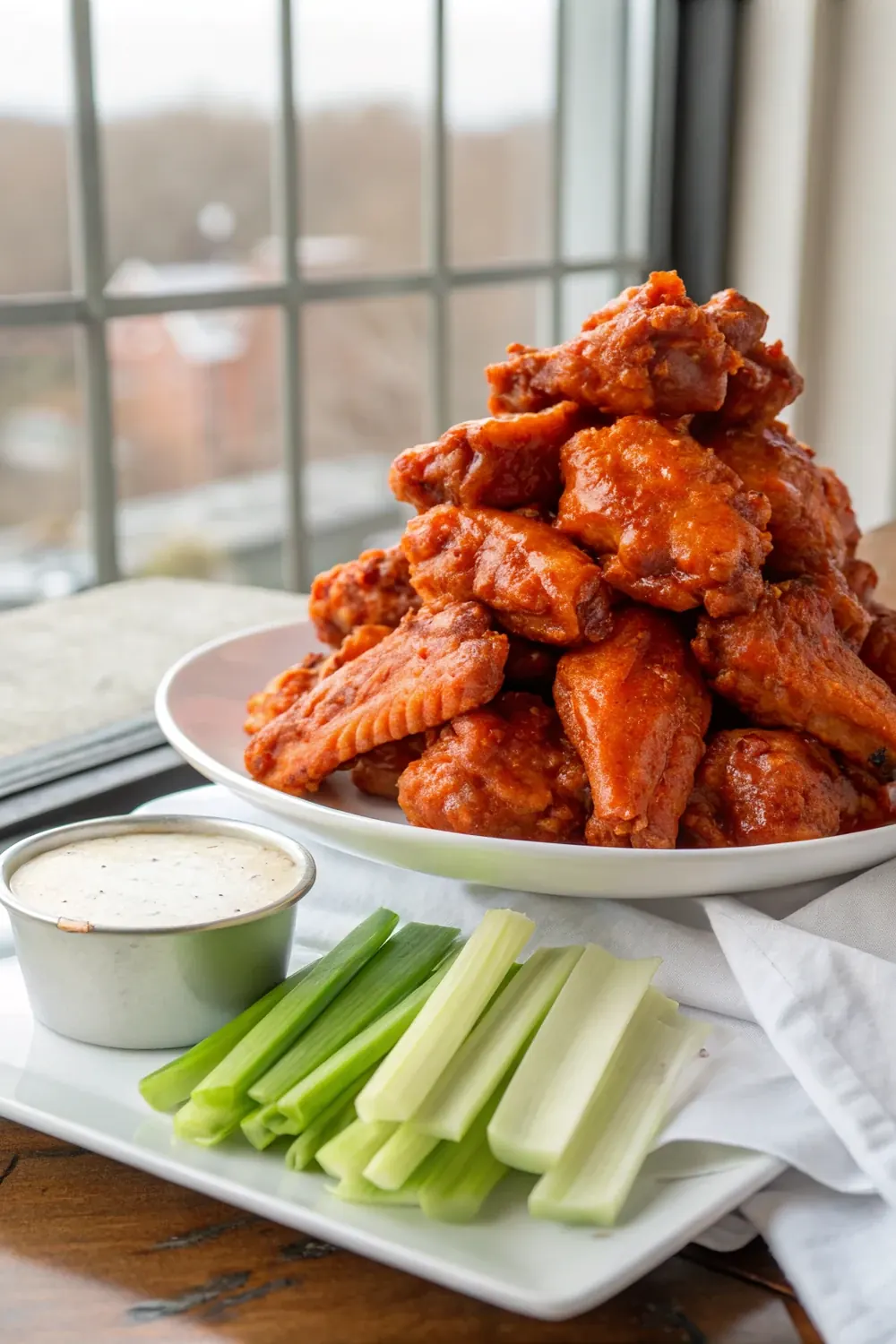
Chef Mia's Texas Pete wing sauce recipe: cayenne hot sauce whisked into melted butter with garlic and honey for a glossy, buffalo-style sauce in 5 minutes.
Quick answer: Texas Pete wing sauce is a buffalo-style sauce made by whisking Texas Pete hot sauce into melted unsalted butter at about a 2-to-1 ratio, with garlic, Worcestershire, a little honey, and a splash of vinegar. Warm and whisk until glossy and emulsified, then toss it on hot, dry wings right before serving.
I keep a bottle of Texas Pete on the counter the way some folks keep salt and pepper. Here in Lockhart, it shows up on breakfast tacos, in pinto beans, and most of all on wings come football season. Texas Pete is a cayenne pepper sauce from a North Carolina company, not a Texas one, and it's nobody's idea of blistering heat. What it does have is a clean, tangy, vinegar-forward bite that turns into something special the second it hits melted butter.
This is the wing sauce I've been making for my dad's tailgate crew for going on fifteen years. It's the two-ingredient buffalo formula, hot sauce and butter, dressed up with garlic, a little Worcestershire, and a touch of honey to round the edges. It comes together in about five minutes in one small pot. The trick isn't the recipe, it's the technique: getting that butter and hot sauce to bond into one glossy sauce that clings to a wing instead of sliding off into a greasy puddle. I'll walk you through every bit of it. Football season bonus: the same sauce brushed over my BBQ chicken legs in the oven turns budget drumsticks into tailgate food.
What Texas Pete Actually Is (And Why It Works for Wings)
Let's be straight about the bottle first. Texas Pete is a brand of cayenne pepper sauce made by the T.W. Garner Food Company in Winston-Salem, North Carolina. It has been around since 1929, and despite the name, it is not a Texas product and I have no affiliation with the company. I just cook with it, like millions of other folks do. I want you to know what you are buying so you can use it well.
The ingredient list is short: vinegar, aged cayenne peppers, water, salt, xanthan gum. That vinegar-forward, cayenne-clean profile is exactly what makes it good wing material. It is not a fruity, smoky, or complicated sauce. It is tangy and straightforward, which means it plays nicely with butter and does not fight the chicken. On the Scoville scale it is genuinely mild, well under 1,000 units, so the finished wing sauce is approachable for a crowd.
Because it is mild on its own, you control the heat entirely with how much you add and whether you spike it with cayenne. That is a feature, not a flaw. I would rather build heat up from a mild, flavorful base than try to tame a sauce that is all fire and no character.
Texas Pete vs Frank's RedHot: The Real Difference
Frank's RedHot is the sauce most people associate with Buffalo wings, and for good reason; the original Anchor Bar wings in Buffalo, New York were built on it. Frank's leans on aged cayenne too, but its profile is a touch rounder and saltier, with a signature savory note that reads almost buttery before you even add butter.
Texas Pete is brighter and sharper, more vinegar up front and a cleaner cayenne snap on the finish. Side by side, Frank's tastes mellow and Texas Pete tastes zippy. Neither is hotter than the other in any meaningful way; both are mild. If you have only ever used Frank's, a Texas Pete sauce will taste a shade tangier and a little less salty, which is why I add a touch of honey and Worcestershire to balance it.
You can swap either brand into this recipe one for one. The technique is identical. I keep both in the pantry and reach for Texas Pete when I want that extra vinegar lift, which on wings I almost always do.
The Butter Emulsion: Why It Matters and How It Breaks
Buffalo sauce is an emulsion. You are coaxing fat (the butter) and a water-based acidic liquid (the hot sauce) into one stable, glossy mixture. When it works, the sauce is creamy, opaque, and clings to skin. When it fails, it splits into a thin red liquid floating on a pool of oily butter, and your wings come out greasy.
Two things keep the emulsion together. First, the xanthan gum already in Texas Pete is a mild stabilizer that helps. Second, your whisking mechanically breaks the butterfat into tiny droplets suspended in the sauce. Heat is the variable that wrecks it. If the butter gets too hot and the milk solids break away from the fat, or if everything cools and sets too fast, the bond fails.
The fix is gentle heat and steady whisking. Melt butter slowly, add the hot sauce off the boil, and whisk until it turns from streaky to uniform. If it ever breaks, do not panic; pull it off the heat, whisk in a teaspoon of cold hot sauce or a few drops of warm water, and it usually comes right back. This is the same patience that makes a good pan gravy or my honey BBQ sauce behave.
Dialing the Ratio and the Heat Level
The classic Buffalo ratio is two parts hot sauce to one part butter. This recipe runs close to that: a half cup of Texas Pete to four tablespoons of butter. That gives a sauce with real tang and bite but enough fat to stay creamy and coat well. More butter mellows the heat and acid; less butter sharpens it and risks breaking.
For a mild, kid-friendly batch, bump the butter to six tablespoons and add an extra teaspoon of honey. For a medium that most adults call just right, stick with the recipe as written. For a hot batch, add a quarter to half teaspoon of cayenne or an extra splash of Texas Pete and ease back on the honey. For genuinely fiery wings, whisk in a teaspoon of your favorite extract-free chile sauce or some hot smoked paprika.
Taste as you build. The sauce will taste a little sharper straight from the pot than it does once it is on a hot wing, because heat and the chicken's own fat soften it. I always make the pot sauce a hair bolder than I want the final wing to be.
Baked, Air-Fried, Fried, or Grilled: Getting the Wings Right
The sauce is only half the job. The wing underneath has to be crisp and dry, or the best emulsion in Texas will slide right off. My everyday method is the oven. Toss split wings with kosher salt and a light dusting of baking powder, which raises the skin's pH and crisps it, then bake on a rack at 425 F for about 45 minutes, flipping once. The baking powder trick is the same logic behind a good dry rub; if you love rubs, my notes on the best Texas BBQ rubs are worth a read.
The air fryer is even faster and gives you bakery-crisp skin: 380 F for about 22 to 25 minutes, shaking the basket halfway. Deep frying at 375 F for 10 to 12 minutes is the restaurant route and produces the crispest result, with the bonus that the rendered fat helps the sauce cling. Grilling over medium coals adds smoke and char; just keep the lid down and turn often so the fat does not flare.
Whichever way you go, the wing must hit the bowl hot and dry. If they have been sitting, run them back through the heat for a few minutes before saucing. The same dry-first principle works on my honey BBQ wings.
The Dry-Then-Sauce Technique
Restaurants do not bake or fry the sauce onto the wing, and neither should you. The skin gets fully cooked and crisp first, completely naked, and the sauce goes on only at the very end as a toss. Saucing too early steams the skin soft and you lose every bit of crunch you worked for.
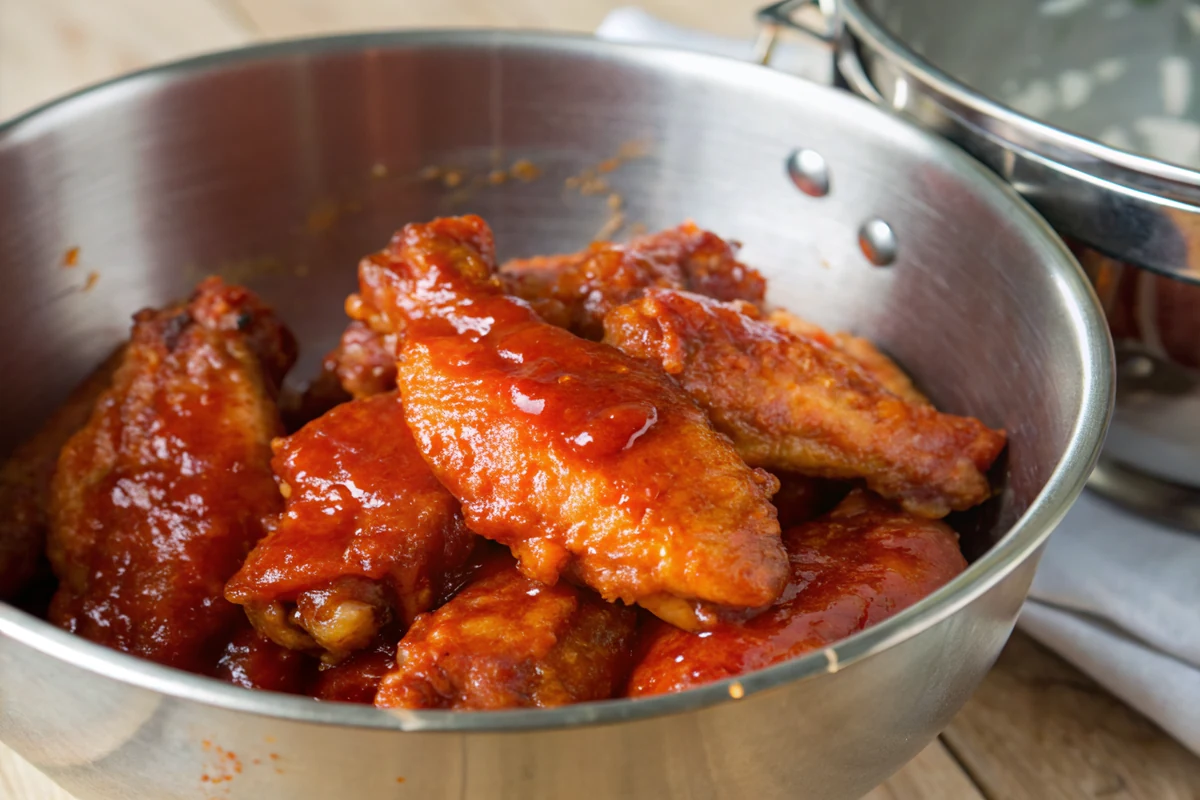
Use a big metal mixing bowl, not a plate. Drop the hot wings in, pour the warm sauce over the top, and toss for a solid 20 to 30 seconds, lifting and turning so the sauce wraps every flat and drum. A metal bowl holds the heat and helps the sauce stay loose while you work.
If you like a thicker, stickier coat, toss once, let them sit 60 seconds, then toss again with whatever sauce pooled at the bottom. That second toss builds a lacquered layer. Serve immediately; this sauce is built for the moment, not for sitting under a lamp.
Scaling for a Crowd and Game Day
I cook for a tailgate of twenty most home games, and wing sauce scales beautifully. The math is linear: for every two pounds of wings, make three quarters of a cup of sauce, so ten pounds of wings wants about three and three quarter cups. Make the sauce in a wide pot so you have room to whisk a big batch without it splashing.
When I am feeding a crowd, I keep the sauce warm in a small slow cooker on low, whisking every fifteen minutes so it stays emulsified, and I sauce wings in batches as each tray comes out of the oven. Cold sauce on hot wings is the most common tailgate mistake; keep it warm and everything coats better. I run the same warm-and-toss system for my BBQ shrimp when the grill is crowded.
Set out celery, carrots, and a cooler of blue cheese and ranch, and put a backup bottle of Texas Pete on the table for the folks who always want more. If you are also running a sweet, sticky option, a pot of Texas BBQ sauce alongside the buffalo keeps both camps happy.
Why Homemade Beats the Bottled Wing Sauce
I am not against a bottle of ready-made wing sauce in a pinch, but homemade wins on three counts, and once you taste them side by side it is hard to go back. The first is freshness. A sauce you whisk together five minutes before the wings come out of the oven has a bright, lively heat that a shelf-stable bottle, full of stabilizers and sitting for months, simply cannot match.
The second is control. When you build it yourself you decide the exact ratio of butter to heat, how much garlic goes in, whether it leans sweet or sharp. Bottled sauce makes that choice for you and usually plays it safe and salty. With this recipe you can run a mild batch for the kids and a fiery one for the adults from the same pot, just by adjusting the cayenne at the end.
The third is cost and pantry sense. A bottle of Texas Pete and a stick of butter make far more sauce, for less money, than a bottle of branded wing sauce, and you almost certainly have both on hand already. The same logic is why I make my own Texas BBQ sauce instead of buying it. Once you see how fast and cheap the real thing is, the bottle starts to look silly.
Storage, Make-Ahead, and Other Uses
This sauce keeps in the fridge in a sealed jar for up to two weeks. It will firm up and separate as the butter solidifies, which looks alarming and is completely normal. To bring it back, warm it gently in a small pan or in short bursts in the microwave, then whisk hard until it goes glossy and unified again.
I do not love freezing it, since the emulsion gets grainy on the thaw, but in a pinch you can. Make-ahead works fine: build the sauce the morning of, refrigerate, and rewarm at game time. Always rewarm before tossing; a cold, broken sauce will not coat.
Buffalo sauce is not just for wings. I toss it with roasted cauliflower, drizzle it on a fried chicken sandwich, stir a spoonful into mac and cheese, and use it as the base for buffalo chicken dip. Anywhere you want tangy heat with a creamy backbone, this sauce earns its spot in the rotation right next to the wings it was born for.
Texas Pete Wing Sauce Recipe
Ingredients
- For the wing sauce:
- 1/2 cup (120 ml) Texas Pete Original Hot Sauce
- 4 tablespoons (57 g) unsalted butter, cut into pieces
- 2 cloves garlic, finely grated or minced
- 1 tablespoon (15 ml) Worcestershire sauce
- 1 tablespoon (21 g) honey
- 1 teaspoon (5 ml) white vinegar (optional, for extra tang)
- 1/2 teaspoon (1 g) smoked or sweet paprika
- 1/4 teaspoon (0.5 g) freshly ground black pepper
- Pinch of cayenne or extra Texas Pete, to dial up the heat (optional)
- For tossing (per batch):
- 2 to 2.5 lb (about 1 to 1.1 kg) chicken wings, split into flats and drums
- Kosher salt and a light dusting of baking powder, for crisp baked or air-fried wings
- Celery and carrot sticks, plus blue cheese or ranch, to serve
Instructions
- Melt the butter gently. Set a small saucepan over low heat and add the cut-up unsalted butter. Let it melt slowly without browning or bubbling hard. Low and slow keeps the milkfat from breaking, which is exactly the stability you want for the emulsion to follow.
- Bloom the garlic. Add the grated garlic to the melted butter and let it sizzle gently for 30 to 60 seconds, just until fragrant. You are softening the raw bite, not frying it to brown. Burnt garlic turns bitter and there is no fixing it once it goes there.
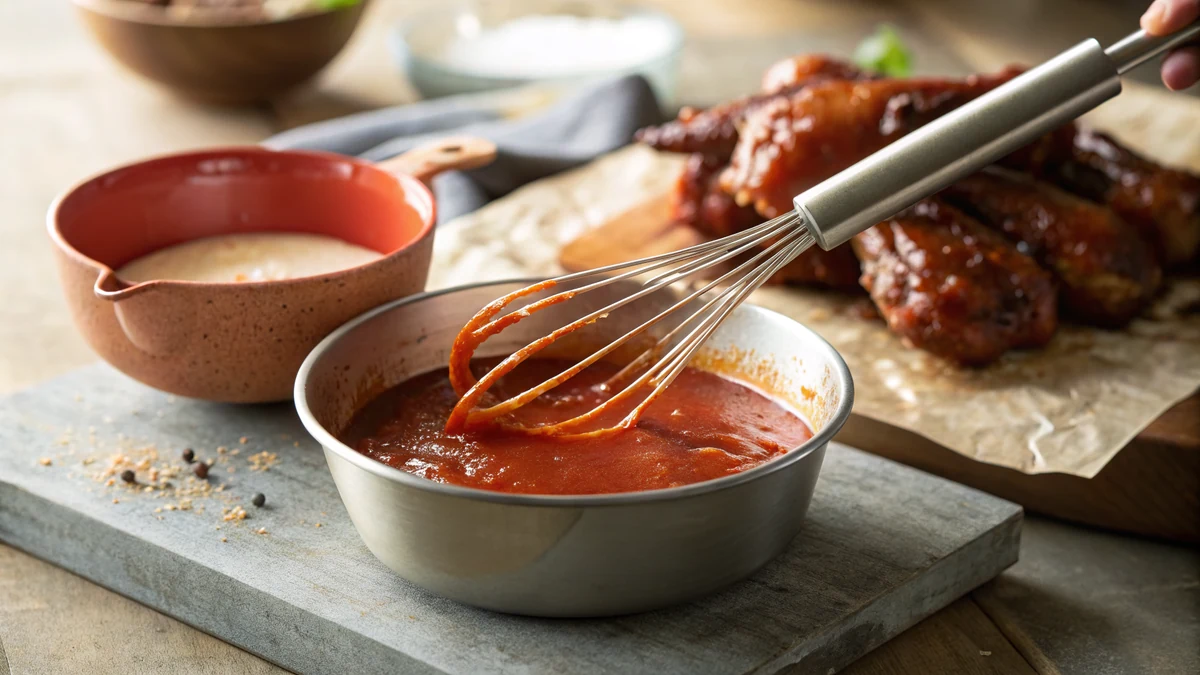
- Whisk in the Texas Pete. Pour in the Texas Pete hot sauce off to the side of the heat and whisk steadily. The sauce may look thin and separated for a few seconds. Keep whisking and it will pull together into one smooth, red, glossy liquid as the butter and sauce emulsify.
- Add the rounding agents. Whisk in the Worcestershire, honey, paprika, and black pepper. The honey tames the vinegar sharpness and helps the sauce cling; the Worcestershire adds a savory, salty depth. Taste here and adjust before you commit it to a pound of wings.
- Adjust heat and tang. Want more punch? Whisk in extra Texas Pete or a pinch of cayenne. Want it sharper and brighter? Add the teaspoon of white vinegar. Want it mellower? An extra knob of butter softens everything. Move in small increments and re-taste each time.
- Hold the sauce warm. Keep the finished sauce over the lowest possible heat or off the burner entirely, whisking now and then. A warm sauce coats far better than a cold one, and gentle warmth keeps the emulsion from setting up or separating before the wings are ready.
- Get your wings hot and dry. Whether baked, air-fried, fried, or grilled, the wings must come off the heat hot, crisp, and dry on the surface. Pat them with a paper towel if needed. Surface moisture is the enemy; it thins the sauce and keeps it from gripping the skin.
- Toss, do not drizzle. Put the hot wings in a large metal bowl, pour the warm sauce over, and toss hard for 20 to 30 seconds until every piece is coated. The bowl gives you room to flip and turn. Tossing distributes the sauce evenly in a way drizzling never will.
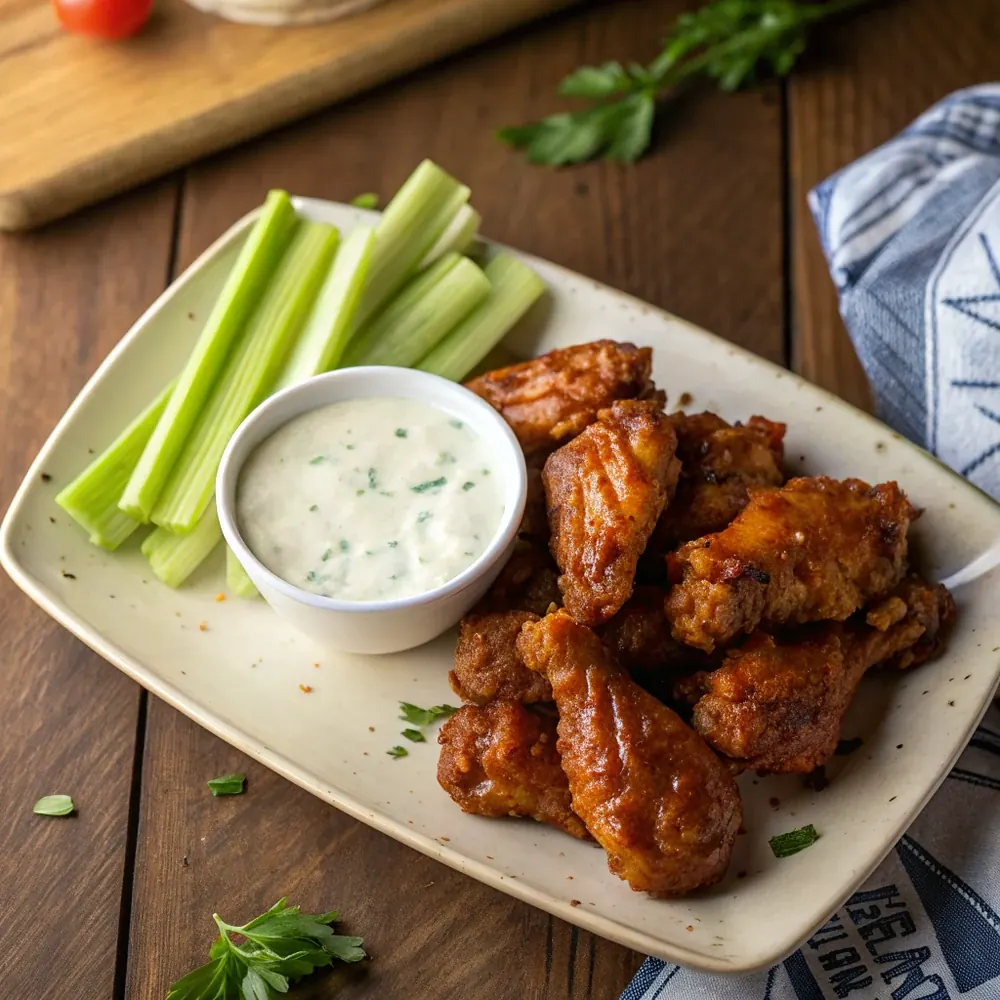
- Serve right away. Buffalo wings are at their best within a couple of minutes of saucing, while the skin is still crisp and the sauce is glossy. Plate them with celery, carrots, and blue cheese or ranch. Pour any sauce left in the bowl over the top.
- Store leftover sauce. Cool extra sauce, then refrigerate in a sealed jar for up to two weeks. It will solidify and separate as the butter firms; that is normal. Rewarm gently and whisk to bring it back to a glossy emulsion before using.
Frequently Asked Questions
Is Texas Pete wing sauce the same as buffalo sauce?
Yes, in practice. Buffalo sauce is simply hot sauce emulsified with butter, and Texas Pete is a cayenne hot sauce, so a Texas Pete wing sauce is a buffalo-style sauce. The original Buffalo, New York recipe used Frank's RedHot, but the method is identical with Texas Pete; you just get a slightly brighter, more vinegar-forward result.
What is the ratio of Texas Pete to butter for wing sauce?
The classic ratio is two parts hot sauce to one part butter, which works out to about a half cup of Texas Pete to four tablespoons of butter. More butter makes it milder and creamier; less butter makes it sharper and hotter but more likely to break. Adjust to your taste in small steps.
Why did my buffalo sauce separate or turn greasy?
It broke, meaning the butter split from the hot sauce. This usually happens from too much heat or letting it cool and reheat roughly. Pull it off the burner, whisk in a teaspoon of cold hot sauce or a few drops of warm water, and whisk hard; it almost always comes back to a glossy emulsion.
Can I use salted butter instead of unsalted?
You can, but Texas Pete and Worcestershire already bring salt, so use salted butter only if you taste as you go and skip any added salt. Unsalted butter gives you full control, which is why I call for it. If salted is all you have, just be cautious and taste before tossing the wings.
How do I make Texas Pete wing sauce hotter?
Add a quarter to half teaspoon of cayenne, an extra splash of Texas Pete, or a spoonful of hot smoked paprika, and ease back on the honey. Texas Pete is mild on its own, around 747 on the Scoville scale, so you have plenty of room to build heat without the sauce becoming harsh.
Do I sauce the wings before or after cooking?
After, always. Cook the wings completely until the skin is crisp and dry, then toss them in the warm sauce at the very end. Saucing before or during cooking steams the skin soft and you lose the crunch. Per safe-cooking guidance, cook wings to an internal temperature of 165 F before saucing (see the USDA safe minimum internal temperatures).
How long does homemade wing sauce last in the fridge?
Stored in a sealed jar, it keeps up to two weeks refrigerated. The butter will solidify and the sauce will look separated, which is normal. Warm it gently and whisk it back together before using. I do not recommend freezing it, since the emulsion turns grainy when it thaws.
What do I serve with Texas Pete buffalo wings?
The traditional spread is celery and carrot sticks with blue cheese or ranch dressing for dipping, which cools the heat between bites. For a bigger game-day table, I add a sweet counterpoint like BBQ wings, a cold slaw, and plenty of napkins. Keep a bottle of Texas Pete on the table for anyone who wants extra fire.