Tex-Mex Recipes
Texas Roadhouse Blooming Onion Sauce
The exact ratio: 1/2 cup mayo, 2 tbsp each sour cream and ketchup, 1 tbsp horseradish. Chill 30 minutes or the horseradish still tastes raw and sharp.
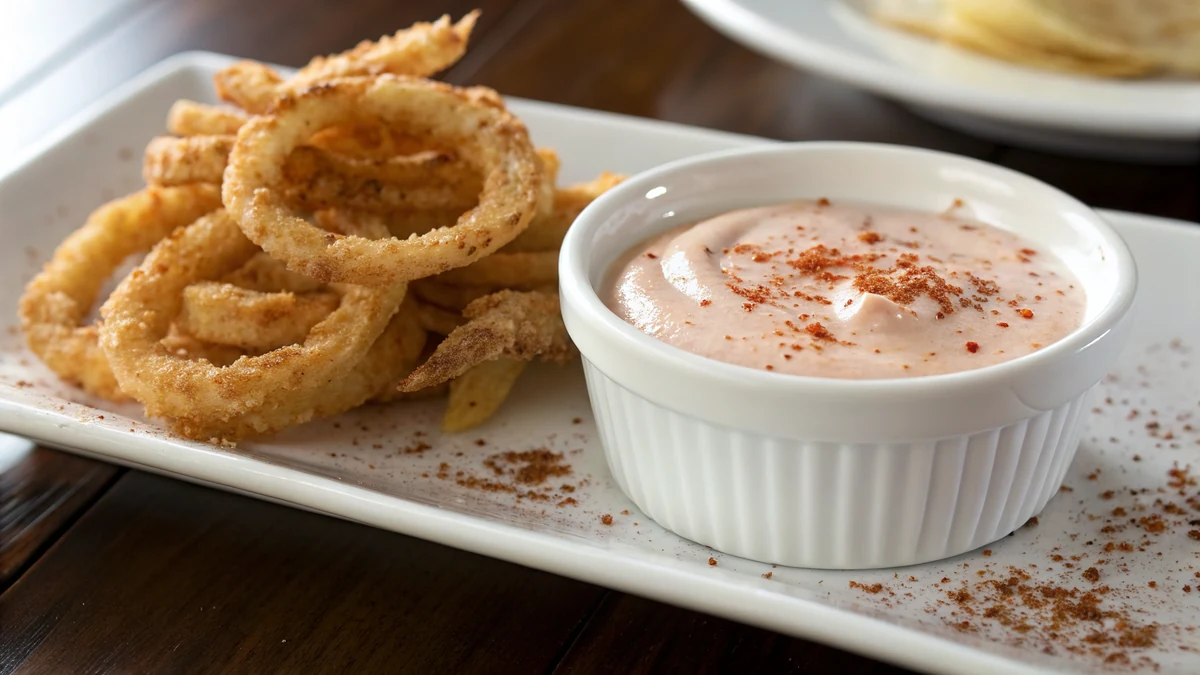
Quick answer: Texas Roadhouse blooming onion sauce is a creamy, tangy, horseradish-spiked dipping sauce made from mayonnaise, sour cream, ketchup, prepared horseradish, cajun seasoning, and paprika. To make it, whisk a half cup of mayo with two tablespoons each of sour cream and ketchup, a tablespoon of horseradish, a teaspoon of cajun seasoning, and a half teaspoon of paprika, then chill it for about thirty minutes so the flavors meld. The result is the pinkish, peppery, slightly sweet dip the steakhouse serves in the center of its fried blooming onion. It takes about five minutes, needs no cooking, yields roughly one cup, and you can tune the horseradish up for sharper bite or add cayenne for more heat.
I have been chasing this sauce for years. The fried onion at the steakhouse is fun, but the cup of dip tucked in its center is the thing I actually crave. It is creamy and tangy with a horseradish kick that sneaks up on you, and once I cracked the ratio at home I stopped ordering the appetizer just to get the sauce. Now I keep a jar in my fridge most weeks.
This page is all about that dip, the bloomin onion sauce itself, not the onion. If you came here to learn how to cut and fry the actual blooming onion, I have a whole separate guide for the Texas Roadhouse cactus blossom. Here I am going deep on the sauce, the exact measurements, how to dial the heat and horseradish, and the dozen other things I dunk in it.
The best part is how forgiving it is. There is no cooking, no thermometer, no risk of curdling. You whisk six pantry staples in a bowl, let them sit, and you have a copycat blooming onion dipping sauce that tastes like the restaurant. Let me show you the formula I landed on and all the ways I bend it.
What Is Texas Roadhouse Blooming Onion Sauce
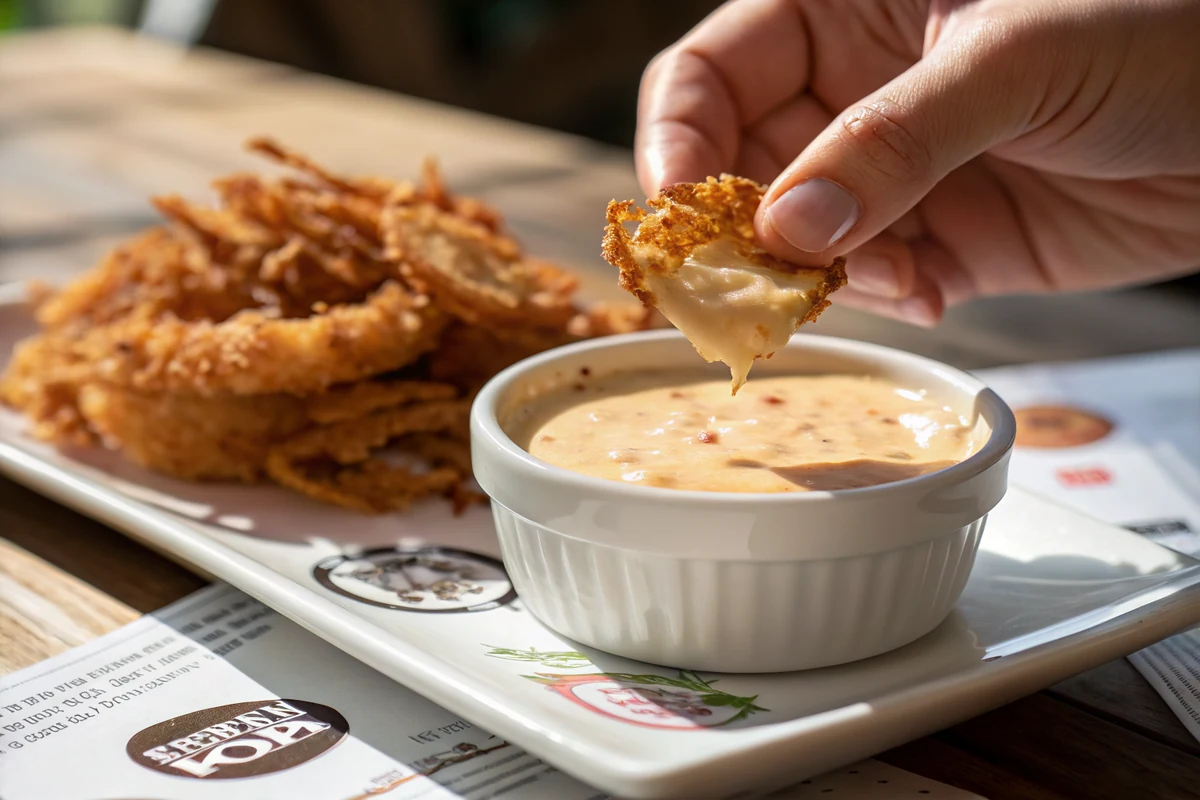
Texas Roadhouse blooming onion sauce is the creamy, pinkish dip that sits in the center of the fried onion appetizer. It is built on a mayonnaise base, brightened with sour cream and ketchup, then spiked with prepared horseradish and a cajun-leaning spice blend. The flavor is tangy and a little sweet up front, with a horseradish warmth that builds on the back end. It is the part of the appetizer most people remember.
If you have had the classic blooming onion dipping sauce at other steakhouses, this is a close cousin. The family of sauces all share that mayo-horseradish-ketchup foundation, but the exact balance and the cajun seasoning are what give this copycat its steakhouse character. It is sometimes spelled bloomin onion sauce, and people search for it under both names.
What makes it special is how versatile that profile is. It is creamy enough to coat a crispy petal, tangy enough to cut through fried food, and spicy enough to keep things interesting without overwhelming. That balance is exactly why I end up using it on far more than the onion it was designed for, which I will get into below.
This page focuses entirely on the sauce. For the fried onion itself, the cutting, battering, and frying, head over to my full cactus blossom guide. Here, the dip is the whole star of the show.
The Exact Ingredients and Why Each One Matters
The whole sauce comes down to six core ingredients plus a few supporting spices, and each one pulls real weight. Mayonnaise is the creamy foundation, giving body and richness so the sauce clings to whatever you dip. Use a good full-fat mayo here, because light versions taste thin and watery and the sauce loses its luxurious cling.
Sour cream adds a clean, dairy tang that keeps the mayo from feeling heavy or one-note. Ketchup does double duty, lending a gentle sweetness that balances the horseradish and giving the sauce its trademark pale pink color. Without the ketchup, the dip looks beige and tastes flat, so do not skip it even though a couple tablespoons seems small.
Prepared horseradish is the soul of the sauce. It delivers that sharp, nose-tingling bite that makes a blooming onion dipping sauce instantly recognizable. Cajun seasoning brings savory depth and a hint of heat, while paprika reinforces color and adds a mild smoky-sweet note. Garlic powder, oregano, and black pepper round out the background.
A pinch of cayenne is my optional kicker for anyone who likes real heat. I leave it out when I am making a batch the kids will share and add a healthy pinch when it is just the adults. That flexibility is built into the recipe on purpose.
The Exact Ratios for a Perfect Batch
Here is the ratio I keep coming back to. For every half cup of mayonnaise, use two tablespoons of sour cream and two tablespoons of ketchup. That four-to-one-to-one relationship is the creamy base, and it scales cleanly. Double everything and you have two cups, triple it for a party, the proportions hold no matter the size.
On top of that base goes one tablespoon of prepared horseradish, one teaspoon of cajun seasoning, and a half teaspoon of paprika. Those three are your flavor drivers. The supporting cast, a quarter teaspoon each of garlic powder, oregano, and black pepper, fills in the corners without stealing the spotlight.
Think of it as a base layer and a seasoning layer. Get the mayo, sour cream, and ketchup right first, taste that creamy foundation, and only then build the spices on top. This makes troubleshooting easy, because if the sauce is off you usually know whether it is the base or the seasoning that needs tweaking.
Measure the horseradish a little conservatively your first time. Brands vary wildly in strength, and you can always whisk in more, but you cannot pull it back out once the sauce is too hot. I would rather start mild and climb than blow out the whole bowl on the first pour.
Step by Step: Mixing It Right
The method is almost embarrassingly simple, but a couple of small moves make the difference between a good dip and a great one. Start with cold ingredients. Cold mayo and sour cream whisk into a tighter, smoother emulsion, and the sauce sets up with better body than if everything is at room temperature.
Whisk the creamy base first, mayo, sour cream, and ketchup, until the color is a uniform pale pink with no white streaks or red swirls. Only then add the horseradish and the spices. Adding the dry seasonings to an already smooth base helps them disperse evenly instead of clumping into little pockets you bite into later.
Whisk, do not just stir. A whisk breaks up any spice clumps and works the horseradish through the whole bowl so every spoonful tastes balanced. Scrape down the sides once to catch any dry seasoning hiding at the edge, then give it a final pass until it looks glossy and even.
Then walk away. The single biggest upgrade is patience. A freshly mixed sauce tastes a little raw and disjointed, but thirty minutes in the fridge transforms it as the horseradish mellows and the spices bloom. An overnight rest is even better, so I often make it the day before a fry-up.
How to Tune the Heat and Horseradish
This sauce is a dial, not a fixed point, and learning to tune it is what makes it yours. The two levers are horseradish, which controls the sharp sinus bite, and cayenne or hot sauce, which controls the lingering warmth on your tongue. They are different kinds of heat, and you can push them independently.
For a sharper, more pungent dip, add prepared horseradish a half teaspoon at a time, tasting after each addition. The bite builds fast and keeps developing as the sauce sits, so what feels mild when you mix it will be noticeably sharper after it chills. Always undershoot a touch and let the rest period do some of the work.
For more lingering heat without more pungency, reach for cayenne, a few dashes of your favorite hot sauce, or a bump of extra cajun seasoning. These add warmth that sits on the back of the tongue rather than hitting your nose. A little chipotle powder is a sneaky way to add heat plus smoke at the same time.
Going the other direction, if a batch comes out too aggressive, the fix is more base. Whisk in another spoonful of mayo and a little ketchup to mellow everything and stretch the heat across more sauce. Keep tasting as you go, and remember the flavor will soften slightly overnight no matter what.
Three Variations I Make Often
The spicier version is my go-to for game day. I double the cayenne, add a teaspoon of your favorite hot sauce, and bump the horseradish to a tablespoon and a half. It turns the dip into something with real backbone that stands up to rich fried food and wakes up a plate of plain fries.
The smoky version swaps the regular paprika for smoked paprika and adds a quarter teaspoon of chipotle powder. That little change gives the whole sauce a barbecue-pit warmth that is incredible on burgers and grilled chicken. It is my favorite when I am cooking outdoors and want the dip to echo the grill.
The lighter version trades half the mayonnaise for plain Greek yogurt and uses light sour cream. You lose a touch of the rich, clingy body, but you keep almost all the tang and bite for a fraction of the calories. I make this one when I want the flavor on a veggie platter without the full indulgence.
Once you understand the base, the variations are endless. A squeeze of lemon brightens it, a little Dijon adds a different kind of sharp, and a spoon of pickle brine pushes it toward something close to a remoulade. Treat the core recipe as a launchpad and adjust to whatever you are dipping.
Beyond the Onion: Other Ways to Use It
Here is my honest confession, I make this sauce more often for things that are not blooming onions than for the onion itself. It is a phenomenal burger sauce, slathered on the bun where its tang and horseradish cut right through a fatty patty. It does the same job a fancy steakhouse spread sauce does, for pennies.
It is brilliant with fried and crispy foods of every kind. Sweet potato fries, regular fries, onion rings, chicken tenders, and mozzarella sticks all love a swipe of it. It is the dip I set out next to my Texas Roadhouse fried pickles almost every time, because the creamy heat plays so well against the salty crunch.
Do not overlook it as a sandwich and wrap spread, or as a dunk for soft pretzels and pretzel bites, where the horseradish bite is fantastic against the chewy, salty dough. I have used it on roast beef sliders, as a dip for raw veggies, and even thinned with a little buttermilk into a punchy salad dressing.
If you love keeping a roster of steakhouse dips on hand, this slots in nicely beside a cooler, herbier option like my Texas Roadhouse ranch dip. Between the two, you have a sharp, spicy choice and a creamy, mellow one for any platter you build.
Storage and Make-Ahead Tips
This sauce is a make-ahead dream, which is part of why I love it. Store it in an airtight container or a jar in the refrigerator, and it keeps for about a week. The flavor actually improves over the first day or two as everything continues to meld, so making it ahead is a feature, not a compromise.
Always make it at least thirty minutes before you plan to serve, and ideally the night before. That rest is when the raw edges round off and the horseradish settles into the cream. A just-mixed batch is perfectly edible but tastes noticeably sharper and less cohesive than one that has had time to sit.
Give the sauce a quick stir before each use, since a little separation is normal after it sits. If it has thickened too much in the cold fridge, a teaspoon of water or milk whisked in loosens it right back to dipping consistency. Keep the container sealed tightly so it does not pick up other fridge odors.
I do not recommend freezing this one. The mayonnaise and sour cream base breaks and turns grainy when thawed, and no amount of whisking brings the texture fully back. Since it comes together in five minutes from pantry staples, a fresh batch is always easier than rescuing a frozen one.
Common Mistakes to Avoid
The most common mistake is skipping the chill time and serving the sauce the moment it is mixed. It tastes raw and the horseradish sits on top instead of woven through. Even fifteen minutes helps, but a proper half hour or an overnight rest is what unlocks the real steakhouse flavor. Build that wait into your timing.
The second mistake is going overboard on horseradish too early. Brands vary enormously in strength, and a heavy hand turns the whole bowl into a sinus-clearing punishment. Start with the measured amount, let it chill, taste, and only then climb. You can always add more, but you cannot subtract it once it is in.
Using light or low-fat mayonnaise is another quiet pitfall. It makes the sauce thin, watery, and weak, with none of the rich cling that lets it coat a crispy petal. If you want a lighter dip, swap in Greek yogurt for part of the mayo rather than reaching for diet mayo, which sacrifices texture without much benefit.
Finally, do not forget to taste and adjust before you commit a batch. The recipe is a reliable starting point, but your horseradish, your cajun blend, and your preference for heat are all variables. A quick taste and a small tweak is the difference between a sauce that is fine and one that tastes exactly like you want it to.
Why This Copycat Tastes Like the Restaurant
People are sometimes surprised that something this simple nails the restaurant flavor, but that is the point. The original is not a complicated emulsion or a cooked sauce, it is a smart balance of pantry staples. Once the ratio of creamy base to horseradish to cajun seasoning is right, the copycat tastes startlingly close to the real thing.
The cajun seasoning is the secret handshake. A lot of generic blooming onion dipping sauce recipes lean only on horseradish and paprika and end up tasting like a plain horseradish mayo. The cajun blend is what gives this version that specific savory, slightly spicy steakhouse character that sets it apart from the others.
The horseradish is the other non-negotiable. Prepared horseradish, the kind in the refrigerated jar, delivers a fresh, sharp bite that powdered or shelf-stable versions cannot match. If your sauce tastes flat and you cannot figure out why, tired or weak horseradish is almost always the culprit, so use a fresh, punchy jar.
Get those two right, respect the chill time, and use full-fat dairy, and you will have a bloomin onion sauce that holds its own against the cup at the steakhouse. The best confirmation is when someone dips, pauses, and says it tastes just like the restaurant. That happens at my table every single time.
Texas Roadhouse Blooming Onion Sauce Recipe
Ingredients
- For the blooming onion sauce:
- 1/2 cup mayonnaise
- 2 tablespoons sour cream
- 2 tablespoons ketchup
- 1 tablespoon prepared horseradish
- 1 teaspoon cajun seasoning
- 1/2 teaspoon paprika
- 1/4 teaspoon garlic powder
- 1/4 teaspoon dried oregano
- 1/4 teaspoon black pepper
- 1/8 teaspoon cayenne pepper (optional, for more heat)
- Pinch of salt, to taste
Instructions
- Gather and measure. Pull the mayonnaise, sour cream, ketchup, and horseradish from the fridge and measure your dry spices into a small dish so they are ready. Cold dairy whisks smoother and the sauce holds together better. Use a medium bowl with room to whisk so nothing slops over the side.
- Whisk the creamy base. Add the mayonnaise, sour cream, and ketchup to the bowl and whisk until the color turns an even, pale pink with no streaks. This trio is the backbone of the sauce, the mayo for richness, the sour cream for tang, and the ketchup for a touch of sweetness and that signature blush color.
- Add the horseradish and spices. Stir in the prepared horseradish, cajun seasoning, paprika, garlic powder, oregano, black pepper, and the optional cayenne. Whisk until the spices are fully dispersed and you no longer see dry specks sitting on top. The horseradish is what gives the sauce its signature sinus-tickling bite, so add it gradually if you are unsure.
- Taste and adjust. Dip a clean spoon and taste. Want more bite, add horseradish a half teaspoon at a time. Want more heat, add cayenne. Too sharp, a little more mayo or ketchup rounds it out. Add a pinch of salt only if it needs it, since the cajun seasoning already carries salt.
- Chill before serving. Cover the bowl and refrigerate the sauce for at least 30 minutes, or up to overnight. This rest is not optional if you want the real flavor, because the horseradish and spices need time to bloom and marry into the creamy base. Give it a quick stir before serving and dip away.
Frequently Asked Questions
What is Texas Roadhouse blooming onion sauce made of?
It is made from a creamy base of mayonnaise, sour cream, and ketchup, spiked with prepared horseradish for bite and a cajun-leaning blend of cajun seasoning, paprika, garlic powder, oregano, and black pepper. An optional pinch of cayenne adds extra heat. You whisk everything together with no cooking, then chill it so the flavors meld. The ketchup gives it the signature pale pink color and a touch of sweetness, while the horseradish provides that recognizable sharp, nose-tingling kick.
How do you make blooming onion dipping sauce at home?
Whisk a half cup of mayonnaise with two tablespoons each of sour cream and ketchup until the color is an even pale pink. Stir in a tablespoon of prepared horseradish, a teaspoon of cajun seasoning, a half teaspoon of paprika, and a quarter teaspoon each of garlic powder, oregano, and black pepper. Taste and adjust the horseradish or heat, then cover and chill for at least thirty minutes before serving. It takes about five minutes of hands-on work and yields roughly one cup.
Why does my blooming onion sauce taste flat?
The two most common culprits are skipping the chill time and using weak horseradish. A freshly mixed sauce tastes raw and disjointed, so it needs at least thirty minutes in the fridge for the spices to bloom and meld. Tired or shelf-stable horseradish also leaves the sauce dull, so use a fresh jar of refrigerated prepared horseradish. Make sure you included the ketchup and cajun seasoning too, since both add depth and balance that a plain horseradish mayo lacks.
How long does blooming onion sauce last in the fridge?
Stored in an airtight container or a sealed jar, the sauce keeps for about a week in the refrigerator. The flavor actually improves over the first day or two as the horseradish and spices continue to meld into the creamy base, so making it ahead works in your favor. Give it a quick stir before each use, since a little separation is normal. Do not freeze it, because the mayonnaise and sour cream break and turn grainy when thawed.
Can I make blooming onion sauce spicier?
Absolutely, and there are two ways to do it depending on the kind of heat you want. For a sharper, more pungent bite, add prepared horseradish a half teaspoon at a time. For lingering warmth on the tongue, add cayenne, a few dashes of hot sauce, or extra cajun seasoning. A bit of chipotle powder adds heat plus smoke. Add gradually and taste as you go, because the sauce gets a little sharper as it chills.
What can I use blooming onion sauce for besides the onion?
Plenty. It makes a fantastic burger sauce, cutting through a fatty patty with its tang and horseradish bite. It is great with fries, sweet potato fries, onion rings, chicken tenders, mozzarella sticks, and fried pickles. It works as a sandwich and wrap spread, a dip for soft pretzels and pretzel bites, a dunk for raw veggies, and even thinned with buttermilk into a punchy salad dressing. I genuinely make it more often for these uses than for the onion.
Is blooming onion sauce the same as bloomin onion sauce?
Yes, they are the same thing, just spelled differently. Bloomin onion sauce, blooming onion sauce, and blooming onion dipping sauce all refer to the creamy, tangy, horseradish-spiked dip served with a fried blooming onion appetizer. The Texas Roadhouse version sits in the center of its cactus blossom. The recipes across steakhouses share a mayo, horseradish, and ketchup foundation, with small differences in seasoning, and this copycat leans on cajun seasoning for its steakhouse character.
Can I make a lighter version of blooming onion sauce?
Yes. Swap half the mayonnaise for plain Greek yogurt and use light sour cream. You lose a little of the rich, clingy body, but you keep almost all of the tang and horseradish bite for a fraction of the calories. I would not recommend using diet or low-fat mayonnaise for the whole base, since it makes the sauce thin and watery. The yogurt swap is a much better route to a lighter dip that still tastes like the real thing.