Southern Comfort Food
Texas Roadhouse Fried Pickles Copycat
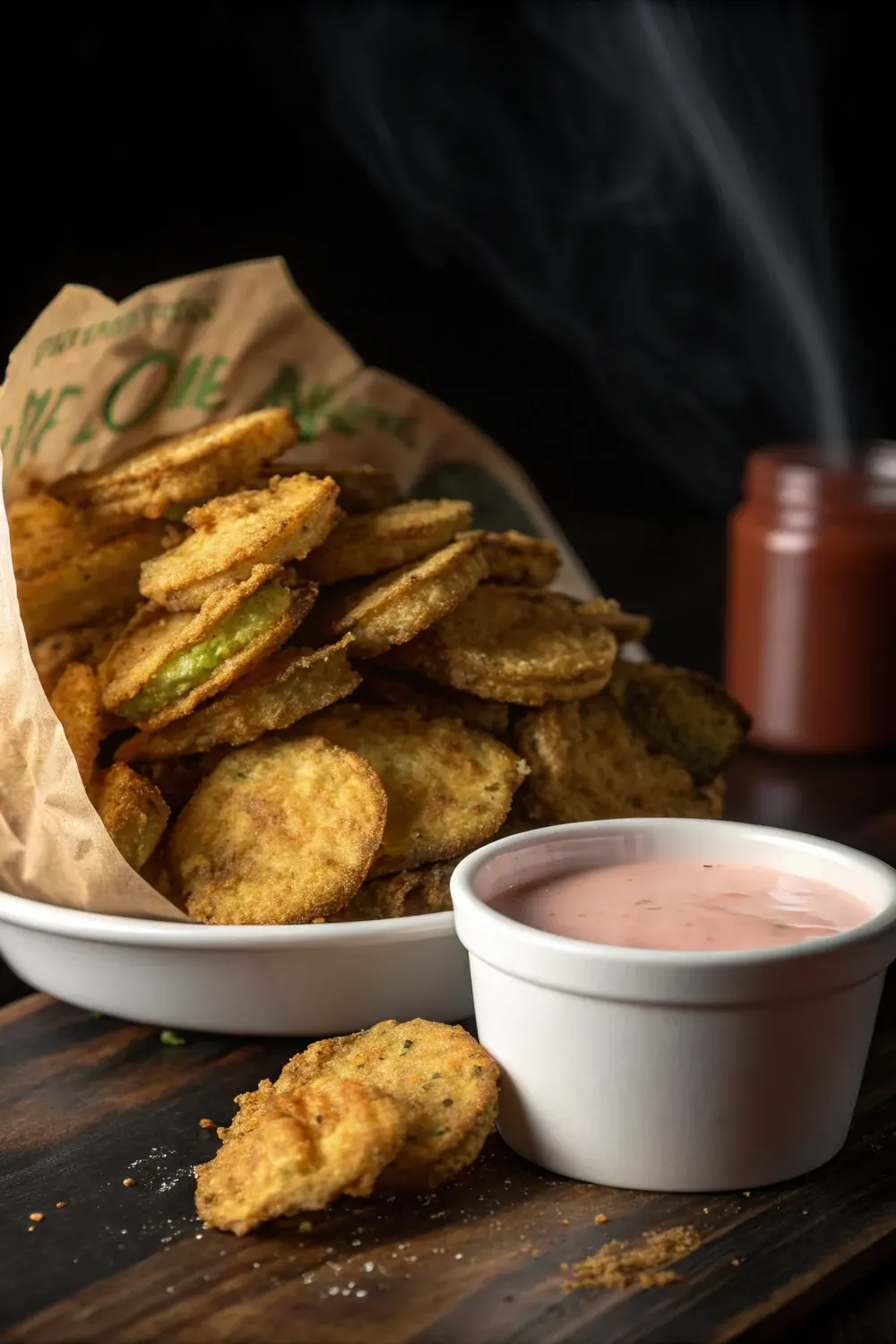
Two things decide these fried pickles: pat the chips bone dry so the batter grips, and hold the oil at 375F so they crisp before they steam. Cajun dip too.
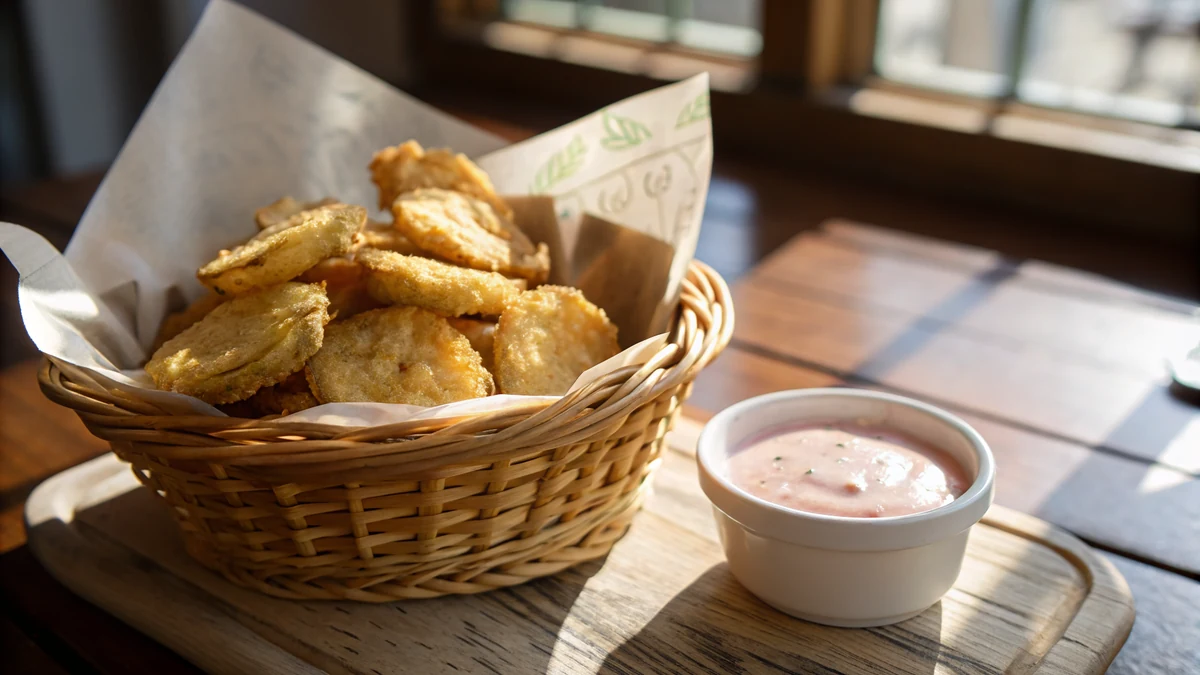
Quick answer: Texas Roadhouse fried pickles are dill pickle chips dredged in a seasoned, cajun-spiced flour batter and deep fried until golden and crunchy, served with a creamy cajun horseradish dipping sauce. The secret is drying the pickle chips well so the coating sticks, frying at a steady 375F so they crisp before they steam, and seasoning both the flour and the finished pickles. You can have a basket on the table in about 20 minutes. They taste like the restaurant appetizer because the coating is well seasoned and the dipping sauce has that tangy, peppery kick.
Fried pickles were the first thing I ever ordered twice in one sitting at Texas Roadhouse. The basket came out hot, crunchy, and faintly tangy, with a little cup of pink-tinged dipping sauce that I wanted to drink straight. My family teases me about it to this day. So of course I had to crack the recipe at home, and after a fair amount of soggy, sliding-coating failures, I got there.
The dish itself could not be simpler. It is dill pickle chips, a seasoned batter, hot oil, and a dipping sauce. But simple does not mean foolproof. The two things that separate a great basket from a greasy, limp one are drying the pickles and holding your oil temperature. Get those right and you are golden, literally.
These are the appetizer I make when friends drop by and I want something fast that disappears off the plate. They pair perfectly with my Texas Roadhouse cactus blossom for a full basket of fried steakhouse starters. Let me show you exactly how I make them, sauce and all.
What Makes Texas Roadhouse Fried Pickles Different
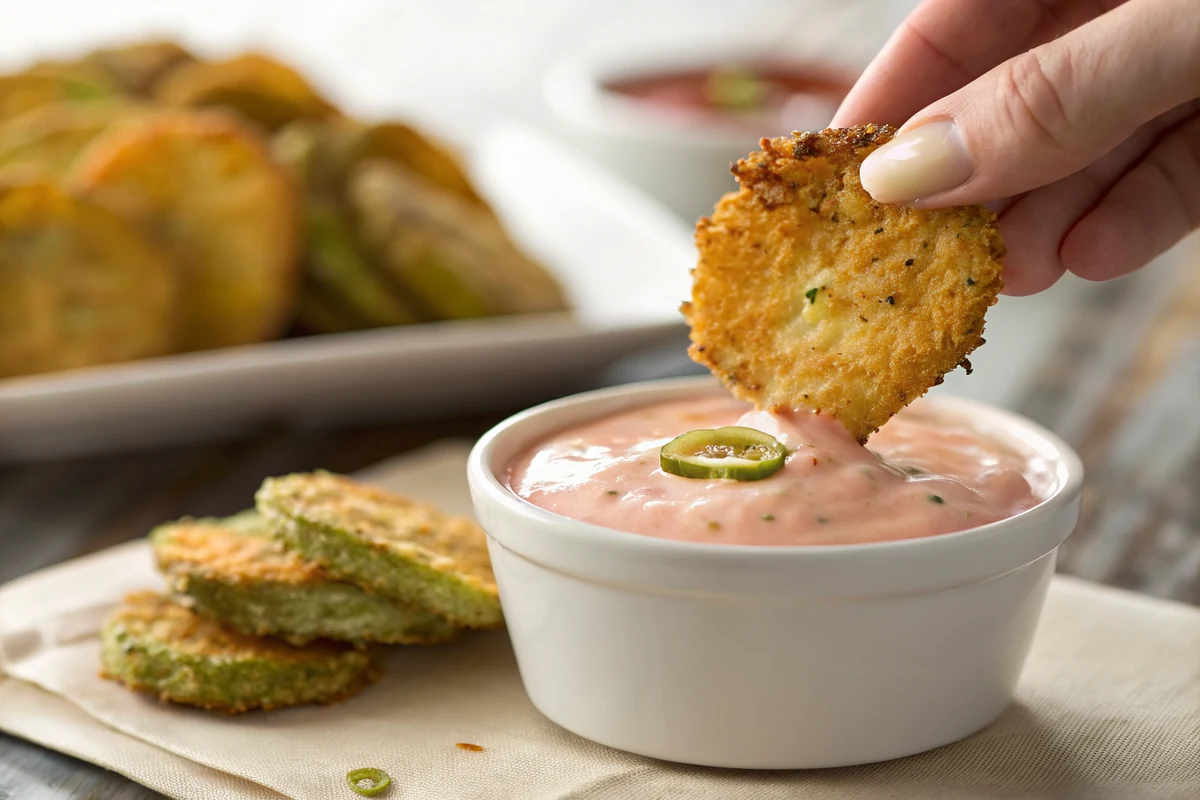
Plenty of restaurants fry pickles, but the Texas Roadhouse version has a particular character. They use crinkle-cut or flat dill chips, not spears, so every bite is mostly crunchy coating with a tangy pop of pickle in the middle. The batter is seasoned with cajun spice, which gives it a savory, peppery edge instead of a plain fried taste.
The other signature is the dipping sauce. It is a creamy, cajun-spiced sauce with a horseradish bite and a touch of ketchup that tints it pink. That cool, tangy sauce against the hot, crunchy pickles is the whole reason the appetizer works so well. I spent as much time dialing in the sauce as I did the pickles.
At home you control the crunch and the seasoning, which means you can make them even better than the restaurant if you respect the two rules. Dry the pickles, and hold your oil at 375F. Everything else is easy. If you love fried steakhouse starters, serve these alongside a cactus blossom for the full appetizer spread, with a ramekin of my blooming onion sauce for dipping both.
Choosing the Right Pickles
Chips, not spears, are what you want for a copycat. Flat dill chips or crinkle-cut chips fry up fast and give you that ideal coating-to-pickle ratio. Spears hold too much brine and stay watery in the center, which steams the coating from the inside and makes it soft. Save the spears for snacking.
Go for a good crunchy dill pickle, not a soft or sweet one. The firmer the pickle, the more snap survives the fry. Bread and butter pickles will fry up too sweet and clash with the savory cajun coating. A classic kosher dill is the flavor most people picture when they think of fried pickles.
Whatever you choose, the brand matters less than how well you dry them. I have made great fried pickles from a plain store brand jar simply by patting them bone dry before dredging. The pickle does its job, the drying does yours.
Why Drying the Pickles Matters So Much
If you take one thing from this recipe, let it be this. Pickle chips come out of the jar soaked in brine, and that surface moisture is the enemy of a crisp coating. Wet pickles make the flour turn to paste, the coating slides off in the oil, and you end up with bald, greasy chips floating in your pot.
Drain them well, then lay them flat on towels and press another towel on top to wick away every drop you can. Some cooks even let them air dry for ten minutes after that. The drier the surface, the better the flour grips and the crunchier the final bite. It takes two minutes and saves the whole dish.
A light first coat of plain flour before the wet dip is another insurance policy. That dry layer gives the buttermilk something to hold onto, which gives the second flour coat something to build on. Layered properly, the coating stays put through the fry and the first dunk in sauce.
Holding Your Oil at 375F
Frying lives and dies by temperature. For thin pickle chips, 375F is the number I chase, a touch hotter than for thicker foods because the pickles only need a couple of minutes and you want the coating to crisp fast before moisture seeps out. A clip-on thermometer takes the guesswork out entirely.
When the oil dips too low, the coating absorbs grease instead of crisping, and you bite into a limp, oily chip. When it runs too hot, the outside scorches while the inside is barely set. Adding too many pickles at once crashes the temperature, so fry in small batches and let the oil recover to 375F between them.
Choose an oil with a high smoke point and a neutral flavor, like vegetable, canola, or peanut oil. Serious Eats has a thorough primer on deep frying at home if you are new to it. Keep a lid nearby for safety and never leave hot oil unattended.
The Cajun Dipping Sauce
The dipping sauce is half the appetizer, and the good news is it takes two minutes and no cooking. My version starts with mayonnaise for body, a little ketchup for sweetness and that signature pink tint, prepared horseradish for bite, and cajun seasoning for the peppery, savory backbone.
A dash of Worcestershire deepens the savory note, and smoked paprika rounds it out with a faint smokiness. Whisk it all together, taste, and adjust to your liking. Want more heat? Add cayenne or a splash of hot sauce. Want more tang? A squeeze of pickle brine or lemon brightens it right up.
Make the sauce first and let it chill while you fry. Resting in the fridge lets the horseradish and spices bloom and meld, so it tastes far better than the moment you mix it. It also keeps for a week in a covered jar, and it is just as good on burgers and fried chicken.
Frying in Batches the Right Way
It is tempting to dump all your pickles in at once and be done, but that is a fast track to soggy results. A pile of cold, wet pickles plunges the oil temperature and they all stick together into a fried clump. Patience here pays off in crunch.
Fry a single layer at a time, only as many chips as fit comfortably without touching. Drop them in one by one so they do not clump, and give the pot a gentle stir after the first thirty seconds so they brown evenly. Each batch takes just 2 to 3 minutes, so the whole job goes quickly even in rounds.
Between batches, let the oil climb back to 375F before you add the next round. Keep finished pickles warm and crisp on a wire rack in a low 200F oven if you are feeding a crowd. They hold for a good ten minutes that way without going soft.
Keeping Them Crispy
What you do right after the fry decides whether your pickles stay crunchy or wilt in five minutes. The instinct is to drop them on paper towels, but that traps steam against the bottom and turns them soggy fast. A wire rack over a sheet pan is the better landing spot, letting air circulate on all sides.
Season them the second they come out of the oil. A pinch of cajun seasoning or flaky salt sticks to the hot, glistening surface and amplifies the flavor. Wait until they cool and the seasoning just slides off. This tiny timing detail makes a real difference in the final taste.
Fried pickles are a serve-now food. They are at their absolute best within a few minutes of leaving the oil, so I time them to come out just as everyone sits down. If you must hold them, the low oven and wire rack combination buys you a little time without sacrificing all the crunch.
Baked and Air-Fryer Versions
If you would rather skip the deep fry, an air fryer does a respectable job. Coat the pickles as directed, spray them well with oil on both sides, and air fry at 400F for about 8 to 10 minutes, flipping halfway, until golden and crisp. They will not be quite as craggy as deep fried, but they are lighter and far less messy.
The oil spray is not optional in the air fryer. Without it the coating stays powdery and pale. Mist them generously, and mist again after the flip. A panko coating instead of the flour dredge crisps especially well with hot air if you want extra crunch.
For an oven version, arrange the coated pickles on a greased rack over a sheet pan, spray with oil, and bake at 450F for 12 to 15 minutes until golden. Neither method matches the deep fried original for shatter-crisp texture, but both get you a tasty snack with less oil and cleanup.
What to Serve With Fried Pickles
Fried pickles are a natural part of an appetizer spread. I love setting them out next to a cactus blossom, a basket of chicken critters, and a platter of Texas Roadhouse grilled shrimp so there is a little of everything, crunchy, fried, and grilled, for a backyard party or game day.
They also play the role of a tangy side next to heartier mains. A basket of fried pickles cuts the richness of a burger or a plate of ribs beautifully, the acidity acting like a built-in palate cleanser. That is exactly why steakhouses put them on the starter menu.
Set out extra dipping sauce and maybe a side of ranch, and you have a crowd pleaser that vanishes fast. I have never once had leftover fried pickles, which tells you everything you need to know about how quickly they disappear.
Scaling Up for a Party
Fried pickles vanish at a gathering, so plan on more than you think you need. Both the seasoned flour and the buttermilk egg wash scale up cleanly, just keep them in wide bowls so you can dredge handful after handful without making a mess. Two jars of pickle chips will feed a decent crowd as one part of an appetizer spread.
The bottleneck is the fryer, not the prep. A single pot only holds a small batch at a time without crashing the oil temperature, so keep the rounds coming and hold the finished pickles crisp on a wire rack in a 200F oven. That way the early batches stay hot and crunchy while you work through the rest.
Set up an assembly line if you have a helper. One person dredges, one person fries, and the baskets fill up fast. Double the dipping sauce too, because it always runs out first, and put out a couple of ramekins around the table so nobody has to reach far for a dunk.
Fried pickles are also a fairground staple, and for good reason: the acid and salt cut the fat of the batter so the whole thing balances instead of overwhelming. My guide to Texas State Fair foods covers the rest of the fried midway lineup and the oil temperature discipline they all depend on.
Reheating Leftover Fried Pickles
Fried pickles are best the minute they come out of the oil, but if you do end up with leftovers, do not microwave them. The microwave steams the coating soft and leaves you with a sad, soggy pickle. There is a much better way to bring back the crunch using dry heat instead.
Spread the leftover pickles in a single layer on a rack or a baking sheet and reheat them in a 400F oven for about 6 to 8 minutes, until they sizzle and crisp back up. An air fryer does the same job even faster, 3 to 4 minutes at 400F is usually plenty. Either way, the dry, circulating heat re-crisps the coating instead of softening it.
Store any leftovers loosely covered in the fridge for up to two days, not sealed airtight while warm, which traps steam and makes them mushy from the start. The dipping sauce keeps separately for a week. Honestly, though, in my house leftover fried pickles are a rare and short-lived event, so plan to make a little extra rather than counting on having any to reheat.
Common Mistakes to Avoid
The biggest mistake is skipping the drying step. Wet pickles ruin the coating before they ever hit the oil, so pat them truly dry. The second is letting the oil temperature drift. Without a thermometer you are guessing, and guessing gives you greasy or burnt pickles. Clip one on and hold 375F.
Crowding the pot is the third common error. Too many pickles at once crashes the heat and they stick together and steam. Fry small batches and let the oil recover. And do not coat the pickles too far ahead, the coating goes gummy if it sits, so dredge just before frying for the crispest result.
Last, do not forget to season the finished pickles. The coating needs a final hit of salt or cajun spice the moment it leaves the oil to taste its best. A bland fried pickle is a sad thing when a quick sprinkle would have fixed it. Treat them right and they rival any basket the restaurant serves.
Texas Roadhouse Fried Pickles Copycat Recipe
Ingredients
- For the fried pickles:
- 1 (16 ounce) jar dill pickle chips (about 2 cups drained)
- 1 cup all-purpose flour
- 1 teaspoon cajun seasoning
- 1 teaspoon paprika
- 1/2 teaspoon garlic powder
- 1/2 teaspoon black pepper
- 1/4 teaspoon cayenne pepper
- 1 large egg
- 1/2 cup buttermilk
- 1 teaspoon hot sauce
- Vegetable or peanut oil, for frying (about 4 cups)
- For the cajun dipping sauce:
- 1/2 cup mayonnaise
- 2 tablespoons ketchup
- 1 tablespoon prepared horseradish
- 1 teaspoon cajun seasoning
- 1/2 teaspoon Worcestershire sauce
- 1/4 teaspoon garlic powder
- 1/4 teaspoon smoked paprika
Instructions
- Drain and dry the pickles. Pour the pickle chips into a colander and let them drain for a few minutes. Then spread them in a single layer on a clean kitchen towel or paper towels and press a second towel firmly on top. Pat them as dry as you can. Wet pickles are the number one reason coatings slide off, so do not skip this. The drier the chips, the better the batter grips.
- Mix the dipping sauce. Whisk together the mayonnaise, ketchup, horseradish, cajun seasoning, Worcestershire, garlic powder, and smoked paprika in a small bowl. Taste and adjust, adding more horseradish for bite or more cajun seasoning for heat. Cover and refrigerate while you fry so the flavors meld and the sauce chills.
- Set up the dredge. In one shallow bowl, whisk the flour with the cajun seasoning, paprika, garlic powder, black pepper, and cayenne. In a second bowl, beat the egg with the buttermilk and hot sauce. The buttermilk gives the coating a tangy lift and helps it cling to the pickles.
- Heat the oil. Pour about 2 inches of oil into a heavy pot or Dutch oven and heat it to 375F on a clip-on thermometer. Holding this temperature is everything. Too cool and the pickles soak up grease and go limp, too hot and the coating browns before it crisps. Keep the thermometer clipped on the whole time.
- Dredge the pickles. Working in small batches, toss a handful of dried pickle chips in the seasoned flour, then dip them in the buttermilk egg, then back into the flour, pressing lightly so the coating builds up. The double dip is what gives you a thick, craggy crust instead of a thin film that slides off.
- Fry until golden. Lower the coated pickles into the hot oil one at a time so they do not clump, and fry in small batches for 2 to 3 minutes, until deep golden brown and crisp. Do not crowd the pot, which drops the oil temperature and steams the coating. Stir gently once so they brown evenly.
- Drain and season. Lift the fried pickles out with a slotted spoon or spider and set them on a wire rack set over a sheet pan, not paper towels, so air keeps them crisp on every side. Sprinkle them with a pinch of cajun seasoning or salt the moment they come out, while the surface is still glistening so it sticks.
- Serve right away. Pile the hot fried pickles into a basket or onto a plate and serve immediately with the chilled cajun dipping sauce. They are at their crunchy best within a few minutes of frying, so call everyone to the table before the first batch is even done.
Frequently Asked Questions
What kind of pickles does Texas Roadhouse use for fried pickles?
Texas Roadhouse uses flat dill pickle chips rather than spears, which gives you that ideal ratio of crunchy coating to tangy pickle in every bite. A firm, classic kosher dill chip fries up best because it holds its snap. Avoid sweet or bread and butter pickles, which clash with the savory cajun coating, and skip spears, which stay too watery in the middle.
Why do my fried pickles get soggy?
Soggy fried pickles almost always come from one of two causes. Either the pickle chips were not dried well enough before dredging, so surface moisture turned the coating to paste, or the oil temperature was too low, so the coating soaked up grease instead of crisping. Pat the pickles bone dry, hold your oil at a steady 375F, and drain the fried pickles on a wire rack, not paper towels.
What is the dipping sauce for Texas Roadhouse fried pickles?
It is a creamy cajun horseradish sauce. My copycat blends mayonnaise, a little ketchup for sweetness and color, prepared horseradish for bite, cajun seasoning, Worcestershire, and smoked paprika. Whisk it together, chill it while you fry, and adjust the horseradish and cajun spice to your taste. The cool, tangy, peppery sauce against the hot crunchy pickles is what makes the appetizer so good.
Can I make fried pickles in an air fryer?
Yes. Coat the pickles as directed, spray both sides generously with oil, and air fry at 400F for 8 to 10 minutes, flipping halfway, until golden and crisp. The oil spray is essential or the coating stays pale and powdery. Air fried pickles are lighter and less messy than deep fried, though they will not be quite as shatter-crisp. A panko coating crisps especially well in the air fryer.
What oil is best for frying pickles?
Use a neutral oil with a high smoke point, such as vegetable, canola, or peanut oil. These can handle the 375F frying temperature without smoking or adding off flavors. Avoid olive oil, which smokes at too low a temperature. You will need about 2 inches of oil in a heavy pot, and you can strain and reuse it once or twice for frying.
How do I keep fried pickles crispy?
Drain them on a wire rack set over a sheet pan instead of paper towels, which trap steam and make the bottoms soggy. Season them with salt or cajun spice the instant they come out of the oil so it sticks. Serve them within a few minutes for the best crunch, or hold them on a rack in a 200F oven for up to ten minutes without losing much texture.
Can I prep fried pickles ahead of time?
You can prep the components but not the finished pickles. Make the dipping sauce up to a week ahead and keep it chilled, and dry the pickle chips earlier in the day. Do not dredge the pickles until just before frying, because the coating turns gummy if it sits. Fried pickles are a serve-now food and lose their crunch quickly, so fry them right before you want to eat.
How many calories are in fried pickles?
A copycat serving of these fried pickles runs roughly 320 calories before the dipping sauce, depending on how much oil the coating absorbs and your portion size. Frying at a steady 375F keeps oil absorption lower than frying too cool, and an air fryer version cuts the calories further. The dipping sauce adds about 90 calories per couple-tablespoon serving, so account for that if you are tracking.