Southern Comfort Food
Texas Roadhouse Cactus Blossom Copycat
Chef Mia's Texas Roadhouse cactus blossom copycat: one giant onion bloomed, battered, and fried crisp, plus the signature dipping sauce recipe.
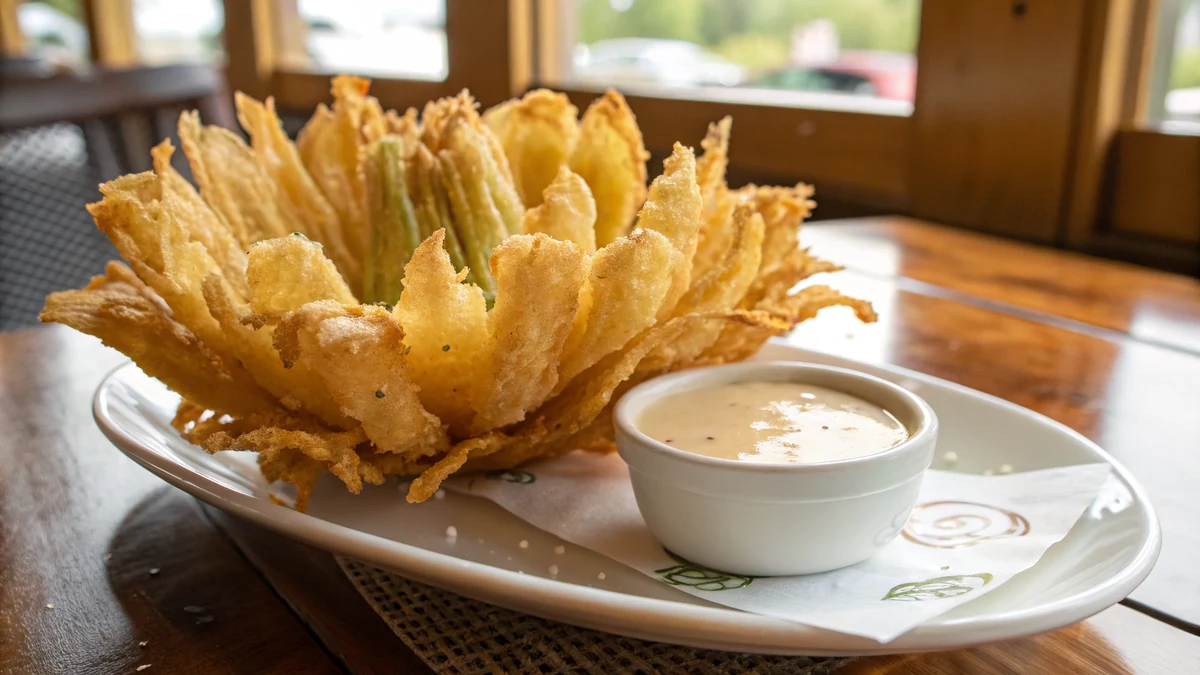
Quick answer: The Texas Roadhouse cactus blossom is one large onion cut into petals, soaked, dredged in a seasoned cajun flour, deep fried until golden, and served with a creamy, tangy signature dipping sauce. The keys are cutting the onion into even petals without slicing through the root, separating the petals so the coating reaches every surface, and frying at 350F so the inside cooks through while the petals turn crisp. It serves a table of six as an appetizer and takes about 35 minutes. It tastes like the restaurant because the seasoning blend and the horseradish-spiked sauce match the original.
The cactus blossom is pure theater. You set a golden, blooming onion in the middle of the table, hand everyone a petal, and watch it vanish in about four minutes flat. It is the Texas Roadhouse appetizer my kids beg for, and for years I assumed it was too fiddly to make at home. I was wrong. Once you learn the cut, the rest is just dredging and frying.
There are really three parts to nail. The cut, which turns one onion into a flower of petals. The coating, a seasoned cajun flour that crisps up shatteringly crunchy. And the sauce, that creamy, peppery, horseradish-laced dip that you will want to put on everything. I will walk you through all three so your first blossom comes out looking and tasting like the restaurant.
This is a showstopper for parties, and it belongs right next to my Texas Roadhouse fried pickles on an appetizer spread. Grab the biggest sweet onion you can find and a sharp knife, and let me show you how the blossom comes together.
What Is the Texas Roadhouse Cactus Blossom
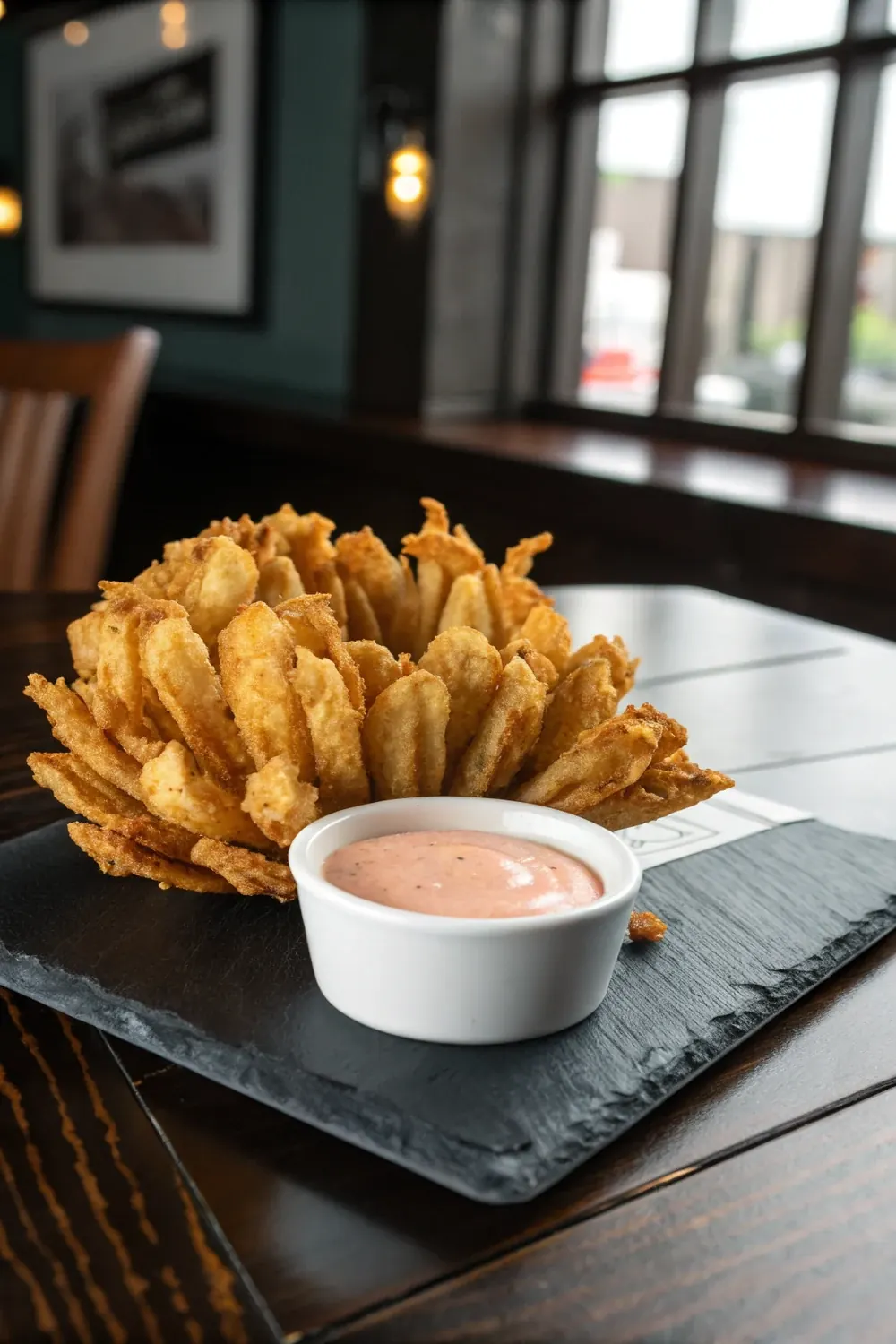
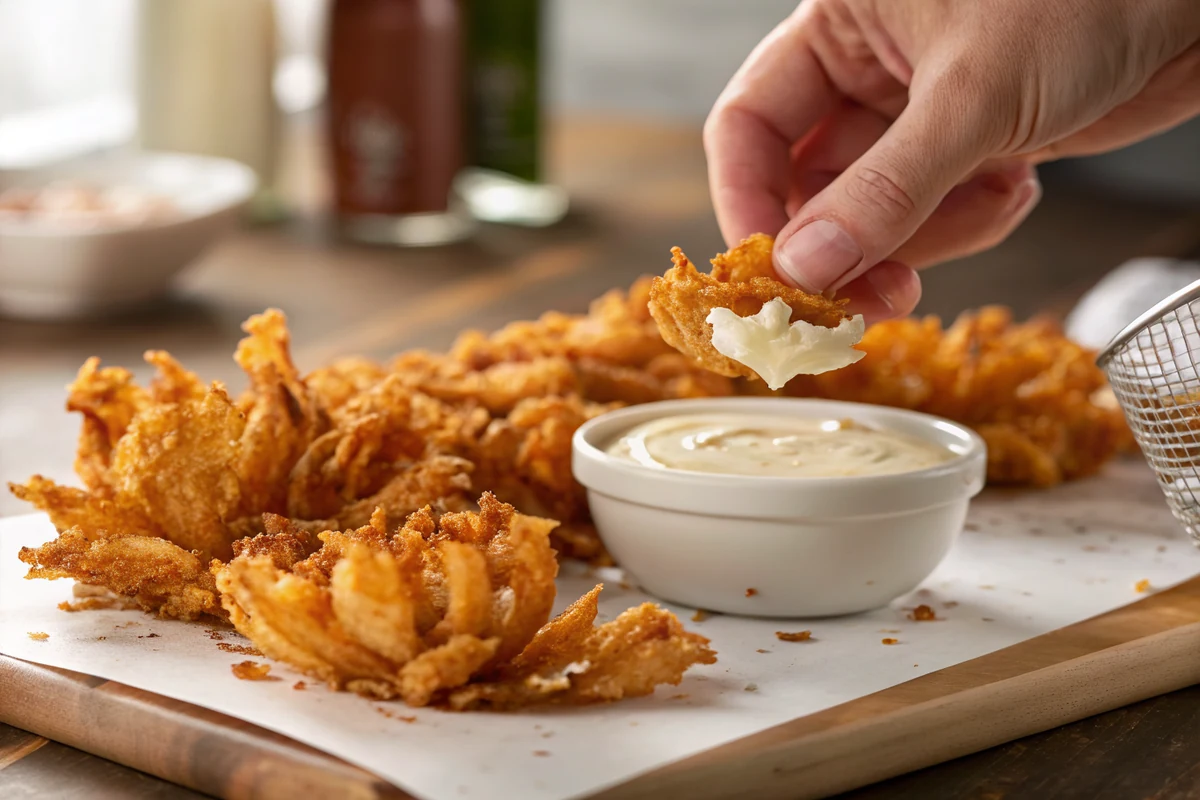
The cactus blossom is Texas Roadhouse's take on the blooming onion, that giant fried onion appetizer cut to fan open like a flower. One whole sweet onion is sliced into petals, battered in a seasoned cajun flour, and deep fried until crisp and golden. It arrives at the table looking like an edible centerpiece, with a cup of dipping sauce tucked into the middle.
It earns its name from the way the petals curl outward when it fries, splaying open like a desert bloom. You eat it with your fingers, pulling petals free one at a time and dragging them through the sauce. It is messy, communal, and completely addictive, which is exactly why it disappears so fast.
Making it at home is more approachable than it looks. The intimidating part is the cut, and once you have done it once it becomes second nature. Everything after that is the same dredge-and-fry routine you would use for fried pickles, just on a grander, more dramatic scale.
Choosing the Right Onion
Size matters here. You want the biggest onion you can find, ideally a full pound, so it blooms into an impressive flower with plenty of petals to go around. A small onion makes a stingy blossom that cooks unevenly. Go large or the whole effect falls flat.
Sweet onions are the classic choice, a Vidalia, Walla Walla, or a big Spanish yellow. Their mild sweetness mellows further as they fry, so the petals taste rich rather than sharp. A regular yellow onion works fine too if that is what you have, just expect a slightly more assertive onion flavor.
Look for a round, firm onion with tight, papery skin and no soft spots. A symmetrical shape makes for a prettier, more even bloom. Avoid flat or lopsided onions, which open unevenly and fry up with raw spots on the thick side and overcooked petals on the thin one.
How to Cut the Petals
This is the heart of the whole dish, and it is simpler than it looks. Trim about half an inch off the pointed top, peel the onion, but leave the hairy root end completely intact, because that root is what holds all the petals together through the soak and the fry. Set the onion cut side down on your board.
Now make your cuts. Starting roughly half an inch out from the center root, slice straight down to the board. Make the next cut a little way around, and keep going all the way around the onion until you have 12 to 16 evenly spaced cuts, like the spokes of a wheel. A sharp, sturdy knife and one firm push per cut works best.
Flip the onion over and gently coax the petals apart with your fingers. They should fan open into a flower. If they cling, a soak in ice water relaxes them. Take your time and keep the cuts even, because uniform petals fry uniformly and look the part on the platter.
Separating and Soaking the Petals
Once the onion is cut, the petals need to open up so the coating can reach every surface. Tightly closed petals trap raw onion and leave bald, uncoated spots. The easiest way to open them is a 10 to 15 minute soak in a big bowl of ice water, which loosens the layers and encourages them to splay outward.
After soaking, drain the onion upside down so the water runs out of the center. A blossom full of trapped water will spit and seize in the hot oil and steam the coating from the inside. Pat the outside gently and let it sit upside down on a towel for a minute before you start dredging.
If you skip the soak, you can still pry the petals apart by hand, just be patient and gentle so you do not snap them off at the root. Well separated petals are what give the finished blossom that open, lacy, restaurant look, so it is worth a few extra minutes.
The Seasoning Blend
The coating is where the cactus blossom gets its flavor, and the seasoning is built on that familiar cajun-leaning blend, paprika, cajun seasoning, garlic, onion powder, black pepper, and cayenne. It is savory, a little smoky, and carries a gentle warmth that builds as you eat. The flour itself should taste boldly seasoned before the onion ever touches it.
Do not be timid with the spices. A whole pound of onion plus a thick double coating is a lot of surface area to flavor, so a flat, underseasoned dredge tastes bland in the middle of all that fried crunch. Taste a pinch of your flour, it should taste a touch too salty and peppery on its own.
The cayenne sets the heat level. The restaurant version is mild, so a half teaspoon gives a pleasant background warmth without lighting anyone up. Bump it up if your crowd likes spice, or leave it out entirely for the kids. The cajun seasoning already brings plenty of savory depth on its own.
Coating It Evenly
Even coating is the difference between a crisp, golden blossom and a patchy one with raw, uncoated petals. The double dredge is the way to get there. Set the onion root side up in the seasoned flour and use a spoon to push flour down into every petal, then turn it to coat the outside, and shake off the loose excess.
Next comes the egg wash. Lower the floured onion into the milk and egg mixture and spoon it down into the center so every petal gets wet, not just the outside. Lift it, let the extra drip away, then plunge it back into the flour for a second coat, pressing the flour firmly into all the crevices.
That second coat builds the thick, craggy crust that makes a blooming onion so satisfying. Work over the bowl and do not rush it. The more thoroughly you coat between the petals now, the crisper and more even the fry will be, with no soft or naked spots.
Frying the Blossom
You need a deep, wide pot and enough oil to submerge the whole onion, about 5 to 6 inches. Heat it to 350F, a touch lower than for thin items, because the blossom is thick and the center needs time to cook through before the petals burn. A clip-on thermometer is non-negotiable for a piece this size.
Lower the onion in petal side down first, gently, using a spider so you do not splash hot oil. Fry it that way for about 3 minutes to set and brown the petals, then carefully flip it root side down and fry another 3 to 4 minutes. The trickiest spot is the dense center, so make sure it is cooked, not raw.
Safety counts with a fry this big. Use a pot large enough that the oil does not surge up over the rim when you add the onion, keep a lid nearby, and never walk away from hot oil. If you are new to frying, the Serious Eats guide to deep frying at home covers the basics well.
How to Make Cactus Blossom Sauce (The Signature Dip)
The cactus blossom sauce is a two-minute, no-cook whisk job: 1/2 cup mayonnaise, 2 tablespoons sour cream, 2 tablespoons ketchup, 1 tablespoon prepared horseradish, 1 teaspoon cajun seasoning, 1/2 teaspoon paprika, 1/4 teaspoon dried oregano, and 1/4 teaspoon garlic powder. Stir it all together, cover, and chill at least 20 minutes. That is the entire recipe, and it makes enough for one blossom with a little left to fight over.
Each piece earns its spot. Mayonnaise is the creamy body and the sour cream loosens it with a lactic tang; ketchup brings the sweetness and that signature blush-pink color; horseradish is the bite you remember an hour later. The cajun seasoning, paprika, oregano, and garlic tie it back to the coating on the petals so the sauce and the onion taste like one dish. It is a close cousin of the classic blooming onion sauce, which I keep as its own page with deeper ratios and variations.
The chill matters more than it looks. Horseradish and dried spices need 20 minutes or so in the fridge to dissolve into the fat and round out; sauce eaten straight after mixing tastes flat and disjointed next to the same sauce an hour later. I mix the sauce first, before the onion is even cut, and let the fridge work while the blossom fries.
Adjust it to taste and put it to work beyond the blossom. More horseradish for a sharper kick, a pinch of cayenne for heat, extra ketchup if your table skews sweet. It keeps about a week covered in the fridge, and it is outstanding on burgers, with fries, and as a dip for fried pickles, so I usually double the batch on purpose.
Serving It as a Centerpiece
Half the fun of a cactus blossom is the presentation. Set the fried onion on a platter, tuck the cup of dipping sauce right into the open center, and bring it to the table whole so everyone can pull petals together. It is a communal, hands-on appetizer that gets people talking and reaching.
It belongs on a spread of fried steakhouse starters. I serve it alongside fried pickles and a basket of warm Texas Roadhouse rolls with cinnamon butter for a party platter that looks generous and costs a fraction of a restaurant tab.
Serve it the moment it comes out of the oil. A blooming onion is at its crisp, dramatic best while it is hot, and it softens as it sits. Time it to land on the table right as your guests gather, and it will be gone before you have a chance to sit down yourself.
Reheating and Leftovers
A cactus blossom is a serve-now showpiece, but a large onion makes a lot of food, so leftovers happen. Skip the microwave, which turns the crisp petals limp and rubbery in seconds. Dry heat is the only way to bring back any of the original crunch once the blossom has cooled.
Spread the leftover petals in a single layer on a sheet pan and reheat them in a 400F oven for 6 to 8 minutes, or in an air fryer at 400F for 3 to 4 minutes, until they crisp and sizzle again. Pulling the cooled blossom apart into individual petals first helps them reheat evenly and keeps the dense center from staying cold.
Store leftover petals loosely covered in the fridge for up to two days, and keep the dipping sauce in its own covered container, where it lasts about a week. If you know you will not finish a whole blossom, it is smarter to fry a slightly smaller onion than to wrestle with reheating, since nothing quite matches that first hot, crisp bite straight from the oil.
Common Mistakes to Avoid
The most common mistake is cutting through the root. If you slice too close to the bottom, the petals fall apart and you lose the flower entirely. Always leave a good half inch of intact root at the base to hold everything together. The second mistake is not opening the petals enough, which leaves bald, uncoated spots.
Frying too hot is another trap. At a blazing temperature the petals scorch dark while the dense center stays raw. Hold the oil at 350F and give the blossom time, flipping it so both sides cook evenly. Too cool, on the other hand, and the whole thing turns greasy, so a thermometer keeps you honest.
Finally, do not skimp on the coating or the seasoning. A thin, bland dredge gives you a limp, flavorless blossom that no amount of sauce can rescue. Double coat it, press the seasoned flour into every crevice, and salt it the moment it leaves the oil. Done right, your homemade cactus blossom rivals the one at the restaurant.
Texas Roadhouse Cactus Blossom Copycat Recipe
Ingredients
- For the cactus blossom:
- 1 very large sweet onion (Vidalia or yellow, about 1 pound)
- 2 cups all-purpose flour
- 1 tablespoon paprika
- 2 teaspoons cajun seasoning
- 1 teaspoon garlic powder
- 1 teaspoon onion powder
- 1 teaspoon black pepper
- 1/2 teaspoon cayenne pepper
- 1 teaspoon salt
- 2 large eggs
- 1 1/2 cups whole milk
- Vegetable or peanut oil, for frying (about 6 cups)
- For the signature dipping sauce:
- 1/2 cup mayonnaise
- 2 tablespoons sour cream
- 2 tablespoons ketchup
- 1 tablespoon prepared horseradish
- 1 teaspoon cajun seasoning
- 1/2 teaspoon paprika
- 1/4 teaspoon dried oregano
- 1/4 teaspoon garlic powder
Instructions
- Make the dipping sauce. Stir together the mayonnaise, sour cream, ketchup, horseradish, cajun seasoning, paprika, oregano, and garlic powder in a small bowl. Taste and adjust the horseradish for more bite or the cajun seasoning for more heat. Cover and chill while you make the blossom so the flavors come together.
- Cut the onion into petals. Slice about 1/2 inch off the pointed top of the onion and peel it, leaving the root end intact. Set it cut side down. Starting about 1/2 inch from the root, make a downward cut to the board, then keep making cuts around the onion, 12 to 16 in all, like spokes of a wheel. The intact root holds the petals together.
- Open the petals. Flip the onion over and gently spread the petals apart with your fingers so it opens like a flower. If they are stubborn, soak the whole onion in a bowl of ice water for 10 to 15 minutes, which relaxes the layers and makes them bloom open. Drain it upside down before coating.
- Set up the dredge. Whisk the flour with the paprika, cajun seasoning, garlic powder, onion powder, black pepper, cayenne, and salt in a wide bowl. In a second bowl deep enough to hold the onion, beat the eggs with the milk. Having both bowls wide makes it far easier to coat between the petals.
- Coat the blossom. Set the onion root side up in the flour and spoon the seasoned flour down into all the petals, then turn it and coat the outside. Shake off the excess. Dip it into the egg wash, spooning it into the center so every petal gets wet. Lift, let it drip, then return it to the flour and coat thoroughly a second time. Press the flour into the crevices.
- Heat the oil. Pour 5 to 6 inches of oil into a deep, wide pot, enough to submerge the onion, and heat it to 350F on a clip-on thermometer. A heavy Dutch oven or a deep fryer works best. Make sure the pot is large enough that the oil does not rise dangerously when you lower the onion in.
- Fry the blossom. Carefully lower the onion into the oil petal side down using a spider or slotted spoon, and fry for 3 minutes. Then flip it root side down and fry another 3 to 4 minutes, until deep golden and crisp all over. The center takes the longest, so make sure the petals near the core are cooked through and not raw.
- Drain and serve. Lift the blossom out and set it on a wire rack or paper-towel-lined plate to drain for a minute, then sprinkle with a little salt or cajun seasoning. Transfer it to a platter, nestle the cup of dipping sauce in the center, and serve immediately while it is hot and shatteringly crisp.
Frequently Asked Questions
What is a cactus blossom at Texas Roadhouse?
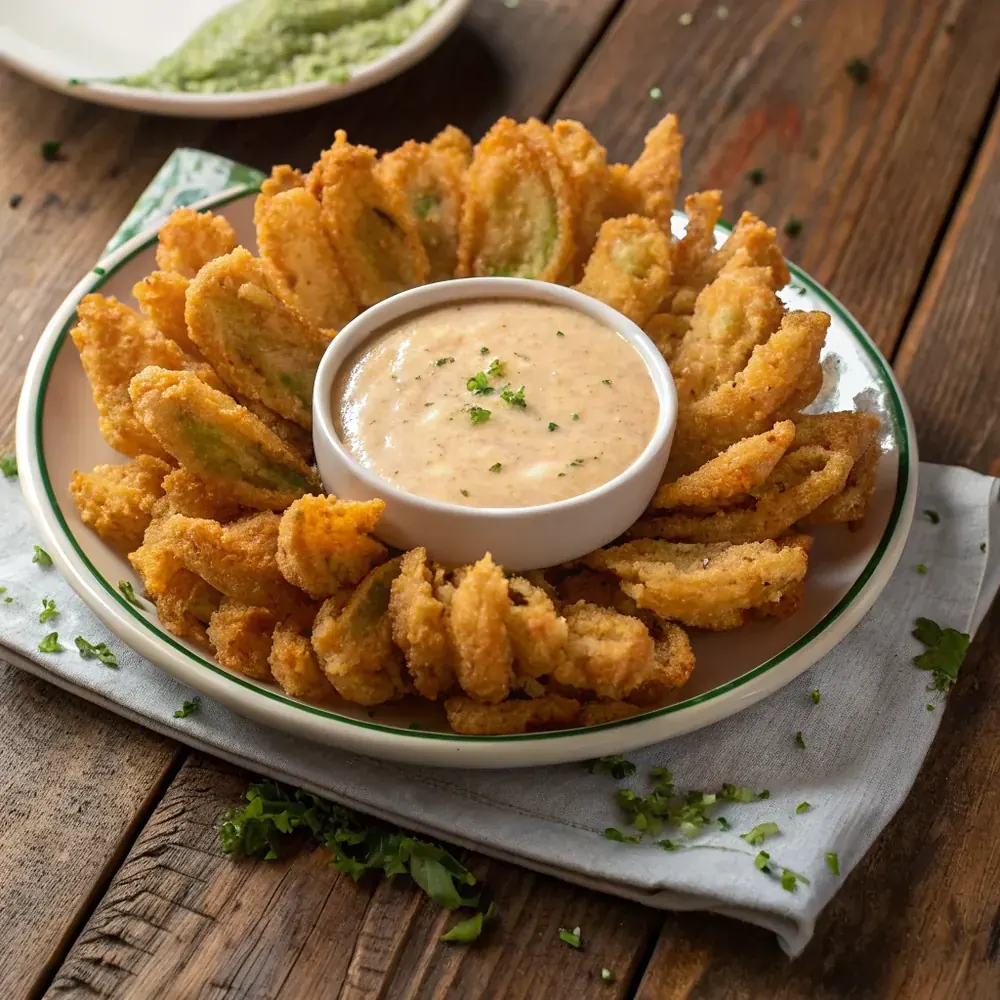
The cactus blossom is Texas Roadhouse's version of a blooming onion. One large sweet onion is cut into petals that fan open like a flower, battered in a seasoned cajun flour, and deep fried until golden and crisp. It is served whole as a shareable appetizer with a creamy, tangy horseradish dipping sauce tucked into the center, and a table of guests pulls the petals off to dip and eat.
How do you cut an onion for a cactus blossom?
Trim about half an inch off the pointed top and peel the onion, leaving the root end fully intact. Set it cut side down, then starting about half an inch from the center root, make 12 to 16 straight downward cuts around the onion like spokes of a wheel. The intact root holds the petals together. Flip it over and gently spread the petals open into a flower before coating.
What is in the cactus blossom dipping sauce?
The signature sauce is 1/2 cup mayonnaise, 2 tablespoons sour cream, 2 tablespoons ketchup, 1 tablespoon prepared horseradish, 1 teaspoon cajun seasoning, 1/2 teaspoon paprika, 1/4 teaspoon dried oregano, and 1/4 teaspoon garlic powder. Whisk it together with no cooking and chill it at least 20 minutes while the blossom fries so the horseradish and spices meld. Adjust the horseradish and cayenne to make it sharper or spicier.
What kind of onion is best for a blooming onion?
Use the largest sweet onion you can find, about a pound, such as a Vidalia, Walla Walla, or a big Spanish yellow onion. Sweet onions mellow as they fry, giving the petals a rich rather than sharp flavor, and a large size makes a dramatic, full bloom with plenty of petals. Choose a round, firm, symmetrical onion for the most even cut and fry.
What temperature do you fry a cactus blossom?
Fry the blossom at 350F, a little lower than you would use for thin foods, because the onion is thick and the dense center needs time to cook through before the petals burn. Use a clip-on thermometer and a deep, wide pot with enough oil to submerge the onion. Fry petal side down first for about 3 minutes, then flip and fry another 3 to 4 minutes until golden and crisp.
Can I make a cactus blossom in an air fryer?
You can, with adjusted expectations. Cut and coat the onion as directed, spray it very generously with oil all over including down into the petals, and air fry at 375F for about 12 to 15 minutes until golden and crisp, checking that the center cooks through. It will not be quite as uniformly crisp as the deep fried version, but it is lighter and far less messy. Mist again partway through if any spots look dry.
How far ahead can I prep a cactus blossom?
Make the dipping sauce up to a week ahead and keep it chilled. You can cut the onion and soak it in ice water earlier in the day, then drain it well. Do not coat the onion until just before frying, because the dredge turns gummy if it sits. Like all fried foods, a cactus blossom is best served hot and fresh, so fry it right before you plan to eat.
How many people does a cactus blossom serve?
One large blossom comfortably serves about six people as a shared appetizer, which is why it is such a popular party starter. It is rich and filling, so a little goes a long way, especially alongside other appetizers like fried pickles. If you are feeding a bigger crowd, it is easier and safer to fry two separate onions than to try to bloom one giant one.