Southern Comfort Food
Texas Roadhouse Filet Medallions Copycat
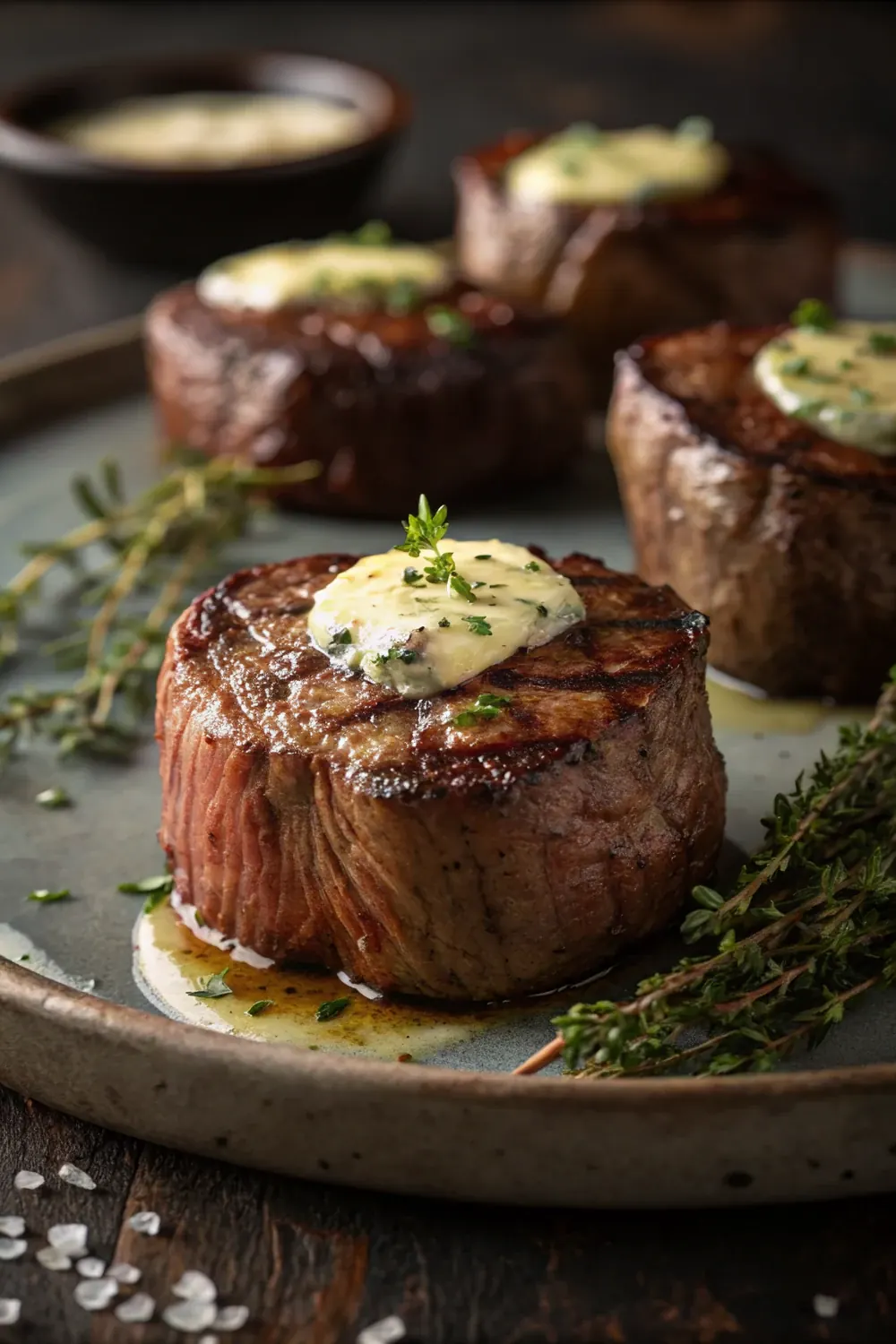
Chef Mia's Texas Roadhouse filet medallions copycat: tender petite filets seared and basted in garlic butter to a perfect medium-rare in 20 minutes.
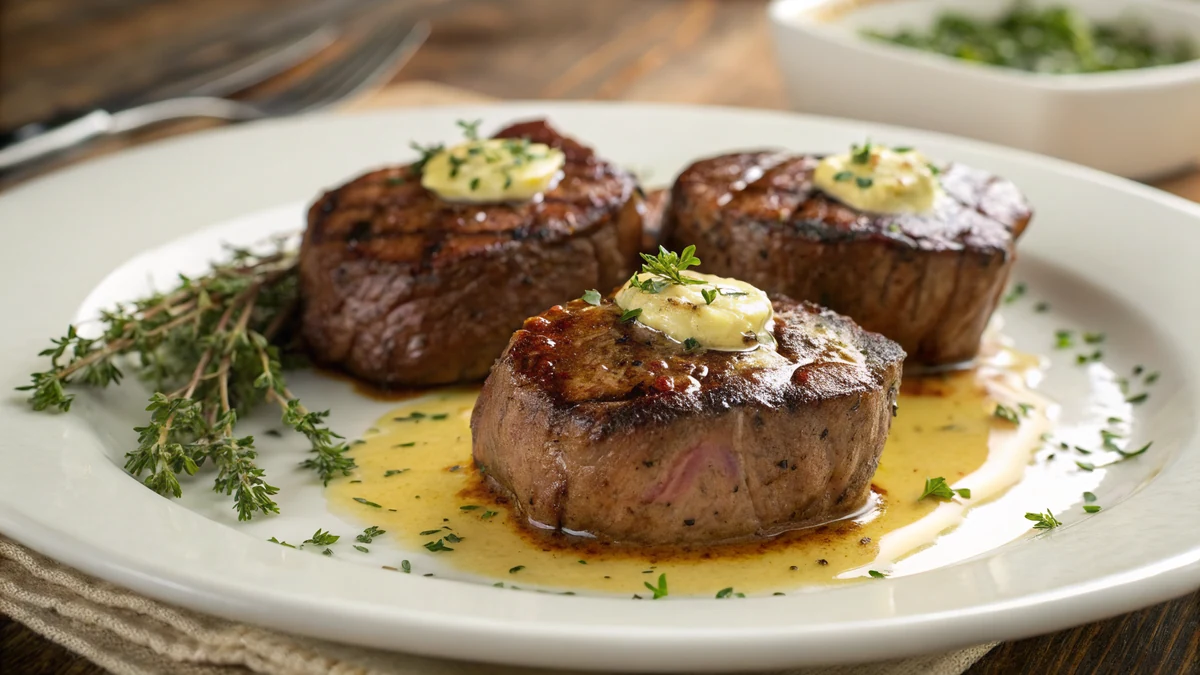
Quick answer: Texas Roadhouse filet medallions are petite, tender beef tenderloin steaks. You season the medallions with a steak-style rub, sear them hard in a screaming hot cast iron skillet for a couple of minutes per side, then baste them with garlic, butter, and thyme until they reach 130 to 135F for medium-rare. A five-minute rest finishes the job. The whole dinner takes about 20 minutes of active cooking and serves four. It tastes like the steakhouse because of the bold sear, the garlic butter baste, and pulling the filets at the right temperature so they stay buttery tender.
Filet medallions are what I order at Texas Roadhouse when I want the most tender bite on the menu without committing to a giant steak. They are small, round portions of beef tenderloin, the same cut as a filet mignon, cooked to a buttery medium-rare and served two or three to a plate. The first time I made them at home, my husband asked what restaurant I had snuck out to.
The secret is that filet is naturally the most tender cut of beef, so your whole job is to not mess it up. That means a hard sear for crust, a garlic butter baste for flavor, and pulling the steaks at exactly the right temperature so they stay rosy and juicy. If you have made my Texas Roadhouse prime rib, you already respect the thermometer, and that habit is everything here.
This is my go-to for an anniversary dinner at home, a special Friday, or any night a good filet goes on sale. Get the cast iron blazing hot, melt some butter, and let me walk you through the medallions I have made more times than I can count to land on something that truly tastes like the steakhouse.
What Filet Medallions Are at Texas Roadhouse
Filet medallions on the Texas Roadhouse menu are petite portions of beef tenderloin, the same prized cut that a full filet mignon comes from. Instead of one large steak, you get two or three smaller round medallions on the plate, cooked to your chosen doneness and served with two sides. It is the most tender steak the steakhouse offers.
Because they are smaller and thinner than a thick filet mignon, medallions cook fast and are a little more forgiving of a busy night. They also plate beautifully, which is part of why they feel special. At the restaurant they often arrive with a simple finish that lets the quality of the beef do the talking.
Recreating them at home is mostly about respecting the cut. Tenderloin is lean and buttery, with little marbling, so the danger is overcooking it into something dry and gray. A hard sear, a butter baste, and a thermometer are all you need to land a restaurant-quality medallion in your own kitchen in about twenty minutes.
Choosing and Cutting the Filet
The cut you want is beef tenderloin. You can buy pre-cut filet medallions or filet mignon steaks from the butcher case, or buy a section of whole tenderloin and cut your own medallions, which is often cheaper per pound. Aim for pieces about five to six ounces each and one to one and a half inches thick for a juicy, even cook.
Look for filets that are bright red, firm, and a uniform thickness across the piece. Even thickness matters more than people expect, because a medallion that is fat on one side and thin on the other will overcook at the thin edge. If you cut your own, trim off the silverskin, the silvery membrane, since it is chewy and will not break down.
Tenderloin is naturally low in fat, so it relies on technique rather than marbling for flavor and moisture. That is why the sear and the butter baste matter so much here. If you want a beefier, more marbled experience another night, a strip or ribeye is the move, but for pure tenderness nothing beats a well cooked filet medallion.
The Seasoning That Tastes Like the Steakhouse
Texas Roadhouse seasons its steaks with a savory blend built on salt, black pepper, garlic, onion, and a little paprika. For a tender filet I keep it simple and let the beef shine, leaning mostly on coarse salt and cracked pepper with a supporting cast of the other spices. Bold seasoning on the outside builds the flavorful crust that defines a great sear.
Season more generously than feels natural, and make sure you hit the rounded edges of the medallion too, not just the flat faces. A thick piece of beef can absorb a lot of seasoning, and a timid sprinkle tastes bland by the time you reach the center. Press the rub on so it adheres and forms a proper crust.
If you already keep my Texas Roadhouse steak seasoning in a jar, this is exactly the dish it was built for. A confident sprinkle of that blend on each medallion seasons it in one step, with the same savory, slightly sweet profile the steakhouse uses across its grill. It is the fastest route to that familiar flavor.
Why You Bring the Steak to Room Temperature
Pulling the medallions out of the fridge 30 to 40 minutes before cooking is a small step that pays off twice. A steak that starts cold takes longer to come up to temperature in the center, which means the outside overcooks into a thick gray band while you wait for the middle to catch up. Tempered beef cooks more evenly, edge to center.
Just as important, take the time during that rest to pat the medallions thoroughly dry with paper towels. Surface moisture is the enemy of a good crust, because water has to boil off before browning can begin, and that delay overcooks the meat just under the surface. A dry steak hitting a hot pan browns almost instantly.
Do not skip drying just because the steak looked dry in the package. Juices weep out as it sits, and a quick blot right before seasoning makes a real difference. Season after drying, not before, so the salt does not pull fresh moisture to the surface right as you are about to sear. Dry, seasoned, and room temperature is the trifecta.
Getting a Restaurant-Quality Sear
The crust is where a home filet either becomes special or stays ordinary. A deep brown crust forms through the Maillard reaction, which needs high, dry heat. Cast iron is my pan of choice because it holds ferocious heat even when cold steaks hit it, so the temperature does not crash and the sear keeps going strong.
Heat the empty skillet over high for a full four to five minutes before any oil goes in. Use a neutral oil with a high smoke point, like avocado, canola, or grapeseed, because butter alone would burn at this heat. Add the oil, let it shimmer and just begin to smoke, then lay the medallions down and leave them completely alone.
Two to three undisturbed minutes per side builds the crust. The loud, aggressive sizzle tells you the pan is hot enough. If it falls quiet, your pan cooled off and you are steaming, not searing. Sear the rounded edges too by standing the medallions on their sides with tongs, so the whole filet is browned, not just the top and bottom.
The Garlic Butter Baste
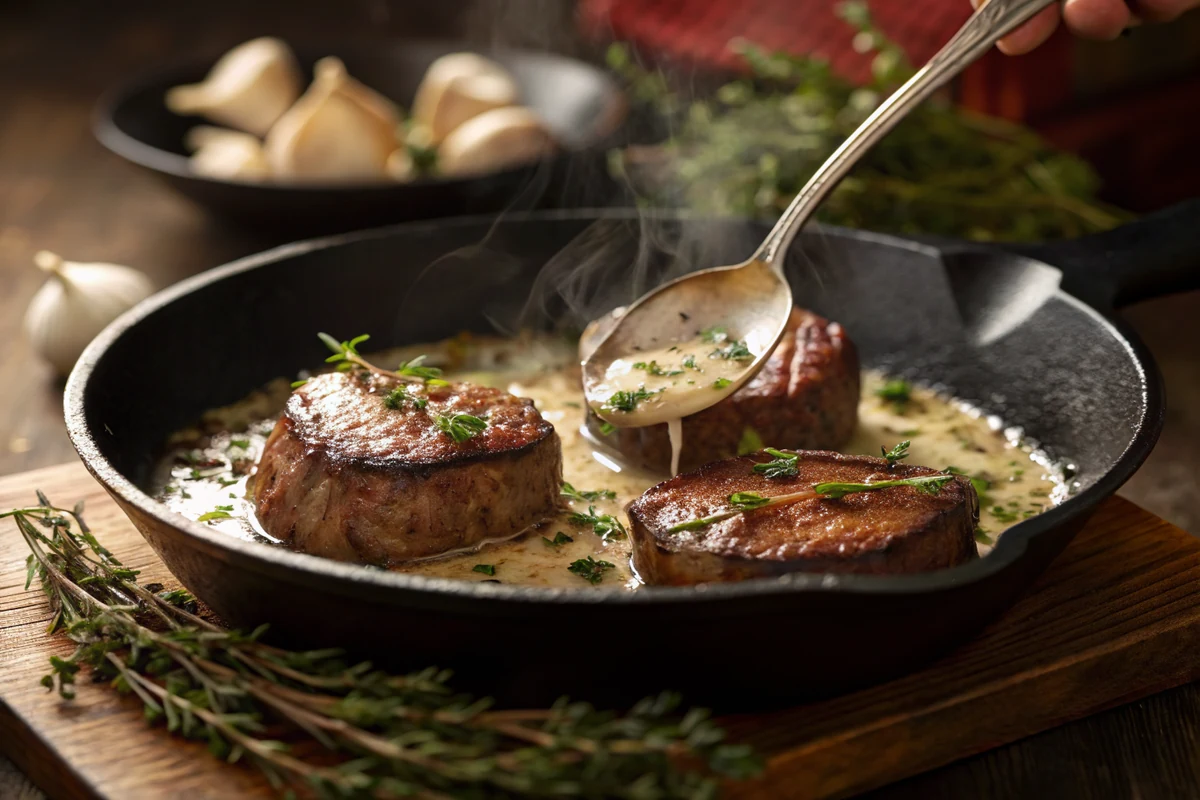
Basting is the move that turns a good seared steak into a steakhouse one. After you flip the medallions, drop in butter, a few smashed garlic cloves, and sprigs of fresh thyme or rosemary. As the butter melts and foams, it carries the garlic and herb flavor, and spooning it over the beef bastes that flavor right into the crust.
Tilt the pan so the butter pools at the lower edge, then use a spoon to ladle it over the filets again and again for about a minute. The hot fat finishes cooking the top of the steak gently and evenly while building a glossy, aromatic surface. This is the part that makes your kitchen smell like a restaurant grill line.
Watch the butter so it foams and browns slightly without burning. If the garlic starts to scorch, pull the pan off the heat for a few seconds and keep basting off the burner. That nutty browned butter and softened garlic become a built-in sauce, and a spoonful over the rested steak is all the finishing it needs.
Steak Doneness Temperatures
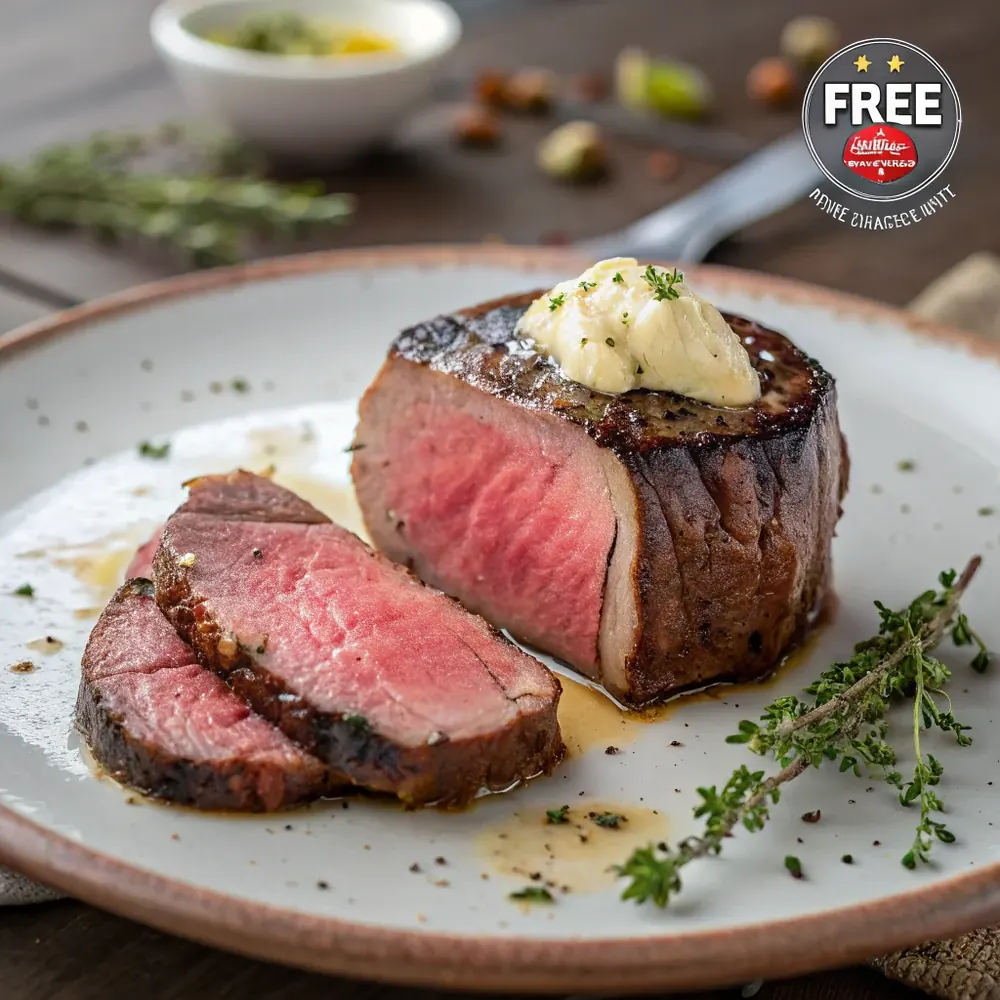
Tenderloin is lean and unforgiving of overcooking, so a thermometer is your best friend. For medium-rare, the sweet spot for a filet, I pull the medallions at 130 to 135F, knowing carryover heat will carry them up a few more degrees while they rest. For medium, pull at 135 to 140F. Past that, a filet starts to dry out and lose its magic.
Because filet medallions are a whole muscle cut rather than ground beef, they are safe to enjoy at medium-rare. The USDA lists 145F with a three minute rest as the safe temperature for whole cuts of beef, and many steak lovers prefer the rosier medium-rare range, which is a personal call.
Check the temperature in the thickest part of the medallion, not near the edge, and start checking early since these cook fast. An instant-read thermometer takes the guesswork out completely, which matters most with an expensive, lean cut like this. Cooking by time alone is a gamble, and a gray, overcooked filet is a sad waste of a beautiful steak.
Resting and Slicing
Resting is not optional with steak. When meat cooks, its juices are driven toward the center, and cutting in right away lets all of that liquid spill out onto the board, leaving the steak dry. A five minute rest, loosely tented with foil, lets the juices redistribute back through the medallion so every bite stays moist.
The medallions will rise a few degrees during the rest from carryover cooking, which is exactly why you pull them a touch early. A warm plate or board keeps them from cooling too much while they rest. Do not wrap them tightly in foil, which traps steam and softens that hard-won crust you worked to build.
If you slice the medallions to plate them, cut against the grain into thick pieces so each bite is tender. Spoon a little of the reserved pan garlic butter over the top and finish with a pinch of flaky salt for crunch and a pop of seasoning. Then serve right away while everything is hot and the crust is still crisp.
Toppings and Sauces
A filet medallion is delicious with nothing more than its garlic butter, but it also loves a sauce. My favorite finish is a spoonful of my Texas Roadhouse portobello mushroom sauce, whose earthy, savory mushrooms and rich gravy are a classic steakhouse pairing that makes the plate feel like a special-occasion dinner out.
For a smothered medallion in the steakhouse style, pile on sauteed onions, sauteed mushrooms, and a little melted Jack cheese, the same treatment I use on my chopped steak. A peppercorn pan sauce or a swipe of compound herb butter also dresses the filets up beautifully without much extra effort or many more dishes.
Keep any sauce on the side or spooned lightly over the top rather than drowning the steak. The whole point of a filet is its tender texture and clean beef flavor, so the sauce should support it, not bury it. A restrained hand here keeps the medallions tasting like the premium cut they are.
What to Serve With Filet Medallions
This is a steakhouse plate, so I build the sides to match. A scoop of creamy loaded mashed potatoes is the classic partner, rich and comforting against the lean, tender beef. A baked potato with all the fixings does the same job if that is more your speed on a special night.
For something green and a little lighter, buttery green beans, roasted asparagus, or sauteed mushrooms all sit happily beside the filets without stealing the show. A crisp wedge salad with a sharp dressing adds a cool, fresh contrast to the richness of the steak and the garlic butter, and it feels appropriately steakhouse.
To go all out for a celebration, start with a basket of warm rolls and cinnamon butter and pour a glass of red wine. Filet medallions make the centerpiece of a restaurant-quality dinner at home for a fraction of the bill, and a thoughtful side or two is all it takes to complete the experience.
Make-Ahead and Reverse-Sear Option
For the best texture, filet medallions are a cook-to-order dish, but you can still prep ahead. Mix the seasoning blend in advance, and trim and portion the medallions earlier in the day so they are ready to temper and sear at dinnertime. The garlic butter ingredients can be measured and waiting by the stove so the actual cook is quick and calm.
If you are nervous about timing on thick medallions, try a reverse sear. Bake the seasoned steaks on a rack in a low 250F oven until they reach about 115 to 120F in the center, then sear them hard in the hot skillet and baste. This method gives you edge-to-edge even doneness and a more relaxed window to hit your target temperature.
Leftover cooked medallions keep in the fridge for up to three days. Reheat them gently so they do not overcook, ideally in a low 250F oven just until warmed through, or slice them cold over a salad or into a steak sandwich. A delicate cut like this is best treated kindly on the second day rather than blasted in a hot pan again.
Common Mistakes to Avoid
The first mistake is a cold, wet steak. Temper the medallions for half an hour and pat them bone dry, because a cold or damp filet will steam and refuse to build a crust. The second is a pan that is not hot enough. Preheat the cast iron hard, and listen for that loud sizzle when the beef lands. A quiet pan means a gray sear.
The third mistake is overcooking, the cardinal sin with a lean, pricey filet. Use a thermometer, pull at 130 to 135F for medium-rare, and account for carryover heat during the rest. Guessing by time turns tender filet into dry, gray disappointment. The thermometer is the single best tool for protecting an expensive cut of beef.
The last mistake is skipping the rest. Cutting into the medallions straight out of the pan dumps all the juices onto the board and leaves the steak dry. Give them five minutes, loosely tented, so the juices settle back in. Patience at the very end is what separates a juicy restaurant-style filet from a disappointing one.
Texas Roadhouse Filet Medallions Copycat Recipe
Ingredients
- For the filets:
- 4 beef tenderloin medallions (about 5 to 6 ounces each, 1 to 1 1/2 inches thick)
- 1 tablespoon neutral oil (canola, avocado, or grapeseed)
- 1 1/2 teaspoons kosher salt
- 1 teaspoon coarse black pepper
- 1/2 teaspoon garlic powder
- 1/2 teaspoon onion powder
- 1/4 teaspoon paprika
- For the garlic butter baste:
- 3 tablespoons salted butter
- 3 cloves garlic, smashed
- 3 sprigs fresh thyme (or rosemary)
- Flaky salt, to finish
Instructions
- Temper and dry the filets. Take the medallions out of the fridge 30 to 40 minutes before cooking so they lose their chill and cook evenly. Pat them very dry on all sides with paper towels. A dry surface is non-negotiable for a good sear, because any surface moisture turns to steam and stops the crust from forming. Dry steak browns, wet steak gray-steams.
- Season generously. Stir together the salt, pepper, garlic powder, onion powder, and paprika. Rub the medallions lightly with oil, then season all over, including the rounded sides. Press the seasoning on so it sticks. Season more than feels comfortable, because a thick filet needs it, and let the seasoned steaks sit while the pan heats so the salt can start working.
- Get the skillet screaming hot. Set a cast iron skillet over high heat for 4 to 5 minutes until it is genuinely ripping hot. Add the oil and let it shimmer and just start to smoke. A truly hot pan is the difference between a deep brown crust and a sad gray sear, so do not rush this step or move on before the pan is ready.
- Sear the first side. Lay the medallions in the pan without crowding and do not move them for 2 to 3 minutes. Let a dark, even crust build. You should hear an aggressive sizzle the whole time. If the pan goes quiet, it was not hot enough. Resist every urge to peek or nudge, because the crust needs that undisturbed contact to form.
- Flip and add the butter. Flip the medallions once. Add the butter, smashed garlic, and thyme to the pan. As the butter melts and foams, it will pick up the garlic and herb flavor. Sear this side for another 2 minutes. Use tongs to also sear the rounded edges briefly so the whole filet is browned, not just the two flat faces.
- Baste with garlic butter. Tilt the skillet so the foaming butter pools at the lower edge, and spoon it continuously over the filets for about a minute. This baste flavors the meat and helps it finish cooking evenly. Keep checking the temperature with an instant-read thermometer, pulling at 130 to 135F for medium-rare, since carryover heat will add a few more degrees.
- Rest before serving. Move the medallions to a warm plate or board and let them rest for 5 minutes, loosely tented with foil. Resting lets the juices redistribute so they stay in the steak instead of flooding the plate when you cut. Spoon a little of the pan garlic butter over the top and finish with a pinch of flaky salt just before serving.
Frequently Asked Questions
What are filet medallions at Texas Roadhouse?
Filet medallions are petite portions of beef tenderloin, the same premium cut as filet mignon. Instead of one large steak, you get two or three smaller round medallions on the plate, cooked to your preferred doneness and served with two sides. It is the most tender steak on the Texas Roadhouse menu, prized for its buttery texture rather than heavy marbling.
What cut of meat are filet medallions?
Filet medallions are cut from the beef tenderloin, the long, lean muscle that filet mignon also comes from. You can buy them pre-cut, use filet mignon steaks, or slice your own medallions from a section of whole tenderloin, which is often more economical. Aim for pieces about five to six ounces each and one to one and a half inches thick.
What temperature should filet medallions be cooked to?
For medium-rare, pull the medallions at 130 to 135F and let carryover heat carry them up a few degrees during the rest. For medium, pull at 135 to 140F. The USDA lists 145F with a three minute rest as the safe temperature for whole cuts of beef, while many steak lovers prefer the rosier medium-rare range. Use an instant-read thermometer for accuracy.
How do I cook filet medallions so they stay tender?
Temper the steaks to room temperature, pat them dry, and season generously. Sear them hard in a screaming hot cast iron skillet for two to three minutes per side, then baste with garlic, butter, and thyme. Pull them at 130 to 135F for medium-rare and rest them five minutes. The biggest threat to a tender filet is overcooking, so trust a thermometer over a timer.
Do I need a cast iron skillet for filet medallions?
A cast iron skillet is ideal because it holds intense heat even when cold steaks hit it, which gives you the deep, even crust that defines a great sear. Any heavy, oven-safe pan that gets ripping hot will work in a pinch. Avoid thin, lightweight pans, which lose their heat the moment the beef lands and leave you steaming rather than searing the filets.
What sauce goes with filet medallions?
Filet medallions are excellent with just their garlic butter, but they pair beautifully with a portobello mushroom sauce, a peppercorn pan sauce, or a swipe of compound herb butter. For a steakhouse-style smothered version, top them with sauteed onions, sauteed mushrooms, and a little melted Jack cheese. Keep sauces light so the tender beef and clean flavor still come through.
Can I make filet medallions without a grill?
Absolutely. A hot cast iron skillet on the stovetop gives you a better, more even crust than most home grills, plus the bonus of a garlic butter baste right in the pan. Sear the seasoned medallions two to three minutes per side, baste with butter and garlic, and finish to temperature. No outdoor grill is needed for a restaurant-quality result.
What sides go with filet medallions?
Classic steakhouse sides are the best match. Loaded mashed potatoes or a baked potato with the fixings, buttery green beans, roasted asparagus, sauteed mushrooms, or a crisp wedge salad all pair well. A basket of warm rolls with cinnamon butter and a glass of red wine turn filet medallions into a full celebration dinner at home.