Southern Comfort Food
Texas Roadhouse Prime Rib Copycat
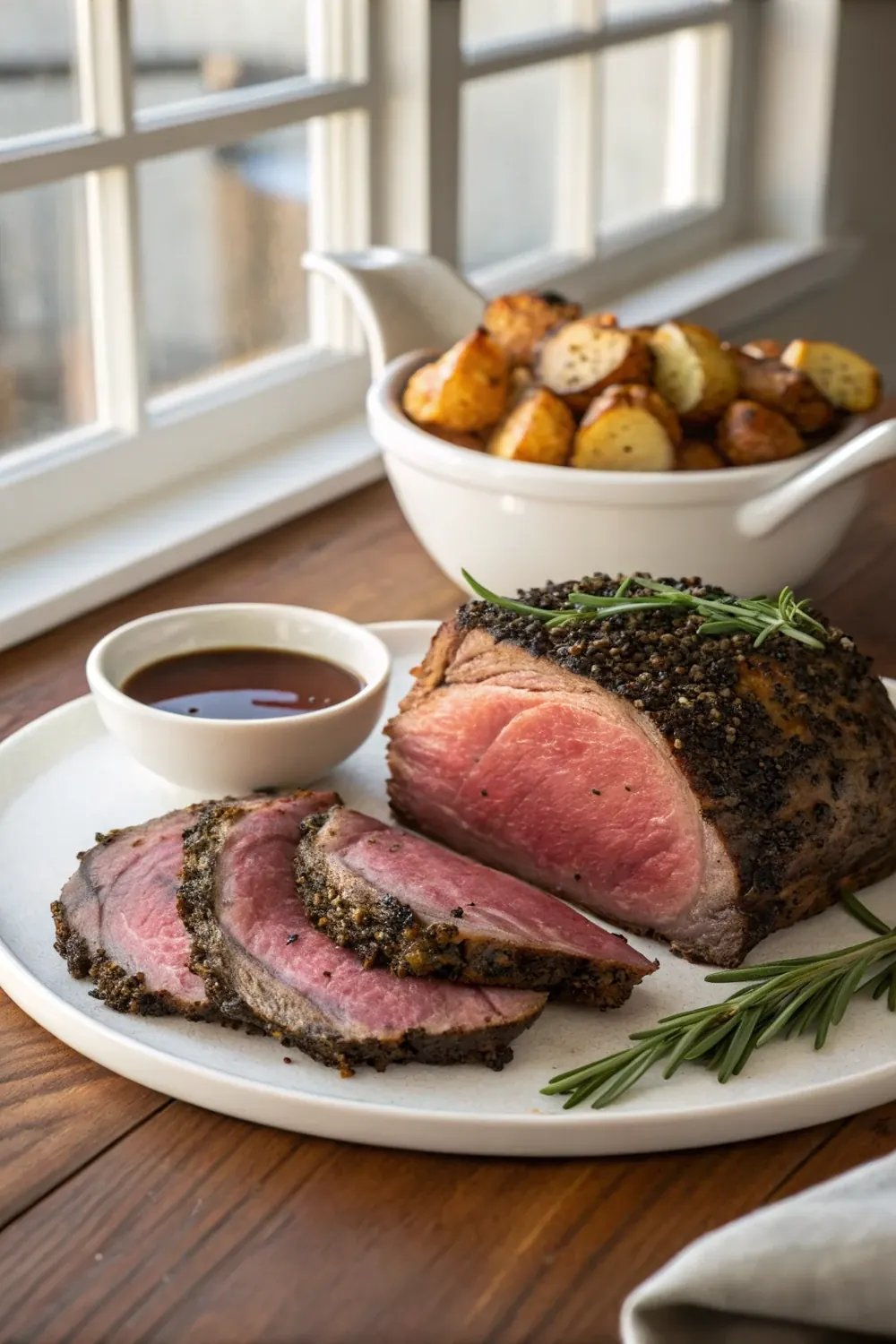
Chef Mia's copycat Texas Roadhouse prime rib, dry-brined and reverse-seared or smoked low and slow, with real doneness temps, au jus, and horseradish cream.
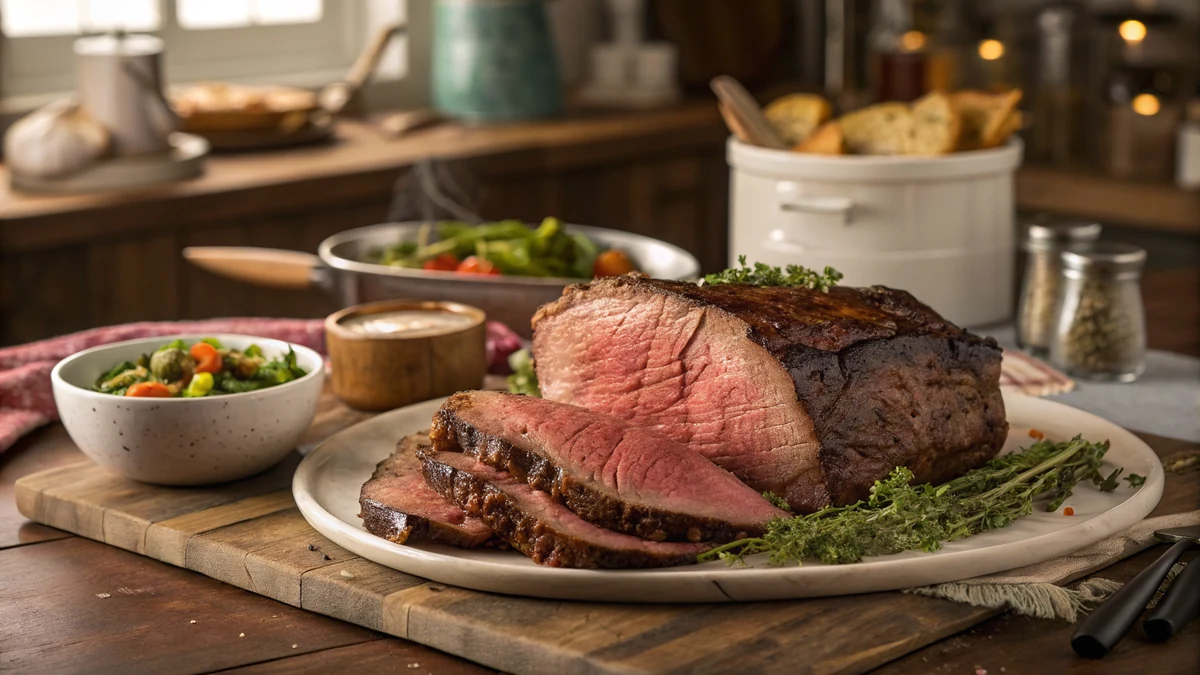
Quick answer: Texas Roadhouse prime rib starts with a 5 to 6 pound standing rib roast, dry-brined overnight with kosher salt, then coated in a copycat steak seasoning rub. Roast it low in a 250F oven (or smoke it at 225F) until the center hits 125F for medium-rare, then blast it hot for a crackling crust. Rest tented 25 minutes, slice against the grain, and serve with drippings au jus and a cold horseradish cream. Pull a few degrees early for carryover.
I will be honest with you. The first time I tried to copy the Texas Roadhouse prime rib at home, I cremated a beautiful roast because I trusted my oven dial instead of a thermometer. That hunk of beef cost me forty dollars and a good chunk of my pride. So this recipe is the version I wish someone had handed me back then, scribbled on a grease-stained card. It is patient, it is forgiving, and it tastes like the slab they carve at the restaurant on a Friday night, only better because you control the salt and the doneness.
Here is the thing nobody tells you. The restaurant magic is not some secret machine. It is salt, time, low heat, and a hot finish. I dry-brine the roast overnight so the meat seasons all the way through, then I lean on a copycat Texas Roadhouse steak seasoning for the crust. From there you pick your road: a low oven reverse-sear if it is raining, or the smoker if you want that pecan smoke ring. Both land in the same gorgeous medium-rare. I will walk you through every temperature, every rest, and the two sauces that make people quiet at the table.
Why This Copycat Tastes Like the Restaurant
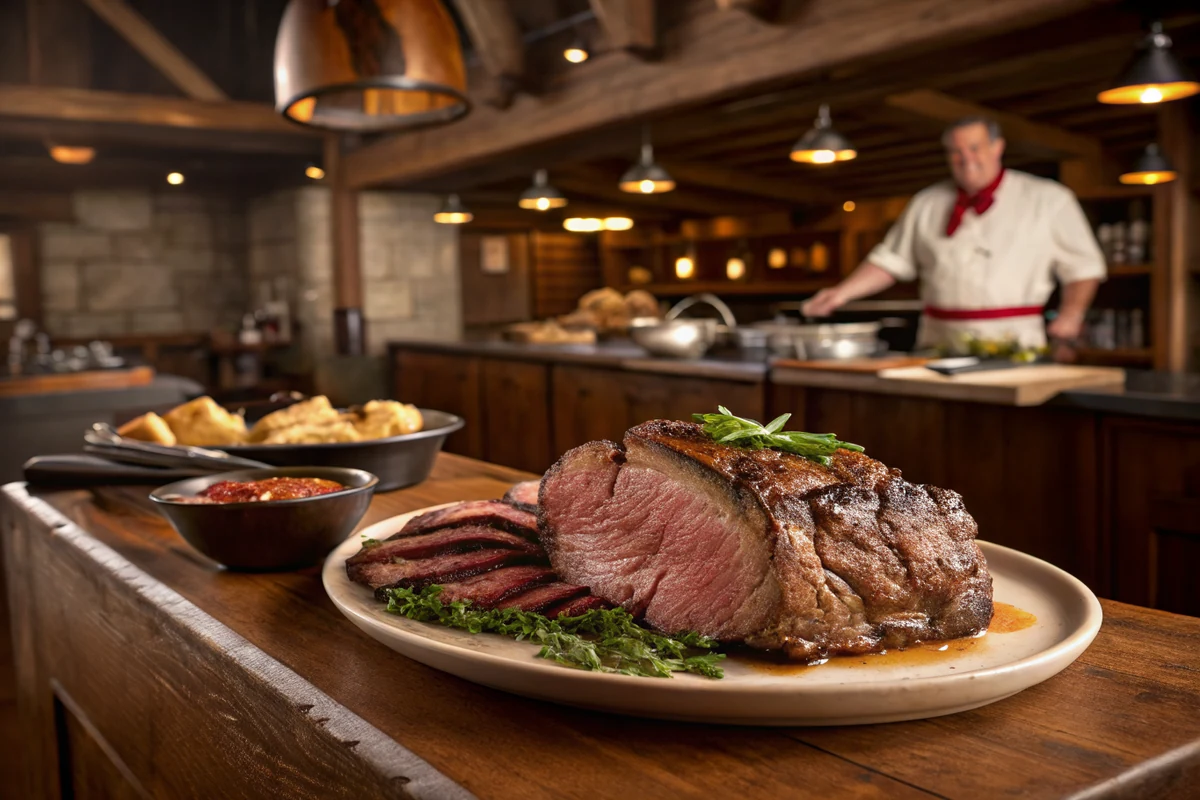
Let me set expectations right up front. This is a copycat inspired by the restaurant I love, not the official recipe, and I have no affiliation with Texas Roadhouse. What I can tell you is that I have eaten their prime rib more times than I should admit, and I reverse-engineered the flavor by paying attention to three things: a heavily salted exterior, a buttery rub that leans on garlic and onion, and beef cooked gently so it stays pink corner to corner.
The restaurant runs giant roasts on slow rotation, which is exactly why their slices are so even and juicy. We cannot fit a hotel pan of beef in a home oven, but we can copy the technique. Low and slow first, hot crust last. That sequence is the whole ballgame.
Once you taste a roast you dry-brined and pulled at the right temperature, the steakhouse markup starts to look a little silly. A 5 to 6 pound roast feeds my family of six with leftovers for about a third of what we would pay sitting in a booth. And I get to keep all the bones for stock.
Choosing the Right Roast: Prime vs Choice, Bone-In vs Boneless
Grade matters more than almost anything else. USDA Prime has the most marbling, so it is the richest and most forgiving, but it costs more and can be hard to find outside a good butcher counter. Choice is the sweet spot for most of us, plenty marbled and widely available. I avoid Select for a roast like this because it runs lean and can dry out before the fat does its job. If a whole roast feels like too much for a weeknight, the same beefy hit comes from skewered steak kabobs on the grill or a quick pan of seared Texas Roadhouse filet medallions.
Bone-in or boneless is mostly a personal call. Bone-in looks dramatic, insulates the meat a touch, and the bones make incredible snacks. Boneless is easier to slice cleanly and carves into tidy rounds, which is nice for a crowd. If you buy bone-in, ask the butcher to cut the eye off the bones and tie it back on. You get the insulation while cooking and effortless slicing later.
For six people I buy a 5 to 6 pound roast, figuring roughly three-quarters of a pound to a pound per person raw. Big eaters and leftover lovers should round up. A roast that size also holds heat beautifully through the rest, which keeps your medium-rare safe from overcooking. If you scale up, keep the temperatures identical and just add time.
The Overnight Dry Brine and Why It Works
Salt is not just for taste here, it is doing chemistry. When you salt the roast and let it sit uncovered overnight, the salt first draws moisture to the surface, then that salty liquid gets reabsorbed deep into the muscle. The result is beef seasoned all the way through, not just on the crust, and proteins that hold onto water better during cooking.
Leaving it uncovered on a rack does a second favor. The surface dries out, and dry meat browns far better than wet meat. A damp roast steams and stays pale no matter how hot your oven runs. A dried, brined roast crackles into a mahogany crust in minutes.
Use kosher salt and give it real time, 12 to 24 hours. I have rushed this to a couple of hours when company surprised me, and the difference is night and day. If you want a flawless side to go with it, start my Texas Roadhouse mashed potatoes while the roast rests so everything lands hot together.
Building a Copycat Texas Roadhouse Steak Seasoning Rub
The rub is where the restaurant personality lives. Mine is built on kosher salt and a heavy hand of coarse black pepper, then rounded out with garlic powder, onion powder, and sweet paprika. A little brown sugar helps the crust caramelize without tasting sweet, and that is the note people cannot quite place when they take the first bite.
Two ingredients are the sneaky ones. A pinch of turmeric deepens the color so the crust reads golden and rich instead of dull, and a teaspoon of cornstarch helps the whole mixture cling to the buttered surface and crisp up under high heat. It is a trick I borrowed from fried chicken dredges, and it works beautifully on a roast.
If you love this blend, make a big jar of the standalone steak seasoning and keep it by the stove. It is excellent on ribeyes, burgers, and roasted potatoes, and having it premixed means prime rib night is one less thing to measure when your hands are already greasy with butter.
Oven Reverse-Sear, Step by Step
The reverse-sear flips the old method on its head. Instead of searing first and finishing low, you cook the roast gently in a 250F oven until it is nearly done, then blast it hot to build the crust. Cooking low keeps the temperature even from edge to center, so you get pink all the way across instead of a gray band under the surface.
Plan on about 20 to 25 minutes per pound in that low oven, but trust the thermometer, not the clock. Every roast and oven is a little different. I pull mine when the center reads 118 to 120F, rest it, then sear at 500F for 8 to 12 minutes. The crust forms fast at that heat, so stay in the kitchen and watch it.
This is the same logic the food world has championed for years, and if you want the deep nerdy explanation, here is a solid writeup of the reverse-sear method. The takeaway is simple. Gentle heat for doneness, fierce heat for crust, and a thermometer to tie it together.
Smoker Method: Wood, Temps, and the Smoke Ring
If the weather cooperates, the smoker is my favorite road. Set it between 225 and 250F and let the roast take on slow, clean smoke. For wood I reach for oak when I want a steady backbone of smoke, or pecan when I want something a little sweeter and nuttier that flatters beef without overpowering it. Skip the heavy mesquite here, it can turn bitter over a long cook.
Place the roast fat-side up directly on the grate with a leave-in probe in the center. Smoke until the center hits 120 to 122F for medium-rare, roughly 30 to 35 minutes per pound, so about 3 to 3.5 hours for a 5 to 6 pound roast. The low chamber temperature builds a gorgeous pink smoke ring just under the bark.
You can serve it straight off the smoker, but I usually rest it, then give it a fast sear in a 500F oven or over a hot grill for a crisper crust. Either way, a smoked prime rib with that bark and a spoon of horseradish cream is the kind of thing that makes guests stop mid-sentence. For the timing on any size roast, my how long to smoke prime rib guide breaks it down by the pound.
Real Doneness Temperatures and Carryover Cooking
Here is the chart I live by, and the temperatures are the ones to actually trust. Rare lands at 120 to 125F, medium-rare at 130 to 135F, and medium at 140F. Past that you are cooking the very thing you paid for right out of the meat, so I rarely go above medium for a roast this nice.
The catch is carryover. A big roast keeps cooking after it leaves the heat, climbing another 5 to 8 degrees while it rests. That is why I pull my medium-rare roast at 118 to 122F, not at 130F. If you wait until the probe reads your final number, the rest will overshoot it and you will be disappointed.
For safety and a full reference, check the USDA safe temperature guidance, which lists 145F with a rest for whole cuts of beef. Cook to the doneness you are comfortable with, but always go by a calibrated thermometer rather than time or color, because color lies and ovens drift.
The Meat Thermometer Is Non-Negotiable
I will say it plainly. You cannot nail prime rib by feel or by minutes per pound alone, not consistently. A leave-in probe thermometer that sits in the roast the whole cook and reads out to a unit on the counter is the difference between guessing and knowing. Set an alarm for your pull temperature and you are free to make sides and pour wine.
Placement matters as much as the tool. Slide the probe into the thickest part of the eye, angling away from any bone, because bone conducts heat and will read hotter than the meat around it. If your probe drifts into a fat pocket or touches bone, you will pull too early or too late.
Calibrate it once in ice water, where it should read 32F. I keep a fast instant-read on hand too, to spot-check the center in a couple of places before I commit to resting. Two thermometers sounds like overkill until the night you save a hundred-dollar roast with them.
Resting, Slicing Against the Grain, and Carving Tips
Resting is not optional and it is not the time to get impatient. When beef cooks, the juices race toward the center. Resting tented under loose foil for 20 to 30 minutes lets them settle back through the meat so they end up on your plate as flavor instead of pooling on the board the second you cut.
When it is time to carve, find the grain. The muscle fibers run in a clear direction, and you want your knife to cross them, not follow them. Slicing against the grain shortens every fiber so each bite gives way easily. Cut with the grain and even a perfect medium-rare can chew like a rope.
For bone-in roasts, run a long knife between the meat and the bones first to free the eye, then lay it flat and slice into half-inch to three-quarter-inch slabs. A sharp, long carving knife and a steady hand beat a serrated knife here. Wipe the blade between cuts so your slices stay clean and the crust stays put.
Au Jus and Horseradish Cream From Scratch
The au jus is built from the gift the roast leaves behind. Pour off the excess fat but keep those dark drippings glued to the pan, set it over medium heat, and deglaze with a splash of red wine, scraping up every browned speck. Add beef stock and a hit of Worcestershire, simmer until it tastes deep and beefy, and season at the end. Strain it if you want it glossy and smooth.
The horseradish cream is the cold, sharp counterpoint. I stir sour cream with drained prepared horseradish, a little mayo for body, Dijon for tang, and a squeeze of lemon to keep it bright. Make it ahead and keep it cold so the bite stays assertive. Add more horseradish if you like it to clear your sinuses, less if you have timid eaters.
Serve both on the side so everyone builds their own bite. A thin slice dragged through warm jus, then touched with cool cream, is the exact contrast that makes this feel like a special-occasion dinner even on a regular Tuesday. Add a few grilled shrimp skewers on the side and you have the classic steakhouse surf and turf.
Leftovers: French Dip Sandwiches and Prime Rib Hash
Leftover prime rib might be the best part of the whole project. The day after, I shave cold slices thin, pile them on a toasted hoagie with melted provolone, and serve a cup of reheated au jus for dipping. That French dip alone is worth cooking a roast a size larger than you think you need.
For breakfast I dice the trimmings and ends into a hash with crispy potatoes, onions, and peppers, then crown each plate with a runny fried egg. The smoky bark bits scattered through the potatoes are little flavor bombs, and it uses up every scrap so nothing good goes to waste.
When you reheat, be gentle. Slices dropped into warm, not boiling, au jus come back to life without cooking past your original medium-rare. A microwave will turn beautiful pink beef gray and tough in seconds, so I avoid it for anything I want to eat sliced. Save the microwave for the gravy, not the meat.
Make-Ahead, Holiday Timing, and Common Mistakes
For a holiday, work backward from when you want to eat. Salt the roast the night before, take it out to temper 60 to 90 minutes ahead, then build in the low cook, a hot sear, and at least a half-hour rest. A roast actually holds beautifully tented for up to an hour, so finishing early and resting longer is a feature, not a problem, when you are juggling a full table.
The mistakes I see most are all avoidable. Skipping the dry brine, slicing without resting, cooking by the clock instead of a thermometer, and pulling at the final temperature instead of accounting for carryover. Each one quietly ruins an otherwise great roast, and each one is easy to dodge once you know it is coming.
Round out the meal with warm bread and a green vegetable. My Texas Roadhouse rolls with cinnamon butter and a pan of Texas Roadhouse green beans turn this into a full steakhouse spread at home. And if someone at the table swears off red meat, my chicken fried chicken keeps everybody happy at the same dinner.
Texas Roadhouse Prime Rib Copycat Recipe
Ingredients
- For the roast:
- 1 standing rib roast, 5 to 6 pounds (bone-in or boneless ribeye roast), Prime or Choice grade
- 2 tablespoons kosher salt (Diamond Crystal), for the overnight dry brine
- 2 tablespoons unsalted butter, softened, plus a little olive oil
- For the steak seasoning rub:
- 1 tablespoon kosher salt
- 1 tablespoon coarsely ground black pepper
- 2 teaspoons garlic powder
- 2 teaspoons onion powder
- 2 teaspoons sweet paprika
- 1 teaspoon light brown sugar, packed
- 1/2 teaspoon ground turmeric
- 1 teaspoon cornstarch (helps the rub cling and crisp)
- For the au jus and horseradish cream:
- 2 cups low-sodium beef stock
- 1/2 cup dry red wine or extra stock
- 1 tablespoon Worcestershire sauce
- 1 small shallot, minced (optional)
- 1/2 cup sour cream
- 1/4 cup prepared horseradish, drained
- 1 tablespoon mayonnaise
- 1 teaspoon Dijon mustard
- 1 teaspoon lemon juice
- Pinch of salt and black pepper, to taste
Instructions
- Dry-brine overnight. Pat the roast bone-dry with paper towels. Rub 2 tablespoons kosher salt over every surface, including the ends. Set the roast on a wire rack over a sheet pan and refrigerate uncovered 12 to 24 hours. This pulls moisture out, then pulls it back in seasoned, and the open air dries the surface so it browns later. Do not skip this. It is the single biggest reason home prime rib tastes flat.
- Make the rub and season. Whisk together the kosher salt, black pepper, garlic powder, onion powder, paprika, brown sugar, turmeric, and cornstarch. Take the roast out and let it sit on the counter 60 to 90 minutes to take the chill off. Smear the softened butter and a little olive oil all over, then pat the rub on firmly. The cornstarch and turmeric give you that restaurant cling and color.
- Oven reverse-sear, low phase. Heat the oven to 250F. Set the roast fat-side up on the rack over the sheet pan and slide a leave-in probe thermometer into the thickest center, away from bone. Roast slowly, about 20 to 25 minutes per pound, until the center reads 118 to 120F for medium-rare. For a 5 to 6 pound roast that is roughly 2 to 2.5 hours. Pull it the moment the probe hits your number.
- Oven reverse-sear, hot finish. Tent the roast loosely and rest it 20 minutes while you crank the oven to 500F (or as high as it goes). Return the roast and sear 8 to 12 minutes, watching closely, until the crust is deep brown and crackling. Carryover will push the center up to 128 to 132F. This high-heat finish after the slow cook is what gives you edge-to-edge pink with a roaring crust.
- Smoker method. If you would rather smoke it, set the smoker to 225 to 250F with oak or pecan. Place the roast directly on the grate, fat-side up, with the probe in the center. Smoke until the center reads 120 to 122F for medium-rare, about 30 to 35 minutes per pound, so 3 to 3.5 hours for this size. The smoke ring and bark are unreal. You can still do a quick hot oven or grill sear after resting if you want extra crust.
- Rest tented. Move the roast to a cutting board and tent loosely with foil. Rest at least 20 to 30 minutes for a roast this size. Resting lets the juices redistribute so they stay in the meat instead of flooding your board. The internal temperature keeps climbing 5 to 8 degrees during the rest, which is your carryover. Do not slice early or you will lose all that good juice.
- Build the au jus. Pour off excess fat from the pan but keep the browned drippings. Set the pan over medium heat, add the shallot if using, then deglaze with the wine and scrape up every brown bit. Add the beef stock and Worcestershire, simmer 6 to 8 minutes until it tastes deep and beefy, and season. Strain if you like it silky. This is your dipping jus, and it should taste like the roast itself.
- Whisk the horseradish cream. Stir together the sour cream, drained horseradish, mayonnaise, Dijon, lemon juice, salt, and pepper. Taste and add more horseradish if you want it to bite. Keep it cold until serving. The cool, sharp cream against the warm, fatty beef is the contrast that makes people go back for a third slice.
- Slice against the grain. If the roast is bone-in, run your knife along the bones to free the eye, then lay it flat. Find the direction the muscle fibers run and slice across them into half-inch to three-quarter-inch slabs. Cutting against the grain shortens those fibers so every bite is tender. Fan the slices out, spoon a little jus over, and serve the rest of the jus and the cream on the side.
- Serve and store. Serve right away while the crust is crisp, with extra au jus and horseradish cream alongside. Wrap leftovers tightly and refrigerate up to 4 days, or freeze sliced portions up to 3 months. Reheat gently in warm au jus so the meat does not overcook. Cold prime rib also makes a ridiculous next-day sandwich, which I will not stop talking about below.
Frequently Asked Questions
How much prime rib do I need per person?
Plan on roughly three-quarters of a pound to one pound of raw bone-in roast per person, which accounts for the bone and shrinkage. A 5 to 6 pound roast comfortably feeds about six people with some leftovers. If your crowd loves cold prime rib sandwiches the next day, or you have big eaters, size up by a pound or two.
What is the best internal temperature for medium-rare prime rib?
Medium-rare finishes at 130 to 135F, but you should pull the roast earlier because of carryover cooking. I take a roast this size out at 118 to 122F, then let it rest. During the rest the center climbs another 5 to 8 degrees and settles right into that perfect rosy medium-rare. Always go by a thermometer, never the clock.
Should I cook prime rib bone-in or boneless?
Both work great. Bone-in looks impressive, insulates the meat slightly, and the bones make excellent snacks and stock. Boneless slices more cleanly into tidy rounds for a crowd. My favorite trick is buying bone-in and asking the butcher to cut the eye off and tie it back on, so you get insulation while cooking and easy carving afterward.
Can I make this prime rib in a smoker instead of the oven?
Absolutely, and it is fantastic. Set the smoker to 225 to 250F using oak or pecan, place the roast fat-side up with a probe in the center, and smoke until the middle reads 120 to 122F for medium-rare, about 30 to 35 minutes per pound. Rest it, then sear hot if you want extra crust. You get a gorgeous smoke ring and bark.
What is reverse-searing and why use it?
Reverse-searing means cooking the roast gently first in a low 250F oven until nearly done, then finishing with intense heat to build the crust. It keeps the meat evenly pink from edge to edge instead of leaving a gray overcooked band near the surface. The hot sear at the end gives you that deep, crackling restaurant crust without overcooking the center.
Why do I need to dry-brine overnight?
Dry-brining with kosher salt the night before seasons the beef all the way through, not just on the surface. The salt draws moisture out, then it gets reabsorbed seasoned, and the proteins hold water better while cooking. Leaving the roast uncovered also dries the surface so it browns into a real crust instead of steaming. It is the single biggest upgrade you can make.
How long should prime rib rest before slicing?
Rest a 5 to 6 pound roast at least 20 to 30 minutes, loosely tented with foil. Resting lets the juices redistribute through the meat so they stay in the slices instead of flooding your cutting board. The internal temperature also keeps rising during the rest, which is the carryover you planned for. Slicing too early loses both the juice and your perfect doneness.
What is the best way to reheat leftover prime rib?
Reheat slices gently in warm, not boiling, au jus so they warm through without cooking past your original medium-rare. Avoid the microwave for sliced beef, since it turns pink meat gray and tough fast. Cold leftover prime rib is also incredible shaved onto a French dip sandwich or diced into a breakfast hash with crispy potatoes and a fried egg.
What wood is best for smoking prime rib?
Oak gives a steady, balanced smoke that flatters beef without overpowering it, which makes it my go-to. Pecan is a great choice when you want something slightly sweeter and nuttier. I avoid heavy woods like mesquite for a long cook because they can turn bitter. Use clean, thin blue smoke rather than thick white smoke for the best flavor.
Can I prepare prime rib ahead for a holiday?
Yes, this roast is friendly to holiday timing. Dry-brine the night before, temper it on the counter ahead of cooking, and remember it holds beautifully tented for up to an hour after resting. That means you can finish it early and let it rest longer while you manage the rest of the meal, then sear briefly right before serving for a fresh crust.