Southern Comfort Food
Texas Roadhouse Mashed Potatoes
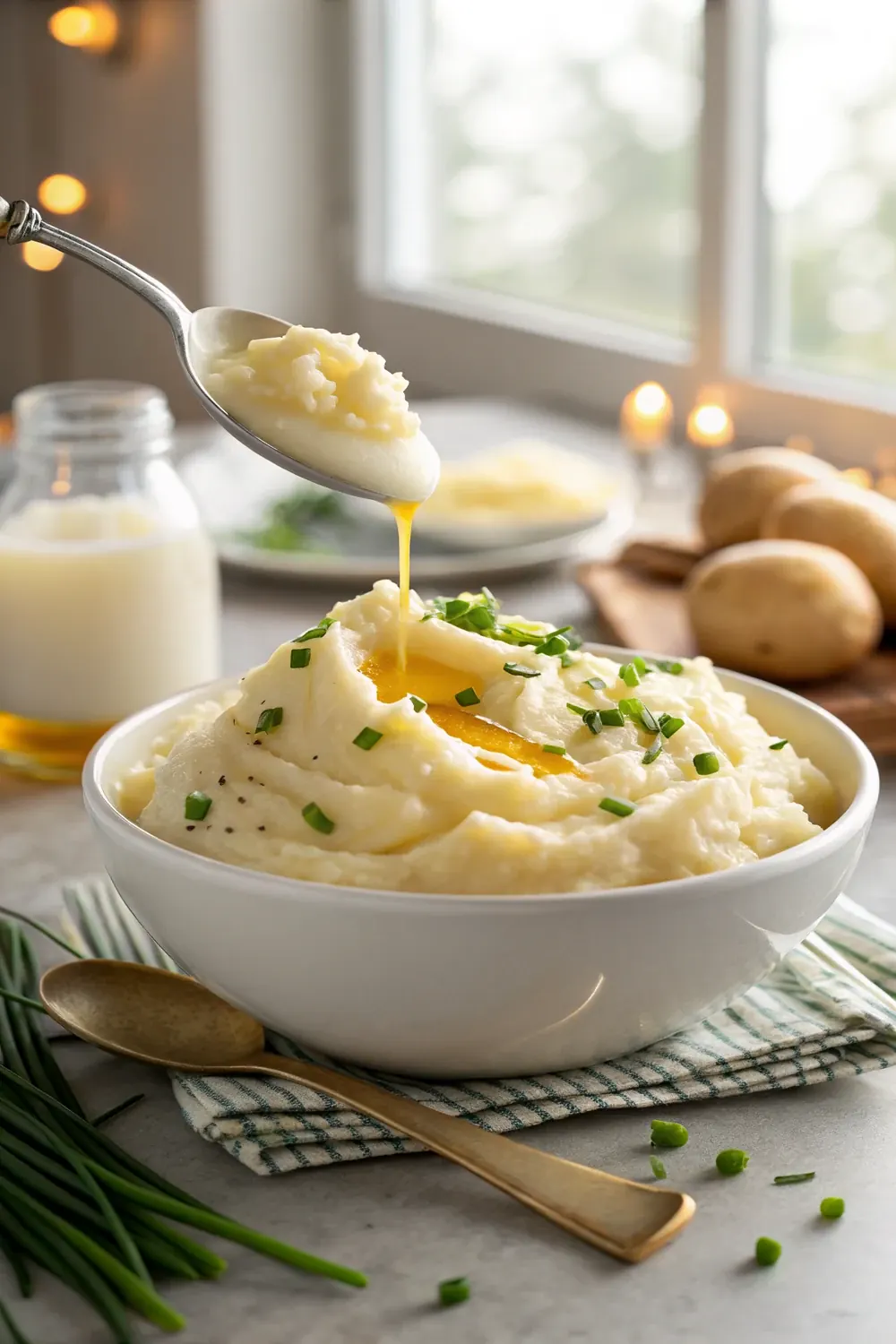
Texas Roadhouse mashed potatoes copycat. Russet potatoes, heavy cream, butter, garlic, salt, pepper. Skin-on rustic or smooth riced. Brown gravy on the side.
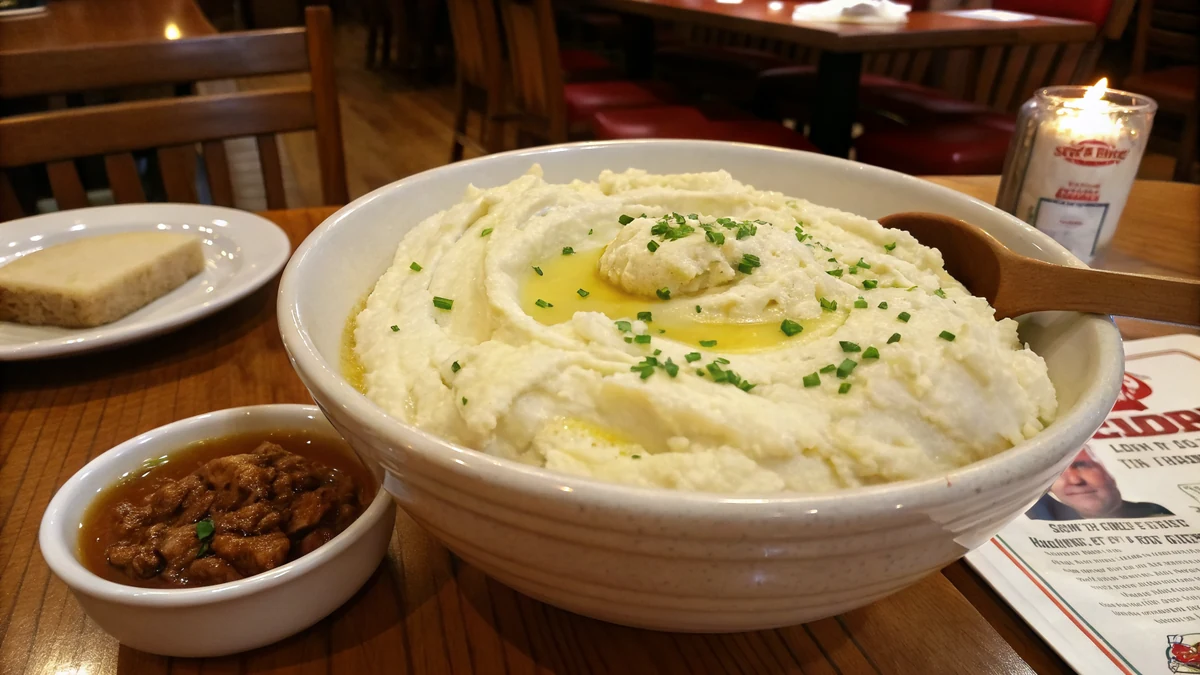
Quick answer: Texas Roadhouse mashed potatoes are Idaho russets boiled in salted water, drained, then mashed with heavy cream, melted butter, granulated garlic, kosher salt, and white pepper. The chain serves a smooth version under the skin-on country-style variant; either is correct at home. A simple brown gravy made from butter, flour, beef base, and black pepper goes on the side. Total time about 35 minutes. Serves 6 as a steakhouse side alongside chicken-fried steak or a ribeye.
I grew up between my grandmother's kitchen in Fredericksburg and the Texas Roadhouse off Loop 410 in San Antonio, and I learned the same dish two ways. My grandmother riced her potatoes through a tin ricer she bought in the 1970s and folded in hot cream and butter with a wooden spoon, the same way her own mother had at the Lyndon B Johnson ranch in Stonewall when she cooked there in the 1960s (the LBJ Library cookbook prints a version of the ranch mashed potato recipe). Texas Roadhouse, which opened its first restaurant in Clarksville Indiana in 1993 and now runs roughly 600 Texas-themed locations, serves a fluffier smoother version that comes out of a big steam-jacketed kettle in the back. Both are correct. Both descend from the same Idaho russet plus cream plus butter logic.
What follows is the home version I make for Sunday supper, six servings out of a 5-quart pot, with the option of a skin-on rustic finish or a smooth riced finish. The brown gravy on the side is the steakhouse part of the dish, a quick butter and flour roux with beef base and black pepper, the kind that ladles cleanly over a chicken-fried steak or pools at the edge of a ribeye. Total time is about 35 minutes if you move with purpose. The hardest part is not over-mashing, which turns the potatoes gluey. Treat the russet like a delicate thing and you will get the cloud-fluffy texture that defines the dish.
Why Russet Potatoes (Starch Behavior and Fluffiness)
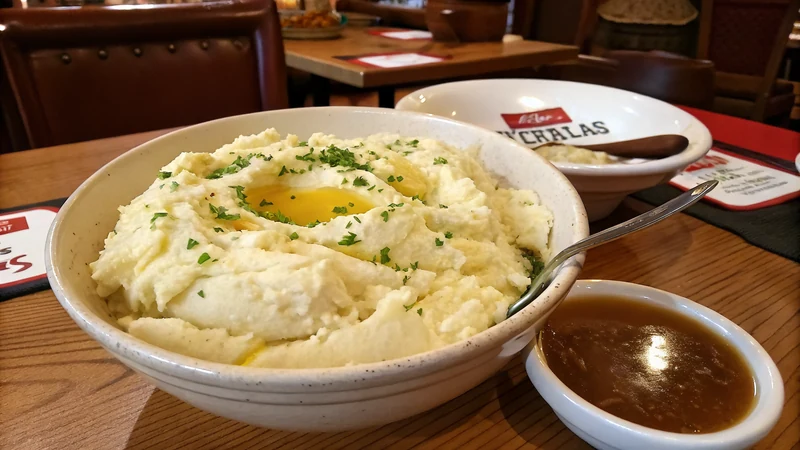
Idaho russet potatoes are the steakhouse choice for one reason: starch behavior. Russets are high-starch, low-moisture potatoes, sometimes called floury or mealy potatoes. The starch granules are large and densely packed, and when the potato is heated past about 180F (82C) those granules swell and burst, releasing the starch into a soft, dry, separable curd. Mashed, they produce a light fluffy texture with discrete starch particles that catch cream and butter rather than glueing together. This is the cloud-fluffy texture Texas Roadhouse aims for.
Yukon Gold potatoes are the second most common steakhouse choice and they behave differently. Yukons are medium-starch and medium-moisture; they produce a denser, creamier, slightly waxy mash with a yellow color and a buttery flavor of their own. They are excellent mashed and many chefs prefer them, but they are not the Texas Roadhouse texture. If you have only Yukons, you can still make this recipe; expect a richer, denser, less fluffy result. Red potatoes and fingerlings are wrong; they are low-starch waxy potatoes that turn gummy when mashed.
Idaho specifically (rather than russet generically) matters because Idaho-grown russets are the heaviest and starchiest russets in the United States, owing to the cold nights and volcanic soil in the Snake River plain. They are graded and shipped year-round and you can find them in any HEB, Kroger, or Whataburger-adjacent grocery in Texas. Look for clean firm tubers with no green patches and no sprouting eyes. Avoid bag potatoes that feel light for their size; that is moisture loss and means an older potato.
Skin-On Rustic vs Smooth Riced (the Texas Roadhouse Style)
Texas Roadhouse serves two versions depending on the market. The smooth version is what most locations plate as the default mashed potato side; it is fluffy, uniform, lightly speckled with garlic, and almost cloud-like in texture. This is the riced version. The rustic version, called country-style mashed potatoes in some menus, is skin-on, broken up with a paddle rather than riced, and has visible flecks of russet skin throughout. Both are correct copycats and the choice is yours. And if you would rather skip the mash entirely, the chain's loaded baked potato is the other steakhouse potato worth keeping in the rotation.
Smooth riced is the cleaner steakhouse plate look. The ricer extrudes the potato through small holes in long delicate strands that fall in a fluffy pile, and once cream and butter are folded in the texture is light and almost ethereal. It pairs cleanly with a brown gravy because the smooth surface gives the gravy something to pool against. It is the Sunday-supper white tablecloth version.
Skin-on rustic is the country-Texan version, closer to the way my grandmother served them on a Hill Country ranch table. The skin adds a slight chew, a deeper potato flavor, and visible texture that says home-cooked rather than restaurant-issued. Pair it with chicken-fried steak and cream gravy and you have the canonical Hill Country diner plate. Saltgrass Steak House, the Houston-based Texas chain, also serves a country-style version; they call it Idaho mashed.
Boiling Technique (Cold Start, Salted Water, Drain Dry)
Three rules govern boiling for mashed potatoes and all three matter. Rule one: cold start. Put the cut potatoes in cold water and bring up to a boil together. Dropping them into already-boiling water causes the outsides to break down before the centers cook through, which gives you outer-mush plus inner-firm, the opposite of what you want.
Rule two: salt the water heavily. Two tablespoons of Diamond Crystal kosher salt per 5 quarts of water is the right amount; the water should taste like a mild broth. This is the only chance you have to season the potato from the inside, and no amount of finishing salt after the mash can replicate it. If you use Morton kosher (denser than Diamond Crystal), reduce to 1 1/2 tablespoons; if you use table salt, reduce to 1 tablespoon.
Rule three: drain dry. After the colander, return the potatoes to the hot empty pot over low heat for 30 to 45 seconds, shaking gently. The residual heat drives off surface moisture and dries the cut surfaces. Wet potatoes plus cream equals watery mash; dry potatoes plus cream equals fluffy mash. This step takes 30 seconds and it is the difference between steakhouse texture and a school-cafeteria slop.
The Ricer vs Masher vs Mixer Decision
A potato ricer is a stainless steel device that looks like a giant garlic press, with a hopper that holds about a cup of cooked potato and a plunger that extrudes the potato through small holes. The output is a pile of fluffy potato strands with no lumps and no gluten-like starch development. This is the smooth Texas Roadhouse texture. OXO makes a good ricer for about twenty dollars and it is a one-trick tool but the trick is the right one for mashed potatoes. A food mill works similarly with slightly different texture.
A hand-held potato masher (the wavy-grid kind or the wire-zigzag kind) is the right tool for skin-on rustic style. You can control the texture by how much you mash; stop at chunky rustic or push through to nearly smooth. The masher does not produce the cloud-fluffy ricer texture, but it does produce honest country mash with visible skin and visible potato chunks. Pampered Chef and Joseph Joseph both make good ones.
An electric mixer (KitchenAid stand mixer with paddle attachment on speed 1 or 2) is what most restaurants use at scale because it is fast and consistent. At home, a hand-mixer is dangerous; it overworks the potato in seconds and produces gluey mash. If you must use a stand mixer, use the paddle (not the whisk) on the lowest speed for 20 to 30 seconds maximum. A food processor or blender will destroy the potato into wallpaper paste; never use one for mashed potatoes.
Cream and Butter Ratio (the Steakhouse Richness Scale)
The richness of mashed potatoes is set by the cream-to-potato and butter-to-potato ratios, and steakhouses run high on both. This recipe uses 3/4 cup of heavy cream and 1/2 cup (one stick) of butter per 3 pounds of potatoes, which is a generous restaurant ratio. Texas Roadhouse runs slightly higher in butter and slightly lower in cream than this; Saltgrass runs the other way. Both produce a rich finished side that gets praised by every diner.
If you want a lighter every-day version, drop the cream to 1/2 cup and the butter to 1/4 cup (half a stick). The potatoes will be lighter, less rich, and you can taste the russet more clearly. If you want a holiday Thanksgiving extravagance, push the cream to 1 cup and the butter to 3/4 cup, and fold in 4 ounces of softened cream cheese for an even more luxurious finish. Joel Robuchon famously used a 1-to-1 ratio of butter to potato by weight in his three-Michelin-star pommes puree; that is not Texas Roadhouse, but it is the upper limit.
Brand matters less than you think but a little. Land O Lakes unsalted butter is what most American steakhouses use; it is reliable, mid-fat-content, and clean-flavored. European-style butters like Kerrygold, Plugra, and Vermont Creamery have higher butterfat (82 to 86 percent versus 80 percent in American butters), which produces a richer mouthfeel. For cream, any heavy cream at 36 to 40 percent fat works; Daisy and Promised Land are Texas-shelf standards.
Garlic Method (Raw vs Roasted vs Sauteed in Butter)
Texas Roadhouse uses granulated garlic, a dried-and-ground form that hydrates and disperses uniformly through the mash without leaving raw garlic bite or visible flecks. One teaspoon of granulated garlic per 3 pounds of potatoes is the chain ratio. Granulated garlic is different from garlic powder; the granulated form has slightly larger particles and a more pronounced garlic flavor without the dusty quality of powder. Bloom it in the warm cream for 2 minutes off heat to soften any raw edge.
Roasted garlic is the upgrade move for Sunday supper. Cut the top off a whole head of garlic, drizzle with olive oil, wrap in foil, and roast at 400F for 40 minutes until the cloves are caramel-brown and soft. Squeeze the cloves out of the skins and mash them into the cream-and-butter mixture before folding into the potatoes. The flavor is mellow, sweet, and deep; the potatoes taste richer without tasting garlicky in the pizza-garlic way. Add 4 to 6 cloves per recipe.
Sauteed-in-butter garlic is the in-between method. Melt the butter in a small saucepan, add 3 cloves of finely minced fresh garlic, and cook over low heat for 90 seconds until fragrant and just starting to color (do not brown; brown garlic is bitter). Then add the cream and warm through. This produces a more present garlic flavor than granulated and a fresher quality than roasted; use it when you want garlic to be a distinct note rather than a background.
Salt Strategy (Salting the Water, Finishing Salt)
Mashed potatoes need a lot of salt and the home cook usually under-salts. The strategy is two-stage: heavy salt in the boiling water (this seasons the potato from the inside), then a smaller dose of finishing salt folded in with the cream and butter (this corrects the surface). The boiling water dose is 2 tablespoons of Diamond Crystal kosher salt per 5 quarts of water; that sounds like a lot but most of it stays in the drained water. Only about 1 teaspoon worth is actually absorbed by the potato.
The finishing salt is fine sea salt or kosher salt folded in at the cream-and-butter stage. Start with 1 teaspoon of fine sea salt, fold, taste, and adjust. Add more in small pinches; you can always add and you cannot remove. The right level is when the potato tastes savory but not salty, when butter and garlic both come forward clearly. Under-salted mashed potatoes taste flat no matter how much cream is in them; this is a salt problem, not a fat problem.
For finishing at the table, a tiny pinch of flaky finishing salt like Maldon or Jacobsen on top of the served scoop adds a textural crunch and a flavor pop. White pepper rather than black is the chain choice because it disappears visually into the potato; black pepper is fine and arguably more flavorful but you see the specks. I use white pepper when I am cooking for company and black when I am cooking for myself.
The Brown Gravy (Drippings, Roux, Beef Base, Black Pepper)
The Texas Roadhouse brown gravy is a side-served gravy, ladled into a small ramekin and given to each diner to spoon as desired. It is built on a butter-flour roux cooked to a light brown color, then whisked with beef stock and seasoned with onion powder, garlic powder, and black pepper. This is different from the cream gravy that goes on chicken-fried steak; cream gravy is white, peppered heavily, and made with milk and sausage drippings. Both gravies appear on the steakhouse menu; both have their place.
If you happen to have pan drippings from a roast or steak, use them in place of (or in addition to) the butter for the roux. Three tablespoons of drippings makes a richer gravy with real meat flavor. If you do not, butter-and-stock works fine; Better Than Bouillon beef base is the secret weapon for home cooks who do not roast a steamer pot of bones every weekend. One teaspoon of base per cup of water produces a stock close to a homemade reduction.
The black pepper level should be assertive but not overwhelming; 1/2 teaspoon freshly ground per 2 cups of gravy is the starting point. Adjust to taste. A teaspoon of Worcestershire sauce adds umami depth and is a steakhouse touch many chains use without advertising. For a darker color, add a few drops of Kitchen Bouquet or Gravy Master; for natural color, push the roux 30 seconds further into the brown range. See Serious Eats for deep coverage of roux technique. One substitution to avoid: beef base has no business in a holiday turkey gravy, which runs on poultry drippings and a giblet stock instead. My turkey gravy is the version that belongs on this same bowl of potatoes in November.
Doubling Up for Holidays
Thanksgiving and Christmas, this recipe doubles cleanly to 12 servings out of a 7-quart Dutch oven or a 12-quart stockpot. Use 6 pounds of russets, 1 1/2 cups of heavy cream, 1 cup of butter, 2 teaspoons of granulated garlic, 2 teaspoons of fine sea salt, and 1 teaspoon of white pepper. The boiling water dose doubles to 1/4 cup of kosher salt in 10 quarts of water; the boil time stretches by 3 to 5 minutes because the pot takes longer to come up to temperature. The drain-dry step is the same.
Tripling for a 20-person dinner is doable but at that scale a hand masher or ricer becomes a workout. Use a stand mixer paddle on speed 1 for 30 seconds; the slight texture loss is acceptable for the labor savings. Keep the potatoes warm in a slow cooker on warm setting; they hold beautifully for 90 minutes with the cream and butter folded in. Stir every 20 minutes and add a splash of warm cream if the surface dries.
For make-ahead Thanksgiving, prepare the potatoes up to the fold-in step, transfer to a buttered baking dish, dot the surface with extra butter, and refrigerate up to 24 hours. Reheat at 350F covered with foil for 25 to 30 minutes, then uncovered for 10 minutes to set the top. The texture is 90 percent of fresh-mashed and the labor savings on the day of are significant. See Bon Appetit for additional make-ahead testing notes.
Reheating Without Drying Out (Oven vs Stovetop vs Microwave)
Leftovers keep for 3 days in an airtight container in the fridge. Reheating is where most home cooks ruin them; mashed potatoes dry out fast under direct heat. The best method is the stovetop double-boiler. Place the cold mashed potatoes in a heatproof bowl, set over a saucepan of simmering water (not touching), and warm with frequent stirring for 8 to 10 minutes. Add a splash of warm cream or milk if the surface dries.
Oven reheating works for larger volumes. Transfer to a buttered baking dish, dot with extra butter, cover with foil, and bake at 325F for 20 to 25 minutes. Stir at the 15-minute mark and add a splash of warm cream if needed. For a crusty top finish, uncover for the last 5 minutes. This method is best for holiday leftovers when you have 4 cups or more.
Microwave reheating is the worst method but the most common. If you must, transfer to a microwave-safe bowl, add 2 tablespoons of warm cream or milk per cup of potatoes, cover loosely with a damp paper towel, and microwave on 50 percent power in 60-second bursts, stirring between each. Full power destroys the texture. Most home cooks zap full power for 3 minutes and get rubber; the 50 percent power and stirring is the technique that preserves texture.
Mashed Potato Texture Failures (Gluey, Gummy, Lumpy, Watery)
Gluey is the most common failure and the most embarrassing. Cause: over-mashing or using a food processor, blender, or hand mixer on high. The starch develops gluten-like long chains and the texture turns to wallpaper paste. Fix: there is no fix once it is gluey; serve as a savory pudding or compost. Prevention: use a ricer or masher, fold by hand with a spatula, stop the moment the potatoes look uniform.
Gummy is similar to gluey but milder, usually from over-folding after the cream goes in. Fix: sometimes a small splash of warm cream and gentle folding recovers it partially. Prevention: fold slowly and stop early. The texture should be just past distinct lumps and well before pasty smooth.
Lumpy is from under-cooked centers in the potato chunks, or from inconsistent chunk sizes. Fix: continue mashing and add more warm cream to soften; if severe, return to the pot with a splash of cream and heat gently while folding. Prevention: cut chunks uniformly to 1 1/2 inches and simmer until the paring knife slides in with no resistance. Watery is from un-dried potatoes after the colander stage; the drain-in-pot-over-heat step prevents it. Fix: cook over low heat in the pot while folding to evaporate moisture, or add a tablespoon of melted butter to compensate.
Variations (Loaded with Bacon and Cheese, Jalapeno-Cheddar, Blue Cheese)
Loaded mashed potatoes are the appetizer version, served as the Texas Roadhouse loaded mashed potato side or as a riff on the filling in my twice baked potatoes. Fold in 1/2 cup of grated sharp cheddar, 4 strips of crumbled cooked bacon, and 2 tablespoons of thinly sliced green onion or chives just before serving. Top with another sprinkle of cheddar, bacon, and green onion. Pairs cleanly with a ribeye or a smoked brisket slice.
Jalapeno-cheddar is the Hill Country Texas version. Fold in 1/2 cup of grated sharp cheddar, 2 finely diced pickled jalapenos (or 1 fresh jalapeno, seeded and diced fine), and 1 tablespoon of pickled jalapeno brine for tang. The heat is gentle and the cheese is rich; pairs with carne asada, fajitas, or grilled chicken. This is also excellent topped with a fried egg as a brunch plate.
Blue cheese mashed is the steakhouse-elevated version, served in fine-dining American restaurants. Fold in 4 ounces of crumbled blue cheese (Maytag, Point Reyes Original Blue, or a Roquefort if you want a sharper bite) just before serving. Top with crispy fried shallots and a few cracks of black pepper. Pairs with a cowboy-cut ribeye or a porterhouse for the canonical American steakhouse plate. See Southern Living for additional Southern-style variations.
Pairings (Chicken-Fried Steak, Ribeye, Smoked Brisket, Meatloaf)
The canonical pairing is chicken-fried steak with cream gravy ladled on the steak and the brown gravy from this recipe on the potatoes. The two gravies coexist on the plate without mixing; the diner spoons potatoes into the cream gravy if they want crossover. See chicken-fried steak for the canonical Texas diner version. A green vegetable like the Texas Roadhouse style green beans, or a scoop of the chain's seasoned skillet corn, rounds out the plate.
A grilled or pan-seared cowboy cut ribeye is the high-end steakhouse pairing. The bone-in ribeye gives up its own juices on the plate, and the mashed potatoes catch them; the brown gravy is optional but appreciated. Add a wedge salad with blue cheese dressing and a Shiner Bock. This is the Sunday supper version of a Texas Roadhouse meal at home.
Smoked brisket sliced fatty over the mashed potatoes is the Hill Country pit-house plate; the potatoes act as a sponge for brisket fat and smoke. Meatloaf with tomato glaze is the diner-Southern plate, served with peas and corn for a 1950s-style supper. Roasted turkey at Thanksgiving with the make-ahead version above is the canonical holiday plate. Also pair with the Texas Roadhouse rice for a starch-on-starch combo platter when you are feeding teenagers.
Comparison to LBJ Ranch Mashed Potatoes (the Texas Presidential Connection)
Lyndon B Johnson, the 36th president of the United States and a Hill Country Texan from Stonewall, served mashed potatoes at the LBJ Ranch in a style very close to this recipe but with two distinguishing features. The first was the use of buttermilk in place of part of the cream; about 1/4 cup of buttermilk plus 1/2 cup of cream rather than 3/4 cup of cream. This added a subtle tang that paired well with the smoked meats the ranch served regularly.
The second feature was the addition of a small amount of crushed dried red pepper (chile pequin from the ranch property itself, where wild pequins still grow on the fence rows) at the cream-blooming stage. The heat was barely perceptible but added a Hill Country note that distinguished the ranch mashed from the generic steakhouse version. Lady Bird Johnson's cookbook, published posthumously by the LBJ Library in Austin, includes a version of this recipe with a note that LBJ ate them weekly with chicken-fried steak and peach cobbler.
The presidential connection matters less than the technique connection. Texas Roadhouse, founded in 1993 by Kent Taylor in Clarksville Indiana, drew explicitly on the Texas steakhouse tradition (which itself draws on the LBJ ranch tradition, the King Ranch tradition, and the German Hill Country butcher tradition) when developing its menu. The mashed potatoes on the chain menu are recognizably descended from the LBJ ranch version, minus the buttermilk and pequin. Saltgrass Steak House, founded in Houston in 1991 by Tilman Fertitta, runs a parallel version with a slightly heavier hand on the butter.
Chef Mia's Kitchen Notes
I keep a ricer in my kitchen even though I almost never use it for anything else; it is the one piece of single-purpose equipment that I refuse to give up. OXO makes the one I own; it cost about twenty dollars in 2018 and it will outlive me. If you make mashed potatoes more than twice a year, buy one. The texture difference between ricer and masher is not subtle, and the texture difference between either of those and a hand mixer is dramatic and unhappy.
On the cream brand: Daisy heavy cream is what I buy at HEB; it is reliable, mid-fat, and the price is right. Promised Land Dairy is the Texas-grown option from Floresville and the milk-fat is slightly higher; the difference shows up in mouthfeel and is worth the dollar extra when you can get it. Both work for this recipe. Avoid ultra-pasteurized half-and-half; it is too watery for steakhouse mashed.
On butter: I keep both Land O Lakes unsalted and Kerrygold in the fridge; I use Land O Lakes for everyday cooking and Kerrygold for finishing or when I want the higher butterfat to show up. For this recipe, either works. If you want the closest Texas Roadhouse copycat flavor, use Land O Lakes; if you want richer, use Kerrygold or Plugra. The 80 percent versus 84 percent butterfat difference is real and noticeable in side-by-side tastings; see King Arthur Baking for a good explanation of why fat content matters in cooking.
Final note. The single most common home-cook mistake on mashed potatoes is not technique; it is rushing. The 30 second drain-and-dry step, the 2 minute garlic bloom, the slow careful folding, all of these take 30 to 60 seconds individually and they are individually skippable, but skipping them gives you the dull cafeteria mash instead of the fluffy steakhouse mash. Slow down for 5 minutes total and the dish goes from a kitchen side to the centerpiece of the plate. That is the difference between Texas Roadhouse copycat and Texas Roadhouse actual.
Texas Roadhouse Mashed Potatoes Recipe
Ingredients
- For the potatoes:
- 3 lbs (1.4 kg) Idaho russet potatoes (about 4 large or 6 medium), peeled for smooth version or skin-on for rustic
- 2 tablespoons kosher salt for the boiling water (Diamond Crystal)
- Cold water to cover by 2 inches
- 3/4 cup (180 ml) heavy cream, warmed (Daisy or Promised Land)
- 1/2 cup (115 g) unsalted butter, melted (Land O Lakes for the chain match, or European-style like Kerrygold for richer)
- 1 teaspoon granulated garlic (not garlic salt; not garlic powder substitute)
- 1 teaspoon fine sea salt, plus more to finish
- 1/2 teaspoon white pepper (or freshly ground black pepper if that is what you have)
- Optional: 2 tablespoons sour cream for a tangier finish
- For the brown gravy:
- 3 tablespoons unsalted butter
- 3 tablespoons all-purpose flour
- 2 cups (480 ml) beef stock (or 2 cups water plus 2 teaspoons Better Than Bouillon beef base)
- 1/2 teaspoon onion powder
- 1/4 teaspoon granulated garlic
- 1/2 teaspoon freshly ground black pepper, plus more to finish
- Pinch of kosher salt, to taste (the beef base is already salty)
- Optional: 1 teaspoon Worcestershire sauce for depth
- Equipment:
- 5-quart heavy-bottom pot for boiling
- Colander for draining
- Potato ricer (smooth version) or potato masher (rustic version)
- Small saucepan for warming cream and butter
- Second small saucepan for the gravy
- Whisk for the gravy roux
Instructions
- Peel or scrub the potatoes. If you want the smooth Texas Roadhouse style, peel 3 lbs of Idaho russets with a Y-peeler and cut into roughly 1 1/2 inch chunks. Even-size chunks cook at the same rate, which matters more than people think. If you want the skin-on country-style rustic version (also served at Texas Roadhouse in some markets), scrub the russets well with a stiff brush under cold water and cut into chunks with the skins on. Place the cut potatoes into a bowl of cold water as you work to prevent browning. Drain just before cooking.
- Cold start the potatoes in salted water. Place the cut russets in a 5-quart heavy-bottom pot and cover with cold water by 2 inches. Add 2 tablespoons of kosher salt (Diamond Crystal volume; if using Morton, use 1 1/2 tablespoons). Bring to a boil over high heat, then reduce to a steady simmer. The cold start is critical; dropping potatoes into already-boiling water causes the outsides to overcook before the centers are tender. Salting the boiling water seasons the potato from the inside out, which no amount of post-mash salt can replicate.
- Simmer until fork-tender, 15 to 18 minutes. Simmer the potatoes uncovered, with the water bubbling but not at a hard rolling boil, for 15 to 18 minutes. Test with a paring knife; the blade should slide into a chunk with no resistance and the chunk should fall off cleanly. Under-cooked centers will not mash smoothly, and over-cooked potatoes will absorb too much water and turn gluey. The window is wider than people think but the doneness target is firm enough to ride the ricer or masher but fully tender at the center.
- Warm the cream and melt the butter. While the potatoes simmer, melt the butter in a small saucepan over low heat. Add the heavy cream and warm it through, just until you see the first wisp of steam. Do not boil; you only want it warm enough to fold into the hot potatoes without shocking them. Cold cream and butter on hot potatoes is the most common cause of grainy, cold-spot mashed potatoes. Add the granulated garlic to the warm cream mixture and let it bloom for 2 minutes off heat. Keep warm until the potatoes are ready.
- Drain the potatoes thoroughly and dry them. Drain the potatoes into a colander and let them sit for 60 seconds to release any clinging water. Then return the drained potatoes to the empty hot pot and place over low heat for 30 to 45 seconds, shaking the pot gently. The residual heat evaporates surface moisture and dries the potatoes, which is what allows them to absorb the cream and butter without going watery. Watery mashed potatoes start with un-dried potatoes. This step is non-negotiable for the steakhouse texture.
- Rice or mash, your choice of texture. For the smooth Texas Roadhouse style, run the hot potatoes through a potato ricer directly into the warm pot or a bowl. The ricer produces a cloud-light fluffy texture that no masher can match. For the skin-on rustic style, use a hand-held potato masher and mash with controlled vertical strokes until the texture is broken up but still chunky. Skin pieces should be visible. Do not use an electric mixer or food processor; both develop too much starch and turn the potatoes gluey within seconds. Texas Roadhouse uses neither at scale; they use a paddle attachment on slow speed.
- Fold in the warm cream and butter. Pour the warm cream-and-butter mixture over the riced or mashed potatoes. Add 1 teaspoon of fine sea salt and 1/2 teaspoon of white pepper. Fold gently with a rubber spatula or wooden spoon, using a slow circular stroke from the bottom up. Fold just until the cream is absorbed and the potatoes look uniform; over-folding develops gluten-like starch chains and turns the texture pasty. If using the optional 2 tablespoons of sour cream for tang, fold it in last. Taste and adjust salt; mashed potatoes need more salt than people think.
- Start the brown gravy while the potatoes rest. In a second small saucepan, melt 3 tablespoons of butter over medium heat. Sprinkle in 3 tablespoons of flour and whisk constantly for 90 seconds to 2 minutes, until the roux smells nutty and turns a light golden brown (this is a blonde-to-light-brown roux, not a Cajun dark roux). The color shift is what gives brown gravy its name. Do not let it burn; reduce the heat if it darkens too fast. Adjust the heat as needed; cast iron retains heat and may need to come off the burner briefly.
- Whisk in the stock and seasonings for the gravy. Slowly pour the beef stock into the roux while whisking constantly to prevent lumps. If using bouillon base instead of stock, dissolve 2 teaspoons of Better Than Bouillon beef base in 2 cups of hot water first, then add. Whisk in the onion powder, granulated garlic, and black pepper. Bring to a gentle simmer and cook for 3 to 4 minutes, whisking every 30 seconds, until the gravy thickens enough to coat the back of a spoon. Add the optional Worcestershire sauce for depth. Taste and adjust salt; usually a small pinch is plenty.
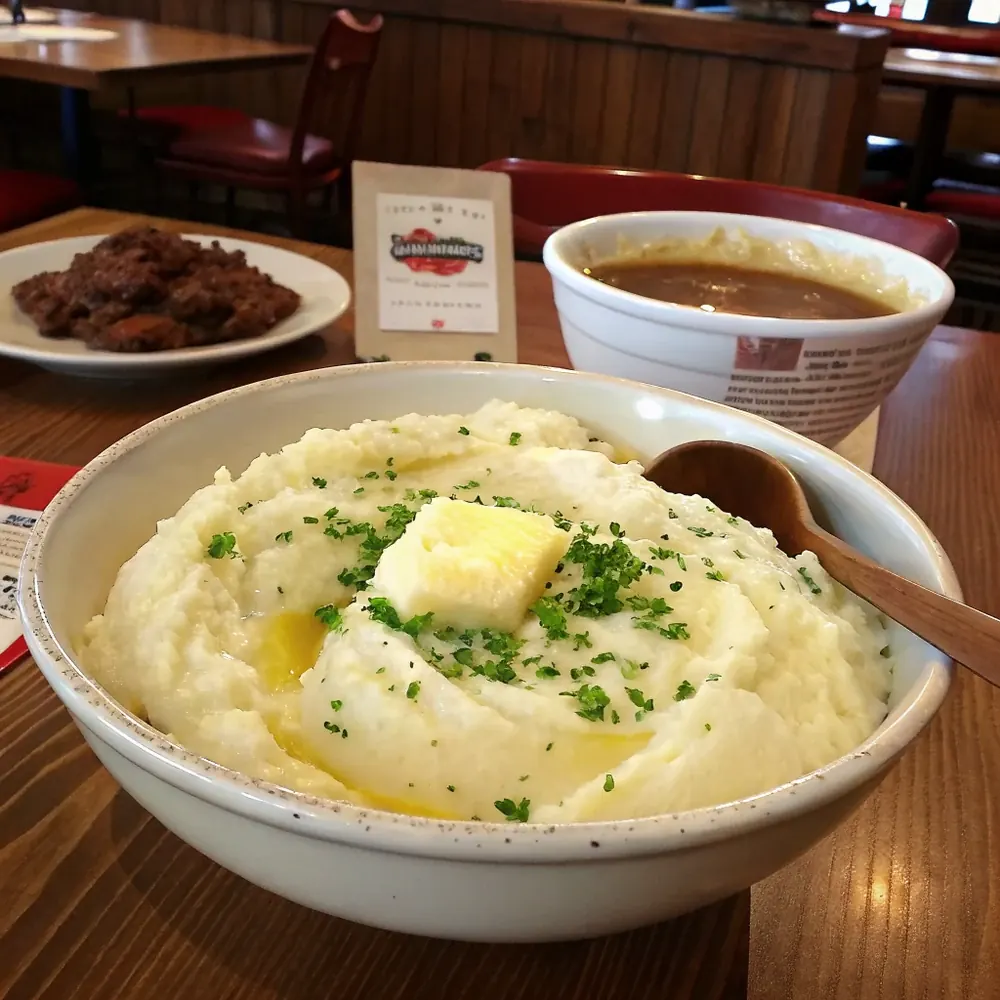
- Hold the potatoes warm and finish at the table. If you are not serving immediately, hold the mashed potatoes warm by covering the pot with a clean kitchen towel (not a tight lid; you want some steam release) and resting it over a pot of barely simmering water as a makeshift double-boiler. Or transfer to a slow cooker on warm. For serving, scoop into a warm bowl, top with a small pat of melted butter and a few cracks of black pepper, and serve the brown gravy in a separate ramekin or gravy boat. Six steakhouse-size servings.
- Serve with chicken-fried steak or ribeye. Plate next to a piece of chicken-fried steak with cream gravy ladled over the meat (not the potatoes; the steakhouse keeps gravies separate), or alongside a cowboy cut ribeye, or under a smoked brisket slice. The brown gravy from this recipe is the side gravy, served in its own vessel so each diner adds as much as they want. Add a wedge of cornbread, a green vegetable like the Texas Roadhouse style green beans, and a glass of sweet tea or a Shiner Bock. Leftovers keep 3 days in the fridge.
Frequently Asked Questions
What kind of potatoes does Texas Roadhouse use for mashed potatoes?
Idaho russet potatoes, the high-starch low-moisture variety also known as Burbank russets. Russets produce the cloud-fluffy texture that defines the chain's mashed potato side. Yukon Gold potatoes are the second steakhouse choice and produce a denser, creamier, more buttery mash; they work but are not the chain's actual style. Red potatoes, fingerlings, and other waxy potatoes are wrong; they turn gummy when mashed. For the copycat, use 3 lbs of Idaho russets, peeled for the smooth version or scrubbed and skin-on for the country-rustic version.
Should I peel the potatoes or leave the skins on?
Both are correct. Texas Roadhouse serves a smooth peeled version as the default mashed potato side, and a skin-on country-style version in some markets. Peeled and riced produces the fluffy uniform restaurant texture; skin-on and mashed produces the country-Texan rustic texture with visible skin flecks and a deeper potato flavor. Scrub well if you go skin-on; russet skins are thin and tender after cooking. The smooth version pairs cleanly with brown gravy because the gravy pools nicely; the rustic version is the better choice with chicken-fried steak and cream gravy because the texture echoes the diner tradition.
Why are my mashed potatoes gluey or gummy?
Almost always from over-mashing or using the wrong tool. Food processors, blenders, and high-speed hand mixers develop the starch into long gluten-like chains within seconds and the texture turns to wallpaper paste. The fix is prevention, not recovery; once mashed potatoes are gluey there is no way back. Use a potato ricer for the smooth version, a hand masher for the rustic version, or a stand mixer with paddle attachment on the lowest speed for no more than 30 seconds. Fold in cream and butter by hand with a spatula or wooden spoon, slowly, and stop the moment the texture looks uniform.
Do I really need a potato ricer, or can I just use a regular masher?
You do not strictly need one, but a ricer is the only tool that produces the cloud-fluffy smooth Texas Roadhouse style texture. A hand masher produces a chunkier rustic texture that is excellent but different. If you only own a masher, make the skin-on country-style version of this recipe; it plays to the masher's strengths. If you want the smooth restaurant style, buy a ricer; OXO makes a good one for about twenty dollars and it lasts forever. Food mills also work and have the additional advantage of skin removal during ricing.
How do I make the brown gravy without using beef stock?
Use 2 cups of hot water plus 2 teaspoons of Better Than Bouillon beef base, dissolved together before whisking into the roux. Better Than Bouillon is a concentrated paste available at every major grocery store; it produces a stock-quality result without the time investment of simmering bones. For an even better version, use 2 cups of water plus 2 teaspoons of beef base plus 1 teaspoon of Worcestershire sauce for umami depth. Avoid bouillon cubes; they are saltier and more artificial-tasting. Pan drippings from a recent roast or steak are the gold-standard substitute and produce the deepest flavor.
Can I make Texas Roadhouse mashed potatoes ahead for Thanksgiving?
Yes, with adjustments. Prepare the recipe through the fold-in step, transfer to a buttered baking dish, dot the surface with extra butter, cover tightly with plastic wrap, and refrigerate up to 24 hours. To serve, replace the plastic with foil and bake at 350F covered for 25 to 30 minutes, then uncovered for 10 minutes to set the top. The texture is about 90 percent of fresh-mashed; most diners cannot tell the difference. For a slow-cooker hold, transfer to a slow cooker on warm setting for up to 90 minutes, stirring every 20 minutes and adding a splash of warm cream if the surface dries.
How does Texas Roadhouse mashed potatoes compare to Saltgrass and other Texas steakhouses?
Texas Roadhouse, Saltgrass Steak House (the Houston-based chain founded in 1991), and most Texas independent steakhouses all serve russet-based mashed potatoes with cream, butter, garlic, and salt. The differences are in ratios and finish. Texas Roadhouse runs slightly higher in butter than cream and uses granulated garlic for a uniform finish. Saltgrass runs slightly higher in cream than butter and uses fresh garlic sauteed in butter for a more pronounced garlic flavor. Both serve brown gravy on the side rather than over the potatoes. Independent Hill Country steakhouses often serve the skin-on rustic version with cream gravy, blurring the line between steakhouse and diner. See Food Network for additional copycat coverage of regional steakhouse sides.