Buying guide
Best Cast Iron Skillets for Texas Cooking 2026
Quick answer: The best cast iron skillet for everyday Texas cooking is the Lodge 12-inch Pre-Seasoned ($30), durable, affordable, and indistinguishable in performance from boutique pans once well seasoned. For premium smooth-finish performance, the Stargazer 12-inch ($165) is our top pick. Cast iron is canonical for Texas cornbread, fried chicken, and skillet steaks. This guide tests 8 brands across cornbread crust, fried chicken evenness, brisket reheating, and seasoning durability.
As an Amazon Associate, Chef Mia earns from qualifying purchases. This doesn't cost you anything extra and helps keep the recipes free.
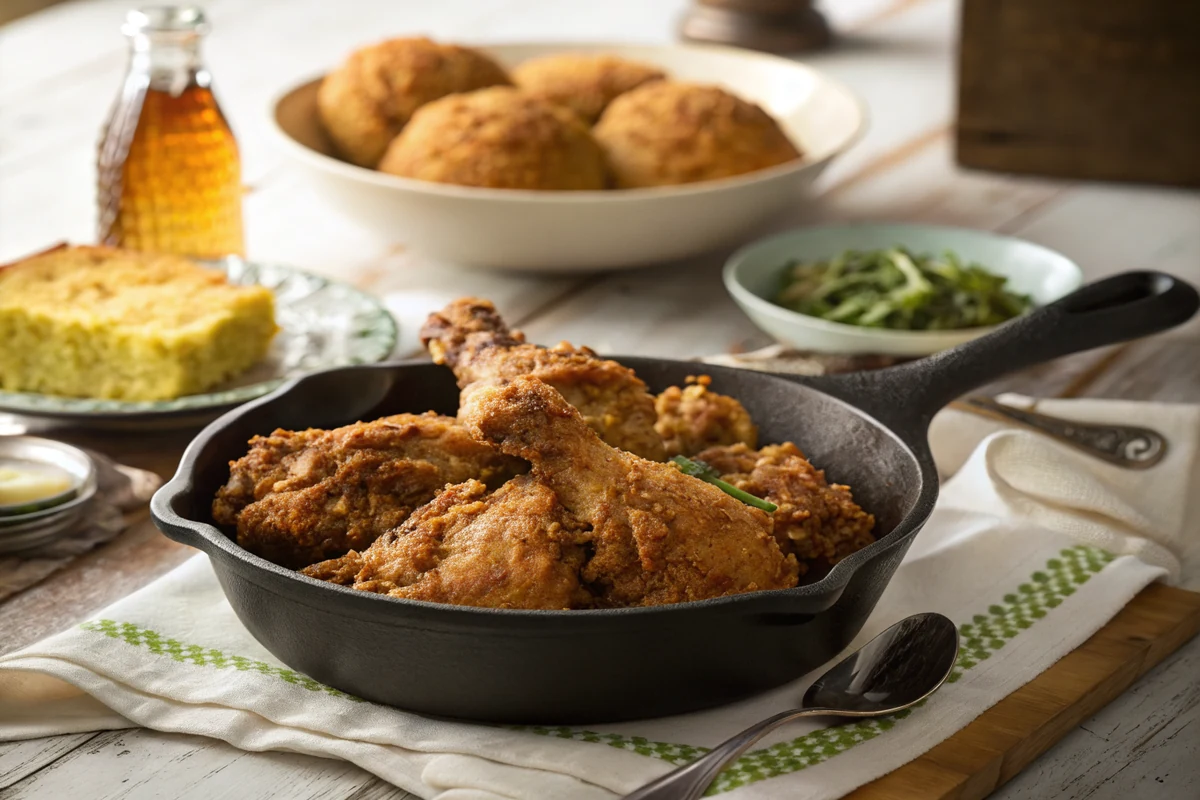
My grandmother's cast iron skillet sits on my counter in Lockhart, and it's older than I am. She got it from her mother. The pan has cooked Sunday cornbread for four generations of our family. It's never been washed with soap, never seen a dishwasher, never been pampered. It has been used. That, in my experience, is what makes a cast iron skillet great over decades. Not the brand. Not the finish. How often you cook in it.
That said, the cast iron market has fragmented in the past ten years between the budget workhorse (Lodge) and a wave of artisan smooth-finish pans (Stargazer, Field Company, Smithey, Finex). I've tested eight skillets across four protocols: cornbread crust, bone-in fried chicken evenness, brisket reheating, and seasoning durability after twelve cooks. The pan that lasts a hundred years is rarely the most expensive one. Personally, I still cook on the same Lodge I bought in 2014. Every Texas cornbread and buttermilk fried chicken recipe in this guide assumes cast iron.
Why Cast Iron Is Essential for Texas Cooking
Cast iron is the workhorse of Texas home cooking for one practical reason and one cultural reason. Practically: cast iron stores heat. A 12-inch cast iron skillet preheated to 425°F holds that temperature better than any nonstick pan, any stainless steel pan, any carbon steel pan in a comparable price tier. When you drop battered fried chicken into hot oil in a cast iron skillet, the temperature recovers fast and the crust sets cleanly. That same heat retention is why Texas cornbread develops the deep brown crust at the bottom that you cannot get from a baking pan.
Culturally: cast iron is the inherited tool of Southern and Texas cooking. Cornbread, fried chicken, chicken-fried steak, skillet biscuits, queso flameado, breakfast hash, and skillet desserts like cobbler all assume cast iron. A great-grandmother's pan in good condition is more valuable than any premium boutique pan because the patina took decades to build. You cannot fake fifty years of seasoning.
Cast iron also tolerates abuse that ruins other cookware. Drop it from the counter onto a hardwood floor, the floor dents, the pan does not. Leave it on a 500°F grill for thirty minutes, fine. Use it as a press for a smashburger, that is what it was designed for. Bake bread in it. Move it from stovetop to oven to grill to smoker without thinking. No other piece of cookware tolerates that range.
The case for cast iron in 2026: a well-seasoned pan is functionally nonstick for eggs and fish, conducts heat as well as the most expensive pans on the market, lasts indefinitely, and costs $30 at the entry level. The case against cast iron: it weighs more than most other cookware, it requires basic care (drying after washing, occasional re-seasoning), and the raw cooking surface of a rough pan like a Lodge is bumpy compared to a milled smooth finish.
How We Tested These 8 Cast Iron Skillets
Every skillet in this guide is the 12-inch (or close-equivalent) model, the size most useful for Texas home cooking. I tested across four protocols. First: classic Texas cornbread at 425°F for 22 minutes, judged on bottom crust color, edge crispness, and release. Second: bone-in skin-on fried chicken thighs in 350°F peanut oil, judged on temperature recovery, crust evenness, and oil splatter pattern. Third: brisket reheating with a quarter-inch of beef broth, judged on heat retention and moisture loss. Fourth: seasoning durability after twelve cooks including acidic tomato sauce, judged on rust and visible seasoning damage.
Each pan was scored on five criteria: cooking performance, build quality, value, durability of seasoning, and weight-comfort. I also tracked the surface finish of each pan when new (rough cast like Lodge, milled smooth like Stargazer) and how that finish changed after twelve cooks. Some boutique smooth-finish pans actually become rougher over time as seasoning builds; some rough pans become smoother as the cooking surface fills in.
One important note for new cast iron cooks: every pan in this guide will perform well after twelve to twenty cooks of fat-based foods. The most common reason cast iron disappoints new owners is impatience, cooking acidic tomato sauce or a watery vegetable in a pan that has not yet built a layer of polymerized fat on the cooking surface. Give any new pan a month of bacon, eggs, cornbread, and steak before you put a tomato in it.
Prices in this guide reflect MSRP at the time of testing. All eight skillets were purchased at retail; no review samples were accepted.
Top 8 Cast Iron Skillets Tested
Lodge 12-inch Pre-Seasoned
Best value. Lodge is the cast iron incumbent, South Pittsburg, Tennessee, in continuous operation since 1896. The 12-inch Pre-Seasoned is the pan that lives on most Texas stovetops, and for good reason. Heat retention is excellent, the pre-seasoning is functional from day one, and the price is unbeatable. After twenty cooks of bacon and cornbread the seasoning fills in the micro-pebbling and the pan develops a near-nonstick cooking surface.
✓ What I love
- Exceptional value
- Made in the USA since 1896
- Dependable performance
- Well-supported brand
- The pan grandmothers gift to grandchildren
✗ Where it falls short
- Rough cast surface takes time to season smooth
- Single-handle design less ergonomic on heavier loads
Stargazer 12-inch
Premium pick. Stargazer is a Pittsburgh-based startup making milled-smooth cast iron the way pre-WWII Griswold and Wagner pans were made. The cooking surface is machined smooth, practically polished, so eggs slide on day one. Lighter than Lodge by about 30%. The two-handle design improves balance.
✓ What I love
- Milled smooth cooking surface
- Lighter weight
- Thoughtful ergonomic design
- Made in the USA
- Gorgeous build quality
✗ Where it falls short
- Five times the price of a Lodge
- Lighter weight slightly reduces thermal mass
- Matte finish shows seasoning patterns more visibly
Field Company No.10
Premium smooth, lightweight. Field Company makes a milled smooth pan with a deliberately light weight, about 30% lighter than a comparable Lodge. Roughly the same size as a 12-inch Lodge but noticeably more manageable when lifting full of food. Cooking surface machined smooth, side walls gently flared for easy spatula access.
✓ What I love
- Very light for cast iron
- Smooth machined surface
- Elegant design
- Easy to handle
- Made in the USA
✗ Where it falls short
- Lighter weight means slightly less thermal mass for searing steaks
- Premium price
Smithey Ironware No.12
Artisan, mirror-polished. Smithey is a Charleston, South Carolina maker producing cast iron with a polished mirror-smooth cooking surface. The No.12 is the premium pan in this guide, heavy, well-balanced, beautifully finished. The polished surface is the smoothest of any pan tested; eggs slide as if cooking on glass. The trade-off: at $245 the value proposition gets thin.
✓ What I love
- Mirror-polished cooking surface
- Exceptional build quality
- Beautiful aesthetics
- Made in South Carolina with care
✗ Where it falls short
- Very expensive
- Polished surface shows wear more visibly than rough cast
Le Creuset 12-inch Cast Iron
Designer brand. Le Creuset's reputation rests on enameled cast iron Dutch ovens, but they also make a bare cast iron skillet. Well-made and heavy, comfortable handle, enameled exterior makes the outside easy to clean. The price is high, and you're paying for the brand as much as for performance.
✓ What I love
- Beautiful design
- Enameled exterior is easy to clean
- Well-built
- Lifetime warranty
✗ Where it falls short
- Overpriced for a bare cast iron pan
- No meaningful performance advantage over a Lodge
- Brand premium is substantial
Victoria 12-inch
Budget alternative. Victoria is a Colombian brand that has built a reputation as the smooth-surface alternative to Lodge at the same price point. Heavier than a Lodge, cooking surface machined slightly smoother from the factory, and the long ergonomic handle is more comfortable than the short Lodge handle.
✓ What I love
- Smoother factory surface than Lodge at the same price
- Longer ergonomic handle
- Heavier thermal mass
✗ Where it falls short
- Not made in the USA
- Brand recognition lower than Lodge
Finex 12-inch
Octagonal design. Finex makes an unusual octagonal cast iron skillet with a coiled steel handle and a thick weighty base. The octagonal shape is genuinely useful: eight pour spouts instead of two, and edge access is easier for spatulas. The coiled handle stays cooler than a solid cast handle. The trade-off is the pan's substantial weight, close to nine pounds.
✓ What I love
- Octagonal design has eight pour spouts
- Coiled handle stays cool
- Beautifully heavy thermal mass for searing
✗ Where it falls short
- Very heavy
- Expensive
- Octagonal shape can take adjustment
- Owned by Lodge since 2019
Vintage Griswold (eBay)
Collector pick. Before WWII, Griswold and Wagner produced cast iron with a milled smooth cooking surface that boutique modern brands have spent two decades trying to recreate. A pre-WWII Griswold No.8 or No.10, found on eBay or at estate sales, is often the best cast iron skillet you can own. Light, smooth, beautifully balanced.
✓ What I love
- Smooth cooking surface that modern boutique brands try to replicate
- Lighter than modern Lodge
- Generational provenance
- Often unmatched balance
✗ Where it falls short
- Requires research to avoid fakes
- May need rust removal and re-seasoning
- No warranty
Cast Iron Skillet Comparison Table
Quick reference across all 8 skillets tested. Weight is approximate; surface finish indicates rough cast (Lodge), milled smooth (Stargazer, Field, Smithey), or polished (Smithey).
| Brand | Price | Surface | Weight | Made In | Rating |
|---|---|---|---|---|---|
| Lodge 12-inch | $30 | Rough cast | 8.0 lb | USA (TN) | 9.0 |
| Stargazer 12-inch | $165 | Milled smooth | 5.7 lb | USA (PA) | 9.5 |
| Field Company No.10 | $165 | Milled smooth | 5.6 lb | USA | 9.0 |
| Smithey No.12 | $245 | Polished | 7.9 lb | USA (SC) | 9.0 |
| Le Creuset 12-inch | $200 | Pre-seasoned | 8.5 lb | France | 7.5 |
| Victoria 12-inch | $30 | Semi-smooth | 8.4 lb | Colombia | 8.5 |
| Finex 12-inch | $220 | Pre-seasoned | 9.0 lb | USA (OR) | 8.5 |
| Vintage Griswold | $80-300 | Milled smooth | 5.2 lb | USA (pre-WWII) | 9.5 |
Buying Guide: What to Look For in a Cast Iron Skillet
Size first. A 12-inch skillet is the most useful size for Texas home cooking, it holds a full pone of cornbread, fits four bone-in chicken thighs comfortably, and can sear two ribeyes side by side. Below 10 inches, the pan is mostly a single-portion tool. Above 13 inches, the pan becomes heavy enough that one-handed lifting is unsafe with food in it.
Surface finish. Rough cast (Lodge, Victoria, most budget brands) develops a smoother cooking surface over time as the seasoning fills in micro-pebbling. Milled smooth (Stargazer, Field Company) starts smoother on day one but the difference narrows after twenty cooks. Polished mirror (Smithey) is the smoothest available but adds substantial cost. None of these is wrong; all are reasonable depending on your patience for a break-in period.
Weight matters more than people think. A 12-inch Lodge weighs about 8 pounds. A 12-inch Field Company weighs about 5.6 pounds. The difference feels enormous when you are flipping fried chicken over a hot stove or lifting a full pan of cornbread out of the oven. If you have wrist or shoulder issues, the lighter pans are a meaningful quality-of-life upgrade.
Handle design. A long single handle (Lodge, Victoria) is traditional and provides good leverage but heats up significantly. A helper handle on the opposite side (Stargazer, most premium pans) makes two-handed lifting safer. A coiled spring handle (Finex) stays cooler. Read every product page for handle details, this is where the daily-use experience lives.
Made-in matters to some buyers and not others. Lodge, Stargazer, Field, Smithey, and Finex are made in the USA. Le Creuset is made in France. Victoria is made in Colombia. All are quality manufacturers; choose based on values and budget rather than assuming American manufacturing always means better.
Cast Iron Care and Seasoning Guide
Initial Seasoning (For Any New Pan)
Even pre-seasoned pans benefit from an additional seasoning round before first use. Wash the pan with hot water and a small amount of mild dish soap, dry thoroughly with a towel, then dry over medium heat on the stovetop for two minutes until any residual water is gone. Apply a very thin layer of flaxseed oil, avocado oil, or grapeseed oil, about a teaspoon for a 12-inch pan, wiped to the point that the pan looks almost dry. Place upside down on the middle rack of a 450°F oven for one hour. Cool inside the oven. Repeat two more times for the best initial layer.
Daily Care After Cooking
While the pan is still warm, scrape food residue with a stiff plastic spatula or a chainmail scrubber. Rinse with hot water, a small amount of dish soap is fine despite the old myth. Dry immediately with a towel, then place on a burner over medium heat for one minute to ensure no residual moisture. Apply a few drops of oil and wipe the cooking surface with a paper towel until it looks dry. Done. This takes ninety seconds and is what keeps the pan in working condition.
Restoration of a Neglected or Rusty Pan
If the seasoning has flaked or rust has formed, restoration is straightforward. Scrub with steel wool and hot water until the metal is uniformly bare gray. Dry thoroughly. Re-season as in the initial seasoning instructions above, but plan on five seasoning rounds rather than three for a fully restored pan. Restored pans cook as well as factory-new pans within a few weeks of use.
Storage
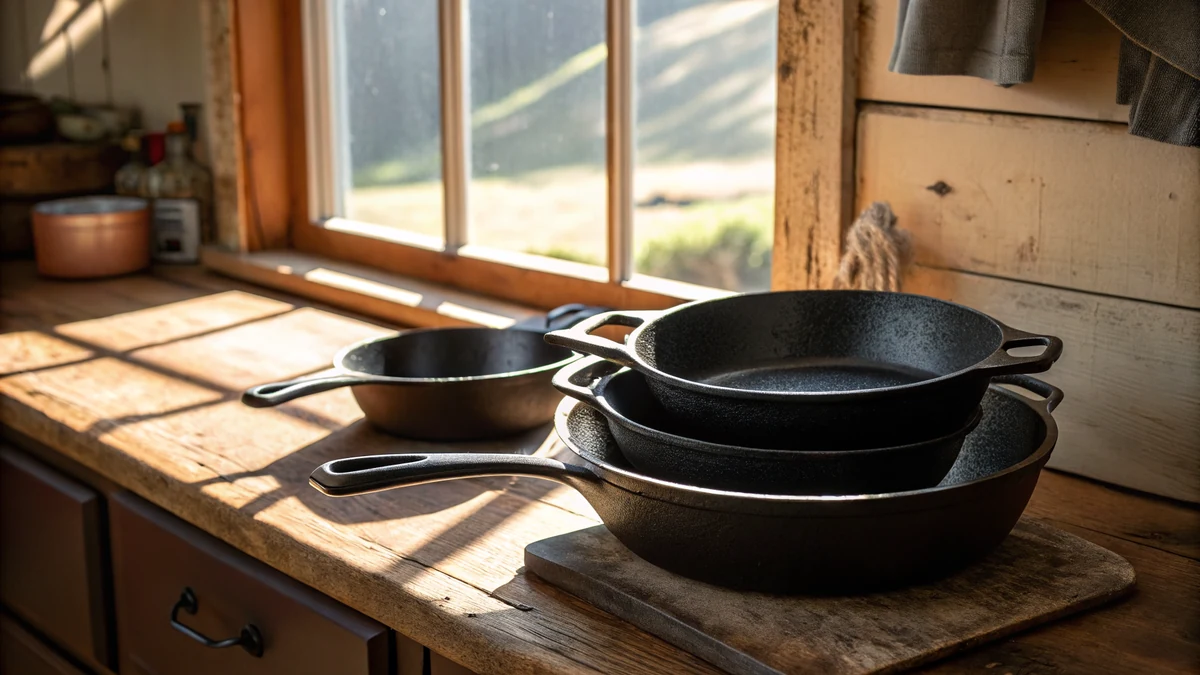
Store cast iron in a dry cabinet with a paper towel between stacked pans to prevent scratching. Never store with a wet lid trapping moisture inside. In humid climates (Houston, Beaumont), check stored pans every few weeks for surface rust.
What to Avoid
Avoid extended cooking of highly acidic foods (long tomato simmers, deglazing with significant amounts of wine or vinegar) until the seasoning is well-established, typically twenty to forty cooks in. Avoid dishwasher and avoid soaking. Avoid cold-water rinsing of a hot pan, which can crack the iron.
Texas Recipes That Need a Cast Iron Skillet
If you have a 12-inch cast iron skillet, these are the recipes from our archive that put it to its highest use.
- Authentic Texas-Style Cornbread, the recipe that makes the case for cast iron more clearly than anything else. Hot pan into 425°F oven, deep crust, no sugar.
- Cast Iron Skillet Cornbread, the simpler weeknight version, ready in 25 minutes.
- Buttermilk Fried Chicken, the heat retention of cast iron is exactly what shallow-frying chicken thighs requires.
- Chicken-Fried Steak, every Texas truck stop classic starts with a hot cast iron skillet.
- Cowboy-Cut Ribeye, sear in cast iron, finish in the oven, butter-baste off heat.
- Buttermilk Biscuits, cast iron in the oven produces the bottom crust other pans cannot match.
For more, browse the full Southern Comfort Food collection and the Texas BBQ collection.
Final Verdict and Best Choices by Use Case
- Best overall (price/performance): Lodge 12-inch Pre-Seasoned at $30, the pan that lives on most Texas stovetops for good reason.
- Best premium: Stargazer 12-inch, milled smooth surface from day one, lighter weight, thoughtful design.
- Best lightweight option: Field Company No.10, meaningfully easier to handle for cooks with wrist or shoulder concerns.
- Best for showpiece kitchens: Smithey No.12, mirror-polished surface, gorgeous, expensive.
- Best budget smooth-finish: Victoria 12-inch, better factory surface than Lodge at the same price.
- Best find: Vintage Griswold from eBay or an estate sale, if you can find a clean one, it is unmatched.
If you only buy one cast iron pan, make it the Lodge 12-inch. Cook cornbread in it every weekend for a year, and you will own a tool worth keeping for life.
Frequently Asked Questions
What is the best cast iron skillet for cornbread?
Any 12-inch cast iron skillet preheated in a 425°F oven before pouring the batter will produce excellent cornbread crust. For value, the Lodge 12-inch Pre-Seasoned at $30 is the canonical choice. For premium smooth-finish performance, the Stargazer 12-inch ($165) or Field Company No.10 ($165) are excellent. The pan matters less than preheating the pan and using bacon grease or butter to coat the surface before adding batter.
Is Lodge cast iron actually good?
Yes. Lodge cast iron is genuinely excellent value at $30 and performs as well as boutique smooth-finish pans for almost all home cooking. The cast surface is rougher from the factory than modern milled pans, but after twenty cooks the seasoning fills in the micro-pebbling and the cooking surface becomes near-nonstick. Lodge has been making cast iron in Tennessee since 1896 and the company supports the product with strong warranty service.
How do I season a cast iron skillet for the first time?
Wash with hot soapy water, dry thoroughly. Apply a thin layer of flaxseed, avocado, or grapeseed oil, a teaspoon for a 12-inch pan, wiped almost dry. Bake upside down in a 450°F oven for one hour. Cool in the oven. Repeat two more times. After this initial seasoning, the pan is ready for cooking. Each subsequent cook (especially with bacon, fried chicken, or other fatty foods) adds another layer of seasoning.
Can I use soap on cast iron?
Yes, modern dish soaps are fine on cast iron. The old myth about soap destroying seasoning came from a time when soaps contained lye, which could strip the polymerized oil layer. Modern detergents do not strip seasoning. Use hot water and a small amount of mild dish soap when needed, dry immediately, and dry over heat on the stovetop to prevent rust.
How do I remove rust from cast iron?
Scrub with steel wool and hot water until the metal is uniformly bare gray. Rinse, dry thoroughly, then re-season using the initial seasoning instructions (three rounds of thin oil at 450°F for one hour each). A rust-restored pan cooks as well as a factory-new pan after a few weeks of regular use. Avoid using strong acid baths (vinegar soaks) unless rust is severe; they can pit the iron surface.
How heavy is a 12-inch cast iron skillet?
Most 12-inch cast iron skillets weigh between 5.5 and 9 pounds. The Lodge 12-inch is about 8 pounds. The lighter premium pans (Field Company, Stargazer) are around 5.6 to 5.7 pounds. Pre-WWII Griswold pans are about 5.2 pounds. Weight makes a meaningful daily difference for cooks with wrist or shoulder concerns; lighter pans are easier to maneuver one-handed.
Is smooth cast iron better than rough cast iron?
Smooth (milled or polished) cast iron starts more nonstick from day one and looks more refined. Rough cast (factory Lodge surface) develops a comparably smooth cooking surface after twenty to forty cooks as seasoning fills in. After several months of regular use, the practical cooking performance is similar. Smooth is more pleasant from the start and costs more; rough is more affordable and rewards patience.
How long does cast iron last?
Indefinitely with basic care. Cast iron skillets passed down through three or four generations are common in Texas kitchens. The iron does not wear out under normal use; only abuse (dropping on a hard surface and cracking, or extreme thermal shock) damages it. The seasoning layer is renewable, even a completely neglected and rusty pan can be restored to working condition with steel wool and an oven.
Can I cook tomato sauce in cast iron?
Yes, but with caveats. Brief acidic cooking (deglazing, a short braise) is fine. Extended simmering of tomato sauce, citrus juices, or vinegar in a young pan (under twenty cooks of seasoning built up) can strip seasoning and impart a metallic flavor. In a well-seasoned pan with thick polymerized seasoning layers, acidic cooking is far less of an issue. Wait until your seasoning is well-established before doing long acid simmers.
Are vintage cast iron skillets really better?
Pre-WWII American cast iron (Griswold, Wagner) was milled smooth at the factory in a way most modern budget brands are not. A clean vintage pan from this era offers a smoother cooking surface, lighter weight, and beautiful balance. Modern boutique brands (Stargazer, Field, Smithey) have effectively recreated this quality at premium prices. Vintage pans are excellent if you find a clean one but are not strictly necessary, a Lodge will serve a Texas kitchen well for life.