
BBQ kitchen
How Long to Smoke Pork Tenderloin
Pork tenderloin is one of the most rewarding things you can put on a smoker, and one of the easiest to ruin. It is lean, tender, and quick, which means it drinks up smoke beautifully but punishes you the moment you overcook it. People ask me about timing more than anything else with this cut, so let me give you exact numbers, the method behind them, and the variables that nudge the clock either way.
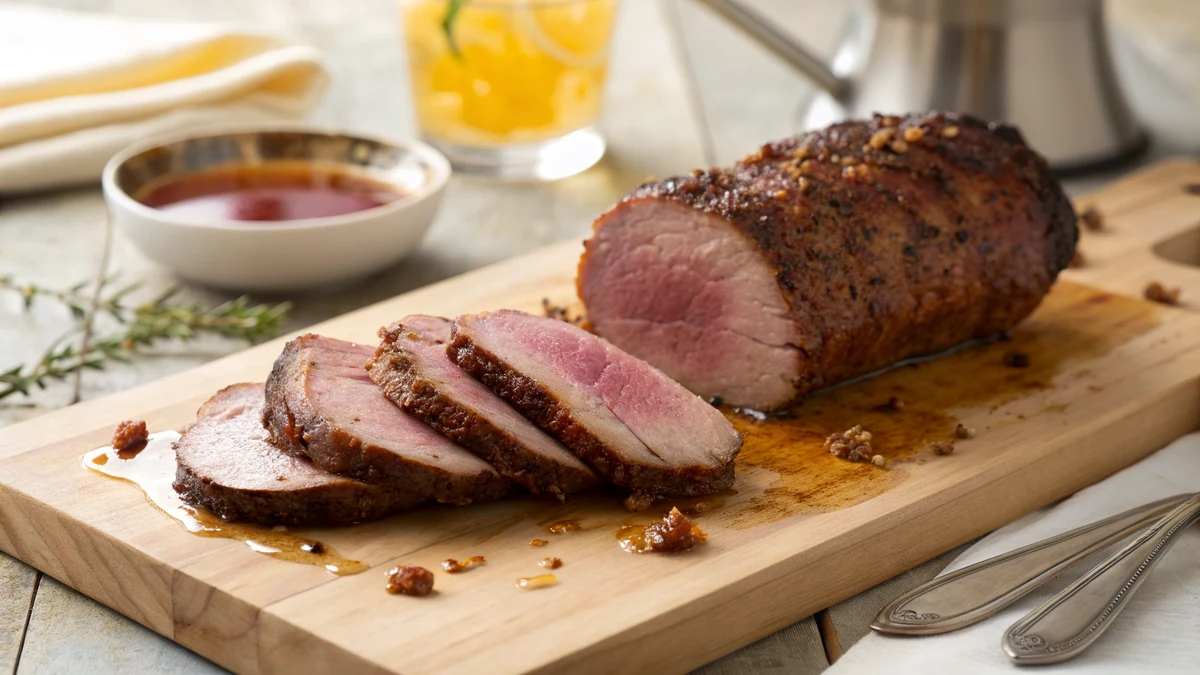
The short answer: smoke a whole pork tenderloin for about 2.5 to 3 hours at 225F, or 1.5 to 2 hours at 250F, until it reaches an internal temperature of 145F in the thickest part. Then rest it 5 to 10 minutes before slicing. Because tenderloin is long and thin, the time depends far more on your smoker temperature and the loin's thickness than on its weight, so always cook to 145F with a thermometer rather than trusting the clock.
Pork Tenderloin Smoking Time Chart
Here is the timing at a glance. Treat these as a planning window, not a promise, because the only number that truly tells you the loin is done is the internal temperature. A pork tenderloin almost always finishes faster than people expect, so start checking early.
| Smoker temp | Approx. time | Pull temp | Rest |
|---|---|---|---|
| 225F | 2.5 to 3 hours | 145F | 5 to 10 min |
| 250F | 1.5 to 2 hours | 145F | 5 to 10 min |
| 275F | 1 to 1.5 hours | 145F | 5 to 10 min |
One thing to notice: the jump from 225F to 275F nearly halves the cook time. That is the trade you are making, more smoke and a gentler margin for error at the low end, a faster weeknight dinner at the high end. All three finish at the same 145F pull temperature, because doneness is about the meat, not the pit.
Preparing the Tenderloin
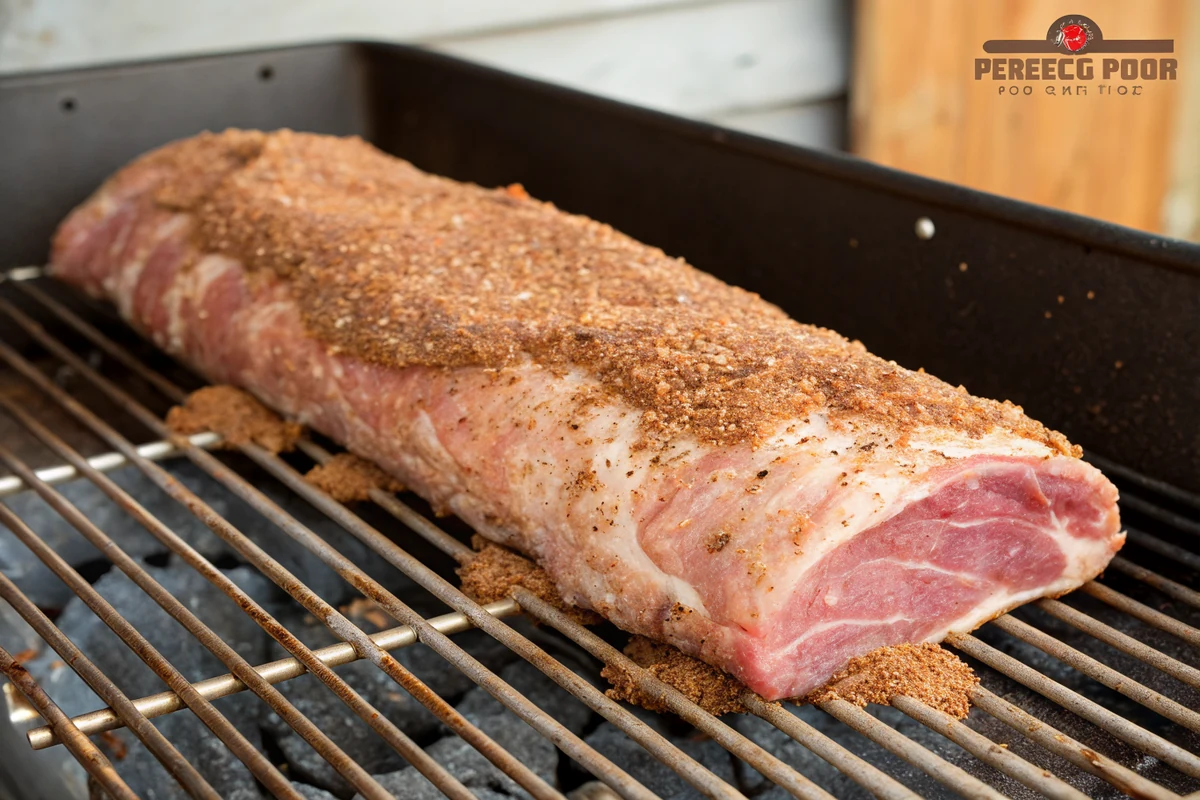
Good prep starts at the butcher counter. Make sure you are buying tenderloin, not loin, because they are completely different cuts with completely different cook times. A tenderloin is small and slender, usually a pound to a pound and a quarter, and they often come two to a pack. The first job is to remove the silver skin, the thin shiny membrane along one side, by sliding a knife just under it and peeling it off. Left on, it will not render and it tightens like a rubber band on the smoker.
Seasoning is where you set up both flavor and juiciness. I coat the loins in a thin layer of mustard or oil as a binder, then a rub that leans a touch sweet, brown sugar, salt, pepper, paprika, and a little garlic and onion powder. The sugar helps build color and a light bark. If you have time the night before, a simple brine of water, salt, and a little sugar for a few hours works wonders on such a lean cut, helping it hold water through the cook.
Let the seasoned meat sit out for 20 to 30 minutes while the smoker comes up to heat. This takes the deep chill off the center so it cooks more evenly, and it gives the rub time to turn tacky and grip the surface. While you wait, get your smoker stable, because a tenderloin cooks fast and you want it going onto a steady, ready fire rather than a swinging one.
Smoking at 225F or 250F
Set your smoker to a steady 225F to 250F and pick a gentle wood. Pork tenderloin is mild and lean, so I reach for fruit and nut woods, apple, cherry, or pecan, which give color and a sweet, rounded smoke without overpowering the meat. Post oak, the backbone wood of the Central Texas pits around Lockhart, works too; just go a little lighter so it does not bully such a delicate cut. A water pan in the chamber steadies the temperature and keeps the surface from drying out before the inside is done.
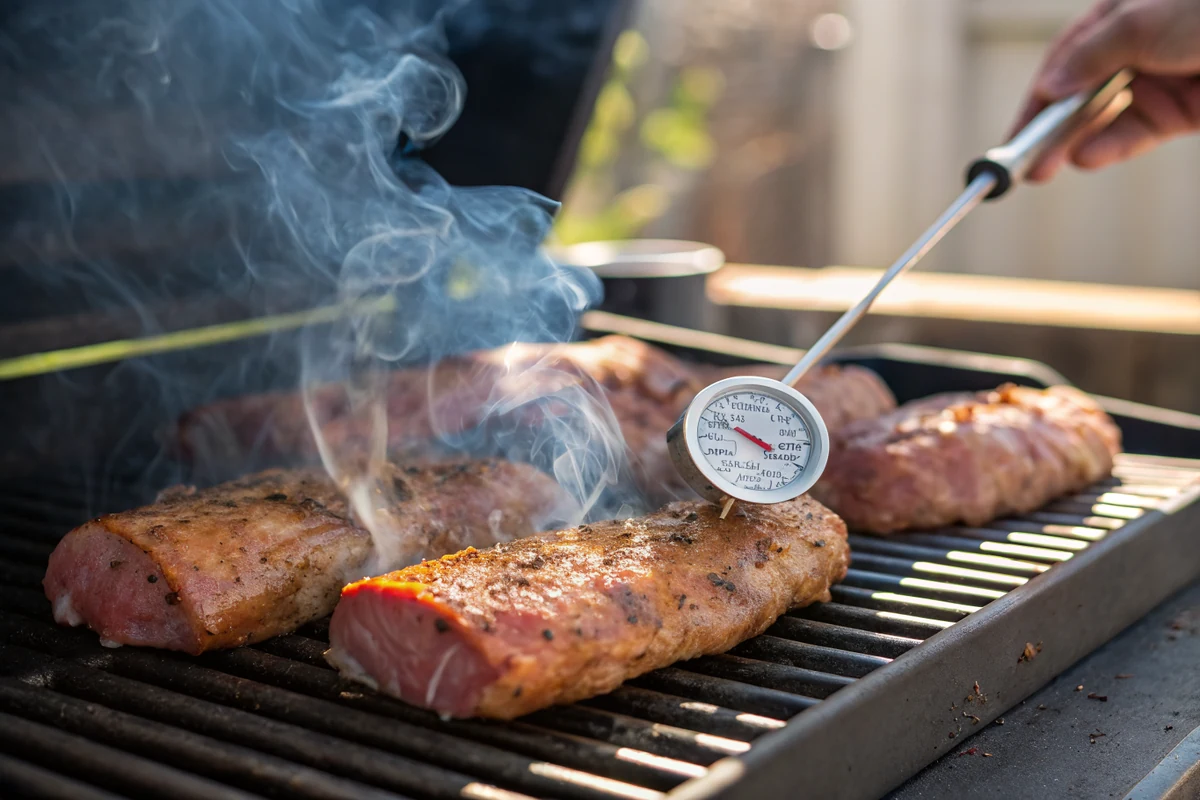
Lay the tenderloins on the grate with room between them so smoke can circle every side. At 225F, plan on roughly 2.5 to 3 hours; at 250F, about 1.5 to 2 hours. I do not flip them constantly, just once partway through if my smoker has a hot side. The single most useful tool here is a leave-in probe thermometer, because the difference between juicy and dry on a cut this lean is only a handful of degrees and a few minutes.
If you want a glaze, hold it until the last 20 to 30 minutes. Brushing barbecue sauce or honey on too early means the sugars sit over heat too long and scorch before the meat is done. A late glaze sets into a glossy, sticky coat right as the loin finishes. The same patience applies to any sweet finish, the way I treat the glaze on my smoked pork belly burnt ends.
The Number That Matters: 145F
Forget the clock for the actual call on doneness; the internal temperature is everything with pork tenderloin. Pull it at 145F in the thickest part, which is the USDA safe minimum for whole pork cuts. At that temperature the center is juicy and carries a faint blush of pink, which is completely safe and is the sweet spot for tenderness. If pink bothers you, take it to 150F, but understand you are trading away juiciness with every extra degree.
The reason a thermometer matters so much here is the shape and leanness of the cut. There is very little fat to buffer mistakes, and the thin profile means it climbs through the safe zone quickly and then keeps right on going into dry, chalky territory. An instant-read in the thickest section, or better yet a leave-in probe, takes all the guessing out. Check a couple of spots, since one end is often thinner and runs ahead of the other.
Carryover is real even on a small cut. After you pull the loin, the residual heat keeps cooking the center a few more degrees as it rests, which is part of why 145F off the smoker lands perfectly after resting. If you wait for the thermometer to read 150F or 155F on the grate, the rested result will be noticeably drier. Trust 145F and let the rest do the last bit of work.
What Changes the Cook Time
The biggest lever is smoker temperature, which you already saw in the chart: 225F runs slow, 275F runs fast, and the difference is roughly an hour on a cut this size. After that, thickness matters more than total weight. A short, fat tenderloin takes longer than a long, slim one of the same weight, because heat has farther to travel to the center. This is why weight-based rules of thumb mislead people on tenderloin, and why temperature is the honest guide.
Starting temperature of the meat plays a part too. A loin straight from the fridge takes longer than one that has sat out 20 to 30 minutes, and a fully frozen one is a different project entirely; always thaw first. The smoker itself matters, as a well-insulated cooker holds steady while a leaky one swings and stretches the time. Cold, windy days outdoors pull heat off the pit and add minutes, so build in a buffer when the weather is rough.
Wood choice changes flavor more than time, but a roaring, oversmoked fire can build bitter bark before the inside catches up, so keep the smoke clean and thin. If you are cooking two tenderloins side by side, they shield each other a little and can run slightly slower than a single loin with airflow all around it. None of these swings are dramatic, which is the good news, but together they are exactly why you cook to 145F and not to a fixed number of minutes.
A Simple Smoked Pork Tenderloin Recipe
Here is the exact recipe I cook, pulling together everything above into a straightforward smoke. It feeds about six as a main and pairs with just about any Texas BBQ side you like. The whole thing comes together in well under three hours of mostly hands-off time.
Ingredients
- 2 pork tenderloins, about 1 to 1.25 lb each, silver skin removed
- 2 tablespoons yellow mustard or olive oil, as a binder
- 2 tablespoons brown sugar
- 1 tablespoon kosher salt
- 2 teaspoons coarse black pepper
- 1 teaspoon smoked paprika
- 1 teaspoon garlic powder
- 1/2 teaspoon onion powder
- 1/4 cup barbecue sauce or honey glaze, optional
Instructions
- Trim and season. Pat the tenderloins dry and slide a sharp knife under the silver skin to remove it, since it will not render and turns tough. Coat the meat lightly with mustard or oil, then rub on the mixed brown sugar, salt, pepper, paprika, garlic, and onion powder all over. Let the seasoned loins sit 20 to 30 minutes while the smoker heats.
- Set up the smoker. Bring the smoker to a steady 225F to 250F with a fruit or nut wood like apple, cherry, or pecan. Keep a water pan in the chamber for steady heat and humidity, and wait for clean, thin blue smoke before the meat goes on.
- Smoke to temperature. Lay the tenderloins on the grate with space between them. Smoke at 225F for about 2.5 to 3 hours, or at 250F for 1.5 to 2 hours, until an instant-read thermometer in the thickest part reads 145F. Cook to temperature, not the clock.
- Glaze, if using. If you want a glaze, brush barbecue sauce or honey over the loins in the last 20 to 30 minutes of the cook so the sugars set into a sticky coat without scorching.
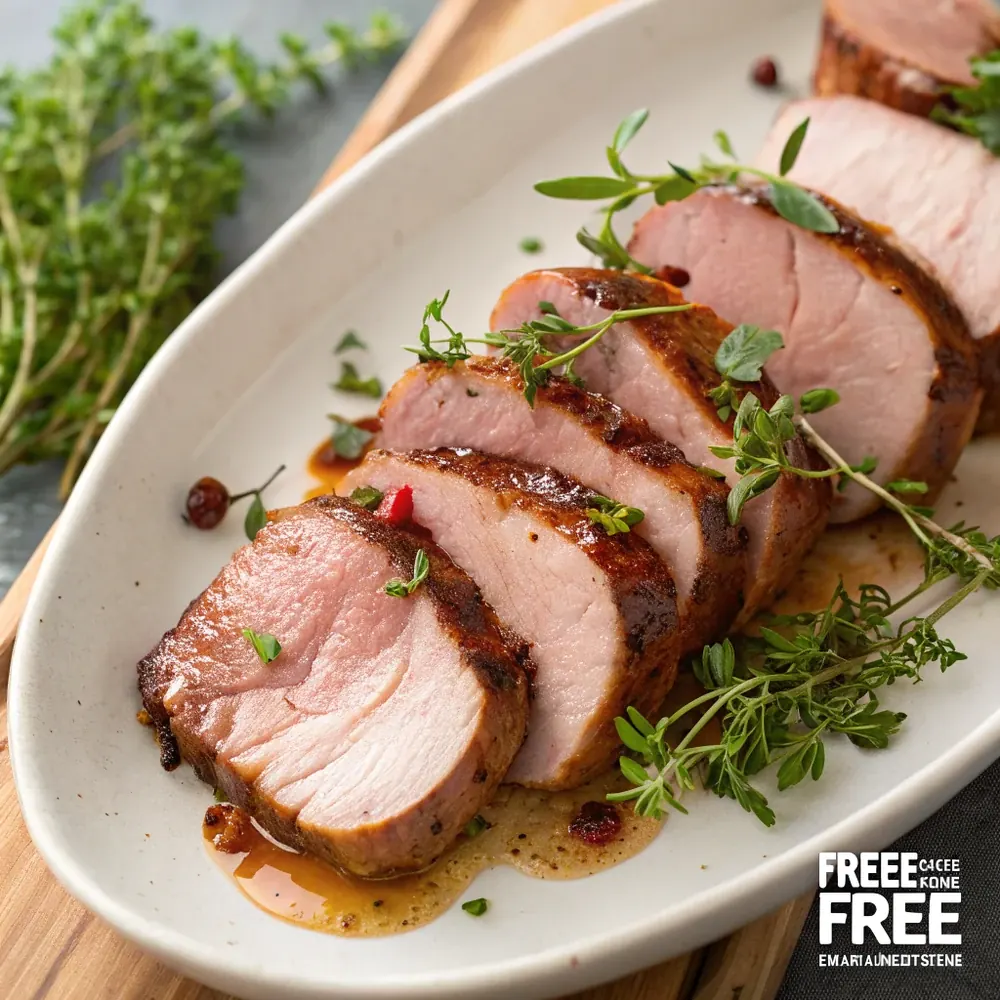
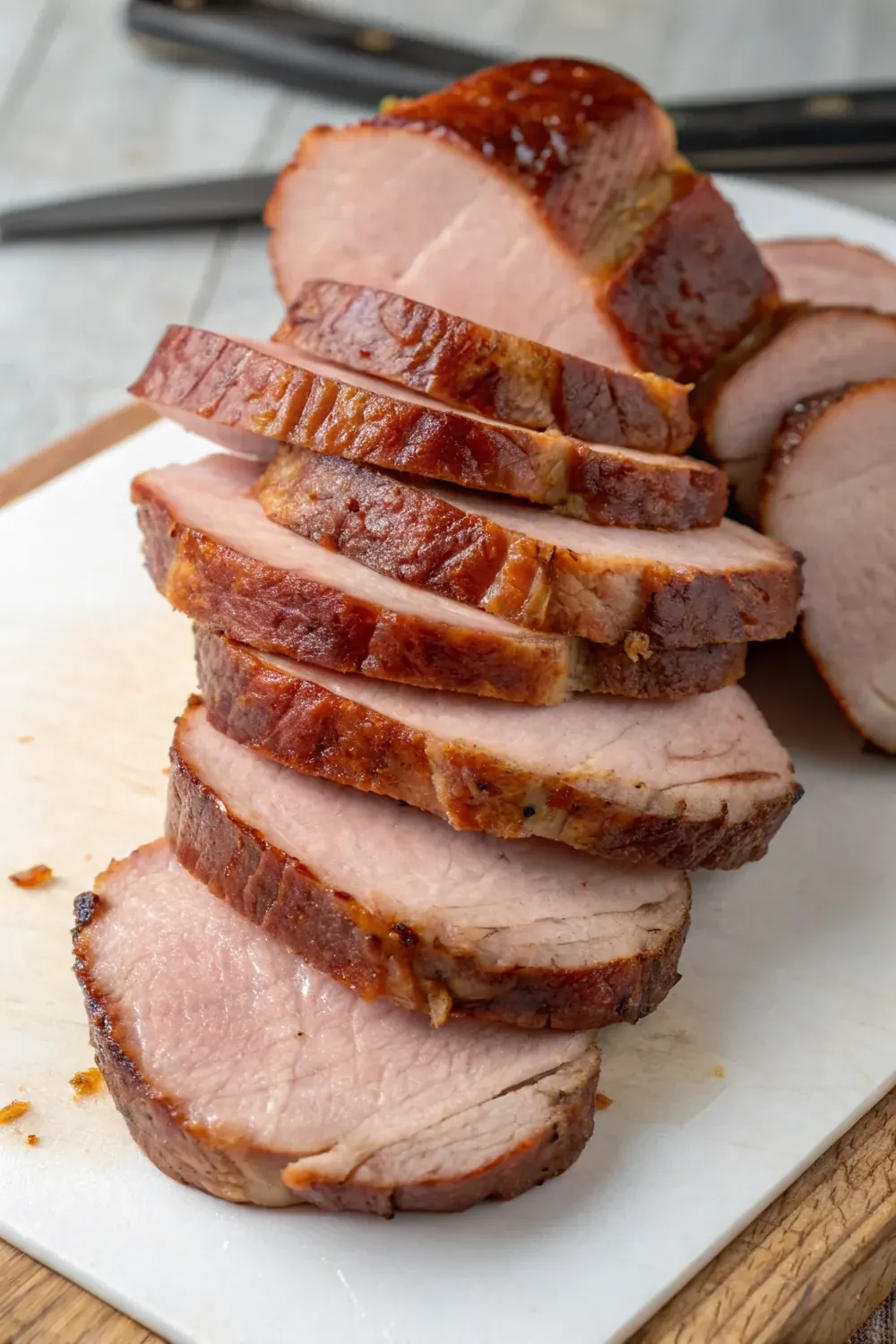
- Rest and slice. Move the tenderloins to a board and rest them 5 to 10 minutes. Slice into medallions about half an inch thick across the grain, and serve. The centers should be juicy with a faint blush of pink, which is safe and perfect at 145F.
Leftovers slice cold into sandwiches or warm gently for tacos. If you smoke tenderloin often, you will start to feel the timing in your bones, but until then, keep that thermometer handy and pull at 145F every single time.
Frequently Asked Questions
How long does it take to smoke a pork tenderloin?
A whole pork tenderloin takes about 2.5 to 3 hours at 225F, or roughly 1.5 to 2 hours at 250F, to reach a safe internal temperature of 145F. Because tenderloins are long and thin rather than thick and heavy, the cook time is driven much more by your smoker temperature and the thickness of the loin than by its weight. Always cook to an internal temperature with a thermometer rather than to the clock, since two tenderloins of the same weight can finish 20 minutes apart.
What temperature should smoked pork tenderloin be?
Pull pork tenderloin off the smoker when it reaches 145F in the thickest part, which is the USDA safe minimum for whole pork cuts, then let it rest 5 to 10 minutes. During the rest the temperature carries over a few degrees and the juices redistribute. At 145F the center will be juicy with a faint blush of pink, which is perfectly safe and is exactly how you want it. If you prefer no pink at all, take it to 150F, but do not go higher or the lean meat dries out fast.
Should I smoke pork tenderloin at 225 or 250?
Both work, and the choice is about time versus bark. At 225F you get a longer cook, around 2.5 to 3 hours, which means a little more smoke flavor and a gentler, more forgiving window. At 250F the loin finishes faster, in about 1.5 to 2 hours, with a slightly firmer exterior. I lean toward 225F when I have the time and want maximum smoke, and 250F on a weeknight when I want dinner sooner. Either way, pull at 145F internal.
Is pork tenderloin the same as pork loin?
No, and confusing them is the most common smoking mistake. Pork tenderloin is small, about 1 to 1.5 pounds, long, thin, and very lean, and it cooks in a couple of hours. Pork loin is a large, wide roast that can weigh 3 to 5 pounds and takes far longer to smoke. The times on this page are for tenderloin. If you have a big pork loin roast, plan on roughly 2.5 to 3 hours at 225F per the loin's much greater thickness, and still pull at 145F.
Do you wrap pork tenderloin when smoking?
You usually do not need to wrap pork tenderloin, because the cook is short and the stall that affects big cuts like brisket is not really a factor here. I smoke tenderloin unwrapped the whole way so the outside builds a nice seasoned crust. If you are glazing it, brush the glaze on in the last 20 to 30 minutes so the sugars set without burning. Wrapping is only worth it if your loin is racing toward done on the outside while still cool inside, which is rare at 225 to 250F.
How do you keep smoked pork tenderloin from drying out?
Three things keep it juicy: do not overcook it, season or brine it ahead, and rest it after. The biggest culprit is heat, since tenderloin is so lean that every degree past 145F squeezes out moisture, so a thermometer is non-negotiable. A simple brine or a dry rub with a little sugar the night before helps the meat hold water and season through. And resting it 5 to 10 minutes before slicing lets the juices settle back into the meat instead of running out on the board.
Cooking a bigger spread? Pair this with my smoked pork belly burnt ends for a pork-heavy board, run the how long to smoke sausage guide for an easy crowd-stretcher, or get your timing right on a long cook with the how long to smoke ribs at 275F guide. Pick your wood with the BBQ wood pairing tool before you light the fire.