
Texas BBQ
How Long to Smoke Sausage
Sausage is the unsung hero of a Texas pit. It is the meat that built the Central Texas market houses around Lockhart and Elgin, where a rope of smoked sausage hangs as proudly as the brisket. It is cheaper than brisket, faster than ribs, and it stretches a meat board to feed a crowd without much effort. The only thing people second-guess is timing, and the answer hinges on one question: is your sausage fresh and raw, or already cured and cooked? Let me lay out the times for both, the temperatures that keep it juicy, and the small things that move the clock.
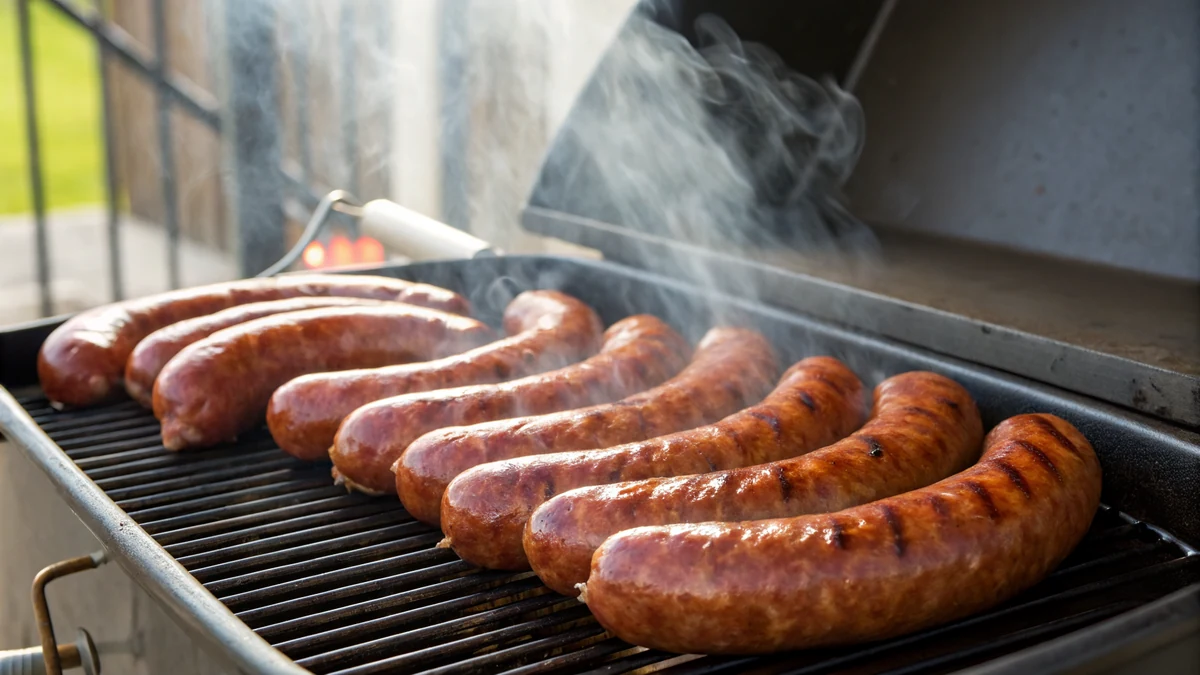
The short answer: smoke fresh, raw sausage links for about 2 to 3 hours at 225F to 250F, until they reach 160F internal for pork and beef or 165F for poultry. Pre-cooked or cured smoked sausage only needs about 1 to 1.5 hours, since you are just warming it and adding smoke. Sausage diameter matters most: thin links finish faster than fat brats or rope sausage. Cook to internal temperature with a thermometer, keep the heat gentle so the casings do not split, and never prick the links.
Sausage Smoking Time Chart
Here is the timing by sausage type. The big divide is raw versus pre-cooked, with link diameter the next biggest factor. All times assume a steady 225F to 250F pit.
| Sausage type | Approx. time | Pull temp | Notes |
|---|---|---|---|
| Fresh pork or beef links | 2 to 3 hours | 160F | Raw, cook through |
| Fresh poultry links | 2 to 3 hours | 165F | Raw, cook through |
| Thin breakfast links | 1 to 1.5 hours | 160F | Smaller, finish faster |
| Pre-cooked or cured | 1 to 1.5 hours | 140 to 150F | Warm and smoke only |
The key takeaway is that raw sausage is a food-safety cook, finishing at 160 or 165F, while pre-cooked sausage is just a warm-and-smoke, so you only need it hot for serving. Confusing the two is how people either undercook raw links or dry out a perfectly good smoked rope by treating it like raw.
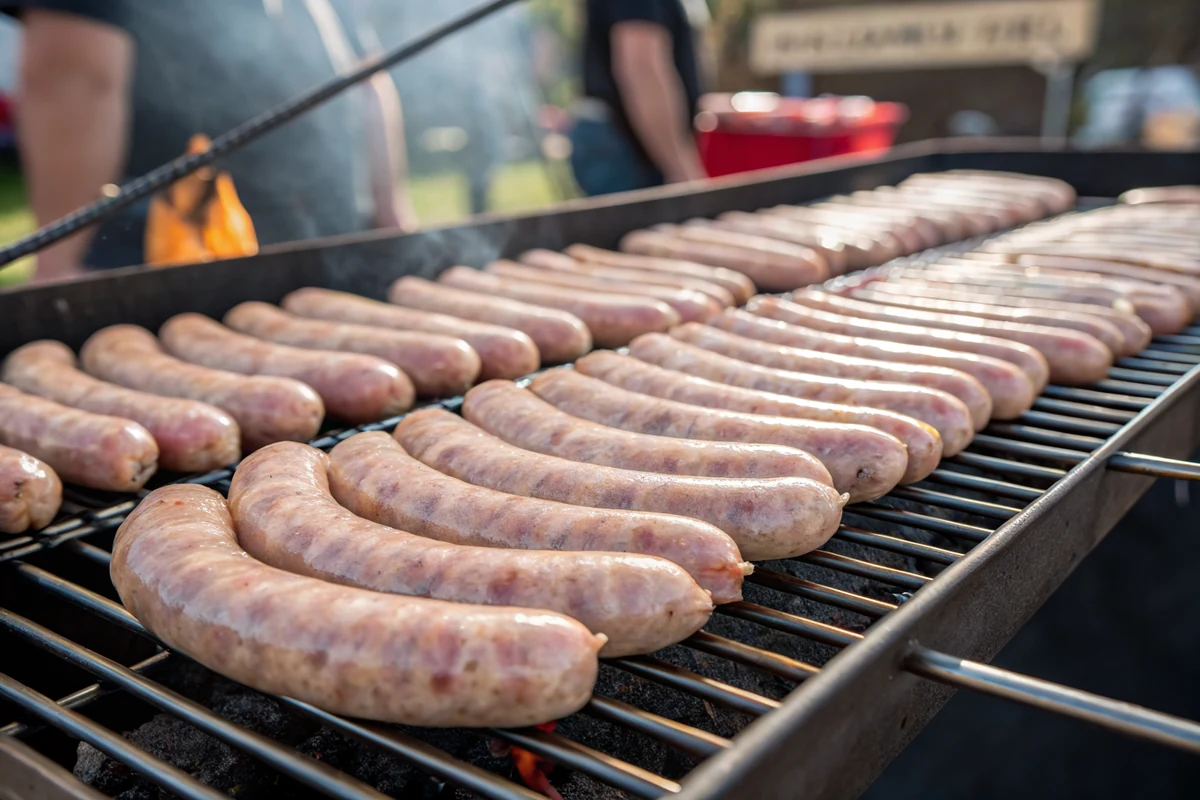
Fresh Raw vs Pre-Cooked Sausage
The first thing to sort out is what you actually have, because it changes everything about the cook. Fresh, raw sausage, the kind sold in coils or links at the butcher counter, bratwurst, Italian, country pork, raw rope sausage, has never been cooked and must reach a safe internal temperature. That is the 2 to 3 hour cook to 160F or 165F, and it is the more common backyard project.
Pre-cooked and cured sausages are a different animal. Smoked kielbasa, andouille, hot links from the store, and most packaged smoked sausage have already been cooked during processing, so they are safe to eat straight from the package. When you put them on the smoker, you are only warming them through and layering on extra smoke flavor, which takes about an hour. Push them as long as raw sausage and you will dry them out.
If you are unsure which you have, check the label. Words like fresh or raw, and a refrigerated link that is pink and soft, mean it needs full cooking. Words like fully cooked, smoked, or cured mean it is ready and just wants reheating. For homemade Texas links, you are almost always working from raw, the same way I do for my Texas hot links, so plan on the full cook to temperature.
Smoking the Sausage
Set the smoker to a steady 225F to 250F. Sausage takes smoke readily and the spices already carry a lot of flavor, so the wood is your call: hickory and oak give a classic Texas backbone, with post oak the pitmaster's default, while pecan and applewood are a touch sweeter and milder. Whatever you burn, keep the smoke clean and thin, since a heavy, sooty fire turns the casing bitter fast.
Lay the links on the grate or hang them with space between each so smoke can reach every side. You do not need to flip sausage the way you would on a hot grill, since the indirect heat cooks it evenly, though I give a single turn partway through to even out color if my pit has a hot side. The most important rule is to resist pricking the casings; those holes drain the juices and fat that keep the link plump.
Keep the heat gentle and steady. The number one cause of split, greasy, blown-out sausage is cooking too hot too fast, which melts the fat before the proteins set and bursts the casing. At 225F to 250F the fat renders slowly and stays put, giving you a juicy interior and a taut casing with that satisfying snap. Patience here is rewarded with a far better link.
Cooking to a Safe Temperature
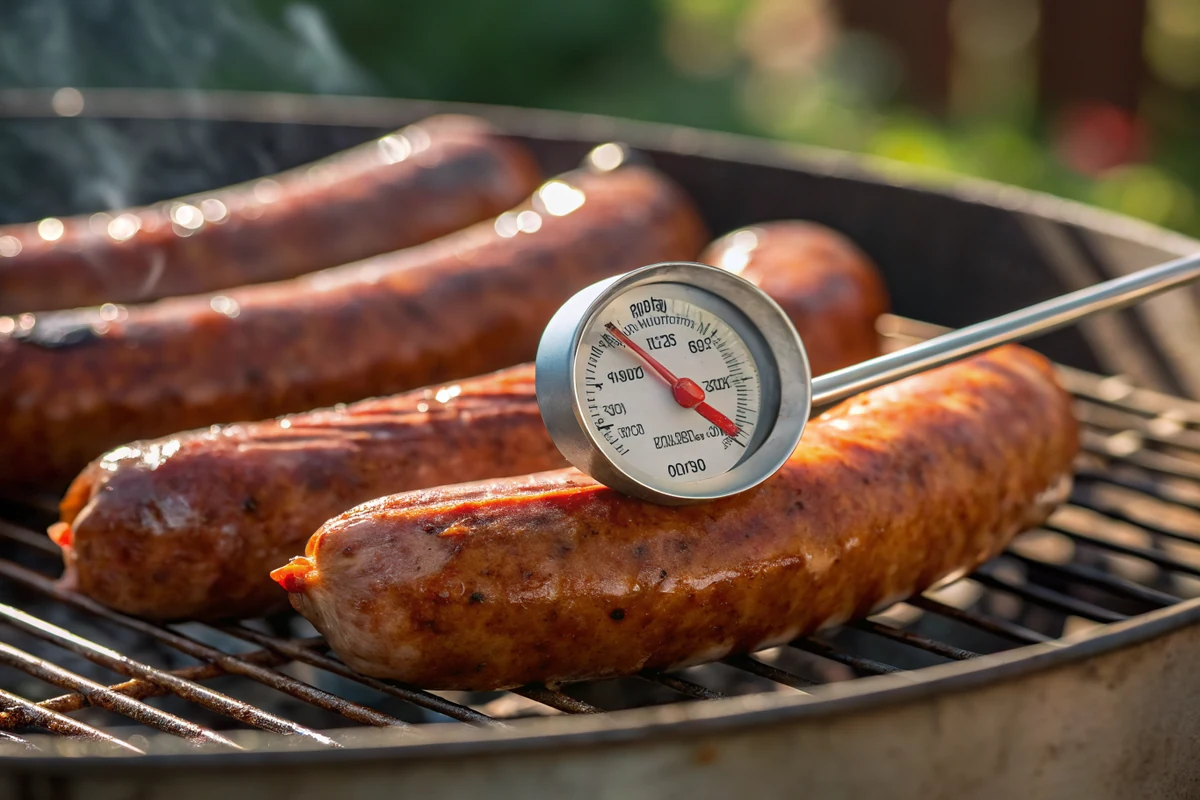
For raw sausage, the internal temperature is both a safety line and a quality marker. Pull pork and beef links at 160F and poultry links at 165F, measured in the center of the thickest link with an instant-read thermometer slid in from the end. At those temperatures the sausage is fully cooked, juicy, and snappy. Going much past them starts to dry the meat and render away the fat that makes sausage good.
For pre-cooked and cured sausage, you are not cooking for safety, just for serving temperature, so 140 to 150F is plenty to warm it through. You will know it is ready when it is hot in the center and the casing has tightened and taken on color. There is no need to push these to 160F; doing so only squeezes out moisture from a sausage that was already safe to eat cold.
A thermometer matters here because sausage gives few visual cues; the outside can look beautifully done while the center of a fat link still lags behind. Check the biggest link, since the thinner ones will be ahead of it. Once the thickest link hits the target, the whole batch is ready. This is the same temperature-first discipline that keeps any smoke from going wrong.
What Changes the Cook Time
Diameter is the dominant variable. A fat bratwurst or a thick rope of country sausage takes much longer to heat through than a slim breakfast link, even at the same pit temperature, because heat has to travel farther to the center. This is why a chart can only give a window; a tray of mixed links will not all finish together, so probe the fattest ones to make the call.
Raw versus pre-cooked is the other headline, as we covered, roughly doubling the time for fresh links over cured ones. Beyond that, your pit temperature sets the pace, with 225F running slower and gentler and 250F a touch faster. I would not climb much higher, because the casings start to split as the heat rises, trading a little speed for a lot of blown-out, greasy links.
The usual suspects round things out. Cold links straight from the fridge take longer than ones that have sat out briefly, frozen sausage takes half again as long and should really be thawed first, and cold, windy weather pulls heat off the pit and stretches the cook. A crowded grate where links shield one another also runs slower than a few links with open airflow. Build in a buffer and let the thermometer, not the timer, tell you when to pull.
A Smoked Sausage Recipe
Here is the simple method I use for a couple of pounds of fresh links. It works for bratwurst, Italian, or any raw rope sausage, and it slots right into a bigger cook alongside your Texas BBQ sides. Adjust the time down for thin links and up for fat ones, always finishing by temperature.
Ingredients
- 2 lb fresh sausage links, such as bratwurst, Italian, or country pork
- 1 tablespoon coarse black pepper
- 1 tablespoon paprika
- 2 teaspoons garlic powder
- 1 teaspoon kosher salt, if links are unseasoned
- Barbecue sauce or mustard, for serving
Instructions
- Prep the smoker and links. Bring the smoker to a steady 225F to 250F with a wood like hickory, pecan, or oak. Pat the sausage links dry and dust them with the pepper, paprika, and garlic powder if you want extra bark, adding salt only if the sausage is unseasoned.
- Arrange with space. Lay the links on the grate or hang them with space between each so smoke can circle the whole surface. Do not prick the casings, which would let the juices escape.
- Smoke low and slow. Smoke the sausage at 225F to 250F for about 2 to 3 hours, turning once partway through. Keep the heat gentle so the casings do not split and the fat stays in the link.
- Cook to temperature. Check the center of the thickest link with an instant-read thermometer. Pull pork and beef sausage at 160F internal, or poultry sausage at 165F. The casing should be taut with a clean snap.
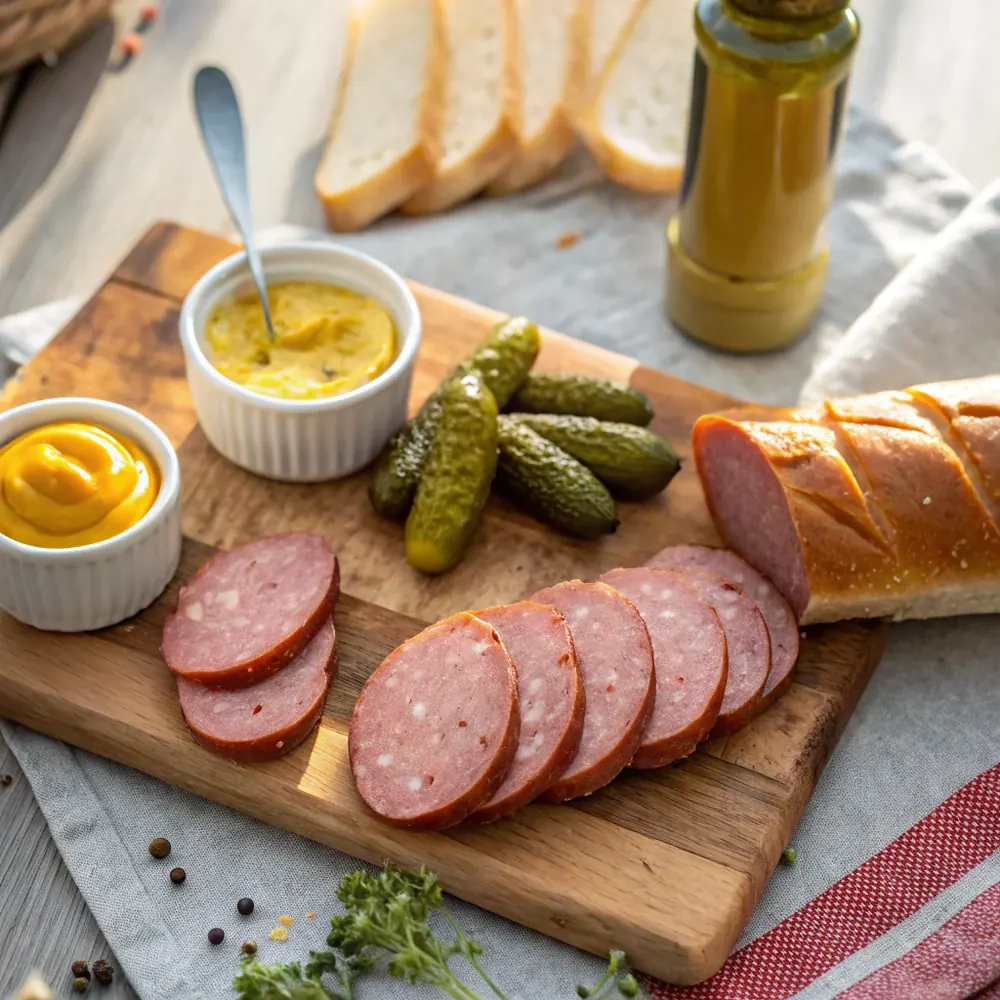
- Rest and serve. Rest the links 5 minutes so the juices settle, then serve whole or sliced, with barbecue sauce or mustard alongside. They are excellent on a bun, over beans, or on a meat board.
Smoked sausage keeps and reheats beautifully, so I often smoke extra to slice into beans, jambalaya, or breakfast tacos through the week. It is the gift that keeps giving off a single fire.
Frequently Asked Questions
How long does it take to smoke sausage?
Fresh, raw sausage links take about 2 to 3 hours at 225F to 250F to reach a safe internal temperature of 160F for pork and beef, or 165F for poultry. Pre-cooked or cured smoked sausage only needs about 1 to 1.5 hours, since you are warming it through and adding smoke rather than cooking it from raw. Sausage diameter matters a lot; thin breakfast links finish faster than fat bratwurst or rope sausage. Always cook to internal temperature with a thermometer rather than to the clock.
What temperature do you smoke sausage at?
Smoke sausage at 225F to 250F. This gentle range cooks the inside through to a safe temperature before the casing toughens or the fat renders out and leaves the sausage dry. Going too hot, much above 275F, risks splitting the casings and a greasy, blown-out link as the fat melts too fast. Low and slow keeps the sausage plump and juicy with a tender snap. Pull pork and beef sausage at 160F internal and poultry sausage at 165F.
What internal temperature should smoked sausage be?
Smoke fresh pork or beef sausage to 160F internal, and poultry sausage like chicken or turkey to 165F, measured in the center of the thickest link. These are the USDA safe temperatures, and they also happen to be where sausage eats best, juicy and cooked through with a clean snap. Cured and pre-cooked sausages are already safe, so you only need to warm them to about 140 to 150F for serving. Use an instant-read thermometer pushed into the end of a link to check.
Do you have to flip sausage when smoking?
You do not have to flip sausage in a smoker the way you would on a grill, because the indirect heat cooks it evenly from all sides. I usually give the links a single turn and a rotation partway through if my smoker has a hot spot, just to even out color and rendering. Hanging sausage or laying it on a rack with space between links lets smoke circle the whole surface, so it colors uniformly without much fuss. The hands-off nature is part of why sausage is such an easy smoke.
Should you poke holes in sausage before smoking?
No, do not prick sausage before or during smoking. Those holes let the juices and rendered fat escape, leaving you with a drier, less flavorful link. The casing is there to hold all that moisture in, and at a gentle 225F to 250F it will not split if you keep the heat steady. The only reason people prick sausage is fear of bursting, but bursting comes from cooking too hot too fast, not from intact casings. Keep the heat low and leave the links whole.
Can you smoke sausage from frozen?
It is better to thaw sausage first for even cooking and food safety, but you can smoke from frozen in a pinch. Frozen links will take noticeably longer, roughly half again as much time, and the outside can over-smoke before the center reaches a safe temperature, so watch it with a thermometer. Thawing overnight in the fridge gives a far more even result and lets the rub or seasoning adhere better. Whether from fresh or frozen, the finish line is the same internal temperature.
Building a full board? Add my Texas hot links, run a rack from the how long to smoke ribs at 275F guide, pile on some smoked pork belly burnt ends, and slide on corn from the smoked corn on the cob guide. Match your wood with the BBQ wood pairing tool.